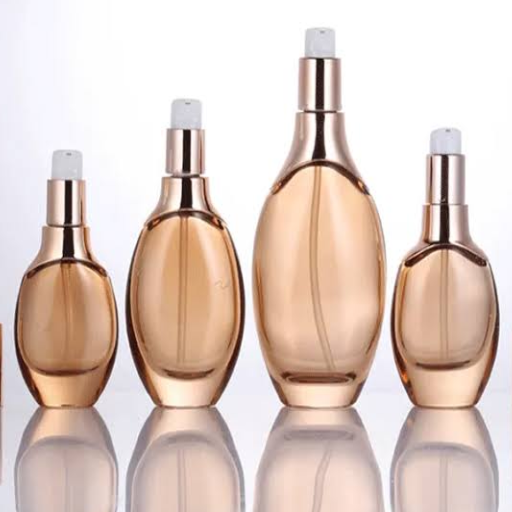
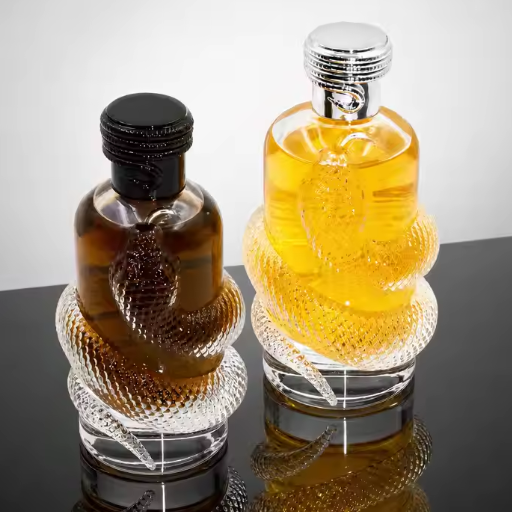
Entering the perfume industry can be both exciting and challenging for newcomers. The extensive collection of perfumes, which all promise unique scent experiences, makes it difficult to find a fragrance that matches your preferences. This is especially important because fragrance sample bottles deliver essential benefits. The small tools let you test multiple fragrances without buying full-size bottles, helping you find your ideal fragrance at your own pace. The guide will explain the current operating functions of perfume samples, which enhance your fragrance experience and underscore their vital role as resources for beginners and experts alike. Prepare yourself to discover the optimal methods for utilizing these tiny wonders.
Introduction to Fragrance Sample Bottles

Fragrance sample bottles are small, portable vials that contain a limited amount of perfume for testing and exploration. The design allows users to experience the scent through skin application and testing across various environments before deciding whether to purchase a full bottle. Customers can use the samples to test different scents at no extra cost as they build their own fragrance collection. The product is a crucial resource for both beginner fragrance testers and experienced users looking to broaden their scent collection.
What are Fragrance Sample Bottles?
Perfume sample bottles are miniature scent containers that let users experience fragrances without buying full bottles, offering both testing options and practical use.
History and Evolution of Sample Bottles in Perfumery
The perfume industry’s expansion led to significant modifications to the original fragrance sample bottle design. In the late 19th and early 20th centuries, sample bottles emerged as a marketing tool, allowing perfume brands to present their new fragrances to potential buyers. Providing customers with small fragrance vials to test products became common during this period, as both Guerlain and Chanel established market demand.
Department stores became the primary locations for perfume sales, resulting in increased sample bottle requirements by the 1950s. Luxury brands at the time used these samples to let customers experience their scents at home before purchasing the actual products. Dior and Estée Lauder used sampling campaigns to promote their products to broader customer bases.
E-commerce began using sample bottles for digital distribution as the 21st century entered its digital transformation phase. Online perfume retailers recognized the need to offer samples, as customers could not physically test products. The existing platforms offer sample programs that allow customers to select specific vials or receive preselected kits.
Key Market Insight: The global fragrance market reached a value of over $33 billion, according to recent industry reports, which showed that sample bottles had a significant impact on consumer purchasing behavior. The analysis of 2023 market trends found that 65 percent of online fragrance purchases are driven by testers and samples.
Brands develop new sample bottle designs because of their need to create sustainable packaging solutions which use refillable and biodegradable materials.
The three major developments that shaped how customers interacted with fragrance samples, market strategies, and technological advancements resulted in the creation of fragrance sample bottles. The small items that possess great power transformed from basic glass vials into modern sustainable packaging solutions that connect personal preferences with brand discovery.
Purpose and Benefits of Using Fragrance Samples
The personal exploration process is supported by fragrance samples, which let users test different scents without buying full bottles. Customers use the system to discover their preferred fragrances through its method, which delivers a personalized perfume experience.
The product sample allows customers to test the scent before they buy the higher-priced product. The system helps customers make better buying decisions by reducing purchase regret and improving satisfaction with their selection.
Fragrance sampling enables brands to introduce new products and reach larger customer groups. The samples provide a basic understanding for customers, helping them understand what the brand represents and what it offers.
Fragrance samples provide users with a portable and functional application solution. The compact samples make it easy to use them while traveling and for quick touch-ups throughout the day.
Many companies are adopting eco-friendly sample packaging which uses biodegradable and recyclable materials for their package design. This method enables companies to reduce environmental harm while meeting current consumer sustainability expectations.
Importance of Perfume Sample Bottles in the Industry
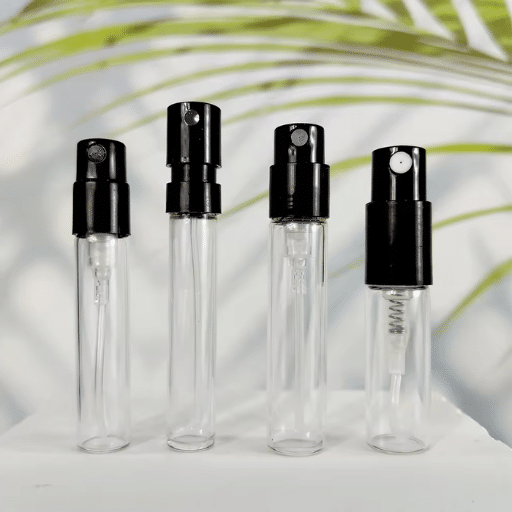
The following five points highlight the key role of perfume sample bottles in the fragrance industry.
Customer Engagement Expansion
With perfume sample bottles, potential customers can test fragrances before deciding whether to buy full-size products. Customers who receive samples in studies have three times the purchase rate of those who do not.
Product Launches Require Sample Testing
Brands use sample bottles to create excitement and generate interest for their new fragrance launches. The product functions as a marketing tool that allows customers to test the scent before making a purchase decision.
Brand Awareness Increases Through Sample Bottle Distribution
Customers who receive sample bottles share their brand experiences with others, enabling the brand to connect with new potential customers. The industry relies on this word-of-mouth method as a vital marketing channel, helping it compete with other businesses.
Personalized Customer Experience
The system uses customer feedback and purchasing data to create personalized perfume samples that match individual tastes. The personalized experience fosters a deeper relationship between brands and their audiences, leading to increased customer loyalty.
Reduction in Returns and Waste
Sample bottles enable customers to test fragrances before purchase, reducing product returns and waste. The customers will select products which match their preferences, which results in higher satisfaction levels.
The fragrance industry considers perfume sample bottles essential because they provide convenience for customers and enable businesses to market their products.
Role of Sample Bottles for Consumers
Perfume sample bottles play an important role in enhancing the consumer experience. The brand offers small fragrance samples that let customers try multiple scents without buying the entire collection. The following five functions sample bottles to customers:
-
Cost-Effective Exploration
The low-cost or free perfume-testing option using sample bottles lets customers try different fragrances until they find their perfect scent match.
-
Convenience for Travel
The compact, portable design of sample bottles lets travelers bring their preferred scents, thanks to their lightweight, eliminating the need for heavy fragrance containers.
-
Personalized Decision-Making
Fragrance testing through skin contact enables consumers to make better purchasing decisions by providing insight into how different perfumes interact with their unique body chemistry.
-
Access to Premium Scents
High-end and luxury perfumes maintain their retail prices at expensive levels. Through sample bottles customers can test premium fragrances at a lower cost because they do not have to spend money upfront.
-
Reduced Risk and Waste
Sample sizes give customers the chance to test perfumes at home before they buy full bottles which helps them discover their preferred scents while reducing product waste.
Impact on Niche Fragrance Discovery
The usage of sample bottles by niche fragrance researchers enables them to discover new scents which they use to present their research results. The use of sample bottles enables independent brands to expand their market reach while giving customers access to rare scents not available in mainstream stores. The following five elements create major effects that help people discover niche fragrances:
Accessibility to Unique Scents
Niche brands that produce artisanal scents offer consumers sample sizes, enabling them to experience the fragrances. The process allows people to discover special scent combinations that would remain hidden during normal circumstances.
Affordability for Exploration
Niche perfumes are often costly due to their high-quality ingredients and limited production runs. Sample bottles let consumers test these fragrances at a lower cost than buying full-sized products upfront.
Enhanced Consumer Reach
Niche fragrance brands use sample sizes to reach new customers who want to test their products before buying them in more than 70 locations, which include regular stores and special perfume shows.
Data on Customer Preferences
Sampling provides brands with essential consumer data that helps them identify customer preferences and develop new products and improve existing ones.
Promotion Through Word-of-Mouth
Niche fragrance fans will share their fragrance experiences through personal talks and social media which creates better brand awareness.
Cost-Effectiveness of Sample Sizes
Using sample sizes allows fragrance brands to attract additional customers because this approach incurs lower costs than selling full products. A Google report shows that 71% of shoppers will buy a product after testing a sample, according to consumer behavior analysis. The existence of affordable small-sized products enables brands to reduce financial risk for customers, which results in more first-time customers.
The option to produce sample sizes at a lower price point brings brands greater financial advantages than using full-sized product packages. These miniature versions require less material, packaging, and shipping costs, leading to lower total expenses. The distribution of sample sizes through complementary samples accompanying online purchases and marketing subscriptions increases their ability to generate profits.
Consumer Psychology Insight: The study results show that consumers respond to products with both financial and psychological effects. Customers who sample products establish positive product links which lead to them making purchases. The combination of these factors establishes sample sizes as a necessary expense-effective element in contemporary perfume marketing operations.
Types and Designs of Perfume Sample Bottles
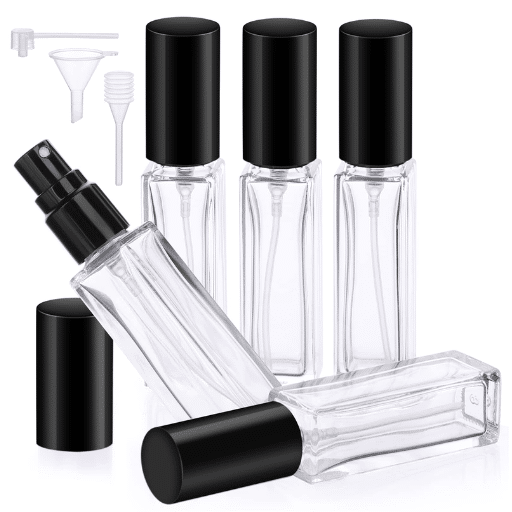
The different types of perfume sample bottles include multiple designs which fulfill distinct functions while appealing to various customer groups. The perfume’s marketability and display capabilities depend on the chosen sample packaging options. The most common types establish their distinct characteristics through their special features which differentiate them from each other.
| Type | Capacity | Key Features | Target Audience |
|---|---|---|---|
| Vial Samples | 1ml – 2ml | Affordable, lightweight, easy to distribute | Luxury brands for initial campaigns |
| Miniature Bottles | 4ml – 7ml | Exact replica designs, collectible | Collectors, gift purchasers |
| Rollerball Samples | 3ml – 5ml | Portable, hygienic, sustainable design | Younger consumers, eco-conscious users |
| Spray Vials | 1.5ml – 3ml | Precise application, compact | Travelers, on-the-go users |
| Single-Use Sachets | 0.5ml – 1ml | Flat, lightweight, mass distribution | Magazine inserts, event promotions |
| Eco-Friendly Samples | Varies | Biodegradable, refillable materials | Environmentally conscious consumers |
1. Vial Samples
Vial samples are small cylindrical glass containers which hold between 1 milliliter and 2 milliliters of perfume. People select these options because they provide affordable prices and simple ways to carry items. The 2023 market survey found that about 60% of luxury perfume brands start their advertising campaigns with vial samples because these samples are lightweight and simple to distribute.
2. Miniature Bottles
Miniature bottles function as miniature versions of actual perfume bottles which designers develop with precise designs that duplicate their original bottle designs. The typical capacity of these bottles ranges from 4 to 7 milliliters of fragrance. Recent marketing trends indicate that miniature bottles are more effective at attracting consumer attention, achieving a 25% higher engagement rate than standard vials. The products attract collectors who see them as valuable items while people purchase these items to give as luxurious gifts.
3. Rollerball Samples
Rollerball samples combine design elements with functions that enable users to carry and operate the product easily. Users can apply the product to their skin using rollerball applicators which deliver between 3 milliliters and 5 milliliters of perfume. The 2023 beauty industry report established rollerball samples as a popular choice among younger people who value sustainable design and hygienic functionality.
4. Spray Vials
Spray vials are compact containers that allow users to apply products precisely. The device contains between 1.5 milliliters and 3 milliliters of perfume which users can dispense through its small spray nozzle. The product appeals to consumers who travel frequently. The Google Trends data shows that searches for “spray vial samples” have increased by 18% over the past year which indicates a growing preference among consumers.
5. Single-Use Sachets
Single-use sachets are flat, lightweight containers used to distribute products to multiple locations. The product contains 0.5 to 1 milliliter of fragrance, making it suitable for use in magazines, mailers, and at events. The product maintains operational capacity through its minimalist design, as research shows that 40% of consumers who receive sachets will consider purchasing the full product later.
6. Eco-Friendly Samples
Sustainable development has become a major trend in 2023, driving demand for eco-friendly sample packaging solutions. Brands now use biodegradable or refillable packaging materials to reduce their environmental footprint. The recent study found that 30% of beauty market consumers now prefer environmentally friendly perfume samples which has led businesses to create new products for this market segment.
Key Takeaway: The different types of perfume sample bottles offer unique benefits that appeal to different market segments. Selecting a particular design enables brands to achieve both customer satisfaction and successful marketing outcomes. The latest trends indicate that consumers prefer environmentally friendly products with attractive designs.
Common Types of Sample Bottles: Vials vs. Atomizers
The perfume industry uses two main types of sample bottles: vials and atomizers, as each offers distinct advantages that help marketers reach specific customer groups. The following explanation shows how the two bottle types function together with the most common industry bottle variations.
Glass Vials
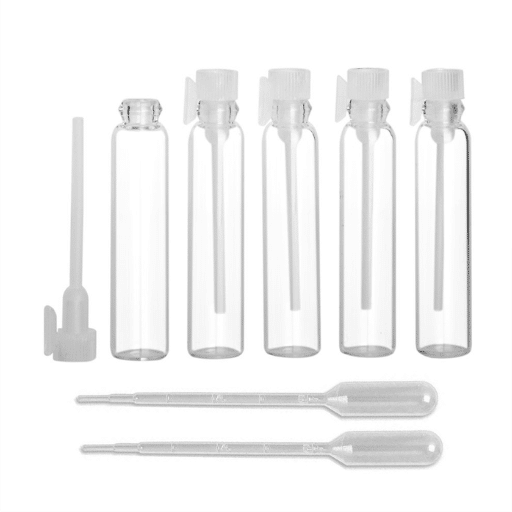
Glass vials are an economical choice because of their simple design. The small cylindrical containers typically hold less than 2ml of liquid which they close with either a plastic stopper or cap. The affordable price of these items makes them ideal for mass sampling, as their design allows customers to experience complete fragrance testing.
Mini Spray Atomizers
These compact atomizers allow consumers to spray perfume rather than pour or dab. The option provides users with authentic feedback on how the perfume spreads and creates odor when applied to their skin. High-end sampling typically uses atomizers as the primary method for testing products.
Roll-On Vials
Roll-on vials come with a rollerball applicator which makes them easy to use for fragrance application when people travel. The system lets customers exactly determine their required perfume quantity which suits customers who want to use fragrances in small amounts.
Refillable Atomizers
This eco-friendly, sustainable solution has become a preferred choice for brands that want to minimize their environmental footprint. The atomizers enable users to refill them with either existing or new fragrances which increases their value for reuse among environmentally minded customers.
Flat Card Spray Bottles
Flat card sprays serve as sleek rectangular containers that people can easily carry in their wallets or pockets. The container shows a slight increase in storage capacity compared to vials while it offers users a spraying function that enables simple product usage. These are often used as part of direct mail campaigns and branded giveaways.
The different types of sample bottles brands use enable them to select appropriate sampling methods, helping them create optimal user experiences that align with their brand identity.
Exploring Mini and Travel Size Options
The development of mini and travel-sized products has emerged to meet the growing demand for convenient, portable solutions. The global travel-size toiletries market will surpass $ 3 billion by 2030 as tourism grows, airlines implement strict liquid-size regulations, and consumers prefer lightweight, compact products. The products offer multiple functions: they serve as travel products that let customers test items before buying full versions, and they provide packaging solutions that meet the needs of people with active lifestyles. The solution enables brands to build a broader customer base through cost-effective marketing while preserving strong brand recognition.
The most common product categories for mini and travel-size items include skincare products, cosmetics items, personal hygiene products, and fragrances. The travel industry considers mini shampoos and conditioners essential, while modern travelers prefer pocket-sized perfumes and deodorants. Many brands have adopted eco-friendly refillable containers and responsibly sourced materials to meet consumer expectations for sustainability, enhancing the appeal of these compact solutions.
The market expansion process enables companies to establish access points through their efficient and convenient solutions which create value for their customers.
Innovative Packaging Trends in Sample Bottles
The packaging design of sample bottles has evolved into three main focus areas: sustainability, visual appeal, and practical use. The global sample bottle packaging industry will reach $ 9.17 billion by 2027, according to market analysis, with a 7.4 percent compound annual growth rate from 2021 to 2027. Market expansion occurs as customers seek products that deliver both environmental sustainability and functional performance.
Biodegradable and recyclable materials, including glass and plant-based plastics, have emerged as a major trend in the market. The environmental benefits of these materials attract environmentally minded customers to brands that want to reduce their environmental footprint. Companies provide refillable sample containers, enabling users to reduce waste by reusing their packaging, in line with current market trends.
Smart packaging technology serves as a new product development solution for packaging materials that companies use to deliver their products. Sample bottles equipped with QR codes or NFC tags enable users to access product application tips and ingredient sourcing information which improves the consumer experience while increasing brand transparency. Manufacturers prefer lightweight designs because they reduce shipping costs and make products easier for customers to handle.
The sample bottle design process incorporates aesthetic and functional elements, including unique shapes, airtight seals, and no-spill features, to achieve its aesthetic goals. Luxury brands now offer miniaturized versions of their full-sized products which come in stylish compact designs that customers can use to experience premium products according to recent market trends.
Industry Trend: The sample bottle packaging industry uses sustainable methods, technological advances, and consumer-focused designs to maintain its competitive edge in the market.
Enhancing Consumer Experience with Fragrance Samples
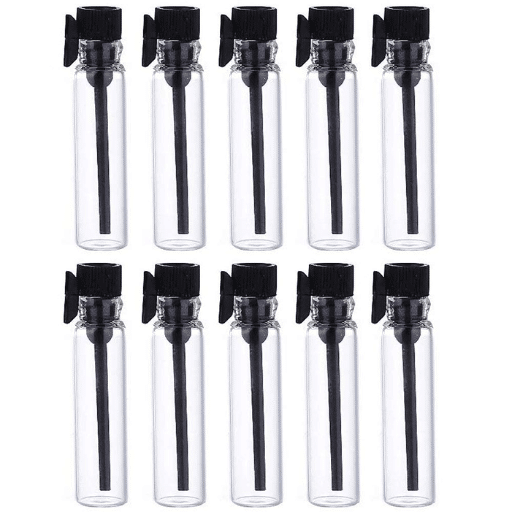
Fragrance samples have become an essential tool for brands to engage customers and provide a personalized experience. According to recent market trends approximately 67% of consumers are more likely to purchase a full-sized fragrance after trying a sample. The results demonstrate that trial opportunities are crucial to both driving sales and achieving customer satisfaction.
Digital technology now enables new ways to present fragrance samples to customers. Brands currently use QR codes on sample packaging to deliver personalized product suggestions and multimedia content which improves the customer experience with the fragrance. Research also shows that consumers prefer samples that are thoughtfully packaged and visually appealing with 78% of buyers expressing a preference for eco-friendly or refillable sample designs.
Subscription-based models for fragrance samples have become more popular among consumers. Scentbird has experienced substantial growth by offering customers a monthly subscription service that lets them explore different fragrances through curated collections. The method builds customer loyalty while meeting the growing demand for both product diversity and simple use.
Fragrance brands can enhance the consumer experience through their products by leveraging personalization and sustainability alongside technological advancements. The beauty industry is highly competitive, and brands must build strong relationships with their audiences through their product offerings.
How Samples Help in Selecting the Right Scent
Selecting my ideal scent requires sample testing, which I consider essential. The samples allow me to test different fragrances at my own pace, learning how each scent interacts with my skin and daily activities. The testing process allows me to evaluate different fragrance options without buying an entire bottle to determine my preferred scent. The method provides an affordable, practical way to select a fragrance that accurately represents my true self.
Experiencing Niche Perfumes Through Discovery Sets
The discovery sets offer an excellent entry point to niche perfume exploration, showcasing special brand collections with miniature bottles and product samples. The perfect way for fragrance enthusiasts to experience unique high-quality scents exists in this method because it eliminates the need to invest in full-sized bottles. The global luxury fragrance market will grow at an annual rate exceeding 6 percent from 2023 to 2030, according to recent data, as niche perfumes have become more popular with consumers. Market growth stems from rising consumer demand for customized products that deliver distinctive fragrance experiences. Discovery sets, priced from $20 to $100, allow customers to sample perfumes from Byredo, Maison Francis Kurkdjian, Diptyque, and Le Labo at reasonable prices and convenient locations.
The discovery sets provide multiple olfactory options because they combine fresh and floral and woody and oriental scent profiles which help users discover their ideal fragrance. The scent descriptions, together with detailed ingredient lists that show the artistic inspiration behind each creation, help consumers better understand the products. Customers value the experience more because some stores and online platforms allow them to use their discovery set purchase credits to buy full-size bottles.
The discovery sets function as practical instruments which enable people to experience niche perfumery while they enjoy an exquisite fragrant journey.
The Convenience of Refillable Sample Bottles
The design of refillable sample bottles creates an ideal solution which enables perfume aficionados to transport tiny portions of their preferred scents without needing to purchase complete perfume bottles. The compact containers offer a suitable solution for both travel and testing new fragrances while maintaining sustainability. The environmental benefits of refillable bottles stem from their ability to reduce demand for disposable plastic and glass.
Using refillable sample bottles offers five distinct advantages for users.
- Eco-Friendly Design: People create less waste when they reuse a bottle because it helps decrease the environmental damage caused by throwaway packaging.
- Portability: The design of refillable sample bottles permits users to carry them easily because they fit into handbags and pockets and travel kits.
- Cost-Effectiveness: You can achieve long-term financial savings by refilling your bottle with your preferred scent instead of buying single-use samples.
- Customizable Scents: With refillable bottles, users can blend and test various fragrances, providing a personalized scent experience.
- Stylish and Durable: Most refillable bottles feature contemporary designs which use high-quality aluminum and glass materials to provide strength and visual appeal.
Refillable sample bottles are a smart, stylish, and sustainable option for fragrance lovers who value convenience.
Tips for Selecting the Best Fragrance Samples
- 1
Understand Your Preferences
You should first discover your preferred fragrance families before choosing a fragrance from these four categories: floral, woody, citrus, and oriental. Survey results show that 35 percent of respondents prefer fresh scents, including citrus and aquatic notes.
- 2
Consider Seasonality
Some fragrances complement specific seasons better. The summer and spring seasons require perfumes that contain floral and fruity scents, while the winter and fall seasons need perfumes that contain warm scents and woody and vanilla notes.
- 3
Look for Versatility
Select samples that work for different events. The fresh, subtle scents pair well with both casual daywear and professional environments.
- 4
Read Reviews and Ratings
Online reviews and ratings should be used to evaluate product quality and durability. Research shows that fragrances with higher longevity ratings tend to have better customer satisfaction.
- 5
Test Before Buying Full Size
Fragrance samples need to be tested on your skin because they show how the scent interacts with your personal body chemistry. People perceive the same perfume differently because their skin types and pH levels affect how it wears.
What to Look for in a Perfume Sample Bottle
The selection process requires evaluating multiple factors that determine the quality and usability of perfume sample bottles. The following three factors are the primary ones to evaluate.
Size and Quantity
The usual volume range for perfume sample bottles starts at 1ml and extends to 5ml. The 2ml and 3ml sample sizes provide enough product for multiple fragrance evaluations that can last for multiple days. The method enables you to test scent duration while observing scent changes throughout the day.
Packaging Material
Glass bottles are the preferred choice for perfume samples because they preserve scent authenticity better than plastic containers. The non-reactive nature of glass prevents chemical interactions which help maintain the perfume’s original fragrance. You need to select bottles which have both durable construction and reliable closing mechanisms through either caps or sprayers.
Applicator Type
Dabbers and spray nozzles serve as the two standard dispensing methods for sample bottles. Spray applicators distribute fragrance evenly while allowing users to test the product on their skin and various fabric surfaces. According to market research, over 70% of users now prefer spray bottles which represent the current trend among consumers.
Labeling and Brand Information
The sample bottle needs to display the fragrance name along with the brand name and concentration type which includes Eau de Parfum and Eau de Toilette. This method helps to identify scents accurately because it eliminates all possibilities of scent confusion which occurs when you test multiple fragrances.
Leak-Proof Design
A reliable sample bottle must have a leak-proof design that prevents any product loss. Customer reviews on major retail sites show that designs with secure bottle seals earn 4.5-star or higher customer satisfaction ratings.
Cost vs. Value
The majority of sample bottles present affordable prices to customers; however, premium brands impose higher sample costs to their consumers. Sample sets from luxury brands currently sell at prices between 10 dollars and 25 dollars according to complete market investigations. The price should match both the product quality and the brand value which the fragrance house maintains.
Your product evaluation process will achieve better results when you assess these elements which help you discover optimal perfume sample solutions before purchasing your complete bottle.
Understanding Sample Sizes: 1ml, 2ml, and Beyond
The fragrance testing process requires appropriate perfume sample sizes, as different testing conditions require different sample amounts. A standard 1ml perfume sample typically provides 8-12 sprays, depending on the atomizer design. Two days of testing are possible because this duration allows you to observe how the scent develops after application to your skin. The 2ml sample delivers about 16-24 sprays, which lets users test the product for one week. Fragrance enthusiasts prefer larger sample sizes because they can experience a scent for multiple weeks without buying a complete bottle.
| Sample Size | Number of Sprays | Testing Duration | Best For |
|---|---|---|---|
| 1ml | 8-12 sprays | 2 days | Brief testing, initial scent evaluation |
| 1.5ml | 12-18 sprays | 3-4 days | Mid-range testing |
| 2ml | 16-24 sprays | 1 week | Weekly evaluation, standard testing |
| 5ml | 40-60 sprays | 2-3 weeks | Extended testing, daily use evaluation |
| 10ml | 80-120 sprays | 4-6 weeks | Long-term testing, travel size |
High-end fragrance brands may create custom 1.5ml and 2ml vials for their promotional campaigns while independent retailers provide travel-size product options that range from 5ml to 10ml for their niche scents. Online decanters and sampling services offer customers specialty sizes, enabling them to choose their preferred products.
Recommendation: The correct sampling method depends on understanding these sizes and their various uses. The 1ml sample works effectively for brief testing while the 5ml sample provides a better experience when you need to use it daily for several weeks. Your product choices will improve and your fragrance exploration experience will become better through this knowledge.
Recommendations for Tester and Sampler Sets
The selection process for tester and sampler sets requires both a diverse range of fragrance options and practical testing methods to achieve optimal fragrance analysis results. The current data presents the following findings and suggestions:
Scents Variety
The required sets should deliver multiple fragrance options, which include floral, woody, oriental, and fresh scent families. The available options allow you to explore different styles until you find the fragrance profile that best matches your preferences. The majority of brands now include specially selected “best seller” testers into their product bundles which customers should use as their initial testing option.
Size Considerations
Major fragrance companies currently offer sampler sizes ranging from 1ml to 5ml. The 1ml vials, the most affordable option for beginners, provide enough fragrance to test for short periods. The 2ml to 5ml sizes are required when you need to assess how a fragrance develops through time or across different situations. Many popular brands, such as Dior and Jo Malone, now include 2ml testers in their introductory sets to enhance the longevity of the experience.
Combination Sets
Some companies sell sampler sets that combine perfumes and body lotions, as well as travel-sized spray products. Recent bestseller lists from Amazon and Sephora show that customers prefer combo sets because they offer matching items that enhance the overall experience.
Top Brands Offering Affordable Samplers
The latest Google search data shows that Chanel, Gucci, Yves Saint Laurent, and Le Labo together offer the highest-rated sampler sets. The product selection includes budget-friendly options starting at $20, while premium options range up to $50. Customers can access new scents through monthly samplers which Scentbird offers at a price of $15.
Cost-Effective Alternatives
Many website retailers provide budget-friendly options to customers through their reduced-price tester sets which include discounted tester packages and single testers that start at $3 per vial. You can use these products to test different scents that you want to try before making your full bottle purchase decision.
Final Recommendation: Your tester and sampler set selection will enable complete fragrance testing, allowing you to make informed purchasing decisions when evaluating products based on their scents, sizes, and verified sources. The structured process will help you find the scents which match your fashion preferences and your daily needs.
References
- ScienceDirect:
Title: Sampling and sample preparation for analysis of aromas and fragrances
This article discusses sampling and preparation technologies for analyzing aromas and fragrances, providing insights into the composition and methodologies. - Google Books:
Title: FRAGRANCE CHEMISTRY
This book explores the chemistry behind fragrances, including components and sources, offering a comprehensive academic perspective. - SpringerLink:
Title: Investigation of odors in the fragrance industry
This article examines the role of odors in fragrance creation and the academic interest in olfactive reconstitution.
Frequently Asked Questions (FAQ)