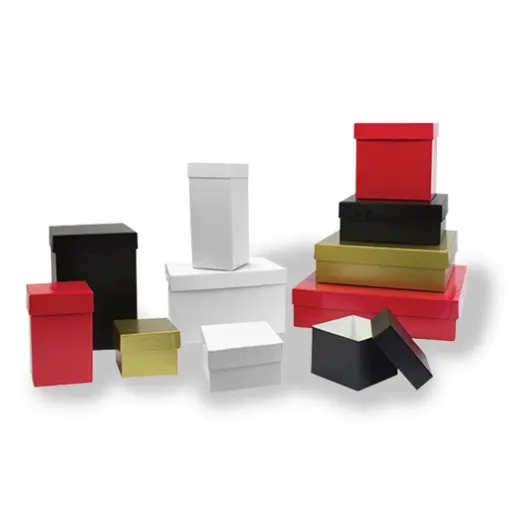
Every rigid box manufacturer produces luxury boxes that cannot be compressed and are made from a thick chipboard which is wrapped in a print paper or a leatherette or a specialty paper. Companies with best practices will have an in-house printing and lamination department, a structural designer, FSC material, and a consumer friendly MOU or MOD greater than zero DTC or big company brand.
When buying rigid packages from any supplier, it is the vendor you choose who will work on the unboxing, more than the designer. Lowered supplier performance results in delays in launch, a new crest that looks funny on that creased foil and a cheap lid-gaping new box experience. A prudent one ensures you meet all required deadlines and your bottom line is protected.
When Aria, who is a CEO of a spring launched natural beauty product company, signed a bound package deal and requested nor sought for any mock-up as well. The first scale print of 3,000 units with a gold foil turned out to be two shades darker and none of the brand colours. Without dots in the i’s or T’s, she wasted six weeks plus almost $11,000 correcting the first batch because of something that her vendor missed. That did not cost a single dime to avoid.
This manual eludes a rigid box manufacturer, writes down the 8 things you need to look at while choosing them, presents 12 questions that must be answered prior to making the purchase and, ultimately those signs that should make you leave immediately. By the time you are done reading, you will possess the tools to evaluate suppliers as savvy package procurement teams do.
Key Takeaways
- A rigid box manufacturer makes non-collapsible setup boxes from chipboard, used by brands in beauty, electronics, spirits, and luxury retail.
- The 8 criteria for vetting one are capacity, materials, printing and finishing, customization, QC and certifications, MOQ, lead time, and sustainability.
- Modern manufacturers offer MOQs of 300 to 500 units; legacy factories often start at 3,000 to 5,000.
- Always require physical pre-production samples before approving bulk production. Skipping this step is the #1 cause of costly rework.
- Look for FSC-certified chipboard, ISO 9001 quality systems, and Incoterms-based pricing in writing.
What Is a Rigid Box, and Why Does the Manufacturer Matter?
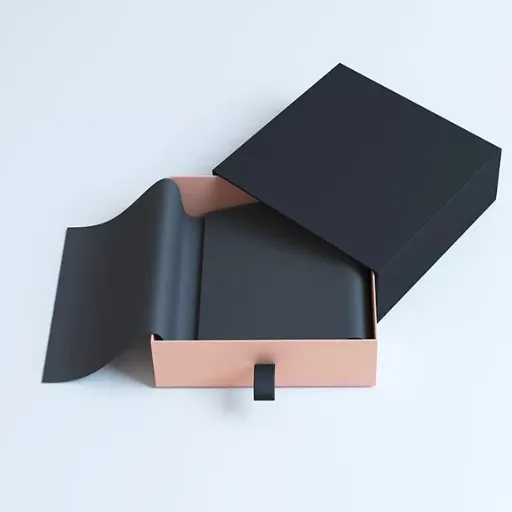
Setup boxes, commonly called rigid boxes, are sturdy cases that do not collapse, made of thick cardboard (ranging from 1.2 to 3.0 mm) and coated with printed material, cloth, or any other decorative covering. Folding cartons are usually sent in a flat form but rigid boxes are manufactured to maintain a particular shape. This indicates prestige in that aesthetically appealing boxes protect certain goods and enhance the shopping course of a customer.
Why the manufacturer is more important than the design: the production of rigid boxes has nine quality checks and most of them are on or in the factory, and not with the brand. Features such as thickness of materials, alignment of the wrap, pressure for foiling, squareness of corners and fitting of inserts are all fixed at the tie of production. A competent designer can outline the same. Consistent execution on thousands of pieces is the realm of a good rigid box manufacturer alone.
Any brand buying through an intermediary and not directly from a factory will have no control over any of the 9 quality checkpoints. And that is where the quality problem originates.
The 6 Types of Rigid Boxes Manufacturers Produce
Most rigid box manufacturers offer 6 structural styles. The closure you choose affects unit cost, perceived value, and assembly complexity.
| Style | How It Opens | Best For | Cost Tier |
|---|---|---|---|
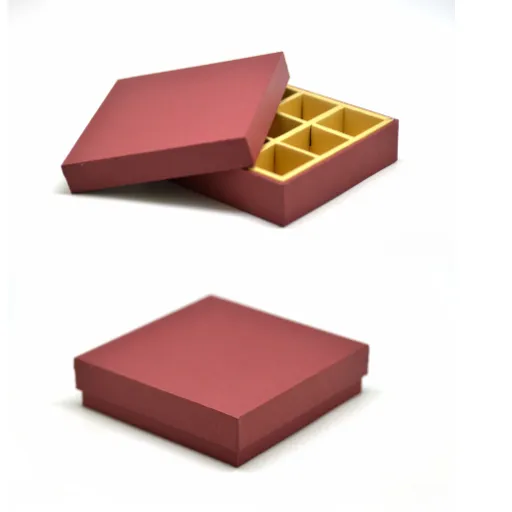
| Telescope (two-piece) | Lid lifts off base | Apparel, gift sets | Lower |
| Hinged-lid | Lid attached on one side | Watches, jewelry | Medium |
| Magnetic closure | Lid snaps shut with hidden magnets | Beauty, tech, luxury gifts | Higher |
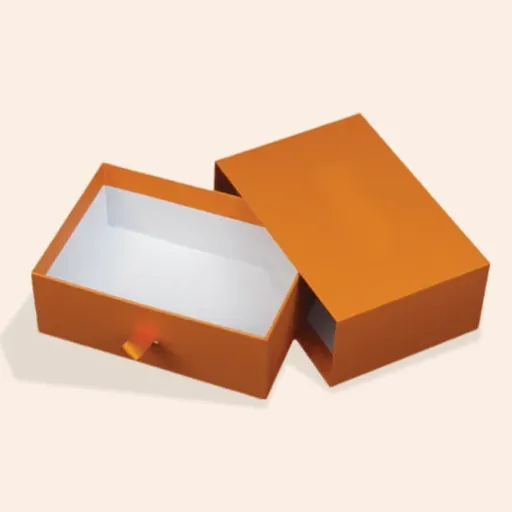
| Drawer / slide | Inner tray pulls out of sleeve | Chocolates, soap bars | Medium |
| Book-style | Opens like a hardcover book | Subscription boxes, lookbooks | Higher |
| Shoulder-neck | Three-piece with raised inner shoulder | Premium spirits, fragrance | Highest |
A skilled rigid box manufacturer can produce all 6. A less-equipped one will steer you toward the 2 or 3 they’re set up for. That alone is a useful filter on your first sales call.
How Rigid Boxes Are Made: A 7-Step Process
Understanding the manufacturing flow helps you spot a serious manufacturer from a trading company that subcontracts the work.
- Chipboard cutting and scoring. CNC die-cutters shape the chipboard panels and score the fold lines.
- Wrap sheet printing. Offset presses print the decorative wrap, usually on 128 to 157 gsm art paper.
- Lamination and finishing. The printed sheet receives matte, gloss, soft-touch, or spot UV lamination, plus any hot foil stamping or embossing.
- Corner taping. Workers fold the chipboard into shape and reinforce the corners with paper tape.
- Wrapping and turn-in. The printed wrap is glued to the chipboard frame, then the edges are folded inside.
- Insert assembly. EVA foam, paper pulp, satin, or blister inserts are placed inside.
- Quality inspection and packing. Trained QC staff check 8 to 12 units per carton against the approved sample.
Visit the factory floor in person or via live video and you should see all 7 stations operating. If steps 1 through 3 are missing or vague, you’re talking to a trader, not a manufacturer.
8 Criteria for Choosing a Rigid Box Manufacturer
Use these 8 criteria to score every supplier on your shortlist. The most reliable framework is a 1-to-5 scale across each criterion, with a minimum cumulative score of 32 out of 40 before you place a sample order.
1. Manufacturing capacity and in-house operations
Confirm the factory runs printing, lamination, and wrapping in-house. Subcontracting any of those 3 steps adds 7 to 14 days to lead time and reduces QC accountability.
2. Material sourcing and chipboard quality
The chipboard core determines the box’s premium feel. Ask for board specifications in grams per square meter (gsm) and thickness in millimeters. Premium rigid boxes use 1,200 to 1,500 gsm grey chipboard. FSC-certified board is now a baseline expectation, not a premium feature. (Verify the FSC certification system directly through the FSC database.)
3. Printing and finishing capabilities
At minimum, the manufacturer should offer offset printing, soft-touch and matte lamination, hot foil stamping, debossing, and spot UV. If they can’t show you physical samples of each, they don’t actually do it in-house.
4. Customization depth
Closures, inserts, dimensions, ribbon pulls, magnets. Ask what’s in their standard library and what counts as a custom tool. Custom dies typically cost 80to80to300 one-time per SKU.
5. Quality control systems and certifications
Look for ISO 9001 quality management, FSC chain-of-custody certification, and BSCI or Sedex social audits. Ask for the certificate numbers, then verify them on the certifying body’s website. Real certificates can be cross-checked in under 60 seconds.
6. Minimum order quantity and pricing transparency
A modern rigid box manufacturer should offer tiered pricing at 300, 500, 1,000, 3,000, and 5,000 units. If the supplier won’t quote anything under 5,000, they’re a wholesale-only factory and not suited for DTC and SMB brands.
7. Lead time, shipping, and Incoterms
Stock rigid boxes: 15 to 25 days. Fully custom: 25 to 45 days from approved pre-production sample. Confirm Incoterms (EXW, FOB, CIF, DDP) in writing before payment. Vague shipping terms create disputes when delays happen.
8. Sustainability practices
Specifics beat slogans. Ask which lamination uses water-based adhesives, whether the wrap paper is recyclable, and what percentage of the chipboard is post-consumer recycled.
12 Questions to Ask Before You Order
Print this list and use it on every supplier call.
- Are you the factory, or do you subcontract production?
- What’s your in-house printing equipment (brand and model)?
- What’s the gsm and thickness of your standard chipboard?
- Can you send me 3 physical samples in the closure style I’m considering?
- What’s your MOQ at 300, 500, 1,000, and 3,000 units?
- What’s the unit price at each tier, FOB your port?
- What’s the lead time after pre-production sample approval?
- Do you hold FSC chain-of-custody certification? Can you share the certificate number?
- Do you offer water-based adhesives and lamination?
- How many QC inspections do you run, and at what stages?
- What’s your defect rate target, and what happens if we exceed it?
- What’s included in your custom tooling cost, and is it refundable on reorders?
If a manufacturer can’t answer 10 of these 12 with specifics, keep searching.
6 Red Flags When Vetting a Rigid Box Manufacturer
Marcus, a craft whiskey brand owner, learned this the hard way. He chose a low-bid supplier on a B2B marketplace in 2024 without insisting on a pre-production sample. The 5,000-unit run arrived with chipboard that flexed under light pressure, ribbon pulls in the wrong shade, and 14% of units with visible glue bleed. The factory refused a refund. Marcus had no QC documentation to support a chargeback claim.
Watch for these warning signs.
- No physical samples before bulk order. Photos and digital mockups aren’t enough. A real manufacturer will send 2 to 3 pre-production samples within 7 to 10 days.
- Vague or shifting pricing. Real quotes break down unit cost, tooling, inserts, shipping, and Incoterms separately. Lump-sum prices hide markups and create surprise fees later.
- No QC documentation. Ask for the inspection report from the last shipment of a similar product. If they can’t share one (redacted is fine), they don’t run formal QC.
- Limited material library. A serious factory has 200+ chipboards, wrap papers, and finishes on hand. A trader has a few PDFs.
- No structural design support. Manufacturers worth their fee provide dieline drafts and prototyping. Traders push your design back to “your team.”
- Communication delays over 48 hours. Sales response time is the single best predictor of post-order communication quality.
Skip the supplier guesswork. Want a vetted manufacturer that meets all 8 criteria above? Request samples from Fuzhou Longlu and see the build quality in person.
What a Custom Rigid Box Actually Costs
Custom rigid box pricing depends on 5 main drivers: chipboard thickness, finished size, closure style, surface finish, and order quantity. The table below shows representative FOB pricing for a standard 8 x 6 x 3 inch magnetic-closure box with hot foil logo.
| Order Quantity | Indicative FOB Unit Price | Tooling (one-time) |
|---|---|---|
| 300 units | 4.20to4.20to5.50 | $180 |
| 500 units | 3.10to3.10to4.20 | $180 |
| 1,000 units | 2.40to2.40to3.20 | $180 |
| 3,000 units | 1.80to1.80to2.40 | $180 |
| 5,000 units | 1.50to1.50to2.00 | $180 |
These ranges assume FSC-certified 1,500 gsm chipboard, soft-touch lamination, single-color hot foil, and an EVA insert. Add 8 to 15% for full-color offset printing on the inner wall. Add 15 to 25% for a shoulder-neck construction.
Industries with the highest demand for custom rigid boxes:
- Beauty and cosmetics (skincare sets, palettes, fragrance)
- Consumer electronics (earbuds, smartwatches, accessories)
- Spirits and chocolate (limited editions, holiday gift sets)
- Apparel and accessories (luxury scarves, ties, handbags)
- Subscription boxes (DTC monthly clubs, corporate gifting)
According to a 2024 Two Sides North America survey, 55% of brands now require FSC-certified paperboard in primary packaging, up from 38% in 2021. Rigid boxes have been at the front of that shift because they’re the visible first touch with the consumer.
How Fuzhou Longlu Packaging Co., Ltd. Approaches Rigid Box Manufacturing
We are a rigid box manufacturer and have developed our entire production process based on the eight factors mentioned in the previous section. In Fuzhou, we have one plant for all: offset printing, lamination, foil stamping, wrapping, and also chipboard, which is always FSC certified since it is the primary board stock, is used as the standard. The very first order is welcomed and the minimum order quantity is three hundred pieces, the price goes up at least twice thereafter five hundred, then thousand, three thousand and five thousand units.
All orders are complemented by a pre-production sample before a mass production is initiated and shipped. There are 4 areas (i.e. incoming materials’ QC, in-line QC of printed items, QC of wrapped products, and pre-shipping QC) where it is expected to alert the customer with relevant reports for each dry fiberboard box, case, or book shipped. Both ISO 9001 and BSCI certifications are regularly updated once a year.
February, 2026, was when Lisa, who is a DTC perfume entrepreneur, and we provided custom wooden boxes to, made her first order of 1,000 shoulder-neck boxes, it’s then 5 days later that was able to ship the pre-production sample. She gave two corrective actions for some foil changes. The bulk finally hit her warehouse exactly 28 days after her most recent approval, with 0.4 percent defects found during examination. Everything was delivered on time for her launch, and in April, she proceeded with the order for another 3,000 pieces.
Final Checklist Before You Sign a PO
A rigid box manufacturer is one of the few vendors who can either elevate your launch or quietly sink it. Use this guide as a working checklist:
- Score every supplier against the 8 criteria, with a minimum of 32 out of 40 to qualify.
- Run the 12-question call before any sample order.
- Insist on FSC chipboard, ISO 9001, and verified certificate numbers.
- Require physical pre-production samples before bulk production.
- Confirm Incoterms and unit pricing tiers in writing.
- Watch for the 6 red flags. Walk away from any 3 of them.
Custom rigid boxes are a margin investment, not a commodity buy. The factory you choose shapes how your product feels in the customer’s hands, and how often they reorder. Get the supplier right, and the unboxing moment becomes one of your strongest marketing assets.
Ready to test the difference? Request rigid box samples from our Fuzhou facility and see the build quality firsthand. Get a free quote and samples →