
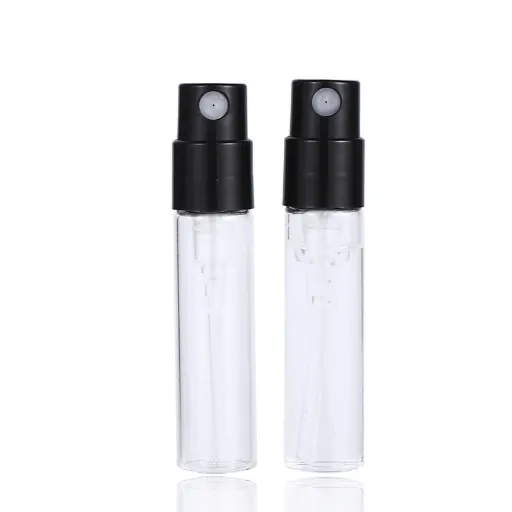
A modest two-milliliter bottle can usher a casual shopper into a committed client. Good quality sampling programs help fragrance houses increase conversion rates by as much as 30 percent as opposed to cases where samples are not used at all. Yet, withdrawal strategies are such that most businesses consider tester bottles as an accessory. Simply searching for the bottom of the range, putting a sticker, and reasonably trusting in the end.
It is already a known fact that perception of people does matter. Same goes to sampling. This porcelain teacup with a leaking structure, those unworthy cheap plastic bottles or even unfitting applicators can destroy established brands very fast. Tester bottles contain more than the perfume. They are the first real contact between your commodities and your potential consumer.
In the guide presented here, we will highlight the essentials of selecting the most appropriate tester bottles together with sample vials for your particular product. We shall discuss the different size options available, possible materials to use, closures, eco-friendliness, prevention of leakage, and finally, considerations for choosing a manufacturer. You should experience this section clearly enough for you to design a sampling package which will protect your product, represent your brand and help convert.
The right tester bottle methodology plays the part of the catalyst that transforms a single core sample into a recurring purchase regardless of whether you decide to introduce new fragrance products, adding new cosmetics products or just making changes in the sampling processes. Here is everything you will, or probably need to know how.
What Are Tester Bottles?
Often people start a conversation with tester bottles and sample vials without distinctions. However, talking about the packaging sector, there lie two areas. It is important to know since one promises to deliver different results to different stages of a customer engagement process.
Tester bottles are larger containers and may take the form of full-size counter cards or as small sized travel units which provide experience in the store. A 50ml – 100ml bottle is typically displayed on the shop counter for cons לmers to smell, touch and test the product thus motivating them to purchase it. It contains the same essence as in the retail version. But sometimes the packaging is stripped of the elements. So, you might expect to find an elaborated design of a retail package as opposed to just a simple white box, or perhaps there may even be no fancy cap on the bottle. This is purely utilitarian rather than aesthetic.
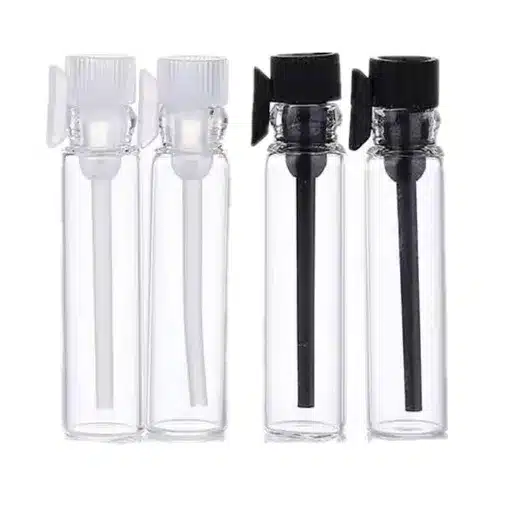
Tester bottles come in the shape of miniature vessels constructed for easy supply to many. Their capacities are measured in a concentrated amount and are ‘samples’ because the largest sample vials produced are about 5 milliliters, the smallest possible vials would be about 0.5 milliliters. These are specific vials made for distribution at campaigns, packages that have been bought online, and selling as perfumery multi-distribution kits via postal services. Each unit is relatively cheaper, they are easy to send and carry and they help to reach out to the public with the scent you wish to share with very little cost.
When 2025 dawned, Maya Chen successfully launched her niche fragrance brand; in a way, she felt that one-milliliter dabber vial was enough for all purposes. One of the purchases included 10,000 units, which were sent to the beauty department, included in e-commerce chills and put on a counter in the retail stores. For beauty editors, they were appreciated for the small dimension. However, e-commerce clients found the item lacking. This is because most of the retail partners preferred items where the customers could at least spritz or spray the product. Maya learned from the experience that ‘one size fits all’ is just a myth. Presently for discovery mailers, she uses 2-milliliter spray vials whereas for influencers kits, mini sprays that holds 5 ml and for counters 50 ml tester bottles are provided. Ever since that change, her sampling conversion rates have increased by 100%.
There is a thin line of difference between the two. Tester bottles do help with evaluation. Sampling vials help with discovery. Most of the brands succeed because in their strategies, several layers are employed with both forms included in each layer.
Types of Tester Bottles and Sample Vials
Choosing the right format starts with understanding your options. Perfume tester bottles and sample vials vary by size, material, and closure type. Each combination sends a different message about your brand.
By Size and Volume
The size you choose should match your distribution channel and your customer’s mindset.
0.5-milliliter to 1-milliliter vials work best for high-volume giveaways. Magazine inserts, event handouts, and mass mailers all fit here. The cost per unit is minimal. The tradeoff is limited branding space and a basic user experience.
2-milliliter to 3-milliliter vials are the industry standard for discovery sets and e-commerce sampling. They offer enough volume for several applications. Customers can wear the scent for a full day or two before deciding. This size balances cost with perceived value.
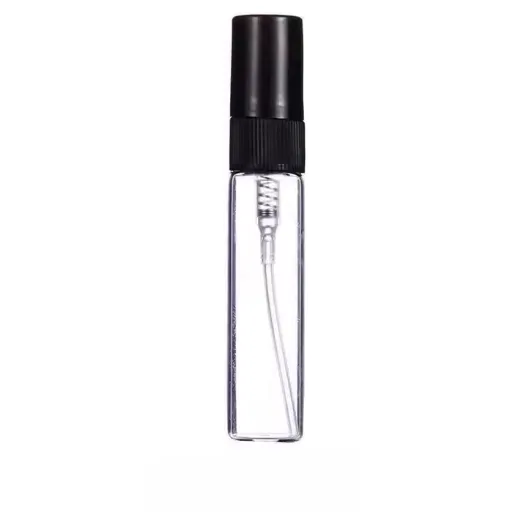
5-milliliter to 10-milliliter bottles blur the line between sample and product. Travel atomizers in this range feel premium and reusable. They work well for influencer kits, loyalty rewards, and gift-with-purchase programs.
30-milliliter and larger perfume tester bottles serve as retail counter testers. These are essentially the commercial product in utilitarian packaging. They allow hundreds of sprays and give customers the authentic spray pattern, bottle weight, and atomizer quality of the full-size product.
By Material
Glass and plastic each have some specific advantages on the basis of cosmetic lets’ say tester bottles or fragrance samples. Whether it is fragrance or cosmetic product that should be packaged mainly depends on the position of your brand in the market, cost of production, and environmental objectives.
Glass bottles are associated with high-end products, like expensive perfumes. The use of chalk glass is possible for soda-lime bottles as it is inert and does not react with its contents. Borosilicate glass is toughened. Rather as an option brown and cobalt blue glass can shield the tops from uv rays which helps in protection of products contained therein. Glass or hollow glass such as containers gives the feel of being sturdy and well made. Such an experience translates to expectations of how fine a product will be. There’s no need to get the premium tester bottles before understanding how the client thinks.
Plastic tubes or vials, PET and PP being the commonly used, are cheap and non-fragile. This is appropriate for promotional samples and other projects aimed at reducing weight and cost of shipping. However, the major drawback is that when plastics are used there is a possibility of chemical migration into fragrance on prolonged storage. For best preservation of the scent, minimizing such internment in plastics is advocated for by specialists to only six months or less.
When discussing recyclable containers, great portion of waste glass bottles especially jar and more so in case of cities that promote recycling campaign includes bottles that can further be returned for the purpose outlined by the glass bottle. This tendency becomes more apparent with the closely related issues of post-consumer recycle glass and recycled plastic. These materials offer the same performance that consumers need, yet the level of usage impacts the environment to a lesser extent. Any company that wedges its products on the market with an assertion of sustainability can produce bottles made of PCR and such bottles serve as more than just tester bottles for healthy samples.
By Closure and Applicator Type
The closure is as important a part of the use of the product as the liquid itself.
Crimp-seal spray pumps are effective with finely diffusing the fluid while ensuring a real shop-like experience. They do not tend to screw on and use a crimping tool to seal which presents an additional step in the filling process. For perfumes that wish for the customers to enjoy the continues coverage of the larger bottles, the crimp-seal is often the preferred choice.
Screwed-cap spray pumps on the other hand are less difficult to fill and put together. These sprays are suitable for smaller businesses, mini bottles to be carried round and reusable tester bottles. As for the quality of the spray, it is still fine except it almost always does not match that of a crimp-seal atomizer.
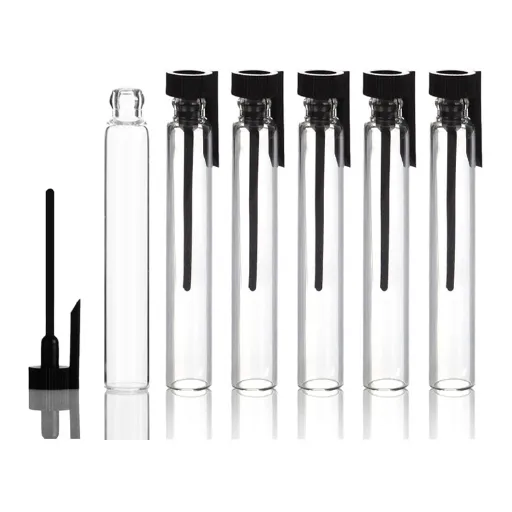
Dabber and plug vial packages are the least expensive. A short, and quite thin piece of plastic or economical to budget stopper on the bottle allows a customer to trickle the perfume on his or her self. It differs from a spritz but the price of each piece is quite lower and these are preferred for traditional alcohol-based perfumes and concentrate oils.
Numerous people think of rollerball applicators in particular when it comes to perfume oils and travel kits as they are very effective for such purposes. They allow precise application and are also tactile providing consumers with a lot of satisfaction in the use of the merchandise.
If you are unsure which combination fits your program, explore our custom tester bottles to see size, material, and closure options side by side.
How to Choose the Right Tester Bottles for Your Brand
With so many combinations available, the decision can feel overwhelming. The key is to match your format to your channel, your budget, and your brand identity.
Match Format to Sampling Channel
Your distribution method should drive your sizing decision.
For e-commerce discovery sets, 2-milliliter spray vials tucked into branded boxes or sleeves create an unboxing moment. Customers expect portability and enough volume for multiple wears.
For retail counter testing, 30-milliliter to 100-milliliter bottles replicate the full-size experience. Retail partners want testers that feel substantial and spray cleanly through thousands of uses.
For events and trade shows, 1-milliliter to 2-milliliter low-cost vials let you maximize reach. You can hand out thousands without blowing your marketing budget.
For influencer and PR kits, 5-milliliter to 10-milliliter travel atomizers with custom caps or frosted glass finishes signal premium quality. Influencers photograph these. Their followers notice the details.
Budget and Minimum Order Considerations
Cost differences occur for products of various scales with factors such as the dimensions of the items, the materials used, or extent of the items embellished, affecting prices.
For startup businesses that order many tester bottles wholesale, even in small quantities, the bare cost of each vial for orders between 1,000 and 3,000 units is about 0.05to0.05to0.25 pence. The simplest glass vials with dabbers and regular closures fall within this price range. Designned vials, however, with their logos printed on, are higher in price.
Within the threshold of medium wholesale order i.e., five thousand to ten thousand units, generally the price per unit reduces to about 0.03to0.03to0.15, because in these ranges, volumes are significant.
For large consignment of tester bottles wholesale upto tens of 50,000 pieces plus ordered directly from any factory, the prices may decrease to 0.02to0.02to0.08 pence. Smart switching for example from a three piece closure to a two piece one will save hundreds of dollars at this level of volume.
Branding and Decoration at Micro Scale
A 2-milliliter cylinder does not offer much real estate. That makes every design decision count.
Screen printing works well on cylindrical glass vials and allows for crisp logos directly on the surface. It holds up to handling better than paper labels.
Label application is more flexible for low-volume runs or programs that change frequently. You can update designs without retooling.
Custom colored caps, frosted glass finishes, and hot-foil accents add perceived value without adding much cost at scale. Even a black glass vial with a gold cap feels more luxurious than a clear vial with a white plug.
When CleanGlow Cosmetics ordered 5,000 clear plastic 1-milliliter vials with basic white plugs for a product launch, they saved money upfront. Within two weeks, they received complaints about leakage during shipping and a chemical scent that customers blamed on the product. The real culprit was low-grade plastic interacting with the fragrance oils. CleanGlow switched to borosilicate glass vials with crimp-seal closures for their next run. The per-unit cost increased by $0.08. Customer complaints dropped to zero, and their repeat purchase rate climbed by 18 percent. Sometimes the cheapest option is the most expensive mistake you can make.
Sustainability in Tester Bottle Packaging
Sustainability is no longer a nice-to-have in the fragrance and cosmetics industry. It is a baseline expectation. The good news is that sustainable tester bottle options have expanded significantly in the past two years.
Eco-Friendly Material Options
Recycled glass has the same optical clarity and chemical inertness with that of a virgin glass. It cuts down carbon dioxide emission by 20 to 30 percent in comparison to the creation of fresh glass. For marketers who reaching out to the environmentally risky consumers, PCR glass in a trial bottle is a helpful and meaningful way of engaging consumers of values.
Mono-material plastic jars make recycling less labor intensive. The typical multi-component closures consisting of metal springs, plastic housing with gaskets for instance are not easy to recycle. Monomaterial PP or PET models with only one component can be directly disposed of in regular bins.
All Paper construction of outer packaging for discovery collections and mailers eliminates the need to use of plastic films or blisters. Kraft paperboard printed with soy-based inks gives a rustic and high end touch which is appealing to natural and organic brands.
Regulatory and Compliance Trends
In accordance with Regulation on Packaging and Packaging Waste Management, the enterprise whose packaging supplied in the EU market including transports, consumer, and branded goods sector with packaging shall recycle the waste up to certain amounts. It is estimated that by 2030, a faster pace of technology will contribute to a very high level of recycling of all kinds of packages put on the EU market. Pressure is already high for any products sent to European consumers with How much is too much packaging as mono-material or PCR available techniques hold less compliance anxiety.
Enhanced Producer Responsibility regulations about packaging are gaining traction. These imply that the respective brands are called upon to be held accountably after the packaging is used out. And while products using similar tactics such as sampling programs that supply countless thousands of tiny tester bottles are currently acceptable, there are concerns with these programs as well. Adopting new materials that can be sustainably consumed helps your business to embrace the challenges that are yet to come.
There are changes regarding to the expectations that consumers have as well. Based on the survey conducted by a luxury fragrance manufacturer, 62% of their customers are already open to paying for sustainable perfume packaging than regular packaging. In fact, almost one out of two new designs of luxury brands without test appearances already contain element of using recycled materials in packaging whereas in 2020 that number accounted at 27 percent. Sustainable supply chain implementation is not restricted to standards fulfillment. It pertains its reputation type within its segment as well as creating and maintenance of customer satisfaction.
Leak-Proof Design and Shipping Compliance
A sample that leaks in transit is a sample that never gets tried. Worse, it can damage your brand’s reputation and the other products in the shipment. Leak-proof design is non-negotiable for any sampling program that involves shipping.
Critical Design Features
In terms of ensuring airtight closure for spray containers, the crimp-seal is the best option. This involves a metal ring that is placed on the neck of the vial and squeezed tightly around it by a machine so that there is no gap that pressure or tumbling will affect. This is a factor in the pharmaceutical industry as well as the fragrance industry employing crimp-seal materials.
A screw-cap closure is a more user-friendly cap that allows for easy removal especially in tester bottles, meant for travel, where customers frequently open and close the containers quite often. The downside becomes the elevated possibilities for leakage during loading as a result of change in pressure, which normally disengages these types of seals.
One more type which is considerate, especially for dabber vials, is the one with an orifice reducer along with a plug seal. A good orifice reducer is expected to moderate the rate of droplets to the optimum and to fit snugly whenever the cap is place.
E-Commerce and International Shipping
Flights that include alcohol-based tester bottles, such as the alcoholic samples of various perfumes, are considered as hazardous air cargo. This is because, as per International Air Transport Association, Perfumes are considered highly Flammable. Also, a normal size unit does not require dangerous goods labeling while one bulk unit or a samples product may require one while shipping locally or even internationally.
Flight operations cause a number of changes in temperature and pressure, testing the endurance of the seals and materials used. Plastic vials do not adhere to these extremes as quite as the ones, which are glass, built with crimp seal caps. If exporting is in your plans for the future, be sure to subject simulated freeze-thawing and pressure cycles to the intended packaging for the goods before all out scale shipping.
With E-commerce businesses, the sample does not bring much excitement during the unboxing experience. It comes in a simple box where the small vial is left lying around. it is arbitrary and minimal effort A custom insert, on the other hand, incases such a vial, with extra precaution done on the package, which comes wrapped inside branded Poland. The outer packaging helps to cover the product well and also adding the premise story.
With the improvement in packaging of the tester bottles from (2)two ml clear plastic vails to glass spray vails into kraft boxes filled with unique inserts, Velour Parfums reaped two benefits. Primarily, a 94% reduction in shipping damage claims. Secondly, the increase in social media engagement was spectacular. People were capturing images of the unwrapping events and mentioning the brand. The improvement in packaging increased the cost by $0.35 per unit, but the amount of earned media and repeat business covered this cost as soon as the first quarter was completed.
Sourcing Tester Bottles: What to Look for in a Manufacturer
Choosing a manufacturing partner is as important as choosing the bottle itself. The right supplier delivers consistent quality, meets your timeline, and helps you navigate customization options. The wrong supplier can derail a launch with delays, defects, or communication breakdowns.
Request Physical Samples Before Committing
Never place a bulk order based on a catalog photo alone. Ask for physical samples of the exact bottle, closure, and finish you are considering. Test them with your actual product. Check for chemical interactions, leak resistance, and how the applicator feels in use. A sample that looks perfect on a screen might feel cheap in your hand.
Verify Lead Times and Production Capacity
In-stock items typically ship within 7 to 14 days. Custom production, which includes unique shapes, custom colors, or specialized printing, usually requires 15 to 45 days depending on complexity and order volume. If you are working toward a fixed launch date, build in buffer time for proofing, revisions, and transit.
Evaluate Decoration Capabilities
Not every manufacturer can execute fine-detail screen printing on a 10-millimeter-diameter vial. Ask to see examples of their past work at your intended size. If you want hot-foil stamping, frosted finishes, or custom-molded caps, confirm that these capabilities exist in-house rather than being outsourced to a third party.
Assess Quality Control Processes
A reliable manufacturer inspects for dimensional consistency, cosmetic defects, and functional performance. Ask about their leak-testing protocols. Do they pressure-test crimp-seal closures? Do they check screw-cap torque? Do they inspect for glass imperfections that could cause breakage? Quality control at the factory level prevents costly surprises after the shipment arrives.
Communication and Design Support
Custom packaging requires back-and-forth communication. You need a partner who responds promptly, understands your design intent, and can suggest practical alternatives when your ideal solution is not feasible. A manufacturer that offers 3D mockups or digital proofs before tooling saves time and reduces risk.
At Fuzhou Longlu Packaging, we specialize in custom tester bottles and sample vials for fragrance and cosmetic brands worldwide. From 1-milliliter dabber vials to 100-milliliter retail testers, we offer glass and PCR options with a full range of closures and decoration techniques. Contact us today for a free quote and physical samples tailored to your product.
Conclusion
Tester bottles are far more than miniature containers. They are strategic tools that introduce your brand, protect your product, and convert curious samplers into loyal customers. The choices you make about size, material, closure, and sustainability shape how customers perceive your brand before they ever spray a drop.
Here are the key takeaways to guide your next decision:
- Match your bottle size and format to your distribution channel. A 1-milliliter vial works for events. A 2-milliliter spray suits e-commerce. A 50-milliliter tester belongs on a retail counter.
- Prioritize leak-proof design, especially if you are shipping. Crimp-seal closures and quality glass reduce damage and preserve your reputation.
- Choose sustainable materials when possible. PCR glass and mono-material plastics meet consumer expectations and regulatory trends without sacrificing performance.
- Partner with a manufacturer who understands micro-format packaging. Quality control, decoration capabilities, and clear communication matter at every order size.
The fragrance packaging market is projected to reach $3.80 billion by 2035, and sampling programs are one of the fastest-growing segments. Brands that invest in thoughtful tester bottle strategies now will capture that growth. Brands that cut corners risk losing customers at the very first touchpoint.
Your product deserves packaging that reflects its quality. Start with the sample. Get the sample right, and the full-size sale often follows.
Ready to upgrade your sampling program? Request a free quote from Fuzhou Longlu Packaging Co., Ltd. and let us help you design tester bottles that protect your product, elevate your brand, and turn samples into sales.


