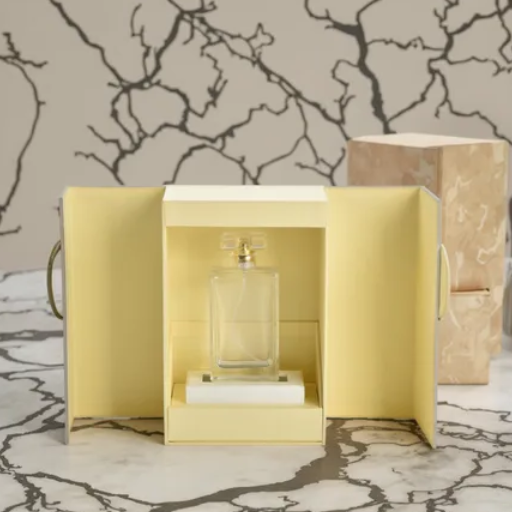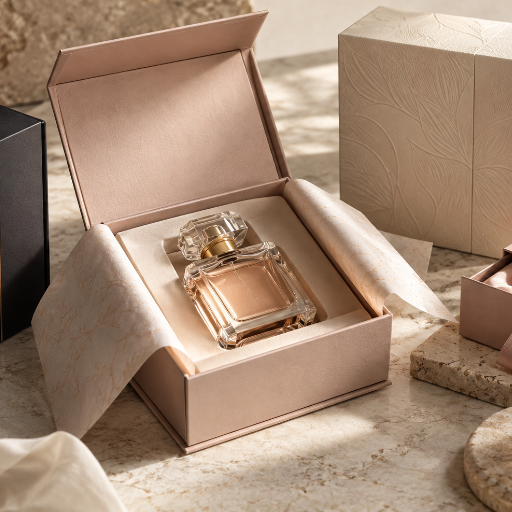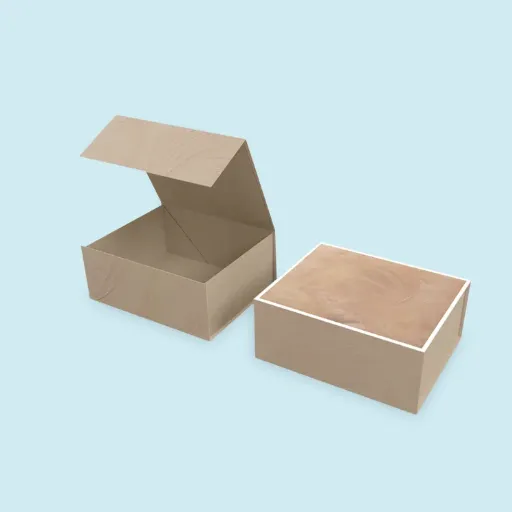
Custom rigid boxes cost between 2.40 and 2.40 and 15.00+ per unit in 2026, depending on size, style, finishes, and order quantity. A basic 100-unit run starts near 4.50perbox,whilea5,000−unitluxuryorderwithfoilstampingandavelvetinsertcandropto4.50perbox,whilea5,000−unitluxuryorderwithfoilstampingandavelvetinsertcandropto3.80 — and velvet insert can swing your quote by 30%.
Most articles dodge this question. They open with “it depends” and route you to a quote form. We get it — pricing does depend on real variables. But you deserve numbers before you spend an hour filling out a form.
Two weeks ago, a skincare founder named Lin emailed us two quotes she had received for “the same” 1,000 magnetic rigid boxes: one came in at 2,400,theotherat2,400,theotherat6,100. Same product, same brief, 2.5× spread. The reason wasn’t fraud — it was four hidden variables her vendors had handled differently.
By the end of this guide, you’ll know exactly what custom rigid boxes should cost in 2026 — by quantity, style, and finish — and you’ll have a 7-lever playbook to bring quotes down 15–35% without cheapening your brand.
Key Takeaways
- Real 2026 pricing ranges from 2.40–2.40–15+ per unit, with the biggest cost driver being order quantity (the 500 → 1,000 unit jump can cut per-unit cost by 20–35%).
- Magnetic closure, EVA foam inserts, and velvet trays are the three add-ons that most aggressively move pricing — each can add 0.30–0.30–2.50 per unit.
- Hidden costs (tooling, sample fees, freight, customs) routinely add 8–15% on top of the unit quote. Always ask for an itemized breakdown.
- Total Landed Cost (TLC), not unit price, is the only fair way to compare quotes from different manufacturers.
- Factory-direct sourcing from Fujian, China typically beats domestic or broker pricing by 30–50% on equivalent specifications, even after freight and duty.
Quick Answer: Custom Rigid Box Cost Ranges in 2026
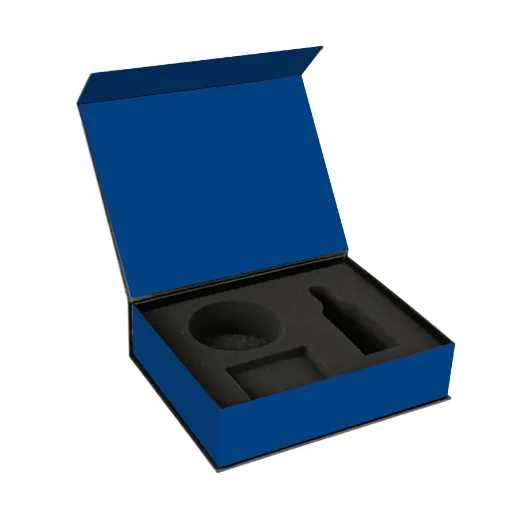
Here’s the table no one else publishes — real per-unit pricing from a working Fujian factory, current as of Q2 2026.
| Box Style | 100 units | 500 units | 1,000 units | 3,000 units | 5,000+ units |
|---|---|---|---|---|---|
| Basic two-piece (telescope) | 4.50–4.50–6.20 | 3.10–3.10–4.40 | 2.60–2.60–3.50 | 2.40–2.40–3.10 | 2.20–2.20–2.80 |
| Magnetic closure | 7.80–7.80–10.50 | 5.20–5.20–7.10 | 4.40–4.40–6.00 | 3.90–3.90–5.20 | 3.50–3.50–4.70 |
| Luxury (foil + EVA insert) | 11.50–11.50–15.00 | 7.80–7.80–10.40 | 6.20–6.20–8.40 | 5.40–5.40–7.20 | 4.80–4.80–6.50 |
These ranges assume a medium box (around 200 × 150 × 60 mm), 1500gsm chipboard, art-paper wrap, CMYK printing, and one or two finish elements. Larger boxes, premium wraps (leatherette, fabric), or multi-color Pantone runs push prices higher.
What’s included in these ranges
Unit price, factory production, basic CMYK printing, one finish (matte or gloss lamination), and standard inserts where listed.
What’s not included
Tooling, dieline fees, sample fees, sea or air freight, customs and duties, insurance, or warehousing.
8 Factors That Drive Custom Rigid Box Cost
Pricing variables aren’t a mystery — they’re a list. Here are the eight that actually move your quote.
1. Box style and closure
A telescope (two-piece lid) box is the cheapest rigid format. Magnetic closures add the largest single jump in cost — typically 0.30–0.30–0.90 per unit at 1,000+ MOQ. Drawer, shoulder-neck, and book-style boxes sit in between. For a deep look at each format, see our guide to types of custom rigid boxes.
2. Size and chipboard thickness
Standard chipboard runs 1200–2500gsm. Heavier board (2000gsm+) gives a more premium feel but adds 8–18% to material cost. Box dimensions also drive sheet usage — a 300mm box doesn’t just use more board, it changes how many units fit per printing sheet, which affects setup amortization.
3. Outer wrap material
Art paper wraps cost the least. Specialty papers (textured, pearl, kraft) add 10–25%. Leatherette and fabric wraps can double the wrap cost on their own. Mono-material paper wraps also tend to be easier to recycle under the new EU PPWR rules — a growing concern for EU-bound brands.
4. Printing method and ink coverage
CMYK is the standard. Spot Pantone (PMS) color adds 0.05–0.05–0.20 per unit and is non-negotiable if your brand has a precise color signature. Full-coverage dark prints (especially deep blacks and reds) increase ink consumption and reprint risk.
5. Premium finishes
Foil stamping, embossing, debossing, spot UV, and soft-touch lamination each add a discrete cost. We break these down in the add-on cost section below.
6. Inserts
EVA foam, velvet trays, custom corrugated cradles, and blister inserts each have their own tooling and unit cost. A single-cavity EVA insert at 1,000 MOQ runs 0.40–0.40–1.20. A velvet-wrapped tray can climb to $2.50.
7. Order quantity (the MOQ cliff)
This is where most buyers leave money on the table. The 500 → 1,000 unit jump often cuts per-unit cost by 20–35%, not the 5% buyers expect. Tooling and setup costs amortize over more units, and certain printing techniques become available only above 1,000 MOQ.
8. Shipping mode and Incoterms
Sea freight (LCL or FCL) is cheapest but adds 25–40 days to your timeline. Air freight is 5–10× more per kilo but lands in 5–7 days. Always clarify whether your quote is EXW (factory pickup), FOB (loaded at port), or DDP (delivered duty paid). These look like jargon, but they decide who pays the next 0.30–0.30–1.10 per unit.
Want a factory-direct quote with this breakdown itemized? Request a transparent quote → — we publish line-item pricing so you can compare apples to apples.
Add-On Costs: What Each Upgrade Really Adds Per Unit
Here’s the second table competitors don’t publish. These are real add-on costs at 500 and 3,000 MOQ in 2026.
| Add-on | At 500 MOQ | At 3,000 MOQ |
|---|---|---|
| Foil stamping (gold/silver/holographic) | +0.30–0.30–0.60 | +0.15–0.15–0.35 |
| Embossing / debossing | +0.20–0.20–0.45 | +0.10–0.10–0.25 |
| Spot UV | +0.15–0.15–0.25 | +0.08–0.08–0.18 |
| Soft-touch lamination | +0.20–0.20–0.30 | +0.12–0.12–0.22 |
| PMS spot color match | +0.10–0.10–0.20 | +0.05–0.05–0.12 |
| EVA foam insert (single cavity) | +0.70–0.70–1.20 | +0.40–0.40–0.80 |
| Velvet tray insert | +1.40–1.40–2.50 | +0.80–0.80–1.60 |
| Satin ribbon pull | +0.20–0.20–0.40 | +0.10–0.10–0.25 |
| Magnetic closure (vs. lid-off) | +0.55–0.55–0.90 | +0.30–0.30–0.55 |
Stacking add-ons compounds quickly. A foil + emboss + EVA combo at 1,000 MOQ can add 1.50–1.50–2.30 per unit — a meaningful jump if your unit economics are tight.
Hidden Costs to Watch in Every Quote
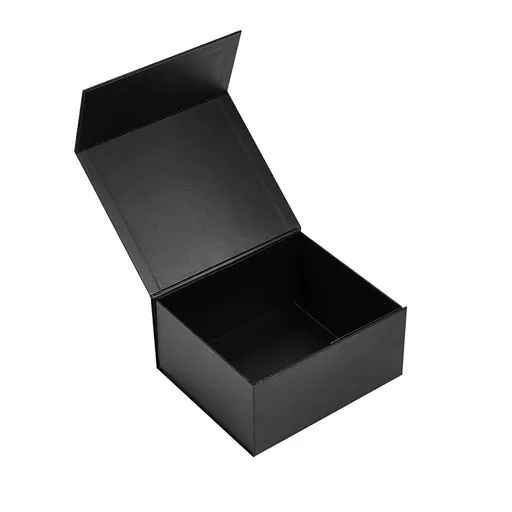
Unit price is only half the conversation. These line items routinely add 8–15% to the final invoice — and often surprise first-time buyers.
- Tooling and dieline fees: 80–80–400 one-time for custom shapes. Standard dimensions usually waive this.
- Sample fees: 35–35–150 per sample. Most reputable manufacturers credit this back against bulk orders. Always ask.
- Customs duties and tariffs: Vary by HTS code and country. US Section 301 tariffs on certain paper products currently sit at 7.5–25%. Always confirm with your broker.
- Color-matching and reprint risk fees: If you skip the pre-press color proof, you assume the reprint cost. A botched Pantone match can cost 2,000–2,000–5,000 to redo.
- Storage and split-shipment fees: Splitting one PO into two shipping dates? Expect a 200–200–600 fee per additional shipment.
When Lin (the skincare founder we mentioned earlier) finally compared her two quotes side by side, the $3,700 spread came down to three of these items: one vendor included tooling and a refundable sample, the other didn’t.
Total Landed Cost: Comparing Quotes Apples-to-Apples
Use this formula to compare any two rigid box quotes fairly:
Total Landed Cost (TLC) = Unit Price × Quantity + Tooling + Inserts + Freight + Duty + Insurance
Here’s a worked example for 1,000 magnetic rigid boxes shipped Shanghai → Los Angeles, EXW:
| Line item | Amount |
|---|---|
| Unit price ($4.80 × 1,000) | $4,800 |
| Tooling (one-time) | $120 |
| EVA foam insert ($0.55 × 1,000) | $550 |
| Sea freight (LCL, ~2.5 CBM) | $480 |
| US duty (7.5% on packaging) | $360 |
| Insurance + handling | $140 |
| Total Landed Cost | $6,450 |
That works out to 6.45perdeliveredunit—notthe6.45perdeliveredunit—notthe4.80 your unit-price column showed. When you compare quotes, always normalize to delivered cost per unit, not factory cost.
How to Reduce Custom Rigid Box Cost Without Cheapening Your Brand
Seven levers can cut your quote 15–35% without compromising the unboxing experience.
- Right-size your MOQ. If you’re sitting at 500 units, model what 1,000 units would cost. The per-unit drop often funds the inventory carry.
- Consolidate finishes. One foil color reads as luxurious as three, at a fraction of the cost. Resist the urge to stack every premium technique.
- Use collapsible construction. A collapsible rigid box ships flat, cutting sea freight volume 40–60%. The unit cost is similar, but landed cost drops noticeably.
- Choose paper wraps over fabric. A textured art paper with a soft-touch lamination can mimic the hand-feel of leatherette at 35–50% lower wrap cost.
- Prep your art files correctly. Vector files, correctly tagged Pantone colors, and 3mm bleed save reprint risk. A clean dieline saves your manufacturer 2–3 hours of pre-press work — savings that come back to you.
- Negotiate tooling and sample fees. Reputable factories will refund sample fees against bulk orders. Many will absorb tooling above 2,000 MOQ.
- Source factory-direct. Skipping the broker layer removes 15–30% of margin from your quote. For criteria on vetting a manufacturer, see our guide on how to choose a rigid box manufacturer.
Ready to test the difference? See our wholesale pricing tiers → — MOQ starts at 100 units, with transparent per-unit cost at every quantity break.
Why Rigid Boxes Cost More Than Folding Cartons (and When the Premium Is Worth It)
Folding cartons run 0.30–0.30–1.20 per unit at comparable sizes. Rigid boxes cost 3–10× more. The premium reflects three structural realities:
- Heavier chipboard core (1500gsm+ vs. 350gsm for folding cartons)
- Two-step assembly (the chipboard frame is wrapped, not folded from one sheet)
- More manual labor (wrapping and inserting is largely hand-assembled)
That premium pays off when packaging is the product experience. A 2024 unboxing study by Dotcom Distribution found that premium packaging lifted perceived product value by up to 1.7×. For DTC subscription, luxury beauty, jewelry, and gifting categories, that lift more than offsets the cost gap.
When does the premium not pay off? Mass-market SKUs sold on price, products that ship inside another shipper box, or items where the customer never sees the packaging on a shelf. In those cases, a well-printed folding carton usually wins on ROI.
For a worked example, consider Marcus, who runs a coffee subscription brand. He shipped 3,000 collapsible rigid boxes in 2025, paying 5.20perdeliveredunit.Hisrepeat−purchaserateclimbed115.20perdeliveredunit.Hisrepeat−purchaserateclimbed1134,000 in incremental annual revenue. The packaging upgrade paid for itself in seven weeks.
2026 Cost Outlook: What’s Moving the Custom Rigid Boxes Market This Year
Four forces are shaping rigid box pricing through the rest of 2026:
- Chipboard pricing is normalizing. Greyboard rates are down roughly 14% from the 2024 peak, easing material pressure on quotes.
- US tariff environment is unsettled. Section 301 reviews continue to add uncertainty for China-sourced packaging. Lock in pricing on long-running SKUs if you can.
- EU PPWR compliance arrives August 12, 2026. Brands shipping into the EU should confirm FSC certification and recyclability documentation now — non-compliant packaging will face fines and shelf bans.
- Sea freight is stable but volatile. Rates from Shanghai are near 2023 lows, but Red Sea disruptions occasionally spike Shanghai-to-Rotterdam costs by 20–40% week-to-week.
The practical takeaway: if your brand has high volume and stable demand, this is a reasonable window to lock in pricing for 6–12 months. Smaller brands with variable demand are usually better off ordering quarterly.
Frequently Asked Questions
How much do custom rigid boxes cost per unit in 2026?
Most custom rigid boxes cost between 2.40and2.40and15.00 per unit, depending on quantity, style, and finishes. A basic 1,000-unit telescope box typically runs 2.60–2.60–3.50 per unit, while a luxury magnetic box with foil and EVA insert can reach 6.20–6.20–8.40.
What’s the most cost-effective design for custom rigid boxes?
The two-piece telescope (lid-off) box is the most affordable rigid format because it requires the least labor and material. Magnetic closure adds the most to cost, while collapsible construction can reduce freight cost.
How much does foil stamping add to a rigid box?
Foil stamping typically adds 0.15–0.15–0.60 per unit, depending on coverage area and order quantity. Larger foil areas, multi-color foils, and holographic foils cost more than a small gold or silver logo stamp.
What is the smallest order for custom rigid boxes?
Factory-direct manufacturers commonly accept orders starting at 100 units, though 500+ units unlock noticeably better per-unit pricing. Brokers and domestic suppliers often start at 250–500 units with higher unit costs.
Are rigid boxes cheaper in China?
Yes, factory-direct sourcing from Fujian or Guangdong typically beats domestic US or EU pricing by 30–50% on equivalent specs, even after freight and duty. The trade-off is a longer lead time (28–45 days versus 10–18 days domestic).
How can I get an accurate rigid box quote quickly?
Provide your manufacturer with five details: box dimensions, target quantity, closure style (telescope, magnetic, drawer), wrap material, and finish list. With these in hand, a real factory can return an itemized quote in 24–48 hours.
Bringing It All Together
Custom rigid boxes cost real money, and the spread between cheap and premium is wider than most buyers expect. The good news: once you understand the eight cost drivers, the nine common add-ons, and the hidden line items, you can read any quote in under five minutes — and negotiate it with confidence.
Three takeaways worth tattooing to your procurement notebook:
- Order quantity is the single biggest lever. Always price a tier above where you think you need to be.
- Compare on landed cost, not unit price. Tooling, freight, and duty change the picture.
- Transparency is a quality signal. A factory willing to itemize line by line is one that won’t sneak surprises into your final invoice.
We built our pricing model the way buyers ask for it: factory-direct, itemized, and starting at 100 units. If you’re sourcing rigid boxes for a 2026 launch — whether it’s an indie skincare line, a luxury watch SKU, or a 10,000-unit subscription run — we’d be glad to send back a real quote within one business day.
Request a transparent quote → — itemized line items, MOQ from 100 units, and a free dieline review with every inquiry. Get the numbers before you make the decision.
For a broader view of how cost fits into the rigid box buyer journey, start with our complete guide to custom rigid boxes. To see what premium finishes actually look like in production, our luxury rigid boxes overview walks through real examples.
The right packaging is the kind your customers remember. The right price is the kind your CFO approves. With the numbers above, you can have both.