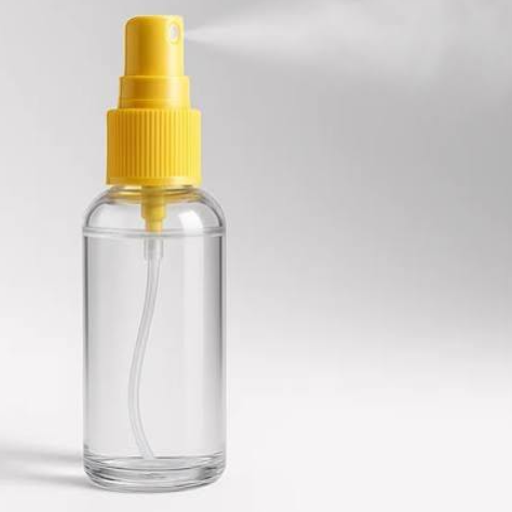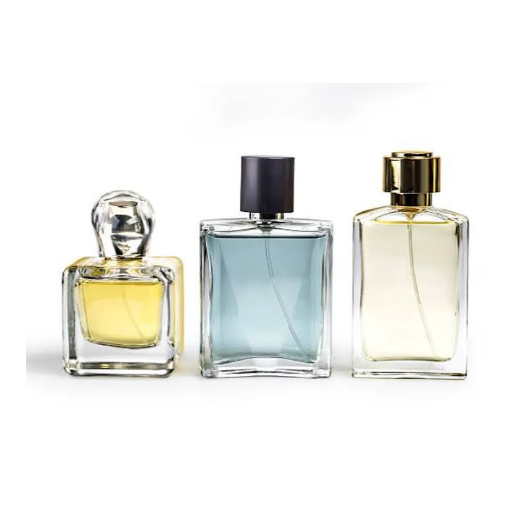
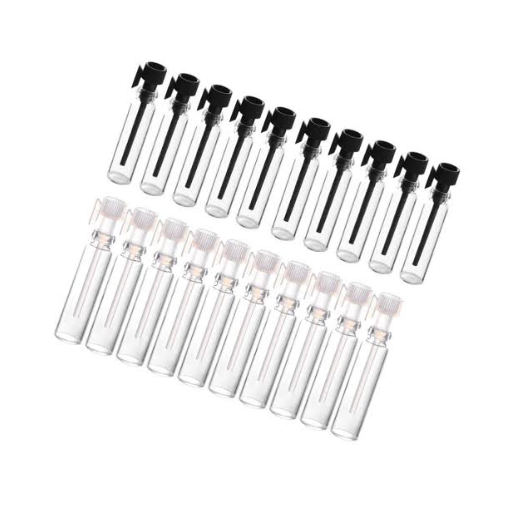
Perfume bottle sampling is the step between a bottle specification and a bulk order. It has three stages: a sample you can hold and test, a pre-production sample you approve, and an AQL inspection that checks the bulk run against that approval. Skip one stage and you’re trusting a photo, a promise, or the top layer of cartons.
A photo can’t show a dip tube that stops 8 mm short, a crimp that weeps after a week, or gold foil that drifts half a millimetre on the line. Every fragrance brand begins with a sample. This guide gives you the sequence, the tests and the record to keep, so the bottle that arrives in bulk is the bottle you approved.
Key Takeaways
- Perfume bottle sampling has three stages: a stock or custom sample, a pre-production sample, and an AQL inspection of the bulk run.
- Test with your real fragrance, not water, and check fill, priming, output, spray pattern, leaks, crimp, dip tube, decoration and box fit.
- Approve against a written record and keep a sealed golden sample. Without one, a bulk dispute has no reference.
- For 10,000 bottles at general inspection level II, the sample is 200 pieces; at AQL 2.5, accept 10 major defects and reject at 11.
- Sample bottles for customers are a separate purchase from the sample you approve for production.
What “Perfume Bottle Sampling” Actually Means
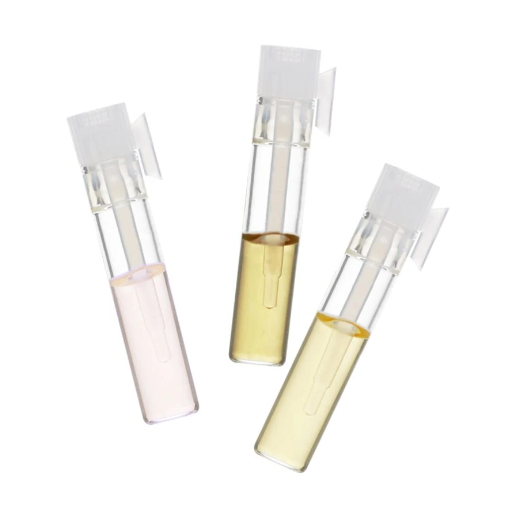
The phrase covers three different jobs. Confusing them is how brands pay for samples twice.
Market sampling means filling small bottles for customers: a 2 ml vial in a discovery set, a 5 ml spray at a counter, a 10 ml travel bottle in a subscription box. The output is a campaign asset, and marketing owns it.
Pre-production sampling means making the finished item to your spec: the bottle, pump, collar, cap, decoration and box. The output is a pre-production sample and a sealed golden sample. The brand, supplier and often the filling line all sign off.
Bulk inspection sampling means drawing a random sample from the production run and checking it against the approved standard. The output is an inspection report, and the buyer or QC team owns it.
| Stage | Question it answers | Output | Who signs off |
|---|---|---|---|
| Market sample | Will customers try the scent? | Filled vials or sprays | Marketing lead |
| Pre-production sample | Is the finished bottle, pump, cap, decoration and box correct? | PPS and golden sample | Brand, supplier, filler |
| Bulk inspection | Does the production run match the approved sample? | Inspection report | Buyer or QC |
Perfume sample bottles are a product. Perfume bottle sampling is a process. You can buy one without the other, but a good sample programme usually needs both.
If you’re choosing formats, sizes and materials, the covers that decision. This article covers the process.
Ready to test a bottle with your own formula? , and we will put together a sample kit for your trial.
Stage 1: Build the Sample Kit Before You Commit
Perfume bottle sampling starts with a kit, not a catalogue. A useful kit answers three questions: does it fit the concept, work with the fragrance, and repeat in bulk?
Stock sample vs custom sample
A stock sample comes from an existing mould. It is the fastest way to check shape, glass weight, neck finish and the feel in hand. It doesn’t prove final decoration, because print or coating may be added later.
A custom sample uses a new mould, a custom decoration, or both. It costs more and takes longer, but it is the only way to approve the actual order. For custom decoration, confirm the base bottle with a stock sample first, then approve the finish on a decorated sample.
What belongs in the kit
Ask for the full assembly, not just the bottle: bottle, pump or sprayer, collar, cap, label and box or insert. If the box is part of the unboxing experience, sample it with the bottle. A bottle that fits a stock carton may not fit a custom insert.
Include a spec sheet with the kit. At minimum, list:
- Capacity and target fill.
- Neck finish and glass weight.
- Dimensions and material.
- Pump type and output.
- Cap and collar.
- Decoration method and artwork.
- Label stock and box structure.
- Destination market and fragrance type.
Fragrance type matters. Alcohol-based perfume and oil-based attar put different demands on the pump and seals.
Stage 2: Test the Sample With Your Real Formula
A sample tested with water proves almost nothing. Fill it with the fragrance you will sell.
Fill, prime and spray
Fill to the target volume with the pump fitted, leaving the headspace the supplier recommends. Prime the pump and count the strokes to the first full spray. Note any spitting, dripping or weak delivery.
Then measure output. Spray ten strokes into a graduated cylinder, divide by ten, and compare the result with the pump specification.
Check the pattern on paper. A good fine mist sprayer produces an even cone, not a narrow jet or a wet patch. Our explains how pump design changes output and priming.
Leak, evaporation and travel checks
Invert the filled sample for 24 hours and look for seepage around the crimp, collar and cap. Weigh it, leave it standing for a week at room temperature, and weigh it again. A measurable loss points to a seal or cap problem.
Then shake it, pack it with the box and carry it in a bag. Travel exposes cap fit and closure strength faster than a bench test.
Neck fit, crimp and dip-tube length
The pump should seat without force. The cap should sit flush, with no rocking or gap. A crimp should be even around the collar and tight enough that the pump cannot twist by hand.
Check the dip tube inside the bottle. It should reach the bottom without curling, and the last dose should still spray. A tube that stops short leaves several millilitres unusable.
Decoration and box clearance
Check print, foil, coating and label registration against the approved artwork. Rub the decoration with a dry cloth, then a damp one, and look for lifting or scratching. Compare colour in daylight and under store lighting, because a match under one light can fail under the other.
Place the bottle in the box or insert. It should sit without movement, put no pressure on the pump, and let the lid close cleanly.
| # | Check | Pass condition |
|---|---|---|
| 1 | Capacity and fill | Holds the declared fill with the pump fitted and correct headspace |
| 2 | Neck fit | Pump, collar and cap seat without force or rocking |
| 3 | Crimp or screw | Crimp is even and tight, or threads engage without cross-threading |
| 4 | Dip tube | Reaches the bottom without curling, and the last dose sprays |
| 5 | Prime and output | Primes within the agreed strokes and delivers the agreed dose |
| 6 | Spray pattern | Even cone, with no spitting or dripping |
| 7 | Leak and evaporation | No seepage after inversion, shaking and standing |
| 8 | Decoration and box | Registered, adhered, colour-matched, and the bottle sits without movement |
Nadia, a founder preparing her first 30 ml launch, approved a stock bottle from a supplier photo. The bulk pumps arrived with a shorter dip tube. The last 6 to 8 ml wouldn’t spray, and customers noticed before she did.
A filled sample would have exposed the problem in minutes. That scenario is hypothetical.
Stage 3: Approve a Pre-Production Sample and Seal a Golden Sample
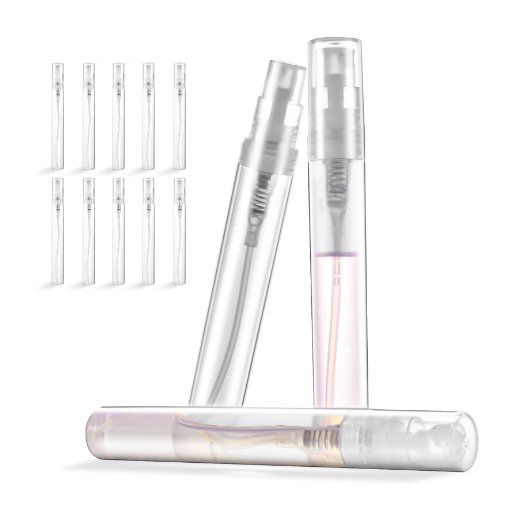
A pre-production sample, or PPS, is made after the order is placed, using production components and the actual decoration. It proves the finished item, not the catalogue item.
What a PPS must prove
The PPS should match the spec sheet, the approved artwork and the filled test. Check the bottle, pump, collar, cap, label and box together. If the bottle will run on a filling line, ask the filler to confirm that it loads, fills and caps at line speed. A bottle that works by hand can still fail on an automated line.
The sample approval record
Write down what you approved. The sample approval record should include the date, purchase order number, component codes, decoration method, colour reference, fill volume, pump output, test results, photos, any accepted deviations, and the signatures of everyone who approved it.
Keep a sealed golden sample for each component, stored away from light. The golden sample is the reference for the bulk inspection. Without it, “match the approved sample” means whatever each side remembers.
Common approval mistakes
The most expensive mistake is approving a photo. The second is treating a stock sample as a PPS. Others include approving decoration before function, skipping the filler, and accepting a colour that is “close” without a written tolerance. Each one removes a checkpoint you’ll need later.
Jonas, a brand manager in Rotterdam, approved a PPS and then accepted bulk with gold foil 0.4 mm out of register. No sealed golden sample was kept, so the supplier argued that the bulk matched what was approved. The rework cost more than the sample round would have. That example is hypothetical.
Stage 4: AQL Sampling of the Bulk Order
What AQL means, and what it does not mean
AQL stands for acceptance quality limit. It’s the maximum number of defective items in a sample that still allows the batch to be accepted. If defects exceed that limit, the batch is rejected.
The rules come from ISO 2859-1 and its ANSI-ASQ Z1.4 equivalent. Both set sample sizes and accept/reject numbers. QIMA’s AQL guide explains the method in plain language, and the ISO 2859-1 preview shows the table structure.
AQL is not a licence to ship 2.5% defects. It is a decision rule. It tells you whether the lot is good enough to accept, not whether every bottle is perfect.
Critical, major and minor defects for perfume bottles
Define the defect classes in the purchase order, because the same chip can be critical to one brand and minor to another.
| Class | Examples | Common starting point |
|---|---|---|
| Critical | Crack, sharp edge, leak path, pump that cannot deliver | AQL 0 |
| Major | Visible chip, pump that will not prime, cap that will not seat, missing decoration | AQL 2.5 |
| Minor | Light scuff, small bubble outside the label area, slight colour variation within tolerance | AQL 4.0 |
Those numbers are a common buyer specification, not a legal requirement. A critical defect is usually zero because no acceptable level exists for a bottle that can cut a customer or leak.
A worked sampling plan
Take a lot of 10,000 bottles, general inspection level II, single sampling, normal severity. The code letter is L, and the sample size is 200 bottles.
At AQL 2.5 for major defects, accept 10 and reject 11. If the inspector finds 11 or more, the lot fails. Any critical defect fails the lot regardless of the count.
Draw the sample randomly across cartons, not from the top layer. Record every defect with a photo and carton number so the supplier can trace it.
When to inspect
A perfume bottle sampling plan should include two inspection points: during production and before shipment. The during-production check catches a drift while the line can still correct it. The pre-shipment check confirms cartons, labels and quantities before the balance payment and container booking. If the route is long or the cartons will be transloaded, add a container loading check.
Clara, a sourcing manager for a mid-sized fragrance house, inspected 10,000 bottles at AQL 2.5 and found 14 major defects, mostly chipped necks. She rejected the lot. The supplier reworked it and shipped nine days later.
The alternative was a launch with a visible quality problem. That example is hypothetical.
Want a sampling plan you can approve against? and we will quote the bottle with the sampling stages built in.
Sample Bottles for Market Sampling: A Short Bridge
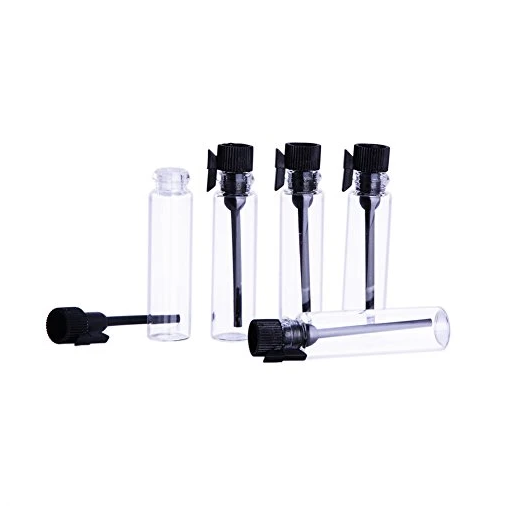
Once the production bottle is approved, you may still need a separate purchase: filled samples for customers.
Vials, sprays, rollerballs and vial-on-card
- A 1 to 2 ml vial or dabber is the lowest-cost way to reach many people. It’s common in discovery sets, magazine inserts and events.
- A 2 to 3 ml spray gives a truer wearing experience and is the usual choice for a premium sample.
- A 5 to 10 ml travel spray costs more but feels closer to the full product.
- A rollerball suits oil-based formulas.
- A vial-on-card pairs perfume sample vials with printed brand storytelling and a barcode.
Choose by channel, not by price alone
A retail counter, subscription box, influencer kit and e-commerce insert each put the sample in a different context. Match the format to how the customer will use it, then compare cost. The covers sizes and materials in detail, and the explains when a full-size tester makes more sense than a small sample.
Filling and shipping filled samples
Empty bottles are not dangerous goods. Once filled with alcohol-based fragrance, they are UN 1266, Class 3, packing group II or III. Limited-quantity provisions are commonly used for samples, but air, sea and road rules differ. The ICC Compliance Center guide to shipping perfume under 49 CFR is a useful starting point, and our covers the packaging side.
Filled samples are also cosmetic products. Labeling and safety obligations follow the market where they are sold, so confirm the requirements with your regulatory adviser before you print the card or vial.
Costs, Lead Times and the Sample RFQ
Why sample fees vary
A stock sample, a decorated sample and a custom mould sample are three different costs. Courier charges, the number of rounds and whether the fee is credited against the bulk order also change the total. Ask for the credit policy in writing before the first round. Don’t assume the fee is free or refundable.
Sample round vs bulk production
A sample round is shorter than bulk production, but it still depends on the decoration and components. Build it into the launch calendar as a real stage. Standard production time for Longlu orders is 4 to 6 weeks after approval, so a late sample decision moves the ship date.
Sample fees and MOQ are linked. A decorated sample that passes at 1,000 units may be uneconomic at 500. explains the tiers.
The sample RFQ checklist
Put these fields on the request:
- Bottle reference or drawing.
- Capacity and target fill.
- Neck finish and glass weight.
- Pump type and output.
- Cap and collar.
- Decoration method and artwork.
- Label stock and box structure.
- Target quantity, destination and required delivery date.
- Sample deadline and the name of the person who will approve it.
A complete RFQ cuts sample rounds. A vague one guarantees a second.
FAQ
What is perfume bottle sampling?
Perfume bottle sampling is the process of requesting, testing and approving a physical bottle before bulk production, then inspecting the production run against that approval. It’s different from buying perfume sample bottles for customers, which is a product purchase.
What is a pre-production sample?
A pre-production sample, or PPS, is a finished sample made after the order is placed, using production components and the actual decoration. It is the reference for the bulk run. A stock sample shows what a catalogue item looks like; a PPS shows what your order will look like.
How many bottles should I sample before ordering?
Sample enough units to test function and decoration, not just appearance. A practical kit includes several bottles for fill and spray testing, at least one for a leak and evaporation check, and one decorated sample for the approval record. The exact count depends on how many components and decoration steps are new.
What does AQL 2.5 mean?
AQL 2.5 is an acceptance quality limit of 2.5% for a defect class, usually major defects. It is used with a sampling table to decide how many defects in a sample are still acceptable. For a 10,000-piece lot at general inspection level II, the sample is 200 pieces, with accept 10 and reject 11 at AQL 2.5.
Should I fill samples with real perfume?
Yes. Water does not reproduce the viscosity, wetting and seal behaviour of an alcohol-based fragrance. A water test can pass a pump that fails with the real formula. Use the actual juice, and test oil-based formulas with the pump or rollerball they will ship with.
How long does perfume bottle sampling take?
It depends on whether the sample is stock or custom, how complex the decoration is, and how many rounds you need. Bulk production is a separate clock: Longlu’s standard production time is 4 to 6 weeks after approval. Ask for the sample turnaround in writing and add it to the launch plan.
Conclusion
Perfume bottle sampling is not one step. It’s a sequence: a sample you can hold, a pre-production sample you approve, a golden sample you seal, and a bulk inspection you can defend.
Each stage removes a different risk. The sample catches fit and function. The PPS catches decoration and assembly.
The golden sample settles disputes. The AQL inspection catches drift before the container leaves.
The brands that launch smoothly aren’t the ones with the cheapest sample. They’re the ones that wrote down what they approved. If you’re ready to start, and we’ll build the sampling stages into your quote.