OEM vs private label perfume bottles comes down to one question: who brings the design? In OEM production, you supply the bottle design and specification, and the factory builds to it. In private label, the factory’s existing bottle is branded for you. Almost everything else, from tooling to MOQ to who owns the mould, follows from that split.
Two brands can order the same 50 ml bottle, pay different prices, wait different times, and end up owning different things. The bottle is identical. The model is not.
If you’ve compared quotes and wondered why the terms never line up, you’re not alone. Suppliers use the labels loosely, sometimes for two different purchases. This guide separates the two supply chains and gives you the questions to put in writing.
Key Takeaways
- OEM means you bring the bottle design and the factory builds to spec. Private label means the factory’s existing bottle is branded for you.
- For bottles, the real fork is stock mould versus custom mould. Decoration, caps, collars and boxes can be customized on either route.
- “Private label perfume” usually means the juice. “Private label perfume bottles” means the packaging. They’re different purchases with different suppliers.
- Tooling cost, MOQ pressure and lead time rise as you move from a label change to a new mould. Confirm all three in the quote.
- Who owns the mould, artwork and formula is decided by the contract, not by the model name.
OEM vs Private Label Perfume Bottles: What the Terms Mean
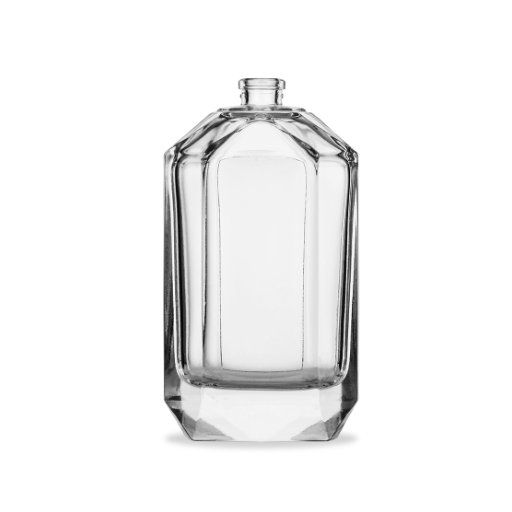
OEM stands for original equipment manufacturer. TechTarget defines an OEM as a company that produces goods sold under another company’s brand, building to the customer’s designs. For a bottle, that means the shape, capacity, neck finish and decoration come from your drawing or approved sample.
Private label describes the branding arrangement. Shopify defines it as a retailer selling products made by a third party under its own brand. For a bottle, that usually means an existing catalogue item with your print, coating, cap or label.
The definitions overlap. Both can include your specifications and end with your brand on the box. The practical difference is the design record: OEM starts from your drawing, private label starts from something the supplier already makes.
Two supply chains share the same words
In fragrance, “private label perfume” usually means the liquid. You choose from the supplier’s formula library, and it is filled and labelled for your brand.
“Private label perfume bottles” is a packaging purchase: glass, neck finish, pump, cap, collar and box. The supplier may not fill anything at all.
A fragrance house sells a private label scent in a stock bottle. A packaging manufacturer sells an OEM bottle with no juice. Confirm which one the supplier thinks you mean.
Where white label and ODM fit
White label is the least exclusive route: a generic product made once and sold to many brands with only a label change.
ODM means original design manufacturer. Wikipedia describes an ODM as a company that designs and manufactures for another brand, usually keeping the design unless the buyer buys it. That’s why an ODM bottle can show up in another brand’s catalogue.
| Model | Who brings the design | What you can change | What you usually own | Best fit |
|---|---|---|---|---|
| OEM | You (drawing, spec, artwork) | Shape, capacity, neck finish, glass, decoration, closure | The design record; mould only if the contract says so | A bottle that must be yours alone |
| ODM | The factory | Decoration, colour, closure, pack | Your artwork; the factory usually keeps the mould and base design | A distinctive bottle without a new mould |
| Private label | The factory’s existing range, adapted for you | Decoration, label, closure, box | Your brand and artwork, not the bottle design | Branding a proven bottle for one market |
| White label | The factory | Usually label and pack only | Your brand only | The fastest, least exclusive route |
For the full production sequence, the covers materials, moulding, decoration and quality control.
OEM Perfume Bottles: You Bring the Design
An OEM bottle is built from your design record, which is what sets OEM vs private label perfume bottles apart. That can be a full technical drawing, a 3D file, or an approved sample with a written spec. The factory reproduces it; it does not invent it.
What changes in practice:
- Shape and capacity are fixed by your drawing, not chosen from a catalogue.
- Neck finish is specified by you and must match the pump, collar and cap you plan to use.
- Glass colour, weight and tolerance are part of the spec, not a stock variant.
- Decoration is quoted as a separate operation, even when the mould already exists.
- Mould ownership is a contract term. Paying for tooling doesn’t automatically transfer the mould to you.
Moulds, tooling and decoration setup
A new bottle shape needs a mould. That is why OEM costs more upfront and takes longer to start. Tooling is a one-time cost spread over the order, so the unit price falls as volume rises.
Decoration has its own setup: a screen per colour, a die for hot stamping, a line setup for coating. Those costs exist on stock bottles too, which is why a heavily decorated private label bottle can cost more than a plain OEM bottle at volume.
Production time is a separate clock. The site quotes 4 to 6 weeks for standard production, and a new mould or complex decoration adds time before that clock starts. Ask for the tooling and decoration schedules in writing.
What an OEM brief must contain
A useful brief is short and complete: capacity, neck finish, glass colour and weight, shape reference, decoration method and coverage, closure, box and target quantity. Add the market and delivery date, because both affect the quote.
Have a drawing but no supplier yet? , and we will tell you whether it needs a new mould or can be built on an existing one.
Private Label Perfume Bottles: You Brand an Existing Bottle
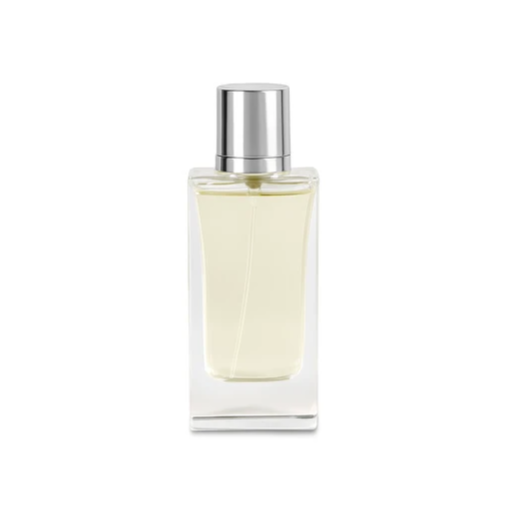
A private label bottle starts with something the supplier already makes. You’re not paying for a new mould. You’re paying for the bottle, the decoration, the closure and the pack, plus the setup those operations need.
This is the faster route. The mould exists, the glass is proven, and the main variables are decoration, cap choice and packing. For a first launch or a short seasonal run, that can matter more than exclusivity.
What “private label” usually means in a bottle catalogue
In many catalogues, “private label” means a stock bottle with your logo and label. That is closer to ODM or white label than to exclusive production, and the supplier may sell the same bottle to other brands.
That isn’t a problem if you know it. It becomes a problem when a brand pays for “private label” expecting a shape no one else can buy, then sees the same bottle in a competitor’s launch.
Ask one direct question: can another brand buy this exact bottle? If yes, your differentiation has to come from decoration, cap, collar, box and label, not from the glass.
What you can still customize
Plenty. Print, hot stamping, coating, frosting, coloured glass, a custom cap, a metal collar, a printed box and a custom label can all change how the bottle reads. A stock bottle with a custom cap and a rigid box often looks more expensive than a custom mould with a plain closure.
The constraint is minimum order quantity, not design freedom. Decoration setup and component MOQs decide how small a run can be.
When private label is the right call
Choose it when speed matters, when the bottle isn’t the brand’s main differentiator, or when you want to test a market before committing to tooling. Choose OEM when the shape is part of the brand.
Maya, a founder planning a 30 ml eau de parfum, wanted a “private label” bottle with a zinc-alloy cap. The catalogue bottle used a 15 mm crimp neck, so her cap had to become a custom cap and collar instead. The quote changed; the launch stayed on schedule. Hypothetical example.
The covers the model in more depth, including packaging versus fragrance.
OEM vs Private Label Perfume Bottles in Practice
The model names are simple. The consequences are not. This table maps the common project types to the model that usually fits.
| Project | Model in practice | What is custom | Main constraint to price |
|---|---|---|---|
| Stock bottle plus your label | Private label or white label | Label, maybe a printed box | Decoration minimums; neck-fit library |
| Stock bottle plus custom decoration and cap | ODM or private-label hybrid | Print, coating, cap, collar, box | Decoration setup; cap tooling |
| New bottle shape | OEM (custom mould) | Shape, capacity, neck, glass, decoration | Mould cost and time; MOQ; production after tooling |
| Full package: bottle, cap and box | OEM or ODM programme | Every component | Component coordination; sample approval |
| Finished fragrance under your brand | Private label or white label juice | Scent selection, label | Formula ownership; regulatory duties; not a bottle purchase |
Cost structure and where the money goes
OEM front-loads cost into tooling. Private label front-loads cost into decoration setup and component minimums. At low volume, private label usually wins on cash outlay. At high volume with a shape you will reuse, OEM can win on unit cost, because the tooling is spread across more pieces.
Do not compare a decorated private label quote against a plain OEM quote. Ask both suppliers for the same line items: bottle, tooling or setup, decoration, closure, box, packing and freight.
MOQ pressure by model
Every model has a minimum somewhere: a glass minimum for stock bottles, a print run minimum for decoration, a tooling minimum for custom caps. A new mould has the highest of all, because the tooling must be paid for.
That’s why the same bottle can be quoted at 300 pieces and at 30,000. The number reflects which minimums are triggered. The explains the seven minimums behind a quote.
Lead time and the 4 to 6 week production window
Standard production is 4 to 6 weeks once the order and the pre-production sample are approved. Tooling, decoration setup and sample rounds sit outside that window. A private label order with stock glass can move faster because it skips the mould stage.
Put these dates on a calendar:
- Sample approval
- Tooling sign-off
- Decoration proof
- Production start
- Inspection
- Ship date
A single missed proof can move the ship date by a week.
Who owns the mould, the artwork and the formula
The model name doesn’t settle ownership. The contract does.
- Mould: state who paid for it, who holds it, who maintains it and whether it can be moved to another factory.
- Artwork: state who owns the print files and whether the supplier can reuse them.
- Formula: for juice, state whether the fragrance house keeps the formula and whether it can sell the same scent to another brand.
The covers package anatomy, rigid boxes, finishes and production steps.
OEM vs ODM vs White Label vs Private Label: Clearing the Terms
The four terms describe two things: who designs, and how exclusive the result is.
OEM vs ODM. OEM means you bring the design. ODM means the factory brings a design it already owns and adapts it for you. If the drawing came from your side, it’s OEM. If it came from the factory’s catalogue, it’s ODM, even when the supplier calls it OEM.
Private label vs white label. Private label is produced for you under your brand, often with some adaptation. White label is a generic product sold to many brands with a label change. The difference is exclusivity.
Contract manufacturing is the umbrella. It describes producing under contract and says nothing about who owns the design. A contract manufacturer can run an OEM, ODM or private label order.
None of these terms has a single legal definition. Factories use them differently by country and by category. Write the model into the quote, not just into an email.
How to Choose: A Five-Question Test
Answer these before you ask for prices. The answers point to the model.
- Whose drawing is it? With a technical drawing or a spec you’ll defend, you’re buying OEM. Choosing from a catalogue means ODM or private label.
- Will you reuse this bottle across SKUs and years? A bottle you’ll use for years justifies tooling. A one-season bottle usually doesn’t.
- What must be unique: the shape, the decoration, the cap, the box, or only the label? Custom decoration and a cap can make a stock bottle distinctive without a new mould.
- What annual volume can you commit in writing? MOQ follows volume. A forecast you can’t support becomes dead stock.
- Who owns the mould, artwork and formula after the order? If the answer isn’t in the contract, assume it isn’t yours.
If two answers point in different directions, split the project. Use a stock bottle and custom decoration for the launch, then invest in an OEM mould once the volume is proven.
Not sure which model your project needs? , and we will quote the route that fits.
What to Put in the RFQ, Whatever the Label
The RFQ protects you more than the model name. A complete request gets a comparable quote. A vague one gets a low number that changes later.
The bottle spec fields
Capacity, neck finish (FEA 13, 15 or 18, or a screw thread), glass colour, glass weight, shape reference and tolerance. Attach your drawing, or name the catalogue item you’re starting from.
The closure and decoration fields
Pump or spray type, crimp or screw, cap material and collar. For decoration, state the method, Pantone colours, coverage, and whether foil, coating or frosting is included.
The commercial and document fields
Target quantity, annual forecast, Incoterm, destination and delivery date. Ask for a spec sheet, artwork proof, sample approval record and inspection plan. For large orders, agree the inspection level and defect definitions before production.
The ownership fields
Ask who owns the mould, who holds the artwork files, and what happens to both if you move suppliers. Ask whether the mould can be transferred, and at what cost. These questions are easier before the order.
Priya, a brand manager, ordered “private label perfume” and expected bottles; the quote covered filled juice. Her bottle spec went unquoted with the launch six weeks away, so she bought the packaging separately. Hypothetical example.
If the package includes a box, the shows formats that pair with a bottle order. If you’re still choosing the bottle, start with the .
Ready for a quote you can compare? and ask for the model, the tooling and the ownership terms in writing.
FAQ
What is the difference between OEM and private label perfume bottles?
OEM means you supply the bottle design and the factory builds to it. Private label means the factory’s existing bottle is branded for you. The practical difference is who owns the design record and who pays for tooling.
Is private label the same as white label?
No. Private label is produced for you under your brand, often with adaptation. White label is a generic product sold to many brands with a label change. Private label offers more control and usually a higher minimum.
Can I get a custom bottle without a new mould?
Yes. You can customize decoration, colour, coating, cap, collar, box and label on an existing mould. That is the ODM or private-label route. A new shape is the only thing that requires a new mould.
Which is cheaper, OEM or private label?
Private label usually costs less upfront because there is no mould. OEM can cost less per unit at high volume because the tooling is spread across more pieces. Compare the same line items, including decoration and packing, before deciding.
Who owns the mould in OEM production?
It depends on the contract. Paying for the tooling does not automatically make the mould yours. State who owns it, who maintains it and whether it can be moved to another factory.
Conclusion
OEM vs private label perfume bottles is a decision about the design record. OEM starts with your drawing and usually needs a mould. Private label starts with the factory’s bottle and your branding. ODM and white label sit between and beside them, depending on who owns the design and how many brands can buy it.
Choose the model that matches what must be unique. If the shape is the brand, invest in OEM. If the decoration and the box carry the brand, private label or ODM will get you to market faster.
Then put the details in writing: the spec, the tooling, the MOQ, the lead time and the ownership terms. The model name is shorthand. The quote and the contract are the real agreement.
If you’re ready to compare routes, and we will quote the model that fits, with the tooling and ownership terms stated.