B2B perfume bottle procurement is a seven-step cycle you run every season: fix the brief, qualify the supplier, issue the RFQ, compare quotes on cost per sellable unit, contract the reorder terms, inspect what arrives, then reorder from the approved file. Skip a step and the cost doesn’t disappear. It moves to the second order, where the volume is higher and the excuses are thinner.
The unit price on a perfume bottle quote is the least useful number in the file. Two suppliers can quote $0.80 and $0.93 for what looks like the same bottle and cap, and the higher quote can still be the cheaper order once defects, freight and packing are counted.
If you’ve ever put two quotes side by side and realised they describe different products, you’re not being slow. The format is the problem. This guide gives you the seven documents that make perfume bottle procurement repeatable: a one-page brief, a qualification checklist, an RFQ template, a comparison sheet, a contract clause list, an inspection report and a supplier scorecard.
We build glass perfume bottles and closures, so we see these documents from the factory side of the table. The sequence below is the one that produces quotes you can actually compare.
Key Takeaways
- A perfume bottle quote is only comparable when the brief fixes fill volume, neck finish, closure, decoration, packing and volume.
- Line-item pricing plus one named Incoterm turns four quotes into a decision.
- Cost per sellable unit, not price per bottle, is the number that matters. A 16% higher unit price can still be 3% cheaper per bottle that ships.
- The contract decides what happens on the reorder: mould ownership, tolerance, AQL and who pays for defects.
- Standardising necks and closures across SKUs cuts MOQ exposure and shortens every future order.
What B2B Perfume Bottle Procurement Actually Manages
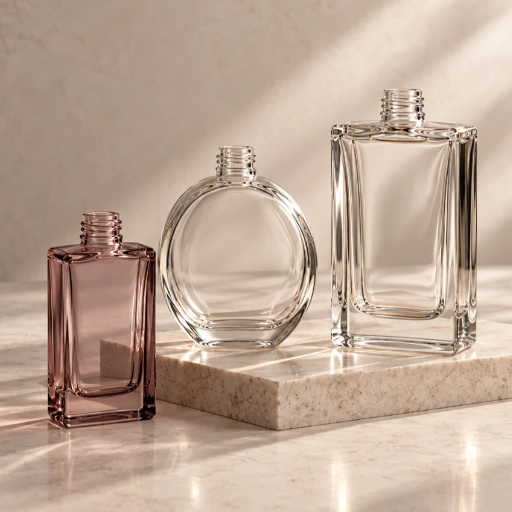
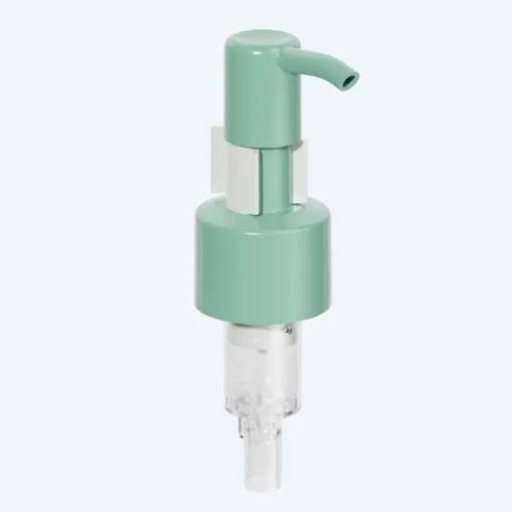
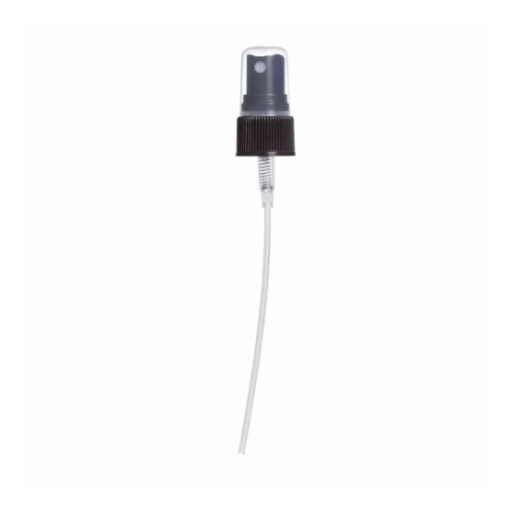
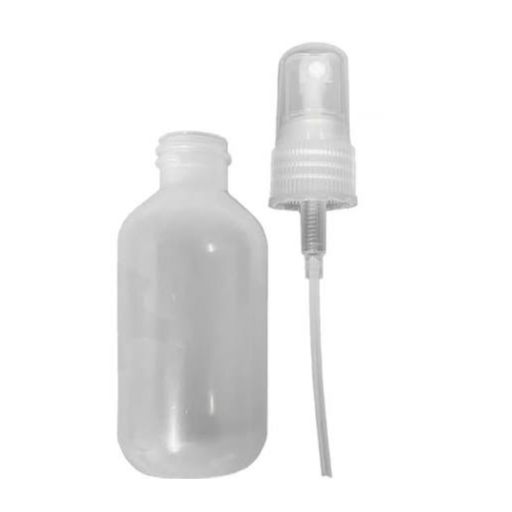
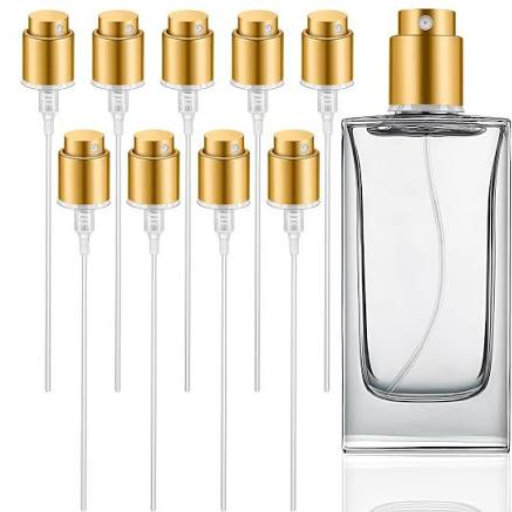
You aren’t buying a bottle. You’re buying a matched set: bottle, neck finish, pump, collar, cap, box and packing.
Each component has its own MOQ, lead time and defect mode. Procurement’s job is to keep them matched across orders and seasons.
That’s why a single “best price” request produces messy answers. A quote for the bottle alone, a quote with the pump included and a quote with decoration added are three different products wearing the same name.
A working procurement file produces three things:
- A specification that doesn’t change over email. One page, versioned, signed off by both sides.
- A qualified supplier set. Two or three factories that have passed the same checks, so a missed shipment doesn’t become a missed launch.
- An order record. PO, inspection report, packing list and invoice, filed together, so the reorder starts from evidence instead of memory.
If you’re still at the component-matching stage, our shows the bottle, pump and cap combinations we produce, and this guide to explains the fit variables that cause most returns.
Step 1: Fix the Bottle Brief Before Anyone Quotes
The brief is the control document. Anything outside it becomes a change order later, and change orders are where budgets leak.
You don’t need a design deck. You need one page with the fields that change the price:
- Fill volume and headspace, in ml
- Glass colour, weight and finish (flint, frosted or coated)
- Neck finish, such as FEA 13, 15 or 18, or a screw thread
- Closure type: crimp pump, screw pump, snap-on, plus the cap
- Decoration: screen print, hot stamp, spray coating or label
- Box, insert, carton count and shipper
- Annual volume and first order volume
- Destination markets and any labelling requirements
- Artwork files and who approves them
- Tolerances you’ll accept on capacity, weight and neck dimensions
That last line is the one buyers skip. If the brief doesn’t state a tolerance, the factory picks one, and the argument starts at the inspection.
A purchasing manager we’ll call Daniel learned this on a 50 ml launch. Daniel sent a photo of a bottle with a gold cap to six suppliers and asked for the best price.
Six quotes came back between $0.62 and $1.14. The cheapest covered the bottle only, no pump and no decoration.
Two quotes used different neck finishes. None of them described the same packing. Daniel spent three weeks re-quoting a bottle that could have been specified in a day.
A one-page brief with these fields would have removed all six ambiguities before the first email went out.
For the neck specification specifically, this guide to covers the FEA and screw standards and how they affect pump choice.
Step 2: Qualify Suppliers Before the RFQ
An RFQ sent to an unqualified supplier produces a price you can’t trust. Qualification is cheaper before the quote than after the PO.
If you already run a formal vetting method, use it. Ours is written up in , including the four checks and the red flags that end a conversation early. The short version is five questions:
| Check | Ask for | Weak answer |
|---|---|---|
| Legal entity and site | Business licence, factory address, export records | A trading address with no production line |
| Process fit | Which decoration and assembly steps happen in-house | “We can do everything” with no line description |
| Quality evidence | Inspection reports, defect logs, calibration records | A logo on a certificate they didn’t issue |
| Capacity | Lines, shifts, current load, peak-season plan | A lead time with no capacity figure behind it |
| References | Two buyers in your category, one reorder customer | Names you can’t contact |
The quality row matters more than it looks. Certifications vary by market and product, and a factory may legitimately hold none for the item you’re buying.
What any controlled process does produce is records: incoming glass inspection, in-process checks, final AQL reports and a defect log. Ask for those. A supplier who can’t show a single inspection report is telling you something.
Want our team to walk through a live brief? and we’ll come back with the component set, the questions we’d need answered and the tolerances that would need agreeing.
Step 3: Write an RFQ That Makes Quotes Comparable
Send the same brief to three to five qualified suppliers. More than five and you’re doing unpaid consulting for the market. Fewer than three and you have no reference price.
The RFQ is where most comparisons break down, because buyers ask for a total and suppliers answer in their own format. Ask for line items instead:
| Line item | What to state |
|---|---|
| Component | Bottle, pump, collar, cap, box and packing, quoted separately |
| Specification | Capacity, weight, glass colour, neck finish, decoration |
| Quantity | First order, annual volume, and the tier you want priced |
| Tooling and setup | Who pays, whether it’s one-time or amortised |
| Samples | Pre-production sample cost and lead time, and whether it’s credited |
| Price basis | Named Incoterm, named port, quote validity |
| Payment | Milestones tied to documents, not only dates |
| Lead time | Production window, and the trigger that starts it |
Add one instruction that changes the quality of every reply: ask each supplier to state what would change the price, and by how much. Volume thresholds, a second colour, a different cap material, a shorter lead time. You’ll learn more about the cost structure from that sentence than from the quote itself.
The quantity tiers in the RFQ should reflect what actually drives , which is usually the glass mould, the decoration setup and the pump order rather than the bottle itself.
At Longlu, production runs 4 to 6 weeks once an order is confirmed. Sampling, tooling and freight sit outside that window, so ask every supplier to quote them as separate lines. A single combined lead time hides which part you’re actually waiting on.
Step 4: Compare Quotes on Cost per Sellable Unit
Before you compare price, compare terms. ICC publishes 11 Incoterms 2020 rules, and each one assigns cost, risk and responsibility differently.
FOB and DDP quotes are not the same offer with a different number. FOB means you arrange and pay freight and carry the risk once the goods are on board. DDP means the supplier delivers to your door with duty paid, usually at a margin.
A quote that doesn’t name an Incoterm isn’t a quote. It’s an opening position.
Once terms are aligned, compare on this formula:
(goods + freight + duty + inspection + defect cost) ÷ sellable units
Here’s a worked comparison. The numbers are illustrative, but the structure is the point:
| Quote A | Quote B | |
|---|---|---|
| Unit price | $0.80 FOB | $0.93 DDP |
| Quantity | 10,000 | 10,000 |
| Goods cost | $8,000 | $9,300 |
| Freight and insurance | $1,400 | Included |
| Inspection | $300 | $300 |
| Defects at 3% vs 1% | 300 units | 100 units |
| Sellable units | 9,700 | 9,900 |
| Cost per sellable unit | $1.00 | $0.97 |
Quote B is 16% higher per bottle and 3% cheaper per bottle that actually ships. The gap comes from two places: the freight that A leaves you to arrange, and the defect rate that A’s price suggests but doesn’t state.
That second point is the one that bites. A supplier who can’t explain why their defect allowance is 3% while another’s is 1% is either guessing or hiding a process problem.
Priya, a supply chain manager at a fragrance house, ran this comparison and still gave the PO to the lowest unit price. It was a 5,000-unit order and the difference looked small.
On the second order, 4% of the caps arrived with chipped lacquer. The replacement run went by air to save the launch date, and the freight bill wiped out two seasons of the price difference. The quote had been accurate about the bottle and silent about the cap.
The lesson isn’t that cheap is bad. It’s that the quote must cover every component in the pack, at the defect rate the process can actually hold.
Step 5: Contract the Terms That Decide the Reorder
The quote wins the first order. The contract decides every order after it.
You don’t need a 40-page agreement for a bottle. You need answers to nine questions, in writing, before the PO:
- Mould ownership. Who owns the mould, where is it stored, and what happens to it if you move suppliers?
- Tooling amortisation. Is the tooling charge one-time, spread across units, and when is it paid off?
- Tolerances and AQL. Which dimensions are controlled, and what defect level is accepted? AQL sampling follows the ISO 2859 tables, and critical defects are commonly set at AQL 0.
- Defect liability. What’s the claim window, is the remedy replacement or credit, and who pays return freight?
- Change control. Any change to glass, pump, cap or decoration needs written approval and a new sample. No exceptions.
- Artwork and IP. Who owns the drawing, the print files and the mould, and can the factory use them for another buyer?
- Delivery and Incoterm. Which window, which port, and who clears customs? Customs classify each shipment by Harmonized System code, and the code sets the duty rate.
- Payment release. Tie the balance to the inspection report and the bill of lading, not just a calendar date.
- Peak-season capacity. If your launch lands in Q4, reserve the line in writing.
We don’t publish a standard contract here because terms vary by project and market. What matters is that each question gets an answer before the PO, not after the first short shipment.
Step 6: Inspect, Receive, and Reconcile
Inspection is not a formality at the end of the order. It’s the control that makes the payment terms work.
Keep a signed, dated golden sample. Then compare the production run against it on the points that cause complaints:
- Fill capacity and headspace
- Bottle weight and glass defects
- Neck inside and outside diameter
- Pump fit, crimp depth and spray pattern
- Cap fit and pull force
- Decoration registration and adhesion
- Carton count, insert and shipper condition
The inspection report is the payment trigger from Step 5. It’s also the document that turns a complaint into a claim, because it records what was checked, on which date, against which standard.
On receipt, reconcile four documents against each other: purchase order, packing list, invoice and inspection report. One quantity should appear on all four. When it doesn’t, resolve it before the invoice is approved, not at month end.
Then score the supplier. A workable scorecard weights quality 30%, delivery 25%, cost 20%, responsiveness 15% and documentation 10%.
Track on-time-in-full, defect parts per million, quote turnaround, sample turnaround and cost variance against the quoted tier. Two quarters of falling delivery scores is a sourcing decision, not a complaint.
The manufacturing steps behind those checks are covered in , including where defects tend to originate.
Step 7: Reorder Without Rebuilding the File
A reorder should take an email, not a project. That only happens if the previous six steps left a file worth reusing.
Reorder from the approved specification and the qualified supplier, not from last season’s thread. Confirm three things before the PO: the price tier still applies, the lead time still holds, and the mould or print setup hasn’t changed hands.
Two habits protect the reorder:
- Hold safety stock of one production cycle plus a buffer. If production takes 4 to 6 weeks, a zero-buffer policy means every delay becomes a stockout.
- Qualify a second supplier for your top SKU. Not to switch, but to have a phone number that works when the first line is full.
The bigger lever is standardisation. Maya, who runs packaging for a small fragrance label, added two cap colours and a 30 ml size in the second year.
Because all three SKUs used the same neck finish, the caps stayed inside one MOQ family and the new size reused the existing pump. Splitting neck finishes across SKUs would have tripled the component MOQs for a brand that only needed variety in front of the customer, not inside the bottle.
Standardise what the customer never sees. Vary what they do.
B2B Perfume Bottle Procurement FAQ
What is B2B perfume bottle procurement? B2B perfume bottle procurement is the repeatable cycle of specifying, sourcing, quoting, contracting, inspecting and reordering perfume bottles and closures at commercial volume. The unit price is one output of the process, not the process itself.
What should a perfume bottle RFQ include? The one-page brief, line-item pricing for every component, quantity tiers, tooling and sample terms, a named Incoterm, payment milestones, lead time and quote validity. Ask each supplier what would change the price, and by how much.
How many suppliers should I ask for a quote? Three to five qualified suppliers. Fewer gives you no reference price. More turns the RFQ into unpaid consulting and slows your own decision.
Should I buy FOB or DDP? FOB if you have a freight forwarder and want control of the route. DDP if you’d rather have one delivered price and less administration. Either way, compare quotes on the same Incoterm, then convert to cost per sellable unit.
What is a good AQL for perfume bottles? Critical defects such as leaks, cracks or a pump that won’t spray are commonly set at AQL 0. Major and minor levels depend on the decoration and your brand’s tolerance, so agree the numbers in the contract rather than at inspection.
How long does a perfume bottle order take? At Longlu, production runs 4 to 6 weeks once an order is confirmed. Sampling, tooling and freight are additional and depend on the project, so ask for a timeline broken down by stage rather than a single number.
Conclusion
B2B perfume bottle procurement gets easier the moment it stops being a series of one-off negotiations. Seven steps, seven documents, one file that repeats.
The brief fixes what you’re buying. Qualification fixes who you buy from. The RFQ and the comparison sheet fix the price you can defend.
The contract fixes the reorder. The inspection report fixes payment. The scorecard fixes next season.
If you’re starting a new bottle or rebuilding a component set, and we’ll come back with the components, the tolerances and the questions that need settling before anyone quotes. You can also browse to see the shapes, necks and closures we produce.