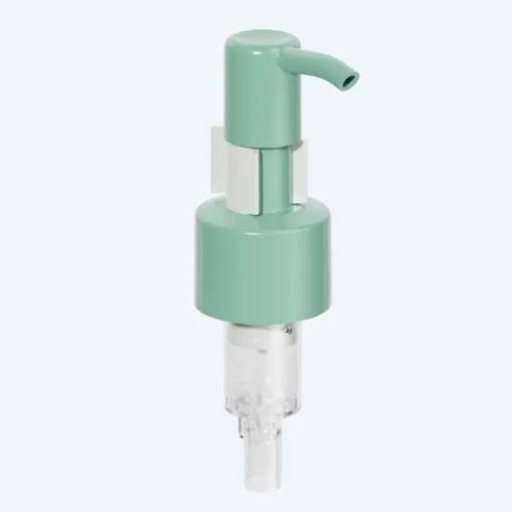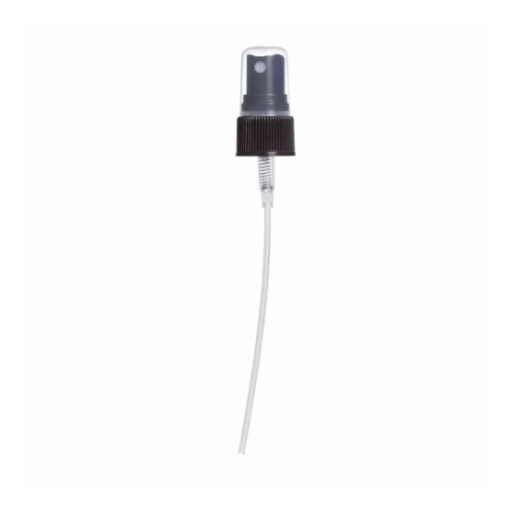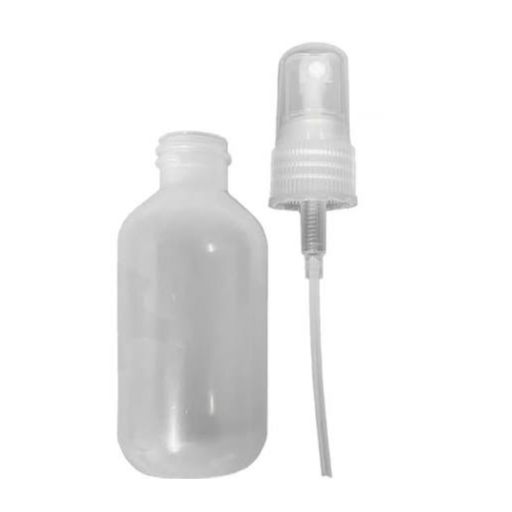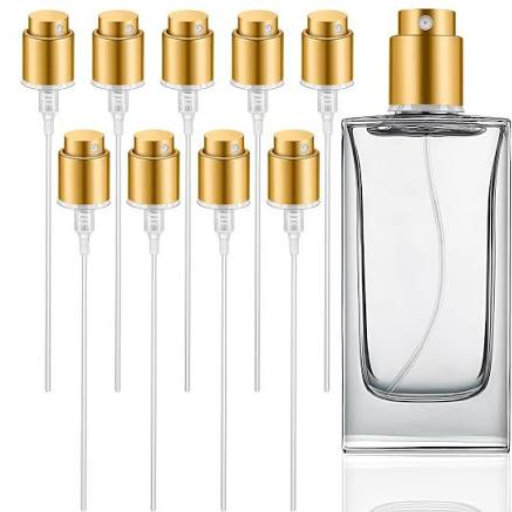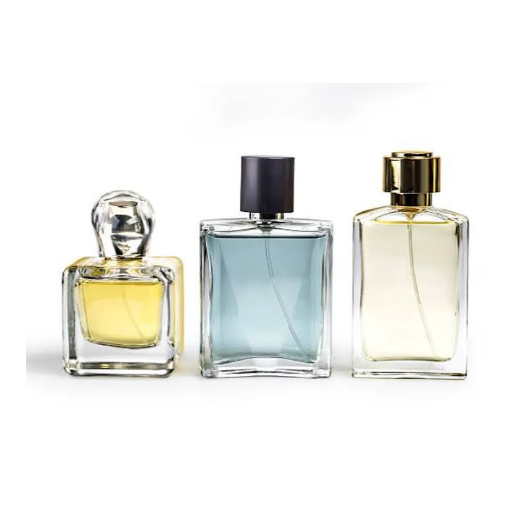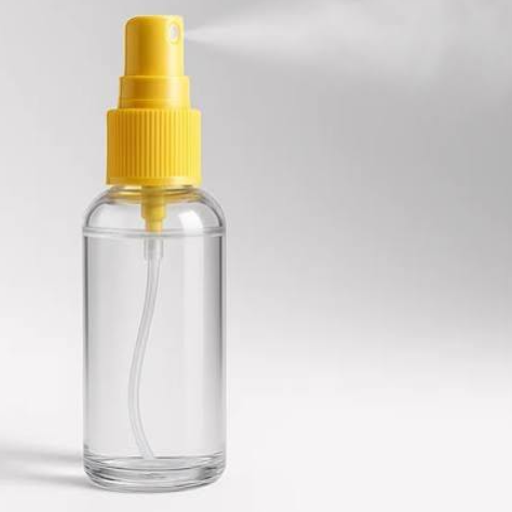
To choose a fine mist sprayer, work in this order: confirm the formula is thin enough for a mist, match the neck finish to your bottle, set the output per stroke from the product type, then verify materials, nozzle geometry and dip tube on a tested sample. The neck finish and the output are the two decisions you cannot change cheaply after tooling.
This guide is for cosmetic, personal-care and household brands sourcing a screw-on or crimp-on sprayer. It isn’t about garden misters or industrial nozzles, which use different hardware.
Most teams spend months on the formula and weeks on the bottle. The sprayer arrives as one line on a purchase order, and a customer decides in one press whether the product feels expensive.
The five decisions below are ordered to prevent rework, and they end with six specs for your RFQ and the tests that catch a bad component before filling. If you have a bottle and a target dose, and we will match components to both.
Key Takeaways
- Match the neck finish first. 18/410, 20/410, 24/410 and 28/410 are not interchangeable, and neither are 410 and 415.
- Cosmetic fine mist sprayers are usually specified between 0.10 and 0.25 ml per stroke, with fixed 0.12, 0.18 and 0.20 ml options in supplier catalogues.
- Fine mist suits thin, water-like formulas. Once a formula approaches a light gel, a treatment or lotion pump is the correct mechanism.
- Gasket and material compatibility cause as many field leaks as a wrong neck size. Test with the real formula, not water.
- Four tests decide a sample: inverted leak, cycle life, spray-pattern consistency and transport simulation.
Quick Answer: How to Choose a Fine Mist Sprayer in Six Specs
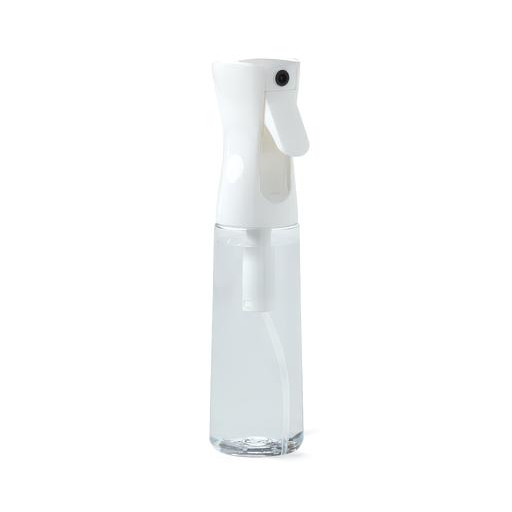
If you confirm only six things before you ask for a quote, confirm these.
| Spec | What to confirm | Common values | Why it matters |
|---|---|---|---|
| Neck finish | Bottle diameter and thread style | 18/410, 20/410, 24/410, 28/410; crimp 13, 15 or 18 mm | Mismatch leaks or will not seat |
| Output per stroke | Dose per actuation | Targets 0.10 to 0.25 ml; catalogues list 0.12, 0.18, 0.20 | Sets feel, dose and label claim |
| Viscosity fit | How thin the formula is | Water-like, roughly 1 to 5 cP | Thicker formulas need a different pump |
| Materials and gasket | Wetted plastic, gasket, spring | PP body; EPDM, silicone or NBR gasket; stainless or plastic spring | Swelling and corrosion cause leaks |
| Dip tube | Length to the bottom of the bottle | Inner height minus neck height minus 3 to 5 mm | Too short leaves product; too long starves the pump |
| Closure and actuator | Crimp or screw, lock, overcap | Screw 410 or 415; crimp fragrance neck | Decides refill, travel and child resistance |
Send it with your bottle drawing. That turns a vague sample request into a specification a factory can quote.
Step 1: Match the Fine Mist Sprayer Neck Finish to Your Bottle
The neck finish is the diameter and thread pattern where the fine mist sprayer meets the bottle. It’s the first physical gate: get it wrong and nothing downstream matters.
How to read 18/410, 20/410, 24/410 and 28/410
The first number is the neck diameter in millimetres; the second is the thread style. A 20/410 sprayer fits a 20 mm neck with a 410 thread. It will not fit a 24/410 bottle, even if the caps look similar.
| Neck finish | Typical bottle size | Typical products |
|---|---|---|
| 18/410 | 15 to 60 ml | Perfume, travel sizes, samples |
| 20/410 | 80 to 150 ml | Toner, face mist, setting spray |
| 24/410 | 150 to 250 ml | Body mist, hair care, hand sanitiser |
| 28/410 | 250 ml and above | Household, room spray, large-format care |
These are conventions, not rules. The bottle drawing and the sprayer drawing must agree.
410 versus 415: the mismatch that leaks
A 410 and a 415 finish share a neck diameter but not a thread profile. A 24/410 sprayer on a 24/415 bottle may start, then sit high, cross-thread or leak. The buyer sees a diameter match and assumes compatibility.
Ask for the neck drawing, not just the capacity, and choose the bottle first if you are sourcing both. has the dimensions; the covers the fit test.
Crimp versus screw for fragrance
Crimp-on sprayers are permanently sealed to a glass fragrance bottle: tamper-evident, hard to refill and standard on prestige perfume. Screw-on sprayers can be removed and refilled, which suits travel, body mist and personal care. Crimp necks are quoted in millimetres, usually 13, 15 or 18 mm; screw necks use the 410 or 415 system. The two don’t convert without an adapter, and adapters add height and cost.
How to measure a bottle neck
Use calipers across the thread crest, then check the thread count against the drawing. Send one physical bottle with the sample request: a bottle beats a photograph, and a photograph with a ruler beats a description.
Our range covers , so the neck conversation starts with the bottle you have.
Step 2: Set Fine Mist Sprayer Output Per Stroke From the Product
Output is the volume a fine mist sprayer delivers per full actuation. It decides how wet the product feels, how many uses a bottle gives and whether the label claim matches reality.
| Product | Target output per stroke | Risk if too high |
|---|---|---|
| Prestige fragrance | 0.08 to 0.12 ml | Runs down the wrist, wastes expensive juice |
| Toner | 0.10 to 0.13 ml | Soaks the cotton pad and drips |
| Face mist | 0.12 to 0.15 ml | Feels wet rather than weightless |
| Hair mist | 0.13 to 0.18 ml | Wets sections instead of misting them |
| Body mist | 0.15 to 0.25 ml | Drains the bottle and feels wasteful |
The targets above are application guidance, not catalogue values. HCC Packaging lists 0.12, 0.18 and 0.20 ml options on its standard cosmetic range. Berlin Packaging quotes 0.16 to 1.5 ml across the wider sprayer family, with high-output models at 4 ml. The cosmetic band is the narrow one.
Why output is a tooling decision
Output is set by the insert, orifice and stroke, not by a dial. Once the tool exists, changing 0.20 ml to 0.12 ml usually means a different insert or a new tool. Output belongs in the first sample request, not the third production run.
Imagine a product developer named Lena. She chose a 0.25 ml fine mist sprayer for a toner because the sample felt generous. Customers said it soaked through cotton pads and ran down the bottle. A lower-output insert fixed it, after a new sample round and a four-week delay. The formula never changed; the dose did.
Matching output to viscosity
A fine mist sprayer atomises thin liquids. Water is about 1 cP at room temperature; a light toner or alcohol fragrance sits a few centipoise above it. As viscosity rises, the spray stops breaking into droplets and arrives as a jet. Users call it spitting. Fragrance oils, essential oils and serums with gums are the usual culprits. If your formula is thicker than a light toner, read the .
covers face, hair and body formats in more detail.
Step 3: Check Formula Compatibility and Materials
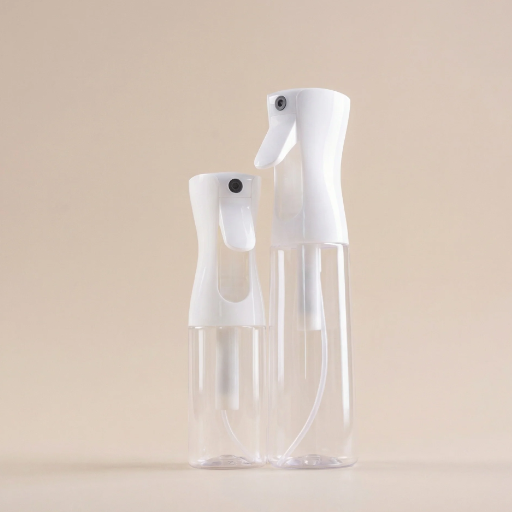
Two fine mist sprayers can share a neck finish, an output and a price, and behave completely differently after a month on the shelf. The difference is usually the gasket, the spring or the plastic.
Plastics: PP, PET, HDPE and LDPE
The sprayer body is usually polypropylene, which resists most alcohols and many oils. The dip tube must suit both the formula and the bottle’s inner geometry. The material that fails is rarely the body; it is the small part nobody specified.
Gaskets: EPDM, silicone and NBR
The gasket sits between the sprayer and the bottle neck. It’s the primary seal, and it’s formula-specific.
- EPDM suits many water-based formulas.
- Silicone suits many alcohol systems, but not every fragrance oil.
- NBR is the usual choice for oils, with a caveat: oil chemistry varies enough that testing decides.
No chart replaces a compatibility test. Alcohol and fragrance oils are the most likely to swell a standard gasket; actives that crystallise can clog the nozzle between uses.
Springs: stainless steel versus all-plastic
A stainless-steel spring gives consistent actuation and long cycle life. An all-plastic spring keeps the assembly mono-material for recycling, at some cost to feel. If recyclability is a requirement, ask for the full material breakdown and test the plastic version with your formula; otherwise stainless is the safer default. The page covers the internal components.
The 72-hour inverted leak test
Fill a sample bottle with the real formula, fit the fine mist sprayer, invert it and hold it at 45 °C for 72 hours. Check for seepage at the neck, the actuator and the dip tube connection. Repeat at half fill, because headspace changes how the seal behaves.
Water isn’t a valid test liquid for fragrance, oil or alcohol systems. The formula is what swells the gasket.
Step 4: Set the Fine Mist Sprayer Pattern, Nozzle and Dip Tube
The neck gets you a fit. The nozzle decides how the product feels in use.
Fine mist sprayer droplet size and feel
Fine mist is measured by droplet diameter, usually the volume median diameter (DV50). CosmeticPump’s orifice guide maps the cosmetic band from about 25 to 90 micrometres.
| Droplet size (DV50) | Consumer perception | Typical use |
|---|---|---|
| 25 to 40 µm | Ultra-fine cloud | Premium face mist, setting spray |
| 40 to 55 µm | Fine and even | Toner, hydrating mist |
| 55 to 70 µm | Soft, slightly wet | Body mist, hair mist |
| 70 to 90 µm | Damp, visible droplets | Body spray, not for face |
Orifice, cone angle and actuation force
Orifice diameter controls how much liquid exits and how finely it breaks up. Cosmetic face and toner sprayers commonly run 0.15 to 0.28 mm, according to the same guide. A larger orifice gives more output and coarser droplets; a smaller one gives a finer mist and a higher clogging risk with actives.
Two other numbers belong in the spec. Cone angle describes spray width. Actuation force describes how hard the user must press; a stiff actuator is a comfort problem, and a compliance problem for users with limited hand strength.
Dip tube length: the most-forgotten spec
The dip tube must reach the bottom without coiling. The working rule is:
Dip tube length = inner bottle height − neck height − 3 to 5 mm
Cut too long and it coils, kinks or lifts the inlet away from the liquid. Cut too short and the last few millilitres never spray, which reads as a short fill. Measure the inner height, not the outer height, and cut at an angle so the tube does not seal against the bottle floor.
Fixed mist, adjustable, stream and continuous
Most cosmetic sprayers are fixed mist. Adjustable nozzles switch between mist and stream for household products. Continuous sprayers use a pre-compression chamber for an even spray on a longer press: less hand fatigue, higher cost, harder to recycle. See .
Step 5: Qualify the Fine Mist Sprayer Supplier and the Batch
A sample proves what one person made by hand. Qualifying a fine mist sprayer supplier proves what a line can repeat.
Sample protocol: test with the real formula
Send the fine mist sprayer supplier your formula, bottle and target output. Ask for samples filled with your product, not water, from at least two production batches, and keep the batch numbers. Use the sample the way a customer will: prime it, spray at the stated distance, leave it a week and spray again. Many failures appear only after the nozzle dries once.
The four tests that matter
| Test | Method | What it catches |
|---|---|---|
| Inverted leak | 72 hours at 45 °C, full and half fill | Gasket swell, thread mismatch, seal failure |
| Cycle life | Repeated actuation to the rated count, commonly 10,000+ | Spring fatigue, piston wear, output drift |
| Spray pattern | 20 consecutive pumps on black paper at 15 cm | Spitting, clogging, inconsistent cone |
| Transport simulation | ISTA 3A or ASTM D4169 | Leaks and cap loss in transit |
A common plan is AQL 1.5, inspection level II, under ANSI/ASQ Z1.4. AQL is the acceptable quality limit, the defect rate a batch is allowed to carry. Agree it before production, not after the cartons arrive.
Compliance questions worth asking
If the product is a lip or food-contact item, ask for the food-contact declaration. If it is sold in the EU, ask about REACH and the plastics regulation. If the formula is hazardous, ask whether the closure can be child-resistant to 16 CFR 1700.20. None of these should be answered with a logo.
MOQ, lead time and tooling
Market fine mist sprayer MOQs for standard colours commonly sit between 5,000 and 20,000 pieces per SKU. CosmeticPump puts the standard range at 5,000 to 20,000; HCC Packaging quotes 10,000 standard, 20,000 for custom Pantone and 100,000 for a custom mould. Those are market terms, not our quotation.
At Longlu, production runs 4 to 6 weeks once an order is confirmed. MOQ depends on the component, decoration and quantity tier, so ask for the tier that applies to your SKU. The explains what moves it; the guide covers buying at volume.
The RFQ template
Copy this table into an email. A supplier who can’t answer it in writing is telling you something useful.
| Field | What to state |
|---|---|
| Bottle | Capacity, material, neck finish, neck drawing |
| Formula | Viscosity, alcohol or oil content, pH, actives, fill temperature |
| Output and pattern | Target ml per stroke, DV50 range, cone angle, tolerances |
| Materials and dip tube | Sprayer plastic, gasket, spring, measured tube length |
| Decoration | Colour, print, metal shell, overcap |
| Volume | First order and annual forecast, by SKU |
| Tests | Leak, cycle, pattern and transport standards |
| Commercials | Incoterm, sample cost, tooling, lead time, payment terms |
Five Mistakes That Show Up Six Weeks After Launch
These are the failures that survive a sample review and appear in the field.
- The neck was checked on a drawing, not a bottle. A 410 sprayer on a 415 bottle can pass a visual check and still leak after transit vibration.
- The dip tube was cut to the outer bottle height. It coils, starves the pump and leaves product behind.
- The gasket was chosen for water. A fragrance oil or essential oil swells it, and the leak starts at the neck.
- Output was set by feel, not by dose. The label says 30 uses, the bottle gives 18, and the customer feels short-changed.
- The overcap was never tested in a carton. Too tight and it cracks. Too loose and it falls off before the bottle reaches the shelf.
Consider Marco, who launched a body mist with a 24/410 sprayer and a locking overcap. The sample passed every hand test. The first pallet arrived with caps popped off: the overcap was sized for the bottle alone, not for the bottle inside its folding carton. A change to the carton insert fixed it, after a second carton run and a delayed launch.
None of these is exotic. Each is cheap to catch at the sample stage and expensive after filling. The page covers the symptoms once they reach the customer.
Fine Mist Sprayer vs Other Dispensers
| Dispenser | Best formula | Typical output | Where it fits |
|---|---|---|---|
| Fine mist sprayer | Thin, water-like | 0.10 to 0.25 ml | Toner, face mist, fragrance, body mist |
| Treatment pump | Light serum or lotion | Low, dose-controlled | Skincare with actives |
| Lotion pump | Lotion, cream, gel | Higher, dose-controlled | Body care, thicker formulas |
| Trigger sprayer | Thick cleaners, household liquids | 0.7 to 1.5 ml | Cleaning, garden, automotive |
| Aerosol | Fine mist with propellant | Continuous | Prestige fragrance, regulated formats |
| Crimp perfume pump | Alcohol fragrance | Low, fixed dose | Perfume and eau de toilette |
If the formula pours like water and the user should feel a cloud, choose a fine mist. If it pours like a light gel, choose a treatment or lotion pump. If it must wet a surface fast, choose a trigger. The and the cover the adjacent formats.
FAQ
What size fine mist sprayer do I need? Match the neck finish to your bottle first, then set output by product type. A 20/410 is common for toner and face mist; 24/410 suits body mist and hair care. Confirm both the neck diameter and the dose.
How much does a fine mist sprayer dispense per spray? Published cosmetic fine mist sprayer options commonly list 0.12, 0.18 and 0.20 ml per stroke. As a target, fragrance sits near 0.08 to 0.12 ml and body mist near 0.15 to 0.25 ml. The right figure depends on the product.
What is the difference between 20/410 and 24/410? The first number is the neck diameter in millimetres. A 20/410 fits a 20 mm neck, a 24/410 fits a 24 mm neck, and 410 is the thread style. They are not interchangeable: a 20/410 sprayer will not seal on a 24/410 bottle.
Can a fine mist sprayer handle oil-based formulas? Only thin oils. Mist nozzles are built for low-viscosity liquids, roughly water to a light toner, and fragrance or essential oils can swell the gasket. Test the full formula with the intended gasket, or move to a treatment or lotion pump for thicker products.
What is a typical MOQ for a fine mist sprayer? MOQ terms for a fine mist sprayer range from 5,000 to 20,000 pieces per SKU for standard colours, with 20,000 for custom Pantone and 100,000 for a custom mould cited by individual suppliers. MOQ is quoted per project, so confirm the tier before you launch.
How do I test a fine mist sprayer before ordering? Fill it with your real formula, not water. Run a 72-hour inverted leak test at 45 °C, check cycle life, spray 20 pumps on black paper and run a transport simulation. Then use the sample for a week and spray it again after the nozzle dries.
Conclusion
How to choose a fine mist sprayer comes down to a sequence, not a checklist. The formula decides whether a mist is the right mechanism. The mechanism narrows the output, the output narrows the nozzle, the bottle decides the neck, and the neck decides the SKU.
Get those five in order and the remaining choices, colour, decoration, overcap and packaging, are cosmetic. Get them out of order and every later decision carries a rework cost.
Start with the bottle and the target dose. Send both to a supplier who will put the specifications in writing and test with your formula. matched to your bottle and product type, or read the for the background behind these steps.