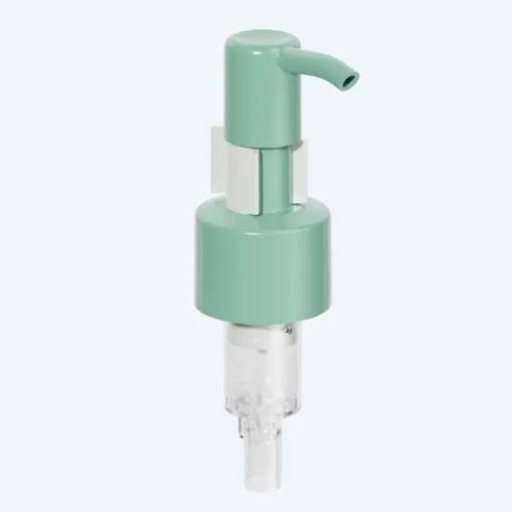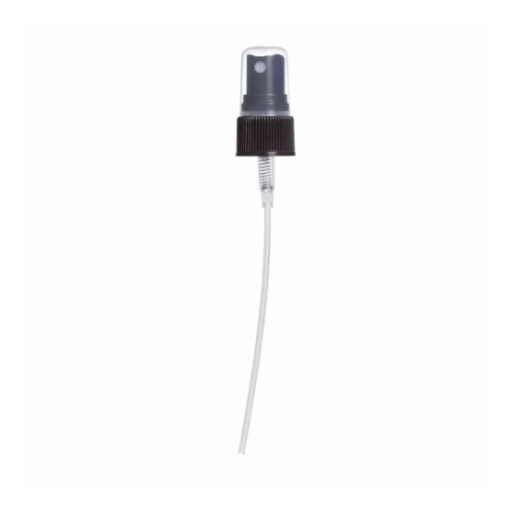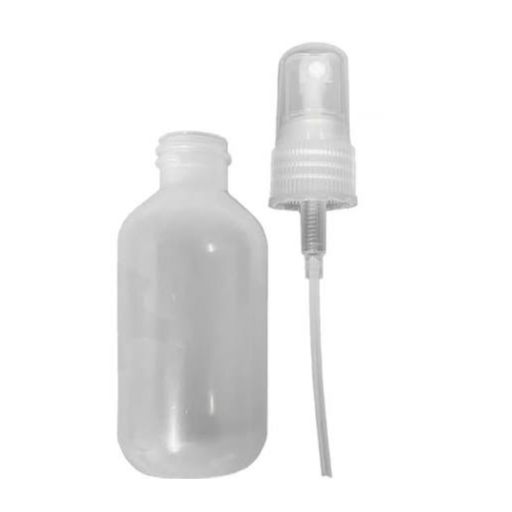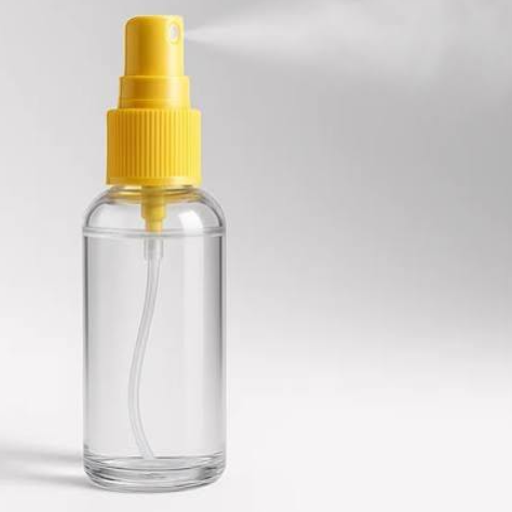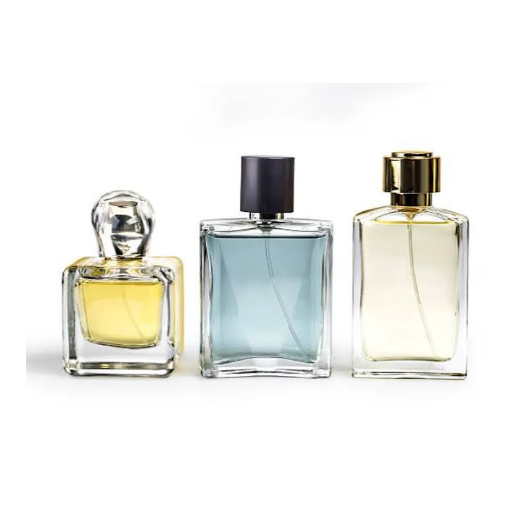
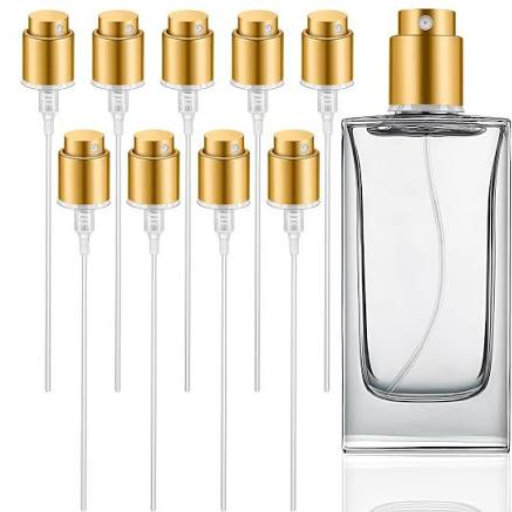
A perfume spray nozzle is the assembly at the top of a fragrance bottle that turns liquid into mist. It has three working parts: the actuator you press, the insert and orifice that shape the spray, and the closure that seals the assembly to the glass. Buyers and consumers use one word for all three, which is why so many replacements don’t fit.
If you’re here because a bottle stopped spraying, the short answer is this: on a crimped perfume bottle the pump is factory-sealed. Replacement usually means a new actuator or a decant into a travel atomizer, not a new internal nozzle. On a screw-on bottle you replace the whole sprayer.
This guide separates the parts, explains the measurement systems that decide fit, and gives brands the specifications to put in an RFQ. It’s written for fragrance brand owners and product teams, and for anyone trying to understand the part in their hand.
with your bottle drawing if you’re specifying components for a production run.
Key Takeaways
- A perfume spray nozzle is three parts, not one: actuator, insert/orifice and closure. Only the actuator is routinely user-replaceable on a crimped bottle.
- Crimp ferrules are quoted in millimetres (13, 15, 18, 20). Screw necks use the 410/415 thread system (18/410, 20/410, 24/410). A “15 mm nozzle” is not a thread size.
- Fine fragrance pumps usually dose 0.05 to 0.12 ml per press. At 0.07 ml a 50 ml bottle gives about 714 sprays; at 0.10 ml it gives about 500.
- Crimp-on pumps are permanent and tamper-evident. Screw-on sprayers are removed and replaced as a complete unit.
- Start with the bottle neck, then set the dose, then choose the actuator feel. The nozzle is the last decision, not the first.
What Is a Perfume Spray Nozzle?
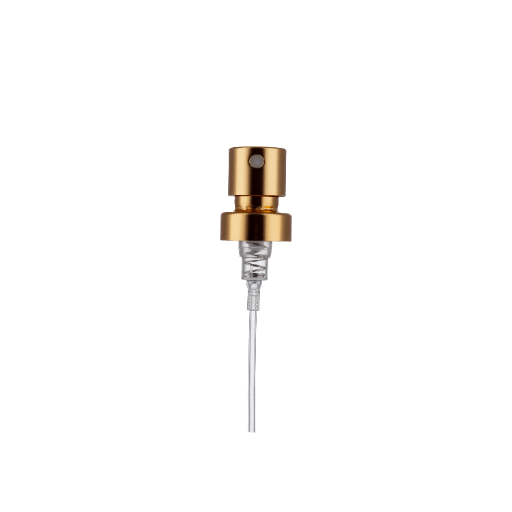
A perfume spray nozzle is the dispensing head that atomises fragrance. Pressing the actuator compresses a pump chamber, forcing liquid through a narrow orifice. The liquid breaks into droplets through atomisation, and the geometry of the insert decides how fine and how wide the mist is.
In a parts catalogue, “nozzle” often means only the insert inside the actuator. In everyday use, it means the whole spray head. That ambiguity causes most of the confusion in this category.
| Part | What it does | What it controls | User-replaceable? |
|---|---|---|---|
| Actuator | The button you press | Finger feel, spray direction, lock and cap interface | Sometimes, if the stem fit matches |
| Insert and orifice | Shapes the liquid into droplets | Droplet size, cone width, evenness | Not sold separately in practice |
| Closure | Seals the assembly to the bottle | Pressure retention, tamper evidence, refillability | No on crimp; yes on screw |
| Dip tube | Draws liquid from the bottle | Feed, priming, product left behind | Yes, if the length is right |
| Gasket | Elastomer seal at the neck | Leak resistance, formula compatibility | Yes, with the correct material |
Why “Nozzle” Means Three Different Things
A consumer who loses the top of a perfume bottle is usually missing the actuator. A brand that specifies a “nozzle” is usually choosing an actuator, an insert and a closure as one assembly. A filler who talks about the nozzle may mean only the orifice that sets the spray pattern.
Those are three different purchases. Separating them prevents the two most common errors: buying a replacement that doesn’t fit the pump stem, and specifying a dose that the closure can’t deliver.
Perfume Spray Nozzle Types: Crimp, Screw and Crimpless
The closure is the first classification that matters, because it decides what the user can remove. Output and actuator style come after.
Crimp-On Nozzles
A crimp-on sprayer uses an aluminium ferrule that is mechanically pressed onto the glass neck. It can’t be removed without destroying the ferrule. That permanence gives the best evaporation control and the clearest tamper evidence, which is why it’s the default for fine fragrance.
Crimp ferrules are quoted in millimetres. Our perfume pump range uses FEA 13, FEA 15, FEA 18 and FEA 20, with FEA 15 the common choice for 30 to 100 ml bottles. The ferrule size must match the bottle neck drawing, not the bottle’s nominal capacity.
Screw-On Nozzles
A screw-on sprayer threads onto a standard neck such as 18/410, 20/410 or 24/410. It can be removed by hand, which suits travel formats, body mists and refillable designs. The trade-off is a weaker seal than a crimp and a closure that reads as less premium on a prestige fragrance.
A screw-on sprayer is replaced as a complete unit. You don’t replace the insert inside it.
Crimpless and Snap-On Nozzles
A crimpless pump uses a snap-on or push-on collar that mimics the crimped look without a crimping machine. It is faster to fill and friendlier to refills. The limit is dose: crimpless models are typically capped at 0.08 ml and 0.12 ml, so a concentrated extrait that needs 0.05 ml is a poor fit.
Standard, Micro-Spray and Spray-Through Formats
Output separates a standard fragrance sprayer from a micro-spray atomizer. Micro-spray versions deliver a smaller, softer dose for samples and travel. The actuator format matters too: an exposed button suits a bottle with an overcap, while a spray-through design lets the user spray without removing the cap. Our page covers the cap side of that decision.
What Controls Spray Quality
Two perfume spray nozzles can share a neck size, a dose and a price, and still feel completely different. The difference sits in four places.
The Insert and Orifice
The insert is the small component inside the actuator that contains the swirl chamber and the orifice. It sets droplet size, spray cone and evenness. The opening is typically sub-millimetre, and small changes in its geometry change the feel more than most buyers expect. The principle is the same one described in any spray nozzle reference: pressure plus a small opening equals droplets.
This is the part most people mean when they say “nozzle”, and it’s the part least likely to be sold on its own.
Dose Per Stroke
Dose is the volume delivered per full press. Fine fragrance usually sits between 0.05 and 0.12 ml. The number is set by the pump chamber and stroke, not by the actuator alone.
Dose has a direct commercial effect. At 0.07 ml, a 50 ml bottle gives about 714 sprays. At 0.10 ml, the same bottle gives about 500. If the label promises 700 uses, the second specification fails the promise even though nothing’s defective.
Actuator Stroke and Spring
The actuator converts finger force into pump travel. A longer or stiffer stroke feels more deliberate; a short, light stroke feels softer. The spring inside the pump returns the actuator and closes the valve. A weak spring can leave the spray running for a moment after release.
Formula Viscosity and Alcohol Content
Atomisation depends on how easily the liquid breaks apart. Alcohol-based fine fragrance is close to water in viscosity and mists readily. Oil-heavy formulas, thick gels and high-surfactant products need a different mechanism, not a different nozzle.
For pump-side detail on ferrules, dosage and quality tests, see our .
How to Match a Perfume Spray Nozzle to a Bottle
Fit starts with the bottle, not the nozzle. The neck drawing is the fixed constraint, and everything else follows from it.
Read the Neck Finish Before Anything Else
Two measurement systems appear in fragrance packaging, and they aren’t interchangeable:
| System | Examples | What the number means |
|---|---|---|
| Crimp ferrule | FEA 13, FEA 15, FEA 18, FEA 20 | Ferrule diameter in millimetres |
| Screw thread | 18/410, 20/410, 24/410, 24/415 | Neck diameter in millimetres, then thread style |
A 15 mm crimp ferrule and a 15/410 screw neck aren’t the same fit. Neither is a 24/410 sprayer on a 24/415 bottle: the diameter matches, the thread doesn’t, and the result is a sprayer that sits high, cross-threads or leaks.
Set the Dip Tube and Gasket
The dip tube must reach the bottom of the bottle without coiling. A common rule is inner bottle height minus neck height minus 3 to 5 mm. Too short and the pump starves before the bottle is empty. Too long and the tube bends, blocking the inlet.
The gasket is the other quiet failure. A gasket chosen for water can swell in a fragrance oil, and you won’t see the leak at the neck until weeks after filling. Test the real formula, not water.
Check Actuator Height Under the Cap
The actuator has to sit inside the overcap or align with a spray-through opening. A taller actuator can clash with a low cap, and a decorative collar can change the stack height. Confirm the full assembly, not the components in isolation.
Our walks through the fit test in order. If you’re still choosing the bottle, confirm the neck options that pair with each closure before you order.
Perfume Spray Nozzle Replacement: What You Can and Cannot Swap
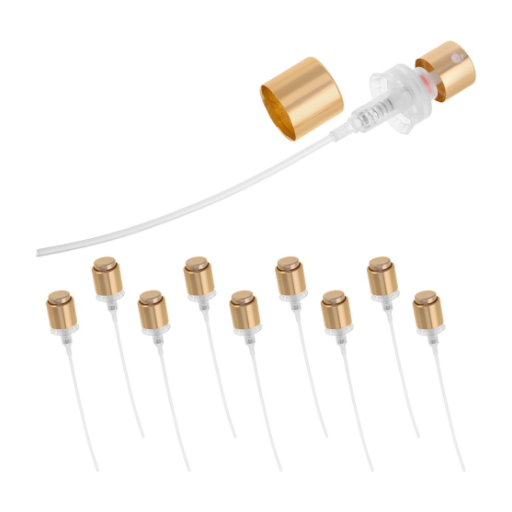
Replacement depends entirely on the closure. A perfume nozzle replacement isn’t a universal part, so the same advice doesn’t apply to a crimped bottle and a screw-top bottle.
Crimped Bottles
The ferrule and pump body are sealed to the glass. There’s no user-serviceable nozzle inside. The actuator can sometimes be pulled off and replaced, but only with one that fits the pump stem and sits correctly under the cap. Generic replacements sold as “15 mm” usually refer to the ferrule, not the stem, so they often don’t fit.
If the pump itself has failed, the practical options are to decant the fragrance into a travel atomizer or to return the bottle to the brand. Prying at the ferrule damages the glass neck and rarely restores the seal.
Screw-On Bottles
Unscrew the whole sprayer and replace it with one that matches the neck finish. Don’t try to prise the insert out of the old actuator. The replacement unit carries its own insert, dip tube and gasket, and the neck size is the only fit variable that matters.
Crimpless Bottles
The assembly pulls off and a matching crimpless unit pushes back on. Check the collar diameter and the stem fit, not just the bottle capacity. A collar that looks similar can sit proud or fail to lock.
When Cleaning Is the Better Answer
If the bottle sprays weakly or not at all, clean before replacing. Dried fragrance residue in the orifice is common, especially after a bottle has sat unused. Warm water, a short soak and a gentle wipe of the opening solve many cases. A pin can clear a visible blockage, but don’t enlarge the hole.
Our covers the cleaning sequence and the cases where repair is not worth attempting. The iFixit guide to a jammed perfume nozzle is a useful second reference for consumer repairs.
Common Nozzle Problems and What They Mean
| Symptom | Likely cause | Fix or replace? |
|---|---|---|
| No spray at all | Empty bottle, blocked dip tube, failed pump | Check fill and tube first; replace if the pump has failed |
| Weak spray | Low liquid, partial clog, air leak at the gasket | Clean; replace the gasket or sprayer |
| Uneven or spitting spray | Damaged orifice, formula too viscous, air in the chamber | Clean and re-prime; check formula fit |
| Leak at the neck | Worn gasket, cross-threaded closure, cracked neck | Replace the gasket or sprayer; inspect the glass |
| Actuator loose or missing | Worn stem socket or lost part | Replace the actuator if the stem matches |
| Spray continues after release | Sticky valve or weak spring | Replace the pump or sprayer |
Most of these are user-fixable on a screw-on bottle and factory issues on a crimped one. That’s the difference between a five-minute fix and a lost bottle.
Specifying a Nozzle for a Fragrance Brand
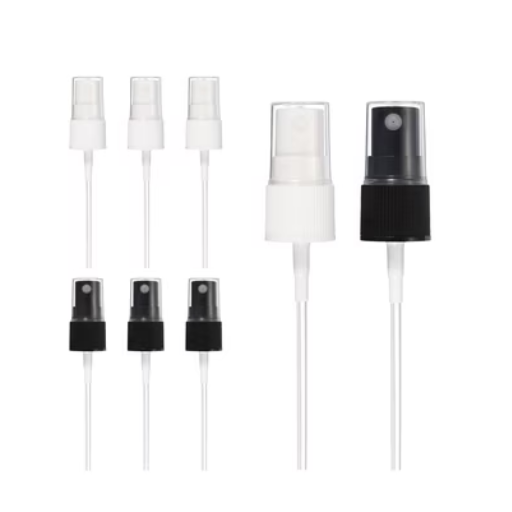
For a brand, the nozzle is a specification, not an accessory. Three decisions carry most of the risk:
- The closure, because it fixes what can be replaced later.
- The dose, because it sets how many sprays the label can promise.
- The insert, because it sets how the mist feels in use.
The goal is a spray that matches the product’s price point and dose, and a component that survives filling and transport.
Start With Dose and Closure
Decide the dose first. A concentrated extrait may need 0.05 ml; an eau de toilette may sit at 0.08 to 0.10 ml.
Then choose the closure. Crimp suits fine fragrance and tamper evidence. Screw suits refillable and travel formats, and crimpless sits between the two with a narrower dose range.
Choose the Actuator for Feel, Not Only Looks
Actuator shape affects the finger, the spray angle and the cap stack. A wide pad feels softer; a narrow pad concentrates force. Test two or three inserts on the same pump before committing, because the insert changes the mist more than the button shape does.
Test the Assembly, Not the Component
Four tests catch most failures:
| Test | Method | What it catches |
|---|---|---|
| Inverted leak | 72 hours at 45 °C, filled and half-filled | Gasket swell, seal failure |
| Cycle life | Repeated actuation to the rated count, commonly 10,000 or more | Spring fatigue, output drift |
| Spray pattern | 20 consecutive pumps on black paper at 15 cm | Spitting, clogging, uneven cone |
| Transport simulation | A carton and pallet test that includes the overcap | Leaks, cap loss, vibration damage |
A component that passes on a bench can still fail in a carton. Test the full assembly.
Put the Specs in the RFQ
| Field | What to state |
|---|---|
| Bottle | Capacity, material, neck finish, neck drawing |
| Closure | Crimp, screw or crimpless; ferrule or thread size |
| Dose | Target ml per stroke and tolerance |
| Spray | Pattern, cone, droplet target if specified |
| Actuator | Shape, colour, lock, cap clearance |
| Materials | Plastic, gasket, spring, ferrule finish |
| Volume and tests | Order quantity, test standards, destination market |
Our range covers , and production runs typically take 4 to 6 weeks once an order is confirmed. Send the bottle drawing and the target dose, and we will match the closure and actuator to both.
FAQ
What is the spray part of a perfume bottle called? It’s usually called the perfume bottle spray nozzle, the sprayer, the atomizer or the actuator. Technically, the actuator is the button, the insert contains the orifice, and the closure is the crimp ferrule or screw cap that seals the assembly to the bottle.
Can you replace a perfume spray nozzle? It depends on the closure. On a screw-on bottle, unscrew the whole sprayer and replace it with one that matches the neck finish. On a crimped bottle, the pump is factory-sealed; you may be able to replace the actuator, but not the internal nozzle. Decanting into a travel atomizer is often the practical answer.
How do I know what size nozzle my bottle takes? Read the neck, not the bottle capacity. Crimp bottles use ferrule sizes such as 13, 15, 18 or 20 mm. Screw bottles use finishes such as 18/410, 20/410 or 24/410. If you’re unsure, measure the neck diameter and thread, or send the bottle to a supplier for a match.
Why is my perfume spray nozzle not working? The usual causes are a blocked orifice, a blocked dip tube, a failed pump or an empty bottle. Clean the opening and check that the tube reaches the liquid. If the pump has lost pressure on a crimped bottle, the assembly can’t be repaired at home.
What is the difference between a crimp and a screw nozzle? A crimp nozzle is permanently sealed to the glass with an aluminium ferrule. It gives the best seal and tamper evidence but can’t be refilled. A screw nozzle threads onto the neck and can be removed, which suits travel and refillable formats.
Can I replace just the perfume spray nozzle cap? If by cap you mean the actuator, sometimes. It must fit the pump stem and clear the bottle’s overcap. If you mean the decorative overcap, that’s a separate component and doesn’t affect the spray. The internal insert isn’t a user-replaceable part.
Conclusion
A perfume spray nozzle is a small assembly with three separate jobs: press, shape and seal. Once those jobs are separated, the confusing questions become simple.
The closure decides what can be replaced. The neck finish decides what fits. The dose decides how the bottle performs against its label.
For consumers, start with the closure type before buying any replacement. For brands, start with the bottle neck and the target dose, then choose the actuator and insert on a tested sample.
If you’re specifying a perfume spray nozzle for a fragrance launch, to our team. We’ll confirm the closure, the ferrule or thread size, and the actuator options that fit your bottle and your price point.