A real lotion pump manufacturer can tie a named pump model to your bottle neck, target output, formula sample and tolerance, in writing. That is the whole test. The factory photo, the certification wall and the ten-name list are decoration until someone puts a model number and a tolerance next to your order.
If you have spent an afternoon on the first page of Google for “lotion pump manufacturer,” you have seen the pattern. Ten companies, ten short blurbs, no prices, no minimum order quantities, no test method. Everyone claims to be a factory. Almost no one tells you how to check.
This guide fixes that. You will learn what a pump factory actually makes, the twelve fields that produce comparable quotes, what published output and price figures look like, the seven tests to run on a sample, and the audit questions that separate a production line from a storefront.
Key Takeaways
- “Manufacturer” covers factories, assembly shops, traders and agents. Ask who owns the mould, who moulds the pump engine, and where assembly and QC happen.
- Output is model-specific. Published references run from 1.0 mL to 3.35 mL on common lotion-pump necks, with small-format pumps down to 80 µL, and a 24/410 label alone says nothing about the dose.
- Marketplace listings in late 2026 show lotion pumps at roughly $0.03 to $0.12 per unit, with MOQs commonly between 10,000 and 30,000 pieces.
- Test output by weight, priming, rebound, leaks, drop, formula compatibility and dip-tube fit before you approve a bulk order.
- A supplier that can’t provide a model number, a nominal output and a tolerance isn’t ready for your order, however good the price looks.
What a Lotion Pump Manufacturer Actually Makes
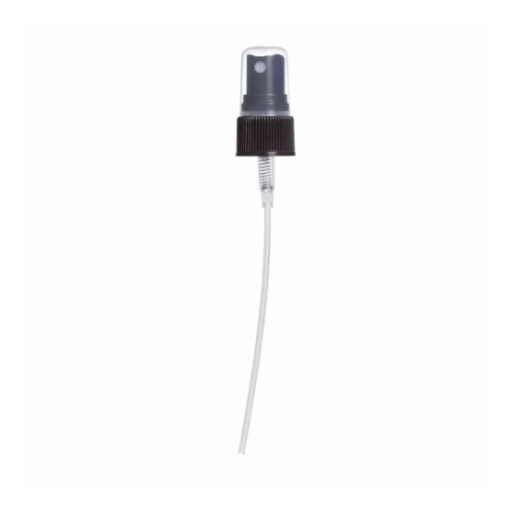
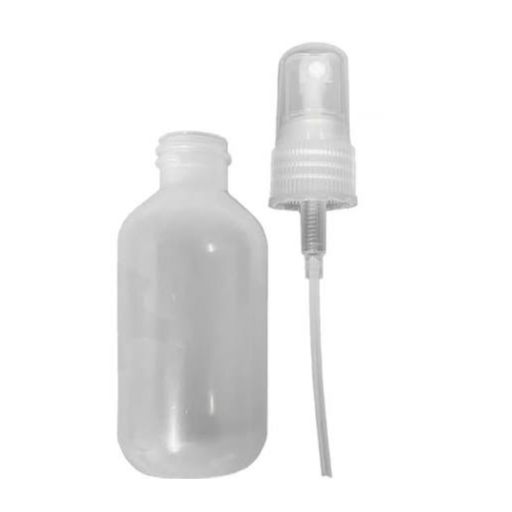
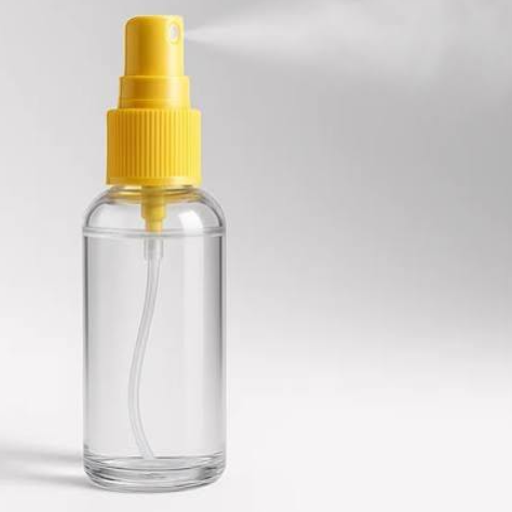
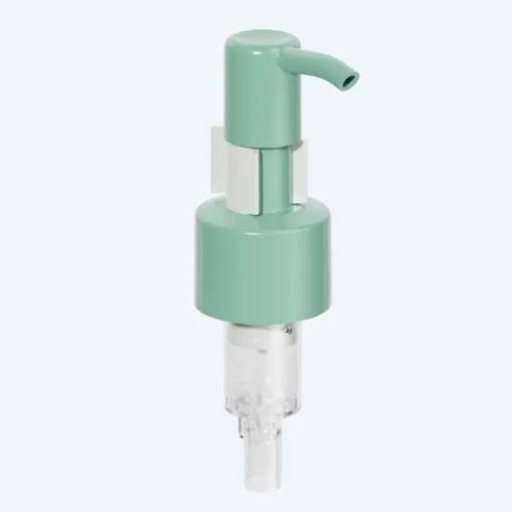
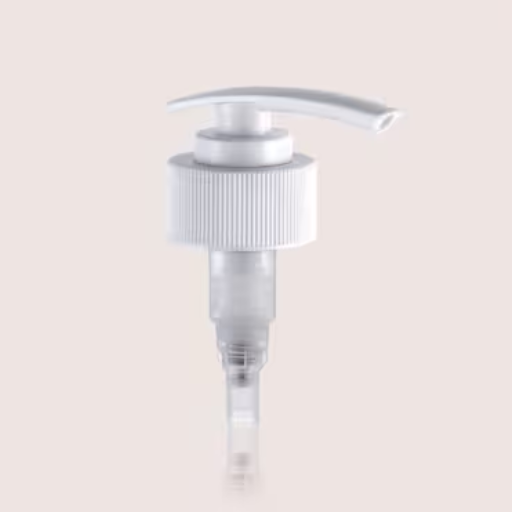
A lotion pump looks like one part. It is really four parts working together, and each one can come from a different supplier.
- The pump engine is the chamber, piston, spring and valves that move the product. This is the part that determines output and behaves differently with thick formulas.
- The actuator is the head you press. Its shape changes the feel, the dose and how cleanly the product leaves the nozzle.
- The closure is the collar that screws onto the bottle. Its code, such as 24/410 or 28/410, describes the thread and finish, not the engine inside.
- The dip tube carries product from the bottom of the bottle to the engine. Its length and cut angle have to match the bottle.
A supplier can make all four, mould two and buy the rest, or assemble finished components from three different factories. All of them may call themselves a lotion pump manufacturer. A real one should answer a technical question with a model number; ask for it early.
Factory, assembler, trader or agent?
The distinction matters because it decides who can answer a technical question, who controls change, and who is responsible when a batch leaks.
| Type | Owns the mould? | Moulds the engine? | Assembles? | Handles QC? | Change control |
|---|---|---|---|---|---|
| Injection factory | Usually | Usually | Usually | In-house | Direct |
| Assembly shop | Sometimes | No | Yes | Often | Partial |
| Trader | No | No | No | No | Forwards your question |
| Agent | No | No | No | No | Introduces you to someone else |
A trader isn’t automatically a bad choice. A good trader can consolidate several components, manage freight and save you three weeks. The problem starts when a trader answers a technical question it can’t actually control.
Three questions that locate the production
Ask these before you discuss price:
- Who owns the mould for this pump model? If the answer is “our partner,” ask whether the mould is exclusive and what happens if the partnership ends.
- Which parts do you mould in-house, and which do you buy? A factory should be able to name the engine, housing, actuator and closure separately.
- Where is the pump assembled and tested? Ask for the site address and a short video of the line. A sales office in one country and a factory in another is normal. Confusing the two is not.
If the answers arrive as a brochure instead of specifics, you are talking to a sales layer, not production.
The Spec Sheet That Gets a Lotion Pump Manufacturer to Quote Accurately
Most pump quotes are not comparable because the buyer sends a bottle and a quantity. The supplier fills in the blanks with whatever model is closest to the door.
A useful inquiry starts with the dose, not the pump name.
Start with the dose, then work backward
Decide what one full press should deliver. A facial lotion may want a small, controlled dose. A body lotion may want a larger one. The target is milliliters per full stroke, plus an acceptable tolerance.
HCC Packaging’s output guide makes the point plainly: output per stroke is set by the selected pump engine and is normally stated as milliliters per full actuation. It also notes that cc and mL are the same volume, so a 2 cc specification means 2 mL.
Do not start with “1 cc” because it sounds standard. Start with the consumer routine, then ask which named model delivers it.
Neck finish is a connection, not a performance specification
A 24/410 lotion pump fits a bottle with a 24 mm thread and a 410 finish. It doesn’t guarantee a particular output, a particular viscosity range or a particular feel.
HCC documents both a 1.20 mL and a 2.20 mL pump on a 24/410 neck. Same connection, different engine, different dose. That is why a quote that says “24/410 lotion pump” is incomplete.
If you need a refresher on how the thread and finish work together, our covers the dimensional side, and the same logic applies here.
Dip tube, actuator and lock style
The dip tube is cut to the bottle height and bottom shape. Too long and it curls or blocks. Too short and the pump starves before the bottle is empty. Send the bottle drawing or a physical sample.
The actuator changes the user’s hand position and the apparent dose. A small head on a high-output engine feels weak. A wide head on a low-output engine feels sloppy. Ask for the actuator in the sample, not just in the drawing.
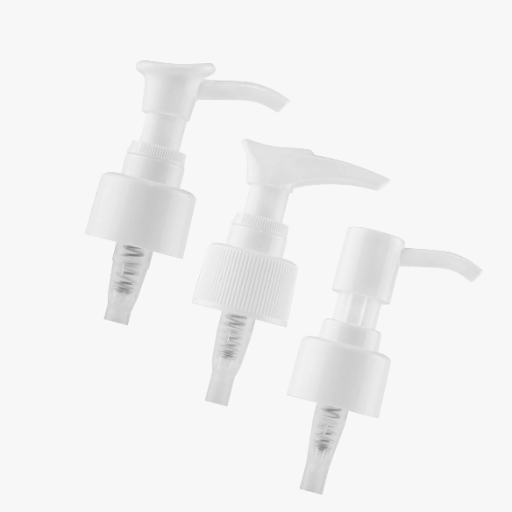
The lock style affects transport and cost. A clip-lock pump is common for personal care and helps prevent accidental dispensing in transit. A twist-lock adds a quarter-turn lock and usually costs more.
The twelve fields that produce a comparable quote
| Field | Why the supplier needs it | A vague answer sounds like |
|---|---|---|
| Formula category and viscosity notes | Determines engine and valve choice | “It’s a lotion” |
| Target output per stroke | Sets the pump model | “Standard output” |
| Output tolerance | Defines what you will accept | “It’s accurate” |
| Neck finish | Matches the bottle | “24 mm” |
| Bottle drawing or height | Sets dip-tube length | “Normal bottle” |
| Dip-tube requirement | Reaches the product at all fill levels | “We’ll cut it” |
| Actuator style | Changes feel and dose | “Standard head” |
| Lock style | Affects transport and cost | “With lock” |
| Colour and match | PPG or Pantone reference | “White” |
| Decoration | Printing, hot stamp, label | “We’ll see” |
| Order quantity | Sets MOQ and price band | “A few thousand” |
| Destination market and documents | Testing, labelling, compliance | “Export” |
The RFQ sentence that saves a week
Add this to the bottom of your inquiry:
Please quote the exact pump model, nominal output per full stroke with tolerance, neck finish, actuator and lock style, MOQ, unit price at 10,000, 30,000 and 50,000 pieces, lead time from deposit, sample lead time, and the test reports you can provide. Quote the sample and the bulk order on the same model.
That sentence does two things. It forces a model number into the reply, and it makes a vague quote visibly incomplete.
Output, Price and Lead Time: The Numbers Behind the Quote
Published figures are useful, but only when they stay attached to a model. Treat every range below as an example from a named source, not as an industry standard.
Output is model-specific
| Pump reference | Nominal output | Documented necks | Source |
|---|---|---|---|
| All-plastic twist-lock | 1.20 mL | 24/410, 28/410 | HCC Packaging |
| Multi-size twist-lock | 2.20 mL | 24/410, 24/415, 28/410, 28/400, 28/415 | HCC Packaging |
| 28/410 twist-lock | 2.30 mL | 28/410 | HCC Packaging |
| Clip-lock | 3.35 mL | 24/410, 32/410 | HCC Packaging |
| Clip-lock, ribbed, white | 1.0 mL | 24/410 | NABO |
| Small-format lotion pump | 200 µL | 15 mm | Aptar Click Lotion |
| Small-format atmospheric | 80/130 µL | 5/10/15 mL bottles | Silgan Sofistic |
HCC’s current guide explicitly says it doesn’t assign a universal viscosity range or output to a pump category. That isn’t a dodge. It’s the honest answer: the engine, the valve and the formula decide together.
The practical consequence is simple. A 250 mL bottle at 2.0 mL per press gives 125 full strokes. The same bottle with a 3.35 mL engine gives about 75.
Both are valid products. One may be wrong for your price point, your routine and your label claims. If you’re still deciding between a sprayer and a pump, our starts with the formula instead of the catalogue.
Listings also blur names. The same model can appear as a lotion pump dispenser, a lotion pump bottle component or a replacement pump. Match the model number, not the listing title.
Thick formulas need a sample, not a viscosity number
A thick lotion can stall a pump that works fine with water. Output alone does not fix that. Check rebound, dip-tube fit and formula flow with the actual product.
HCC’s thick-formula guidance recommends reviewing the bottle neck, formula type, viscosity notes, target output, actuator, quantity and destination market before sampling. It also warns that a larger output does not automatically work better with a resistant formula.
Do not invent a centipoise cut-off. Ask the supplier to test your formula, and record what “pass” means before the test starts.
An airless lotion pump is a different system, not an upgraded lotion pump. It uses a collapsing pouch or piston to limit air contact. That changes evacuation, cost and the fill process, so specify it only if the formula or the position actually needs it.
Price bands and MOQs
Lotion pump wholesale listings in October 2026 showed these indicative bands. They are not quotes, and they move with resin, colour, decoration, packaging and freight. The lotion pump price depends on output, collar material, lock style, colour, decoration, testing and order quantity, so compare quotes on the same model.
| Pump | Price per unit | MOQ | Source type |
|---|---|---|---|
| 24/410 black ribbed lotion pump | $0.034–0.041 | 30,000 | Supplier listing |
| 24/410 standard lotion pump | $0.039–0.045 | 30,000 | Supplier listing |
| 28/410 custom lotion pump | $0.032–0.05 | 10,000 | Supplier listing |
| Aluminium collar lotion pump | $0.024–0.032 | 10,000 | Supplier listing |
| Big-dosage skincare pump | $0.094–0.12 | 10,000 | Supplier listing |
| Child-resistant lotion pump | $0.11–0.117 | 30,000 | Supplier listing |
| 24/410 clip-lock, 1.0 mL | $0.06 | 10,000 | NABO product page |
| 28/410 twist-lock | $0.077 | Not stated | NABO product page |
NABO also states that custom colour starts at 30,000 pieces, even though the standard white pump has a 10,000 MOQ. That split is common. Ask which MOQ applies to your colour, your decoration and your packaging, not just to the pump.
Lead time starts at a named event
| Stage | Published example | What starts the clock |
|---|---|---|
| Standard lotion pump production | 15–20 days | Deposit |
| Standard lotion pump production | 15–25 days | Deposit |
| Stock plastic items | 7–10 working days | Deposit |
| OEM production | 30–35 working days | Deposit or sample approval |
| CustomPackingCo production | 4–6 weeks | Confirmed order and artwork approval |
“15–20 days” means very little without the start event. A deposit, an approved artwork, a signed sample and a confirmed bottle drawing are four different starting lines. Put the event in the purchase order.
A $0.01 difference on 30,000 units is $300. That is worth negotiating, but it’s small next to a failed leak test, a rework run or a late launch. Compare like-for-like models first, then argue about the last cent. The same commercial logic applies to , where MOQ and QC move together.
How to Test and Audit a Lotion Pump Manufacturer
A sample isn’t a formality. It’s the only evidence you’ll have before 30,000 units leave the factory.
The seven-test sample scorecard
Ask for samples from the production line, not a hand-built golden sample. Then run the same seven checks on every supplier you shortlist.
- Output by weight. Prime the pump, then deliver ten full strokes into a tared container. Weigh the result, divide by ten, and convert to volume with your formula’s density. Record the mean and the spread. Compare both with the nominal output and the stated tolerance.
- Priming. Count the strokes needed to reach a consistent dose. A pump that needs eight strokes on a 250 mL bottle will annoy users and distort your fill-line planning.
- Rebound. Deliver twenty strokes and watch the actuator return. A slow or sticky return signals a poor match with a thick formula or a weak spring.
- Leak. Fill the pack and leave it upright, inverted and on its side for 24 to 48 hours. Check the closure, the actuator and the dip-tube joint.
- Drop. Put a filled pack in its carton and run a standard carton drop. Inspect the actuator, collar and bottle for cracks or separation.
- Compatibility. Fill with your formula and store at ambient and elevated temperature for at least four weeks. Look for stress cracking, swelling, colour change and loss of dose.
- Dip-tube fit. Check the cut length, the bottom clearance and the behaviour when the bottle is tilted. Confirm how much product remains at the end of the pack.
Record the pump model, neck finish, actuator, lock, formula, fill volume, date and tester. A result without those fields cannot be compared with the next supplier.
Twelve audit questions
Ask these on a call or by email. The answers tell you more than a certificate scan.
- What is your legal entity name and factory address?
- Which pump models are your own moulds?
- Which components do you mould in-house?
- Do you assemble and test on the same site?
- What output test do you run, and how often?
- What leak and torque checks do you record?
- What is your AQL plan for a lotion pump order?
- What happens when a mould is repaired or a resin batch changes?
- Can you provide COA and MSDS for the actual batch?
- If you claim a certificate, what is its scope and expiry date?
- Can you share an anonymised reference order in our category and market?
- Who handles a claim after delivery, and what is the response time?
Red flags
- A quote without a model number.
- “Any output is possible” without a sample or a tooling cost.
- No stated tolerance.
- No question about your bottle, dip tube or formula.
- Certification logos with no certificate behind them.
- A price far below the band with no explanation.
- Pressure to pay in full before you approve a sample.
A lotion pump supplier can be cheap, fast or precise. Rarely all three. The audit is how you find out which two you are actually buying.
Where CustomPackingCo Fits
CustomPackingCo is a Fuzhou-based packaging manufacturer and sourcing partner for perfume and beauty brands. We build and source dispensing packaging for beauty and personal care brands, and we review the pump and bottle as one assembly when that is the useful unit.
We don’t publish a lotion-pump product catalogue, and we don’t claim in-house lotion-pump engine manufacturing. What we can do is check the neck and dip-tube fit, coordinate pump samples with the bottle, and keep one specification record across both.
Our published production window is 4 to 6 weeks. Certifications aren’t listed on our site, so we don’t claim any. MOQ is set per project, so ask rather than assume.
If you have a bottle and a target dose, . We will tell you what fits, what needs a sample, and what we cannot verify.
Frequently Asked Questions
What does a lotion pump manufacturer do?
A lotion pump manufacturer makes or assembles the pump engine, actuator, closure and dip tube. Some mould every plastic part in-house. Others mould the housing and buy the spring, gasket or actuator. The label covers both, so ask which parts are actually made on site.
How do I verify a lotion pump manufacturer is a real factory?
Match the legal entity and factory address on the quotation to the business licence. Ask which moulds it owns, which parts it moulds, and where assembly and QC happen. Then request a short video of the line and a sample from the production run. A sales office alone proves nothing.
What is the MOQ for custom lotion pumps?
Marketplace listings in late 2026 commonly quote 10,000 to 30,000 pieces. Custom colour often starts at 30,000 even when the standard colour has a 10,000 MOQ. Tooling, decoration and packaging can raise the minimum further. Confirm the MOQ for your exact configuration in writing.
How much does a lotion pump cost?
Indicative 2026 listings range from about $0.03 for a basic 24/410 pump at 30,000 pieces to $0.12 for a large-dose or child-resistant model at 10,000. Output, collar material, lock style, colour, decoration, testing and quantity all move the price. Treat any figure without those details as a starting point.
What is the lead time for lotion pumps?
Supplier listings quote 15 to 20 days after deposit for standard pumps, 15 to 25 days for other standard ranges, and 30 to 35 working days for OEM production. CustomPackingCo’s published production window is 4 to 6 weeks. Always name the event that starts the clock.
Can I get a free sample?
Many suppliers offer free samples and charge freight. Ask whether the sample comes from the production line, whether it uses your target model, and whether the bulk order will be made on the same model. A free sample of a different pump proves very little.
Is 24/410 or 28/410 better for lotion pumps?
Neither is better in the abstract. The bottle neck decides the connection. A 28/410 pump is common on larger or thicker products, but the neck code does not guarantee output, viscosity fit or feel. Match the bottle first, then specify the engine.
Can CustomPackingCo supply lotion pumps?
We build and source dispensing packaging for beauty and personal care brands. We can quote a lotion pump with the bottle as one assembly, check neck and dip-tube fit, and coordinate samples. We don’t claim in-house lotion-pump manufacturing, so the pump’s production origin will be confirmed per project.