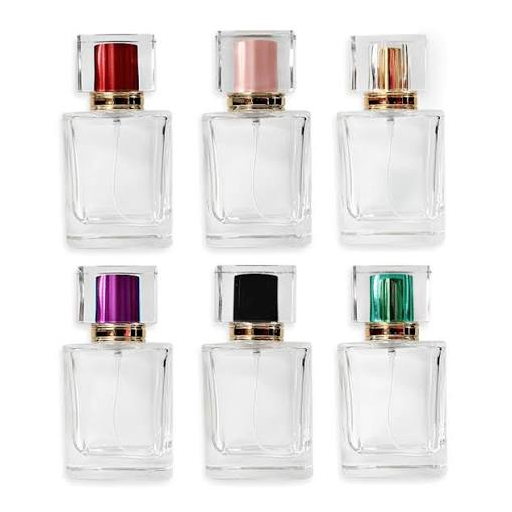
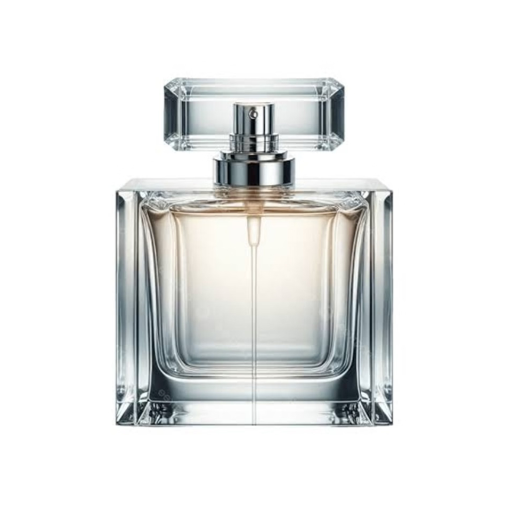
FEA 15 is the 15 mm crimp neck used on most fine-fragrance bottles between roughly 30 and 100 ml, defined in EN 14854:2021 and closed with a metal ferrule that a crimping press rolls permanently under a glass bead. It has no thread. The number names the nominal neck diameter, not the opening, not the capacity, and not the cap.
That reply is the one most buyers never get. Ask a supplier “what neck is this bottle,” and you usually get a capacity or a photo. Ask a pump maker, and you get a collar size. The two answers describe the same part from opposite ends.
This guide covers the FEA 15 neck finish the way a specification sheet should. It gives the five dimensions that actually decide fit, the tolerance stack between glass and metal, the difference between FEA 15 and the screw necks buyers confuse it with, and the failure modes that scrap a run. If you are at the point of ordering glass or pumps, read the last section first: it is the checklist that makes the rest of this article unnecessary.
Key Takeaways
- FEA 15 is a 15 mm crimp neck with no thread, specified in EN 14854:2021 and read with EN 14849 for the ferrule.
- The finish is defined by five figures: bead diameter, under-flange diameter, bore, neck height and bead position. The collar name gives you none of them.
- Published tolerance for glass necks runs about ±0.15 to ±0.30 mm, with ±0.20 mm typical in production. Beyond ±0.30 mm, sealing commonly fails.
- FEA 15 covers roughly 10 to 100 ml, and is the safe default for 30 to 100 ml. FEA 13 handles miniatures; FEA 18 and 20 take large formats.
- A crimp neck cannot take a screw cap unless the mould cuts a thread. Screw 15 and 15/415 are a different neck, not an alternative closure for this one.
At the quoting stage already? and we will come back with a matched bottle, pump, collar and cap set with the drawings cross-checked.
What Is an FEA 15 Neck Finish?
FEA is the trade label for a family of crimp necks. EN 14854:2021 is the written specification that governs them, covering nominal sizes 11, 13, 15, 17, 18 and 20 mm for both moulded and tubular glass. Read the standard alongside EN 14849, which sets the ferrule dimensions those necks are designed to receive.
So FEA 15 means a neck drawn to the 15 mm entry in that standard. It is a relationship between glass and metal, not a description of the bottle.
The bead anchors the collar, the land seals
Look at the top of a fragrance bottle and you see a raised ring just below the lip. That ring is the bead. The pump sits on the flat land above it, and the aluminium ferrule wraps over the bead before the crimping head folds it underneath.
Two functions, two surfaces. The land carries the seal, compressed against an elastomer gasket in the pump. The bead carries the mechanical load, so the pump cannot be pulled off. Confusing them is the root of most crimp failures.
What FEA 15 is not
Three mix-ups account for most of the wrong orders we see.
It is not a thread callout. There is no thread on an FEA 15 neck, which is why 15/400 appears in older catalogues as a separate legacy convention rather than a synonym. If a drawing shows turns, you are looking at a screw finish.
It is not the bore. Measure inside the neck and you will find an opening several millimetres narrower than 15 mm. That opening is the bore, it is its own dimension, and it decides whether your filling nozzle fits.
It is not the cap size. The decorative overcap sits over the assembled pump and collar, so its internal diameter is driven by the collar outside diameter, not by the neck. Our FEA 15 perfume cap guide covers the cap side in detail.
The Five Dimensions That Define an FEA 15 Neck
A collar name is not a specification. These five figures are, and they are the ones a pump supplier will ask for.
| Symbol | Dimension | What it controls | Why it matters |
|---|---|---|---|
| ØA | Bead outside diameter | Whether the ferrule grips | Oversize splits the collar; undersize leaves the pump loose |
| ØB | Under-flange diameter | Clearance for the ferrule skirt | Too tight and the collar will not seat flat on the land |
| ØC | Bore | Filling speed and dip tube clearance | Too narrow slows the line; too wide puts the seal entirely on the gasket |
| H | Neck height | Whether the pump bottoms out or seats | Too short and the pump never compresses the gasket |
| E | Bead position below the land | Crimp engagement | The crimp needs material at the right height to fold under |
[ENGINEERING FIGURES: insert Longlu’s nominal values and tolerances for ØA, ØB, ØC, H and E on the 15 mm crimp neck, with the glass grade they apply to. This table is the article’s differentiator and must not be published with placeholder text.]
CETIE publishes the gauge sheets that control two of these directly: DT42.01 for sealing-bead height, dimension E, and DT42.02 for lug position, dimension G. If you are qualifying a new mould, those are the sheets the toolmaker should be working to.
Tolerance, and why the glass and metal drawings disagree
Every dimension carries a tolerance, and the tolerance is where fit problems live.
Published figures for glass perfume necks run from about ±0.15 mm to ±0.30 mm, with ±0.20 mm the common production expectation. Past roughly ±0.30 mm, sealing starts to fail regardless of how good the pump is. On the metal side the numbers are much tighter: collar bore around +0.00/−0.03 mm, collar outside diameter and step depth near ±0.05 mm, and concentricity around 0.03 mm total indicator reading.
Read those two bands together and the design problem becomes obvious. The collar is made to hundredths of a millimetre. The glass is made to tenths. The crimp absorbs that gap by deforming, which is why a crimp tolerates more variation than a thread, and also why it gets exactly one attempt.
FEA 15 vs FEA 13, 18 and 20: Choosing by Format
The size family follows the bottle. A heavier bottle carries a wider collar and, usually, a larger pump.
| Finish | Nominal neck | Typical format | What it is for |
|---|---|---|---|
| FEA 13 | 13 mm | About 5 to 15 ml | Miniatures, travel sprays, sample formats |
| FEA 15 | 15 mm | About 10 to 100 ml | Mainstream fine fragrance; the safe default from 30 to 100 ml |
| FEA 18 | 18 mm | About 75 to 125 ml | Full-size designer formats |
| FEA 20 | 20 mm | About 150 ml and up | Large formats, body and hair mists |
The ranges overlap on purpose, because format is a design choice as much as a physical limit. An 80 ml bottle can be built on FEA 15 or FEA 18, and the decision usually comes down to which pump you want and how much stock you are willing to hold.
Two practical notes. Outside FEA 13 and FEA 15, stock pump availability narrows quickly, so confirm the pump before you commit to a 17 mm or 18 mm bottle. And if you build a range, standardising on FEA 15 cuts the number of pump SKUs you carry, which is a real saving once you are holding safety stock.
Building a range across several sizes? by format and neck, then send us the shortlist and we will flag any neck that limits your pump choice.
Crimp vs Screw: Why FEA 15 Has No Thread
Every fragrance bottle is crimp or screw, and the choice locks most of the rest of the specification.
How a crimp actually seals
The pump assembly arrives complete, with its collar, dip tube and often an overcap. The collar drops over the bead, the crimping head closes it, and the metal folds underneath. That is the whole operation, and it is irreversible.
The advantages are practical. The seal is the most secure available, it cannot loosen in transit, it is unmistakably tamper-evident, and the tooling is universal. The costs are equally practical. You need a crimping press on the line, and your customer cannot refill the bottle.
Screw 15 and 15/415 are a different neck
Buyers often assume a screw pump is an alternative closure for an FEA 15 bottle. It is not. A screw neck is moulded with a thread, and a crimp neck is moulded without one. To move from crimp to screw you change the glass mould, not the pump.
The 15 mm screw version of this neck goes by two names. Pump makers usually list it as Screw 15. Some bottle suppliers write 15/415, because 415 is a two-turn thread series on a 15 mm diameter. They describe the same neck.
The message for buyers is simple: ask which drawing your pump supplier works to, and put that drawing in front of the glass factory. For the tool-free, refillable option, see our crimp-on sprays range and the matching perfume collars.
The finishes that are not fragrance at all
Most neck-finish articles describe 18/410, 20/410 and 24/410, because those are the everyday cosmetic and household finishes. Know them so you can spot them on a quotation and rule them out. They belong to lotions, soaps, serums and household products.
A 24/410 bottle won’t accept a standard fragrance pump, and adapting it creates leaks that surface after filling. Our 410 and 415 thread series guide covers that family in full.
How to Measure and Verify an FEA 15 Neck
Calipers will confirm the family in two minutes. They won’t confirm fit, so use them to rule out the wrong part, then verify against drawings.
Measure the bead, not the opening. For a crimp neck, take the outside diameter across the bead. That figure should land near 15 mm for an FEA 15. If you measured inside the neck, you measured the bore and learned nothing about the finish.
Take two readings 90 degrees apart and average them. A blown neck is rarely perfectly round, and a single reading can be a millimetre off on an oval bottle.
Check the collar outside diameter against the cap. Published figures put the FEA 15 collar or ferrule outside diameter at roughly 16.3 mm. If your overcap’s internal diameter doesn’t clear that with room to spare, the cap won’t sit down.
Then compare both drawings. The glass drawing and the pump drawing should name the same standard and the same tolerances. This is a ten-minute check and the cheapest insurance in the process.
Why a Correct FEA 15 Neck Still Fails
Even a correctly named neck fails when the drawing and the tooling disagree.
| Symptom | Likely cause | What to do |
|---|---|---|
| Collar splits during crimping | Bead oversized, or glass at the top of tolerance | Check ØA against the pump maker’s drawing |
| Pump turns freely after crimping | Bead undersized, or bead too low for the crimp to bite | Measure bead height and position, not just diameter |
| Leak at the collar after transit | Gasket not compressed, often an uneven land or a short neck | Inspect the sealing land and check H |
| Pump bottoms out and will not seat | Neck too short for the pump plug depth | Compare H on both drawings |
| Cap will not sit down over the assembly | Cap internal diameter too small for the collar outside diameter | Check the cap against the ferrule OD, not the neck |
| Filling nozzle will not fit | Bore undersized for your line speed | Specify ØC on the purchase order, not just collar size |
Two lessons run through that table. A crimp has one attempt, so an out-of-tolerance bead is a scrap problem rather than a rework problem. And almost every row is a drawing problem, not a pump problem. If a pump genuinely won’t spray once fitted, that’s a different fault: our reference covers the pump side.
What to Send Your Supplier for an Accurate Quote
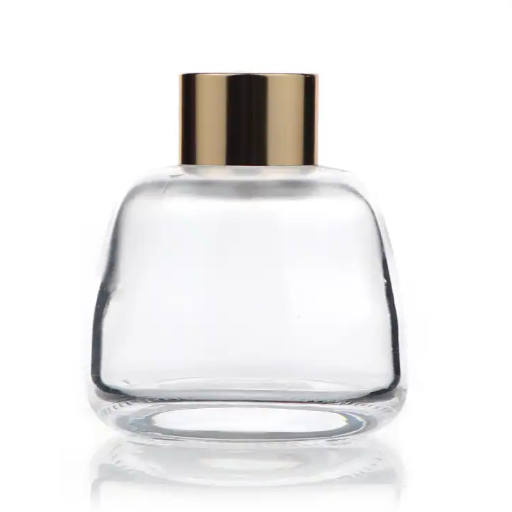
A photo gets you a catalogue page and a guess. These seven items get you a quotation you can hold someone to.
- The pump assembly or its drawing. In fragrance the pump defines the neck, so this comes first.
- The format, in ml and oz. Both, because your market and your factory may work in different units.
- The glass grade and colour. Flint, extra-flint or coloured, and the clarity you need.
- The decoration. Frosting, spray, screen print, hot stamp or plating all affect price and lead time.
- Target dose per actuation. This narrows the pump and therefore the collar.
- Dip tube length, or the bottle’s internal height. So the tube is cut to the bottle, not to a standard.
- Formula viscosity. A fragrance oil and an alcohol-based EDP behave differently in the same pump.
Most buyers start with the bottle, because the bottle is what they can see, then discover the pump they want does not exist for that neck. Sending the pump drawing first reverses the order and avoids the revision.
FAQ
What does FEA 15 mean on a perfume bottle?
FEA 15 is a 15 mm crimp neck, specified in EN 14854:2021. It carries a glass bead just below the sealing land, and a metal ferrule is crimped permanently over that bead. There is no thread.
What are the dimensions of an FEA 15 neck?
Five figures define it: bead outside diameter, under-flange diameter, bore, neck height, and bead position below the land. The nominal values come from EN 14854 and your supplier’s drawing. The collar name itself gives you none of them.
Is FEA 15 the same as 15/400?
No. FEA 15 is a crimp neck with no thread. 15/400 is an older screw convention that still appears in some catalogues. If the drawing shows turns, it is a screw finish and needs a different mould.
What neck size does a 30 ml perfume bottle use?
FEA 15 in almost every case. FEA 15 covers roughly 10 to 100 ml and is the safe default across 30 to 100 ml. FEA 13 usually stops below about 15 ml, and FEA 18 or 20 starts around 75 ml.
Can I put a screw cap on an FEA 15 bottle?
Not without changing the mould. A crimp neck has no thread, so a screw closure has nothing to engage. Screw 15 and 15/415 are separate necks with a moulded thread, not alternative closures for an FEA 15 bottle.
How much does a fragrance pump dispense per spray?
Typically 0.05 to 0.12 ml per actuation for a fine mist, depending on the pump. The neck does not set the dose, the pump does, so specify the dose and let the supplier match a pump to your neck.
Conclusion
FEA 15 is the default fine-fragrance neck for a reason: it is secure, universal and well understood by every pump maker. The difficulty is never the number. It is that the number describes a relationship, and the relationship lives on a drawing rather than in a name.
Three things are worth carrying away. The five dimensions (bead diameter, under-flange diameter, bore, neck height and bead position) decide fit, and none of them appear in the collar name. The tolerance gap between glass at roughly ±0.20 mm and a collar bore at +0.00/−0.03 mm is absorbed by the crimp, which is why it works and why it gets one attempt. And crimp and screw are different necks, not different closures, so the choice changes the mould.
If you want the fit confirmed before you commit to tooling, . We will return a matched bottle, pump, collar and cap set with the drawings cross-checked, so the set is known to fit before the mould is cut.