When a fine mist sprayer is not working, the most common issues one can face are nozzle being clogged, dip tube being disconnected, ball valve being stuck, and the sprayer material being incompatible with the formula. Most of these problems can be dealt with in a few minutes using warm water, a needle, and proper cleaning can do the magic. This tutorial answers the question of “how to fix a fine mist sprayer” as well as other issues such as spray bottles pumps not working on bottle refills.
However, such assistance methods usually fail because the issue is not the sprayer. It is the persisting inconsistency between the formula and the pump components. This is based on our category because each month we manufacture and test thousands of fine mist sprayers at our production plant in Fuzhou Longlu Packaging Co., Ltd. Cosmetics, personal care, and house hold industries experience the same issues over and over again. They are perfectly understood and this also applies to the solutions.
For a deeper look at the internal mechanics, Oberk’s packaging crash course on what’s inside a fine mist sprayer provides an excellent component breakdown. A Packaging Group also explains how a fine mist sprayer works at the mechanism level.
This guide walks you through exactly why fine mist sprayers fail, how to diagnose the specific issue you’re facing, and how to fix it. More importantly, it shows you how to prevent these problems from happening in the first place.
Key Takeaways
- Most fine mist sprayer failures fall into four categories: clogging, mechanical breakdown, chemical incompatibility, and manufacturing defects.
- A clogged nozzle or stuck ball valve causes roughly 60% of all field failures and can usually be cleared with warm water and a thin needle.
- Essential oils, alcohol-based perfumes, and zinc oxide suspensions each attack sprayer components differently, so the fix depends on your formula.
- Quality fine mist sprayers last 3,000-5,000 actuations, but poor storage and formula mismatch can cut that lifespan by half.
- Specifying the right material, filter, and neck finish before production prevents nearly all repeat failures.
Why Fine Mist Sprayers Fail: The Four Failure Categories
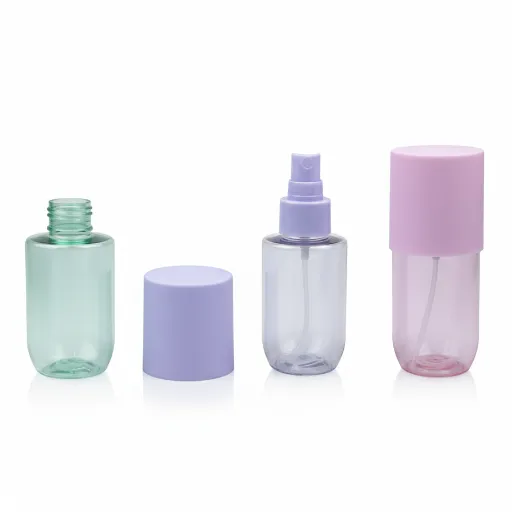
Understanding why a fine mist sprayer stopped working starts with knowing what kind of failure you’re dealing with. In our production and quality testing experience, nearly every failure falls into one of four categories. Each has distinct symptoms, root causes, and solutions.
1. Clogging and Blockage Failures
This is the major cause of a fine mist sprayer not working. Inside the nozzle orifice, the swirl chamber and the dip tube, product residues dry up. Over time, they become hardened structures that eventually block the small channels responsible for the mist.
This happens to certain product formulas by their very nature. Alcohol based colognes are quick to dissipate, leaving heavy oils and fixatives. Essential oils when left alone begin to oxidize and turn into resinous substances. Sunscreens containing zinc oxide and titanium dioxide result in more minerals than is carryable through the usual 0.16 mm wide holes.
Warmth speeds things up. A sprayer left in a bathroom, by a window or other such warm places will dry up easier than if kept inside the room temperature limit. Upon each use, a little coat is formed in the nozzle. Now, add a few hundred uses and the entire thing is clogged.
2. Mechanical and Vacuum Failures
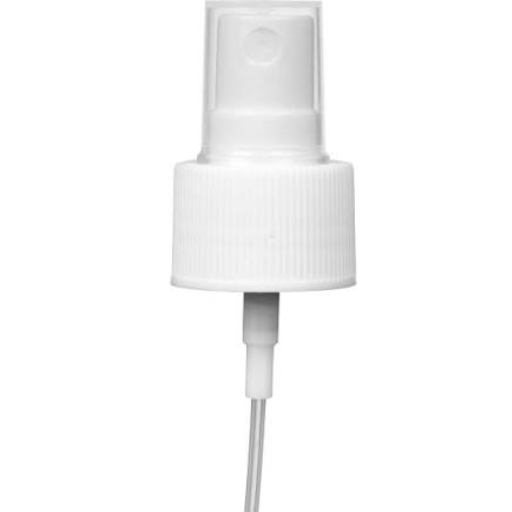
A fine mist sprayer is essentially a precise mechanical pump. Within the casing is a piston that pushes against a spring, opening and closing a ball valve which regulates the flow of liquid, with a gasket that keeps the vacuum seal which pulls the contents capillary up the hose intact. Absence of even one of these would result in a dysfunction of the whole thing.
It is common for springs in poor quality sprayers to be worn out. After activating for several hundred times, the spring will no longer have sufficient energy to retract the liquid, especially when it comes to sprayers. Ball valves also block when sediment deposits around the sealing surface prevent it from moving. Gaskets either get frayed or pressed too much with time which breaks the vacuum, losing the pump’s suction ability.
The problems with the dip tube are not any less annoying. The tube may come off at the top, develop a crack somewhere at the base, or even collapse if the fed liquid components are strong enough to eat into the plastic housing. Such instances imply that when the dip tube is not functioning, the pump is also unable to do its job.
3. Chemical Compatibility Failures
while all plastic can hold every formula. An ordinary polypropylene (PP) actuator could be used for a water-based toner, but as soon as high loads of d-limonene-rich citrus essential oils are applied, the same would be devoured. Certain alcohols can cause silicone gaskets to expand. Acidic formulations can cause PET dip tubes to embrittle with time.
During use however, chemicals do not always reveal their incompatibility instantly. A sprayer may work perfectly for two weeks, and then the seal swells and the pump becomes stiff. It is filled to the maximum, and the actuator cannot be depressed anymore by the fourth week. The sprayer was not mechanically damaged. It simply ‘melted’ from the inside.
4. Design and Quality Defects
Try as engineers might, not all fine mist sprayers that fall fail were good from the beginning in the first place. The piston chamber has tolerances which do not permit uniform pressure. Worse still, cheap seals fail on the first day. The nozzle design rather accommodates the ejection of a solid jet instead of a mist, which users commonly interpret as blockages.
When a brand seeks to offer the cheapest sprayer on the market, they typically purchase production components that possess wide manufacturing tolerances. The sprayer may be suitable for test purposes but unsuitable for mass production because it variances so much between batches that there is no consistency.
How to Diagnose Your Specific Problem
Before you start disassembling anything, match your symptoms to the likely cause. This saves time and prevents you from applying the wrong fix.
| Symptom | Likely Cause | Failure Category |
|---|---|---|
| No spray at all | Clogged nozzle or broken dip tube | Clogging / Mechanical |
| Squirts instead of misting | Clogged swirl chamber or worn insert | Clogging |
| Weak or inconsistent spray | Worn spring or air leak in seal | Mechanical |
| Pump won’t press down | Stuck piston or dried product inside housing | Mechanical / Clogging |
| Leaking from nozzle or base | Compromised gasket or over-tightened closure | Mechanical / Quality |
| Spray degrades after weeks of normal use | Chemical incompatibility with formula | Chemical |
| Works only when held upside down | Cracked or detached dip tube | Mechanical |
Firstly, the sprayer needs to be tested thoroughly. That’s too much can’t be helped comes next. To overcome this obstacle, try pushing on the piston with a finger. If it gives way easily and draws the finger tip inward, dirt has already settled at the bottom of the cleaning container or only a part above the nozzle and hose has been cleaned. If the piston remains immovable, then the plug or another blockage most likely inside the ball valve.
Elena worked as a developer in leading capable production of a renowned cosmetic company in LA. When we received a call from her explaining that most of the fine mist sprayer not working suggesting that every plaintiff has run to a lot of extremes to quote the whole of almost every unit I would just say – it is impossible war and we don’t do war. Under The symptom that she had was some bottles became very easy to spray where others remained extremely hard. We told her to pry back three pistons and see if they would move. Two moved easily while the other one was locked. It was a classic case of defects in the springs in the batch and not the chemical blend. She bought new sprayers and the problem did not return.
How to Fix a Clogged Fine Mist Sprayer (and How to Unclog a Fine Mist Sprayer)
If your clogged fine mist sprayer is the problem, or if you are specifically looking for how to unclog a fine mist sprayer, the fix is usually straightforward. Work through these steps in order.
Step 1: Remove and Rinse the Actuator
Lift or slide out the actuator from the casing. It typically just slides into place, but occasionally it may involve a twist mechanism. Thoroughly rinse warm water down the actuator. Place a finger over and release the nozzle’s opening, where there is slight back and forth pressure, so soft residue can be pushed out.
Do not use hot water. Polypropylene as well as polyethylene pieces may distort when heated over sixty degrees Celsius. Warm tap water is adequate.
Step 2: Clear the Nozzle Orifice
The nozzle orifice, which is the small outlet, where the mist is generated is about 0.12mm to 0.20mm, depending on the sprayer model. There are certain materials that can be used for unclogging physical blockage without causing any damage like sewing needle, a straight pin or thin hard structures like guitar strings.
Insert the needle without excess pressure. In other words, do not apply excess force. Engage in displacement, not penetration. Once in this position, move the needle in a small, circular pattern, and then repeat rinsing with warm water. However, if you can access compressed air, a few quick blasts from the air duster would easily clear the debris that the needle could not remove.
In cleaning of fifty to one hundred units or more in commercial practices, the ultrasonic bath with warm water and a light proprietary cleaning agent is preferred. Vital for ultrasonic systems cleaning is that units spend no longer than three to five minutes in the fluid at any one time as cleaning will remove ninety five percent agricultural residue without any scrapping.
Step 3: Flush the Dip Tube and Housing
In order to wash the container, remove the closure and the dip tube first. Then fill the container with water, put the sprayer back in place and pump it vigorously. This acts as a counterflow cleansing the housing and tube of any deposit. The passage is clear when clean water is sprayed after about twenty or so pumping strokes.
In case there is a fine mist sprayer not working due to excessive accumulations, pour white vinegar in the bottle if dealing with mineral deposits, while oil-based residues are effectively treated with isopropyl alcohol. Allow the solution inside the bottle to stay for about ten minutes then rinse with clean water.
Step 4: Soak and Dissolve Residue
If the clog persists, disassemble the sprayer completely. Soak the actuator, insert, and housing in a cleaning solution appropriate for your formula type:
- Water-based products: Warm water with a drop of dish soap
- Oil-based products: Isopropyl alcohol or a light solvent
- Mineral or salt buildup: White vinegar or a citric acid solution
- Polymer or resin residue: Acetone for compatible plastics, or warm soapy water for extended soaking
Always test your cleaning solvent on a small, hidden area first. Some solvents will fog or craze certain plastics.
Step 5: Reassemble and Prime
Reassemble the sprayer in reverse order. Attach the dip tube, screw the closure onto the bottle, and snap the actuator into place. Prime the pump by pressing firmly and slowly five to ten times. The first few strokes may sputter as air escapes. Once a consistent mist appears, the sprayer is restored.
How to Fix Mechanical and Vacuum Failures When Your Fine Mist Sprayer Is Not Working
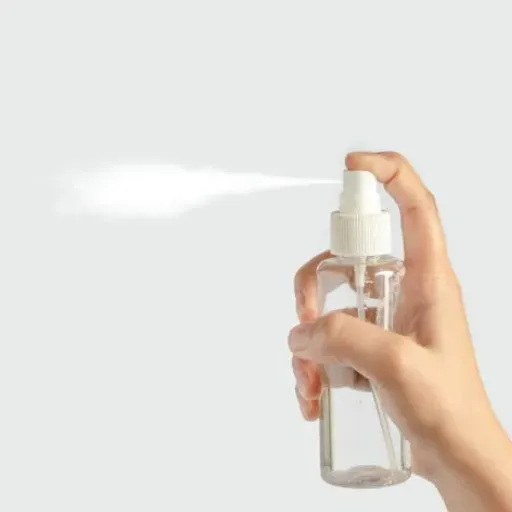
When a fine mist sprayer is not working because of mechanical failure, the repair depends on which component has failed. Understanding how a fine mist sprayer works internally helps you identify which part needs attention.
Fixing a Disconnected or Cracked Dip Tube
Check that the dip tube is fully seated in the housing. If it has pulled loose, trim the top half-centimeter to expose fresh plastic and reinsert it firmly. A cracked dip tube near the base is harder to fix. You can trim above the crack if the tube is long enough, but replacement is usually the better option.
Dip tubes are sized by length and neck finish. Common neck finishes are 18/410, 20/410, 24/410, and 28/410. If you’re replacing a tube, match both the neck size and the length so the bottom sits just above the bottle base. For guidance on sizing, see our article on fine mist sprayer sizes.
Restoring a Stuck Ball Valve or Piston
When a piston isn’t moving or a ball valve has seized, provide immersion of the housing in warm water for a quarter of an hour. This will help soften any residues that have hardened to adhere the parts. Afterward, test pumping the component while submerged. The water pressure frequently releases tightened valves.
If the piston again does not move, spring could have deformed or the piston is in a state of permanent deformation. In both cases, the part should be replaced. A fine mist sprayer not working contains parts that are not intended for field stripping.
Addressing Spring Fatigue
A weak spring produces weak spray. There’s no effective way to restore tension to a fatigued spring inside a sealed sprayer housing. The only fix is replacement. If you’re seeing widespread spring fatigue across a batch, the sprayer specification may be undersized for your formula viscosity or actuation frequency.
Seal and Gasket Issues
A leaking sprayer usually points to a compromised seal. Inspect the gasket between the closure and the bottle neck. If it’s cracked, flattened, or discolored, replace it. For cosmetic applications, use a silicone or fluorinated rubber gasket that resists your formula chemistry.
Over-tightening can also cause leaks. Tighten until snug, then stop. Excessive torque deforms the gasket and can crack the closure threads.
When the Problem Is Formula Chemistry
Sometimes the fine mist sprayer is not working because the formula is attacking the components. No amount of cleaning will fix a chemically degraded seal.
Essential Oils and High-Concentration Actives
Essential oils are among the most aggressive formulas for standard sprayers. Terpenes in citrus oils, phenols in oregano and thyme, and aldehydes in cinnamon can all degrade polypropylene over time. They also oxidize when exposed to air, forming resins that coat the nozzle and ball valve.
If your product contains more than 5% essential oils, specify a sprayer with fluorinated seals and a wider nozzle orifice. A 0.20mm orifice resists clogging better than the standard 0.16mm.
Alcohol-Based Formulas
Perfumes and toners with high alcohol content evaporate rapidly. Every actuation leaves a slightly more concentrated residue inside the nozzle. Over weeks, this builds into a crystalline deposit that blocks the orifice completely.
The fix is mechanical: regular cleaning with alcohol flushes the residue before it hardens. The prevention is design-based: specify a pre-compression sprayer that minimizes the amount of product left exposed in the nozzle chamber between uses. For a comparison of output mechanisms, see our guide on the differences between fine mist sprayers and atomizers.
High-Particulate Formulas
Once we had a sun care client in Miami that was constantly complaining of issues with their fine mist sprayer not working. The zinc oxide suspension in it caused standard sprayers to get blocked after a few days of use. It wasn’t a case of inferior sprayers but rather a problem with the size of the particles.
Since the particles of zinc oxide trickle down you will find that their sizes are between 100 and 1,000 nanometers compared to the nozzle size which is wide open. However, these powdered particles conglomerate into large strokes that work only in anthropogenic activity. The solution mixed in some prevention options by the use of an additional filter that can be positioned within the dip tube and a specification of 2 stage 0.20mm orifice. Ever since this improved construction, these sprayers are working without any issues for six months now.
For spray formulae with particle masses, do not forget to provision filter and increase the size of orifice in the design. It is a catastrophic attempt to push such particulates through a generic fine mist sprayer and expect them to dispense without malfunction.
Polymer-Rich Products
Setting sprays, hair mists, and fixatives often contain film-forming polymers like PVP or acrylates. These ingredients create a thin, sticky film inside the sprayer that standard water flushing cannot remove.
For these products, recommend that end users rinse the actuator weekly with warm water. In manufacturing, specify a sprayer with a smooth, non-stick interior finish and avoid designs with sharp internal corners where polymer can accumulate.
Prevention: How to Stop Fine Mist Sprayer Failures Before They Start
Fixing a failed sprayer is reactive. The real value is in preventing the failure from happening at all. Here’s how brands can specify sprayers that match their formulas.
Choose the Right Sprayer for Your Formula
Compatibility is the first thing to address. Polypropylene works with most water based concoctions but towards harsh organic solvents it shows inadequacy. Polyethylene withstands chemicals better such as oils and alcohols. PET may be clear and heat resistant but at high pH levels it has the tendency to crack.
In the case of an average application seal applications RB 0 would qualify. Fortified solids come in the form of a silicone ring which solves this problem. FKM (Viton) is hard to damage for the most part but expensive. Also, always make sure the sealing material is not weaker than the most radical component.
When particles are suspended, considerations should be made for filtration. Inline 100 micron filters on the dip tube capture any aggregates before they access the nozzle.
One may want to consider pre-compression spray nozzles with delicate contents. Their chamber gets pressurized before the product actually gets dispensed, hence limits how much of the solution comes into contact with the air within the nozzle, and also keeps crystallization to the minimum.
Proper Storage Practices
Store filled products between 15 and 25 degrees Celsius. Heat accelerates evaporation and chemical degradation. UV light breaks down plastics and some formula actives. Keep bottles upright so the dip tube stays submerged and the seal stays wet.
Unfilled sprayers also have a shelf life. Springs can take a set if compressed for months. Seals can dry out. Store sprayers in sealed bags in a cool, dark place, and rotate stock every twelve months.
Quality Control Before Filling
Test a sample from every incoming batch of sprayers. Pump each sample twenty times with water and check for consistent output, even spray pattern, and no leakage. Inspect the gasket and closure threads for defects. A five-minute spot check on twenty units from a batch of ten thousand can save a recall.
Design Considerations for Commercial Brands
Work with a manufacturer who understands your formula. At Fuzhou Longlu Packaging Co., Ltd., we review each client’s ingredient list before recommending a sprayer specification. The right neck finish tolerance prevents leaks. The right overcap slows evaporation. The right material prevents chemical degradation. If you are still deciding on a specification, read our guide on how to choose a fine mist sprayer for your product.
If you’re developing a new product, bring your packaging supplier into the conversation early. Changing a sprayer specification after you’ve already filled ten thousand bottles is expensive. Getting it right the first time is not.
Why Is My Fine Mist Sprayer Not Working? Quick Answers
Before we move to the business guide, here are direct answers to the most common questions we receive.
Why is my fine mist sprayer not working? The most common cause is a clogged nozzle from dried product residue. Other frequent causes include a disconnected dip tube, a stuck ball valve, a worn spring, or chemical incompatibility between your formula and the sprayer plastic or seal.
How do you fix a clogged fine mist sprayer? Remove the actuator, rinse it with warm water, clear the nozzle orifice with a thin needle, and flush the dip tube by pumping warm water through the sprayer. For stubborn clogs, soak the components in white vinegar or isopropyl alcohol for ten minutes.
Why does my spray bottle stop working after a few pumps? This usually indicates an air leak or a stuck ball valve. The vacuum seal that draws liquid up the dip tube has been compromised. Try priming the pump with ten slow, firm strokes. If that fails, soak the housing in warm water to free the ball valve.
Can you fix a broken spray pump? It depends on the failure. Clogs and disconnected dip tubes are easily fixed. Mechanical failures like spring fatigue or cracked pistons usually require replacement because the internal components are not designed for field disassembly.
How long do fine mist sprayers last? Quality sprayers are rated for 3,000-5,000 actuations under ideal conditions. Formula chemistry, storage temperature, and actuation frequency all affect actual lifespan. Properly matched sprayers often outlast the product inside the bottle.
When to Repair vs. Replace: A Business Guide
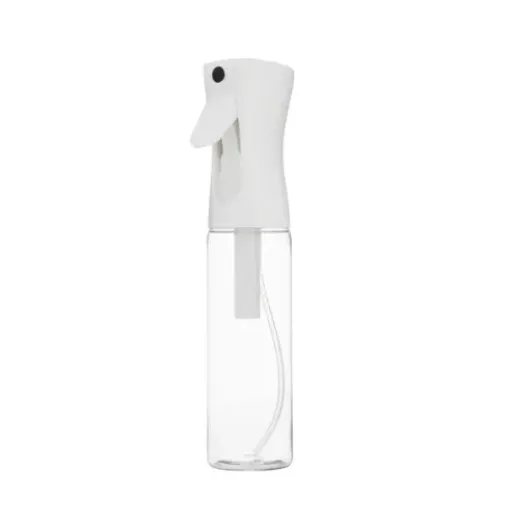
If a bottle is on a bathroom counter, repair seems logical however if it is related to things being sold and kept on shelves for customers, it becomes very different.
When a sprayer is jammed, fixing it can range from 5 minutes to 15 minutes. That is however a significant amount of down time when taken into account. So if the sprayer is lower than 0.50 each and labor is 15 an hour, you break somewhere above a dozen replacements.
In most cases, repair is not your only option. A user who gets a new sprayer upon requesting will feel catered to. If a customer gets a list on how to fix his own sprayer the perception changes to ‘Quality cutting’ values.
If there is more than 2% of failure during the field work, individual unit repair should be stopped, and the real problem should be solved. Doing that essentially involves: improving a sprayer design; putting a filter; or changing the material. If the price of a more durable sprayer, is increased by $0.10 per unit, it can be effective and reduce the expenditures on the customer’s healthcare and manufacturing of new units.
Conclusion
For fine mist sprayer not working, there is disappointment, but hardly a concern. This is because experience has shown that almost all operating failure data results from clogged nozzles, stuck ball valves, worn springs and chemical compatibility issues. Once the source is identified, the solution is often a straightforward one.
There is however a greater focus towards protection. Being the working equation for users, knowing how the formula of the product interacts with the materials of the sprayer, choosing the proper size of the orifice and filter, and packing the products in such a way that none of the damage occurs before reaching the customers, such situations are likely to be very minimal. A sprayer is not simply a replaceable part. It is an accurate device, which must fit in accordance with the chemistry present in a given bottle.
In the event that your brand suffers repeatedly from sprayer break downs, it is almost always the case that the issue is in the specification of such sprayers and not the workmanship. Fuzhou Longlu Packaging Co., Ltd. helps clients in the selection and development of fine mist sprayers that are incorporated with their respective recipes. Whether it is material selection, the neck finishing tolerances, or even custom filtering of the package, we have the capacity to deliver a package that will work from the initial pump up to the last one.
Reach out to us today for your fine mist sprayer needs, our consultation service will not cost you a cent. We shall analyze the formulation of your product, suggest the appropriate components and facilitate the creation of satisfactory customer experience that the buyers will recall without fail.