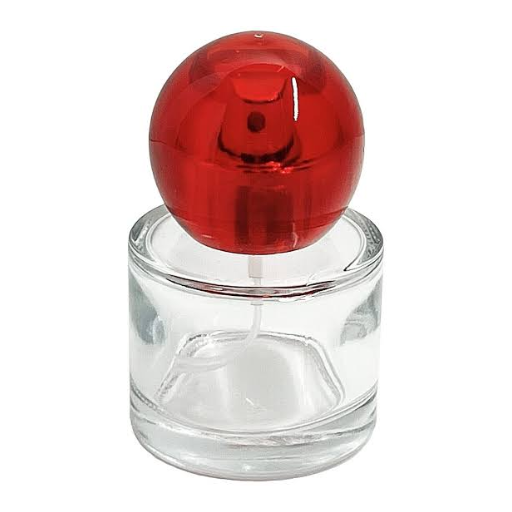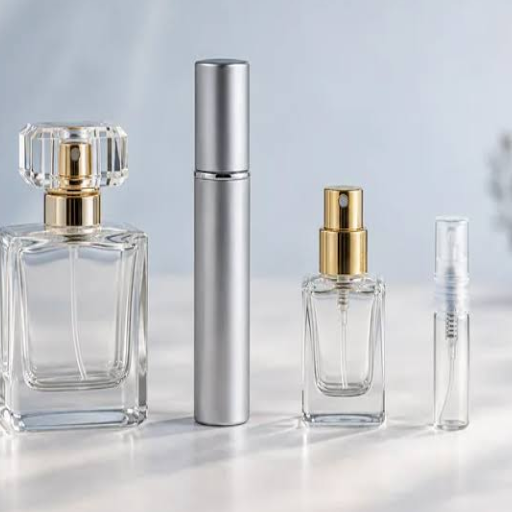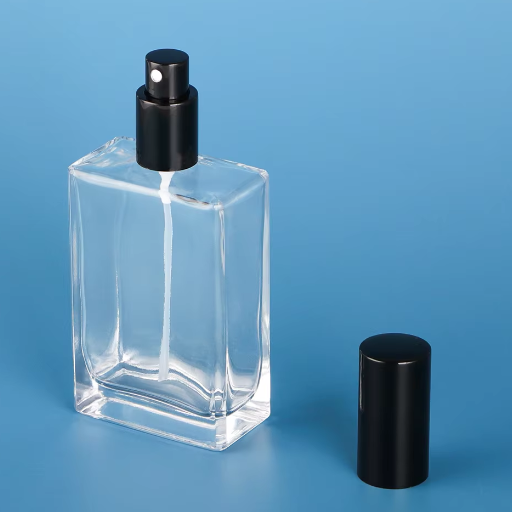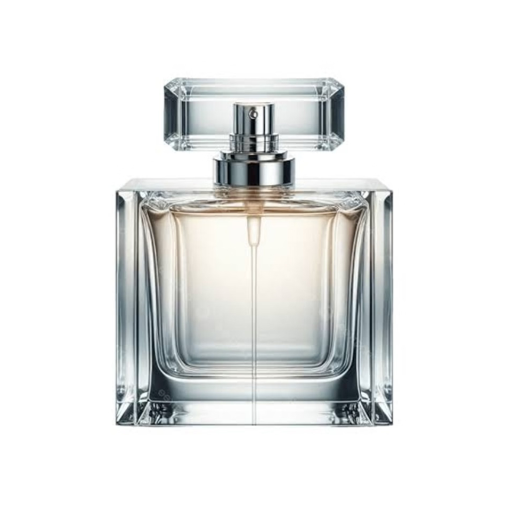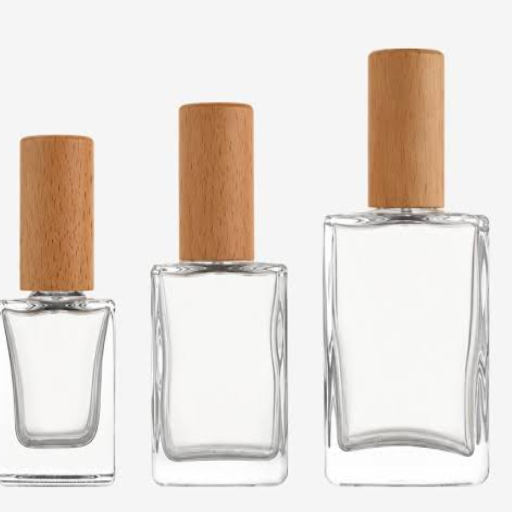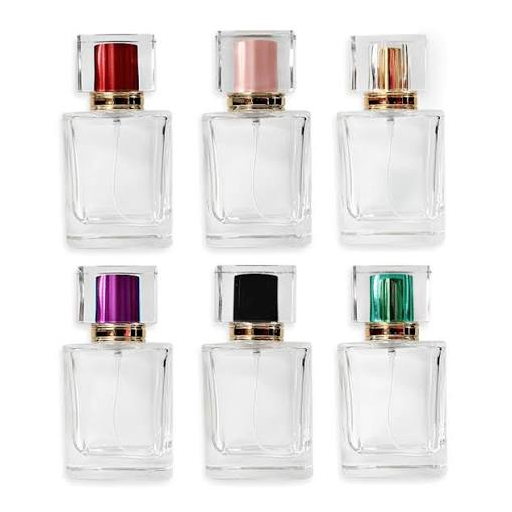
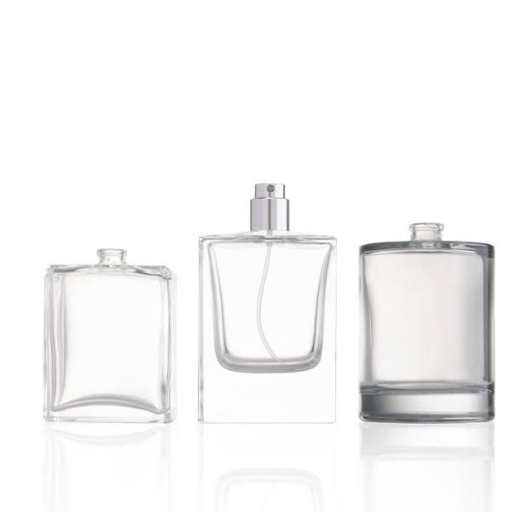
A perfume bottle manufacturer makes the glass bottle and, usually, the closure that has to fit it. Fuzhou Longlu Packaging has made glass fragrance bottles in Fuzhou, China since 2007, and we supply them with the pumps, collars, caps and boxes that go around them.
Most sourcing problems that cost a brand real money are fit problems, not quality problems. The glass is fine. The pump is fine. They were never introduced to each other.
So this page isn’t a list of companies. A list tells you who exists. It doesn’t tell you which number on a drawing decides whether your pump seals, or how to check whether the company answering your email owns a furnace or just a website.
That is what follows. The process, the specs, and the questions to ask any perfume bottle manufacturer, including us.
Key Takeaways
- The neck finish, not the bottle shape, decides whether your pump, collar and cap fit. Fragrance uses FEA15, 15/415 and 18/415. The 24/410 and 28/400 sizes quoted all over the internet are lotion and household closures.
- Glass bottles are formed on an IS machine above 1,400 °C, then annealed. Annealing is what stops a bottle cracking in transit, and it is the step buyers never ask about.
- A cap can cost more than the bottle under it. Zinc alloy closures regularly do.
- Many companies calling themselves manufacturers are trading companies. Seven checks separate them, and none require a factory visit.
- Our production runs 4 to 6 weeks. Filled fragrance is a dangerous good, which is why most brands ship empty components and fill locally.
with your capacity, neck finish and cap material, and we will reply with part numbers rather than a brochure.
What a Perfume Bottle Manufacturer Actually Supplies
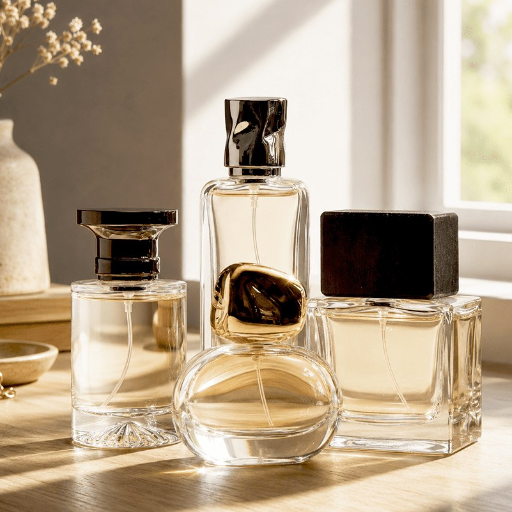
Buyers arrive thinking they are buying a bottle. They are buying a matched set, and the set has to be specified together.
| Component | What it decides | What we make |
|---|---|---|
| Bottle | Capacity, clarity, wall thickness, weight in the hand | 1 ml to 250 ml and above |
| Neck finish | Which pump and collar fit, and whether the seal holds | FEA15, 15/415, 18/415 |
| Pump | Dose per spray, spray pattern, crimp or screw fixing | Crimp-on and screw-on |
| Collar | Hides the crimp, sets the line at the shoulder | Metal or plastic |
| Cap | Protection, brand presence, the sound of the close | ABS, zinc alloy, Surlyn; 13-425 to 48-400 |
| Box and tester | Unboxing, retail presence, sampling programme | Rigid, folding, tester formats |
The arithmetic matters. Buy 5,000 bottles from one supplier and 5,000 pumps from another and have them not meet, and you don’t have a small problem. You have 5,000 unsellable units and a launch date that won’t move.
We supply bottle and closure together because the alternative is the buyer carrying a risk neither supplier will accept.
Browse the we make, or the that fit them.
How Perfume Bottles Are Made
Supplier sites list machine counts. Buyer’s guides list prices. Neither explains what happens to the glass, which is why so few buyers can tell a real factory from a reseller. Here is our line.
Batching. Glass starts as silica sand, soda ash and limestone, measured and mixed. Iron content is the enemy of clarity, which is why flint glass for fragrance is batched more carefully than ordinary container glass.
Melting. The batch enters a furnace and is heated past 1,400 °C into molten glass, then clarified and homogenised to drive out bubbles and impurities. A bottle with visible seeds was not held long or hot enough.
Forming. Molten glass is fed into moulds and shaped by an individual section machine, the standard equipment for glass containers. That mould is what you pay for when you commission a new silhouette, and why a genuinely new shape carries a fixed cost that stock shapes do not.
Annealing. The bottle enters a controlled cooling furnace. Glass that cools too fast keeps internal stress, and stressed glass fails, at the shoulder, in a pallet, or after it’s been filled and shipped. This is the most under-asked step in the process. If a supplier can’t describe how their bottles are annealed, they aren’t making them.
Inspection and packing. Finished bottles are checked, rejects are pulled, approved units are cleaned and packed. Ask what “checked” means, because it ranges from a glance to camera inspection.
runs this sequence end to end, in a 6,000 square meter facility with CNC equipment and automated assembly lines.
Stock, Semi-Custom and Private Mould
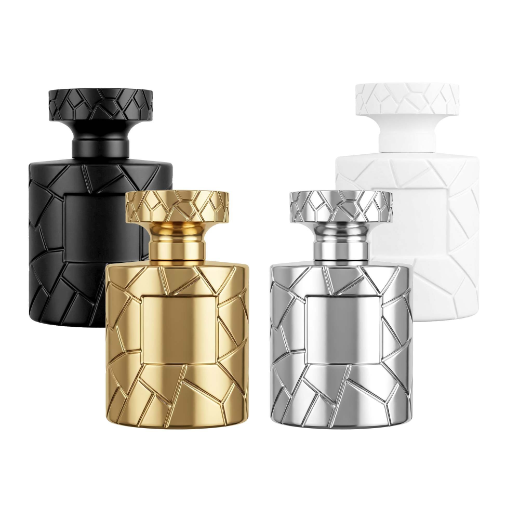
There are three ways to buy, and the choice decides your cost structure far more than the unit price.
Stock. An existing mould, your own decoration. No tooling cost, fastest route to a sample, right for a first run or a short seasonal line.
Semi-custom. An existing mould with a changed collar, cap, decoration or pump. A distinctive package without paying for a new shape.
Private mould. New tooling. The only route to a bottle nobody else has, with a fixed cost amortised across the run.
The question that decides whether private mould is wise is not the tooling price. It is ownership.
We have watched this play out. A brand pays for a distinctive flacon, launches strongly, then tries to dual-source for resilience and finds the mould belongs to the supplier. The bargaining position they believed they had never existed. Ask in writing who owns the tooling after the order, and whether it transfers.
We quote MOQ against your component mix rather than publishing one number, because a stock bottle and a private mould with a zinc cap are not the same order. Tell us the mix and you get the real figure.
Neck Finishes: The Spec That Locks Everything Else
If you take one thing from this page, take this.
The neck finish is the geometry at the top of the bottle where the closure attaches. It has a name, and the name determines which pump, collar and cap will work. Get it wrong and no amount of good intentions in the factory will save the run.
| Finish | Type | Typical use | Refillable |
|---|---|---|---|
| FEA15 | 15 mm crimp | Most 30 to 100 ml spray fragrance | No |
| 15/415 | 15 mm screw | Small to mid formats, travel and refills | Yes |
| 18/415 | 18 mm screw | Larger formats and heavier closures | Yes |
| 24/410, 28/400 | Not fragrance | Lotion, soap and household | Not applicable |
The two numbers are not decorative. The first is the neck diameter in millimetres. The second identifies the thread and finish style. A 415 isn’t interchangeable with a 410, and a 15 mm neck won’t accept an 18 mm closure however carefully it’s fitted.
A warning worth stating plainly. 24/410 and 28/400 are not perfume standards. They are lotion, soap and household closure sizes. If a page presents them as the most-used perfume necks, that page is describing cosmetics packaging generally and has not understood fragrance. Fragrance is FEA15, 15/415 and 18/415.
Crimp or screw is a product decision as much as a technical one. Crimp gives the better seal and the more premium feel, and it is what luxury spray fragrance uses. Screw allows refills and travel formats, and lets a brand fill in house without crimping equipment.
Caps, Collars and Pumps
The closure package is where budgets quietly break.
The pump. Crimp-on pumps are fixed permanently to a crimp neck. Screw-on pumps come off. What you are choosing is dose per actuation and spray pattern, both set by the pump engine rather than the bottle. A fine mist and a wet spray are different products to the end user even when the bottle is identical.
The collar. It covers the crimp and sets the visual transition from shoulder to cap. A small part with an outsized effect on whether a bottle reads as premium.
The cap. This is the component that surprises buyers, because a zinc alloy cap can cost more than the glass under it. ABS is the economical choice, Surlyn gives weight without metal, and zamak gives the density and cold touch luxury buyers read as quality.
Ask for the closure cost separately from the bottle cost. A blended price usually hides margin inside the closure, and you can’t negotiate what you can’t see.
See the we supply.
Decoration Without New Tooling
Decoration is the cheapest way to make a stock bottle look private. It is also where MOQ steps up.
- Screen printing puts flat colour on glass. The workhorse, and the lowest entry point.
- Hot stamping applies metallic foil. Reads as luxury, costs more per unit than print.
- Frosting gives a matte acid-etched or sprayed surface.
- Spray coating adds opaque or gradient colour without coloured glass batch.
- Metallising creates a mirror finish, usually on cap or collar rather than the bottle.
- Embossing raises a logo into the surface, on caps and boxes as well as glass.
The practical rule: decoration on an existing shape carries no tooling cost but usually a higher minimum than the plain bottle, because setting up a print line for 300 pieces isn’t economic. On a small first run, plain stock plus a strong cap often looks better than a printed bottle that forced you into volume you can’t sell.
How to Tell a Manufacturer From a Trading Company
Many perfume bottle manufacturers marketing themselves online don’t make bottles. They place your order with a perfume bottle factory that does, and a trader can’t control your lead time, your tolerances or your decoration.
Sometimes that’s fine. Often it isn’t. You don’t need to visit China to tell the difference, just to ask seven questions and listen for specifics.
- Ask which furnace runs your glass. A manufacturer names the plant or describes the line. A trader talks about partner factories.
- Ask for a video of your mould running, not a catalogue video. Ask for footage of the actual tooling your order will use.
- Ask what the reject rate is and who measures it. “We have strict quality control” isn’t an answer.
- Ask for the neck finish drawing, dimensioned. A manufacturer has it. A trader forwards it slowly.
- Ask who owns the mould. The answer reveals more than any brochure.
- Ask for certificate numbers, not certificate claims. Ask us too. Any supplier claiming a standard should give you the issuing body and number so you can check it.
- Ask what they do not make. A factory tells you where its capability stops. A trader claims everything.
The email to send before you order samples
You can copy this almost verbatim.
Please confirm the neck finish with a dimensioned drawing; glass type and whether it is flint; bottle weight and wall thickness tolerance; fill volume tolerance in millilitres; pump model, dose and crimp or screw fixing; cap material and retention type; decoration method and its minimum quantity; the MOQ for this exact combination; production lead time; inspection standard, inspection level and who performs it; and who owns the tooling after the order.
If the reply is a price list with no specifications, you have learned what you needed to know.
Lead Time, Inspection and Quality Control
Production runs 4 to 6 weeks at our facility. That clock starts when artwork and the golden sample are approved, not when the enquiry arrives, and the approval step is usually where launches slip. A brand that plans backward from a launch date and forgets the two sample rounds will find the date has quietly moved by a month.
The sequence is simple. You approve a sample. That sample becomes the golden sample every production unit is measured against. Production runs. Inspection happens against that reference. Then packing and shipping.
On inspection, the reference buyers use is AQL sampling under ISO 2859-1, the framework your retailer or lab will apply. You inspect a sample of the batch against defined defect classes and accept or reject the lot statistically. Ask any manufacturer, including us, two things: what inspection level do you apply, and who performs the inspection, your team or a third party?
One point that catches first-time exporters. Filled fragrance is classified as dangerous goods for shipping, which is why most brands import empty bottles, pumps and caps and fill in their own market. The finished cosmetic then falls under Regulation (EC) 1223/2009 in the EU, and under MoCRA in the United States. If your formula must meet IFRA standards, that is a formula question rather than a packaging one, but align both before committing to volume.
Where Our Bottles Sit in the Fragrance Supply Landscape
Fragrance packaging has three layers, and it helps to know which one you are buying from.
European luxury glassmakers such as Pochet du Courval, Verescence and Gerresheimer make the flacons behind the biggest prestige launches. The right choice when the bottle is the product and volume justifies a dedicated mould at high unit cost. Rarely the right first call for a brand testing a market.
Dispensing specialists such as Aptar and Silgan dominate pumps and spray engines at global scale. Their components are excellent and widely specified, and many factories build bottles to fit them.
Asian OEM and ODM manufacturers, which is what we are, sit between the two. As a fragrance bottle manufacturer working in glass, we make bottles to stock or private moulds, supply the closure package around them, and quote at volumes a new brand can commit to. We don’t carry the heritage of a French glassworks. You gain a complete package from one source, on a launch timeline.
None of these is universally better. A brand moving 200,000 units a year and building its identity on the bottle should talk to a European glassmaker. A first range, or one that needs bottle, pump, cap and box to arrive together, is usually better served by a manufacturer closer to our end of the market.
FAQ
How do I choose a perfume bottle manufacturer?
Start with the neck finish and work backwards. Confirm the manufacturer can supply the pump, collar and cap that match it, ask for a dimensioned drawing, and verify they own the tooling and the process. Price comes last, because a cheap quote with an incompatible neck is not a cheap quote.
What is the minimum order quantity for custom perfume bottles?
It depends on the tier. Stock shapes with decoration have a far lower minimum than a private mould, and the closure package can raise it again. MOQ is quoted per component mix, so send the specification and ask.
Can one manufacturer supply the bottle, pump, cap and box together?
Yes, and for most brands it is safer. Buying bottle and closure separately shifts the compatibility risk onto you. When one manufacturer supplies both, the neck finish and pump are matched before production rather than after.
How long does it take to make a custom perfume bottle?
Production runs 4 to 6 weeks once artwork and the golden sample are approved. Add sampling and approval at the front and shipping at the back. A private mould adds mould lead time before any of it begins.
How can I verify a manufacturer is not a trading company?
Ask for a video of your specific mould running, a dimensioned neck drawing, the inspection standard and level, and the name of the furnace that will run your glass. Ask what they do not make. Traders struggle with all five; a factory answers without effort.
Do you make oud and attar bottles?
Yes. Oud and attar formats typically use heavier glass, decorative collars and roller or dropper closures rather than spray. The neck finish still governs the closure, so the specification process is identical.
Choosing a Perfume Bottle Manufacturer
Specify the neck before the bottle, buy the closure with the glass, and ask for drawings instead of reassurance.
Three things to carry into your next conversation. The neck finish decides more than the silhouette, and fragrance runs on FEA15, 15/415 and 18/415. Annealing determines whether your bottles survive the journey, and a perfume bottle manufacturer who can’t describe it isn’t making glass. Tooling ownership is a commercial decision wearing technical clothes, and it’s settled before you pay, not after.
If you want the wider picture on how the components come together, the covers the box, the label and the tester alongside the bottle.
Send us your capacity, your neck finish and your cap material. We will come back with specifications and a real MOQ for your mix.