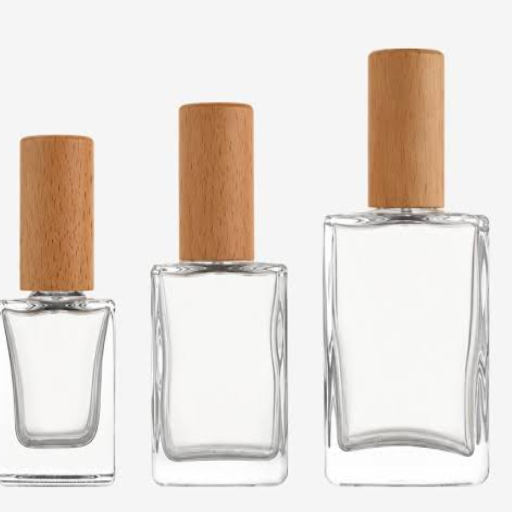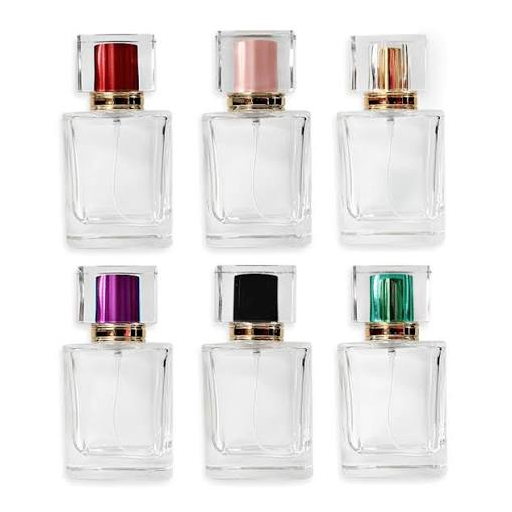
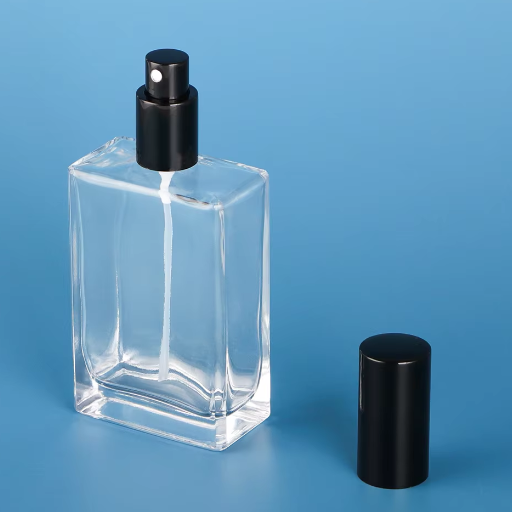
Perfume bottle MOQ is not one number. Bottles bought from resale stock can start as low as 20 pieces. A factory run from an existing mould usually starts around 500 to 5,000, decorated stock around 2,000 to 3,000, and a new mould at 10,000 or more. The figure that actually decides your order is often the cap, the decoration or the box, not the bottle.
If you have been quoted 30,000 for something another supplier offers at 300, neither of them is lying. They are selling you different things.
One is selling a bottle that already exists. The other is selling a mould, a colour batch and a decoration setup, and then spreading the cost of all three across your order. Same object in the photograph. Two completely different purchases underneath.
This guide is written from the factory side of that table. We make glass perfume bottles and the closures, boxes and testers that go with them, and we quote orders across these routes. What follows is the map of where each number comes from, which one binds first, and what you can move without changing the bottle you have already designed.
Key Takeaways
- Perfume bottle MOQ comes from four routes, not one: marketplace stock, stock mould with decoration, semi-custom on an existing mould, and private mould. Each has its own floor.
- A launch buys seven things, not one. Bottle, cap, collar, pump, decoration, box and tester each carry a separate minimum, and the highest of them sets your order quantity.
- The same mould fee is $0.24 per unit across 5,000 pieces and $0.04 per unit across 30,000. Volume does not lower the fee, it dilutes it.
- Decoration is usually the real step-up. A label can start near 500 pieces while hot foil often needs 5,000 or more.
- If a supplier quotes a number far below everyone else, ask which component that number covers. The answer is usually “the bottle only”.
and we will tell you which route it falls into before we discuss price.
What “MOQ” Actually Means When You Buy a Perfume Bottle
Minimum order quantity is the smallest run a factory can produce without losing money on setup. It’s not a sales policy, and it’s not a test of how serious you are.
Every order carries costs that don’t scale with quantity:
- A mould has to be cut.
- A furnace has to run at temperature.
- A screen, a hot foil die or a coating batch has to be prepared.
Those costs land once, whether you buy 500 pieces or 50,000.
Below a certain quantity, the setup cost per unit becomes larger than the piece itself. That’s where the minimum comes from. Change the setup, and the minimum changes with it.
That is also why a perfume bottle MOQ moves when you change the route, and barely moves when you change the quantity.
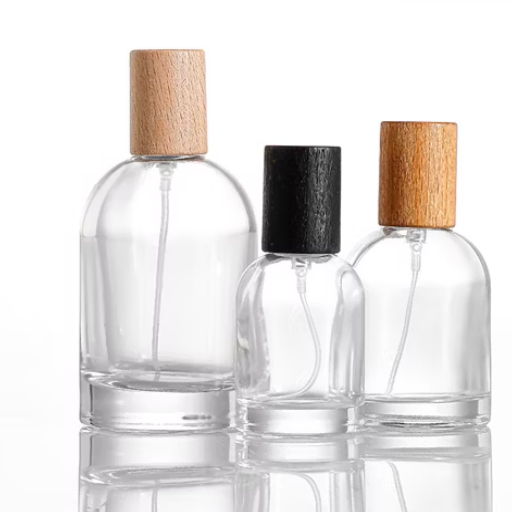
The second thing buyers miss: you’re not buying a bottle. You’re buying a set that has to fit together.
- The glass has a neck finish, and the pump has to match it.
- The collar covers the joint where they meet.
- The cap sits over the collar, so its height and bore have to clear it.
- The box has to hold the finished, capped unit.
- The has to look like the real thing at sample size.
Each of those is manufactured on a different line, by a different process, with a different setup. Which brings us to the number that surprises people.
The Four Purchase Routes Behind a Perfume Bottle MOQ
Almost every quote you receive is one of four products wearing the same name.
| Route | Typical published minimum | What you control | What you give up |
|---|---|---|---|
| Marketplace stock | 20–500 | Label, sticker | Shape, colour, exclusivity |
| Stock mould, decorated | 2,000–5,000 | Colour, logo, finish | The bottle silhouette |
| Semi-custom | 5,000–10,000 | Neck, base, shoulder, colour | Budget and lead time |
| Private mould | 10,000–30,000+ | Everything | Money, time, flexibility |
1. Marketplace stock and stock blanks
This is the 20 to 500 piece tier you see on marketplaces and reseller sites. Someone else already made the bottles, they sit in a warehouse, and you are buying from that stock.
You choose from existing shapes, existing colours and existing caps. Customisation stops at a label or a printed sticker. It’s the fastest and cheapest way to hold a real bottle in your hand.
What you give up is distinctiveness. If your bottle is on page one of a marketplace, it is on every competitor’s shelf too.
2. Stock mould with decoration
This is where most indie fragrance brands actually start. The bottle shape already exists, so there is no mould cost. You add your own colour, logo and finish.
The floor here is set by the decoration, not the glass. A bottle pulled from an existing mould in its stock colour can be ordered in small quantities. The same bottle in your Pantone colour, screen printed, is a different production run with a different setup.
Typical published ranges for this route sit around 2,000 to 3,000 pieces, rising to 5,000 when the finish is complex. Google’s own answer to this query puts custom-decorated bottles at 1,000 to 2,000+ pieces, which is the same floor seen from the decoration side rather than the glass side.
3. Semi-custom on an existing mould
Semi-custom means the mould exists but the bottle is modified for you: a different neck, a heavier base, a change to the shoulder, your own colour batch.
Suppliers usually publish this around 5,000 to 10,000 pieces, because a modified mould run is planned as its own production slot.
4. Private mould
A new mould is cut for your silhouette alone. Nobody else can buy that bottle.
This is the 10,000 to 30,000+ tier. It is the version of a perfume bottle MOQ most buyers picture when they hear the term, and the only route where you should be asking who owns the tooling, because the answer decides whether you can ever move factories.
One point worth stating plainly: these ranges are what suppliers publish across catalogues and buyer guides in 2026, not a quote. They map the market. Your actual number depends on the route, the component and the quantity you can commit to.
The Seven Minimums That Decide Your Order
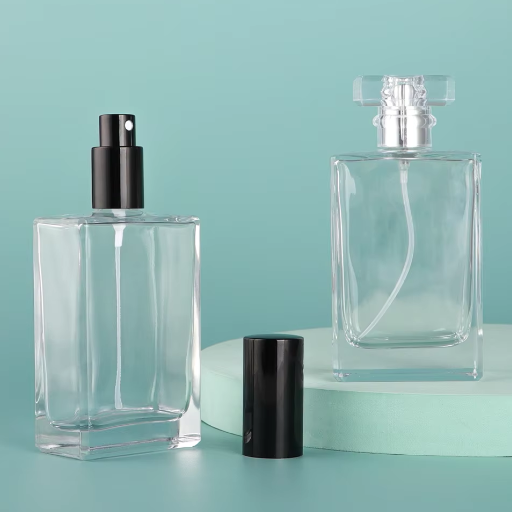
Here is the part that changes how people plan a launch. A perfume bottle MOQ is really seven minimums, and they rarely match.
The table is a market map drawn from published supplier ranges, not a quotation. Your own figure depends on which route and which component you commit to.
| Component | Typical published minimum | Who sets it | What moves it |
|---|---|---|---|
| Glass body (factory run) | 500–5,000 stock; 10,000–30,000+ new mould | Glass factory | Mould route, colour batch, wall weight |
| Cap | 500–1,000 stock; 1,000–5,000 custom; 5,000–10,000 new mould | Cap supplier | Material (ABS, zinc alloy, Surlyn), finish |
| Collar | 3,000–5,000 when custom coloured | Component supplier | Plating, colour matching to cap |
| Pump or sprayer | 5,000–10,000 typical; 100–1,000 if lightly customised | Dispensing supplier | Dose, closure type, actuator finish |
| Decoration | Label 500–1,000; screen 1,000–5,000; coating 3,000–5,000; hot foil 5,000+ | Decorator | Number of colours, process, coverage |
| Box | 300–1,000 rigid; 1,000–5,000 printed carton | Box maker | Structure, board, print method |
| Tester | 1,000–5,000 decorated stock | Tester line | Size, decoration, spray type |
Read the table down the column, not across the row. Resale stock, bought from a warehouse rather than produced to order, sits below this table at 20 to 500 pieces.
A brand that needs a printed carton at 1,000 pieces, a stock bottle at 2,000 and a custom pump at 5,000 cannot place a 1,000 piece order. The pump is the binding constraint. It doesn’t matter that the box maker would happily take 300.
This is the single most common reason a first launch runs late.
Our custom perfume packaging guide walks through the same set of components on the packaging side, if you want the version that includes labels, inserts and outer cartons.
Why the Same Bottle Is Quoted at 300 and at 30,000
Four costs explain almost all of the spread in a perfume bottle MOQ.
Furnace time. Glass is melted continuously in a furnace running above 1,400 °C, and a production run is scheduled into that furnace’s day. A small order does not get a smaller furnace. It gets a slot, and the slot has a minimum.
Mould amortisation. A private mould is a one-time cost. It doesn’t fall when you order less, so the per-unit share rises.
Decoration setup. Screens, dies and coating batches are prepared per run, per colour. Two colours means two setups.
Component pairing. Every part has to match the others, so each part’s minimum applies to the whole order.
The mould arithmetic is worth doing once with real numbers. Take a mould fee of $1,200, which is a common figure at the low end of supplier published ranges:
- Across 5,000 units, the mould adds $0.24 per bottle.
- Across 30,000 units, it adds $0.04 per bottle.
The fee never changed. The dilution did. A brand comparing two quotes on price per unit is often comparing two different assumptions about how many bottles they will actually need.
Now the mismatch, which costs more than any of the above.
A brand plans a launch around 5,000 bottles. The glass is ordered at 5,000. The caps are ordered separately, from a cap supplier with a 5,000 minimum, so 5,000 caps arrive.
But the pump was specified later, at 500 pieces as a trial, and the collar was ordered in the cap colour without checking the plating batch. The bottles are right. The caps are right. The collar sits a shade off, and the pumps are short.
Nothing was defective. The purchase was never treated as one decision.
Decoration Is Where a Perfume Bottle MOQ Jumps
Decoration is the most common reason a quote lands far above the bottle’s own minimum. The processes sort roughly like this, from lowest floor to highest:
- Label or sticker, often 500 to 1,000 pieces. The cheapest way to brand a stock bottle.
- Screen printing, usually 1,000 to 5,000 pieces, depending on colours. One screen per colour.
- Frosting or colour coating, around 3,000 to 5,000 pieces. The bottle enters a batch process.
- Hot foil stamping, typically 5,000 and up. A die is cut, and the foil run has its own setup.
The rule that follows is simple. Decoration minimums stack. A bottle that needs a coating and a hot foil logo inherits the higher minimum twice over, once for each process.
It also means the cheapest path to a premium look is often a stock bottle with a strong cap finish.
How to Lower a Perfume Bottle MOQ Without Lying to Yourself
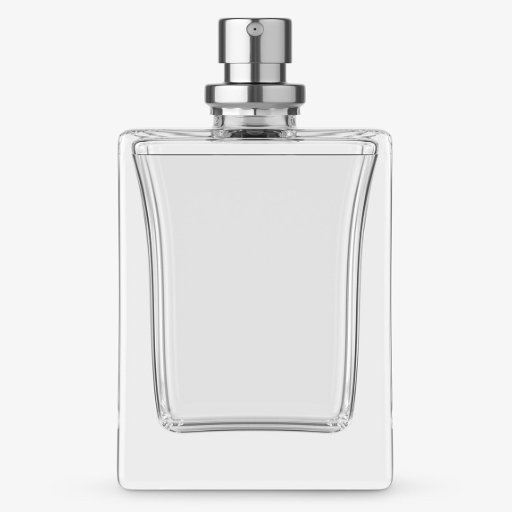
Most buyers who ask for low MOQ perfume bottles are asking about the wrong component. The bottle is rarely the part that blocks a small order.
There are five honest levers. None of them is “just ask for 500.”
Move down a route. Stock mould with decoration instead of private mould. This is the biggest single drop available, and it costs you exclusivity of shape.
Simplify the decoration. One colour instead of three, or a label instead of hot foil. You keep the silhouette and lose some surface interest.
Accept a stock colour for the glass and spend on the closure. The cap is the part people touch. Zinc alloy and Surlyn closures carry more perceived value per dollar than a coated bottle.
Order the components together. If one supplier quotes bottle, pump, collar and cap as a set, the components are planned against the same quantity. That removes the mismatch problem and usually the mismatch premium.
Plan the second order before you place the first. A 5,000 piece run followed by a 20,000 piece reorder costs less in total than two nervous 3,000 piece runs, and it gives the factory a reason to schedule you properly.
What you can change without raising the minimum is worth knowing too: cap finish, collar plating, stock glass colour, label stock and print, insert material, and box closure type. Those are the places to customise when the quantity is fixed.
Buying perfume bottles in bulk does not move the binding minimum either. It lowers the share of every fixed cost spread across the run, which is a different saving.
MOQ and Lead Time Move Together
Quantity and schedule are the same conversation, because both are set by how the factory plans a run.
A normal sequence looks like this:
- Sample and approve the bottle.
- Cut or confirm the mould.
- Produce.
- Inspect.
- Ship.
Our stated production time is 4 to 6 weeks, and the sampling and tooling steps sit in front of that clock.
Two practical notes.
Inspection is usually agreed to a standard rather than a promise. AQL sampling under ISO 2859-1 is the common basis, and the acceptance level belongs in writing before production starts, not after.
And filled fragrance is treated as a dangerous good for shipping. That’s why most brands ship empty components and fill locally, which changes the freight maths but not the MOQ maths.
If you want the dispensing side of the same arithmetic, our sprayer pricing and MOQ guide runs the same volume tiers for pumps and actuators.
A French-language tour of a luxury flacon glassworks. The commentary is in French, but the forming, annealing and inspection stages are the same ones that set the minimums described above.
FAQ
What is the minimum order quantity for perfume bottles? There is no single perfume bottle MOQ. Stock bottles commonly start in the low hundreds, decorated stock around 2,000 to 3,000 pieces, and a new mould at 10,000 or more. Your real minimum is the highest of the component minimums you need.
Can I order 500 custom perfume bottles? Usually not with custom decoration. At 500 pieces you are in stock-blank territory, with a label as your branding. A coated or screen-printed bottle at that quantity is possible only when the factory already has the colour and the screen.
Does a custom cap have the same MOQ as the bottle? Rarely. Caps often carry a lower floor than glass on stock moulds and a higher one when a new cap mould is needed. Custom plating and colour matching add their own batch minimum, which is why a 5,000 piece bottle order can be held up by a 3,000 piece collar.
Why is my MOQ higher than the number on the supplier’s website? Because the website number usually refers to one component in its stock state. Your quote may include a custom colour, a decoration process, a non-standard neck or a matched collar. Ask which line item the published figure covers.
Can one factory supply the bottle, cap, pump and box together? Yes, and it is usually the better route for a first launch. One supplier plans all components against a single quantity, which removes the mismatch between a 5,000 piece bottle run and a 500 piece pump trial.
How much does a perfume bottle mould cost? Published ranges commonly sit between roughly $900 and $3,000 for a simple bottle mould, with complex or heavy-base designs above that. The figure matters less than the quantity you spread it across.
The Number Is a Decision, Not a Barrier
A perfume bottle MOQ is the price of a production setup, expressed as a quantity. Once you know which setup you are paying for, the number stops looking arbitrary.
Three things to carry into your next conversation with a supplier. Ask which component sets the minimum, not just what the minimum is. Check that every part is being planned against the same quantity. And price the decoration separately from the bottle, because that is where most quotes quietly move.
If you are planning a launch and want to know which route your design falls into, . We will tell you what it needs before we talk about price.
If you are still choosing components, start with our and .
The that carry the set follow the same logic. The box minimum is real, but it is rarely the one that binds.
The right perfume bottle MOQ is the one that matches what you can sell, not the one that sounds impressive in a quote.