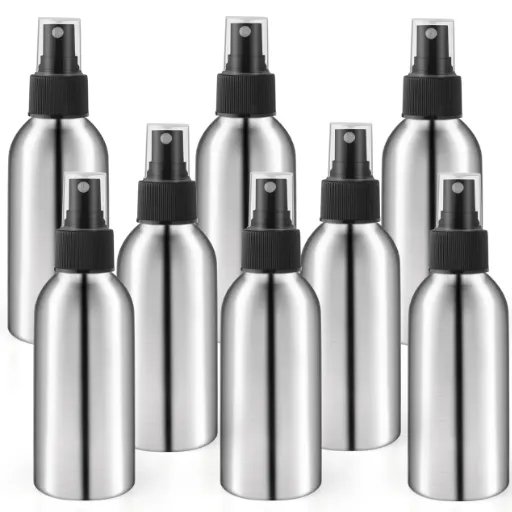
The term ‘cosmetic fine mist sprayer’ is used to describe a pump that allows the dispensing of mist or a spray from a liquid product without dripping or continuous discharge of the contents of a container as a single stream. At the heart of this apparatus is a pump located below the actuator that sprays the product in a form of habitually droplets sized between 20μ to 80μ, and thereby usually applied to facial tonics, setting mists, body sprays and fragrances. The effectiveness of the sprayer however can be determined by the thickness of the product, where it is to be applied, and the atmosphere that what you expect.
And it is regrettably true that beauty brands ‘mature’ in knowledge about various operationally conducive types of fine mist sprayers at a very late stage in the game. A pump that makes one full of joy when applying a water based toner can ultimately frustrate when a mixture of essential oils is pumped as it will not take weeks for it to clog. A body spray bottle that brings immense pleasure when used on ankles that may be a burden when used with a light facial adhering spray.
You are aware of the fact that package forms a significant aspect of product perception. We at Fuzhou Longlu Packaging Co., Ltd., have been through many ecommerce companies which sell cosmetics. Successful brands look into things that in most cases are not seen but rather felt by clients, including contours, sprays and textures. The present manual seeks to allocate appropriate cosmetic fine mist sprayer specifications to each main beauty product class for excellent performance.
Key Takeaways
- Cosmetic fine mist sprayers produce 20-80 micron droplets and work best with low-viscosity, water-based or alcohol-based formulas.
- Skincare toners need 0.12-0.14 mL output with ultra-fine droplets (20-50 microns) for even, non-dripping coverage.
- Makeup setting sprays require the finest mist possible (0.10-0.12 mL output) to set makeup without disturbing it.
- Fragrances and body mists typically use 18/410 or 20/410 neck sizes with controlled output for targeted application.
- Essential oils and serums above 50 cPs viscosity usually need treatment pumps or specialized wide-orifice mist sprayers.
- 59% of global manufacturers now offer PCR plastic options, and mono-material PP sprayers simplify recycling.
What Is a Fine Mist Sprayer and Why Spray Quality Matters in Cosmetics
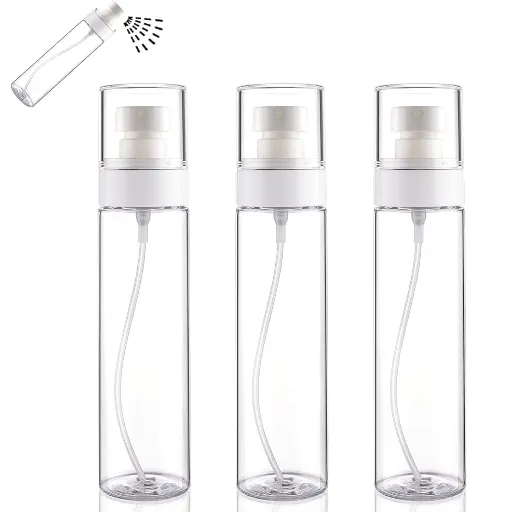
A sprayer that produces fine mist triggers a spring actuated pump that sucks the liquid up a dip tube and a fine fog is released through a particular nozzle. This releases a fine coat of fog-like drops that touch the skin evenly without allowing them to run down. Cosmetic fine mist This sprayer is able to dispense 0.10-0.15mL of fluid per puff and the diameter of the spray produced from the droplets is between 20 and 80 microns.
Why do your clients care at all? Interviews for Byrdie or InStyle magazines always include spray quality among the primary criteria for evaluations of setting sprays and facial mists. Gentle, veiling mists give us a sense of indulgence, immediately. While even an excessive spray has the power of giving you a $40 turnover.
When Elena launched her moisturizing toners in the early part of 2025, she obtained a 24/410 fine mist sprayer at the lowest cost possible, as advised by her manufacturer. These reviews contained one and the only point in two weeks of use: ‘ I am going to drown in here!’
The generated drops had a relatively bigger size. The device’s output was 0.20 ml per stroke which was excessive and produced a lopsided spray. To tackle this issue, she selected the ultra-fine 0.12 ml option whose drops size was 40 microns in diameter. There was a 34% decrease in return rate and 33% increase in repurchase rates. Only the sprayer changed; the formula of the product was unchanged.
Fine Mist vs. Regular Mist vs. Continuous Mist: A Quick Comparison
Not all cosmetic spray pumps are fine mists. Understanding the differences helps you match the right mechanism to your product.
| Feature | Fine Mist | Regular Mist (Treatment Pump) | Continuous Mist |
|---|---|---|---|
| Droplet size | 20-80 microns | 80-150 microns | Ultra-fine, often <80 microns |
| Output per stroke | 0.10-0.15 mL | 0.12-0.25 mL | Variable; sustained spray duration |
| Feel | Dry, cloud-like, even | Wetter, heavier, targeted | Enveloping, veil-like, prolonged |
| Viscosity range | 1-50 cPs | 50-500 cPs | Thin to medium |
| Best cosmetic use | Face, premium body mists | Hair, styling products | Sensorial skincare, luxury fragrance |
| Relative cost | Medium | Low-Medium | Higher (premium positioning) |
For most facial skincare and premium fragrance applications, a standard fine mist sprayer hits the sweet spot between performance and cost. If you want a deeper dive into selection criteria like neck finish matching and material compatibility, see our step-by-step fine mist sprayer buyer’s guide.
Fine Mist Sprayers for Skincare: Toners, Essences, and Hydrating Mists
Any skincare line for the face should top any list in terms of spray performance. Beauty users almost always spray these products onto clean skin with their eyes usually shut and never expect any residue as they spread on the skin immediately.
The facial toner, essence spraying, as well as hydrating mist can be packaged in cosmetic fine mist sprayer of size 20/410 or 24/410 with output of 0.12-0.14 ml per stroke and droplet sizes from 20 to 50 microns. Such type of equipment allows to cover the cheeks and the surrounding area evenly, without forming any drops, and also quickly absorb the liquid and do not cause any discomfort to the skin of the face.
Non-alcoholic and/or low alcohol based materials are appropriate for domestic cosmetic fine mist sprayers. Products containing actives such as hyaluronic acid or niacinamide are easy to spray out and have steady and continuous spray patterns. In case the product has any active ingredient that can get oxidized like vitamin C, retinol etc, then it is advisable to go for an airless fine mist option which will basically prevent any air from entering the sprayer while it is being used.
Want to see how the right sprayer performs with your formula? Request a free sample from Fuzhou Longlu Packaging and test it directly with your product before committing to production.
The Best Sprayer Specs for Facial Toners and Essences
- Output: 0.12 mL for thin, water-like toners; 0.14 mL for slightly more viscous essences
- Neck size: 20/410 for 80-120 mL bottles; 24/410 for 150-200 mL bottles
- Material: Polypropylene (PP) body with stainless steel spring and EPDM or silicone gasket
- Special feature: Locking overcap for travel-size formats
Hydrating Mists and Thermal Water Sprays
Hydrating mists position themselves as sensorial, spa-like experiences. Consumers often mist repeatedly throughout the day, including over makeup. This means the sprayer must deliver an ultra-fine mist that does not disrupt foundation or sunscreen.
Premium hydrating mists increasingly use continuous mist technology to create that enveloping, cloud-like sensation. The droplets are smaller, the application feels more luxurious, and the consumer perceives higher value. If your brand targets the premium skincare segment, a continuous fine mist sprayer can justify a higher price point.
Fine Mist Sprayers for Makeup: Setting Sprays, Primers, and Fixatives
Cosmetics professionals know how difficult it is to package setting sprays. Such products should provide a sufficient quantity to fix the makeup into place but the consumer must barely feel the product on the face during application. Consumers will complain about heavy drops or improper spray patterns which cause obvious streaks, run their makeup, or leave a thin coat on the face.
The most common size of a setting spray, priming spray or makeup sealant is 20/410 or 24/410 but its output is 0.10-0.12 ml per use with a spray and the particles do not exceed 40 microns in diameter. The training mist should also adhere for at least 15-30 seconds without leaving any webs.
Marcus, who runs a cosmetic fine mist sprayer company in Los Angeles, has been through this process before. His original setting spray, which tested beautifully in the laboratory, had absolutely no competitive advantage. When a cheap 0.14 ml sprayer was given to a lifestyle blogger to use together with the new setting spray, she said that it felt “wet” and the drying time was longer than expected. A few people also mentioned that their foundation got ruined.
He decided to go with a 0.10ml extra-fine cosmetic fine mist sprayer with a very small nozzle. And in just three months, his product had made it to a Cosmopolitan list. One of the reviews alluded to the “finest’ ‘spray that they had ever encountered.” At no time was there a change in the formula. The only change was the sprayer used.
Setting Spray Sprayer Quality: What Beauty Editors Look For
Beauty editors consistently describe best-in-class setting spray sprayers with the same language: “standing close to a waterfall,” “a veil,” or “next-to-nothing feeling.” These descriptions map directly to technical specs:
- Ultrafine particle size (20-40 microns): No visible droplets land on skin
- Even distribution: Consistent spray pattern with no sputtering
- Quick dry-down: Absorbs within 15-30 seconds
- Layering-friendly: Can be reapplied over makeup without disruption
When you source a cosmetic fine mist sprayer for makeup, ask your supplier for spray pattern consistency testing. A quality pump should produce a uniform cone or fan pattern across at least 10,000 actuations.
Output and Dry-Time Considerations
Lower output (0.10 mL) prevents oversaturation, which is critical for alcohol-based setting sprays that need to evaporate quickly. Dewy-finish sprays can tolerate slightly higher output (0.12 mL) because the formula is designed to leave a light, moisturizing layer. Match the output to the formula’s drying characteristics, not just the viscosity.
Fine Mist Sprayers for Fragrance and Body Mist
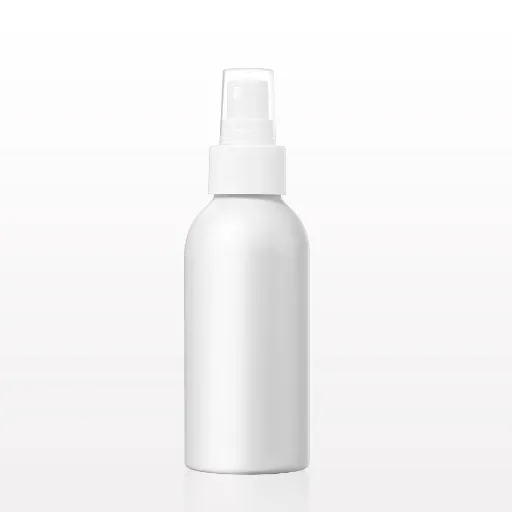
Perfume and body mist are applied differently from skin care cosmetics and this can be explained by two factors: first, the user has a greater need for particular application and coverage areas; second, the sprayer itself adds value to the product and makes it appear more luxurious.
In the case of perfumes and colognes, the most appropriate sprayers are 18/410 or 20/410. These sprayers are short-necked and together with the 30 to 60 mL bottles of perfumes and colognes, they work excellently. They also deliver only a small portion of the senses-altering liquid, which is 0.10 to 0.12 mL. This is because Perfumes are not used at random, all over the face. They are usually sprayed at specific, localized points like the wrists, neck, ears, and so on.
Body mists, on the other hand, come in wider bottles of about 150-250ml and have a broader coverage. 20/410 or 24/410 sprayers with 0.12-0.14 ml spray are perfect as they provide a good range with each burst and dispense a very small amount for every pump. Such range may be advantageous as it lessens the frequency of use of tones of heads.
Perfume Atomizer vs. Fine Mist Sprayer: Technical Differences
Many fragrance brands use the terms interchangeably, but there is a technical distinction:
- Crimp pump atomizers: Attach permanently to the bottle via a metal collar crimped around the neck. Common in traditional perfumery. Cannot be removed without tools.
- Screw pump fine mist sprayers: Thread onto standard neck finishes (18/410, 20/410). Easier to assemble, replace, and refill. More common in modern cosmetic packaging.
If your fragrance brand offers refillable options or travel sizes, a screw-type fine mist sprayer offers more flexibility. If you need guidance on replacing or repairing a sprayer, see our guide to perfume spray nozzle replacement.
Body Mist and Hair Fragrance Considerations
Body mists often live in bathrooms or gym bags, so durability matters. Look for sprayers with locking actuators or overcaps that prevent accidental pressing. For hair fragrances, the sprayer must tolerate slightly higher viscosity if the formula contains light oils or silicones.
Fine Mist Sprayers for Hair Care: Leave-In Conditioners and Styling Mists
Facial skincare products and hair care products are never similar. Whereas hair may need more products to use, spray should cover the strands without leaving any part of the body.
For products with fine mists like the conditioners, detangling sprays, and heat protection mists, a 24/410 treatment pump with a fine mist capable of release 0.14-0.20 ml of product in 40-80 micron size droplets is suggested. The larger dimension of the droplets and the greater volume output make it possible for one to cover the designated areas of the hair.
More so, avoid thicker formulations. These oils or butters based leave-ins might be over 50 cPs in viscosity, which will be beyond the carrying capacity of a simple fine spray enabled system. In situations such as these, an overcap treatment pump spray, which has a greater diameter orifice, is normally better. If you are not clear whether the fine mist actuator is suitable, conduct a stability trial with the formula in mini cosmetic fine mist sprayer but with your formulation containing ingredients before going for production for a minimum of 14 days.
Formula Compatibility: Matching Your Cosmetic Formula to the Right Sprayer
The single most common cause of cosmetic sprayer failure is a mismatch between formula and pump specification. A fine mist sprayer designed for water-based toner will clog, leak, or degrade if paired with an incompatible formula.
Use this compatibility matrix as your starting point:
| Formula type | Viscosity | Recommended sprayer | Gasket material | Notes |
|---|---|---|---|---|
| Water-based toner | 1-5 cPs | Standard fine mist (20-80 microns) | EPDM / Silicone | Ideal for fine mist |
| Alcohol-based setting spray | 1-3 cPs | Fine mist with chemical-resistant gasket | Viton / NBR | Check alcohol concentration |
| Essential oil blend | 5-20 cPs | Larger orifice fine mist or treatment pump | EPDM | High clog risk; test thoroughly |
| Serum / light oil | 20-50 cPs | Treatment pump or wide-orifice mist | Silicone | Often too viscous for fine mist |
| Suspension / shimmer | Variable | Treatment pump recommended | EPDM | Particles clog fine nozzle |
Not sure which sprayer matches your formulation? Contact our team for a complimentary compatibility assessment. We test your formula with multiple pump options and provide a detailed performance report.
Always conduct liquid compatibility testing before mass production. Request samples from your supplier, fill them with your exact formula, and store them under normal use conditions for 2-4 weeks. Check for:
- Clogging: Does the nozzle block after sitting unused?
- Leakage: Does the closure seal hold when the bottle’s tilted or transported?
- Material degradation: Do gaskets swell, crack, or discolor?
- Spray consistency: Does the pattern remain even after repeated use?
Skipping this step has cost brands thousands in returned inventory and damaged reputation. Don’t let it happen to yours. The few dollars spent on sample testing always saves money in the long run.
Sustainability in Cosmetic Fine Mist Sprayers
Sustainability isn’t optional in cosmetic packaging anymore. Industry research shows 80% of beauty brands now prioritize sustainable packaging, and 59% of global sprayer manufacturers have adopted post-consumer recycled (PCR) plastics.
For cosmetic fine mist sprayers, the sustainability conversation centers on three innovations:
PCR plastic content: Using 30-50% PCR material in sprayer components meets most current regulations while maintaining performance. At 30% PCR, most brands report no visible difference from virgin plastic. California now mandates 25% PCR in plastic bottles, escalating to 50% by 2030. The UK requires 30% PCR to exempt packaging from the Plastic Packaging Tax.
Mono-material construction: Traditional fine mist sprayers often contain metal springs, rubber gaskets, and multiple plastic resins, which makes recycling difficult. Mono-material PP sprayers use plastic springs and homogeneous resin throughout, enabling true curbside recyclability.
Refillable systems: Premium cosmetic brands increasingly design outer bottles that consumers keep while replacing only the inner product cartridge. This approach reduces single-use waste by an estimated 25 million kg annually across the industry.
Mono-Material and All-Plastic Options
All-plastic fine mist sprayers eliminate metal components entirely. The trade-off is a slightly different actuation feel and a modest cost increase. For brands targeting eco-conscious consumers, the marketing value often outweighs the per-unit cost difference.
Refillable Fine Mist Systems
Refillable systems work best in premium skincare and fragrance categories where consumers develop brand loyalty. The outer case becomes a design object, while the inner cartridge contains the product and sprayer mechanism. If your brand targets the luxury market, a refillable format signals both sustainability and exclusivity.
Emerging Trends: Continuous Mist and Ultra-Fine Technology for Cosmetics
Constant fine mist sprayers have recently emerged as the most dynamically growing sector of the dispensing solutions in cosmetics. In contrast to the normal pumps, which releases a puff of air at each stroke, the continuous mist sprayers rely on pre compression technology that dispenses a very fine mist of product which will continue as long as the actuator is pressed.
The technology also makes smaller droplets up to 2.5 time fine mist sprayer and increases the spray period by 200 – 1000 %. In such a situation, we can say it’s not like pumping, but rather like discussing under a misting system in a relaxed resort such as a beach residence.
Most of the manufacturers have already gone ahead in modification of this system. AptarGroup developed a spray named “Silk” and a “XD 11 Panache” targeting high end cosmetic brands developed by Silgan Springs, both of which have a completely silent actuation and diffusion that can be controlled. Such characteristics support the consumer’s improvement of sense of smell by avoiding sharp alcohol notes that yield the very first use of a spray.
Continuous mist sprayers cost more than standard pumps, so they suit premium positioning. Consider this technology if your product targets:
- Luxury fragrance consumers who value sensorial ritual
- Premium skincare buyers willing to pay for elevated experience
- Setting spray users who want “airbrushed” application
Choosing the Right Cosmetic Fine Mist Sprayer: Quick Reference by Product
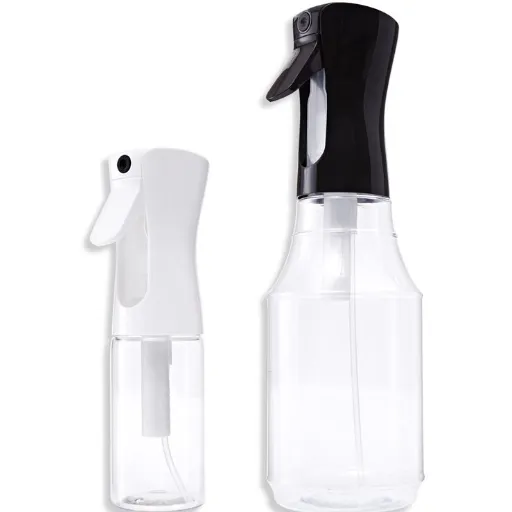
Use this table as a quick decision guide when specifying your next cosmetic fine mist sprayer:
| Cosmetic product | Neck size | Output per stroke | Droplet size | Special features |
|---|---|---|---|---|
| Facial toner | 20/410, 24/410 | 0.12-0.14 mL | 20-50 microns | Locking overcap for travel |
| Setting spray | 20/410, 24/410 | 0.10-0.12 mL | 20-40 microns | Ultra-fine, fast dry-down |
| Perfume | 18/410, 20/410 | 0.10-0.12 mL | 20-50 microns | Elegant actuator design |
| Body mist | 20/410, 24/410 | 0.12-0.14 mL | 30-60 microns | Larger bottle compatibility |
| Hair mist | 24/410 | 0.14-0.16 mL | 40-80 microns | Slightly higher output |
| Hydrating mist (premium) | 20/410 | 0.10-0.12 mL | 20-40 microns | Continuous mist option |
For detailed selection criteria including neck finish measurement, material compatibility, and quality testing protocols, refer to our complete fine mist sprayer buyer’s guide.
Conclusion
The right cosmetic fine mist sprayer does more than dispense product. It shapes how consumers perceive your brand, how effectively your formula performs, and whether customers come back for a second purchase. A toner that drips, a setting spray that smudges, or a perfume that sprays unevenly can undo months of formulation work in a single use.
The key is matching the sprayer specification to your specific cosmetic application:
- Skincare needs ultra-fine droplets (20-50 microns) and low output (0.12-0.14 mL) for gentle, even coverage
- Makeup demands the finest mist possible (0.10-0.12 mL) to set product without disruption
- Fragrance benefits from controlled output and elegant actuator design for targeted application
- Hair care tolerates slightly larger droplets (40-80 microns) and higher output for adequate strand coverage
- All categories require formula compatibility testing before production commitment
Sustainability options have expanded dramatically. PCR plastics, mono-material constructions, and refillable systems are now accessible to brands of all sizes. Regulatory pressure is only increasing, so building sustainability into your packaging decisions today protects your market access tomorrow.
At Fuzhou Longlu Packaging Co., Ltd., we manufacture cosmetic fine mist sprayers in standard and custom configurations for beauty brands worldwide. Whether you need 10,000 units with your brand color or guidance on matching a sprayer to a challenging formula, our team provides samples, compatibility testing, and production at competitive lead times.
Ready to find the perfect cosmetic fine mist sprayer for your product line? Contact us today for a free consultation and sample kit.
External sources: Cognitive Market Research — Fine Mist Sprayers Market Report, Business Research Insights — Fine Mist Sprayers Market, Oulete — Cosmetic Spray Pump Types, Silgan Dispensing — Putting on the Spritz, Byrdie — Best Setting Sprays of 2026, Cosmopolitan UK — Best Setting Sprays