Sarah dedicated eight months to creating the ideal facial toner formula. She successfully located the ideal frosted glass container, created a sophisticated product label, and initiated her first manufacturing run which included 5000 units. The first customer evaluations started appearing two weeks after the product introduction. The reviews did not meet her expectations. Customers reported problems with the product because it had uneven spraying capabilities, its caps leaked, and its streaming function produced water gun-like mist instead of refreshing mist. The fine mist sprayer she chose to save $0.15 per unit was costing her brand reputation and repeat customers.
You are not the only person who has stood before a sprayer catalog to decide which product will match your needs. The right fine mist sprayer can elevate a product from ordinary to unforgettable. The wrong one can turn a premium formula into a customer service nightmare.
This guide covers everything you need to know about fine mist sprayers. The guide provides information about sprayer operation methods, available sprayer types, comparison of sprayers to other dispensing methods, and guidelines for selecting product specifications. The framework will show you how to select optimal choices while eliminating common errors that hinder successful brands from achieving success.
What Is a Fine Mist Sprayer and How Does It Work?
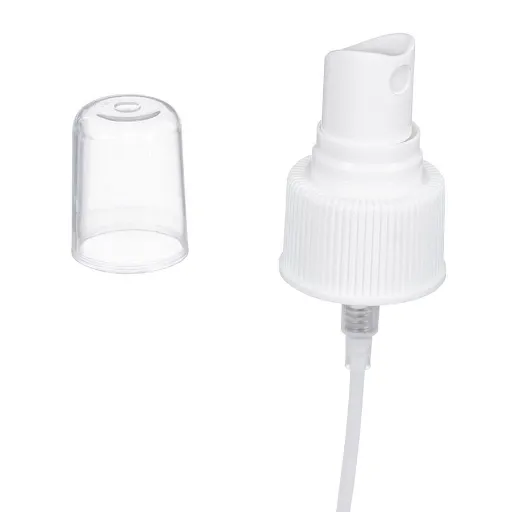
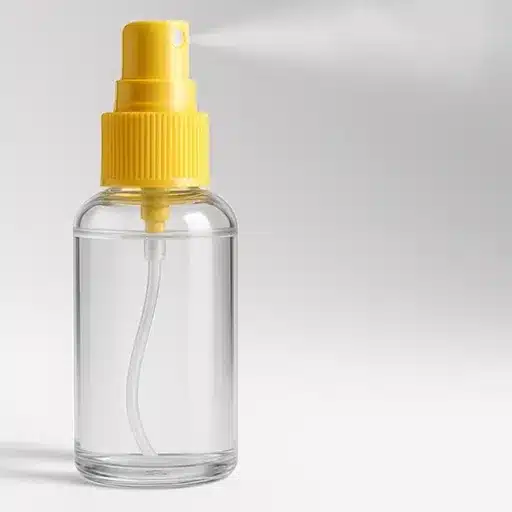
A fine mist sprayer is a compact mechanical pump that converts low-viscosity liquids into a cloud of tiny droplets which typically range from 20 to 100 microns in size. A fine mist sprayer produces a soft continuous mist which applies to skin or surfaces without creating any dampness while lotion pumps and trigger sprayers deliver their content through a stream or heavy droplets.
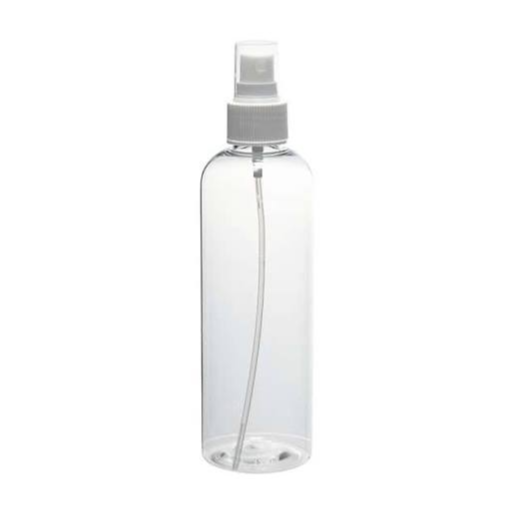
The mechanism operates through an elegant but straightforward design. The actuator button triggers two actions when pressed because an internal spring compresses while a piston moves downward inside the pump chamber. This process establishes a partial vacuum, which directs liquid from the bottle through the dip tube into the container. The spring’s return movement causes liquid to be pressurized, which then moves through a micro-orifice nozzle. The nozzle design generates tiny droplets from the stream, which produces the gentle mist that customers expect.
Every fine mist sprayer contains seven core components:
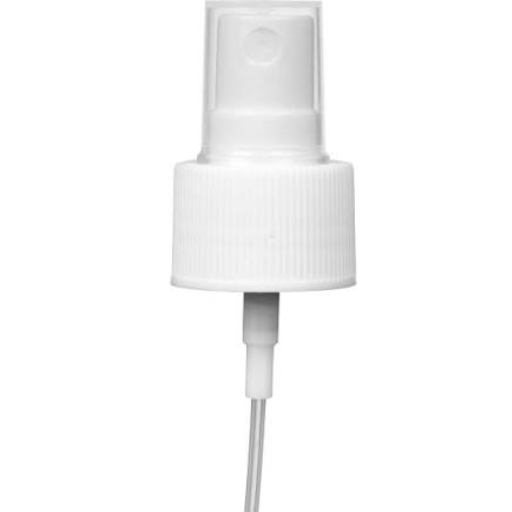
- Actuator: The push-button top that houses the spray insert and determines the final pattern.
- Insert / Nozzle: A precision-engineered piece with internal swirl channels that atomize the liquid.
- Pump Mechanism: The piston, spring, housing, and seal that create suction and pressure.
- Closure: The threaded ring that attaches to the bottle neck, available in standard finishes like 18/410, 20/410, 24/410, and 28/410.
- Gasket: A compressible seal between the closure and bottle that prevents leaks.
- Dip Tube: A long tube extending to the bottle bottom that draws liquid upward.
- Overcap / Dust Cap: A protective cover that prevents accidental actuation and keeps the nozzle clean.
Output per stroke typically ranges from 0.12 ml to 0.4 ml, depending on the pump design. Cosmetic fine mist sprayers usually deliver around 0.12 to 0.15 ml per actuation, making them economical for expensive formulations like serums, toners, and perfumes.
Want to see the difference for yourself? Request a free sample kit with multiple fine mist sprayer options matched to your product type. Testing before you commit to a full order eliminates the guesswork and protects your investment.
Fine Mist Sprayer Types and Sizes Explained
Not all fine mist sprayers are built the same. Choosing the right type starts with understanding the size system and the variations available for different applications.
Standard Neck Finish Sizes
The fine mist sprayers use industry-standard neck finishes which measurement system requires millimeter unit. The first number indicates the diameter of the bottle opening. The second number refers to the thread style.
18/410 is the smallest common size, which people use to create travel-size bottles and sample vials and pocket perfumes. The compact actuator works effectively with mini formats, but its design limitations restrict branding and ergonomic development.
20/410 size, which exists between small and mid-small dimensions, is commonly found on standard perfume bottles and essential oil blends and compact skincare products. Its design enables users to easily carry it while providing sufficient space for their fingers to press buttons.
24/410 size functions as the primary standard used throughout the cosmetics sector. The size appears on products which include facial toners body mists and hair sprays and setting sprays. The design provides users with optimal ergonomic support, produces consistent output, and works with multiple bottle designs.
28/410 size serves two purposes: it supports larger product sizes and it meets requirements for producing high output. Home fragrance sprays and large body mists and specific hair care products use this size because it provides wider spray coverage and a stronger actuator feel.
Continuous Fine Mist Sprayers
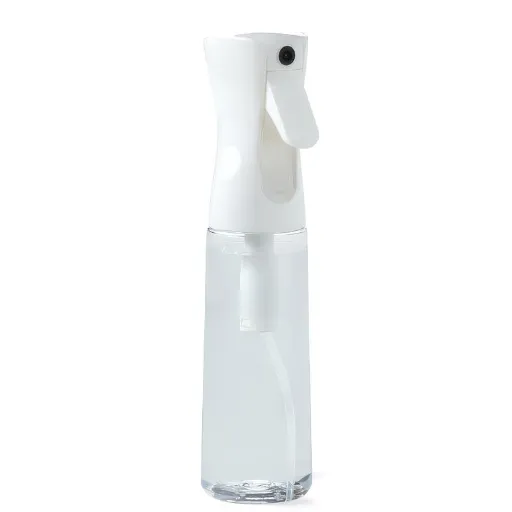
Continuous fine mist sprayers represent one of the most significant innovations in dispensing technology. Continuous systems create long steady sprays through their pre-compression system which eliminates the need for repeated pumping unlike standard finger pumps which deliver one burst per press.
Marcus, founder of a hair care brand targeting salon professionals, made the switch to continuous fine mist sprayers for his leave-in conditioner line. Stylists had complained that standard pumps required dozens of presses to cover long hair. The continuous sprayer let them mist an entire section in one smooth motion. The packaging upgrade resulted in a 34% increase of salon reorders during the first quarter. His product went from a back-shelf item to a stylist favorite because the dispensing experience matched the premium formula inside.
Airless Fine Mist Pump Systems
Airless fine mist sprayers use a bag-in-bottle or piston system that isolates the product from air exposure. The design provides multiple advantages because it extends shelf life while reducing preservatives and allowing almost complete product removal. Premium skincare brands favor airless systems for serums, vitamin C formulations, and other products sensitive to oxidation.
Fine Mist Sprayer vs. Other Dispensing Options
The choice of a dispensing method goes beyond visual appearance because it determines how users will experience the product and how well the formula will work and how the brand will be viewed by customers. Here is how fine mist sprayers compare to the alternatives.
Fine Mist Sprayer vs. Atomizer
The difference between fine mist sprayer and atomizer is very thin. In many cases, they mean the same thing. The definition of an atomizer per se is any equipment that disintegrates liquid to form a mist. In reality, atomisers call for a better atomisation because the standard droplet sizes in the case of perfumes can be from 10 microns to even 20 microns.
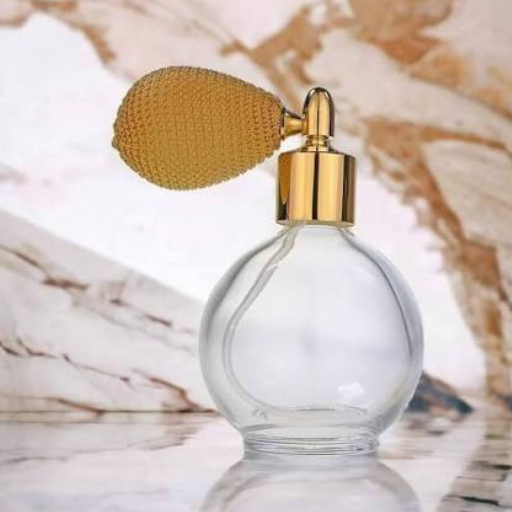
There are bulb and squeeze types of atomizers used for perfumery practice while the finger pump applies for the ordinary fine mist sprayers. In the majority of cosmetic applications and personal care, a good quality fine mist sprayer provides the required advantages. But for some artistic perfumery and medical practices, only the very specialized atomizers that produce the tiniest particles are appropriate.
Fine Mist Sprayer vs. Trigger Sprayer
Trigger sprayers are based on a lever action mechanism capable of delivering more power in terms of liquid volume and less fine atomisation. These systems usually produce much larger droplets in the range of 150-400 um and deliver much larger amount of liquid per stroke, between 0.8 and 1.5 ml.
Household cleaning products and yard compounds, and automotive materials are just some of the area that trigger sprayers are popularly used because coverage is necessary rather than cautious application. Also the higher viscosity products which fine mist nozzles would become clogged with contents can be dispensed with these trigger sprays. The fine mist sprayer comes up trumps in the market of cosmetic, body care even in any product that needs to be applied without creating patches.
Fine Mist Sprayer vs. Aerosol
Aerosol cylinders, on the other hand, can spray very fine mist by using gas propellant under pressure. Yet mist of amazing quality will come at a cost because of the increasing health and environment concerns caused by aerosols. Propane and even butane, being propellant gases, increase the level of volatile organic compounds. Hence it is common to find people who do not like using any aerosol of sorts.
Difference between fine mist sprayer and aerosol sprayers is that the former does not use any propellant, providing similar quality of fine spray without bearing the adverse environmental effects. As people around the world are-stick to a packaging that is eco-friendly mechanical fine mist sprayer systems are becoming more popular as a replacement to the conventional aerosols.
Industry Applications for Fine Mist Sprayers
Fine mist sprayers serve industries far beyond cosmetics, though beauty and personal care remain the dominant market. Understanding how different sectors use these components helps you see opportunities you might have missed.
Cosmetics and Personal Care
In this case, the market is addressed by the fine mist sprayer segment. All mentioned products, namely facial toners and the rest of the items that follow dispersal, require an adequate application of all sprayed particles. A toner that sprays in a concentrated stream will leave customers with wet patches and irritated skin. Fine mist sprayers are great as they make application easy and fun.
Spray bottles are often employed for hair care purposes with the needs arising from the use of leave-in conditioners, sea salt sprays, detangling sprays, and the treatment of pre-finished hair. The market reveals high satisfaction with the purchase of continuous fine mist sprayers due to their capability of providing saloon grade satisfaction right at home thereby increasing demand.
Pharmaceuticals and Medical
Preparation include nasal sprays, throat mists and anti-itch ointments where establishment of proper standards for dosing is necessary. Pharmaceutical-grade fine mist sprayers often have metered-dose devices incorporated in them to ensure equal and steady release of the mist in the container each time one tries to dispense. Even hand sanitizers and disinfectant sprays use a fine mist technology because they provide adequate coverage without over soaking.
Home Care and Cleaning
When it comes to room sprays, linen refreshers, and air fresheners, the fine mist sprayer enables a wide and uniform distribution of the product in a room. Rather than oversaturating a certain area as would a trigger sprayer, a fine mist incorporates the fragrance within the space. Even some environmentally friendly cleaning brands have begun using Venice Muslin Spray S3S for glass and surface cleaners where the effectiveness relies on the cleaning without leaving any marks.
Food and Beverage
Spraying devices for culinary oils, bar ice breaking and food safe flavor sprayers make a new standard in development of technologies. While these options may need specific materials/CAP EDP (corrosion resistant coating) and, above all compatibility, they are a good showcase of the multipurpose aspect of misting.
Automotive and Industrial
Detailers use fine mist sprayers for tire dressings, ceramic coatings, and interior protectants. The even application reduces waste and prevents the blotchy finish that comes from over-application.
How to Choose the Right Fine Mist Sprayer for Your Product
Selecting a fine mist sprayer involves more than picking a size and color. The wrong specification can cause clogging, leaking, or customer dissatisfaction. Here is a practical framework for making the right choice.
Match the Neck Finish to Your Bottle
To begin with, use the bottle that has been designated already. It is important to ensure that the neck finish corresponds. Even though the neck is close there is a big difference and a 24/410 sprayer cannot be used to seal a 24/415 opening. If you decide to start from scratch, consider the positioning of your product and make a decision on the neck size. In travel/premium samples, the 18/410 and the 20/410 neck finishes are more preferred. For everyday personal care, most people look for 24/410. In the case of large-scale production and use of the product at home, one should go for 28/410.
Consider Formula Viscosity
Fine mist sprayer should only have products with a similar viscosity with water. Thick formulations, thickening gels or content with suspended particles tend to make particles lodge between the micro nozzle and sprayer. For products that are denser than water, it would be advisable to carry out testing on the sample sprayers before making a large order. There are some sprayers that can’t handle thicker liquids as well as others do.
Select Output and Dosage
Consider the bottle/zone where the product will be used – how much product is used in the said zone? Facial toner which is applied twice a day may require low-dose output such as 0.12 ml per each pump. Whereas, a body mist which is intended to cover a fair amount of the body, it’s better to have a high pump mist with the capability of dispensing around 0.3 ml per pump. Experiment with different outputs with your formulation so as to achieve an economical yet satisfactory user experience.
Test Material Compatibility
Such as plastics, gaskets, and metal fittings with your formulation. Unfortunately, high levels of alcohol, essential oils or a combination of ingredients such as specific solvents and rubbers or plastics, can cause disintegration. Perform compatibility tests with the final formulation only. For formulations containing essential oils, and alcohols, one should ensure that they mention food safe materials and the chemically resistant ones right from the design stage.
Prioritize Safety and Transit Features
When considering how your item will be displayed on store shelves or sent through digital retailers including their fi mist sprayer is critical, however, locking actuators or the usage of tamper-evident rings or caps helps a great deal. A fine mist sprayer compactly packed can leak may any contents resulting in discontent from that customer. There are added security levels get engagement from child-resistant properties particularly when such items will be used at home.
Such trivia was earned by Lisa, the co-founder of a boutique perfumery in Barcelona, on her own. Lisa ordered 2,000 production pieces in beautiful glass bottles with ordinary fine mist sprayers and transparent caps in the beginning. Due to high temperatures inside the delivery vehicles during transport during summer, some of the bottles had pressure inside. The pumps emptied their contents inside the fitting box thus rendering both the paraphernalia and the image nonexistent. For the next batch, she ordered sprayers with actuators that could be locked and used gaskets of a different material. The returns were almost non-existent. Spending $0.08 more per unit on additional components saved her happy customers and thousands in replacement fees, preserving the reputation she had built.
Customization Options for Fine Mist Sprayers
Standard off-the-shelf sprayers work for many applications, but customization separates premium brands from commodity competitors. Fine mist sprayers offer extensive personalization options that most buyers never realize exist.
Colors and Finishes
Actuators and closures come in virtually any color to match your brand palette. Standard options include black, white, silver, and gold, but custom color matching is available for larger orders. Matte, glossy, and textured finishes add another layer of visual differentiation.
Overcaps and Dust Covers
Overcaps protect the nozzle from dust and prevent accidental discharge. They come in clear, colored, and opaque options. Some brands choose overcaps in a contrasting color to create visual interest. Others opt for clear caps that showcase the actuator design beneath.
Metal Collars and Premium Accents
Luxury brands increasingly specify metal overshells or collars around the closure for a weightier, more premium feel. Gold, silver, rose gold, and gunmetal finishes elevate the perceived value of the entire product. These accents signal quality before the customer ever presses the pump.
Logo Printing and Branding
Some manufacturers offer silk-screen printing or hot stamping directly on the actuator or closure. This subtle branding element reinforces brand recognition every time the customer uses the product. For high-end lines, even small details like a logo on the spray button communicate craftsmanship.
At Fuzhou Longlu Packaging Co., Ltd., we specialize in custom fine mist sprayer solutions for brands of all sizes. Whether you need a specific Pantone-matched color, a metal collar finish, or a completely bespoke actuator design, our OEM and ODM services can bring your vision to life. We work with minimum order quantities that accommodate growing brands, not just corporate giants.
Common Fine Mist Sprayer Problems and Solutions
Even the best fine mist sprayer can develop issues if specified or used incorrectly. Here are the most common problems and how to prevent them.
Clogging
Clogged nozzles usually result from dried product residue, particulate contamination, or formula incompatibility. To prevent clogging, choose a nozzle size appropriate for your formula viscosity. Include clear instructions for customers about storing the product with the overcap in place. If clogging occurs, soaking the actuator in warm water often restores function.
Leaking
Leaks typically trace back to three causes: incorrect neck finish matching, incompatible gasket material, or insufficient torque during assembly. Verify that your bottle and sprayer share the exact same neck specification. Test gasket materials against your formula. If you are filling in-house, check that your capping equipment applies consistent torque.
Inconsistent Spray Patterns
An uneven or sputtering spray usually indicates air in the dip tube, a partially clogged nozzle, or worn internal components. Prime new sprayers with several test pumps before packaging. Quality manufacturers test every batch for output consistency and spray pattern uniformity.
Priming and First-Time Use
New fine mist sprayers often require several presses to draw liquid up the dip tube and establish the spray pattern. This is normal. Design your customer experience to account for priming. Some brands include a small instruction card explaining that the first few pumps may be air. Others pre-prime samples sent to reviewers to ensure first impressions are perfect.
Sustainability in Fine Mist Sprayer Packaging
Sustainability is no longer a niche concern. According to market research, the global fine mist sprayer market is growing at a compound annual growth rate of 6% to 9%, with eco-friendly alternatives driving a significant portion of that expansion. Consumers actively seek products with reduced environmental impact, and packaging is often the first signal of a brand’s commitment.
Recyclable and Mono-Material Options
Traditional fine mist sprayers combine multiple materials, PP plastic, metal springs, and rubber gaskets, making them difficult to recycle. Mono-material designs use a single plastic type throughout, simplifying the recycling process. These designs are particularly important in European markets where strict packaging sustainability regulations continue to tighten.
Post-Consumer Recycled Plastics
PCR plastics incorporate recycled content into new sprayer components without sacrificing performance. Using PCR materials reduces virgin plastic consumption and appeals to eco-conscious consumers. Many brands now specify PCR content percentages on their packaging as a point of differentiation.
Refillable and Reusable Systems
Refillable fine mist sprayer systems pair a durable, high-quality pump with a reusable bottle or a refill pouch. This model reduces single-use plastic waste while maintaining the premium feel of a well-made sprayer. Hair care and home fragrance brands have embraced refillable formats as both a sustainability play and a customer retention strategy.
Aerosol-Free Environmental Benefits
By choosing mechanical fine mist sprayers over aerosol cans, brands eliminate propellant gases entirely. This choice reduces volatile organic compound emissions and positions the product as environmentally responsible. For brands targeting eco-conscious consumers, the propellant-free label alone can influence purchasing decisions.
Conclusion
The fine mist sprayer sitting on top of your bottle does more than dispense product. It shapes the entire customer experience, from the first satisfying press to the final drop. A well-chosen sprayer turns application into a moment of delight. A poorly chosen one creates friction, waste, and frustration.
Here are the key takeaways to guide your decision:
- Match the neck finish exactly to your bottle specification. Even small mismatches cause leaks.
- Test your formula for viscosity and material compatibility before ordering production quantities.
- Consider your customer’s application context when selecting output and spray pattern.
- Do not overlook transit safety. Locking actuators and quality gaskets prevent costly returns.
- Explore customization options like color matching, metal accents, and logo printing to differentiate your brand.
- Factor sustainability into your specification. Mono-material and PCR options future-proof your packaging.
Choosing the right fine mist sprayer does not have to be complicated. With a clear understanding of the options and a systematic approach to selection, you can specify packaging that protects your product, delights your customers, and strengthens your brand.
Ready to find the perfect fine mist sprayer for your product? Contact Fuzhou Longlu Packaging Co., Ltd. today for a free consultation. Our team will help you match the right specifications to your formula, send samples for testing, and guide you through every step from prototype to production. Get your free quote now and discover packaging that works as hard as your product does.