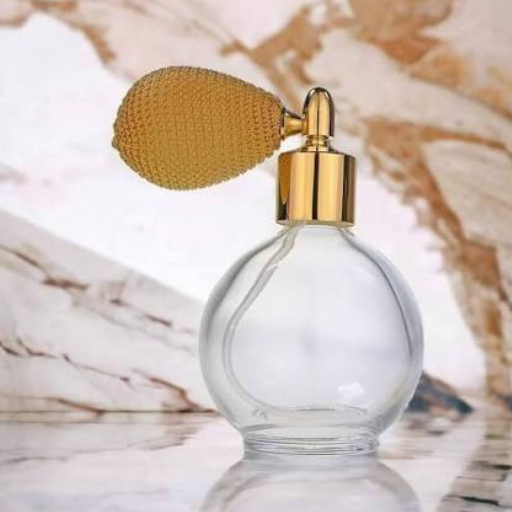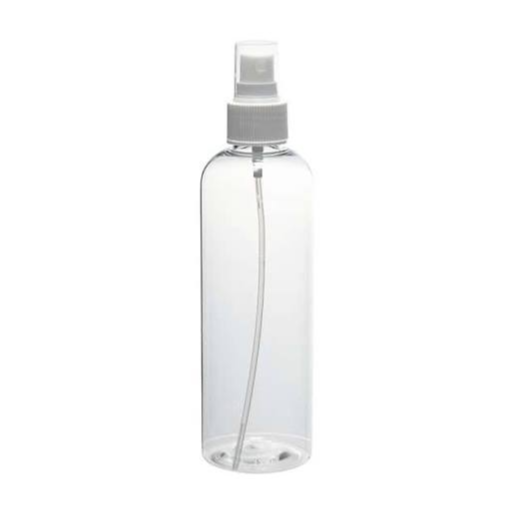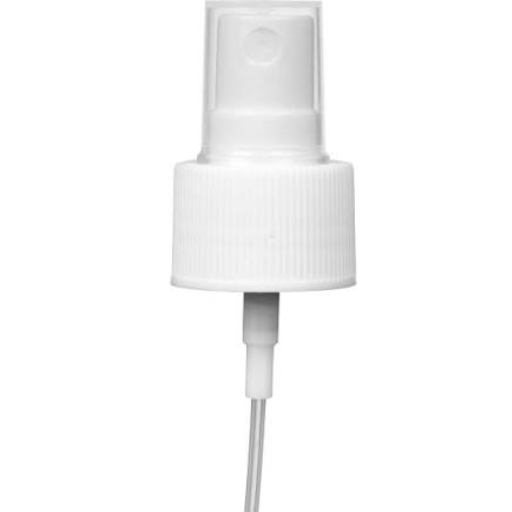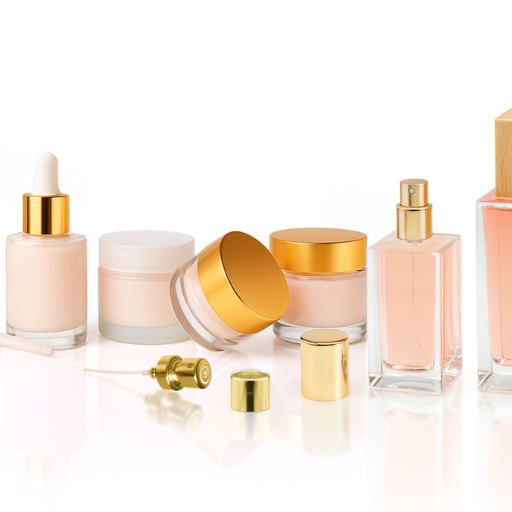
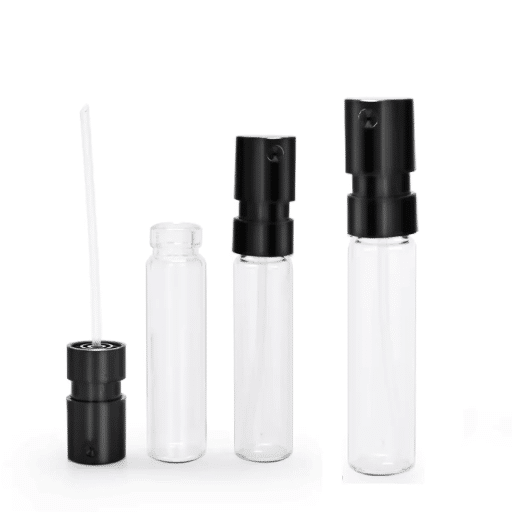
Tester bottle manufacturing is the process of producing the small-format glass or plastic bottles used for fragrance sampling, and it moves through mold design, glass blowing or plastic injection molding, annealing, decoration, assembly, and layered quality control before a single vial reaches a retail counter.
But here’s what most brands don’t realize until it’s too late: a 2ml tester vial is harder to make well than a full-size perfume bottle. A bubble or uneven wall that’s invisible in a 100ml flacon becomes a visible flaw in a mini vial. A neck finish off by a fraction of a millimeter means the spray pump won’t seat, and the tester leaks before a customer ever tries the fragrance.
You’ve probably felt this tension yourself. You want testers that feel premium and work flawlessly, but you also need them at a price that makes sense for a sampling program that gives away thousands of units. That tension is real, and it’s solvable once you understand how tester bottles are actually manufactured.
In this guide, you’ll learn the complete tester bottle manufacturing process for both glass and plastic, why small-format production demands tighter control than full-size bottles, which quality checks separate a reliable tester from a faulty one, and how to specify a bottle that’s cheaper to mold and faster to produce.
Key Takeaways
- Glass tester bottles are made via blow-and-blow molding at 1,500–1,600°C, then annealed at 450–580°C to relieve stress; plastic testers use injection blow molding from PET, PETG, PP, or Surlyn preforms.
- Small-format testers are harder to make than full-size bottles: thin walls, miniature necks (FEA13/FEA15), and tiny pump-fit surfaces magnify defects that full-size production tolerates.
- The quality checks that matter most are sprayer misfire rate (must prime in 1–2 presses and mist, not stream) and overnight invert leak/evaporation testing.
- A defect in the mold replicates on every bottle, so mirror-polished, CNC-engraved molds and pre-production sampling are the highest-impact quality investments you can make.
- Lead times run 3–7 days for stock bottles, 15–25 days for semi-custom, and 25–45 days for a full custom mold after sample approval.
What Is Tester Bottle Manufacturing?

Tester bottle manufacturing is the industrial production of small-format bottles used to sample, test, and distribute fragrances, whether as retail counter testers, sample vials in discovery sets, or travel-size spray bottles.
The perfume packaging market these bottles serve is worth roughly 2.7–2.7–3.0 billion, according to Future Market Insights, and sampling is one of its fastest-growing segments as brands lean into discovery sets and direct-to-consumer trials.
The process differs from full-size perfume bottle manufacturing in one important way: scale and precision. Full-size bottles can tolerate minor imperfections because their larger surface area and thicker walls hide them. A tester, by contrast, is small, thin-walled, and mass-produced by the thousands, which means every stage of production has to be controlled more tightly, not less.
Understanding how testers are made matters for fragrance brands, private-label companies, and packaging buyers for a simple reason. If you can’t tell a well-made tester from a defective one, you’ll either overpay for quality you don’t need or under-spec and ship testers that leak, clog, or crack in a customer’s hand. For a deeper look at the full range of tester formats and how to source them, see our complete guide to perfume tester bottles.
How Are Tester Bottles Manufactured? The 8-Step Process
Every tester bottle, whether glass or plastic, moves through the same eight-stage sequence. Here’s the high-level flow:
- Design and mold engineering, the bottle shape is modeled in CAD, and a precision mold is CNC-engraved and mirror-polished.
- Raw material batching, glass is batched from silica sand, soda ash, and limestone; plastic from PET, PETG, PP, or Surlyn resin.
- Melting or injection, glass melts at 1,500–1,600°C; plastic is injection-molded into a preform.
- Primary forming, glass is blow-and-blow or press-and-blow molded; plastic preforms are reheated and stretch-blow-molded.
- Annealing and stress relief, glass passes through a 450–580°C annealing lehr; plastic is cooled and conditioned.
- Surface treatment and decoration, frosting, color coating, screen printing, hot stamping, or metallization.
- Assembly, the spray pump, collar, cap, and dip tube are fitted and pressure-tested.
- Quality control and packing, layered inspection for dimensions, leaks, sprayer performance, and cosmetic defects before shipping.
We’ll walk through the two manufacturing routes in detail next, then look at the small-format challenges and quality gates that matter most.
Glass Tester Bottle Manufacturing: The Blow-and-Blow Process
Glass testers account for most retail counter and premium sample bottles, and they’re produced through a forming method called blow-and-blow molding.
The process starts with raw materials. Glass is batched from silica sand (SiO₂), soda ash (Na₂CO₃), limestone (CaCO₃), and feldspar, which together make up more than 98% of the material. For premium perfume glass, manufacturers select low-iron quartz sand to keep the glass crystal-clear rather than green-tinted, and they often add cullet, or recycled crushed glass, to reduce energy use.
According to glass packaging manufacturer Boyu Packaging, that batch is fed into a furnace and melted at roughly 1,500–1,600°C. A mechanical shear then cuts a precisely weighed gob of molten glass, one gob per bottle, which drops into a blank mold. Compressed air blows the gob into a preliminary shape called a parison that already includes the neck. The parison then transfers to a final blow mold, where a second blast of high-pressure air expands the glass to conform to the bottle’s curves, ridges, and details.
The mold itself is the quiet hero of the entire process. Because it’s the negative cavity that gives the bottle its shape, any scratch, seam, or uneven surface in the mold replicates on every single bottle produced. That’s why Fuzhou Longlu polishes mold interiors to a mirror finish and controls mold temperature tightly, holding blank molds around 650°C and blow molds around 500°C for complex, non-axisymmetric shapes, as modeled in this academic forming study.
Freshly formed bottles still carry internal thermal stress from rapid cooling. They pass through an annealing lehr, a long temperature-controlled oven that reheats them to roughly 450–580°C and cools them slowly. Correct annealing relieves that stress, which is what prevents the bottle from cracking spontaneously during decoration, filling, or shipping. If you want to see how full-size glass bottles are produced in the same family of processes, our article on how perfume bottles are made covers the broader picture.
Plastic Tester Bottle Manufacturing: Injection Blow Molding

Plastic testers dominate the 1–3ml sample vial market because they’re cheaper, shatter-resistant, and lighter to ship. They’re made through a different route: injection blow molding, or IBM.
The process begins with injection. Molten resin, most commonly PET, PETG, PP, or Surlyn, is injected into a mold to form a preform, a test-tube-shaped blank with the finished neck already formed. That preform is then reheated and transferred to a blow mold, where compressed air stretches and blows it into the final bottle shape. When the preform is stretched as well as blown, it’s called injection stretch blow molding, or ISBM, and it’s the standard method for PET bottles because the biaxial stretching strengthens the material.
Each resin brings a different trade-off. PET and PETG offer clarity and a glass-like look at low cost, which makes them the workhorse of sample vials. PP is softer and more flexible, often used for squeeze-friendly or roll-on formats. Surlyn, an ionomer resin, is prized for its crystal clarity and premium hand-feel. For a full comparison of which material fits your sampling program, our glass vs. plastic tester bottles guide breaks down the decision in detail.
Mini-vial molding comes with its own headaches. Flash, or excess plastic squeezing out at the mold seam, is harder to control on tiny bottles. Uneven wall thickness and visible gate marks, the small dot left where molten plastic entered the mold, become far more noticeable on a 2ml vial than on a full-size bottle. Controlling these requires tight mold tolerance and a willingness to reject imperfect blanks early, which is exactly where a manufacturer’s mold discipline shows up.
Glass and plastic follow different production routes, but both end at the same quality gates. Here’s the comparison at a glance:
| Factor | Glass Testers | Plastic Testers |
|---|---|---|
| Primary forming method | Blow-and-blow molding | Injection blow molding (IBM/ISBM) |
| Key raw materials | Silica sand, soda ash, limestone | PET, PETG, PP, or Surlyn resin |
| Forming temperatures | 1,500–1,600°C melt; 450–580°C anneal | Resin melted and injection-molded |
| Best use | Premium counters, retail testers | Sample vials, discovery sets, shipping |
| Strengths | Clarity, chemical inertness, premium feel | Low cost, shatter-resistant, lightweight |
| Main risks | Cracking, bubbles and seeds | Flash, uneven walls, gate marks |
| Relative cost | Higher per unit | Lower per unit |
Ready to see the difference in your own testers? Request a free sample from Fuzhou Longlu and inspect the neck finish, sprayer, and clarity yourself before you commit to a production run. Contact us for a quote →
Why Small-Format Tester Bottles Are Harder to Make
Here’s the part most sourcing guides skip: a small tester is a more demanding manufacturing job than a full-size bottle, and understanding why will save you from a costly bad batch.
Consider a 2ml glass spray vial next to a 100ml flacon. The vial’s walls are a fraction of the thickness, which makes it cheaper in material but dramatically more sensitive to uneven distribution. A thin spot weakens the bottle and raises the risk of cracking during capping or shipping. Getting the wall thickness even across such a small, curved surface is a precision exercise.
The neck is the second challenge. Tester bottles use standard neck finishes like FEA13 and FEA15 for crimp-on spray pumps, and those tolerances are unforgiving. If the neck finish is off by a fraction of a millimeter, the pump won’t seat, the crimp won’t hold, and the bottle leaks. On a tiny opening, that fraction of a millimeter represents a much larger percentage error than it does on a full-size neck.
Then there’s defect sensitivity. A bubble or “seed” that would pass unnoticed in a thick 100ml base is conspicuous in a 2ml vial held up to the light. The same logic applies to seams and cosmetic flaws. This is why the mindset has to flip: small formats don’t get looser quality standards because they’re cheap. They get tighter ones because flaws can’t hide.
Mini-story: A DTC fragrance brand we worked with approved a 10,000-unit run of 2ml glass testers from a low-cost supplier without validating the mold. The bottles looked fine in the sample photos, but the neck finish varied by just enough that one in six spray pumps wouldn’t seat. The result was a discovery set that leaked during shipping and a flood of one-star reviews before the fragrance even launched. The cost to rework and re-ship dwarfed what a proper mold QC pass would have cost up front.
Decoration and Finishing in Tester Bottle Production
Once the bottle is formed and annealed, it moves to decoration, which is where your brand identity lands on a surface smaller than a business card.
The main decoration methods are frosting or acid-etching for a matte, premium feel; color coating or spray painting for solid, translucent, or gradient colors; screen printing for logos and spot colors; hot stamping for metallic gold or silver foil; and metallization for a reflective finish. Decal transfer handles fine multi-color graphics, while laser or mechanical engraving produces permanent, tactile marks for premium lines.
Decoration on small formats is constrained by surface area. A curved 2ml vial has limited print space and tight registration tolerances, so multi-color artwork that’s easy on a full-size bottle can become an expensive headache on a mini vial. After decoration, every bottle should be tested for adhesion, abrasion resistance, and compatibility with alcohol and fragrance formulas, because coating or frosting can hide glass defects or introduce new ones. If you want the full decision framework for choosing and specifying decoration, our custom tester bottles guide owns that topic in depth.
Quality Control Standards for Tester Bottles
Quality control in tester bottle manufacturing is a system, not a final check. It begins with pure raw materials and precision molds, continues through tight temperature and pressure control during forming, and ends with layered inspection.
The standard checks cover dimensional tolerance, capacity, weight, verticality, and base stability, plus wall-thickness distribution, neck finish, and cosmetic defects like seams, bubbles, stones, and cracks. Automated optical inspection catches repeatable defects, while trained visual inspection remains essential for small, curved bottles where subtle flaws matter.
But testers have quality gates that full-size bottles don’t. The sprayer is the first and most important. A tester pump should prime on the first or second press and deliver a consistent mist, not a dribble or stream, and you should ask any supplier for their misfire rate. Snap-on pumps need a snug, consistent fit or they leak. And every tester should pass an overnight invert leak test, where a filled bottle is turned upside down and checked for evaporation or leakage, because a tester that loses fragrance through the seal defeats the entire purpose of sampling.
Mini-story: When a men’s cologne brand moved their counter testers to a new supplier, they skipped the misfire test because the price was right. The pumps passed a quick visual check but failed in the field, roughly 8% of them dribbling instead of misting. That’s a small number on a spreadsheet, but at a fragrance counter it meant customers got a weak spray and left unimpressed. The brand added a 100-piece pilot with full sprayer and leak testing to their next purchase order, and the problem disappeared.
These quality gates are also what separate a dependable manufacturer from a risky one. Look for suppliers who can show you their QC protocol for sprayer performance and leak testing, not just a generic “ISO 9001” badge, and who will run a pre-production sample you can approve before mass production begins.
Specifying a Tester Bottle for Manufacturability

The cheapest way to lower your tester bottle cost is to design for manufacturing before you ever request a quote.
First, keep walls thick enough to avoid breakage, even if it adds a fraction of a gram of material. The savings from a marginally thinner wall are wiped out the moment cracked testers show up in a shipment. Second, stick to standard neck finishes like FEA13 or FEA15 rather than a custom closure geometry, which forces expensive tooling. Third, minimize decoration colors, since each additional print color adds a plate, a setup step, and cost.
The biggest decision is stock versus custom mold. A stock bottle, decorated with your logo, keeps MOQs low and lead times short. A semi-custom bottle pairs a stock body with a custom closure, color, or finish. A full custom mold gives you a unique shape but carries a mold fee and a much higher MOQ, often 10,000 pieces or more. For the complete economics of MOQ, pricing, and supplier vetting, see our wholesale tester bottle sourcing guide.
Sustainability in Tester Bottle Manufacturing
Sustainability is increasingly a production-level decision, not just a marketing one.
Glass manufacturers lower their footprint by feeding cullet, or recycled crushed glass, back into the furnace and by using electric furnaces that control temperature more efficiently than older flame furnaces. On the plastic side, lightweighting reduces resin use per unit, and mono-material PET or PCR resin with recycled content improves recyclability. The most impactful lever, though, is format choice: a refillable tester that survives dozens of fills replaces dozens of single-use vials. If sustainability is central to your brand, our refillable perfume tester bottles guide explains the formats and the economics.
Frequently Asked Questions
How are perfume tester bottles made?
Glass testers are made through blow-and-blow molding, where a gob of molten glass is blown into a parison and then into a final mold, followed by annealing and decoration. Plastic testers are made through injection blow molding, where a resin preform is reheated and blown into shape.
What is the difference between glass and plastic tester bottle manufacturing?
Glass uses high-temperature melting and blow-and-blow forming with an annealing step, while plastic uses injection to form a preform and then blow molding to shape it. Glass offers premium clarity and chemical inertness; plastic is cheaper, lighter, and shatter-resistant.
How long does tester bottle manufacturing take?
Stock bottles ship in 3–7 days, semi-custom bottles with logo printing in 15–25 days, and full custom molds in 25–45 days after sample approval. Those timelines cover production only; add sampling, decoration approval, and freight for total lead time.
What is the MOQ for custom tester bottle molds?
A full custom glass or plastic mold typically requires 10,000 pieces or more, while decorating a stock bottle can start at 1,000–5,000 pieces depending on the method. Stock bottles carry the lowest MOQs.
What quality checks are done on tester bottles?
Dimensional tolerance, capacity, wall-thickness distribution, neck finish, and cosmetic defects are standard, plus tester-specific checks for sprayer misfire rate, snap-on pump fit, and overnight invert leak and evaporation testing.
Can you manufacture tester bottles with a logo?
Yes. Logos can be applied through screen printing, hot stamping, frosting, color coating, or laser engraving, and the right method depends on your material, budget, and MOQ. See our custom tester bottles guide for the full decision framework.
Conclusion
Tester bottle manufacturing looks simple from the outside and isn’t from the inside. The same glass that makes a flawless full-size flacon can, in a 2ml vial, reveal defects that full-size production tolerates, which is why small formats demand tighter control, not less.
The process itself is consistent: mold engineering, melting or injection, primary forming, annealing, decoration, assembly, and layered quality control. Glass testers are formed by blow-and-blow molding and annealed to relieve stress; plastic testers are injection blow molded from preforms. The difference between a reliable tester and a faulty one comes down to the quality gates, sprayer misfire rate, pump fit, and leak testing, plus the mold discipline that prevents defects from replicating across every bottle.
When you’re ready to move from understanding to ordering, start with a pre-production sample you can inspect yourself. Request a tester bottle sample from Fuzhou Longlu Packaging and see the neck finish, sprayer, and clarity firsthand before you commit to a production run. Our team will walk you through material selection, decoration, and the MOQ and lead time that fit your sampling program.