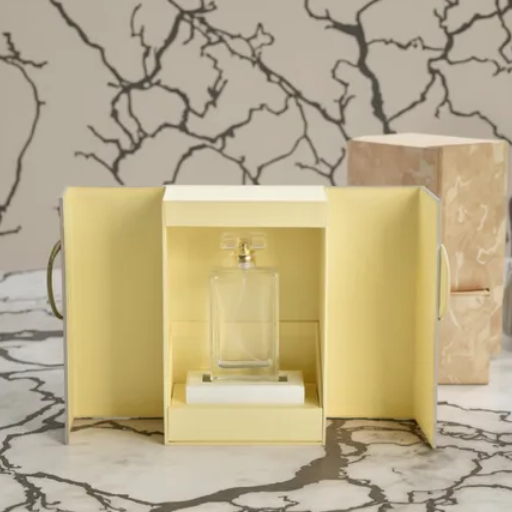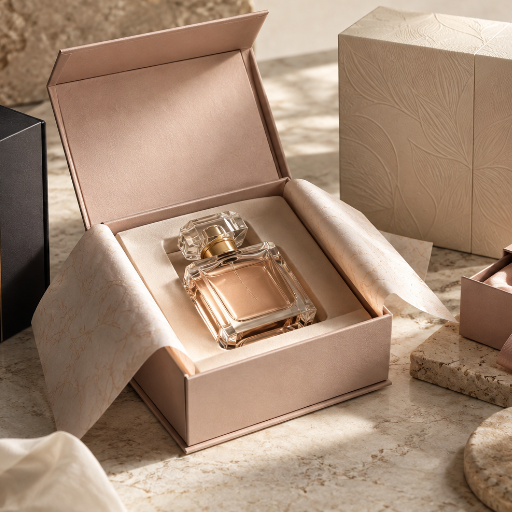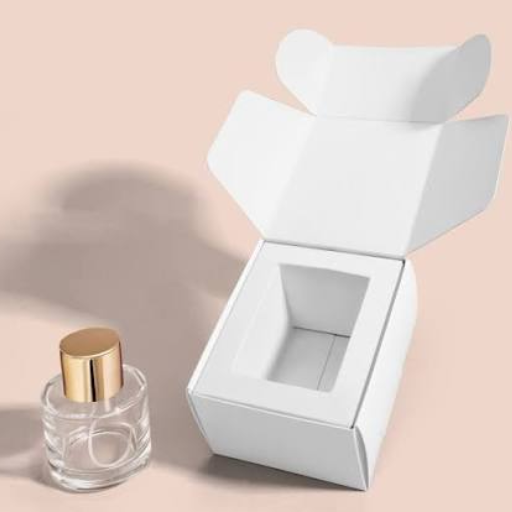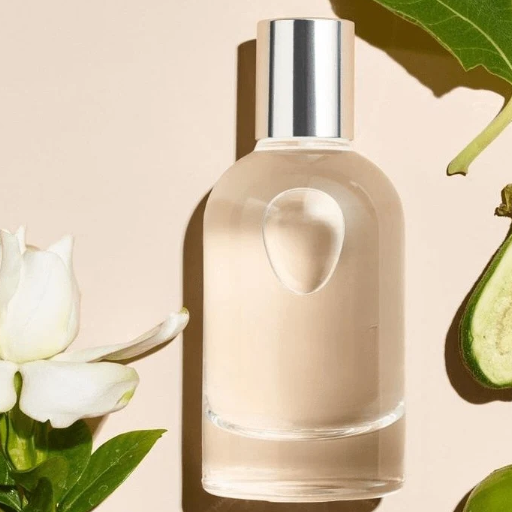
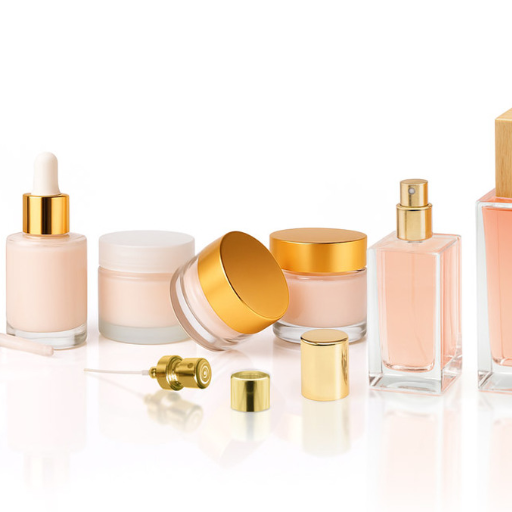
The luxury perfume packaging trends shaping 2026 are refillable and circular systems, quiet luxury and texture-led minimalism, sustainable premium materials, smart NFC packaging, sculptural and gradient glass, and small-batch personalization. Each one is changing what a fragrance box has to do: it now has to sell the scent, protect the bottle, support refills, and prove it is genuine.
Last year, a niche perfumer told us her boxes looked “fine online” but let her down the moment a customer touched one. That gap between a screen and a shelf is exactly where 2026’s trends live. You don’t need to chase all six. But you do need to know which ones are worth the money, which are becoming regulatory requirements, and which will still look current in 2028.
This guide walks through each trend, shows real 2026 examples, and ends with the part most trend lists skip: what each one actually costs to adopt at a realistic order size. Whether you run an indie fragrance brand or a growing house, you’ll leave with a shortlist you can take to a packaging manufacturer.
Key Takeaways
- The six 2026 luxury perfume packaging trends are refillable systems, quiet luxury, sustainable premium, smart NFC packaging, sculptural and gradient glass, and small-batch personalization.
- Refillable perfume bottle adoption rose 31% between 2022 and 2023, and refill systems can cut packaging waste by more than 40%.
- The EU Packaging and Packaging Waste Regulation (PPWR) starts applying across all 27 member states on August 12, 2026, so sustainable premium is now a compliance issue, not a choice.
- Glass still dominates at 53.32% of material demand, and bottles are 51.55% of the packaging market, so bottle trends matter as much as box trends.
- Some trends (quiet luxury, texture, gradient print) are affordable at low order sizes; others (smart NFC, custom sculptural molds, refillable tooling) need a bigger budget.
What Are the Luxury Perfume Packaging Trends for 2026?
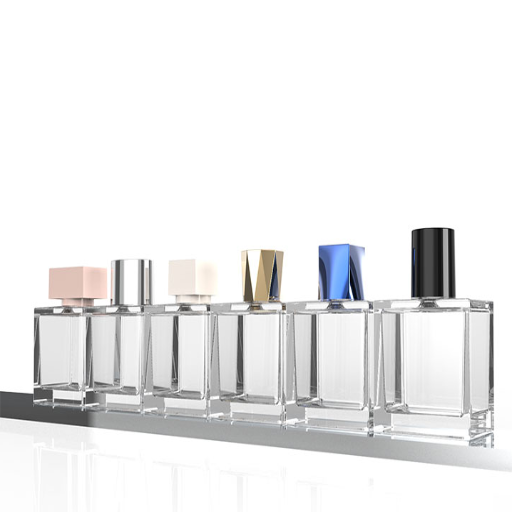
The six trends driving luxury fragrance packaging in 2026, ranked roughly from most structural to most decorative, are:
- Refillable and circular packaging systems
- Quiet luxury and texture-led minimalism
- Sustainable premium (PCR glass, lightweighting, mono-material)
- Smart and connected packaging (NFC, QR, anti-counterfeiting)
- Gradient, sculptural glass, and tactile premium materials
- Personalization and small-batch limited editions
These are not independent fads. They are converging. Sustainability is pushing refillable and mono-material designs. The demand for experience is pushing tactile finishes and layered unboxing. And digital authentication is quietly connecting the two, so a box can carry both a refill code and proof it is real.
If you want to understand how all six fit into a complete package, our custom perfume packaging guide covers the full bottle-to-box system.
Trend 1: Refillable and Circular Perfume Packaging
Refillable packaging stopped being a compromise and became a luxury feature. The turning point is structural: brands now design a durable outer case that customers keep, paired with a lightweight refill pod or sleeve they replace.
Aptar and Bvlgari showed what this looks like at the top of the market with a 10ml refillable travel fragrance. It pairs a marble-effect cap with anodized aluminum and refills in under five seconds. That isn’t a low-cost workaround; it’s a premium object that happens to be refillable. When Bvlgari treats refill as a selling point, the rest of the market follows.
The practical shift for brands is bigger than it sounds. A refillable system changes your structure, not just your materials. You now need a reusable outer, a replaceable inner, and a way to sell refills separately.
Refillable perfume bottle adoption rose 31% between 2022 and 2023, and refill systems can reduce packaging waste by more than 40%.
Here is the catch most trend articles skip: refillable tooling costs real money up front. A custom outer case and a custom refill pod are two molds, not one. For a full breakdown of the sustainable mechanics behind refillables and FSC board, read our sustainable packaging guide.
Trend 2: Quiet Luxury and Texture-Led Minimalism
Quiet luxury isn’t a plain white box. It’s a box that doesn’t need to announce it’s expensive. In 2026, that means typography-led layouts, embossing and debossing, muted palettes, and negative space in place of heavy foil and busy patterns.
The logic is tactile. A customer forms a judgment about a fragrance the second they pick up the box, before they see the price. Weight, a soft-touch laminate, or a blind deboss reads as expensive. A loud gold logo reads as trying.
Avii, a niche brand built on this idea, uses stock bottles with ash-wood caps and simple embossed paper boxes. Nothing shouts, and the result lands firmly in the premium tier. The restraint is the message.
Texture now outranks print for one simple reason: you can’t photograph the difference between a screen and a shelf, but you can feel it in half a second. That is also why unboxing videos matter so much. Watch how the layers and textures build in a real luxury reveal:
If you want the design principles behind this look, from color psychology to typography, we have a full breakdown of luxury perfume packaging design waiting for you.
Trend 3: Sustainable Premium Is the New Baseline
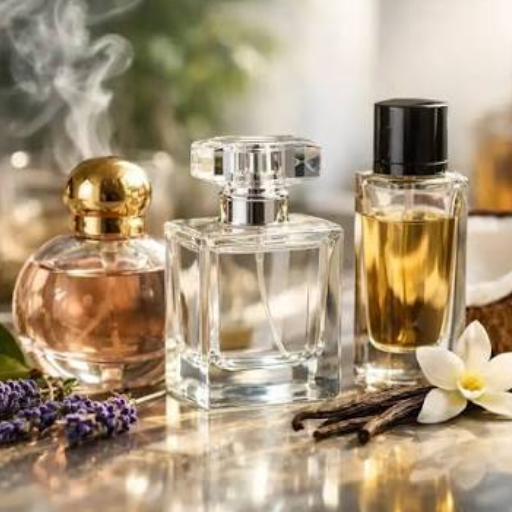
Sustainability is no longer a differentiator in luxury perfume packaging. It is the entry ticket. Brands are moving to post-consumer recycled (PCR) glass, lightweight glass that trims up to 20% of bottle weight, FSC-certified board, mono-material construction, and water-based inks.
The regulatory clock is the reason this trend is now urgent. The EU Packaging and Packaging Waste Regulation, known as PPWR 2025/40, came into force in February 2025 and starts applying across all 27 member states on August 12, 2026, with requirements phasing in through 2030. If you sell fragrance into Europe, recyclability isn’t optional anymore.
The market is moving the same direction. Around 62% of consumers now say they favor sustainable packaging, and the perfume packaging market itself is growing, from 3.72billionin2025towardaprojected3.72billionin2025towardaprojected6.89 billion by 2034.
The risk to avoid is greenwashing. A “recyclable” box that mixes a plastic window, metallic foil, and a magnetic closure isn’t actually recyclable in most streams. Mono-material design, where the box and insert are a single recyclable substrate, is the clean answer. Our sustainable packaging guide explains how to verify these claims instead of just printing them.
Trend 4: Smart and Connected Packaging
Smart packaging is the quiet revolution of 2026. Most trend articles still reduce it to a QR code, but the real story is NFC, digital authentication, and refill tracking.
The standout example is Berlin Packaging and ININUM, which won a 2026 Formes de Luxe Award for an AI-powered fragrance device. It combines Bluetooth Low Energy, NFC pod recognition, app-controlled scent blending, and AI fragrance recommendations, all built around replaceable, recyclable cartridges. The device stays in use; only the scent pods are swapped. That is smart packaging doing real work.
For most brands, the entry point is simpler. An NFC chip under a label or a QR code on the box can authenticate a product, fight counterfeiting, and let a customer reorder a refill in one tap. Counterfeiting is a genuine drag on the category, and a scannable tag is the cheapest way to reassure buyers that a $250 fragrance is real.
The honest caveat: smart packaging adds cost and complexity. An NFC tag is worth it when authenticity or refill reorders matter to your margins. It is overkill for a $30 everyday fragrance in a folding carton.
Trend 5: Gradient, Sculptural Glass, and Tactile Premium Materials
While the box gets quieter, the bottle is getting more expressive. Two bottle trends are clearly winning in 2026: gradient and ombré decoration, and sculptural glass silhouettes.
Gradient decoration, achieved through partial lacquering, colored formulas, or print, showed up across Givenchy Prisme Libre, Hermès Un Jardin sous la Mer, and Dries Van Noten refillables. It is the clearest visual trend of the year because it adds depth without adding clutter.
Sculptural glass is the other direction: faceted, angular, and architectural silhouettes, like Bormioli Luigi’s Edge bottle. Alongside the glass, tactile premium materials are having a moment: marble, anodized aluminum, zamak caps galvanized in 24-carat gold, resin, wood, and Japanese embossed papers.
Remember the scale here. Glass is 53.32% of material demand, and bottles are 51.55% of the packaging market. The bottle isn’t a side note to the box; it’s the largest single component.
A brand that pours its budget into a beautiful box but ships a generic stock bottle is spending money on the wrong half of the package.
Elena, an indie perfumer in Austin, learned this the hard way. She launched with a $0.90 folding carton and a stock bottle. Online it looked fine, but at her first pop-up, shoppers picked it up and set it back down.
When she moved to a heavier rigid box with a soft-touch finish and a decorated bottle, her $9 sample conversion doubled within six weeks. The bottle and the box changed the outcome, not the juice.
Trend 6: Personalization and Small-Batch Limited Editions
The sixth trend is personalization. Luxury buyers increasingly expect a package that feels made for them, not stamped for everyone. In 2026, that means laser engraving, small-batch runs, and limited-edition mechanics.
Laser engraving is the easiest win. It lets a brand add a name, a date, or a limited number directly to the bottle or cap with no tooling change.
Small-batch production supports drop-style launches and regional exclusives without committing to thousands of units. And limited editions, from numbered sleeves to seasonal coffrets, create the scarcity that drives gifting.
This trend pairs naturally with the sub-100ml shift. Travel and discovery formats are booming because they are affordable to sample and easy to gift. Sub-100ml formats already hold about 64.69% of the market.
The production reality is friendlier than you might think. Personalization doesn’t require a bespoke mold; it usually rides on top of a stock bottle and a printed box. That makes it one of the most accessible trends on this list for a smaller brand.
Regional Luxury Perfume Packaging Preferences
Luxury doesn’t mean the same thing everywhere. Regional preferences decide which trend matters most for your market.
- Europe leads the market at about $1.19 billion in 2025 and is compliance-led. PPWR shapes decisions, so refillable, mono-material, and recyclable designs dominate. Refined and understated wins.
- North America is the second-largest region, and e-commerce durability matters more. Packaging must survive shipping and look good in an unboxing video. Social-ready, camera-friendly design is the priority.
- The Middle East favors ornament and weight. Gifting is central, so heavier boxes, gold accents, and layered presentation still work here even as the West goes minimal.
- Asia-Pacific is the fastest-growing region, with China, Japan, and India expanding quickly. Refill, compact formats, and clean minimalism are the strongest signals.
The takeaway is simple: a trend list is only useful when it is filtered through your region and your channel. What sells in Milan isn’t what sells in Riyadh.
Turning 2026 Trends Into Production
So which of these trends should you actually adopt? The answer depends on your order size and budget. Here is the short version:
| Trend | Upfront cost | Best for | ROI at low order size |
|---|---|---|---|
| Quiet luxury and texture | Low (finishes you already buy) | Any brand | High |
| Gradient print | Low | Any brand | High |
| Sustainable premium (FSC, PCR glass) | Low to medium | Brands selling into the EU | High (compliance) |
| Personalization and limited editions | Low (no new mold) | Indie and gift-led brands | High |
| Smart NFC and connected | Medium to high (electronics) | Authenticity-led brands | Medium |
| Sculptural custom glass | High (bespoke mold) | Established houses | Medium |
| Full refillable system | High (two molds) | Brands with refill revenue | Medium to high at scale |
The high-return, low-barrier trends are quiet luxury, texture, and gradient print. These ride on finishes you already buy: soft-touch laminate, debossing, and print techniques. They lift perceived value without new tooling.
The higher-cost trends are smart NFC, custom sculptural molds, and full refillable systems. These add tooling, electronics, or a second mold. They make sense at scale or when authenticity and refill revenue justify the spend.
A London niche house called Maison Verde planned a full custom refillable line for 2026. The custom mold quotes came back at $18,000.
Instead, they launched on a stock refillable bottle with a decorated outer case, which cut tooling to about $4,200 and got them to market two months earlier. They still told a refillable story; they just did not pay a bespoke price for it.
That is the pattern to copy. Adopt the trend at the level your volume can carry, and scale up as orders grow. When you’re ready to put a trend into production, we can help you cost it out against your real order quantity. Request a free wholesale quote and get a sample within days.
Frequently Asked Questions
What are the biggest perfume packaging trends in 2026?
The biggest trends are refillable and circular systems, quiet luxury and texture-led minimalism, sustainable premium materials like PCR and lightweight glass, smart NFC packaging, sculptural and gradient glass, and small-batch personalization.
Is refillable perfume packaging the future?
Yes. Refillable adoption rose 31% between 2022 and 2023, refill systems cut packaging waste by more than 40%, and major houses like Bvlgari now treat refill as a premium feature. The shift is structural, not cosmetic.
What is smart packaging for perfume?
Smart perfume packaging uses NFC chips, QR codes, or connected devices to authenticate a product, fight counterfeiting, and let customers reorder refills. The 2026 Formes de Luxe Award went to an AI and NFC fragrance device from Berlin Packaging and ININUM.
Is sustainable perfume packaging more expensive?
Not necessarily. FSC board and mono-material design carry only a small premium at volume, while lightweight glass can actually cut shipping weight and cost. The bigger cost is usually tooling for refillables, not the sustainable materials themselves.
How do I make perfume packaging look expensive in 2026?
Focus on weight, tactility, and restraint: a soft-touch laminate, a blind deboss, muted colors, and a heavier rigid box. Texture now outranks print. Loud ornament reads as trying; restraint reads as expensive.
Conclusion
Luxury perfume packaging in 2026 is doing more work than ever. It sells the scent, protects the bottle, supports refills, and proves the product is real. The brands that win are the ones that treat packaging as a system, not a box.
The shortlist worth acting on: start with quiet luxury and texture, because they lift perceived value without new tooling. Adopt sustainable premium now, because PPWR turns it from a choice into a requirement in August 2026. Add refillable and smart packaging when your volume justifies the tooling. And never let the bottle lag behind the box, since it’s the largest single component of the package.
You don’t need to adopt all six trends. You need the right three for your market, your channel, and your budget. When you’re ready, our team can help you match the trends to a package your customers will remember. Get a custom perfume packaging quote today.