A memorable perfume unboxing experience comes down to three things: a layered, slow reveal; materials that feel expensive under the fingers; and a final moment designed to be photographed. This guide walks you through each one, so you can build a reveal your customers actually film and share.
Here’s the thing most fragrance brands miss. The first spray no longer happens when a customer presses the atomizer. It happens the moment they lift the lid off the box. In those few seconds, they decide whether your perfume feels like a luxury worth keeping or just another bottle in the drawer.
You already know packaging matters. What you may not have is a clear, production-grade plan for turning that belief into a box that works. By the end of this article, you’ll know exactly how to sequence a reveal, which materials and finishes earn the highest perceived value, how to do it on a realistic budget, and how to keep it sustainable and camera-ready.
Key Takeaways
- A great perfume unboxing experience is a slow, three-layer reveal: sleeve, then interior, then the bottle moment. Roughly 10 to 15 seconds of anticipation is the sweet spot.
- Packaging is 25% to 40% of a perfume’s total product cost, so spend on the two details people touch most: the outer box and the interior cradle.
- Finishes like soft-touch lamination, foil stamping, and a magnetic closure are the fastest levers for perceived luxury, and a magnetic closure alone can support a 25% to 35% retail price premium.
- 84% of viewers say unboxing videos help them decide whether to buy, so design the final moment to be photographed.
- Sustainable paper, molded-pulp inserts, and magnetic-free closures deliver the same premium feel without the plastic.
Why the Perfume Unboxing Experience Matters
Most brands treat the box as a protective shell. That’s the mistake. In fragrance, the box is the opening scene.
The numbers make this hard to ignore. Over 70% of premium-fragrance consumers say the unboxing experience directly shapes their first impression and their purchase decision. Among millennials and Gen Z, more than 65% share a distinctive unboxing on social media, which is free advertising you don’t have to buy.
The behavior data runs even deeper. According to a 2025 report, 84% of viewers say unboxing videos help them decide whether to buy, and over half have made a purchase after watching one. A separate survey of 1,142 US consumers found that 69% treat unboxing and review videos as a significant factor in whether they buy.
Here’s the payoff that matters most for a small brand. In one study, 42% of shoppers said visually appealing packaging would push them to post photos or videos of their order, a jump of 9 points year over year. A premium reveal doesn’t just impress one customer. It recruits that customer to sell for you.
Take Elena, a perfumer who launched her first 50-milliliter eau de parfum in 2025. She packed it in a plain white mailer with a simple folding carton because she thought the juice would speak for itself. It didn’t. Reviews praised the scent but never showed the box, and her Instagram tags stayed quiet.
Six months later, she re-launched with a soft-touch rigid box and a ribbon pull. The same scent suddenly started appearing in unboxing reels. The fragrance hadn’t changed. The first impression had.
The lesson is simple. Your perfume lives or dies on a feeling, and that feeling starts before the bottle is ever seen.
The Anatomy of a Luxury Unboxing Reveal
A luxury unboxing isn’t a single moment. It’s a sequence with a rhythm. The best reveals build anticipation in controlled layers, each one giving the hands something to do and the eyes something to discover.
The goal is resistance, not friction. A lid that lifts with a slight magnetic tug feels premium. A box that fights back feels cheap. Keep the opening smooth, measured, and deliberate.
Layer 1: The Outer Sleeve and Rigid Box
The first three to five seconds set the expectation. This is where a customer decides whether what’s inside is worth paying attention to.
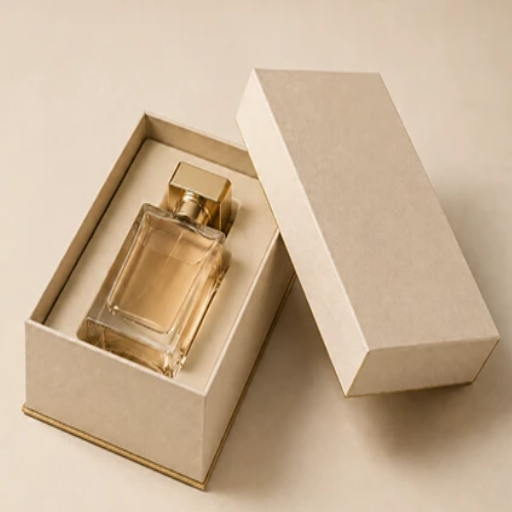
Start with the exterior. A rigid box, the kind with a thick, solid board, reads as more valuable than a folding carton before anyone touches it. The weight, the way it sits in the hand, and the softness of the surface all signal quality instantly.
The finishes you put here do most of the work. Soft-touch lamination gives the surface a velvety feel that photographs beautifully. Foil stamping adds a metallic catch of light. Debossing presses your logo into the board so the brand is felt, not just printed. Each one is a small investment that returns an outsized impression.
A slipcase or sleeve over the rigid box adds a second reveal and protects the finish during shipping. It also gives you room for a second design moment, like a pattern that repeats once the sleeve is off.
Layer 2: The Interior, Tissue, and Cradle
Once the lid lifts, the box should never just dump a bottle at the customer. The interior is where anticipation peaks.
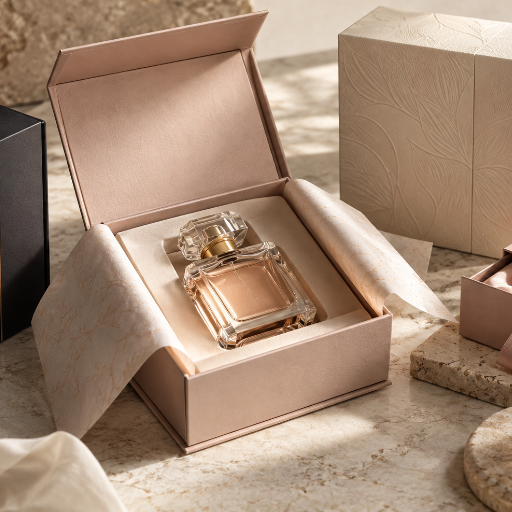
Layering is the trick. A sheet of printed tissue or a branded paper liner hides what’s underneath, forcing a small pause. That pause is the point. It’s the same reason a gift is wrapped even when the gift is obvious.
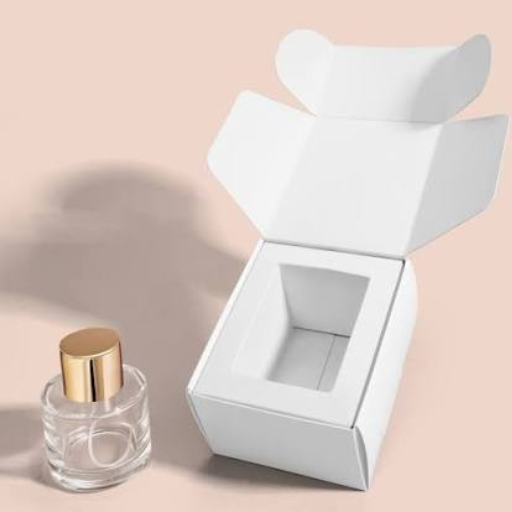
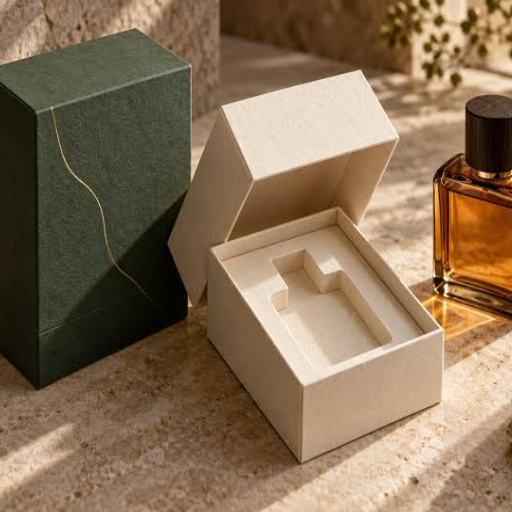
Under the tissue, a cradle holds the bottle upright and centered. A fitted insert made from molded pulp, EVA foam, or velvet keeps the bottle from rattling and presents it like a piece of jewelry in a display case. The cradle does two jobs at once: it protects during transit and it stages the reveal.
Color matters here more than most brands expect. A deep, contrasting interior, like black or a rich brand color, makes the bottle pop the second it’s exposed. A plain white interior flattens the moment.
Layer 3: The Bottle Moment and Message Card
This is the payoff. The bottle should sit in the cradle so the label faces the customer, not sideways. A message card tucked beside it turns a product into a conversation.
The card is where the brand’s voice lives. A short note about the ingredients, the inspiration, or the craftsmanship gives the customer something to read and, more importantly, something to hold up to the camera. Interior printing on the lid or a hidden panel rewards the customers who open all the way, which is exactly the behavior you want to encourage.
Sequenced like this, the whole experience takes ten to fifteen seconds. That’s the window. Short enough to hold attention, long enough to feel ceremonial.
Materials and Finishes That Signal Luxury
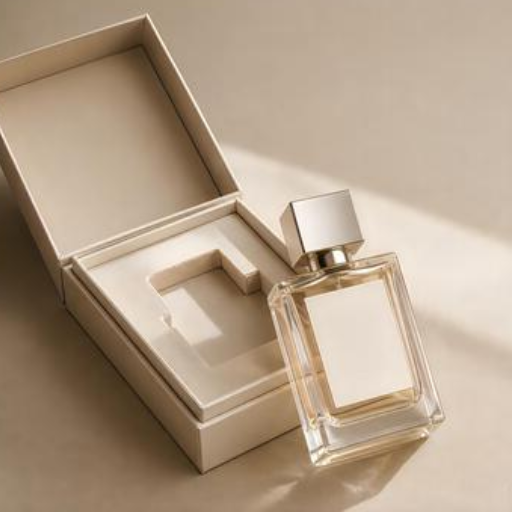
You don’t need a heritage-house budget to get the luxury feel. You need to know which materials earn their cost and which ones you can skip.
Rigid boxes are the foundation. They’re made from thick grey board wrapped in printed paper, and they’re the standard for premium fragrance because they feel substantial and keep their shape. A folding carton is lighter and cheaper, which makes it fine for sample kits or entry-level lines, but it can’t match the heft of a rigid box for a full-size bottle.
| Feature | Rigid Box | Folding Carton |
|---|---|---|
| Board | Thick grey board, wrapped | Single-layer paperboard |
| Feel | Heavy, premium | Light, standard |
| Best for | Full-size bottles, gift sets | Samples, entry lines |
| Relative cost | Higher | Lower |
| Closure options | Magnetic, lid-base | Tuck, friction |
The finishes are where the personality shows up. Here’s what each one does:
- Soft-touch lamination gives a velvet, matte feel that reads as expensive and hides fingerprints.
- Foil stamping applies a metallic layer, in gold, silver, or rose, for a flash of light and a high-end cue.
- Embossing and debossing raise or press the design into the board, adding texture people instinctively touch.
- Spot UV adds a glossy contrast on a matte surface, great for highlighting a logo or a pattern.
- Magnetic closures turn the opening into a small ceremony and stop the lid from flopping open in a bag.
The magnetic closure is worth singling out. It’s one of the highest-impact upgrades you can make, and research links magnetic-closure rigid boxes to a 25% to 35% retail price premium. That’s not a styling flourish. That’s margin.
The trick is restraint. Two or three finishes working together feel curated. Six finishes fighting for attention feel cheap. Choose a primary finish, a supporting texture, and stop there.
Designing a Perfume Unboxing Experience on a Budget
Here’s the number most suppliers won’t tell you. Packaging typically eats 25% to 40% of a perfume’s total product cost. That’s real money, especially for an indie or niche brand running small batches.
The answer isn’t to skimp everywhere. It’s to spend where hands and eyes actually land.
Think of the unboxing as a sequence of touchpoints, then rank them by impact. The outer box is the first thing touched and the last thing photographed, so it deserves the largest share of budget. The interior cradle is second, because it protects the bottle and stages the reveal. The sleeve is third. Tissue and the message card are cheap to do well, so they should always be done.
Marcus learned this the hard way. When he launched a 30-milliliter fragrance, he blew most of his packaging budget on a custom bottle with a heavy metal cap. The box got whatever was left, a thin carton with a basic one-color print.
The result was a beautiful bottle in a forgettable box, and his early reviews reflected it. When he rebalanced, moving money from the cap to a soft-touch rigid box with a magnetic closure, his cost per unit barely moved. His perceived value jumped.
Here’s the practical version: if you have to choose, put soft-touch lamination and a magnetic closure on the box before you add foil to the bottle. The box is what gets filmed.
Two more budget levers to know. Minimum order quantities, or MOQs, usually fall as your volume rises, so consolidating orders is worth the conversation. And a pre-production sample is cheap insurance. One physical sample lets you feel the weight, test the closure, and catch a bad color match before you pay for a full run. It’s the single best way to avoid an expensive reprint.
If you’re buying in volume, it also helps to understand the wholesale perfume boxes buying process before you commit to a quantity.
If you’re ready to cost this out for your own line, our team can request a free wholesale quote and walk you through the numbers on rigid boxes, finishes, and MOQs.
Sustainable Perfume Packaging Without Losing the Luxury Feel
For a long time, sustainable packaging had a reputation for looking brown and earnest. That era is over. The best eco-friendly perfume boxes now feel every bit as premium as their plastic-heavy rivals.
The shift is driven by materials, not compromise. FSC-certified paperboard and recycled board look and feel like conventional luxury stock, but they come from responsibly managed sources. Molded-pulp inserts replace foam and EVA, and they can be molded to cradle a bottle just as precisely while reading as a deliberate, textured choice. Magnetic-free closures, like a friction-fit or a ribbon-tie, remove the one component that’s hardest to recycle.
This isn’t a niche preference anymore. In European surveys, 71% of consumers say they prefer eco-friendly options, and 43% globally say they’ll pay more for sustainable packaging. For a fragrance brand, that’s a genuine competitive edge, not a box to tick.
The design language has changed too. The trend toward visible craftsmanship, real paper textures, and honest materials means a recycled board with a blind deboss can now read as more luxurious than a glossy laminate. Brands like Rissmann are building two-in-one boxes entirely from paper, using a lever mechanism that tilts the bottle forward as the lid opens. It’s sustainable, and it’s also a better reveal.
Priya’s story shows the payoff. She runs a small clean-beauty perfume line and switched her inserts from foam to molded pulp and her closure from magnets to a friction fit. She worried the box would feel flimsy.
Instead, her customers started mentioning the packaging in reviews, unprompted, and her share rate ticked up. The box got lighter, cheaper to ship, and easier to recycle, and it looked more intentional.
If sustainability is part of your brand, fold it into the reveal itself rather than treating it as an add-on. A printed line inside the lid that says “this box is 100% recyclable” turns the packaging into a brand statement. For a deeper look at the materials, start with our sustainable packaging guide.
Making Your Perfume Packaging Camera-Ready
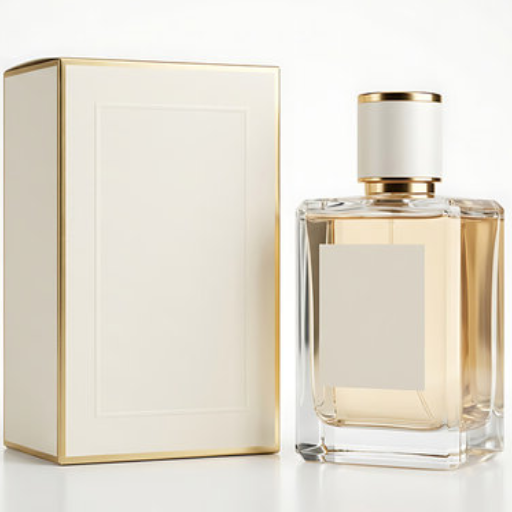
Most unboxing content is filmed on a phone, in a bedroom, under whatever light is available. Your packaging has to survive that environment, not a studio.
The rule of thumb is simple: design for the first three to five seconds on a small screen. That means high contrast, one clear focal point, and finishes that don’t glare. A heavy gloss that looks great on a shelf can turn into a white streak of reflected light on camera. A soft-touch matte reads consistently from any angle.
Color needs to survive compression. Deep, saturated colors hold up on video where pale pastels can wash out. Bold patterns photograph better than fine, delicate ones, which turn to mush when a reel gets compressed.
The Memo Paris case study is the clearest proof that this is a growth channel, not a vanity metric. The fragrance house rebuilt its packaging as a camera-first creative system, and the customer-generated unboxing content that followed drove about 34% of its Meta impressions. More tellingly, that user-generated content cost roughly 9.40perthousandimpressionsagainst9.40perthousandimpressionsagainst15.20 for produced video, about a 40% advantage.
The takeaway isn’t to chase trends. It’s to remove the friction that stops a customer from hitting record. Give them a reason to film, a moment worth pausing on, and a box that looks good from the angle they’ll actually use.
Here’s a seven-step checklist to engineer your own reveal:
- Choose a rigid box as the base for a full-size bottle.
- Pick one hero finish, like soft-touch lamination, and one supporting finish, like foil stamping.
- Add a sleeve or slipcase for a second reveal and shipping protection.
- Layer the interior with tissue or a printed liner that hides the bottle for a beat.
- Fit a cradle that centers the bottle and faces the label forward.
- Add a magnetic closure for the ceremonial opening and the price-premium it supports.
- Finish with a message card that gives the customer something to read and hold up on camera.
Build Your Own Memorable Perfume Unboxing Experience
A memorable perfume unboxing experience isn’t a matter of budget. It’s a matter of sequence, material, and intention.
Start with a layered reveal: a rigid box, a hidden interior, and a bottle staged like a centerpiece. Spend on the outer box and the cradle, because those are the surfaces hands and cameras actually touch. Add a magnetic closure and one well-chosen finish to signal luxury, then keep the rest restrained. And don’t let sustainability be an afterthought, recycled board, molded pulp, and a magnetic-free closure now deliver the premium feel without the waste.
The result is a box your customers open slowly, film happily, and remember. That’s the whole job of fragrance packaging, to make the first spray feel like it started long before the atomizer.
If you want to see what this looks like for your own bottle, the best next step is a free quote and a pre-production sample. Start with our custom perfume packaging guide for the full picture, then contact our team to talk through materials, finishes, and order sizes. We’ll help you build a reveal your customers will want to open, and share, again.