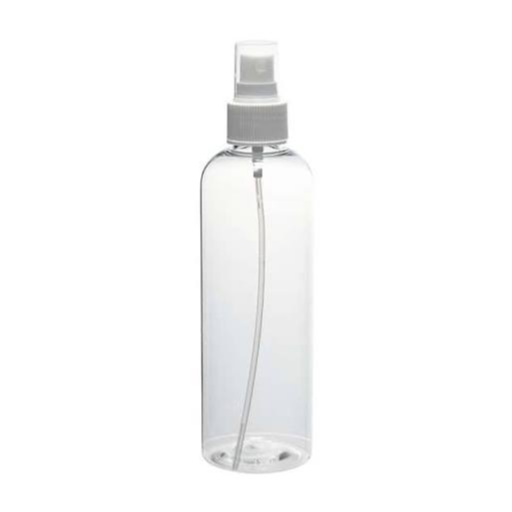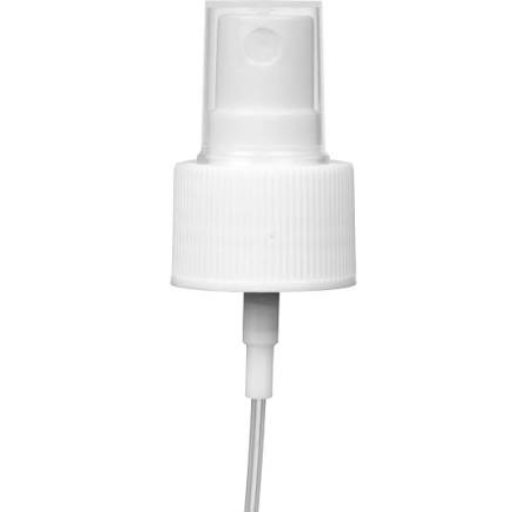
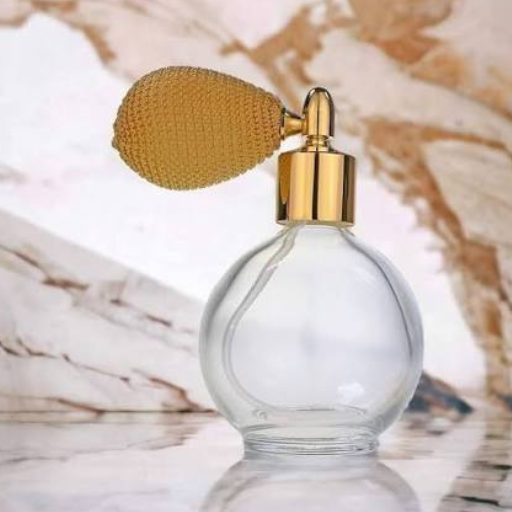
A perfume spray pump is the crimped atomizer that seals onto a fragrance bottle, draws liquid up a dip tube, and breaks it into a fine mist at a controlled dose, usually between 0.05 and 0.12 ml per press for fine fragrance. It is the only component your customer physically touches, and the one most brands never spec themselves.
That gap costs money. A brand owner spends months on a glass flacon and a Zamac cap, then lets the filler choose the pump. The result is a spray that spits at the end of the stroke, a dose that runs heavy, or a pump that fails the inverted test in transit. None of it shows up until the first production run.
We’re Fuzhou Longlu Packaging, a manufacturer of fragrance and cosmetic packaging components. This guide covers the parts buyers confuse, the ferrule sizes that decide fit, real dosage figures, formula compatibility, the QC tests that catch failures early, and what crimp pumps actually cost at volume. If you need the wider mechanism, our complete guide to fine mist spray pumps covers how atomization works across every dispenser type.
Key Takeaways
- A perfume spray pump has three separately specified parts: the crimp ferrule (the seal), the collar (the decoration), and the actuator (the spray feel). Competitors treat them as one unit, which is why buyers overpay or mis-spec.
- Ferrule sizes run FEA 13, FEA 15, FEA 18, and FEA 20. FEA 15 is the workhorse for 30 to 100 ml fragrance bottles.
- Dosage spans 0.04 to 0.40 ml across the range, but fine fragrance concentrates at 0.05 to 0.12 ml. The difference between 0.07 and 0.10 ml is roughly 200 sprays on a 50 ml bottle.
- Crimpless pumps allow refills and lower minimums (from about 1,000 pieces), but are capped at 0.08 ml and 0.12 ml dosage.
- Stock crimp pumps run 0.035to0.035to0.11 per unit at 10,000 to 500,000 pieces, with 20 to 30 days production.
What Is a Perfume Spray Pump?
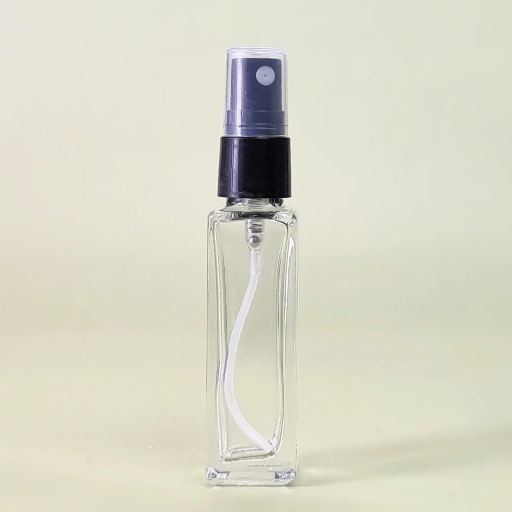
A perfume spray pump, also sold as a perfume atomizer pump, is a finger-operated atomizer permanently crimped onto a glass fragrance bottle. It uses a dip tube, a pump chamber, and a micro-orifice actuator to deliver a metered dose of 0.04 to 0.40 ml per press, with fine fragrance typically sitting between 0.05 and 0.12 ml.
Three things separate it from a body-mist sprayer. The orifice is finer, the dose is lower and more tightly controlled, and the closure is a crimped metal ferrule rather than a screw thread. That precision is also why the bottle neck, not the pump, is your fixed constraint. You don’t choose a pump and then find a bottle; you have a bottle with a given neck finish, and the pump has to match it.
The Three Parts Buyers Confuse: Ferrule, Collar, and Actuator
This is where most sourcing decisions go wrong. A perfume spray pump isn’t one object. It’s three, and each carries a different decision and a different cost.
The crimp ferrule: the functional seal
The ferrule is the aluminum shell that gets mechanically crimped onto the glass neck. It is the part that holds pressure, prevents evaporation, and provides tamper evidence. Its size is the single most important specification in the whole assembly.
Ferrule material matters too. Standard aluminum is the default. Heavier gauge aluminum and anodized finishes cost more but resist denting during filling and shipping, which matters on luxury lines.
The collar: where the decoration lives
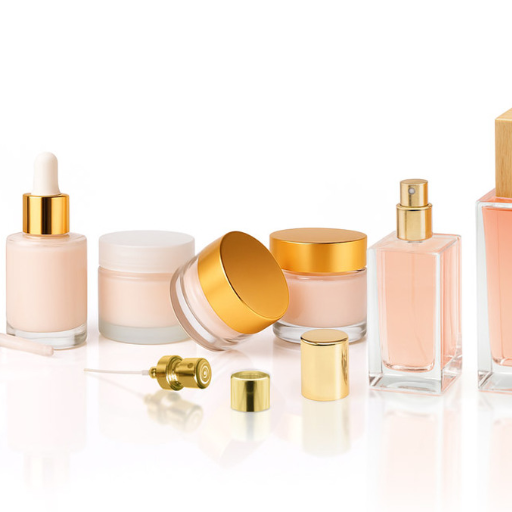
The collar is the ring visible just below the actuator. It is almost entirely decorative, and it is where gold, silver, matte, and anodized finishes appear. A gold collar on a standard pump changes the perceived value of the whole bottle for a few cents per unit.
Keep the boundary clear: the collar is part of the pump assembly and belongs in your pump specification. The decorative overcap that sits on top is a separate component with its own material and finish decisions.
The actuator: the spray button
The actuator is the button you press. Its internal insert sets the spray pattern, the droplet size, and how “dry” the mist feels. Two pumps with identical dosage can feel completely different because of the actuator insert alone.
| Part | Function | What you actually choose | Cost impact |
|---|---|---|---|
| Ferrule | Seals pump to bottle | Size (FEA 13/15/18/20), aluminum gauge, finish | Medium |
| Collar | Decoration and brand signal | Color, finish, anodized vs. painted | Low to medium |
| Actuator | Sets spray pattern and feel | Insert type, orifice, button shape | Low to high |
Want to see how these three parts come together on a real bottle? Our custom perfume packaging guide walks through the pump, bottle, cap, and box as one system.
Crimp vs. Crimpless vs. Screw: Which Closure Fits Your Brand?
Three closure types cover almost every fragrance project. They are not interchangeable, and the choice usually follows from your refill strategy rather than from cost.
Crimp: the standard for fine fragrance
A crimp pump perfume buyers rely on is pressed onto the bottle neck by a crimping machine and cannot be removed without destroying the ferrule. That permanence is the point. It gives the best evaporation control, the strongest tamper evidence, and the widest dosage range.
The trade-off is operational. You need a crimping machine at the filling line, and the consumer can’t refill the bottle.
Crimpless: the refill-friendly option
A crimpless perfume pump uses a snap-on or push-on collar with an aluminum shell that mimics the crimped look. No crimping machine is needed, assembly is faster, and the bottle can be designed for refilling.
The catch is dosage. Crimpless models are typically limited to 0.08 ml (low profile) and 0.12 ml. If your formula needs a 0.05 ml dose for a concentrated extrait, crimpless will not deliver it. Minimums are friendlier too, with some listings starting around 1,000 pieces instead of the usual 10,000.
Screw: for mists, not fine fragrance
A screw pump threads onto a standard neck like 18/410 or 24/410. It is reusable and refillable, which suits body mists, hair mists, and travel formats. It is a poor fit for premium fine fragrance because the thread is a weaker seal and the closure reads as less considered.
Use this decision list:
- Is the bottle refillable by design? If yes, crimpless or screw.
- Does the brand depend on tamper evidence? If yes, crimp.
- Does the filler have a crimping machine? If no, crimpless.
- Is the target dose below 0.08 ml? If yes, crimp only.
- What volume are you ordering? Under 10,000 units, crimpless is often the only practical path.
Perfume Pump Sizes: Matching FEA Ferrules to Your Bottle
The ferrule number on a perfume atomizer pump is the neck diameter in millimeters. FEA 15 means the pump fits a 15 mm crimp neck. That’s the whole rule, and it isn’t negotiable.
Glass suppliers publish the neck finish on the bottle drawing. If your bottle says FEA 15, you need an FEA 15 pump. A 13 mm ferrule won’t seal on a 15 mm neck, and no amount of crimping pressure fixes it.
The dosage-by-ferrule reference
The dosage figures below reflect the ranges published across standard crimp pump families, including Sunmart’s FMB sprayer line, which spans 0.04 ml up to 0.40 ml.
| Ferrule | Typical bottle size | Typical dosage | Best for |
|---|---|---|---|
| FEA 13 | 5 to 15 ml | 0.04 to 0.07 ml | Purse sprays, sample vials, travel |
| FEA 15 | 15 to 100 ml | 0.05 to 0.12 ml | The workhorse for 30 to 100 ml fragrance |
| FEA 18 | 50 to 100 ml | 0.08 to 0.16 ml | Larger flacons, richer sprays |
| FEA 20 | 100 ml and up | 0.10 to 0.23 ml | Big bottles, body mists, big-head atomizers |
These are typical pairings, not hard rules. A 50 ml bottle can carry FEA 15 or FEA 18 depending on the neck the glass supplier molded. The bottle drawing decides.
Why FEA 15 dominates
FEA 15 is the most common crimp neck in fragrance because it balances two needs. It is wide enough to accept a reliable pump mechanism, and narrow enough to keep a 30 ml flacon looking elegant. Most flacons from 30 to 100 ml ship with an FEA 15 neck, which is why the FEA 15 crimp pump is the default specification for a new fragrance line.
If you’re choosing glass and pumps together, standardize on FEA 15 unless you have a specific reason not to. It keeps your options wide and your second-source risk low. For more on neck-to-bottle matching, see our guide to luxury perfume bottles.
Perfume Spray Pump Dosage: The Specs That Decide How It Feels
Dosage is the number that shapes both the user experience and your unit economics. Perfume pump dosage is also the number buyers most often accept without checking.
Output per stroke
Across the full range, a perfume spray pump delivers 0.04 ml to 0.40 ml. Fine fragrance concentrates at the low end. Aptar’s fragrance mist collection, for example, spans roughly 0.10 to 0.29 ml with different inserts used to tune the feel, while compact crimp formats go lower still.
A stated dose is a nominal figure, not an exact one. Most fragrance pumps carry a tolerance of ±0.01 to ±0.02 ml, and that tolerance is what you write into the purchase order. A pump spec’d at 0.10 ml ±0.02 ml is acceptable anywhere between 0.08 and 0.12 ml, a 20% swing on every bottle.
Here is why it matters commercially. Take a 50 ml bottle:
- At 0.07 ml per spray, the bottle delivers about 714 sprays.
- At 0.10 ml per spray, the same bottle delivers about 500 sprays.
That is a 43% difference in how long the product lasts, from a component decision most brands never examine. A customer who feels their fragrance ran out early rarely blames the pump. They blame the brand.
Droplet size and “dry” versus “wet”
Droplet size determines whether a spray feels dry and weightless or wet and heavy. Fine fragrance atomizers target small droplets, and the actuator insert is the main lever. A finer insert produces a drier, more dispersed cloud; a coarser one produces a wetter, more localized spray.
Ask your supplier for droplet size data on the specific pump and actuator combination. Many won’t volunteer it. The ones who can produce the number are usually the ones who control their own molding.
Priming and anti-backflow valves
A good perfume spray pump primes in two or three strokes and stays primed. An anti-backflow valve keeps the dip tube charged between uses so the next press delivers a full dose immediately.
Cheap pumps skip this. The symptom is a sputter on the first press after the bottle has sat for a week, which customers read as a defect.
Materials and Fragrance Compatibility
Fragrance is one of the harshest formulas a perfume spray pump will meet. High ethanol content, essential oils, and reactive citrus notes all attack the wrong materials.
What each part is made from
- Pump body and housing: POM, PP, or PE, chosen for dimensional stability in alcohol.
- Dip tube: PP or PE, matched to the bottle’s internal height. Measure from the gasket to the tube tip and subtract a 2 to 4 mm gap so the tube doesn’t sit flat against the base, as this dip tube sizing guide explains.
- Spring: stainless steel in standard pumps, or eliminated entirely in metal-free designs.
- Gasket: EPDM or FKM fluoroelastomer, both chosen for low compression set and ethanol resistance.
Why ethanol is the real test
Ethanol slowly swells low-density plastics. When a pump core swells, its dimensions change and the seal stops sealing. A pump that passes a water test can fail a fragrance test three weeks later.
Poorly chosen metal springs add a second problem: in contact with ethanol they can release trace ions that affect both scent and color.
Metal-free paths
If your formula is sensitive, or your brand carries a clean-label claim, ask for a metal-free pump. These replace the steel spring with an all-plastic mechanism so the formula only contacts PP and PE. Spray quality has improved sharply, and for most fine fragrances a modern metal-free pump is competitive.
Quality Control: How to Verify a Perfume Spray Pump Before You Commit
Most perfume spray pump failures are detectable before a single unit ships. Four tests catch the majority.
The four tests
- Vacuum decay. Place the filled unit under negative pressure and watch for ingress. This catches seal defects.
- Positive-pressure decay. Pressurize and measure pressure loss over time. This catches valve and ferrule leaks.
- 24-hour inverted test. Fill, invert, leave for 24 hours, then inspect the actuator and ferrule for seepage. This is the single most useful test and costs almost nothing.
- Transport vibration. Finally, simulate freight to catch dip tube and ferrule movement.
Dosage consistency and spray pattern
Pull a sample and weigh ten consecutive sprays. The spread tells you whether the pump holds its dose across a full stroke. Then inspect the spray pattern on paper or glass for a uniform, centered cloud with no spitting.
AQL sampling
Don’t accept a supplier who only tests samples. Ask for an acceptance sampling plan on the production batch, typically to ISO 2859-1 or ANSI/ASQ Z1.4, and write the AQL level into the purchase order. A pump that leaks at a 2% rate costs far more in returns than the component costs to buy.
Run the tests yourself before you commit. Request a sample and put it through the 24-hour inverted test with your real formula, not water.
Sourcing Perfume Spray Pumps: MOQ, Cost, and Lead Time
What drives unit price
Four factors move the price of a crimp pump:
- Ferrule material and finish. Standard aluminum is cheapest, while anodized and heavier gauge cost more.
- Collar finish. A painted plastic collar is the low-cost option; a metal or anodized collar adds cost.
- Dosage. Low-dose precision pumps carry a premium because the insert and tolerances are tighter.
- Volume tier. However, volume is the biggest lever by far.
Realistic benchmarks
Stock aluminum crimp perfume spray pumps land around 0.035to0.035to0.11 per unit at volume. One FEA 15 listing steps from roughly ¥1.07 at 10,000 to 99,999 pieces, to ¥1.01 at 100,000 to 499,999, to about ¥0.94 above 500,000. That is a meaningful spread for the same part.
- MOQ: 10,000 pieces is standard for stock crimp pumps. Crimpless and snap-on formats can start near 1,000.
- Lead time: 20 to 30 days for production on stock and light customization, plus freight.
- Samples: usually available in small quantities before you commit to a production order.
The refill and regulatory backdrop
Refillable fragrance is the dominant packaging story of 2026, and it changes pump selection. A refill program pushes you toward crimpless or screw closures, which constrains your dosage options. Therefore, decide the refill strategy before you finalize the pump.
There is a regulatory layer too. China’s GB 23350-2021, in force since 1 September 2023, limits void ratio, packaging layers, and packaging cost ratio for cosmetics including perfume. If you sell into that market, an oversized gift set can fall foul of it. The
Meanwhile, demand is not slowing. Technavio forecasts the US perfume market will grow by $2.18 billion from 2026 to 2030 at a 5.4% CAGR, which keeps pressure on pump capacity and lead times.
Ready to price a specific pump? Request a free wholesale quote with your ferrule size, target dosage, and annual volume, and we’ll return MOQ, lead time, and per-unit pricing in plain numbers.
FAQ
What is the difference between a perfume spray pump and a body mist sprayer?
A perfume spray pump uses a crimped metal ferrule, a finer orifice, and a lower dose, typically 0.05 to 0.12 ml. A body mist sprayer usually uses a screw closure and delivers a higher volume per press. The pump prioritizes a precise, dry spray; the body mist prioritizes coverage.
What size perfume spray pump do I need?
Match the ferrule to your bottle’s neck finish. If the bottle drawing says FEA 15, you need an FEA 15 perfume spray pump. FEA 13 suits small purse sprays, and FEA 18 or 20 suit larger flacons.
How many sprays are in a 50 ml perfume bottle?
At 0.07 ml per spray, about 714 sprays. At 0.10 ml, about 500. That dose is set by the component you choose, so decide it deliberately rather than accepting whatever the filler supplies.
What is the difference between a crimp and a crimpless perfume pump?
A crimp pump is permanently sealed onto the bottle with a crimping machine, giving the best evaporation control and tamper evidence. A crimpless pump snaps on with an aluminum-look collar, needs no crimping machine, and allows refilling, but is usually limited to 0.08 ml or 0.12 ml dosage.
Are perfume spray pumps recyclable?
Conventional perfume spray pumps mix aluminum, steel, and several plastics, which makes them hard to recycle. Metal-free mono-material pumps made from a single polymer family can be recycled in one stream. Ask for the specific polymer and a recyclability certification before you claim it.
What is the minimum order for a custom perfume spray pump?
Around 10,000 pieces for a stock crimp pump with a custom collar finish. Crimpless and snap-on formats can start near 1,000 pieces. Full OEM tooling carries a higher minimum and a longer lead time.
Conclusion
A perfume spray pump is three decisions, not one. The ferrule seals, and its size is dictated by the glass neck. The collar decorates, and it is where a few cents buy a visibly more expensive bottle. The actuator performs, and its insert decides whether the mist feels dry and precise or wet and heavy.
Get those three right, and the rest follows. Confirm the neck finish from the bottle drawing, choose crimp, crimpless, or screw based on your refill strategy, and set the dosage deliberately, since it changes sprays per bottle by 40% or more. Then test with your real formula, not water, and negotiate on volume: the price gap between 10,000 and 500,000 pieces is larger than any other lever you control.
Most brands hand this component to their filler and hope. The ones who spec it themselves get a better product and a better margin. If you want the underlying mechanism first, our complete guide to fine mist spray pumps covers atomization across every dispenser type.
Send us your bottle’s neck finish, your target dose, and your annual volume. We’ll match the ferrule, collar, and actuator to your formula, quote the perfume spray pump, and include a sample for testing. Contact our team to request a free wholesale quote.