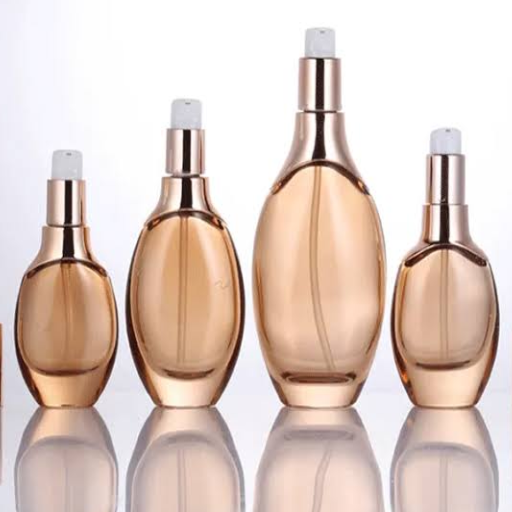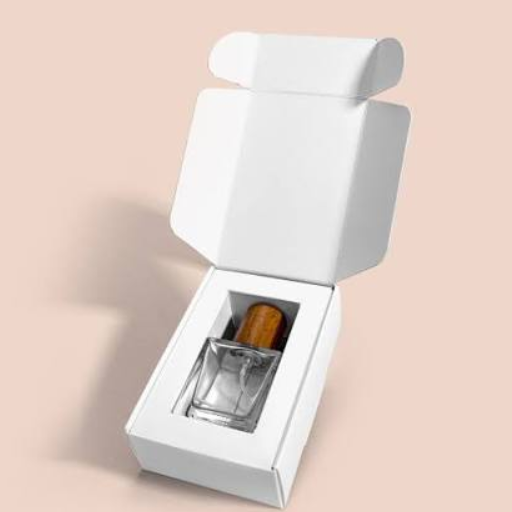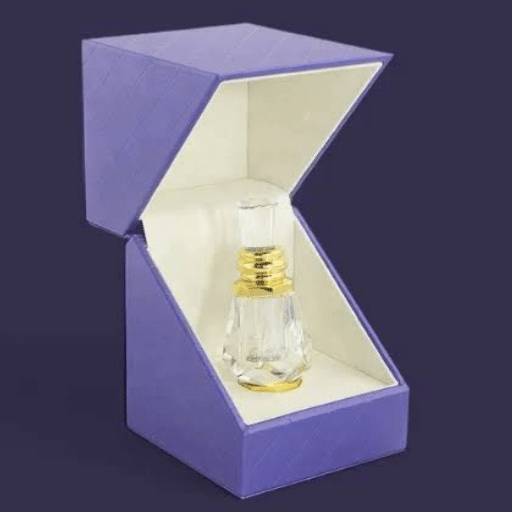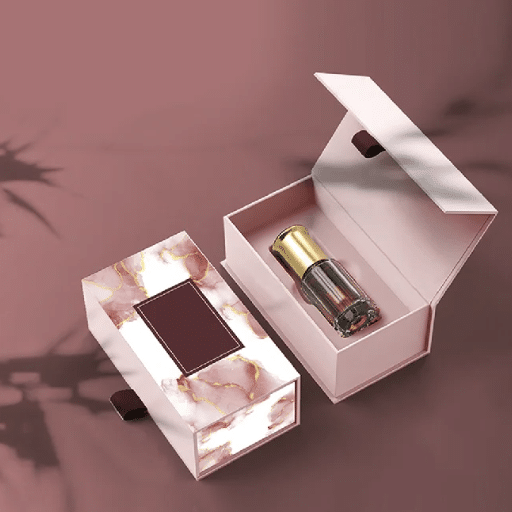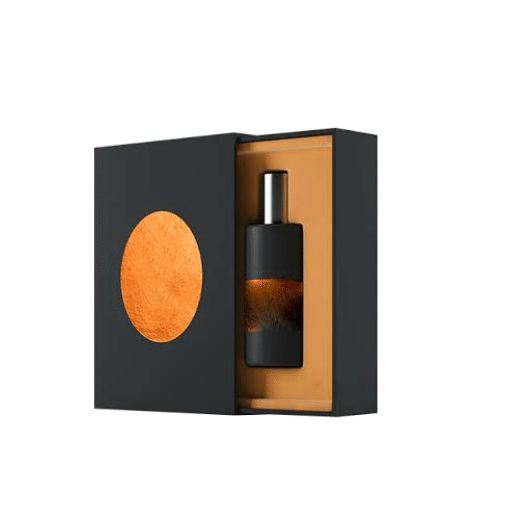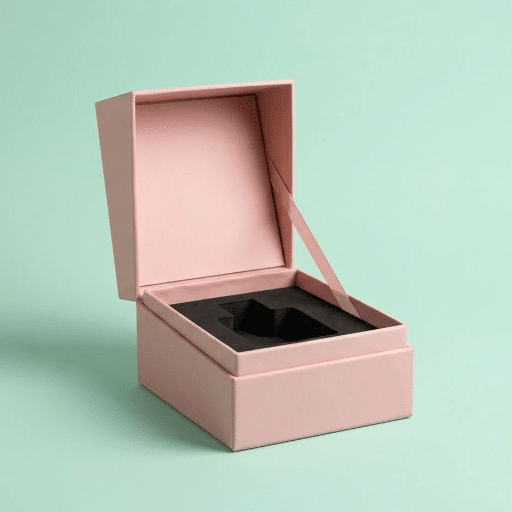
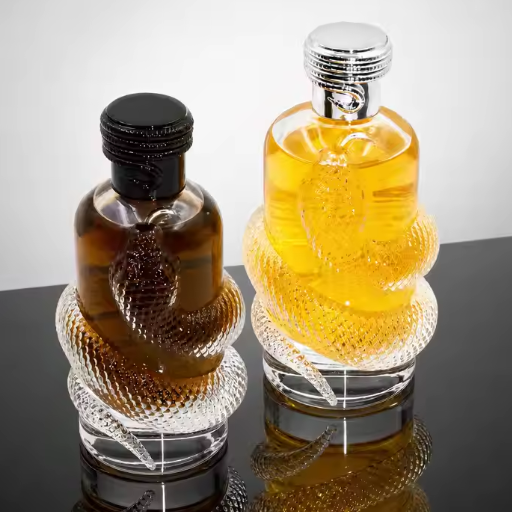
A luxury perfume bottle is a glass or crystal vessel, finished with premium decoration, that communicates quality before the first spray. Most high-end brands don’t blow a custom mold. Roughly 95% start with a stock bottle and make it feel exclusive through frosting, coating, screen printing, or metallization, then pair it with a matching cap and box.
Amira spent nine months developing her first fragrance. She commissioned a bespoke glass mold, a matching Zamac cap, and a custom rigid box. Then she hit her production reality.
The private mold alone cost her $6,800 and carried a 10,000-piece minimum. Her first order was 1,200 units. She had paid for capacity she couldn’t use and locked her launch to a silhouette the market had not yet validated.
You don’t need Amira’s mistake. This guide breaks down how to design and source luxury perfume bottles that look expensive without overspending. You’ll learn the difference between a custom mold and a decorated stock bottle, which glass and finishes signal premium, what each decoration technique actually costs, and how to coordinate the bottle, cap, and box as one system.
Key Takeaways
- About 95% of fragrance brands use a stock bottle plus decoration rather than a private mold, so a custom mold is only worth it when the silhouette itself is a brand asset.
- A private glass mold costs roughly 2,000to2,000to10,000 and carries a 10,000-piece minimum, while a decorated stock bottle can launch at 2,000 to 5,000 pieces.
- Frosting is acid-etched into the glass and permanent, but matte paint is a surface layer that can haze in sealed cartons, so always request a 72-hour alcohol-vapour test.
- Glass is 53.32% of perfume packaging material demand, and the 50 to 150 ml capacity band holds more than half the market.
- The bottle, neck finish, pump, collar, and cap must be ordered as a matched set, and coordinating them with the outer box is where a full-system packaging partner saves real money.
What Are Luxury Perfume Bottles?
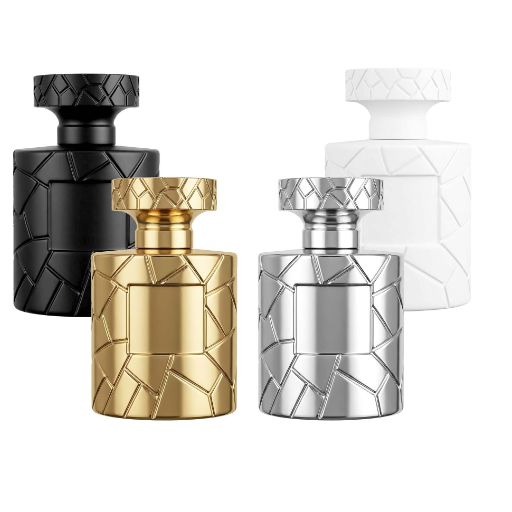
Luxury perfume bottles are premium glass or crystal containers designed to hold fragrance, protect the liquid, and express brand identity. They differ from commodity bottles in three ways: weight, finish, and silhouette.
Where a standard bottle is functional, a luxury bottle is engineered to feel substantial in the hand and deliberate on the shelf. The glass is thicker, the base is often heavier, and the surface carries a refined finish rather than a plain label. The result is a package that justifies a higher price before the customer even opens it.
Glass dominates this category. According to Fortune Business Insights, glass accounts for 53.32% of material demand in the perfume packaging market. Perfumes make up 46.28% of the cosmetic and perfumery glass bottle segment, the largest single application. That is why the bottle is the single most important component of the complete custom perfume packaging system.
What Makes a Perfume Bottle Look Expensive?
Luxury isn’t the price tag. A study of perfume bottle design features found no significant correlation between price per milliliter and how luxurious a bottle was judged to be. Surface finishing and form did the work. Here is what actually moves the needle.
Weight and Tactile Feel
In luxury, weight reads as quality. A heavier bottle with a thickened base sits lower in the hand and feels more valuable. Zinc-alloy caps add metallic heft, and a magnetic closure with a precise snap signals craftsmanship. These small physical cues do more for perceived value than a costly logo ever will.
Glass Quality and Clarity
Not all glass is equal. Soda-lime glass is the workhorse, but crystal reflects far more light. At the extreme, houses like Baccarat hand-polish and acid-polish lead crystal so each facet catches light like a jewel. You don’t need crystal to look premium, but you do need clean, high-clarity glass with minimal bubbles and distortion.
Refined Surface Finishing
This is the biggest lever. Bottles with cut patterns, gloss finishes, and deliberate texture are consistently rated as more luxurious than plain ones. Frosting, a colored gradient, or a mirrored metallization coat transforms a stock silhouette into something that looks bespoke.
Form and Silhouette
Shape speaks before anything else. Geometric forms with sharp angles read as timeless and architectural. Organic curves feel sensual and soft. A minimalist, laboratory-style bottle signals purity and modern quiet luxury. The right silhouette should align with the fragrance’s story and the brand’s packaging design.
Glass and Materials for Luxury Perfume Bottles
Your material choice sets the ceiling for how premium the bottle can feel. Most luxury bottles fall into one of four categories.
Soda-Lime Glass
Soda-lime is the standard for 90% of fragrance bottles. It is stable, non-reactive, and preserves the scent. Its transparency and weight already signal quality. This is the material to build on when you want premium feel without a premium material bill.
Crystal and High-Clarity Glass
Crystal, or high-clarity glass with a higher refractive index, sits at the top of the market. It reflects more light and reads as more valuable. It is used for ultra-luxury and limited editions where the bottle is treated as a collectible object rather than a container.
Coated, Lacquered, and Dark Glass
Color does two jobs at once. A colored or lacquered bottle protects light-sensitive ingredients and sets a mood. Warm tones like gold, deep red, and purple read as opulent, while monochrome black and white signal quiet luxury. Internal lacquering, a technique where color is applied inside the glass, adds depth without scratching off.
Metal Accents and Collars
Aluminum and zinc-alloy collars and caps add weight and a metallic sheen that plain glass can’t. These details are often where a brand’s logo gets its most premium treatment, through debossing, engraving, or a brushed finish.
Custom Mold vs. Stock Bottle: The Real Decision
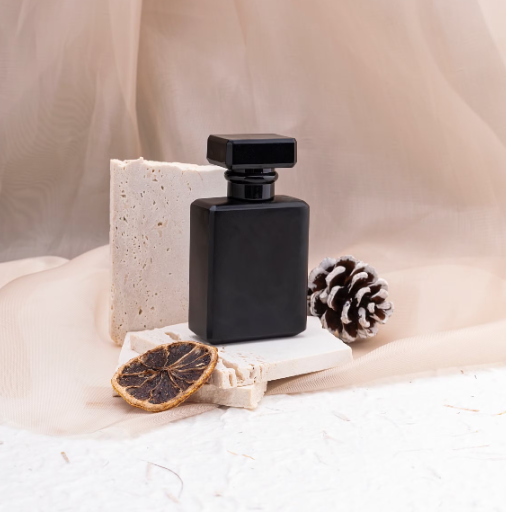
This is the fork in the road for every fragrance founder. Do you open a private mold, or decorate a stock bottle?
A private mold means the silhouette itself is yours, protectable and instantly recognizable. It also means paying for tooling and committing to serious volume. A stock bottle keeps existing geometry but can still look exclusive through decoration and a matched cap.
Daniel founded a niche line with a 50 ml eau de parfum. He couldn’t justify a private mold on a first run of 3,000 units. Instead he chose a heavy-base stock bottle, frosted it, and paired it with a brushed aluminum cap and a rigid box with a velvet insert.
The package looked bespoke, launched in four weeks, and cost a fraction of a custom mold. When the line hit 20,000 units two years later, only then did he invest in a private mold for his hero SKU.
The Cost, MOQ, and Timeline
A custom mold is a real investment, not a line item. According to Aurora Cos, mold fees run roughly 2,000to2,000to10,000 per item, and the bottle, cap, and pump molds are priced separately. Tooling takes 40 to 60 days, with production adding another 35 to 45 days.
| Factor | Custom Mold | Decorated Stock Bottle |
|---|---|---|
| Upfront cost | 2,000–2,000–10,000+ per component | None (pay per piece) |
| Minimum order | ~10,000 units | 2,000–5,000 units |
| Lead time | 3–4 months | 3–4 weeks |
| Risk | High (unproven silhouette) | Low |
| Best for | Hero SKUs, proven volume | First launches, indie brands |
The rule of thumb is simple. Start with a decorated stock bottle to validate the market. Move to a private mold only when the silhouette is central to brand recognition and repeat orders justify a 10,000-piece commitment.
Want help deciding which path fits your launch? Contact our team for a free bottle, cap, and box consultation, no commitment required.
Perfume Bottle Decoration Techniques
Decoration is where a stock bottle becomes a luxury bottle. Each technique changes the cost, look, and durability, so choosing the right one matters.
Frosting and Acid Etching
Frosting gives glass a soft, matte, velvet finish. The key detail most brands miss is that true frosting is acid-etched into the glass, which makes it permanent. Matte paint is a different thing entirely, a surface layer that wears and can haze.
Color and Gradient Spray
Spray coating applies any Pantone color, from a solid opaque body to a translucent gradient. It is the fastest way to add color identity, but it is a coating, so it can chip at the neck and base with repeated handling.
Screen Printing and Hot Stamping
Screen printing applies logos and text directly to the glass in crisp, durable ink. Hot stamping lays down metallic foil in gold, silver, or rose gold. Hot stamping needs a reasonably flat surface to bond well, so it works best on simple faceted or paneled shapes.
Vacuum Metallization and Embossing
Vacuum metallization, also called PVD, creates a mirror chrome or gold finish. It is the most dramatic option and reads as the most expensive. In-mold embossing adds raised or recessed logos and texture directly into the glass during forming, permanent by design.
Decoration Cost and Durability
Here is what each finish adds per piece, based on GPBottles’ sourcing data:
| Method | Effect | Cost per piece | Durability |
|---|---|---|---|
| Screen printing | Logo, text | 0.10–0.10–0.25 | High |
| Hot stamping | Metallic foil | 0.25–0.25–0.50 | Medium |
| Frosting / acid etch | Matte, velvet touch | 0.15–0.15–0.35 | Very high, permanent |
| Color / gradient spray | Any Pantone | 0.20–0.20–0.45 | Medium, chips at edges |
| Vacuum metallization | Chrome, mirror gold | 0.30–0.30–0.60 | High |
Sofia learned the durability lesson the hard way. She ordered matte-paint bottles for a travel set, sealed them in rigid cartons, and shipped them to a humid market. A month later, customers opened boxes to find bottles with cloudy, hazed surfaces.
The coating had reacted inside the sealed carton. The fix was a 72-hour alcohol-vapour test, which any reputable supplier should run on decorated samples before mass production. Ask for it. It costs nothing and catches the problem before it reaches a customer.
Luxury Perfume Bottle Sizes and Neck Finishes
Size and neck finish are easy to overlook and expensive to get wrong.
The 50 to 150 ml capacity band holds more than 55% of the glass perfume bottle market, with 50 ml and 100 ml the two workhorse sizes. Smaller 30 ml bottles suit discovery and travel formats, while larger formats signal a statement purchase.
The neck finish is the part most brands never think about until it breaks the launch. The bottle body, neck finish, pump, collar, and cap must be ordered as a matched set. A pump from one supplier rarely fits the neck of another’s bottle. Ordering these components together, and coordinating them with the wholesale perfume boxes that will hold them, prevents the scramble of re-sourcing a pump two weeks before production.
Sustainable Luxury Perfume Bottles
Sustainability and luxury are no longer opposites. The 2026 conversation is about how to deliver both, and the bottle is where the biggest gains live.
PCR and Recycled Glass
Post-consumer recycled glass, including high-clarity PCR, is one of the most effective levers for cutting a bottle’s footprint. Brands like Abel have relaunched collections in PCR glass with biodegradable caps, proving that recycled content doesn’t have to look dull.
Lightweighting
Lighter glass uses less raw material and cuts transport emissions. Modern lightweight systems reduce bottle weight by up to 20% while keeping strength and clarity. The trick is glass distribution, holding more material at the base and shoulders where the bottle needs it.
Refillable Systems
Refillable formats pair a durable presentation bottle with lighter refill packaging, so the customer keeps the luxury object and replaces only the scent. Screw-neck designs make bottles easy to refill and recycle. For a deeper look at eco-premium materials, see our sustainable packaging guide.
How to Source Luxury Perfume Bottles
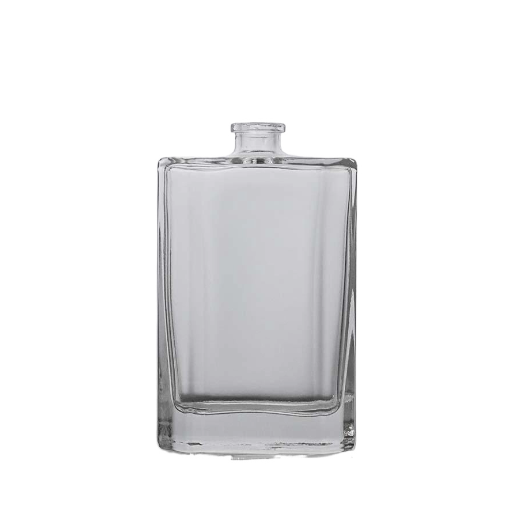
Where you source determines what you pay, how long you wait, and what you can customize. There are two broad paths.
European luxury glassmakers such as Verescence and Stölzle set the standard for quality, but they serve large brands with minimums that often reach 50,000 pieces per mold. Chinese OEM factories offer far lower minimums, often 3,000 to 10,000 units for a custom mold, with strong decoration capabilities and competitive pricing. The tradeoff is that you manage quality control more actively.
Seven questions to ask any bottle supplier before you commit:
- Can you provide free stock samples before I pay anything?
- Do you offer NDA protection for custom designs?
- What is the real MOQ for a decorated stock bottle versus a private mold?
- What are your mold and production lead times, in writing?
- Do you run a 72-hour alcohol-vapour test on decorated samples?
- Which certifications do you hold, ISO 9001, REACH, RoHS, FDA?
- Can you supply the bottle, pump, collar, and cap as a matched set?
That last question is the one most founders skip, and it is the one that saves the most time. A full-system partner who manufactures the cap and box in-house and coordinates the bottle decoration through partner glass factories eliminates the biggest source of launch delays: mismatched components.
Ready to source the whole package, not just the bottle? Request a free wholesale quote and our team will spec a bottle, cap, and box that work together.
Conclusion
A luxury perfume bottle doesn’t have to mean a $10,000 private mold and a 10,000-piece order. Most premium brands build their look from a stock bottle, a deliberate finish, and a coordinated cap and box.
The decisions that matter are the ones you can control. Choose high-clarity glass with real weight. Pick a finish that is permanent, not paint that hazes in transit. Order the bottle, neck finish, pump, collar, and cap as one matched set. And validate with a stock bottle before you commit to a private mold.
When you are ready to move from research to production, Fuzhou Longlu Packaging can help you design and source luxury perfume bottles as part of a complete package. Contact our team for a free quote, and bring a fragrance worth keeping in something beautiful.