You don’t need a 5,000-box order to launch a fragrance brand that looks premium. A small business can order custom perfume boxes starting at 50 to 500 units, with folding cartons costing roughly 0.30to0.30to1.00 per box. Here’s how to do it without overpaying or over-ordering.
When Priya started her indie perfume line last year, a manufacturer quoted her a 1,000-box minimum at 1.40each.Shealmostshelvedthelaunch.Thenshefoundasupplierwillingtorun300digitallyprintedfoldingcartonsat1.40each.Shealmostshelvedthelaunch.Thenshefoundasupplierwillingtorun300digitallyprintedfoldingcartonsat0.65 per box. She tested the market, sold out, and scaled to offset printing on her second run. That’s the difference between knowing your options and accepting the first quote you get.
You’re probably in the same spot. You want custom boxes that make your bottle feel expensive, but you don’t have the volume or the budget of an established house. That’s exactly what this guide covers.
Key Takeaways
- A first run of 250 to 500 folding cartons typically costs 0.30to0.30to1.00 per box, while rigid boxes run 0.75to0.75to5.00 per unit.
- Keep packaging under 10 to 15 percent of your retail price, so a 60eaudeparfumshouldbudgetabout60eaudeparfumshouldbudgetabout6 to $9 for the box.
- Digital printing is the smart choice under roughly 300 units; offset printing wins at 500 units or more.
- Always order a physical sample before production, and never order boxes before you finalize your bottle dimensions.
- Many low-MOQ suppliers exist, from no-minimum US resellers to factory-direct partners that offer FSC-certified board at small quantities.
What Are Custom Perfume Boxes for Small Business?

Custom perfume boxes are packaging made to your brand’s specific size, material, and printed design, rather than a stock box you stamp a label onto. For a small business, “custom” usually means smaller runs of a few hundred units with your logo, brand colors, and bottle fit built in from the start.
Custom boxes differ from stock retail boxes in three ways. They match your exact bottle dimensions, so the bottle doesn’t rattle or sit loose. They carry your full branding, not a generic pattern. And they can be ordered in quantities that fit a first launch rather than a warehouse full of inventory.
The payoff is real. According to MakeABoxes, 79% of shoppers judge a product’s quality by its packaging, and 7 in 10 judge a perfume’s value by its box.
The key is that “custom” no longer means “huge minimum order.” Advances in digital printing and low-MOQ manufacturing have made bespoke boxes realistic for indie and startup brands. If you’re weighing this against a full packaging strategy, our custom perfume packaging guide walks through bottles, caps, and labels as well.
What Custom Perfume Boxes Really Cost at Small Volume
Cost is where most founders get stuck, so let’s get concrete. Packaging often makes up 40 to 60 percent of a fragrance brand’s total cost of goods, according to Sourcify’s breakdown of how fragrance is made. The box is a big slice of that.
The Packaging Budget Formula
A useful rule of thumb, echoed by Packamor’s guide to perfume packaging for small brands, is to keep the box at 10 to 15 percent of your retail price. On a 60eaudeparfum,that′sabout60eaudeparfum,that′sabout6 to 9forthebox.Totalpackaging,includingbottle,cap,andlabel,shouldstayunder20to30percentofretail,orroughly9forthebox.Totalpackaging,includingbottle,cap,andlabel,shouldstayunder20to30percentofretail,orroughly12 to 18onthatsame18onthatsame60 product.
This matters because rigid boxes feel luxurious but add 3to3to8 per unit over folding cartons. If your retail price can’t absorb that, a rigid box will quietly eat your margin.
Per-Unit Cost by Box Type
Here’s what you can expect to pay per box at small to mid volumes:
| Box Type | Cost per Unit | Best For |
|---|---|---|
| Folding carton | 0.10to0.10to1.00 | Mid-market retail, tight budgets, first launches |
| Corrugated mailer | 1.00to1.00to3.50 | Subscription boxes, D2C shipping |
| Drawer or slider box | 0.80to0.80to4.50 | Gift sets, limited editions |
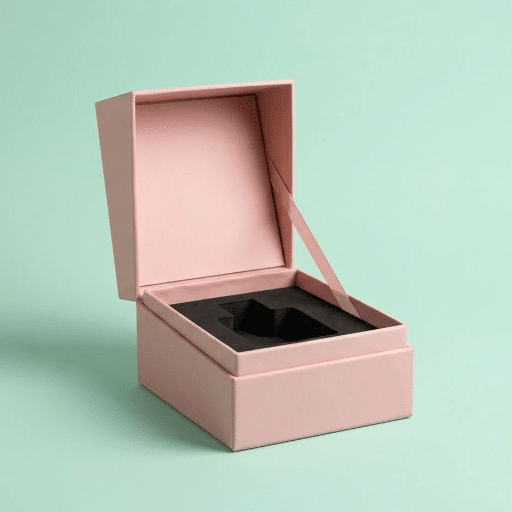
| Rigid box | 0.75to0.75to5.00 | Luxury, keepsake, high-end unboxing |
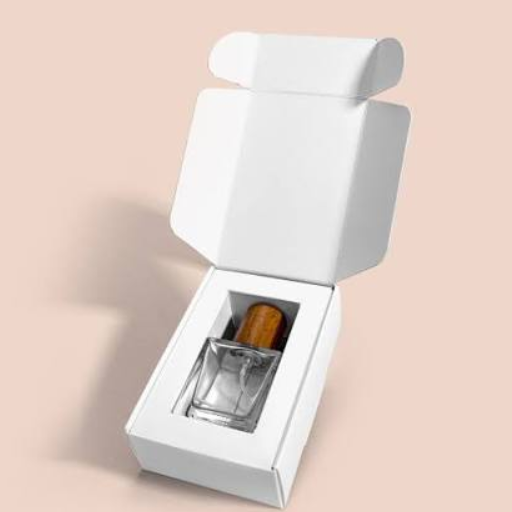
Folding cartons made from 300 to 400 gsm paperboard are the workhorse for small businesses. They’re affordable, print well, and can look far more premium than their price suggests with the right finish.
Why Per-Unit Cost Rises as Quantity Drops
Custom packaging has setup costs: dielines, printing plates, and machine time. Those costs don’t shrink when you order fewer boxes, so they spread across a smaller quantity. A box that costs 0.40at1,000unitsmightcost0.40at1,000unitsmightcost0.90 at 250 units.
That’s not a reason to over-order. It’s a reason to understand the math so you can make an intentional choice between a low-MOQ reseller and a factory-direct partner, which we’ll cover next.
Ready to see what your first run would actually cost? Request a free wholesale quote and get a per-unit breakdown for your exact bottle size.
How Many Boxes Should a Small Business Order First?

This is the question founders ask us most, and the answer is usually smaller than they think.
Marcus learned this the hard way. He ordered 1,000 rigid boxes for his first 300 bottles, reasoning that the per-unit price was better. Six months later he rebranded, and 600 boxes sat unused in his garage. The “savings” from the volume discount cost him far more than he’d have spent on a smaller first run.
The right first order depends on your launch plan:
- 100 to 300 boxes: Best for testing a market, pre-orders, or a crowdfunding campaign. Use digital printing.
- 300 to 500 boxes: A common first retail run. Gives you enough to sell through and reorder without overcommitting.
- 500 to 1,000 boxes: Right only once you have validated demand. This is where offset printing becomes economical.
One rule overrides everything: never order boxes before you finalize your bottle. Confirm your bottle’s exact dimensions, including the cap, before your box dieline is drawn. A box sized for the bottle without the cap is a costly mistake.
Low MOQ vs. No Minimum: Understanding Your Options
“Low MOQ” sounds great until you realize every supplier means something different by it. Some mean 500 units, others mean 100, and a few genuinely mean no minimum.
Reseller vs. Factory Direct: How to Choose
This is the decision most guides skip, and it’s the one that saves you the most money.
| Factor | US/UK Reseller | Factory Direct |
|---|---|---|
| MOQ | 10 to 100 units | 300 to 1,000 units typical |
| Per-unit cost | Higher | Lower |
| Lead time | 5 to 14 days | 2 to 6 weeks |
| Certifications | Sometimes | Usually (FSC, ISO, BSCI) |
| Support | English, design help | Varies, often more technical |
| Sustainability options | Limited | Recycled, FSC, kraft common |
A reseller like Teal Packaging or Packhit is ideal for very first runs. You’ll pay more per box but get low minimums and fast turnaround. A factory-direct partner like Fuzhou Longlu gives you better per-unit pricing and deeper material and certification options, once you’re ready to order a few hundred units.
Marketplace and Domestic vs. Overseas
Marketplaces like Accio list boxes with minimums as low as 1 to 100 pieces, but quality and consistency vary widely. Domestic suppliers offer speed and easy communication. Overseas factories offer the lowest per-unit cost at higher volumes.
There’s no single “best” option. The right choice is the one that matches your order size, timeline, and need for certifications. For a deeper look at the bulk side of this decision, see our wholesale perfume boxes guide.
Digital vs. Offset Printing for Small Perfume Box Runs
Printing method is the biggest cost lever you control at small volumes.
Digital printing has no plate setup cost, so it’s the right choice under roughly 300 units. Per-unit cost is higher, but your total cash outlay is lower because you’re not paying for plates you may only use once.
Offset printing requires plates, which cost money to make, but delivers sharper color, more finish options, and a lower per-unit price. It wins at 500 units or more.
The practical play is simple: use digital for your first run and to test designs. When a design is validated and you’re ordering 500 to 1,000 boxes, switch to offset. Many brands waste money by paying for offset plates on a 200-unit first run they end up changing anyway.
The Sample-to-Production Workflow
Samples are where good boxes happen. A PDF proof shows you the design, but only a physical sample shows you how the box feels, opens, and holds the bottle.
Here’s the sequence, with typical costs and timelines:
- Dieline and 3D mockup. Your supplier draws a flat template showing cut and fold lines. Many offer this free with a 3D render so you can see the structure before committing.
- Physical sample. Expect to pay 50to50to100 for a custom-size sample, and allow about 7 days. Stock samples are often free. This is the step where you check fit, paper feel, and closure.
- Pre-production proof. A final check before the full run. Confirm colors, text, and any regulatory print.
- Production, QC, and delivery. Folding cartons typically run 2 to 4 weeks; rigid boxes 4 to 6 weeks.
The sample step is the one founders skip, and the one that catches the most expensive mistakes. If you want to explore material options before you commit, our custom perfume packaging guide walks through materials and finishes in detail.
Want to sample before you commit? Get a free sample quote and test your box in hand before production.
7 Ways to Lower Your Custom Perfume Box Cost
Small budgets benefit most from a few deliberate choices:
- Use the stock box plus custom insert hybrid. A stock rigid box with a custom die-cut insert looks premium for a fraction of full-custom cost.
- Skip inside printing and full-bleed coverage. Printing only the outside panels cuts ink and setup.
- Standardize one size and finish across SKUs. One box for multiple scents means one dieline and one plate set.
- Order in tiered quantities. Per-unit price drops noticeably at 100, 250, and 500 units, so match your order to the next tier.
- Choose kraft or recycled board. It’s affordable, sturdy, and gives you an eco-friendly story to tell.
- Batch multiple SKUs into one production job. Combining orders spreads setup costs further.
- Match box size to bottle. Less material means less cost and less waste, and it ships tighter.
None of these sacrifices the premium feel your brand needs. They’re choices about efficiency, not quality.
Eco-Friendly Custom Perfume Boxes for Small Businesses

Sustainability isn’t only for big brands anymore. FSC-certified paperboard, recycled greyboard, and kraft are all available at small quantities, and many customers now expect them.
Eco-friendly materials do carry a premium, typically 10 to 25 percent over conventional options. But for many indie brands, that premium is worth it: it’s a selling point your customers notice and remember. Water-based and soy-based inks, plus mono-material construction, keep your box recyclable without sacrificing print quality.
If sustainability is central to your brand, our sustainable packaging guide covers materials, certifications, and how to avoid greenwashing in more detail.
How to Choose a Supplier for Your First Run
The supplier you pick shapes everything from cost to whether your boxes arrive on time. Ask these questions before you commit:
- What is your true minimum order quantity, not just what’s advertised?
- Do you offer a physical sample before production, and what does it cost?
- Do you provide a free dieline and 3D mockup?
- What certifications do you hold (FSC, ISO, BSCI)?
- What is your lead time, and when does it actually start?
- What finishes and materials do you offer at my order size?
Watch for two red flags. A supplier that advertises “low MOQ” but then quotes you 1,000 pieces is not being honest. And a supplier that won’t send a physical sample is not one you want handling your brand’s first impression.
FAQ
What is the minimum order quantity for custom perfume boxes?
Minimums vary widely. Some resellers offer no minimum or start at 10 to 50 units, while factory-direct partners typically start at 300 to 1,000 units.
Can I order custom perfume boxes with no minimum?
Yes. Suppliers like The Box Zilla and Packhit advertise no minimums, though you’ll pay a higher per-unit price at very small quantities.
How much do custom perfume boxes cost for a small business?
Folding cartons cost roughly 0.10to0.10to1.00 per box, and rigid boxes 0.75to0.75to5.00, depending on quantity, material, and finishes.
How many perfume boxes should I order first?
For most first launches, 300 to 500 boxes is a sensible range. Test demand first, then scale once you’ve validated your product and design.
Should I use digital or offset printing for a small run?
Use digital printing under roughly 300 units, since there’s no plate setup cost. Offset printing becomes more economical at 500 units or more.
Are eco-friendly custom perfume boxes available at low MOQ?
Yes. FSC-certified and recycled board are available at small quantities, typically at a 10 to 25 percent premium over conventional materials.
How do I get samples before ordering custom perfume boxes?
Request a physical sample from your supplier. Custom-size samples usually cost 50to50to100 and take about 7 days, while stock samples are often free.
Conclusion
Custom perfume boxes for small business are more achievable than most founders realize. You can start with a few hundred folding cartons, keep the box within 10 to 15 percent of your retail price, and scale to offset printing and larger orders only when demand justifies it.
The short version: order a physical sample first, never buy boxes before your bottle is finalized, and choose your supplier based on real MOQs rather than advertised ones.
When Aisha launched her 30ml scent, she spent $75 on a sample and caught a sizing issue that would have ruined her entire first run. That single sample saved her more than she paid for her whole box order. It’s the cheapest insurance in the business.
At Fuzhou Longlu Packaging, we help small fragrance brands move from first sample to first run without the factory minimums that stall most launches. Get a custom quote for your bottle today, and we’ll walk you through materials, MOQs, and samples step by step.