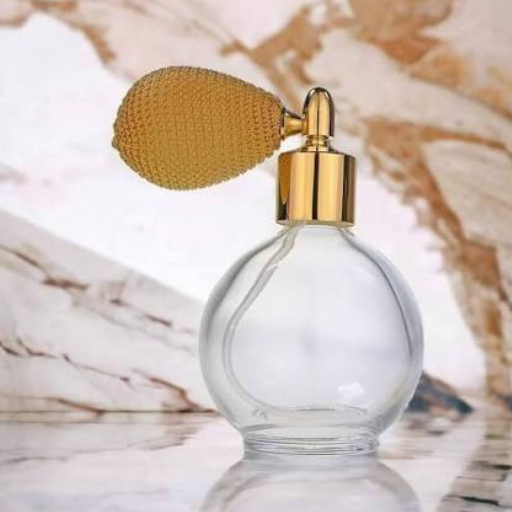
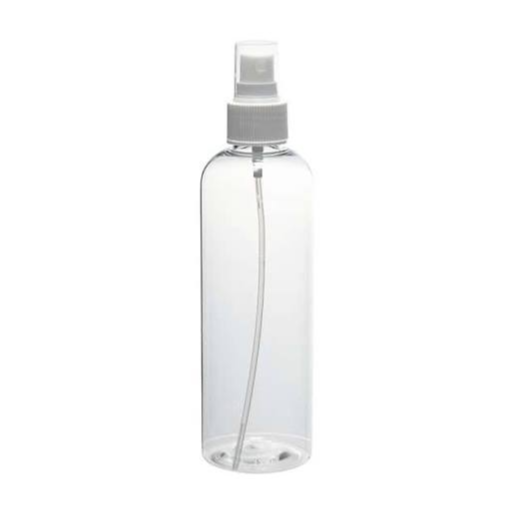
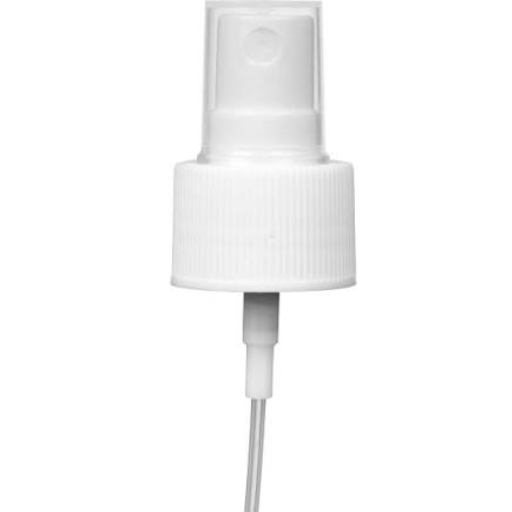
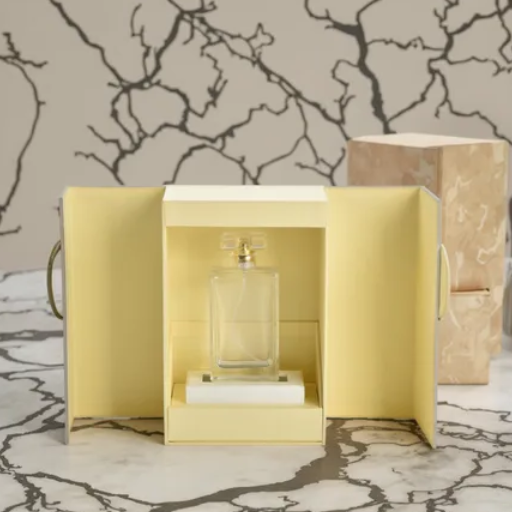
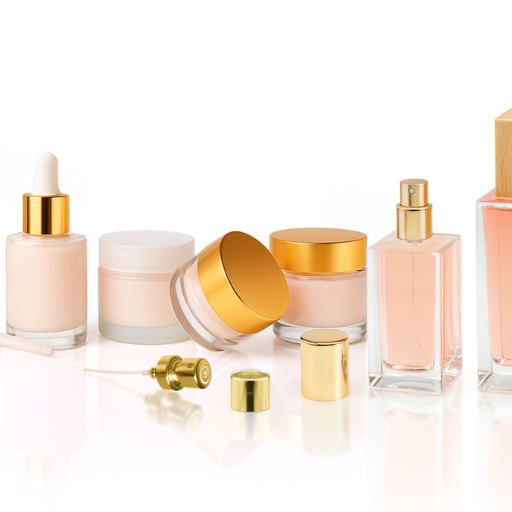
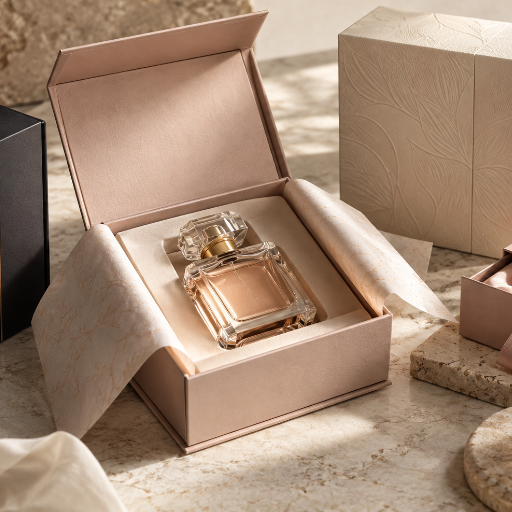
Wholesale perfume tester bottles are empty counter-testers and sample containers that fragrance brands, retailers, and distributors buy in bulk, usually 500 to 10,000+ pieces at a time, for roughly 0.05to0.05to0.50 per unit depending on material, size, and volume. Get the sourcing wrong and a bargain order turns into a costly lesson in leakage, sprayer failures, and freight overruns. Get it right and testing programs quietly pay for themselves.
That is the trap Lena walked into last spring. She runs a six-figure indie fragrance label and needed 3,000 tester bottles for a department store rollout. She picked the cheapest Alibaba listing she could find, $0.09 a piece, and skipped the physical sample. Three weeks later, 11% of the sprayers misfired and another batch of caps leaked inside their cartons. Her “savings” of a few hundred dollars cost her a restock, a reorder, and a frustrated retail buyer.
This guide exists so you do not repeat Lena’s mistake. You will learn realistic MOQ tiers, honest per-unit pricing, how to vet a supplier, how to QC a tester atomizer, and how to calculate the landed cost that actually determines your real price.
Key Takeaways
- Wholesale perfume tester bottles run about 0.05to0.05to0.50 per unit, with the biggest price breaks kicking in at 5,000 to 10,000 pieces.
- Stock bottles start at MOQs of 100 to 500 pieces; custom glass with a new mold usually requires 3,000 to 10,000+ pieces.
- Direct manufacturers offer the best pricing but higher MOQs; trading companies and distributors trade a higher unit cost for smaller lots.
- Always request a physical sample, confirm on-time delivery above 97%, and test sprayer misfire and leakage before any bulk order.
- Your real price is landed cost: unit price plus mold fee, freight, duty, and a breakage allowance, not the sticker number on a quote.
What Are Wholesale Perfume Tester Bottles?

Wholesale perfume tester bottles are empty fragrance packaging purchased in bulk for retail counters, sampling campaigns, discovery sets, and subscription boxes. They differ from full retail bottles in one important way: their job is to help a customer try the scent before they buy the full size.
They come in several formats. Full-size counter testers hold the same volume as the retail bottle but sit on a store shelf for sampling. Sample vials and mini sprays hold 0.5ml to 10ml and get handed out or packed into discovery sets. Rollerballs serve oil-based and clean-beauty formulas. Snap-on pump testers, common in 5ml sizes, are the workhorses of department store counters.
For a broader look at the difference between testers, samples, and retail bottles, start with our complete guide to perfume tester bottles. This article zooms in on the buying side: where to source them, what they cost, and how to avoid the traps.
Why Buying Wholesale Matters
A single tester bottle is almost worthless. Bought one at a time, you would pay a steep markup and never achieve a consistent spec. Wholesale buying gives you three things that small orders cannot.
First, cost. Per-unit price falls sharply as volume climbs, which is the whole reason wholesale exists. Second, consistency. A 10,000-piece order from one factory means every bottle matches, from glass clarity to sprayer throw. Third, repeatability. When your brand scales, a reliable wholesale supplier can ship the same spec again and again without you renegotiating from zero.
The real question is not whether to buy wholesale. It is which channel and which volume give you the best total cost without taking on inventory you cannot move.
Sourcing Channels: Manufacturer, Trading Company, Distributor, or Agent
Wholesale perfume tester bottles reach you through four main channels, and each one trades a different balance of price, minimum order, and risk.
A direct manufacturer owns the molds and the production line. This is the cheapest route at scale, but manufacturers want volume. Many Chinese glass and plastic factories ask for 3,000 to 10,000 pieces on a custom order, with lead times of 25 to 35 days. You get the lowest unit price and the deepest customization, but you also carry the most risk if you do not verify the factory.
A trading company buys from factories and resells. They accept lower MOQs, often 500 to 1,000 pieces, and can combine several packaging types in one shipment. You pay a markup for that flexibility, but it is the sweet spot for many small and mid-size brands.
A distributor splits bulk orders into small lots of 50 to 500 pieces. This is the fastest, lowest-commitment way to test the market, at the highest unit price. Startups often begin here before committing to a factory order.
A sourcing agent is a paid intermediary who finds the factory, audits it, manages QC, and coordinates logistics. It is the safest route for a first-time importer, since the agent has boots on the ground and a relationship with inspectors.
| Channel | Typical MOQ | Unit Price | Customization | Risk Level |
|---|---|---|---|---|
| Direct manufacturer | 3,000 to 10,000+ | Lowest | Highest | Highest (verify first) |
| Trading company | 500 to 1,000 | Mid | Mid | Medium |
| Distributor | 50 to 500 | Highest | Lowest | Low |
| Sourcing agent | Varies | Mid to high | High | Lowest |
Which one fits depends on where your brand is. A new label testing a scent should start with a distributor lot or a trading company order. A brand with a proven SKU and repeat demand should move to a direct manufacturer to protect margin. Most brands follow that exact path as they grow.
If you are still deciding which tester format to order, our perfume sample bottles guide breaks down vial, spray, rollerball, and travel formats so you can match the container to your sampling strategy before you commit to volume.
Wholesale MOQs: What to Expect at Every Level

Minimum order quantity is the first number every buyer asks about, and it is also the most misunderstood. MOQ is not a single figure. It changes based on whether the bottle already exists.
Stock or ready-to-ship bottles use existing molds. Because the factory has already made them, MOQs can be as low as 100 to 500 pieces. You get no mold fee and a fast dispatch, but you also get no unique shape.
Semi-custom bottles pair an existing stock mold with your logo or decoration. These typically require 300 to 1,000 pieces, since the factory needs to set up screen printing or hot stamping for your design.
Full custom bottles require a new mold, which you pay for once and then own. MOQs here run 3,000 to 10,000 pieces and up. The mold fee can range from a few hundred dollars for a simple shape to several thousand for complex designs.
| Order Type | Typical MOQ | Mold Fee | Lead Time |
|---|---|---|---|
| Stock / ready-to-ship | 100 to 500 | None | 3 to 7 days |
| Semi-custom (stock + logo) | 300 to 1,000 | None | 15 to 25 days |
| Full custom (new mold) | 3,000 to 10,000+ | 300to300to3,000+ | 25 to 45 days |
The price-break point matters more than the MOQ. Most factories offer meaningful discounts once you cross 5,000 to 10,000 pieces. Below that, you are paying for setup time spread across fewer units.
You can often negotiate a lower MOQ. Ask whether the supplier will allow mixed cartons or several designs inside one order. Offer to accept standard packaging instead of custom boxes. And be honest about your growth plans, a supplier will bend on an early order if they believe larger ones are coming.
How Much Do Wholesale Perfume Tester Bottles Cost?
Pricing for wholesale perfume tester bottles depends on three things: size, material, and volume. Here are honest ranges gathered from current manufacturer and marketplace listings.
Small empty glass spray vials in 1ml to 10ml sizes run about 0.05to0.05to0.50 per piece depending on volume. At 500 pieces you might pay 0.13to0.13to0.22 each. At 10,000 pieces, that same bottle drops toward 0.05to0.05to0.12. Plastic and PET spray bottles land in a similar range, roughly 0.19to0.19to0.40 for a 5ml pump bottle, though plastic can go lower in very high volumes.
Larger or decorated testers cost more. A 50ml luxury tester with custom finishing can reach 0.40to0.40to0.50 per unit even at volume. Decoration, screen printing, frosted coating, and color matching add cost on top of the base bottle.
Here are representative per-unit ranges by volume. Treat these as planning numbers, not fixed quotes, since material and decoration shift them.
| Format | 500 pcs | 5,000 pcs | 10,000+ pcs |
|---|---|---|---|
| 1ml to 3ml glass vial | 0.13to0.13to0.22 | 0.08to0.08to0.15 | 0.05to0.05to0.12 |
| 5ml PET spray bottle | 0.25to0.25to0.40 | 0.15to0.15to0.25 | 0.10to0.10to0.19 |
| 10ml glass spray | 0.20to0.20to0.35 | 0.12to0.12to0.22 | 0.08to0.08to0.18 |
| 50ml decorated tester | 0.45to0.45to0.55 | 0.40to0.40to0.50 | 0.38to0.38to0.48 |
The formula to hold in your head is simple:
- Total cost = (unit price × quantity) + mold fee + shipping + duty + breakage allowance
The last three are where buyers get surprised. A 0.09bottlethatarriveswith80.09bottlethatarriveswith80.09 bottle. It is closer to $0.16 once you spread the waste across the units that survived.
If you want a deeper look at how decoration and branding change the cost of a tester, our custom tester bottles guide walks through logo printing, finishes, and closures. And if you are ready to move from research to a real quote, request pricing on our tester bottles with your quantity and specs.
Lead Times and the Production Timeline
Lead time catches more first-time buyers off guard than price does. A stock bottle can ship in 3 to 7 days. A semi-custom order with logo printing usually needs 15 to 25 days. A full custom bottle with a new mold runs 25 to 45 days after you approve the sample.
The full timeline looks like this. You finalize the spec, get a quote, approve a pre-production sample, sign the order, and pay a deposit, commonly 30%. Production runs 20 to 40 days depending on complexity. Then inspection, balance payment, shipping, and customs clearance.
Marcus learned the hard way that “lead time” means the production window, not the full wait. He ordered 5,000 snap-on pump testers in November for a Valentine’s Day launch, budgeting 25 days because that is what the quote said. He did not account for the two weeks of mold sampling, the one week of decoration approval, and the three weeks of sea freight. His testers landed in March, a month after the holiday. He now works backward from the launch date, not forward from the quote.
Two factors stretch lead times the most: mold complexity and decoration layers. Every extra color, foil, or coating adds a setup step. And Chinese production slows around major holidays, so ask your supplier for their holiday calendar before you promise your own customers a date.
Where to Source Tester Bottles in China
China produces more than 60% of the world’s cosmetic packaging, and tester bottles come from a handful of regional clusters, each with its own strength.
Zhejiang province, around Yiwu and Jinhua, is the epicenter of low-MOQ, fast-turnaround fragrance packaging. If you want small batches and quick customization, this is where to look. Guangdong, centered on Guangzhou, leads on export orientation and rapid prototyping. Jiangsu, particularly Xuzhou and Jiangyin, is known for high-quality glass and snap-on pump lines. Jiangxi produces high-end glass for luxury bottles.
Proximity to a port also matters for freight cost. Ningbo and Shenzhen are the two big gateways, so a factory near either one usually means cheaper, faster shipping than one deep inland.
You do not need to fly to China to vet a factory, but you should act as if you did. That means video tours, documented samples, and a written trail for everything.
How to Vet a Wholesale Tester Bottle Supplier

Most sourcing disasters are preventable with an hour of diligence before you send money. Here is the checklist that separates a real factory from a photo on a marketplace.
Confirm the basics first. Ask for the business license, tax number, and factory address. Request certifications like ISO 9001 for quality management and ISO 22716 for cosmetic good manufacturing practice. If you are selling into the US or EU, ask about FDA registration and REACH compliance. A supplier that hesitates on any of these is telling you something.
Then demand proof of production. A live video call walking the factory floor is worth more than a catalog. Request a bank account certificate that matches the supplier’s company name. Ask for references from past overseas clients. Check their on-time delivery rate, you want 97% or higher, and their marketplace rating, which should sit at 4.5 stars or above.
The red flags are consistent. A generic email address. A price far below every other quote. A refusal to send a physical sample. A demand for 100% payment upfront. A bank account in a personal name. Any one of these should stop the order until you get a good explanation.
For a more complete importer’s checklist, the Asia Quality Focus cosmetic packaging guide covers third-party inspection and testing standards. And GPBottles’ guide to sourcing perfume bottles from China is a useful second opinion on channels and vetting.
Quality Control for Tester Bottles
Tester bottles fail in predictable ways, and almost none of them are visible in a product photo. This is why the physical sample matters more than the price list.
Sprayer performance comes first. A tester atomizer has to prime on the first or second press and deliver a consistent mist, not a dribble or a stream. Ask for a misfire rate and test a sample yourself before you commit. Snap-on pumps are convenient but need a snug, consistent fit, or they leak.
Leak and evaporation testing is non-negotiable for glass and plastic alike. Invert the filled bottle, leave it overnight, and check for seepage. For transit, look for ISTA-tested packaging that survives vibration and drop. A bottle that passes on your desk can still fail inside a moving truck.
Then check cap torque, thread tolerance, and glass clarity. Run your finger over the neck for rough seams. Hold the glass to the light and look for bubbles or uneven walls. These are the defects that show up as returns and bad reviews.
Before shipping, request a pre-shipment inspection with photos. For larger orders, a third-party inspector from SGS or a similar firm gives you an unbiased report. A defect rate under 0.5% is a reasonable bar for a quality glass line.
This is also the moment to confirm material compatibility. Alcohol-based fragrances need glass or compatible PET. Oil-based and essential-oil formulas often do better in amber glass, which blocks UV light. If you want to understand the material science behind that choice, our guide to how perfume bottles are made covers glass and plastic production in detail.
Shipping, Import, and Landed Cost
Landed cost is the number that actually matters, and it is almost never the number on the quote. It is the total you pay to get a usable bottle onto your shelf, and it includes the freight, duty, and breakage that quotes leave out.
Sea freight is the economical choice for large orders, shipped as a full container load (FCL) or less than container load (LCL). Glass bottles need reinforced packaging, so confirm the supplier’s breakage compensation policy in writing before you pay. Air freight is faster, roughly 5 to 10 days, but far more expensive, so it only makes sense for urgent or lightweight orders. Door-to-door shipping through a freight forwarder simplifies customs for first-time importers.
The documents you need are standard: a commercial invoice, packing list, bill of lading, and sometimes a certificate of origin. Your forwarder usually handles the rest.
Here is a quick worked example. You order 5,000 glass testers at 0.12each,so0.12each,so600 in product. Mold fee is zero because you chose a stock mold. Sea freight and duty add 350.Yourbreakageallowanceis2350.Yourbreakageallowanceis212. Your landed cost is 962across4,900usablebottles,about962across4,900usablebottles,about0.196 each. The sticker said $0.12. That gap is why landed cost, not quote price, should drive your decision.
Compliance for Wholesale Tester Bottles
Compliance is easy to overlook when you are focused on price, but it can stop an entire shipment at the border. Know your target market before you order.
For the European Union, REACH restricts certain chemicals in materials, and the EU Cosmetics Regulation governs what goes inside the bottle. For the United States, the FDA regulates cosmetic packaging and requires good manufacturing practices under ISO 22716. California’s Prop 65 adds its own labeling rules for certain materials. And because tester bottles often hold alcohol-based fragrance, transport rules for limited quantities and flammable goods apply during shipping.
Ask your supplier which regulations their bottles are built to meet, and get it in writing. A factory that cannot answer that question cleanly is not one you want holding a big order.
If sustainability is part of your brand story, our eco-friendly packaging solutions cover recyclable glass, PCR plastic, and refillable formats that reduce single-use sample waste.
Frequently Asked Questions
Where can I buy wholesale perfume tester bottles?
Most buyers source through Chinese manufacturers and trading companies on B2B platforms, or through a sourcing agent. Direct manufacturers offer the best price at higher MOQs; distributors sell small lots at a premium for brands just starting out.
What is the minimum order quantity for perfume tester bottles?
Stock bottles start at 100 to 500 pieces. Semi-custom bottles with a logo usually need 300 to 1,000 pieces. Full custom bottles with a new mold typically require 3,000 to 10,000 pieces or more.
How much do wholesale perfume tester bottles cost?
Roughly 0.05to0.05to0.50 per unit depending on size, material, and volume. Small glass vials run 0.05to0.05to0.22 at volume; decorated or larger testers cost more. The real number is landed cost, which adds freight, duty, and breakage.
Should I buy from a manufacturer or a trading company?
A manufacturer wins on price and customization but wants higher volume. A trading company accepts lower MOQs and can combine multiple packaging types, at a markup. Most brands start with a trading company and move to a manufacturer as volume grows.
How do I avoid scams when sourcing tester bottles?
Request a physical sample, a video factory tour, and a bank account certificate that matches the company name. Watch for prices far below market, demands for full upfront payment, and generic email addresses. Use a third-party inspector for large orders.
Conclusion
Wholesale perfume tester bottles are a small line item that carries an outsized risk, and an outsized reward. The difference between a 0.09bottleanda0.09bottleanda0.19 bottle is often the difference between a smooth retail rollout and a restock you pay for twice.
To source them well, hold onto four numbers. Know your MOQ tier and whether you are buying stock, semi-custom, or custom. Know your real per-unit price, and the volume break points that lower it. Know your lead time, including sampling, decoration, and freight, not just production. And know your landed cost, the total that includes duty and breakage.
The team at a growing subscription box company learned this the slow way. Their first order of 8,000 mini spray testers skipped the sample step to save a week. The sprayers primed fine in the warehouse but clogged in cold weather, and a winter’s worth of subscriber boxes shipped with faulty testers. They re-sourced with a proper sample and QC process the next quarter. Their cost per bottle went up twelve cents. Their return rate dropped to almost nothing.
Cheap is not the same as low-cost. Vet the supplier, test the sample, and calculate the landed number before you commit.
When you are ready to source wholesale perfume tester bottles for your fragrance brand, contact our team for a free quote and a physical sample. We will help you spec the right bottle, hit your MOQ, and ship testers that protect your brand as well as they hold your fragrance.