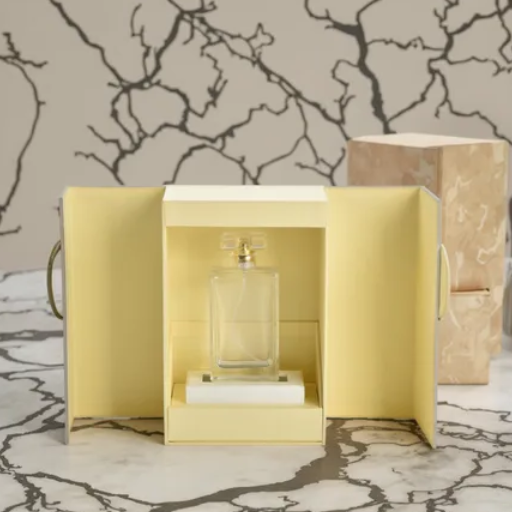
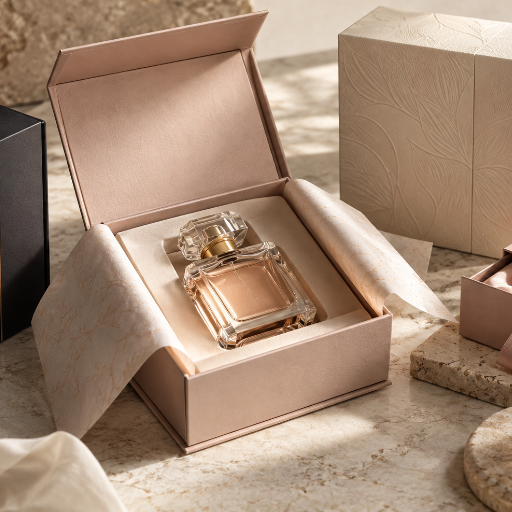
The best eco-friendly perfume boxes use FSC-certified paperboard, recycled cardboard, kraft paper, or molded pulp. These materials protect your fragrance bottle. They also stay recyclable, compostable, or reusable.
They combine renewable substrates, low-impact inks, and right-sized designs. The result? Less waste without losing luxury appeal.
But here’s the challenge most fragrance brands face: a box can look eco-friendly without actually being sustainable.
When Clara launched her indie perfume line in early 2026, she ordered kraft boxes with a “natural” label and assumed she had done the right thing. Three months later, a wholesale buyer asked for her FSC certificate and a recyclability assessment. The boxes used a plastic lamination and petroleum-based ink that made them non-recyclable. Clara had to redesign her packaging from scratch, costing her both money and a key retail partnership.
This guide will help you avoid that mistake. You’ll learn how to choose truly eco-friendly perfume box materials. You’ll discover which certifications matter, how sustainable finishes affect recyclability, and what realistic costs and MOQs look like. You’ll also learn how to vet a manufacturer who can deliver both sustainability and quality. By the end, you’ll have a clear framework for packaging that aligns with your brand values and your customers’ expectations.
Key Takeaways
- Eco-friendly perfume boxes use FSC-certified paperboard, recycled cardboard, kraft, or molded pulp, not just brown paper and green labels.
- Recyclability depends on the whole box: material, inks, coatings, adhesives, and decorative finishes all affect end-of-life outcomes.
- FSC, PEFC, Cradle to Cradle, and OK Compost are the most credible certifications for sustainable perfume packaging.
- Sustainable boxes typically cost 10–25% more than conventional options, but bulk orders and simpler designs can narrow the gap.
- The EU Packaging and Packaging Waste Regulation (PPWR) and California SB54 are reshaping what brands must prove about their packaging.
What Are Eco-Friendly Perfume Boxes?

Eco-friendly perfume boxes are secondary packaging made from renewable, recycled, or responsibly sourced materials. Examples include FSC-certified paperboard, kraft, and molded pulp. These boxes protect the fragrance bottle. They also reduce environmental impact through recyclability, compostability, or reuse.
They differ from conventional boxes in three ways:
- Material sourcing: The board comes from recycled fibers, responsibly managed forests, or agricultural byproducts rather than virgin fossil-based resources.
- End-of-life design: The box can be recycled, composted, or reused without requiring the consumer to separate mixed materials.
- Production footprint: Low-impact inks, water-based coatings, and efficient die-cutting reduce energy, water, and chemical use.
A common misconception is that “brown equals green.” A box can be unbleached kraft on the outside but lined with plastic film, glued with synthetic adhesives, and printed with solvent-based ink. That combination often makes the package non-recyclable. True sustainability means looking at the whole system, not just the surface color.
What Makes a Perfume Box Eco-Friendly?
Not every box marketed as sustainable deserves the label. Use these six criteria to judge whether a perfume box is genuinely eco-friendly.
Renewable or Recycled Materials
The foundation of a sustainable box is the substrate. Look for materials with high recycled content, such as post-consumer recycled (PCR) paperboard, or fibers from renewable sources like bamboo, sugarcane bagasse, or FSC-certified wood pulp. Avoid boxes that rely on virgin plastic windows, foam inserts, or metallized films unless they are clearly separable and recyclable.
Recyclability or Compostability at End of Life
A box should have a clear disposal pathway. Paperboard and corrugated cardboard are widely recyclable. Molded pulp is often compostable in industrial facilities. Mixed-material constructions, such as paper laminated with polypropylene film, usually cannot be recycled through standard municipal streams.
Reduced Material Use and Right-Sizing
Oversized boxes waste board, filler, and shipping volume. Right-sizing means designing the box to fit the bottle and insert tightly, which also reduces dimensional weight and freight emissions. Brands like Marcus, a direct-to-consumer fragrance founder, cut his shipping costs by 18% after switching from a standard rigid box to a right-sized kraft mailer with a molded pulp insert.
Low-Impact Inks and Coatings
Soy-based, vegetable-based, and water-based inks replace petroleum-derived solvents. Water-based or aqueous coatings can replace plastic laminations. Uncoated or matte finishes often have lower environmental impact than glossy UV coatings.
Credible Certifications
Third-party certifications separate real sustainability from marketing claims. We will cover the most important ones later in this guide.
Ethical and Transparent Supply Chain
Sustainability includes how and where materials are made. Ask suppliers about fiber sourcing, energy use, waste management, and whether they can provide chain-of-custody documentation.
Want to see how the right material choice affects both cost and recyclability? Explore our complete guide to sustainable perfume packaging →
Best Materials for Eco-Friendly Perfume Boxes
The right material depends on your brand position, bottle protection needs, budget, and sustainability goals. Here’s how the most common options compare.
Kraft Paper and Kraft Board
Kraft is unbleached paperboard made from wood pulp. It has a natural, tactile look. That look signals sustainability without extra decoration.
- Pros: Renewable, recyclable, biodegradable, strong tensile strength, premium rustic aesthetic.
- Cons: Limited color range unless printed; can look plain for ultra-luxury positioning.
- Best for: Indie brands, natural fragrance lines, minimalist luxury, and e-commerce shipping.
Recycled Cardboard and Paperboard
Recycled paperboard diverts waste from landfills. It also uses less energy and water than virgin board. It can be printed with high-quality graphics and finished for luxury appeal.
- Pros: Widely recyclable, customizable, strong enough for retail and shipping.
- Cons: Quality varies with recycled content percentage; higher PCR content can reduce smoothness.
- Best for: Brands that want premium printing on a recyclable substrate.
FSC-Certified Rigid Board
FSC certification ensures the wood fibers come from responsibly managed forests. Rigid board is used for high-end magnetic closure and two-piece boxes.
- Pros: Premium feel, strong protection, credible sustainability story, excellent printability.
- Cons: Higher cost and weight than folding cartons; needs careful finishing choices to remain recyclable.
- Best for: Luxury perfume houses, gift sets, and retail presentation.
Molded Pulp / Molded Fiber
Molded pulp is made from recycled paper, bamboo, or sugarcane bagasse. It is increasingly used for inserts, trays, and even primary packaging shapes.
- Pros: Excellent shock absorption, biodegradable, compostable in many facilities, plastic-free.
- Cons: Rougher surface than paperboard; limited fine-detail printing; may require inner barrier for fragrance oils.
- Best for: Inserts, trays, and protective cavities inside outer boxes.
Corrugated Board for E-Commerce Shipping
Corrugated cardboard is the workhorse of shipping protection. It can be made from recycled fibers and is one of the most recycled packaging materials globally.
- Pros: Highly protective, widely recyclable, cost-effective at scale, customizable.
- Cons: Less premium appearance; usually needs an inner rigid or folding carton for presentation.
- Best for: E-commerce shipping boxes and subscription fragrance services.
Bamboo and Sugarcane Bagasse
These fast-growing, renewable fibers are used for board, pulp, and molded trays. They offer a strong alternative to wood pulp.
- Pros: Rapidly renewable, biodegradable, distinctive story.
- Cons: Sourcing transparency varies; can be more expensive than recycled paperboard.
- Best for: Brands with a strong botanical or natural identity.
Bioplastics and Plant-Based Polymers
Materials like PLA, bio-PE, and bio-PET are derived from plants rather than petroleum. They can work for windows, inserts, or specialty applications.
- Pros: Lower fossil-fuel dependence; can be designed for industrial composting.
- Cons: Not all bioplastics are biodegradable; many require industrial composting facilities that consumers lack access to.
- Best for: Specific applications where paper cannot perform, such as transparent windows or moisture barriers.
| Material | Best For | Recyclability | Cost Tier |
|---|---|---|---|
| Kraft paper/board | Minimalist, natural, e-commerce | Widely recyclable | Low–Medium |
| Recycled paperboard | Premium printing, retail | Widely recyclable | Medium |
| FSC-certified rigid board | Luxury boxes, gift sets | Recyclable if unlaminated | High |
| Molded pulp | Inserts, trays, protection | Industrial compostable/recyclable | Low–Medium |
| Corrugated board | Shipping, e-commerce | Widely recyclable | Low |
| Bamboo/bagasse | Natural/botanical identity | Biodegradable/recyclable | Medium–High |
| Bioplastics | Windows, specialty barriers | Varies; often industrial compost only | Medium–High |
Eco-Friendly Finishes: What Stays Green and What Does Not

The most sustainable material can be ruined by the wrong finish. Here is how common decorative treatments affect recyclability.
Soy-Based and Water-Based Inks
Soy and vegetable inks replace petroleum solvents and make paper easier to de-ink during recycling. Water-based inks work well on uncoated and matte stocks. These are the default choice for eco-friendly perfume boxes.
Uncoated and Matte Finishes
Leaving paper uncoated or using a matte water-based coating preserves recyclability. It also creates a soft, tactile surface that many premium brands now prefer.
Foil Stamping and Recyclability
Traditional hot foil stamping is generally recyclable in small areas, but large foil-covered panels can contaminate paper recycling streams. Newer cold-foil and recyclable foil options are available. If luxury impact is essential, use foil sparingly and confirm recyclability with your supplier.
Lamination Types
Plastic lamination (gloss or matte PP/PET) makes paper non-recyclable in most municipal systems. Better alternatives include:
- Water-based aqueous coating
- Cellulose film
- Bio-based lamination
- Uncoated stock
Spot UV and Embossing
Spot UV coatings are often solvent-based and can interfere with recycling. Embossing and debossing are mechanical processes that add no foreign material, making them among the most sustainable decorative options.
How to Avoid Greenwashing on Finishes
Ask your supplier for written confirmation that the finished box is recyclable in standard streams. A vague “eco-friendly” claim is not enough. Specify low-VOC, water-based coatings and request a recyclability assessment if you plan to market the box as recyclable.
Box Styles That Work for Sustainable Perfume Packaging
The box style affects material use, protection, shipping efficiency, and perceived value. These styles work especially well for eco-friendly perfume packaging.
Tuck-End Folding Cartons
Folding cartons use less material than rigid boxes and ship flat, reducing freight volume. They are ideal for single-bottle retail packaging and can be made from recycled or FSC-certified paperboard.
Rigid Two-Piece Boxes
Rigid boxes feel premium and protect well, but they use more material and take up more shipping space. To keep them green, use FSC-certified board, avoid plastic lamination, and design them for reuse as gift or storage boxes.
Magnetic Closure Boxes
Magnetic boxes offer a luxury unboxing experience. For sustainability, specify recyclable magnets or consider whether the magnetic closure is essential. Some brands use hidden tuck closures or ribbon pulls instead.
Drawer and Sleeve Boxes
Drawer boxes create a layered reveal and can be made with minimal adhesive. Sleeve boxes use a single outer wrap, which can reduce material use compared to full rigid boxes.
Round Tube Boxes
Paper tubes are sturdy, plastic-free, and visually distinctive. They work well for travel sizes, sample sets, and brands with a natural positioning.
Molded Pulp Trays and Clamshells
For brands that want to eliminate almost all non-recyclable material, molded pulp trays can replace both outer boxes and inserts. They are common for sample sets and limited-edition launches.
| Style | Sustainability Score | Best For | MOQ Tier |
|---|---|---|---|
| Tuck-end folding carton | High | Retail, cost-sensitive brands | Low |
| Rigid two-piece | Medium | Luxury, gifting | Medium–High |
| Magnetic closure | Medium | Premium unboxing | Medium–High |
| Drawer/sleeve | High | Layered reveals, gift sets | Medium |
| Round tube | High | Travel sizes, natural brands | Medium |
| Molded pulp tray | Very High | Plastic-free launches | Medium |
Inserts and Protection: Sustainable Options
The insert is where many perfume boxes fail the sustainability test. Foam, plastic trays, and synthetic fabrics are common but hard to recycle.
Molded Pulp Inserts
Molded pulp holds bottles securely and absorbs shock. It is made from recycled paper or agricultural fibers and is biodegradable or recyclable. For fragrance oils, some molded pulp includes a thin recyclable barrier to prevent oil absorption.
Recycled Paperboard Inserts
Die-cut paperboard inserts can cradle a bottle without foam. They are easy to recycle and can be printed with brand messaging or disposal instructions.
Fabric and Velvet: When Is It Sustainable?
Natural fabrics like organic cotton or linen can be sustainable, but velvet and synthetic fabrics are usually not recyclable. If fabric is essential for luxury positioning, choose recycled or organic options and design the insert so the fabric can be separated from the board at end of life.
EVA Foam and Plastic Trays: What to Avoid
EVA foam, polystyrene, and PET trays are fossil-based and rarely recycled. Replace them with molded pulp or paperboard whenever possible. If you must use plastic, choose post-consumer recycled content and design it for easy separation.
Certifications Explained: What to Look for in Eco-Friendly Perfume Boxes
Certifications give buyers confidence that sustainability claims are verified. Here are the most relevant ones for perfume boxes.
FSC (Forest Stewardship Council)
FSC certification ensures that wood fibers come from responsibly managed forests that protect biodiversity, water quality, and worker rights. Look for FSC Mix or FSC Recycled labels on paperboard and rigid board.
PEFC (Programme for the Endorsement of Forest Certification)
PEFC is another credible forest certification with strong acceptance in Europe. It works similarly to FSC and is often used by European suppliers.
Cradle to Cradle Certified
This certification evaluates materials for safety, recyclability, and renewable energy use across the product life cycle. It is useful for brands that want a comprehensive sustainability credential.
OK Compost / TÜV Industrial / Home Compostability
These certifications confirm that a material will break down in industrial or home composting conditions within a specified timeframe. They are most relevant for molded pulp, bioplastics, and certain coatings.
Carbon Neutral and Climate Neutral Labels
These labels indicate that a product’s carbon emissions have been measured and offset, or reduced to net zero through operational changes. They are becoming popular for premium beauty brands.
How to Verify Certification Claims
Ask your supplier for the certificate number and verify it on the certifier’s website. Be cautious of self-declared claims like “earth-friendly” or “green” without third-party backing. Real certifications have specific logos, license numbers, and chain-of-custody requirements.
Need help choosing certified materials for your next order? Contact our team for a free packaging consultation →
Costs, MOQs, and Lead Times for Eco-Friendly Perfume Boxes
Sustainability does not have to break the budget, but it does require realistic planning. Here are typical ranges for eco-friendly perfume boxes at different quantities.
Cost per Unit at Different Volumes
These are approximate ranges for custom eco-friendly folding cartons and rigid boxes, including basic printing. Final pricing depends on size, material, finish, and insert type.
| Quantity | Folding Carton (Kraft/Recycled) | Rigid FSC Box |
|---|---|---|
| 100 units | 2.50–2.50–4.50 each | 6.00–6.00–10.00 each |
| 500 units | 1.20–1.20–2.20 each | 3.50–3.50–5.50 each |
| 1,000 units | 0.80–0.80–1.50 each | 2.50–2.50–4.00 each |
| 5,000+ units | 0.40–0.40–0.80 each | 1.50–1.50–2.50 each |
How Sustainable Materials Affect Pricing
FSC-certified board and recycled paperboard usually cost 10–25% more than conventional virgin board. Molded pulp inserts can cost less than EVA foam at scale but may have higher tooling costs for custom cavities. Soy-based inks and water-based coatings are generally comparable in price to conventional options.
Typical MOQ Ranges by Box Type
- Folding cartons: 500–1,000 units
- Rigid boxes: 1,000–3,000 units
- Molded pulp inserts: 1,000–5,000 units
- Corrugated shippers: 500–1,000 units
Some manufacturers, including Fuzhou Longlu Packaging, offer lower MOQs for startups through shared tooling or digital printing.
Hidden Costs
Budget for these items that can affect total project cost:
- Certification audits or FSC chain-of-custody fees
- Custom tooling or dies for molded pulp
- Specialty inks or coatings
- Physical samples and prototyping
- Pre-shipment inspection and quality control
Lead Time Differences vs. Conventional Boxes
Eco-friendly boxes typically add 3–7 days to production because of material sourcing and certification verification. Plan for 4–6 weeks total for custom orders, including sampling and shipping.
How to Choose an Eco-Friendly Perfume Box Manufacturer

The right manufacturer can make sustainability simple. The wrong one can turn your eco-friendly intentions into a compliance risk.
Questions to Ask Before Ordering
- What certifications can you provide (FSC, PEFC, Cradle to Cradle, OK Compost)?
- What is the recycled or renewable content of your board?
- Are your inks and coatings water-based or soy-based?
- Can you provide a recyclability assessment for the finished box?
- What is your MOQ and sampling process?
- Do you offer design-for-recycling guidance?
Red Flags: Greenwashing and Vague Claims
Be wary of suppliers who:
- Use terms like “eco-friendly” or “green” without certification
- Cannot provide material composition or chain-of-custody documents
- Claim biodegradability without specifying conditions or timeframe
- Offer plastic-laminated boxes as “recyclable”
- Refuse to provide physical samples for testing
Sampling and Prototyping Workflow
Always request a physical sample before full production. Test for:
- Bottle fit and insert stability
- Print quality on recycled or kraft stock
- Structural durability during drop testing
- Recyclability of all components
Quality Control and Certification Audits
For large orders, consider a pre-shipment inspection. Verify that the final material matches the certified sample and that logos or certification marks are printed correctly.
Why Work with a Manufacturer Like Fuzhou Longlu Packaging
At Fuzhou Longlu Packaging, we help fragrance brands source eco-friendly perfume boxes. We balance sustainability, protection, and brand presentation. We offer FSC-certified materials, soy-based and water-based printing, and molded pulp inserts. We also offer flexible MOQs for emerging brands. Our team guides you through material selection, certification choices, and design-for-recycling. That way, your packaging performs in stores, in transit, and at end of life.
Ready to source sustainable perfume boxes? Request a free quote and sample from Fuzhou Longlu Packaging →
2026 Sustainability Trends Shaping Perfume Boxes
Sustainability in perfume packaging is moving fast. Here are the trends that will define 2026 and beyond.
Mono-Material and Design-for-Recycling
Regulators and recyclers are pushing for packaging made from a single material family. A mono-material perfume box uses only paper-based components, making it easier to recycle. Design-for-recycling means avoiding mixed layers, difficult-to-separate inserts, and non-recyclable finishes.
Refillable and Reusable Box Systems
Refillable fragrances are growing quickly, refillable perfume bottle adoption rose 31% between 2022 and 2023, according to Hale Path Packaging. Box designs are adapting with modular inserts, removable trays, and durable outer boxes meant to last through multiple refills.
Right-Sizing and Dimensional Weight Reduction
E-commerce brands are under pressure to reduce shipping volume. Right-sized boxes lower material use, freight emissions, and shipping costs. They also reduce the need for void fill.
Water-Based Inks and Plastic-Free Coatings
The shift away from solvent-based inks and plastic laminations is accelerating. Water-based coatings, matte finishes, and uncoated stocks are becoming the default for sustainable beauty packaging.
Digital Product Passports and QR Traceability
QR codes and NFC tags on perfume boxes can link to ingredient sourcing, recycling instructions, and authenticity verification. This builds trust and helps consumers dispose of packaging correctly.
Regulatory Pressure: EU PPWR and California SB54
The EU Packaging and Packaging Waste Regulation entered force in February 2025. It applies across EU member states from August 2026. It introduces recyclability requirements, design-for-recycling rules, and extended producer responsibility. California SB54 mandates that all packaging sold in the state be recyclable or compostable by 2032. These laws mean fragrance brands must document and verify their packaging choices more carefully than ever.
Lila, a brand manager for a niche luxury fragrance house, learned this the hard way. Her team designed a beautiful box with a metallized sleeve and plastic window for a European launch. Six weeks before shipping, their EU distributor flagged the package as non-compliant under the upcoming PPWR recyclability rules. The redesign delayed the launch by two months. Now Lila starts every packaging project with a compliance checklist and certification requirements.
Conclusion
Eco-friendly perfume boxes are no longer a niche choice. They’re becoming the standard that consumers, retailers, and regulators expect. The right box protects your fragrance, communicates your values, and avoids the greenwashing traps that can damage your brand.
Here is what to remember:
- Choose materials with verified recycled, renewable, or certified content.
- Check the whole box, not just the outer board, for recyclability.
- Use low-impact inks, water-based coatings, and minimal lamination.
- Work with suppliers who can provide credible certifications.
- Plan for regulations like EU PPWR and California SB54 before you design.
Sustainable packaging does not mean sacrificing luxury. The right materials, finishes, and manufacturer partnership can make your perfume boxes feel premium. They can also perform responsibly.
Start your sustainable packaging project today. Contact Fuzhou Longlu Packaging for a free quote, sample, and certification guidance →