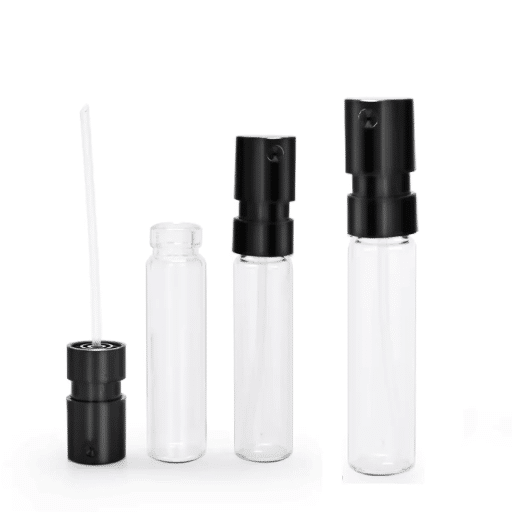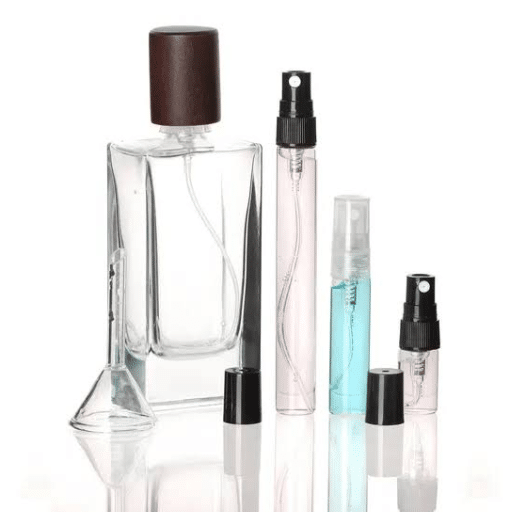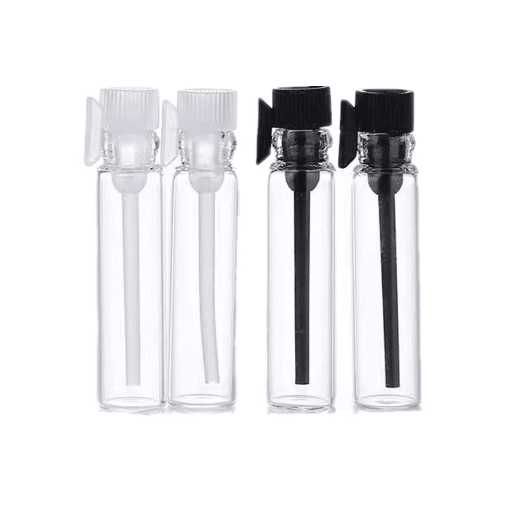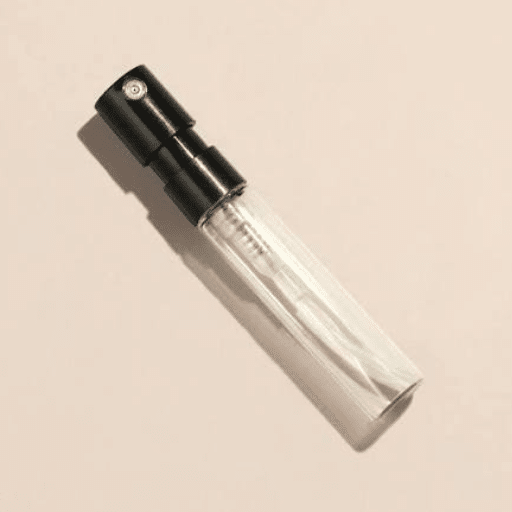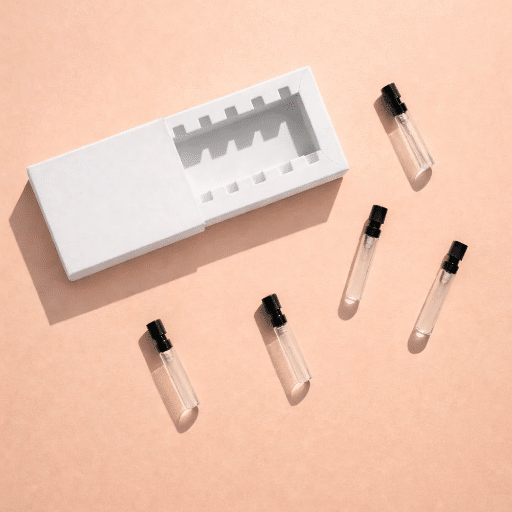
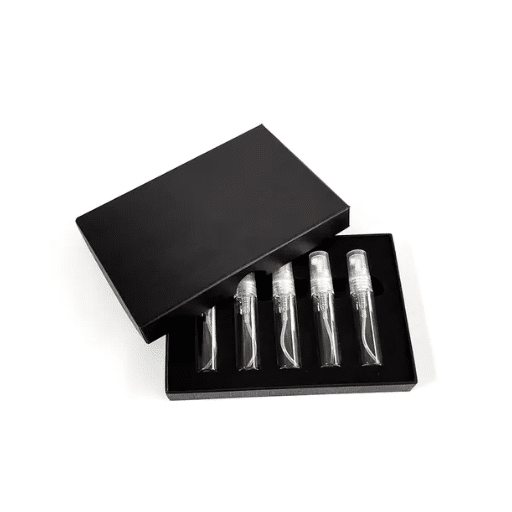
The difference between a tester and a sample perfume bottle comes down to size and purpose. A tester is a full-size bottle, usually 50 to 100ml, built for in-store and counter display. A sample is a small vial, typically 1 to 3ml, made for trial, discovery sets, and promotional giveaways.
Here’s the problem most fragrance brands hit early on. Suppliers talk about these two formats as if they’re interchangeable, but they aren’t. Choose the wrong one and you either waste budget on oversized bottles nobody needs or send out samples that feel cheap and never convert.
By the end of this guide, you’ll know exactly when to use testers, when to use samples, and how to source each one without overpaying.
Key Takeaways
- A tester is a full-size bottle (50 to 100ml) for retail display; a sample is a small vial (1 to 3ml) for trial and discovery.
- Both hold the same fragrance formula. The difference is packaging, size, and purpose, not the juice inside.
- Use testers for counter sampling and luxury presentation; use samples for discovery sets, subscription boxes, and influencer seeding.
- Most brands need both formats working together, not one or the other.
- Wholesale MOQs start around 1,000 to 3,000 pieces for stock glass vials and climb to 10,000 or more for custom plastic runs.
What Is the Difference Between a Tester and a Sample Perfume Bottle?

A perfume tester bottle is a full-size bottle produced for retail and counter use. Brands make testers so shoppers can spray the real fragrance in a store without opening a boxed bottle for sale. Testers usually come without a decorative cap and in plain or unbranded packaging. That’s how they stay cheaper than retail.
A perfume sample bottle is a small-volume container. It’s the format brands use for discovery sets, giveaway programs, and subscription boxes. Samples typically run 1 to 3ml, though some discovery formats reach 10ml.
There’s also a third term people confuse: a decant. A decant is an aftermarket sample, where someone transfers fragrance from a larger bottle into a small vial. Brands rarely produce decants, so suppliers produce testers and samples directly. The Scent Nest covers the full three-way distinction.
The important point for any buyer is this: both testers and samples usually hold the exact same fragrance formula. The difference is packaging and volume, not the perfume inside. A tester is not “stronger” or “more concentrated” than a retail bottle. It’s the same juice, presented without the box, as the FragranceFragrance tester glossary confirms.
That distinction matters because it changes what each format is actually for. Testers sell the full-size experience. Samples reduce the risk of trying something new.
If you’re new to fragrance packaging, our complete guide to perfume tester bottles covers the counter-tester format in depth. Our perfume sample bottles guide does the same for mini vials and discovery sets.
Tester Bottles vs. Sample Bottles: A Side-by-Side Comparison
Here’s how the two formats stack up across the factors that matter most to a brand.
| Factor | Tester Bottle | Sample Bottle |
|---|---|---|
| Typical size | 50 to 100ml | 1 to 3ml (up to 10ml) |
| Primary purpose | In-store and counter display | Trial, discovery, and giveaways |
| Packaging | Plain, often no decorative cap | Minimal vial or atomizer |
| Dispensing | Full-size sprayer | Spray, dabber, or roll-on |
| Price | Cheaper than boxed retail | Often free or very low cost |
| Contents | Same formula as retail | Same formula as retail |
| Best use case | Retail counters, luxury launch | Discovery sets, subscriptions, seeding |
The size difference is the whole story. A tester has to hold enough fragrance for dozens of sprays at a busy counter. A sample only needs to survive a few uses before the customer decides.
That’s why the two formats rarely compete with each other. They answer different questions. A tester answers, “What does the full-size experience feel like?” A sample answers, “Do I like this enough to buy it?”
Cost per impression also differs. A tester costs more per unit but can serve hundreds of shoppers. A sample costs pennies but reaches one person each. The right choice depends on where your customers are.
If you’re weighing materials alongside format, see our breakdown of glass vs plastic perfume bottles. For now, know that glass is the premium default and plastic is the cost-saving choice.
When to Use Tester Bottles
Tester bottles earn their place wherever the full-size experience drives the sale. That’s almost always in a physical retail setting.
- Retail counters and boutiques. When a shopper can pick up a bottle, spray it, and feel its weight, conversion improves. A 2ml vial can’t deliver that tactile moment.
- Luxury and premium launches. High-end brands lean on testers because presentation matters. A full-size bottle with a weighted cap signals quality before the scent is even released.
- Brand positioning. A tester says, “This is a serious, finished product.” A tiny plastic vial can quietly say the opposite.
- Discount and gray-market resellers. Buyers on these channels expect full-size testers, which move at a lower price than boxed retail.
Maya learned this the hard way. She launched a niche fragrance line in early 2026 and skipped testers entirely. Instead she sent only 2ml plastic samples to a handful of boutiques. The response was polite but flat.
Boutique owners told her customers wanted to spray something that felt substantial. When she added 50ml glass testers to her counter display three months later, her retail sell-through rose noticeably. The full-size format did the convincing that the sample never could.
If you’re launching a men’s line, our cologne tester bottles sourcing guide walks through the format specifics for masculine and unisex scents.
Want help choosing the right tester format for your next launch? Request a free sample or quote from our team.
When to Use Sample Bottles

Sample bottles are the workhorse of modern fragrance marketing. They’re how brands get their scent into a customer’s hands before they commit. Sampling-led acquisition is also a big reason the global perfume bottles market keeps growing.
- Discovery sets. A box of five to ten mini vials lets a customer explore a whole collection. This format is now the standard for niche and indie brands, and 1 to 3ml is the gold-standard size.
- Subscription boxes and influencer seeding. Small samples are cheap to produce at scale, which makes them perfect for high-volume distribution. A 2ml vial costs pennies, so sending thousands costs little.
- DTC e-commerce sampling. Fragrance has famously high return rates because scent is impossible to judge online. Samples reduce that risk by letting a customer test before they buy the full size.
- New-scent validation. Before committing to a full production run, samples let you test a formula with real customers at low cost.
One clean-beauty brand ran into a hidden cost with cheap samples. They shipped 1ml plastic vials and started getting complaints about leaking and a faint chemical smell. The low-grade plastic was reacting with the fragrance oils.
They switched to borosilicate glass vials, which added only about eight cents per unit. The leakage stopped, and repeat purchases climbed 18%. The lesson: sample quality directly shapes how your brand is remembered.
For everything you need on mini vials and discovery formats, read our complete guide to perfume sample bottles.
Choosing the Right Format for Your Sampling Strategy
The real question isn’t “tester or sample.” It’s “what are you trying to get the customer to do?”
Choose tester bottles if:
- You sell through physical retail or boutiques.
- Your brand is positioned as premium or luxury.
- The full-size tactile experience is part of the pitch.
- You’re reselling through discount or gray-market channels.
Choose sample bottles if:
- You sell mostly online or through discovery sets.
- You want to run subscription box placements or influencer seeding.
- Your goal is high-volume trial at low cost.
- You’re validating a new scent before a full production run.
Most brands discover they need both. Priya runs a small fragrance label that started online-only with 2ml discovery vials. When she expanded into two boutiques last fall, she added 50ml testers to each counter. Her online samples still drive trial, while the testers drive in-store conversion. The two formats now feed each other.
Here’s the thing most founders miss: testers and samples work together. The tester sells the premium moment. The sample removes the risk of trying. For guidance on sizing, our perfume tester bottle sizes guide breaks down which capacity fits which use case.
Sourcing Testers and Samples: Materials, MOQs, and Costs

Once you’ve picked your format, the next step is sourcing it without overpaying. Here’s what to expect from a manufacturer.
Materials:
- Borosilicate glass. Premium, chemically inert, and stable with alcohol-based fragrance. The default for high-end brands.
- Soda-lime glass. A more economical glass option with good clarity.
- Amber glass. Adds UV protection for light-sensitive and essential-oil formulas.
- Plastic (PET). Lightweight and cheap, but it can react with some fragrance oils.
- Aluminum. Travel-friendly and opaque, ideal for on-the-go formats.
MOQs:
- Stock glass vials: 1,000 to 3,000 pieces.
- Custom glass: 5,000 to 10,000 pieces.
- Plastic sample vials: 10,000 to 50,000 pieces.
Costs:
- Plastic 1ml vials: 0.01to0.01to0.05 each.
- Stock glass 2ml vials: 0.05to0.05to0.15 each.
- Custom 5ml glass atomizers: 0.25to0.25to0.80 each.
Leak-proofing matters. For spray samples, crimp-seal closures hold up better in transit than screw caps. A metal ring squeezed around the neck resists pressure changes during shipping. Screw caps are friendlier for travel but can leak if the pressure shifts.
Lead times. Stock bottles ship faster, often 7 to 15 days for sampling. Custom and decorated orders usually run 25 to 45 days after sample approval.
Think about total cost, not just unit price. A cheap plastic vial that leaks costs you a customer. A slightly pricier glass vial that arrives intact protects the sale.
For wholesale pricing and supplier verification, see our wholesale perfume tester bottles sourcing guide.
Ready to compare real numbers for your project? Get a customized quote from Fuzhou Longlu Packaging.
Frequently Asked Questions
Are tester perfumes the same as the original?
Yes. A genuine tester holds the same formula as the retail bottle. Any difference in scent comes from storage, oxidation, or age, not from a different juice.
Is a tester bottle bigger than a sample?
Yes. Testers are full-size, usually 50 to 100ml. Samples are small vials, typically 1 to 3ml.
How many sprays are in a 2ml perfume sample?
A 2ml sample usually delivers around 20 to 30 sprays, depending on the atomizer.
Are perfume testers worth buying?
For consumers, testers offer the full-size formula at a lower price because packaging is skipped. For brands, they’re worth producing whenever retail display matters.
Can a sample be a spray, or is it always a dabber?
Samples come in several formats: spray atomizers, dabber vials with a rod, and roll-ons. Spray samples give the truest full-size experience.
Where can I buy tester and sample bottles wholesale?
Manufacturers like Fuzhou Longlu Packaging supply both formats with custom decoration and competitive MOQs. Reach out for a quote and free samples.
Conclusion
The choice between tester and sample perfume bottles isn’t about which is better. It’s about what you want the customer to do next.
A tester sells the full-size experience at a retail counter. A sample removes the risk of trying a new scent online or in a discovery set. Most fragrance brands use both, and the smart ones source both from the same manufacturer to keep quality consistent.
The next step is simple. Figure out your goal, pick the format, then source it with real MOQ and cost data instead of guesswork.