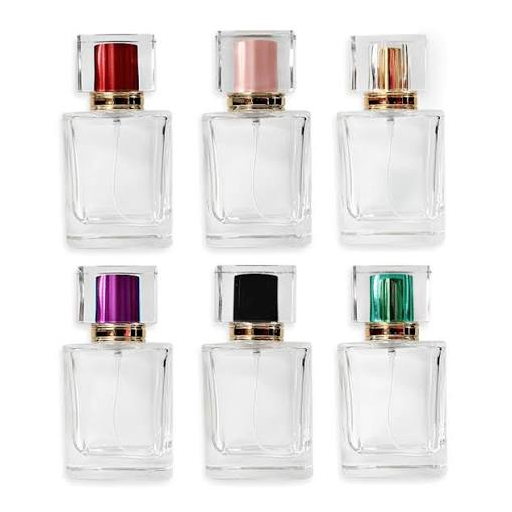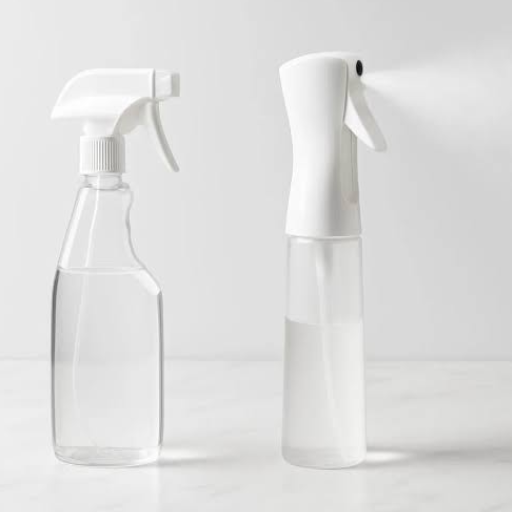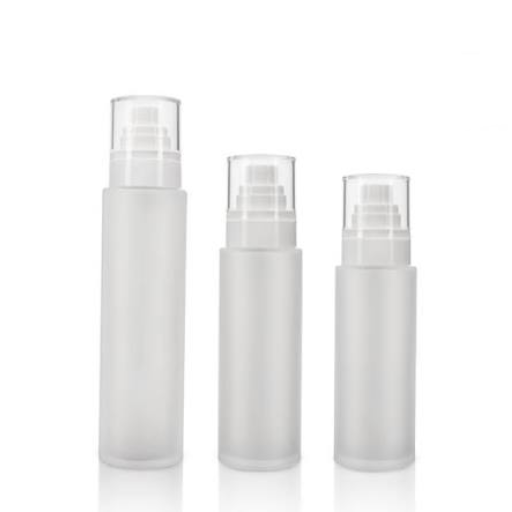
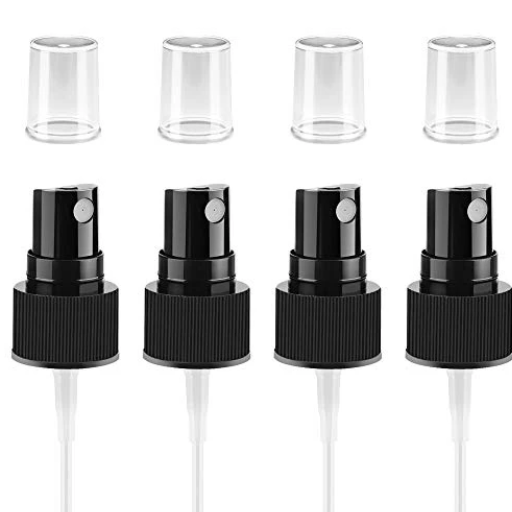
Fine mist sprayers attach to bottles with a two-part neck code: a diameter and a thread series. The common fine mist sprayer neck sizes are 18/410, 20/410, 24/410 and 28/410. 20/410 covers most face mists and toners, 24/410 covers body mist and hair care, and 28/410 handles room and linen sprays. Both numbers must match the bottle.
Consider a skincare brand in Shenzhen. It ordered 30,000 bottles with 24 mm necks and 30,000 pumps marked 24/410, so the fit looked settled.
The filling line stopped at 9:40 on a Tuesday morning. The pumps stood about 6 mm too high because the bottles were 24/400, not 24/410. The gaskets never reached the sealing surface, and 4,200 filled units failed a leak check.
Most buyers compare the diameter and stop there. That single omission causes most of the leaks we are asked to diagnose, and it is expensive to fix after filling. This guide covers the full neck finish code, the SPI dimensions behind it, how to measure a bottle in three steps, and the fit errors that pass a visual check but fail in transit. By the end you will have the exact numbers to put into an RFQ.
If you already have a bottle in hand, send us the neck measurement and we’ll confirm the finish against your drawing before you quote.
Key Takeaways
- A neck finish code has two independent parts. 20/410 means a 20 mm thread diameter on the 410 finish series, and a 20/400 pump will not fit that bottle.
- Verified SPI dimensions: 20/410 has a thread diameter of 19.48 to 19.89 mm and a finish height of 13.69 to 14.45 mm.
- 410 and 415 differ in height, not just thread turns. On a 24 mm neck, the 410 finish is about 16 mm tall and the 415 is about 24 mm.
- Output per stroke is set by the pump internals, not the neck size. The same 24/410 body can be built to deliver 0.10 ml or 0.20 ml.
Fine Mist Sprayer Neck Size Chart
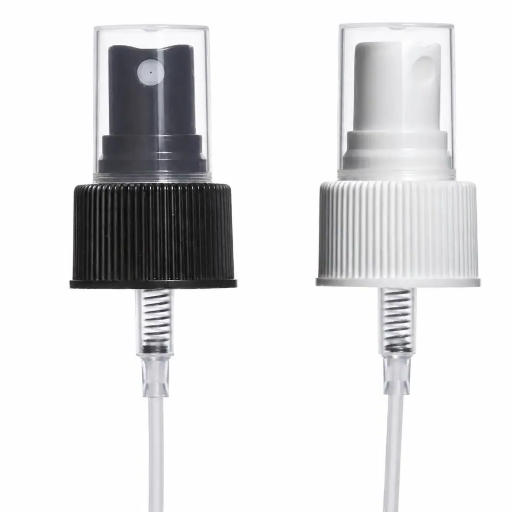
Here is the bottle neck finish chart we use when a customer sends a drawing. The figures are SPI tolerances for plastic bottles, converted from inches.
| Finish | Turns | T: thread OD (mm) | H: finish height (mm) | I min (mm) | Typical bottle | Common fine mist use |
|---|---|---|---|---|---|---|
| 18/410 | 1.5 | 17.48 to 17.88 | 12.90 to 13.67 | 8.25 | 10 to 50 ml | Perfume, serum, samples |
| 20/410 | 1.5 | 19.48 to 19.89 | 13.69 to 14.45 | 10.26 | 30 to 120 ml | Face mist, toner, setting spray |
| 24/410 | 1.5 | 23.47 to 23.88 | 16.03 to 16.79 | 13.11 | 100 to 250 ml | Body mist, hair care, sanitizer |
| 28/410 | 1.5 | 27.13 to 27.64 | 17.60 to 18.36 | 15.60 | 250 to 500 ml | Room and linen spray |
| 20/400 | 1 | 19.48 to 19.89 | 9.04 to 9.80 | 10.26 | 30 to 120 ml | Short-neck bottles, disc caps |
| 24/400 | 1 | 23.47 to 23.88 | 9.78 to 10.54 | 13.11 | 100 to 250 ml | Short-neck bottles |
| 24/415 | 2 | 23.47 to 23.88 | 23.93 to 24.69 | 13.11 | 100 to 250 ml | Tall collar, heavy dispensers |
| 28/415 | 2 | 27.13 to 27.64 | 27.10 to 27.86 | 15.60 | 250 to 500 ml | Tall collar, high torque |
Three things to note:
- Every dimension has a range, so 24 mm is never exactly 24.00 mm.
- The 400 and 410 rows share a diameter but not a height, which is the trap most buyers fall into.
- These are plastic-bottle SPI tolerances. Glass follows the GPI standard and differs slightly, so the bottle drawing always wins.
If you want to check the underlying specifications, the Drug Plastics neck finish chart is the standard reference, and ContaPack’s SPI table lists the 24 mm and 28 mm finishes in millimetres.
What a Neck Finish Code Actually Tells You
A neck finish code has two parts. The first number is the thread diameter in millimetres, measured across the outside of the threads. The second number is the thread series, which sets the height and thread geometry. In 20/410, the neck is 20 mm across the threads and uses the 410 finish.
That definition sounds simple. The trouble is that both halves are nominal, and neither tells you the whole story.
The first number is the T dimension
The first number is what packaging drawings call the T dimension: the outside diameter of the thread. It is not the inner opening, and it is not the bottle’s capacity.
Real parts carry a tolerance. On a 20/410 finish, T runs from 19.48 to 19.89 mm across the SPI range. That’s a 0.41 mm window, enough to matter on a high-speed capping line.
So when a supplier says “24 mm neck,” they mean a nominal 24, typically 23.47 to 23.88 mm on the threads. Ask for the full code and the tolerance, not the round number.
The inner opening is a separate dimension, usually listed as I. On a 24/410 bottle it is about 13.1 mm, which matters for fill nozzles and dip tube clearance.
The second number is the finish series
The second number sets the thread height and geometry. The most common series for fine mist sprayers are 400, 410 and 415, and they scale up in thread turns:
- 400 runs about one thread turn and sits lowest.
- 410 runs about one and a half turns and is the cosmetic standard.
- 415 runs about two turns and stands much taller.
On a 24 mm diameter, that translates into very different heights. The 24/400 finish measures 9.78 to 10.54 mm. The 24/410 measures 16.03 to 16.79 mm. The 24/415 measures 23.93 to 24.69 mm.
That’s a spread of roughly 6 to 8 mm per series step. It isn’t a cosmetic detail. It decides whether the gasket reaches the bottle and whether the pump bottoms out before it seals.
The second number isn’t a height in millimetres, a thread count, or a capacity. A 410 finish is not 4.10 mm of anything. Treat it as a family name with a defined geometry.
When the code does not apply: crimp-on pumps
Not every fragrance sprayer screws on. A crimp pump seals against the glass neck with a metal ferrule that is pressed into place by a crimping tool. There’s no thread, so there’s no 410 code.
Fragrance brands still ask for a “24/410 sprayer” for a crimp-neck flacon that has no thread at all. No screw sprayer will fit it, and two sample rounds will not fix a missing thread. The correct request is a crimp pump with a matching ferrule diameter and collar height.
If your bottle is crimp-finish, read perfume bottle neck sizes and match a perfume spray pump to the ferrule instead. Neck size doesn’t apply.
The Four Fine Mist Sprayer Neck Sizes You Will Be Quoted
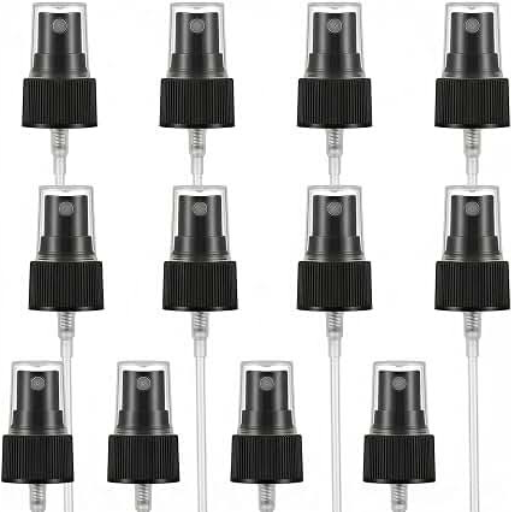
Most RFQs come back with one of four options. Choosing between 18/410 vs 20/410 vs 24/410 comes down to fill volume and actuator width.
18/410: perfume, serum and samples
18/410 is the smallest common finish, with a thread diameter of about 17.5 to 17.9 mm. It suits 10 to 50 ml bottles, including trial sizes and travel formats.
The trade-off is the actuator. A small collar limits the finger pad and the nozzle housing, so the spray feels tighter than a 20/410. For a daily-use product, buyers usually move up.
20/410: the cosmetic default
20/410 is the workhorse. Face mists, toners, setting sprays and small treatment products overwhelmingly use it, usually on 30 to 120 ml bottles. A 20-410 finger sprayer is the standard stock component for this size.
The 20/410 finish also appears as 20/400 on shorter-neck bottles. They share a thread diameter of 19.48 to 19.89 mm and differ only in height: 13.69 to 14.45 mm against 9.04 to 9.80 mm. That is the single most common source of “the sprayer won’t screw down” complaints in this size class.
24/410: body, hair and hand care
24/410 covers 100 to 250 ml formats and most body mists, hair products and hand sanitizers. It gives the widest actuator, the easiest press, and the largest choice of stock sprayers.
Because 24 mm is so common, it also attracts the most confusion. 24/400 and 24/415 both start with 24, and neither is interchangeable with 24/410.
28/410: room and linen sprays
28/410 suits 250 to 500 ml bottles and higher output formats. Room sprays, linen mists and larger body products use it, often with a trigger or a high-output actuator rather than a fine mist.
If your volume is over 500 ml, 28/410 is usually the practical ceiling for a hand-held fine mist. Above that you are into trigger sprayers and different economics.
410 vs 415 vs 400: The Compatibility Trap
The 410 vs 415 neck finish question explains most of the leaks we see, and none of them come from the diameter.
Thread turns and what “bottoming out” means
A 410 finish engages in about one and a half turns. A 415 takes about two. A 400 takes roughly one.
More turns mean a taller finish and a longer thread engagement. The sprayer screws further down, and the gasket compresses against a sealing surface that sits higher or lower depending on the series.
Put a 410 sprayer on a 415 bottle and the skirt bottoms out on the neck before the gasket seals. You get a visible gap, a loose collar, or a sprayer that spins. The opposite pairing is worse: a 415 sprayer on a 410 bottle leaves the gasket hovering above the bottle with nothing to compress against.
The 24/400 case
The 24/400 to 24/410 swap is the most expensive version of this mistake. Both measure 23.47 to 23.88 mm across the threads, so a caliper check on the diameter passes. The heights are 9.78 to 10.54 mm against 16.03 to 16.79 mm.
That is roughly 6 mm of difference. On a filling line, it looks like a pump that fails to seat. If the torque setting is high enough, the machine will force the skirt down and crack it instead.
When 415 is the right call
Choose 415 when the bottle is already tooled for it, or when the design calls for a tall collar that hides the neck. Some heavy dispensers and high-viscosity products use it for extra thread engagement.
Don’t choose 415 because it sounds stronger. For a cosmetic fine mist sprayer, 410 has the widest component availability and the shortest lead time. If you are specifying a new bottle, 24/410 or 28/410 is the safer default.
How to Measure a Bottle Neck
You need calipers, the bottle, and five minutes. Do not rely on a supplier’s product page or a catalog photo.
Step 1: Measure T across the threads
Close the caliper jaws across the outside of the threads, not across the smooth neck below them. Take three readings at different points and use the largest.
If you read 19.5 to 19.9 mm, you are looking at a 20 mm finish. 23.4 to 23.9 mm means 24 mm. Around 17.5 to 17.9 mm means 18 mm.
Step 2: Measure H and count thread turns
Measure from the top edge of the finish down to the shoulder, parallel to the neck. Then count the thread turns from the top down.
A height near 9 to 10 mm on a 24 mm neck points to 400. Near 16 mm points to 410. Near 24 mm points to 415. The turns confirm it: a 400 finish shows about one turn, a 410 about one and a half, and a 415 about two.
Step 3: What to send your supplier
A drawing beats a description. Send the bottle drawing with T, H and I dimensions, a physical sample, your target output in millilitres per stroke, your formula’s approximate viscosity, and the fill volume.
With those five items, a supplier can confirm the finish and propose a matching sprayer without a second round of sampling. Without them, you are guessing on both sides.
If you are matching a pump rather than a sprayer, the fine mist spray pump specifications cover the component side in more detail.
Matching Sprayer Neck Size to Output, Dip Tube and Capacity
The fine mist sprayer neck size decides fit. It doesn’t decide dose. Treating them as one gives you a sprayer that fits but doses wrong.
| Finish | Common output range | Bottle capacity | What sets the output |
|---|---|---|---|
| 18/410 | 0.08 to 0.14 ml | 10 to 50 ml | Pump chamber and orifice |
| 20/410 | 0.10 to 0.16 ml | 30 to 120 ml | Pump chamber and orifice |
| 24/410 | 0.12 to 0.20 ml | 100 to 250 ml | Pump chamber and orifice |
| 28/410 | 0.15 to 0.25 ml | 250 to 500 ml | Pump chamber and actuator |
The same 24/410 body can be built at 0.10 ml or at 0.20 ml by changing the chamber and the insert. So a spec that says “24/410 with medium output” is not a spec. Ask for millilitres per stroke.
Dip tube length follows the bottle, not the neck. The tube should reach within 3 to 6 mm of the base without touching it. Too short and the pump pulls air before the bottle is empty. Too long and the tube bows, then pushes the sprayer up or springs back after each press.
Capacity and neck size usually travel together, but they’re not locked. You can find a 50 ml bottle with a 24/410 neck. Confirm the pairing on the drawing rather than assuming from the fill volume.
Why a Correct Code Still Leaks
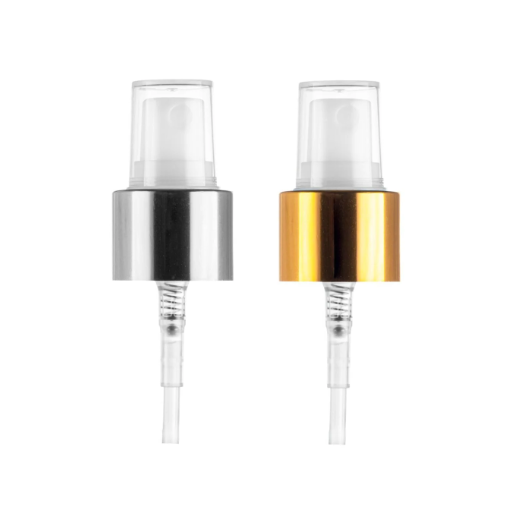
A matching code removes the most common failure. It doesn’t guarantee a seal. These are the failures we see most often, with the fix for each.
| Symptom | Most likely cause | Fix |
|---|---|---|
| Sprayer sits high with a visible gap | Finish series mismatch, such as 410 on 415 | Match the H dimension, not just the diameter |
| Leak at the collar after capping | Gasket compressed past spec, or wrong gasket material | Check capping torque and confirm gasket compatibility with the formula |
| Sprayer spins freely | Thread diameter mismatch | Re-measure T and confirm the full code |
| Seepage at the shoulder after transit | Dip tube too long and bowing | Trim the tube to 3 to 6 mm above the base |
| Pump slow to prime | Tube too short, or formula too viscous | Check tube length and viscosity before changing components |
| Cross-threaded skirt | Closure forced onto a mismatched finish | Fit a sample by hand before the line starts |
Gasket material is a chemical decision: an alcohol-heavy fragrance and a natural oil blend can need different elastomers. Capping torque is a machine setting that drifts, so a batch that passed at the start of a shift can fail at the end.
If a sprayer has already failed in the field, the fine mist sprayer troubleshooting guide covers the diagnosis step by step.
FAQ
What does 20/410 mean on a fine mist sprayer?
20 is the thread diameter in millimetres, measured across the outside of the threads. 410 is the finish series, which sets the height and thread geometry. The sprayer fits a bottle with the same 20/410 finish, not any bottle with a 20 mm neck.
Is 20/410 the same as 20/400?
No. They share a thread diameter, but the 410 finish is about 13.69 to 14.45 mm tall and the 400 finish is about 9.04 to 9.80 mm. A 20/410 sprayer on a 20/400 bottle won’t seal.
Can I use a 24/410 sprayer on a 24/415 bottle?
No. The diameter matches, but the height does not. A 24/410 pump bottoms out on a 24/415 neck before the gasket seals, which produces a gap and a leak.
How much does a fine mist sprayer dispense per spray?
Most cosmetic fine mist sprayers deliver 0.08 to 0.25 ml per stroke. Fragrance sits at the low end, body mist at the high end. The neck size doesn’t set this figure; the pump chamber and orifice do.
How long should the dip tube be?
Long enough to sit 3 to 6 mm above the inside base of the bottle without touching it. If the supplier does not offer your length, the tube is usually trimmed at filling rather than ordered to size.
What neck size do most face mists use?
20/410 is the most common for face mists and toners in 30 to 120 ml bottles. Larger body mists usually move to 24/410.
Conclusion
The brands that get this right follow one routine. They send the bottle drawing, a few physical bottles, a target output in millilitres per stroke and a formula sample before approving anything. The supplier matches the fine mist sprayer neck size, trims the dip tubes to the bottle’s inner height, and the first production run passes leak testing without rework.
That is the whole discipline. Measure T and H, confirm the finish series, and match the sprayer before either component goes into production.
To recap:
- The code has two parts, and both must match the bottle.
- 20/410 is the cosmetic default, 24/410 covers body and hair care, and 28/410 handles room sprays.
- 410 and 415 differ in height by 6 to 8 mm at the same diameter.
- Output per stroke is a separate specification from neck size.
If you have a bottle or a drawing, request a free wholesale quote and send the neck dimensions with it. We will confirm the finish and match a sprayer sample before you commit to a production run. For the wider selection picture, start with the complete fine mist sprayer guide.