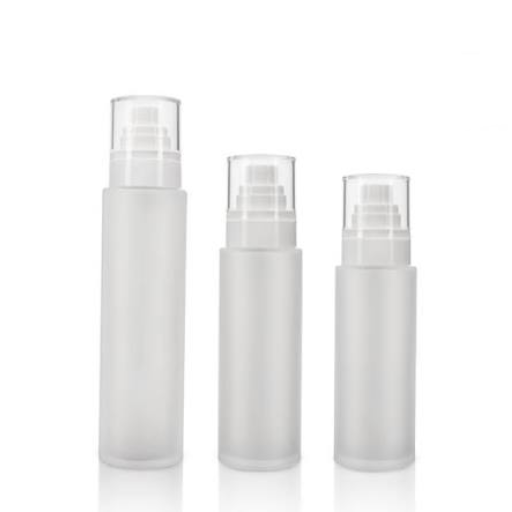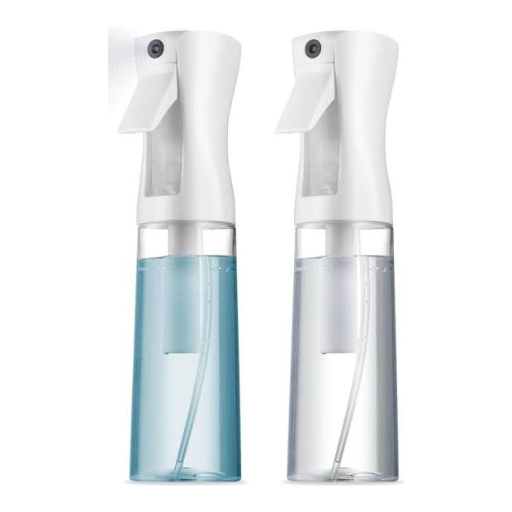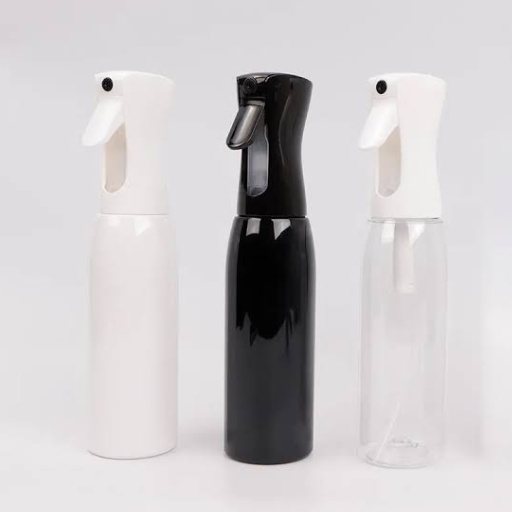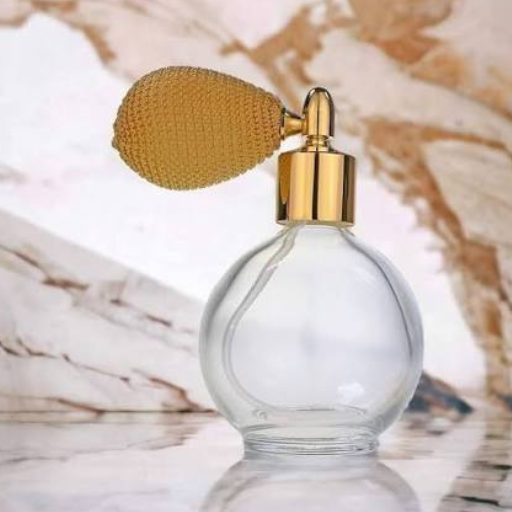

The short answer to how to choose a fine mist sprayer is to match the neck finish first. Then set output per stroke from your product’s viscosity and use case. Confirm materials and nozzle geometry with a tested sample before you discuss price. That order matters. A 24/410 sprayer won’t seal on a 20/410 bottle, and a 0.20 ml dose turns a facial toner into something closer to a household cleaner.
Most buyers start with the sprayer they saw at a trade show. That is backwards. The bottle and the formula decide the sprayer. This guide walks through the five decisions in order, with the numbers to put into an RFQ.
We have spent years matching dispensing components for cosmetics, personal care, and household brands. This is the same sequence our technical team uses when a customer sends a bottle and a formula sample. If you already have the bottle, send its neck measurement and we will match a sprayer sample. Request a free sample kit →
Key Takeaways
- Match the neck finish before anything else: 18/410, 20/410, 24/410, and 28/410 aren’t interchangeable, and 410 and 415 threads differ even at the same diameter.
- Set output per stroke by product: roughly 0.08 to 0.10 ml for prestige fragrance, 0.10 to 0.13 ml for toner, and 0.15 to 0.25 ml for body mist.
- A fine mist sprayer suits low-viscosity formulas, commonly under 5 to 8 cP. Thicker serums and oils need a treatment or lotion pump.
- Test with the final formula, not water. Check leak, cycle life, pattern consistency, and transit before approving a batch.
- Customisation drives MOQ: 5,000 to 10,000 pieces for standard colours, 20,000 for custom Pantone, and 50,000 or more for a custom mold.
Quick Answer: The Six Specs Every Fine Mist Sprayer Must Match

Every fine mist sprayer selection comes down to six specifications. Get these right and the rest is decoration, tooling, and logistics.
| Spec | What to confirm | Typical values | Why it matters |
|---|---|---|---|
| Neck finish | Diameter and thread style | 18/410, 20/410, 24/410, 28/410 | Physical fit and seal |
| Output per stroke | ml per actuation | 0.08 to 0.25 ml | Feel and coverage |
| Viscosity fit | Formula thickness | Under about 5 to 8 cP | Mist versus stream versus clog |
| Materials | Plastic, gasket, spring | PP, EPDM or silicone, stainless steel | Formula compatibility |
| Dip tube | Length | Inner bottle height minus 3 to 5 mm | Pickup and near-empty performance |
| Closure and actuator | Screw or crimp, lock, overcap | 410 or 415 thread, crimp 13 to 18 mm | Leaks and transit protection |
The table is a starting point, not a substitute for a sample. Two sprayers with the same neck and output can behave differently because of the nozzle, the spring, and the gasket. That is why the last step is always a test with your actual formula.
If you want the wider picture of how these components fit together, the complete fine mist sprayer guide covers types, mechanisms, and applications.
Step 1: Match the Fine Mist Sprayer Neck Finish First
The neck finish is the physical connection between bottle and sprayer. It is written as two numbers, such as 20/410. The first number is the outer diameter of the bottle neck in millimetres. The second is the thread style.
Both numbers have to match. A 20/410 sprayer won’t seal on a 20/415 bottle, even though the diameter is the same.
For fine mist sprayers, four finishes cover most cosmetic and personal-care work:
| Neck finish | Typical bottle capacity | Common products |
|---|---|---|
| 18/410 | 15 to 60 ml | Perfume, travel sizes, samples |
| 20/410 | 80 to 150 ml | Toner, face mist, setting spray |
| 24/410 | 150 to 250 ml | Body mist, hair care, cleanser |
| 28/410 | 250 ml and above | Household, pet care, room spray |
These bands are conventions, not rules. A 15 ml perfume can use an 18/410 or a crimp neck.
Always measure the bottle you actually ordered. For a closer look at the three most common sizes, see the neck finish sizes explained.
410 vs 415: Same Diameter, Different Thread
Both finishes share a diameter, but the thread pitch and height differ. A 410 closure has a shorter thread. A 415 has a taller one. Forcing a 415 sprayer onto a 410 bottle can feel tight and still leak. The seal depends on the gasket compressing against the neck land, not on how hard you turn it.
Crimp vs Screw for Fragrance
Screw closures are refillable and easier to sample. Crimp closures are permanent, tamper-evident, and common on glass fragrance bottles. Crimp necks are measured differently (13 mm, 15 mm, 18 mm), so a crimp pump and a screw pump aren’t interchangeable.
If you are launching a refillable fragrance, screw is usually the better starting point. If you are matching a premium glass bottle with a crimp collar, plan for crimping equipment at the filler.
How to Measure Your Bottle Neck
Use calipers across the threaded section, not across the smooth shoulder. Measure the outer diameter at the threads, then compare it against a known 410 and 415 sample. A half-millimetre error can cause a leak that appears weeks later in transit.
A small toner brand we will call Maree Botanicals ordered 5,000 frosted bottles with a 20/410 neck. The sprayer supplier shipped 24/410 closures because its sales sheet listed 24/410 as the standard cosmetic size. The first production run leaked at the closure.
The brand lost three weeks and paid for a second run of sprayers, which cost more than the original order. The mistake wasn’t the supplier’s alone. Nobody had measured the bottle.
Step 2: Set Fine Mist Sprayer Output From the Product

Output per stroke, also called dosage, is how much liquid leaves the nozzle each time the actuator is pressed. It is the specification users feel most directly. Too little and a body mist feels stingy. Too much and a toner runs down the face.
Published supplier ranges for cosmetic fine mist sprayers usually fall between 0.08 ml and 0.25 ml per stroke. The right number depends on the product, not the pump.
| Product type | Target output | Why |
|---|---|---|
| Prestige fragrance | 0.08 to 0.10 ml | A light, dry plume that doesn’t soak the skin |
| Toner | 0.10 to 0.13 ml | Even coverage without visible droplets |
| Face mist | 0.12 to 0.15 ml | Slightly wetter feel for a refreshing application |
| Hair mist | 0.13 to 0.18 ml | Enough volume to carry through the hair |
| Body mist | 0.15 to 0.25 ml | Broader coverage over a larger area |
Why Output Is a Tooling Decision
Output is set by the nozzle orifice, the pump chamber, and the spring tension. Changing it later usually means new tooling, not a different setting. That is why it belongs in the first conversation with a supplier, before colour, decoration, or overcap design.
When a Fine Mist Sprayer Is the Wrong Choice
Fine mist sprayers work best with thin, water or alcohol-based formulas. As a rule of thumb, they suit liquids under about 5 to 8 cP. Above that, the nozzle produces a stream, a sputter, or nothing at all.
| Dispenser | Best formula | Typical output per stroke | Common use |
|---|---|---|---|
| Fine mist sprayer | Thin, under about 5 to 8 cP | 0.08 to 0.25 ml | Fragrance, toner, face mist, body mist |
| Treatment pump | Serum, gel, light lotion | 0.15 to 0.50 ml | Facial serum, targeted treatment |
| Lotion pump | Cream, lotion, thick gel | 0.50 to 2.0 ml | Body lotion, cleanser, moisturiser |
| Trigger sprayer | Household liquids | 0.50 to 1.5 ml and up | Cleaning, garden, large-format |
For a formula near the viscosity limit, test both a fine mist sprayer and a treatment pump. The fine mist sprayer vs lotion pump comparison explains where the boundary sits.
Step 3: Check Formula Compatibility and Materials
A sprayer isn’t one material. It is a PP body, a spring (usually stainless steel), a gasket, a dip tube (often LDPE), and an actuator. Each part can react with the formula.
Plastics: PP, PET, HDPE, LDPE
PP is the default for the pump body because it resists many solvents and holds tolerances well. PET and HDPE appear in bottles and dip tubes. The pump body and the bottle don’t have to be the same plastic. They do have to be compatible with the formula and with each other at the closure. The pump-side specifications page covers component materials in more detail.
Gaskets: EPDM, Silicone, NBR
The gasket is the most common failure point. EPDM handles many water-based formulas. Silicone is often used with alcohol systems. NBR resists oils better than EPDM in some cases.
None of these is universal. Fragrance oils, essential oils, and high-alcohol formulas can swell or harden a gasket over weeks. That is why a fresh sample can pass and a three-month-old bottle can leak.
Springs: Stainless Steel vs All-Plastic
A stainless steel spring gives consistent actuation and longer cycle life. An all-plastic spring is the recyclability play, but it can feel different and may have a shorter life. If mono-material recycling matters, ask for the all-plastic option and test it with the formula.
The 72-Hour Inverted Leak Test
Fill the bottle with the final formula, fit the sprayer, and store it upside down at about 45 °C for 72 hours. Check the closure, the nozzle, and the dip tube connection. A sprayer that passes at room temperature can fail in a hot container or an unpressurised cargo hold.
A body-mist brand we will call Solenne launched with a fragrance oil blend and a standard EPDM gasket. The first samples passed. Six weeks after launch, customers reported oily rings around the collar. The gasket had swelled.
Switching to a silicone gasket solved it, but the brand had to replace 2,000 units and reprint the carton. The formula was fine. The seal was not.
Compliance Checks for Regulated Markets
For regulated markets, ask for the declaration. US food-contact polymers fall under 21 CFR Part 177. EU plastic food-contact materials fall under Regulation (EU) No 10/2011. Child-resistant closures are tested to 16 CFR 1700.20.
Step 4: Get the Nozzle, Pattern, and Dip Tube Right

Once the neck, output, and materials are settled, the remaining specifications control how the mist feels and how completely the bottle empties.
Droplet Size and What It Means for Feel
Fine mist sprayers typically produce droplets with a volume median diameter (VMD) of about 30 to 80 µm. A regular mist sits nearer 100 to 200 µm.
Smaller droplets feel lighter and drier. Larger droplets feel wetter and land faster. For fragrance and toner, the fine end is usually right. For body mist, a slightly larger droplet gives more coverage.
Orifice, Cone Angle, and Actuation Force
Supplier specifications commonly quote an orifice of 0.20 to 0.45 mm and a cone angle of 55 to 75 degrees. Actuation force usually sits between 5 and 10 N. These numbers are a useful starting point, but they interact.
A small orifice with a stiff spring can feel harsh. A large orifice with a soft spring can dribble. Ask for a sample and judge it by hand, not by the datasheet.
Dip Tube Length: The Most-Forgotten Spec
The dip tube should reach the bottom of the bottle without coiling. The working rule is inner bottle height minus neck height minus 3 to 5 mm.
Too long and the tube bends, restricting flow and causing sputtering. Too short and the sprayer stops picking up product with 20 to 30 percent left in the bottle. Neither problem shows up in a short bench test.
A hair-mist brand we will call North and Tide cut its dip tubes to the bottle’s outer height. The tubes coiled against the base. The sprayer worked on a full bottle and sputtered below half.
Customers complained that the product stopped working while the bottle still felt heavy. The fix was a 6 mm shorter tube and a new sample round, which pushed the launch by five weeks.
Fixed Mist, Stream, and Continuous
A fixed mist nozzle is the simplest and cheapest. A stream or jet pattern suits targeted application, such as spot treatments. A continuous sprayer reduces hand fatigue for sunscreen and body mist, but it costs more and is harder to recycle.
Step 5: Qualify the Supplier and the Batch
The last step isn’t a specification. It is evidence that the supplier can repeat the specification at volume.
Sample Protocol: Test With the Real Formula
Water isn’t a formula. Test with the final product, at the final fill temperature, in the final bottle. Ask for samples pulled from the production line, not hand-built prototypes.
A prototype proves the design. A production sample proves the process.
The Four Tests That Matter
- Leak: 72 hours inverted at about 45 °C.
- Cycle life: at least 10,000 actuations without a significant change in output or pattern. Some suppliers quote 10,000; others test to a higher figure.
- Pattern consistency: 20 consecutive pumps onto black paper at 15 cm. The pattern should be uniform and repeatable.
- Transit: ISTA 3A or ASTM D4169, or a simulation that matches your actual shipping route.
MOQ, Lead Time, and Tooling
Published supplier terms cluster around a few bands. Standard colours often start at 5,000 to 10,000 pieces per SKU. Custom Pantone colours commonly move to 20,000. A custom mold can require 50,000 to 100,000 pieces.
Lead times run about 20 to 25 days for stock and 25 to 30 days for custom colour. A custom orifice adds 35 to 45 days, and full OEM runs 60 to 90 days. Treat these as planning ranges and confirm them in writing.
Tooling is separate from unit price. Orifice tooling runs a few hundred dollars. Full OEM tooling runs into the thousands. Ask who owns the tool if the relationship ends. For a fuller breakdown of volume pricing, see the custom sprayer pricing and MOQ guide.
The RFQ Template
Send these eight lines to every supplier and compare the answers side by side.
| Line | What to specify | Example |
|---|---|---|
| 1 | Bottle neck finish | 20/410 |
| 2 | Bottle inner height | 118 mm |
| 3 | Formula type | Alcohol-based toner |
| 4 | Viscosity | 3 cP |
| 5 | Output per stroke | 0.12 ml |
| 6 | Material and gasket | PP body, silicone gasket |
| 7 | Decoration | Pantone 2347C, one-colour logo |
| 8 | Volume and destination | 20,000 pcs, FOB Ningbo |
That template turns a vague enquiry into a comparable quote. It also signals that you know what you are buying.
Five Selection Mistakes That Show Up Six Weeks After Launch
Most sprayer failures are specification failures that passed a bench test.
- Wrong thread, right diameter. A 410 sprayer on a 415 bottle can feel tight and still leak. Measure both parts.
- Dip tube cut to outer height. The tube coils, flow drops, and the bottle appears to stop working before it is empty.
- Gasket chosen from a datasheet, not a soak test. Fragrance oils and high-alcohol formulas swell some gaskets over weeks.
- Orifice too small for the formula. Actives that crystallise at the nozzle clog a fine mist sprayer faster than a treatment pump.
- Overcap too tight or too loose. A tight cap cracks at the seam. A loose one falls off in the carton. Test the cap on the filled, labelled bottle, not on a bare sprayer.
If a sprayer has already failed in market, the fine mist sprayer troubleshooting guide walks through the likely causes in order.
Frequently Asked Questions
What size fine mist sprayer do I need?
Match the neck finish first, then set output by product. A 20/410 is the usual choice for toners and face mists in 80 to 150 ml bottles. A 24/410 suits body mist and hair care in 150 to 250 ml bottles. Measure the bottle rather than assuming from capacity.
How much does a fine mist sprayer dispense per spray?
Most cosmetic fine mist sprayers deliver about 0.08 to 0.25 ml per stroke. Prestige fragrance sits near 0.08 to 0.10 ml, toner near 0.10 to 0.13 ml, and body mist near 0.15 to 0.25 ml.
What is the difference between 20/410 and 24/410?
The first number is the neck diameter in millimetres: 20 mm versus 24 mm. The 410 is the thread style. The two aren’t interchangeable, even if the bottle looks similar.
Can a fine mist sprayer handle oil-based formulas?
Only thin oils. Fine mist nozzles are built for low-viscosity liquids, commonly under 5 to 8 cP. Thicker oils, serums, and gels need a treatment or lotion pump.
What is a typical MOQ for a fine mist sprayer?
Standard colours often start at 5,000 to 10,000 pieces per SKU. Custom Pantone colours commonly require 20,000. A custom mold can require 50,000 to 100,000 pieces. Confirm the MOQ per component, not per order.
How do I test a fine mist sprayer before ordering?
Test with the final formula in the final bottle. Run a 72-hour inverted leak test at about 45 °C, a 10,000-cycle actuation test, a 20-pump pattern check, and a transit simulation. Approve a production sample, not a prototype.
Conclusion
How to choose a fine mist sprayer comes down to a sequence, not a shopping list. Match the neck finish, set output from the product, and confirm materials against the formula. Then get the nozzle and dip tube right, and qualify the supplier with a tested production sample.
The five decisions are simple. The cost of getting them out of order isn’t. A wrong neck finish stops a launch, and a wrong gasket surfaces weeks later.
A dip tube cut to the wrong length makes a good product feel empty before it is.
If you have a bottle and a formula, we can shorten the process. Send the neck measurement, the fill volume, and the formula type, and we will send matched samples for a real test. Request a free sample kit →
You can also start with the complete fine mist sprayer guide for the wider view. If you are buying at volume, the wholesale fine mist sprayer guide covers the procurement process.