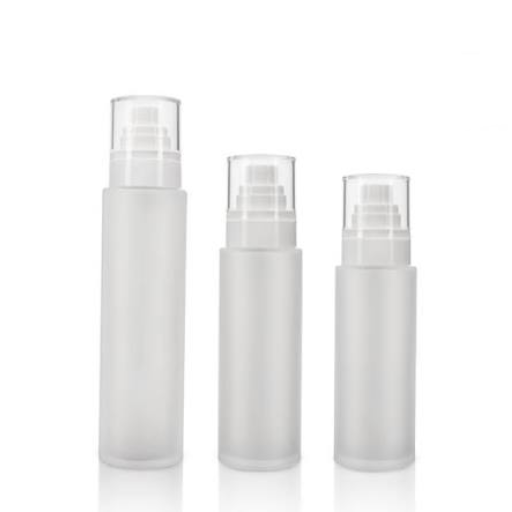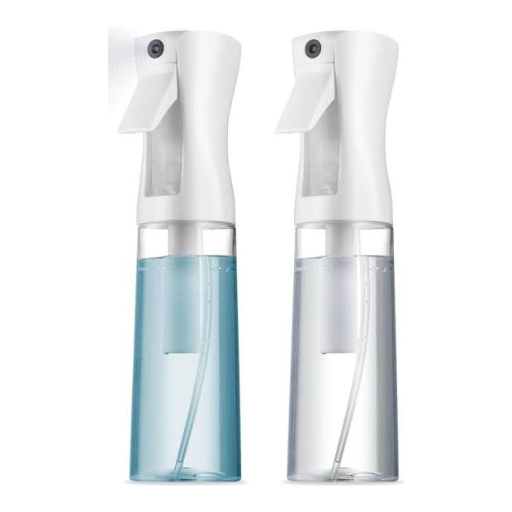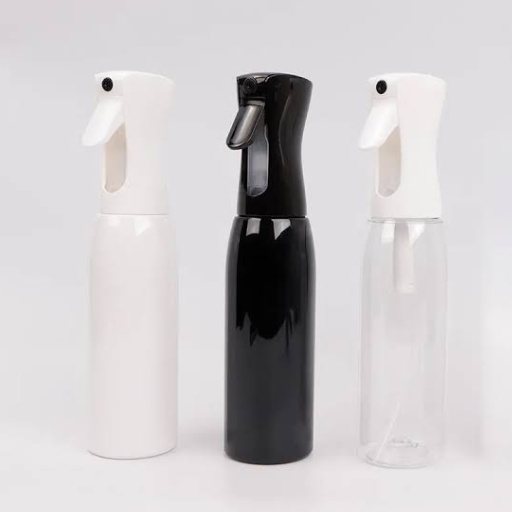
Wholesale fine mist sprayers cost roughly 0.03to0.03to0.06 per unit for standard polypropylene at 10,000 pieces. Minimum order quantities typically land at 10,000, production runs 20 to 25 days, and samples arrive in 50 to 100 piece lots. Aluminum bodies, custom actuators, and decorated collars push the per-unit price toward 0.10to0.10to0.80.
Those are the numbers. Now the part that costs brands real money.
Last autumn, a buyer we will call Daniel sourced 80,000 fine mist sprayers for a facial toner launch. He compared six quotes and picked the lowest at 0.041.Eightweekslater,2,400unitswereleakingintransitandanother3,100sprayedavisiblestreaminsteadofamist.Therework,thereplacementairfreight,andthedelayedretailslotcosthimmorethanthe0.041.Eightweekslater,2,400unitswereleakingintransitandanother3,100sprayedavisiblestreaminsteadofamist.Therework,thereplacementairfreight,andthedelayedretailslotcosthimmorethanthe0.006 per unit he had saved.
You already know price matters. What you may not know is that most of a sprayer’s true cost hides outside the quote, in the specs nobody writes down and the inspections nobody books. This guide walks through the full wholesale process for fine mist sprayers, from the RFQ to the landed-cost calculation, so your next order arrives intact and performs the way your formula deserves.
If you are still deciding which sprayer type fits your product, start with our complete fine mist sprayer selection guide and come back here when you are ready to buy.
Key Takeaways
- Standard polypropylene fine mist sprayers run 0.03to0.03to0.06 per unit at 10,000 pieces; aluminum and custom actuators reach 0.10to0.10to0.80.
- MOQ is typically 10,000, with volume breaks at 30,000, 50,000, and 100,000 that can cut unit price by a third.
- 410 and 415 neck finishes are not interchangeable. A 24/410 sprayer will not seal reliably on a 24/415 bottle, and this is the most common ordering error.
- The five tests that catch most failures are output consistency, full-stroke prime, inverted leak, drop, and compatibility soak with your real formula.
- Landed cost, not unit price, decides your margin. Freight, duty, inspection, and defect allowance often add 20 to 40 percent to the quoted figure.
What Wholesale Actually Means for Fine Mist Sprayers

“Wholesale” describes three different businesses, and the one you choose changes your price, your flexibility, and your risk.
A factory molds and assembles the component. You get the lowest per-unit price at volume, direct control over tooling, and the ability to customize the pump engine itself. You also absorb the full MOQ and the longer lead time that comes with production scheduling.
A trading company buys from several factories and resells. Minimums are often lower and communication is easier, but you pay a margin and you rarely control which factory actually runs your order. When a defect appears, the trading company has to go back to a supplier it may not fully control.
A marketplace listing, on Made-in-China or Alibaba, is a storefront. The price you see is an asking price, frequently for a specification that differs from what ships. Treat it as a starting point for negotiation, not a quote.
How Volume Tiers Change Your Unit Price
Volume is your largest single lever. Published supplier tiers show the shape of the curve clearly:
| Order quantity | Typical unit price (standard PP) |
|---|---|
| 10,000 | $0.079 |
| 30,000 | $0.060 |
| 50,000 | $0.056 |
| 100,000+ | $0.053 |
Moving from 10,000 to 100,000 pieces cuts the unit price by roughly a third. That’s a bigger swing than most buyers win by switching suppliers.
The tradeoff is cash and shelf space. Ordering 100,000 units to chase a 0.026savingtiesup0.026savingtiesup5,300 in inventory you may not turn for a year. Order at the tier that matches your realistic 12-month sell-through, not the tier that looks best on a spreadsheet.
Want a real number for your volume? Send us your neck finish, target output, and annual quantity. We will come back with MOQ, lead time, and per-unit pricing in plain figures. Request a free wholesale quote.
The Spec Sheet to Send Before You Ask for a Quote
Most buyers send a photo and a quantity. That’s why most quotes aren’t comparable. Six specs decide everything about a fine mist sprayer, and every quote you request should state all six.
1. Neck finish. The bottle’s thread specification, such as 20/410 or 24/410. This isn’t negotiable and isn’t inferable from a photo.
2. Output per stroke. The volume delivered per actuation, usually quoted in cubic centimeters. Standard fine mist sprayers deliver 0.10 to 0.15 cc; a 0.15 cc unit is often sold as “big dosage.”
3. Orifice size. The nozzle opening, typically 0.25 to 0.45 mm. Smaller orifices produce finer droplets and suit thin, alcohol-based formulas.
4. Dip tube length. Measured from the neck opening to just above the bottle base. Standard tubes are cut at a 45 degree angle so the tip doesn’t seal flat against the bottom and starve the pump as the bottle empties. Berlin Packaging spells out this rule on its atomizer listings.
5. Material. The body polymer, the gasket material, and the spring material. A stainless steel spring resists corrosion from acidic or alcohol-heavy formulas; a carbon steel spring does not.
6. Closure style. Ribbed or smooth, screw or snap-on, with or without a tamper-evident ring or overcap.
Put those six lines in an email and you will get comparable quotes from every supplier you contact. Leave them out and you will spend a week reconciling prices for products that are not the same product.
Neck Finish and Closure: Where Orders Go Wrong

This section prevents the single most expensive mistake in sprayer sourcing.
410 vs 415: Not Interchangeable
A neck finish code combines the diameter in millimeters with a thread profile. In 24/410, 24 is the millimeter diameter and 410 is the thread specification. In 24/415, the diameter is identical but the thread profile differs.
That means a 24/410 sprayer and a 24/415 bottle look like they match, and they don’t. The closure may thread on partway, seat unevenly, or seal well enough to pass a quick hand test and then fail under transit vibration.
O. Berk lists PET bottles available in either 24-410 or 24-415, which is exactly why the confusion is common: the same bottle model exists in both, and buyers assume the finish is cosmetic. It isn’t.
Always confirm the finish from the bottle drawing or a physical sample, not from a product page title.
Ribbed, Smooth, Snap-On, and Tamper-Evident
The closure is where a few cents buy a visibly better product.
- Ribbed collars give grip and read as functional. Common on household and personal care.
- Smooth collars read as premium and take decoration better. Common on fragrance and skincare.
- Snap-on closures seat faster on a filling line and are common on high-volume cosmetic runs.
- Tamper-evident rings add a visible seal break and are increasingly expected in retail and e-commerce channels.
- Locking actuators prevent accidental discharge in transit and are worth specifying on any order that ships by air.
That last point isn’t theoretical. Daniel’s leaking units weren’t a molding defect. They were standard actuators that depressed against the carton during handling.
Materials, Formula Compatibility, and Sustainability
What the Sprayer Is Made Of
A fine mist sprayer is a small assembly of dissimilar materials:
- Polypropylene (PP) for the housing and collar, the workhorse polymer
- Low-density polyethylene (LDPE) for the dip tube and gaskets
- Acetal (POM) for precision internal parts that need low friction
- Stainless steel for the return spring
Each material behaves differently against your formula. An alcohol-heavy toner stresses gaskets. A citrus-oil blend can attack certain elastomers. A high-pH formula can corrode a carbon steel spring within weeks.
Why Your Formula May Not Mist
Fine mist sprayers are built for water-thin, low-viscosity liquids: alcohol-based fragrances, toners, hydrosols, sanitizers, linen sprays. The pump generates modest pressure through a very small orifice, and thicker fluids simply will not atomize through it.
If your formula is gel-like, cream-textured, or oil-heavy, the right hardware is a lotion pump, a treatment pump, or a trigger sprayer, not a fine mist sprayer. Our guide to the pump side of the assembly explains where each dispenser type fits.
The practical rule: test with your real formula, never with water. Water is the easiest liquid a sprayer will ever see. A pump that mists water beautifully can fail on a 40 percent alcohol blend or a formula with suspended actives.
The PPWR Deadline Is Closer Than Most Buyers Think
The EU Packaging and Packaging Waste Regulation, Regulation (EU) 2025/40, was published on 22 January 2025 and entered into force on 11 February 2025. It becomes fully applicable on 12 August 2026, replacing the nearly 30-year-old Directive 94/62/EC.
For sprayer buyers, the implications are concrete: recyclability, recycled content, and material simplification move from marketing preference to legal requirement for packaging placed on the EU market. DS Smith maintains a plain-language PPWR explainer worth reading before you spec.
What you can ask a supplier for today:
- Mono-material or metal-free construction that separates cleanly in a recycling stream
- Post-consumer recycled (PCR) content, with a stated percentage and documentation
- A material declaration naming each polymer and the spring alloy
Conventional sprayers mix aluminum, steel, and several plastics, which is exactly what makes them hard to recycle. If your brand sells into the EU, raise this at the RFQ stage, not after the artwork is approved. The sustainable packaging guide covers material choices in more depth.
MOQ, Tooling, and How to Read a Wholesale Quote
Real Price Bands for 2026
Marketplace listings for standard polypropylene fine mist sprayers cluster at 0.03to0.03to0.06 per piece at 10,000 units, with 20/410 and 24/410 the most common formats. Across the 13 mm to 28 mm range, listings run 0.065to0.065to0.067. Aluminum-bodied 28 mm units reach 0.10to0.10to0.17 at the same volume.
The wider 0.10to0.10to0.80 band covers aluminum bodies, bespoke actuator shapes, metallized or soft-touch collars, and custom colors. The top of that range is a decorated, brand-specific component, not a stock sprayer.
Treat these as negotiation anchors, not commitments. Freight terms, payment terms, and tooling ownership all move the number.
Mold Fees and Amortization
A stock sprayer needs no tooling. A custom actuator, a proprietary collar shape, or a molded logo requires a mold, and molds are quoted separately, typically as a one-time fee.
The fee isn’t the real question. Ownership is. Ask three things before you pay a tooling charge:
- Who owns the mold?
- Can you move it to another molder?
- Is the fee amortized into unit price, or charged upfront?
A supplier that keeps the mold you paid for has locked you into that supplier for the life of the product. Get ownership in writing.
What a Quote Should Include, and What It Hides
A comparable quote states the unit price, the Incoterm, the MOQ, the lead time, the payment terms, and the packaging format.
Two things routinely go missing. FOB versus CIF changes who pays freight and insurance, and the gap between them can exceed the difference between two competing unit prices. Excluded costs are the second: setup, sampling, color matching, third-party inspection, and export documentation are frequently billed after the order is placed.
Landed Cost: The Math Most Buyers Skip
Unit price isn’t cost. Landed cost is.
Take a 50,000 unit order at 0.056FOB.That′s0.056FOB.That′s2,800. Add ocean freight and insurance at roughly 12 percent, import duty at your market’s rate, a third-party inspection at a few hundred dollars, and a defect allowance of 2 to 3 percent. The delivered cost per usable unit typically lands 20 to 40 percent above the quoted figure.
Now run the same math on Daniel’s order. A 0.041quotewitha7percentdefectratecostsmoreperusableunitthana0.041quotewitha7percentdefectratecostsmoreperusableunitthana0.046 quote with a 1 percent rate. The spreadsheet that compares only unit price is answering the wrong question.
Build the landed-cost column before you award the order. It’s the only number that touches your margin.
Sampling, QC, and Inspection

The Pre-Production Sample Protocol
Never approve a production run from a catalog photo. Request a pre-production sample, typically 50 to 100 pieces, built to your exact specification, and test it against your real formula.
Mei, a product developer at a small skincare brand, ran a sample of 60 sprayers through a two-week compatibility soak before committing to 40,000 units. Three samples developed a stiff actuator after five days in contact with her essential-oil blend.
She changed the gasket material and paid $0.004 more per unit. Her launch shipped with zero sprayer returns. The soak cost her two weeks; the alternative would have cost her the launch.
The Five Tests That Catch Failures
Run these on every sample batch, and record the results.
- Output consistency. Weigh ten sprayers before and after a fixed number of strokes. Output should stay inside your stated tolerance across the batch, not just on the first unit.
- Full-stroke prime. Count the strokes needed to reach a steady mist from dry. A pump that needs six or more will frustrate customers on first use.
- Inverted leak test. Spray upside down and hold. Any drip at the actuator or collar is a fail.
- Drop test. Drop filled units from carton height onto a hard surface, then re-test for leaks and function.
- Compatibility soak. Store filled units at elevated temperature for one to two weeks, then re-test output, actuation force, and leak.
Add a transit simulation if you ship by air. Vibration and pressure change surface failures that a bench test misses.
AQL and Third-Party Inspection
Agree on an acceptance quality limit before production, not after the defect appears. AQL 2.5 for major defects is a common starting point for cosmetic components, with a tighter limit for critical defects such as leakage.
Book a third-party inspection at pre-shipment. The cost is small next to a container of unusable components, and the report gives you use if the batch is out of spec.
Ask for ISO 9001 certification as a baseline. If your product touches skin, lips, or oral care, request the relevant food-contact or cosmetic compliance declarations, such as an FDA 21 CFR statement or an EU 10/2011 declaration, and verify the certificate covers the specific material, not just the company.
Frequently Asked Questions
What is the minimum order quantity for wholesale fine mist sprayers?
Typically 10,000 pieces for a stock sprayer with a custom color or collar finish. Some suppliers quote 5,000 for standard formats, and others hold at 50,000. Custom tooling raises the minimum and extends the lead time.
How much does a fine mist sprayer cost per piece?
Standard polypropylene units run 0.03to0.03to0.06 at 10,000 pieces. Volume breaks at 30,000 and 100,000 can reduce that by a third. Aluminum bodies and bespoke actuators push the price to 0.10to0.10to0.80.
How long does production take?
Around 20 to 25 days for a standard sprayer. Custom colors, decoration, and new tooling add time. Add transit on top: roughly 30 to 40 days by sea to Europe or North America, or days by air at several times the cost.
Can I order samples before committing?
Yes. Suppliers typically provide 50 to 100 pieces for testing, sometimes free and sometimes at a sample charge. Always test with your real formula rather than water.
Are 410 and 415 neck finishes interchangeable?
No. The diameter matches but the thread profile differs, so a 410 closure will not seal reliably on a 415 bottle. Confirm the finish from the bottle drawing before ordering.
What is the difference between a fine mist sprayer and an atomizer?
An atomizer is the broad category for any device that breaks liquid into droplets, including aerosols and bulb sprays. A fine mist sprayer is a specific pump type that produces a low-velocity mist without propellant. Our fine mist sprayer guide covers the full comparison.
Conclusion
Buying wholesale fine mist sprayers is a procurement problem, not a product-selection problem. The component is well understood. What separates a good order from an expensive one is the discipline around it.
Five things decide the outcome. State all six specs in your RFQ, so every quote describes the same product. Confirm the neck finish from a drawing, because 410 and 415 look alike and don’t seal alike.
Test with your real formula, since water flatters every pump. Agree the AQL before production, and book the inspection. Then calculate landed cost, because the cheapest quote per unit is frequently the most expensive order per usable unit.
Volume remains your largest lever. Moving from 10,000 to 100,000 pieces cuts unit price by roughly a third, which is more than most buyers gain by switching suppliers.
If you are pairing the sprayer with a bottle and outer packaging, our custom perfume packaging guide shows how the components work as one system, and our guide to sourcing fine mist spray bottles covers the container side.
Send us your bottle’s neck finish, your target output, and your annual volume. We will match the sprayer to your formula, quote the volume tiers, and include samples for testing. Contact our team to request a free wholesale quote.