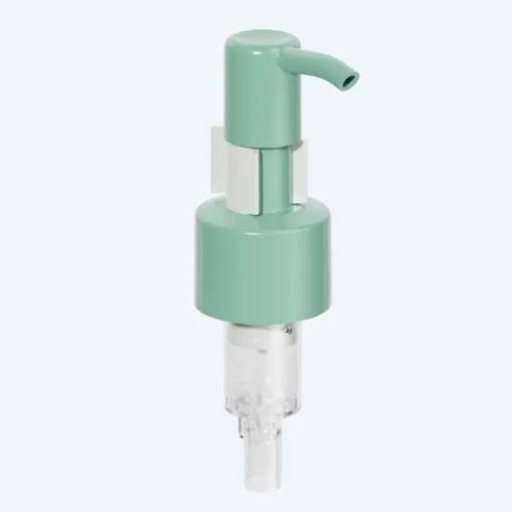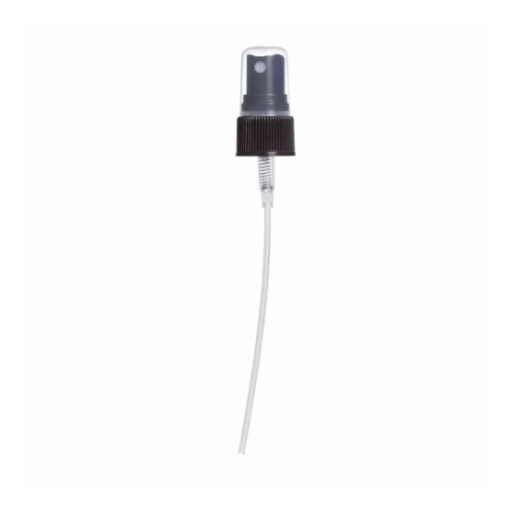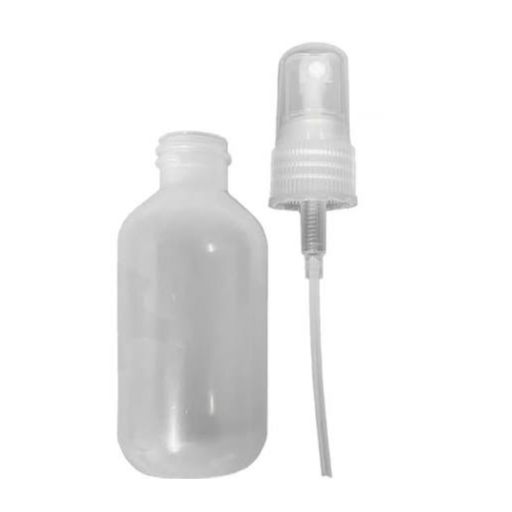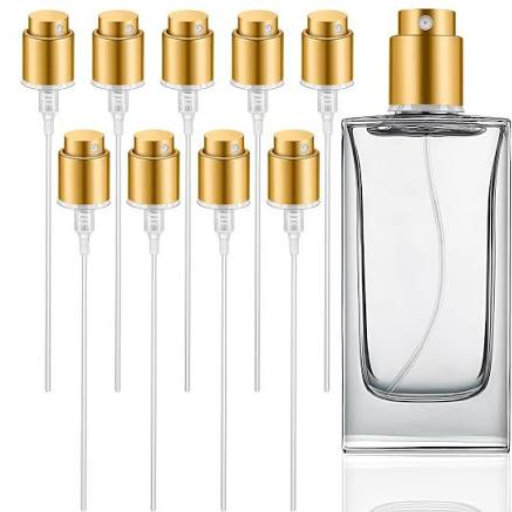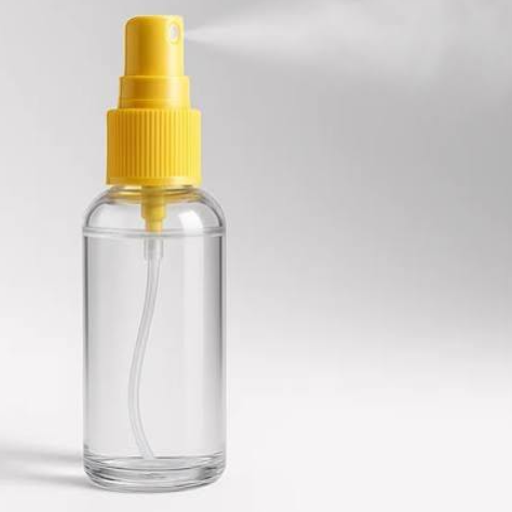
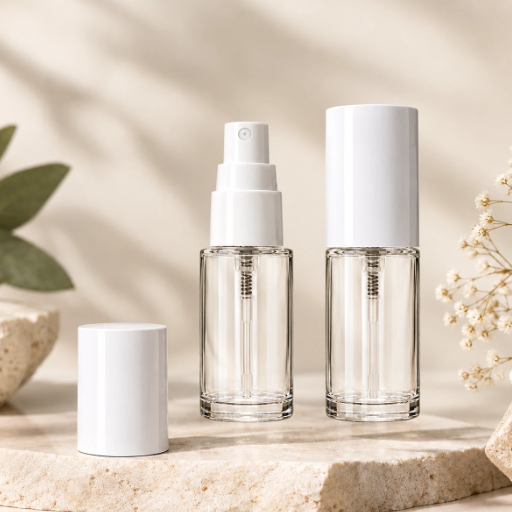
Use a fine mist sprayer when your formula is water-thin and the user needs to cover an area. Use a lotion pump when the formula is thicker and the user needs a measured dose in the hand. The deciding property is viscosity, but the viscosity limit you find online depends on the dispenser model and on what the source means by “works.”
That last point causes most of the confusion. One supplier page says a fine mist sprayer handles liquids up to 200 cP. Another says the practical limit is 5 to 8 cP. Both can be right.
The first describes a sprayer that still emits liquid. The second describes a sprayer that still produces a cosmetic mist. A buyer who reads only the higher number orders the wrong closure and finds out at the fill line.
This guide explains why the published limits disagree, gives verified output and price examples tied to named models, and lists the five specifications to put in your RFQ. For the wider view of sprayer families and neck finishes, our complete fine mist sprayer selection guide covers the rest.
Key Takeaways
- A fine mist sprayer atomizes water-thin liquid into droplets, typically 30 to 80 microns, at about 0.08 to 0.25 mL per stroke.
- A lotion pump delivers a measured dose of a thicker formula: 1.0 to 3.5 mL in the full-size models cited here, with travel formats down to 80 microliters.
- Published viscosity limits disagree because they measure different outcomes. Clean cosmetic atomization usually stops around 5 to 8 cP; some sprayers still move liquid up to roughly 200 cP but produce a coarse, wet output.
- Dispenser ranges are also model-specific. Published examples run from 125 microliters for a low-dose treatment pump to 3.5 mL for a clip-lock lotion pump.
- Standard polypropylene sprayers and standard lotion pumps cost roughly the same at 10,000 pieces, so price rarely settles this decision.
Fine Mist Sprayer vs Lotion Pump: The Short Answer
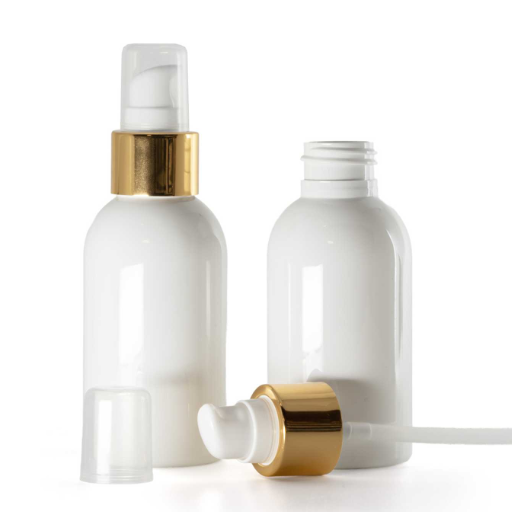
A fine mist sprayer atomizes a low-viscosity liquid into a cone of droplets and spreads it across an area. A lotion pump moves a thicker liquid through a wider outlet as a measured dose. One covers area, the other controls quantity, and your formula plus the intended application decide which one you need.
A reliable decision takes four steps:
- Define what the user must do: cover an area, or collect a dose.
- Measure the formula’s viscosity at fill temperature.
- Get the datasheet for a named dispenser model, not a category range.
- Test a filled sample with your formula and bottle.
If you are choosing for a launch, send us the formula and the bottle neck. We’ll tell you which dispenser to sample before you commit to a purchase order. Request a free wholesale quote.
Why the Viscosity Limits You Read Online Disagree
Search for a fine mist sprayer’s viscosity limit and you will find numbers that differ by more than twenty times. Search for a lotion pump’s range and the spread is even wider. This is not because one source is careless. It is because four different questions are being answered with the same units.
The first difference is atomization quality. A fine mist sprayer forces liquid through a small orifice into a swirl chamber. At low viscosity, the liquid breaks into fine droplets. As viscosity rises, the same sprayer may still push liquid out, but the plume turns coarse, wet, or uneven. That is why one buyer’s “it sprays” test and another buyer’s “it mists” standard produce different limits.
Our fine mist sprayer buyer’s guide puts clean cosmetic atomization at under about 5 to 8 cP. Our pump-side specification page quotes a broader 200 cP figure for the same category. The broader figure describes sprayability; the narrower one describes a usable mist.
The second difference is the model. A dispenser category is not an engineered part. A 24/410 lotion pump from one supplier can have a different chamber volume, spring, and valve from another supplier’s 24/410 pump. Output and tolerance belong to the named model, not to the neck finish or the category.
HCC Packaging, a Ningbo pump supplier, now states this directly: “We do not assign a universal viscosity range or output to either candidate here.” Its separate lotion pump output guide ties every figure to a documented pump reference.
The third difference is the test method. Viscosity changes with temperature and shear rate. A formula measured at fill temperature can read differently from the same formula measured at room temperature. Without a stated method, a cP number is a starting point, not a specification.
The fourth difference is marketing shorthand. “Handles up to 30,000 cP” often means one model in a supplier’s range reaches that figure under favorable conditions. It does not mean every pump under that brand name will dose a 30,000 cP cream cleanly.
Consider a serum at roughly 150 cP. A supplier page says its sprayer handles up to 200 cP, so the formula looks safe. On a filled sample, the sprayer fires a wet jet and the bottle drips between uses.
The catalog was not false. The buyer used a sprayability figure as if it were a mist-quality figure.
The practical rule is simple: never specify a dispenser from a category. Specify it from a model, with your formula in it.
The Difference in One Table
| Fine mist sprayer | Treatment pump | Lotion pump | |
|---|---|---|---|
| What it delivers | Atomized cone over an area | Small measured dose, often through a fine nozzle | Measured slug or ribbon into the hand |
| Typical output | 0.08 to 0.25 mL per stroke | 0.125 to 0.2 mL per stroke (Aptar PAV/U) | 1.0 to 3.5 mL per stroke in full-size models; 0.08 to 0.2 mL in travel formats |
| Droplet or dose | Droplet VMD about 30 to 80 microns | Fine stream or small dose | Dose, not atomization |
| Published viscosity guidance | Clean mist under about 5 to 8 cP; some models still move liquid to about 200 cP with coarser output | Designed for low dose of higher-viscosity formulas | Model-dependent; published ranges commonly run from about 500 to 30,000 cP |
| Air contact with formula | Yes | Yes, unless airless | Yes |
| Common neck finishes | 18/410, 20/410, 24/410, 28/410 | 18/400, 20/410, FEA15 and similar | 24/410, 28/410, 33/400 |
| Price example | 0.03 to 0.06 USD at 10,000 pieces, standard PP | Quoted per project | About 0.06 USD for a 24/410, 1.0 mL model at 10,000 pieces |
| Example MOQ | 10,000 | Project-specific | 10,000 for the example above |
| Main failure mode | Stream, sputter, or clog when the formula is too thick | Under- or over-dosing if the chamber is wrong | Drip between uses when the formula is too thin |
How to read it: every row except the mechanism is model-specific. The table is a map of the decision, not a substitute for a datasheet.
How Each Dispenser Handles Your Formula
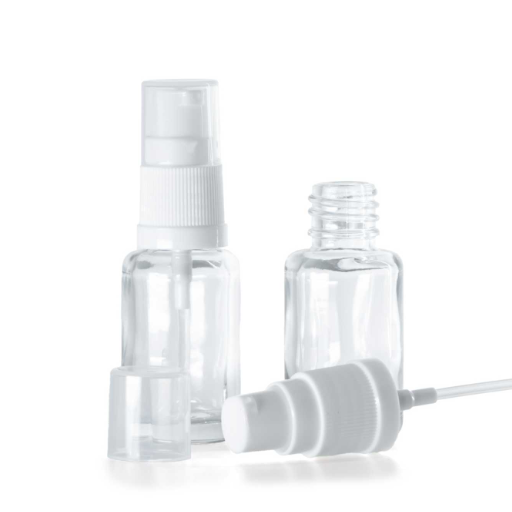
How a fine mist sprayer atomizes
A fine mist sprayer uses a piston to push liquid up the dip tube and through a narrow orifice into a swirl chamber. The geometry converts pressure into droplets. Our buyer’s guide puts the volume median diameter at about 30 to 80 microns for a cosmetic fine mist, which is what makes a mist feel light rather than wet.
The small orifice is also the limitation. Push a thicker formula through and the sprayer doesn’t gradually lose power. It fails in a specific way: a straight stream, a sputter, or a clog.
If the plume looks like a water pistol instead of a cloud, the formula is outside the nozzle’s operating range. Change the actuator or pump engine; don’t pump harder.
How a lotion pump doses
A lotion pump uses a piston and cylinder with a ball valve at the base of the dip tube. Pressing the actuator drives the piston down, pressure lifts the ball, and product travels up and out through a wider outlet. A vent in the closure lets air in to replace the product leaving the bottle.
That architecture is built for volume, not atomization. It is also why the failure runs in both directions. A formula that is too thick can make the pump feel slow or incomplete. A formula that is too thin can slip past the valve and drip from the actuator between uses.
The pump is not broken. It was selected outside its operating range.
Where a treatment pump fits
A treatment pump sits between the two categories. It uses a lotion-pump architecture scaled down, with a small chamber and a fine outlet. It is the right choice when the user needs a small, controlled dose of a formula that is too thick to atomize well but too expensive or too active to dispense in a large slug.
Aptar’s PAV/U treatment pump is a useful reference. It is rated for high-viscosity formulas, delivers 125 or 200 microliters, and fits necks including 18/400 and 20/410. It is not a compromise between the other two. It is a different engine for a different dose.
Verified Output and Price Examples
The table below uses published figures from named models. It is not a price list; it shows why “1 to 2 cc” is not a specification.
| Dispenser | Model or reference | Output per stroke | Neck finishes | Published price |
|---|---|---|---|---|
| Lotion pump | NABO RYJ65Z01, clip lock | 1.0 mL | 24/410 | 0.06 USD at MOQ 10,000 |
| Lotion pump | NABO twist lock | Not stated on the listing | 28/410 | 0.077 USD |
| Lotion pump | HCC all-plastic twist lock | 1.50 ± 0.20 mL | 24/410, 28/410 | Quote |
| Lotion pump | HCC multi-size twist lock | 2.00 ± 0.20 mL | 24/410, 24/415, 28/410, 28/400, 28/415 | Quote |
| Lotion pump | HCC 28/410 twist lock | 2.50 ± 0.30 mL | 28/410 | Quote |
| Lotion pump | HCC clip lock | 3.50 ± 0.35 mL | 24/410, 32/410 | Quote |
| Lotion pump | Aptar Click Lotion, travel | 200 microliters | 15 mm | Quote |
| Lotion pump | Silgan Sofistic, travel | 80 or 130 microliters | 5, 10, or 15 mL bottles | Quote |
| Treatment pump | Aptar PAV/U | 125 or 200 microliters | Europa 5, FEA15, 18/400, 20/410 | Quote |
| Fine mist sprayer | Standard PP, 20/410 or 24/410 | 0.08 to 0.25 mL | 20/410, 24/410 | 0.03 to 0.06 USD at MOQ 10,000 |
Two patterns stand out. Output varies by more than an order of magnitude inside the lotion pump category alone. A travel pump at 200 microliters and a clip-lock pump at 3.5 mL are both lotion pumps, but they serve different products. And a standard sprayer and a standard lotion pump sit in the same price band, so the decision is rarely about unit cost.
MOQs follow the same pattern. Our sprayer guide quotes a typical 10,000-piece minimum for a stock unit with a custom color, and the NABO listing confirms 10,000 for its 24/410 pump, with custom color starting at 30,000. Lead times run about 20 to 25 days for standard sprayers and 15 to 25 days for standard lotion pumps, with OEM runs at 30 to 35 working days. Treat those as supplier figures to confirm, not as a promise.
Need a current number for your volume and neck finish? Send us the specification and we will quote the dispenser, MOQ, and lead time together.
Five Specs to Put in Your RFQ
The fastest way to get comparable quotes is to send five fields in the first email:
- Viscosity in cP, at fill temperature. Not “lotion” or “serum.” A measured number, from a viscometer, with the temperature recorded.
- Target output per full stroke, in mL, with tolerance. State the dose you want. “Standard pump” is not a specification because there is no universal standard.
- Neck finish, full designation. Write 24/410, not “24 mm.” Our neck finish guide explains what the two numbers mean.
- Dip tube length, or the bottle’s internal height. Most suppliers cut the tube to the bottle. Give them the internal depth, not the external height.
- A representative formula sample and the intended application. “Spray over the face” and “dispense into the palm” are different requirements.
Add two fields if they apply. If the formula carries an oxidation-sensitive active, ask for the airless option. If the pack will carry a dosage claim, ask for the output tolerance and the test method in writing.分配器类型:[细雾喷雾器/护理泵/乳液泵]
The Mistakes That Cost a Production Run
Choosing the neck finish before the formula. The neck finish is the easiest thing to check and the least useful thing to decide with. A 24/410 bottle and a 24/410 pump fit at the thread. That says nothing about whether the pump will dose the formula.
Testing with water. A pump that primes and doses water can behave differently with a surfactant-heavy lotion, an alcohol-based mist, or an oil-rich serum. Test the formula, in the bottle, at the fill temperature.
Accepting “1 to 2 cc” as a spec. That phrase covers most of the lotion pump category and almost none of the decisions inside it. Ask for the model number, nominal output, and tolerance.
Skipping the filled-sample test. A hand sample tells you how the actuator feels. It does not tell you how the assembly performs after a week in a carton, at line speed, or near the end of the bottle. Ask for output and leak data with the samples, then run your own fill and actuation test.
Assuming a swap is cheap after launch. If the neck finish and dip tube match, a sprayer and a pump can sometimes be exchanged on the same bottle. That is exactly why the wrong choice can reach production. Fixing it before the purchase order costs a sample; fixing it after launch costs a run, new closures, and a rework plan.
If your formula sits near a boundary, compare the alternatives before you commit. The fine mist sprayer vs trigger sprayer comparison covers the larger-format end, and our wholesale sprayer guide explains how volume, MOQ, and inspection affect the landed cost.
FAQ
What is the difference between a lotion pump and a fine mist sprayer? A fine mist sprayer atomizes a low-viscosity liquid into droplets and spreads it over an area. A lotion pump delivers a measured dose of a thicker liquid into the hand. The first is built for coverage, the second for quantity.
Can you put lotion in a spray bottle? Generally no. A lotion thick enough to need a pump will not atomize cleanly in a fine mist sprayer. It may sputter, stream, or clog. Thin the formula or change the dispenser.
What viscosity can a fine mist sprayer handle? For a clean cosmetic mist, plan on under about 5 to 8 cP. Some sprayer models will still move liquid up to roughly 200 cP, but the output becomes coarse and wet. Ask the supplier for the model’s tested range, not the category’s marketing range.
What viscosity does a lotion pump need? It depends on the model. Published supplier ranges commonly start around 500 cP and run to about 30,000 cP, but individual pumps differ and the upper limit often requires testing. Below the lower limit, a thin formula can drip past the valve.
How many mL does a lotion pump dispense? There is no universal figure. Documented models range from 125 microliters for a treatment pump to 3.5 mL for a clip-lock lotion pump, with 1.0 to 2.5 mL common for face and hand lotion. The output belongs to the named model.
Do a sprayer and a lotion pump use the same bottle? Often yes. Both commonly fit 24/410 and 28/410 necks. Thread compatibility is not formula compatibility, so test the new dispenser with your actual formula before switching.
Conclusion
The fine mist sprayer vs lotion pump decision starts with one number you should already have: your formula’s viscosity, measured at fill temperature.
Five things worth carrying into your next RFQ:
- Fine mist sprayers are built for water-thin formulas and area coverage; lotion pumps are built for thicker formulas and measured doses.
- The viscosity limit you read online depends on the model and on whether the source means “still sprays” or “still mists.”
- Output is model-specific. Documented examples run from 125 microliters to 3.5 mL inside the pump category alone.
- Standard sprayers and standard lotion pumps cost roughly the same at 10,000 pieces, so price is a weak tiebreaker.
- A shared neck finish does not make two dispensers interchangeable. Test the filled assembly.
Measure the formula, choose the application result, confirm the model’s datasheet, then test a filled sample. In that order, the decision takes an afternoon. Out of order, it can cost a production run.
Tell us the formula and the bottle, and we will match the dispenser to both before anything is tooled. Get a free packaging quote.