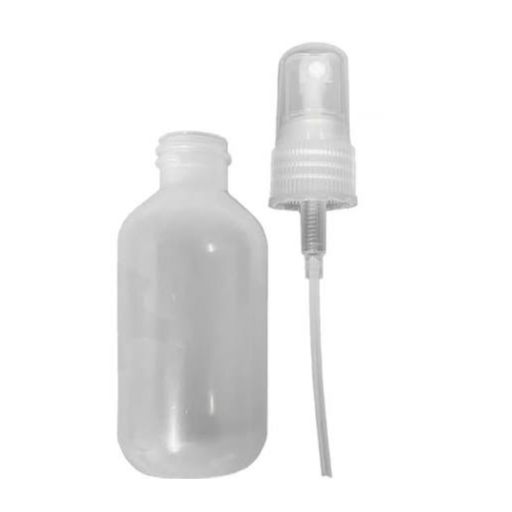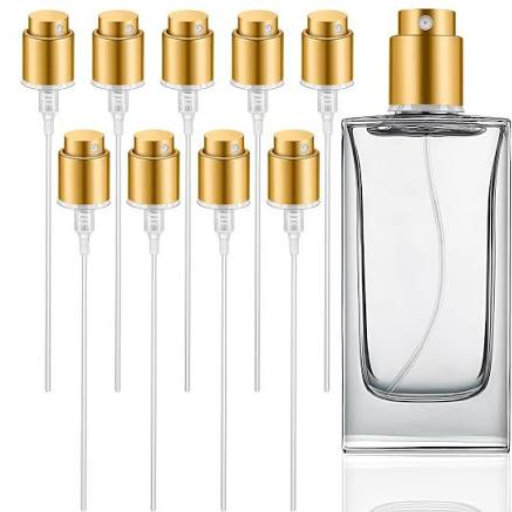
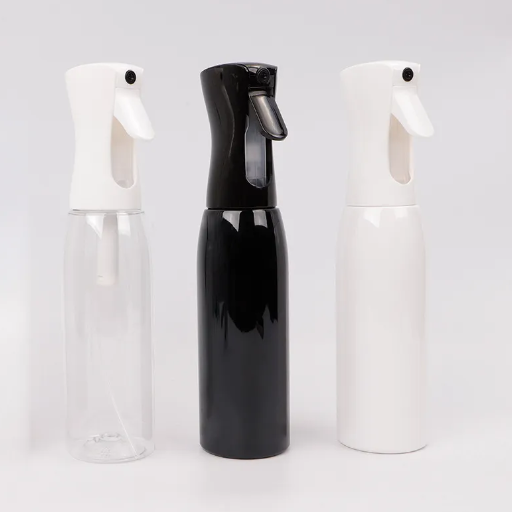
Wholesale fine mist sprayers cost roughly USD 0.03 to 0.06 per unit for standard polypropylene at 10,000 pieces. Minimum order quantities typically land at 10,000, production runs 20 to 25 days, and samples arrive in 50 to 100 piece lots. Aluminum bodies, custom actuators, and decorated collars push the per-unit price toward USD 0.10 to 0.80.
Nadia sourced 60,000 sprayers for a rose-water mist and sent five suppliers one line: “fine mist sprayer, 24 mm, 60,000 pieces.” Four quotes landed between USD 0.052 and 0.061; the fifth, at USD 0.044, won.
The sprayers passed a hand test on her desk. Two weeks into filling, her line began rejecting units that would not prime: the supplier had shipped a 24/415 closure against her 24/410 bottles. The USD 0.008 per unit she saved vanished in a day of downtime.
Price matters. But most of a sprayer’s true cost hides outside the quote, in specs nobody writes down and inspections nobody books. This guide walks the process from RFQ to landed cost.
Still choosing a sprayer family? Start with our complete fine mist sprayer selection guide and come back when you’re ready to buy.
Key Takeaways
- Standard polypropylene fine mist sprayers run about USD 0.03 to 0.06 per unit at 10,000 pieces. Aluminum bodies and custom actuators reach USD 0.10 to 0.80.
- A custom color usually sets the MOQ at 5,000 to 10,000 pieces. Full OEM production runs 10,000 to 30,000.
- A 24/410 sprayer will not seal reliably on a 24/415 bottle. The two finishes look identical and are the most common ordering error in the category.
- Quote every order on landed cost, not unit price. Freight, duty, inspection, and a defect allowance commonly add 20 to 40 percent.
- Five tests catch most failures: output consistency, full-stroke prime, inverted leak, drop, and a compatibility soak in your real formula.
What Buying Wholesale Fine Mist Sprayers Actually Means
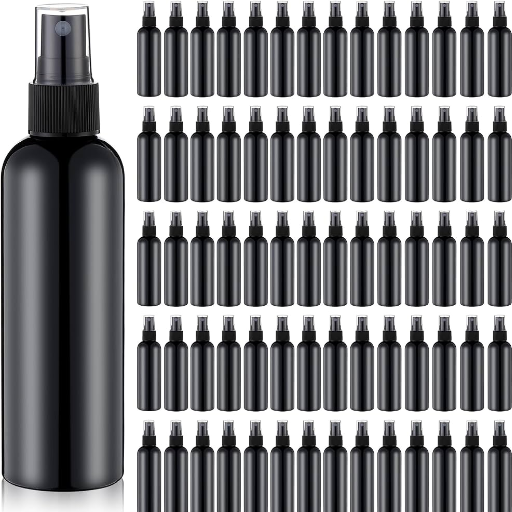
“Wholesale” describes three different businesses, and the one you pick changes your price, your flexibility, and your risk.
A factory molds and assembles the component. You get the lowest price at volume, direct control over tooling, and the ability to change the pump engine. You also absorb the full MOQ and scheduling time.
A trading company buys from several factories and resells. Minimums are often lower and communication easier, but you pay a margin and rarely know which factory runs your order.
A marketplace listing on Made-in-China or Alibaba is a storefront. The price shown is an asking price, often for a spec that differs from what ships. Treat it as a negotiation anchor, not a quote.
How to tell them apart before you send an RFQ
Ask five questions in the first email; they separate a factory from a storefront faster than any badge.
- What is your factory address, and can we schedule a video walkthrough of the molding floor and assembly line? Traders deflect or offer a “partner factory” tour they cannot arrange quickly.
- Do you mold the pump engine and actuator in-house, or buy them in? Many assemble from purchased engines; that caps your customization and defect fixes.
- Who quotes the tooling, and who owns the mold? A trader usually cannot answer without checking.
- Can you send the business license and export registration? The registered scope should match what you are buying.
- Which port do you ship from, and how long from order confirmation to loading? Traders stay vague until they check with a supplier.
A real factory answers all five in one reply. If you are comparing quotes now, send us the six specs below and we will benchmark your best offer. Request a free wholesale quote.
How volume tiers change your unit price
Volume is the largest lever you control on a wholesale fine mist sprayer order. Published supplier tiers show the shape of the curve clearly.
| Order quantity | Typical unit price (standard PP) |
|---|---|
| 10,000 | USD 0.079 |
| 30,000 | USD 0.060 |
| 50,000 | USD 0.056 |
| 100,000+ | USD 0.053 |
Moving from 10,000 to 100,000 pieces cuts the unit price by about a third. That swing is bigger than most buyers win by switching suppliers.
The tradeoff is cash and shelf space. Ordering 100,000 units to capture a USD 0.026 saving ties up USD 5,300 in inventory. Order at the tier that matches your 12-month sell-through.
Small-quantity retail listings for the same component run USD 0.17 to 0.36, five to ten times more: the difference between buying a case and buying a production run.
The Six Specs Every Wholesale Fine Mist Sprayer RFQ Needs
Most buyers send a photo and a quantity, which is why most quotes cannot be compared. Six specifications decide everything, and every RFQ should state all six.
1. Neck finish. The bottle’s thread specification, such as 20/410 or 24/410. It can’t be inferred from a photo and isn’t negotiable.
2. Output per stroke. The volume delivered per actuation. Stock units run roughly 0.08 to 0.25 ml by neck size; 0.10 to 0.15 ml is typical for body and hair mists.
3. Orifice size or droplet target. Smaller openings give finer droplets and suit thin, alcohol-based formulas. Ask for a droplet-size range, not a bare number.
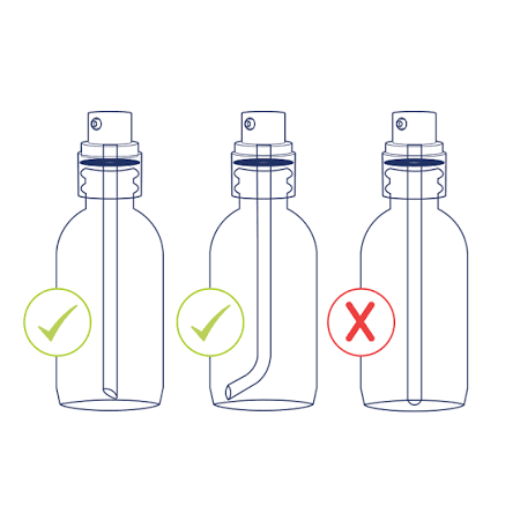
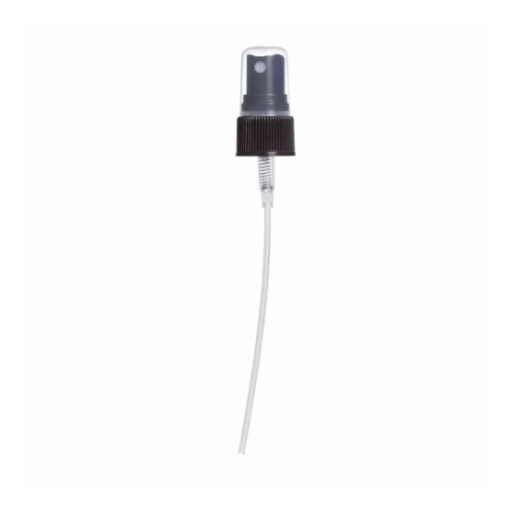
4. Dip tube length. Measured from the neck opening to just above the bottle base. Tubes are cut at 45 degrees so the tip doesn’t seal flat against the base. Berlin Packaging documents this on its atomizer listings.
5. Material. Body polymer, gasket, and spring. A stainless steel spring resists acidic formulas; a carbon steel spring does not.
6. Closure style. Ribbed or smooth, screw or snap-on, with or without a tamper-evident ring, locking actuator, or overcap.
Copy-paste RFQ template
Send this as plain text; it makes every reply comparable.
Subject: Inquiry – Fine mist sprayer, [Quantity] pieces
The last three lines are where quotes usually differ, and where the real negotiation starts.
Neck Finish and Closure: The Cent-Decimal Mistake
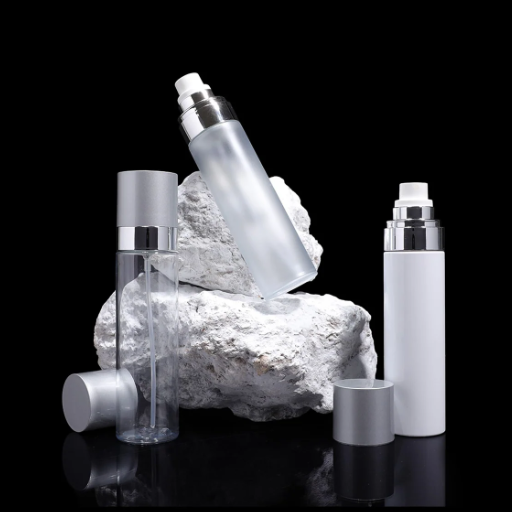
This is the most expensive error in sprayer sourcing, and the one that stopped Nadia’s line.
410 vs 415 are not interchangeable
A neck finish code combines a diameter in millimeters with a thread profile. In 24/410, 24 is the millimeter diameter and 410 is the thread specification. In 24/415, the diameter is identical but the thread profile differs.
That means a 24/410 sprayer and a 24/415 bottle look like a match, and they’re not. The closure may thread partway, seat unevenly, or pass a quick hand test and then fail under transit vibration. O.Berk lists PET bottles in either finish, which is why the confusion is common: the same bottle model exists in both.
Always confirm the finish from the bottle drawing or a physical sample, not a product page title. Our neck size chart for 18/410, 20/410, and 24/410 shows how the widths map to bottle formats.
Ribbed, smooth, snap-on, and tamper-evident
The closure is where a few cents buy a visibly better product.
- Ribbed collars give grip and read as functional, common in household and personal care.
- Smooth collars read as premium and take decoration better, common in fragrance and skincare.
- Snap-on closures seat faster on a filling line and suit high-volume cosmetic runs.
- Tamper-evident rings add a visible seal break and are increasingly expected in retail.
- Locking actuators prevent accidental discharge in transit and are worth specifying on anything that ships by air.
Many leaks traced to “bad molding” are standard actuators depressed by carton pressure during handling. Output rises with neck size, from about 0.08 ml on an 18/410 to 0.25 ml on a 24/410; our fine mist spray pump specification page covers crimp versus screw construction.
Materials and Formula Compatibility
What the assembly is made of
A fine mist sprayer is a small assembly of dissimilar materials:
- Polypropylene (PP) for the housing and collar, the workhorse polymer
- Low-density polyethylene (LDPE) for the dip tube and gaskets
- Acetal (POM) for internal parts that need low friction
- Stainless steel for the return spring
Each behaves differently against your formula. An alcohol-heavy toner stresses gaskets, a citrus-oil blend can attack certain elastomers, and a high-pH formula can corrode a carbon steel spring within weeks.
Why your formula may not mist
Fine mist sprayers are built for water-thin, low-viscosity liquids: alcohol-based fragrances, toners, hydrosols, sanitizers, linen sprays. The pump generates modest pressure through a tiny orifice, and thicker fluids will not atomize.
If your formula is gel-like, creamy, or oil-heavy, the right hardware is a lotion pump or trigger sprayer. Our pump guide explains where each type fits.
The practical rule: test with your real formula, never with water. A pump that mists water beautifully can fail on a 40 percent alcohol blend.
The PPWR deadline is closer than most buyers think
The EU Packaging and Packaging Waste Regulation, Regulation (EU) 2025/40, entered into force on 11 February 2025. Its core requirements apply from 12 August 2026, replacing the 1994 directive, with further obligations phased through 2028 and 2030. DS Smith explains the timeline.
Recyclability, recycled content, and material simplification move from marketing preference to legal requirement on the EU market.
What you can ask for today:
- Mono-material or metal-free construction that separates cleanly in a recycling stream
- Post-consumer recycled (PCR) content with a stated percentage and documentation
- A material declaration naming each polymer and the spring alloy
Conventional sprayers mix aluminum, steel, and several plastics, which makes them hard to recycle. If you sell into the EU, raise this at the RFQ.
What Wholesale Fine Mist Sprayers Cost: MOQ, Tooling, and Quotes
Real price bands for 2026
The 2026 wholesale fine mist sprayer price bands below are at 10,000 units, with 20/410 and 24/410 the most common formats.
| Component | Volume | Typical unit price |
|---|---|---|
| Standard PP, 20/410-24/410 | 10,000 | USD 0.03-0.06 |
| Standard PP, 13-28 mm range | 10,000 | USD 0.065-0.067 |
| Aluminum body, 28 mm | 10,000 | USD 0.10-0.17 |
| Custom actuator, metallized or soft-touch collar | 10,000+ | USD 0.10-0.80 |
The wider USD 0.10 to 0.80 band covers aluminum bodies, bespoke actuators, metallized collars, and custom colors. The top is a decorated, brand-specific component, not a stock sprayer.
Treat these as negotiation anchors, not commitments; freight, payment, and tooling terms move the final number. For a deeper model, see the fine mist sprayer pricing and MOQ guide.
Mold fees and who owns the mold
A stock sprayer needs no tooling. A custom actuator, proprietary collar, or molded logo needs a mold, quoted as a one-time fee.
The fee isn’t the real question. Ownership is. Ask three things before you pay a tooling charge: who owns the mold, can it be moved to another molder, and is the fee amortized into unit price or charged upfront?
A supplier that keeps the mold you paid for locks you in for the life of the product. Get ownership in writing before the PO.
Incoterms and payment terms
Two quote lines routinely go missing, and both can outweigh the gap between competing unit prices.
| Term | Who arranges and pays | What it means for you |
|---|---|---|
| EXW | Buyer, from the factory door | Cheapest quote, most work, highest risk |
| FOB | Seller to the named port, buyer after | Common baseline for factory quotes |
| CIF | Seller to destination port, insurance included | Easier, but check the insurance cover |
| DDP | Seller to your door, duty paid | Simplest, highest unit price |
Payment terms are the second negotiation. Ask for deposit percentage, balance timing, and whether a letter of credit is accepted.
Landed Cost: The Number That Decides Margin
Unit price isn’t cost. Landed cost is. Take a 50,000 unit order at USD 0.056 FOB: USD 2,800 for the goods.
| Line item | Basis | Amount |
|---|---|---|
| Goods | 50,000 x USD 0.056 | USD 2,800 |
| Ocean freight and insurance | about 12% of goods | USD 336 |
| Import duty | 6% of goods (illustrative) | USD 168 |
| Third-party inspection | one pre-shipment visit | USD 300 |
| Total landed | USD 3,604 | |
| Usable units after 2.5% rejects | 48,750 | |
| Landed cost per usable unit | about USD 0.074 |
That is roughly 32 percent above the quoted unit price, before a single defect reaches a customer. Assumptions differ by market; the structure does not.
Run the same math on a cheaper quote with more defects. A USD 0.041 unit price at 7 percent defects can cost more per usable unit than a USD 0.046 quote at 1 percent.
Build the landed-cost column before you award the order. It’s the only number that touches your margin.
Sampling and QC for Wholesale Fine Mist Sprayers
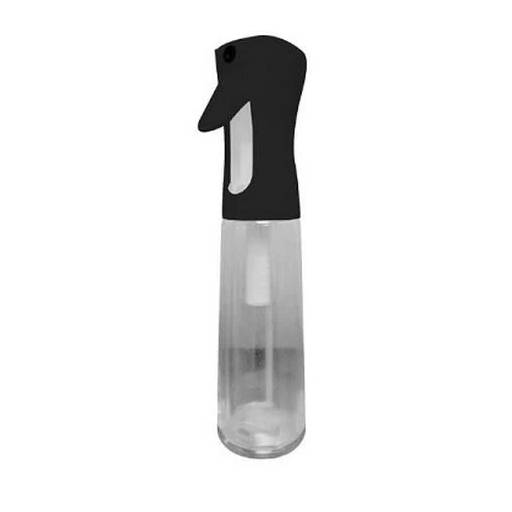
The sample protocol
Never approve a production run from a catalog photo. Request a pre-production sample, typically 50 to 100 pieces built to your exact spec, and test it against your real formula.
Tomás, a developer at a men’s grooming brand, ran 80 sprayers through a two-week soak before committing to 45,000 units. Four developed a stiff actuator after six days against a citrus and cedar blend. He switched the gasket compound for USD 0.005 more per unit, and his launch shipped without sprayer returns. The soak cost two weeks; the alternative would have cost the retail slot.
Five tests that catch failures
Run these on every sample batch and record the results.
- Output consistency. Weigh ten sprayers before and after a fixed number of strokes. Tolerance must hold across the batch, not just on the first unit.
- Full-stroke prime. Count strokes to a steady mist from dry. Six or more will frustrate customers on first use.
- Inverted leak test. Spray upside down and hold. Any drip at the actuator or collar is a fail.
- Drop test. Drop filled units from carton height, then re-test for leaks and function.
- Compatibility soak. Store filled units at elevated temperature for one to two weeks, then re-test output, actuation force, and leak.
Add a transit simulation for air freight. Vibration and pressure change reveal failures a bench test misses.
AQL and third-party inspection
Agree on an acceptance quality limit before production, not after the first defect appears. AQL 2.5 for major defects is a common starting point for cosmetic components, with a tighter limit for critical defects such as leakage.
Book a third-party inspection at pre-shipment. The fee is small next to a container of unusable components, and the report gives leverage if the batch is out of spec.
Ask every supplier for its quality certification and verify it covers the specific material and line, not just the company name. If your product touches skin or lips, request the relevant compliance declarations for the exact components.
Send us a sample batch and we will review it against the agreed specs. Talk to our team.
Frequently Asked Questions
What is the minimum order quantity for wholesale fine mist sprayers?
Stock sprayers often start around 5,000 pieces. A custom color usually sets the MOQ at 5,000 to 10,000, and full OEM production runs 10,000 to 30,000.
How much does a fine mist sprayer cost per piece?
Standard polypropylene units run about USD 0.03 to 0.06 at 10,000 pieces. Volume breaks at 30,000 and 100,000 can reduce that by a third. Aluminum bodies and bespoke actuators push the price to USD 0.10 to 0.80.
How long does production take?
About 20 to 25 days for a standard sprayer, with custom colors, decoration, and new tooling pushing toward 30. Add transit: roughly 30 to 40 days by sea to Europe or North America, or a few days by air at several times the cost.
Can I order samples before committing?
Yes. Suppliers typically provide 50 to 100 pieces, sometimes free and sometimes at a charge. Test with your real formula, not water.
Are 410 and 415 neck finishes interchangeable?
No. The diameter matches but the thread profile differs, so a 410 closure will not seal reliably on a 415 bottle. Confirm the finish from the bottle drawing before ordering.
Conclusion
Buying wholesale fine mist sprayers is a procurement problem, not a selection problem. The component is well understood; the discipline around it separates a good order from an expensive one.
Five things decide the outcome. State all six specs in your RFQ, so every quote describes the same product. Confirm the neck finish from a drawing, because 410 and 415 do not seal alike. Test with your real formula, since water flatters every pump.
Agree the AQL before production and book the inspection. Then calculate landed cost: the cheapest quote per unit is often the most expensive per usable unit.
Volume stays your largest lever. Moving from 10,000 to 100,000 pieces cuts unit price by roughly a third.
Send us your bottle’s neck finish, target output, and annual volume. We will match the sprayer to your formula, quote the volume tiers, and include samples. Contact our team to request a free wholesale quote.