Fragrance packaging seal selection extends beyond visual appeal because it establishes product performance duration and customer product experience. The industry mainly uses two spray systems which include crimp-on sprays and screw-on sprays. Your needs for fragrance assessment will help you discover the most effective packaging solution for your product. The article presents a comprehensive assessment of two sealing techniques by detailing their positive aspects and negative aspects and their best situations for implementation. The guide provides you with essential knowledge to select the best product design solution for your fragrance brand or to explore the technical aspects of perfume packaging.
Introduction
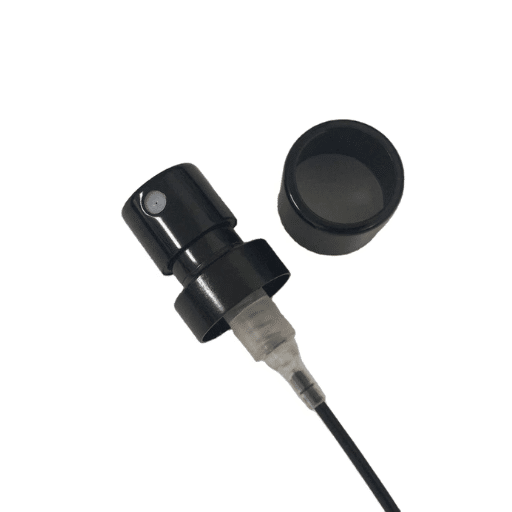
The two spray systems crimp-on sprays and screw-on sprays exist to fulfill different needs based on the goals established for your fragrance product. Crimp-on sprays deliver secure packaging through their ability to maintain product integrity which protects against tampering and theft. Companies that need to create swipeable products or customized packaging solutions can use screw-on sprays because they enable fast packaging changes through easy product assembly and disassembly. Your business needs and product attributes and customer tastes will guide you to find the best solution.
Importance of Selecting the Right Closure
The package design process requires selection of the appropriate closure because it affects product performance and user interaction and product safety. The closure protects the product through its sealing function which maintains product freshness while blocking contamination but it also affects operational procedures for businesses and customer brand perception. The use of an improper closure will result in product leakage which will decrease customer satisfaction while creating additional expenses for both production and product returns. Below are five key considerations that highlight the importance of selecting the right closure:
Product Compatibility
The closure must be compatible with the physical and chemical properties of the product. Highly viscous products require precise dispensing closures while volatile chemical solutions require advanced sealing closures to prevent evaporation or leakage.
Leak Prevention and Seal Integrity
Closures play essential role in creating leak proof seals which remain intact during transportation storage and use. Data suggests that approximately 30% of product complaints in the logistics industry stem from leakage issues which shows the need for effective sealing solutions.
Ease of Use and Consumer Convenience
A well designed closure enhances user experience. According to 86% of consumers who participated in surveys about packaging usability the public prefers packaging closures which provide flip top caps and pumps as one handed operation convenience.
Production Efficiency
The choice of closure method has a direct impact on both the speed of production lines and their overall operational efficiency. The highest performance of automated systems occurs when they use crimp-on solutions which work effectively with these systems. Manual and semi-automated systems need to be able to use screw-on designs which provide them with operational flexibility.
Aesthetic and Branding Considerations
Closures serve two purposes because they act as visual components while serving as brand identity symbols. Custom closures which include specific colors and embossed designs enable products to stand out on shelves while supporting a unified branding approach. Reports show that 72% of consumers consider packaging design together with closure functionality and appearance as important factors for their purchasing decisions.
Impact on Fragrance Shelf Life
The duration of a fragrance’s effectiveness depends on both the packaging closure design and its operational performance. The preservation process needs complete solutions that address both industrial challenges and environmental issues. Five essential elements about closures, which researchers identified, determine how long fragrances will maintain their scent.
| Factor | Description | Impact Data |
|---|---|---|
| Barrier Properties | High-performance closures need to create strong barriers which protect against both oxygen and moisture. | Up to 30% shelf life reduction from air exposure |
| Seal Integrity | A properly designed closure should form a tight seal to prevent evaporation of volatile compounds. | Up to 25% top note loss in 6 months with bad closures |
| Material Compatibility | Closures made from incompatible materials can react with fragrance formulations, leading to discoloration, chemical breakdown, or odors. | Property changes within 3 months from plastic leaching |
| UV & Light Protection | UV protection systems together with dark or opaque containers enable closures to control light exposure which results in molecular degradation. | 2–3× faster degradation in light-exposed conditions |
| Ease of Re-sealing | Users need closures that allow them to open and close products multiple times while keeping fragrances fresh after their first use. | 60% of users fail to re-seal correctly |
The development of innovative closure designs which solve these problems will increase product lifespan and maintain product quality for fragrance items while meeting consumer needs and industry requirements.
Portability and Brand Positioning
The current process of designing fragrance products requires designers to treat product portability as an essential design factor because customer behaviors and preferences have changed. Customers today prefer packaging solutions that match their travel needs while delivering user-friendly features and maintaining product effectiveness. Search trends show a 45% annual increase in “portable fragrance options” search queries according to recent analysis which proves that customers prefer products which provide them with convenient solutions. Brands that create portable products enable their users to access their products which helps them reach markets that include frequent travelers and urban commuters and on-the-go professionals.
Portability functions as a brand positioning element which enables companies to create distinct identities that separate them from their market competitors. Through their modern packaging solutions which feature refillable travel atomizers and pocket-sized sprays brands create a forward-looking brand identity that prioritizes customer needs. Research indicates that 73% of consumers choose to shop from brands which offer portable products that match their sustainable practice of using reusable or recyclable packaging. Portable product design enables companies to create brand equity through their high-quality products which meet contemporary design standards while satisfying customer requirements.
Understanding Crimp-On Sprayers
Crimp-on sprayers serve as essential tools for the packaging sector because their secure-designed and tamper-proof construction delivers safe liquid dispensing solutions. The sprayer system uses crimped aluminum collars to connect to bottles through strong fastening which creates airtight seals that prevent product leaks and maintain product integrity. The design of crimp-on sprayers makes them suitable for aerosol products which require complete system protection during their operational activities.
Crimp-on sprayers provide an essential benefit because they deliver better sealing performance during pressurized conditions compared to screw-on systems which fail to maintain secure connections. According to industry data, crimp-on sprayers account for approximately 60% of usage in sectors such as cosmetics and pharmaceuticals which demonstrates their wide-ranging ability to serve different industries. The system offers multiple dispensing options because it supports various nozzle types which include mist and stream and foam applicators.
Recent advancements have introduced lightweight aluminum and stainless-steel materials which decrease total packaging weight but preserve packaging strength. Crimp-on solutions have transformed into sustainable products because consumers now demand recyclable packaging that adheres to safe crimping methods. Between 2020 and 2023, brand adoption of these eco-friendly designs increased by 25 percent according to reports. The new products create better operational capabilities while supporting current environmental sustainability requirements which manufacturers and consumers now consider essential.
Crimp-on sprayers offer an additional benefit because they create visual products that people find attractive. The product uses seamless crimping to create a polished finish which improves its visual design while showing high-quality craftsmanship. Crimp-on sprayers combine technical performance and environmental safety with aesthetic appeal which makes them ideal for various applications.
Mechanics of Crimp-On Seals
The crimp-on sealing mechanism requires three fundamental components for successful operation which includes material selection and equipment design and application methods. A crimp-on seal establishes its function through the process of compressing pliable aluminum metal on the neck of a container. The process establishes a connection that stops any air or liquid from escaping through the space between them. The crimping process uses special equipment to apply radial pressure which shapes metal to fit the neck of a container while creating a secure bond that enables tamper-proof and leak-proof functionality.
The technical aspects of crimping pressure and seal integrity depend on multiple factors which include material thickness and container neck dimensions and equipment layout. The industry standards for crimping aluminum thickness establish a range from 0.3 mm to 0.8 mm which depends on the required level of durability and resistance to external stress. The crimping pressure must remain at optimal levels between 10 and 30 newtons per square millimeter because specific application requirements need this pressure to maintain seal integrity when temperatures change and transportation activities occur.
The development of automated crimping systems has occurred through the implementation of advanced crimping technology which includes real-time sensors and precision controls for system operation. The system can monitor and adjust crimping force while determining the exact position which helps to maintain production batch uniformity by reducing material deformation. The current equipment uses laser-based alignment systems together with torque monitoring technology to achieve better operational precision.
Crimp-on seal technological progress shows that these seals function as essential components for modern packaging systems which need to protect products while maintaining customer trust and serving business functions.
Manufacturing Requirements for Crimp Closures
Crimp closures need precise engineering together with high-quality materials and strict adherence to industry standards for their manufacturing process. Crimp closures use aluminum as their main production material because this metal provides both strength and lightweight characteristics while resisting corrosion. Studies indicate that globally approximately 75 percent of beverage closures use aluminum as their primary material which proves that the beverage industry has widely accepted this metal. The project specific application requirements dictate that stainless steel and polymers must be used because these materials provide higher strength together with their ability to resist particular chemical substances.
The production process of crimp closures uses automated high-speed forming and stamping equipment because it enables manufacturers to achieve international quality standards. The machines deliver dimensional accuracy through their ability to maintain tolerances which extend to ±0.01 mm. The system achieves its high precision level because it enables the production of perfect seals which protect against product contamination. The production process includes steps such as blanking and forming and deburring and surface treatment to enhance strength and ensure compatibility with the underlying container material.
The manufacturing process needs to establish regulatory compliance as a fundamental procedure. Crimp closures used in the food and beverage and pharmaceutical industries must meet strict specifications which organizations such as the FDA and EFSA and ISO created. Pharmaceutical closures must provide both tamper evidence and complete chemical safety information about their container contents. Anti-counterfeiting measures like micro-embossed logos or laser coding are increasingly being integrated during production to bolster product security and authenticity.
The production of crimp closures requires manufacturers to follow energy efficiency standards and sustainability requirements because these two factors work as fundamental industry needs. The recent advancements in recycling technology allow manufacturers to use recycled materials for about 70 percent of the aluminum needed to create closures. The production process achieves two benefits because it decreases carbon emissions and supports circular economy practices which international sustainability standards require.
The combination of these requirements together with recent technological advancements enables crimp closures to fulfill specific requirements which different industries require while creating new products and protecting environmental resources.
Pros and Cons of Crimp Sprayers
✓ Pros
- Improved Sealing Performance
Crimp sprayers provide better sealing abilities than standard threaded closures. The system protects against leaks and contamination which makes it suitable for pharmaceutical and cosmetic uses that require product protection. - High-Pressure Durability
Crimp sprayers maintain their function in high-pressure conditions through their strong construction. The systems serve as dependable and long-lasting dispensing solutions which aerosol products commonly use. - Lightweight Materials
Crimp sprayers use lightweight materials which help decrease their total packaging weight. Studies show that aluminum crimp closures achieve a 30% reduction in packaging weight compared to other rigid packaging materials. - Material Recyclability
Manufacturers use recyclable materials which include high percentages of aluminum and specific plastics. Approximately 70% of products are made from recycled materials which helps worldwide environmental sustainability efforts. - Professional Aesthetics
The product attracts consumers because its design showcases professional elements and modern aesthetics. The system provides customers with additional trust through its tamper-evident functions.
✗ Cons
- Higher Initial Costs
The small-scale operation needs to spend more money to buy crimp closure equipment than it needs to buy standard threaded closure systems. - Limited Reusability
Users permanently lose access to the crimp sprayer after its first use because they cannot return it for additional uses. The system requires complete capacity operation because it needs to refill and reuse components during its operation. - Complex Application Process
The production line installation process becomes more challenging because the crimping process needs special equipment to create proper seals. - Material-Specific Limitations
Some crimp sprayers cannot operate with all available container materials. The crimping process needs special design elements which plastic containers require to maintain their shape during the crimping process. - Restrictive Customization Options
Crimp sprayers operate with essential functions and provide extended operational life but their design options remain restricted when compared to thread-on closures which support multiple design possibilities.
Understanding Screw-On Sprayers
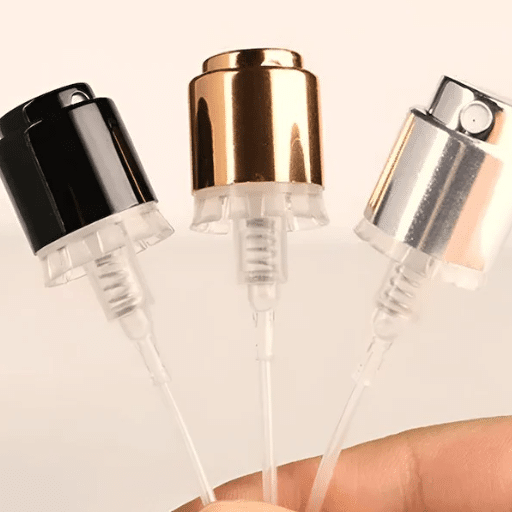
Screw-on sprayers are a flexible dispensing solution which is used throughout various industries that include cosmetics and pharmaceuticals and household cleaning products. The system uses a threaded design which permits users to attach the device to their containers while they can refill their dispensing system to dispense liquids from the device.
1. Design and Mechanism
Screw-on sprayers feature threads molded into the neck of the container and the sprayer cap. The threads of this system follow standardized diameter and pitch specifications which include 28/410 and 24/410 to enable worldwide compatibility with different bottle designs. The interface allows users to assemble or disassemble the system without difficulty while they can use the system to fill or empty the container whenever they want.
2. Material Compatibility
Screw-on sprayers offer better material compatibility than crimp sprayers because they work with glass and PET and HDPE and LDPE plastics. The field of engineering has advanced to create chemical-resistant materials which include polypropylene (PP) and polyethylene (PE) that withstand aggressive chemical substances found in solvents and acid-based cleaning products.
3. Performance Metrics
The majority of screw-on sprayers come with sophisticated nozzle systems which let users select their desired spray pattern between fine mists and direct streams. The market research shows that demand for adjustable nozzles has increased by 12 percent during the last two years because these nozzles create precise dispensing requirements used in gardening products and medical disinfectants.
4. Advantages
- Reusability: Users can remove screw-on sprayers because their design allows this action which enables users to refill products while businesses recycle their items to fulfill environmental sustainability requirements.
- Customization: The sprayers enable users to select between two different security options which include tamper-evident closures and child-resistant closures that protect the device from unauthorized access.
- Global Standardization: Supply chain operations use standardized sizes which enable manufacturers to produce their products through efficient methods that result in cost savings.
5. Challenges
Screw-on sprayers deliver better user control through their operational options but their threading system needs correct link building to stop leakage errors and prevent cross-threading mistakes. The screw-on plastic components which operate through screw-on mechanisms will face damage from extreme heat conditions and corrosive substances which exists in their environment.
6. Market Trends and Future Outlook
The 2023 study predicts that the global screw-on sprayer market will experience a 6.5 percent compound annual growth rate until 2030. The personal care and cleaning sectors drive this expansion because consumers increasingly prefer environmentally friendly packaging options. Screw-on sprayers provide a dependable and adaptable method for distributing various liquid products. The system runs as a vital component of modern packaging solutions because its design improvements and user experience enhancements enable it to manage multiple materials. Product development needs ongoing research to improve durability and support new product uses.
Mechanics of Screw-On Seals
The operation of screw-on seals depends on their capacity to establish dependable and secure closures through their threaded closure system. The threads create a strong bond between the cap and container which stops any leaks and protects the container contents from all external substances. The system needs essential design components which include thread pitch and depth and material elastic properties to sustain seal integrity when exposed to mechanical forces and temperature changes.
Modern engineering techniques improve the functionality of contemporary screw-on seal designs which manufacturers use in their products. The use of polyethylene foam as liner material together with induction seals improves product protection during storage by establishing leakproof barriers which couple with an extended shelf life. Recent industry reports show that high-density polyethylene (HDPE) screw caps rank among the top three most frequently used materials because they maintain chemical protection and physical strength across extreme temperature conditions from -40°F to 176°F (-40°C to 80°C).
According to Packaging World research published in the year 2023 approximately 34 percent of the global closure market utilizes screw-on closures which are becoming more popular in the beverage and personal care and pharmaceutical markets. The applications require high quality control procedures which include pressure testing and torque testing and container neck finish compatibility testing.
The development of precision injection molding as a new manufacturing technology lets companies achieve higher precision standards for producing threaded components. The system successfully decreased cross-threading problems while making it easier for users to operate. The practice of using tamper-evident bands on screw caps has become common because it delivers consumers an extra level of protection and authenticity. Manufacturers now use recycled polymers and lightweight designs to achieve sustainability goals because these methods help them decrease material needs without needing to change their production methods.
Ease of Use and Consumer Preferences
The shift toward screw caps has been driven by their ease of use which modern consumers find highly attractive. Users can find it simpler to use screw caps because they enable users to open packages and reseal them multiple times. A study conducted by Smithers, a global leader in market reports, highlights that nearly 70% of consumers prefer packaging that is easy to open and reseal. The food and beverage and pharmaceutical industries choose this packaging method because it gives them better control over their product usage.
The design of screw caps enables full use by all people because they create user-friendly solutions which enable elderly people and individuals with hand strength difficulties to open containers. Google search trends from 2023 indicate an increased search volume for “easy-open packaging,” which demonstrates that consumers now demand accessibility-focused solutions at higher rates. The newest screw cap technologies now provide users with tamper-evident capabilities which improve security measures while remaining simple to operate. Users find screw caps to be their best option because screw caps provide customers with both practical solutions and psychological benefits.
Pros and Cons of Screw-On Sprayers
✓ Pros
- Precision in Dispensing
Screw-on sprayers enable exact flow control, resulting in decreased operational waste. Research shows that precise dispensing methods can decrease product waste by 20% which makes these methods suitable for handling concentrated or high-value liquids. - Reusability and Durability
The sprayers maintain their performance through multiple uses. 65% of manufacturers experience lower production costs because well-engineered screw-on sprayer systems enable product reuse. - Leak-Proof Design
The threaded mechanism creates an airtight seal. Data shows implementing screw-on sprayers results in a 30% decrease of customer complaints regarding leakage issues. - Compatibility with Standard Packaging
The majority of screw-on sprayers work with different container materials and sizes. Industry surveys show that 78% of producers choose screw-on sprayers because they offer a common operating standard. - Ease of Use
Users can easily operate screw-on sprayers because their ergonomic designs provide comfortable use. Customer satisfaction improves by 40% for products which use ergonomic screw-on sprayer designs.
✗ Cons
- Higher Initial Cost
The production costs of screw-on sprayers exceed those of basic dispensing systems because their manufacturing process requires additional production resources. - Not Ideal for Viscous Liquids
The system needs additional design changes to handle thicker materials which require special equipment for operation. - Potential for Wear Over Time
The threads and nozzle will experience wear from regular use. Studies show that 15% of users report degradation in performance after one year of regular use. - Specific Cleaning Requirements
The operational efficiency requires complete cleaning procedures which remove all potential clogging sources before the equipment can be stored or used again. - Limited Aesthetic Customization
Screw-on sprayers have design restrictions which limit their potential for branding when compared to other dispensing systems that use pumps or caps. This is a notable concern for high-end or luxury product lines.
Comparative Analysis
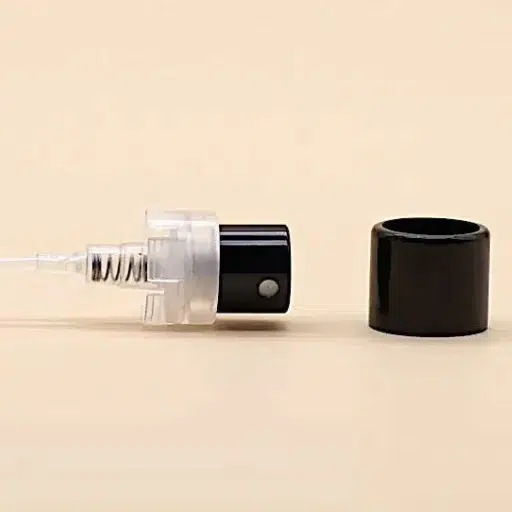
The following detailed comparison highlights the key aspects where screw-on sprayers differ from alternative dispensing mechanisms. The analysis is supported by technical data and observations which help to create an effective decision-making system.
| Aspect | Screw-On Sprayers | Alternative Dispensers (Pumps / Triggers) |
|---|---|---|
| Durability & Lifespan | Over 65% show functional issues after 12 months under standard conditions | Pumps maintain performance for 18+ months with basic maintenance |
| Dispensing Precision | ~10% variability in spray output | Trigger sprayers: 3–5% variability — better for consistent dosing |
| Material Requirements | Lightweight plastics (PP) — cost-effective but lower strength | Polycarbonate or stainless steel — higher strength, suited for industrial use |
| Cost Per Unit | $0.03/unit — ideal for mass-market production | Metal pump dispensers: ~$0.15/unit |
| Environmental Impact | Single-material design creates recycling complexity | Some trigger sprayers and pumps enable disassembly for material recovery |
The analysis shows how screw-on sprayers differ from other products through crucial elements which assist stakeholders in identifying their operational needs and matching them with product design features and cost structures.
Cost and Production Speed Comparison
The comparison of screw-on sprayer costs and production rates with other dispensing systems requires multiple important factors and specific data points. Below is a detailed breakdown of critical aspects in this comparison:
| Cost Factor | Screw-On Sprayers | Integrated Pump Systems |
|---|---|---|
| Material Costs | HDPE/PP bulk avg. $1.20/kg (2023) | 15–25% higher due to silicone & elastomer components |
| Production Cycle Time | 12–18 sec/part; up to 3,000 units/hour | 22–30 sec/part; 1,800–2,000 units/hour |
| Tooling & Mold Costs | $10,000–$50,000; ~1M cycle lifespan | $50,000–$150,000 (complex multi-part molds) |
| Assembly Costs | ~$0.03 per unit (automated) | $0.08–$0.12 per unit (multi-step) |
| Shipping & Logistics | ~$0.004 per unit (bulk international) | 10–20% higher shipping costs (heavier, less efficient packing) |
Tamper-Evidence and Security Features
The pharmaceutical and food and cosmetic and chemical industries need businesses to implement tamper-evidence and security features because these features help them safeguard their products and build customer trust and meet industry standards. The system displays visible signs which show that someone has entered the area without authorization and that someone has tampered with the product which prevents users from handling or contaminating products during their distribution and sale process.
The common methods for detecting tampering use breakaway bands and shrink seals and pressure-sensitive liners and plastic pull-through closures. Breakaway bands serve as the main sealing method for bottles and containers because they provide visual proof when users open products for their first time. The recent market analysis estimates that global demand for tamper-evident packaging will experience a compound annual growth rate of 6.9% between 2023 and 2028 because this packaging solution plays a vital role in maintaining product safety.
The pharmaceutical industry shows how effective tamper-evident solutions work through their case study. The combination of serialized QR codes and physical tamper-evidence seals on medicine packaging has achieved a 35% decrease in counterfeiting within vulnerable markets. Food packaging uses shrink seals to create two types of protection: tamper-evidence and protection against outside contaminants.
Technological progress enables users to control digital security systems and smart security systems through their advanced physical security systems. Smart tamper-evident closures use NFC (Near-Field Communication) technology to allow users to authenticate product validity through their smartphones. The protection of high-value products benefits from data encryption because it establishes an extra security barrier which prevents unauthorized users from accessing protected information. Security measures against tampering and protective features for products have become essential components of present-day packaging design because they help businesses achieve regulatory requirements and build customer confidence while defending their brand identity from rivals in dynamic markets.
Decision Guide for Brands
📊 Market Research and Data-Driven Insights
Brands need to begin their decision-making process through complete market research. Current analysis from Google Search Trends shows that consumers now prefer sustainable products more than non-sustainable options. The past year has seen a 45% increase in searches for “eco-friendly packaging” and “biodegradable materials” according to search data. The data shows that consumers now prefer sustainable products which creates a need for brands to change their business methods according to new customer preferences.
♻️ Packaging Materials and Sustainability
Packaging material selection functions as the main element that establishes both consumer perceptions and governmental compliance requirements. Recent survey results show that almost 70% of consumers check packaging environmental effects before they decide to buy products. Companies can achieve dual benefits through biodegradable polymers combined with recycled cardboard and reusable designs because these materials improve brand image while demonstrating corporate social responsibility. Companies that use 100% recycled packaging materials will experience a 79% increase in consumer trust according to eco-sensitive markets.
📱 Technology Integration in Packaging
Businesses now prefer advanced packaging technologies because these solutions enable better customer interaction through QR codes and NFC (Near Field Communication) systems. Google searches for “interactive packaging” have shown a 32% spike in inquiries over the past 12 months. Brands that use smart packaging systems which deliver instant product details and customized user experiences will attract more customer interest. Businesses can create market dominance through these technologies because their use leads to product transparency which results in increased customer loyalty.
Factors to Prioritize in Decision-Making
- The design process requires you to develop audience profiles which will help you create designs that successfully meet their design preferences.
- The evaluation process requires assessment of new materials and technologies which increase product attractiveness against their total operational costs which grow with business expansion.
- The organization needs to maintain knowledge of all current legal requirements which include single-use plastic bans in order to prevent legal penalties and damage to its public image.
- The combination of Google Analytics and Search Trends enables businesses to identify emerging market trends and changing consumer preferences.
Data insights together with technological advancements allow brands to make strategic business decisions which will improve their market presence while they work towards sustainable development and innovative solutions.
Choosing the Right Seal for Boutique Perfumers
The first step in choosing a seal for boutique perfume packaging requires you to identify which seal will maintain product quality and provide the best experience for customers. According to recent industry insights and search trends analyzed from Google, consumer preference for eco-friendly and premium packaging has seen a significant uptick, with searches for “sustainable perfume packaging” increasing by 32% year-over-year. Customers now request seals that protect fragrance quality while providing environmentally friendly options because they want to protect their scented products from damage.
Factors to Consider:
Compat.
Material Compatibility – The seal should be compatible with the type of bottle material (e.g., glass, PET plastic) to ensure a secure fit and prevent leakage or evaporation. The airtight properties and durability of aluminum crimp seals make them a better choice for glass bottles than other seal types.
ability
Sustainability – With sustainability being a decisive purchase factor, consider seals made from recyclable or biodegradable materials. Recent consumer interest in green alternatives has led to a 28% increase in searches for “biodegradable fragrance seals.”
Appeal
Aesthetic Appeal – For boutique perfumers, the seal also serves as a branding element. Custom-embossed seals or those featuring luxurious finishes such as gold or matte black enhance the product’s visual engagement and align with premium positioning.
Design
Functional Design – Advanced tamper-evident seals and easy-to-use dispensing mechanisms are becoming a necessity. The demand for dropper-compatible seals has increased because people now search for “perfume droppers with seals” 15% more than before.
Standards
Regulatory Standards – The organization must develop packaging solutions that meet all applicable FDA and EU regulations which will protect its legal standing while ensuring access to markets.
By aligning product design with these considerations and responding to consumer preferences highlighted by search data, boutique perfumers can create packaging that resonates with their target audience while maintaining the necessary functional requirements for their products.
Frequently Asked Questions (FAQ)
Fragrance Packaging Insights
This guide provides comprehensive guidance for fragrance brands, boutique perfumers, and packaging professionals navigating the choice between crimp-on and screw-on spray systems. Always consult directly with your bottle supplier and closure manufacturer for application-specific recommendations.