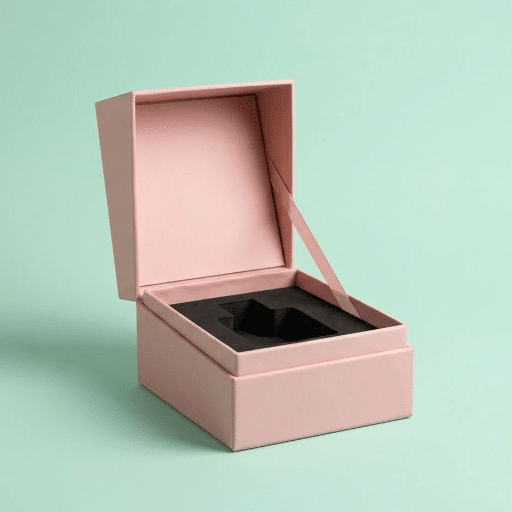
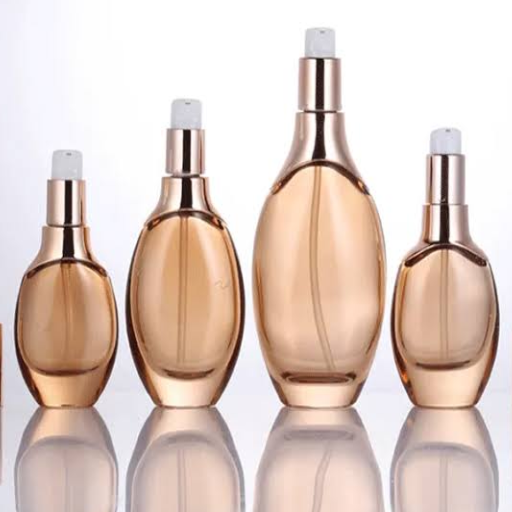
Choosing the right luxury perfume packaging manufacturers comes down to five verifiable signals: OEM/ODM capability, ISO 9001 and FSC certifications, transparent minimum order quantities, a proven sampling process, and measurable quality control. This guide walks you through each one, so you can vet a supplier before you place a single order.
Amelia Chen learned this the hard way. Last spring, the founder of a small fragrance label ordered 1,000 rigid boxes from a supplier she found on a marketplace. The pre-production sample looked flawless. The bulk shipment did not.
Warped lids, off-register foil stamping, and a magnetic closure that snapped open in transit. When she asked for a certification or a QC report, the seller went quiet. She lost $3,800 and six weeks of launch timeline.
The problem isn’t that good luxury perfume packaging suppliers are rare. It’s that most buyers don’t know how to tell the difference. This article is the vetting framework you need, written from the factory side of the table. By the end, you’ll know exactly what to check, what to ask for, and which red flags to walk away from.
Key Takeaways
- Vet luxury perfume packaging manufacturers on five signals: OEM/ODM capability, certifications, MOQ transparency, sampling, and quality control.
- A true manufacturer produces in-house and shows proof, while brokers resell and often cannot produce certification or QC documents.
- MOQs typically run from 50 to 5,000+ units, with real volume discounts appearing at 5,000 to 10,000 pieces.
- Never skip sampling. A white mock-up validates structure, a printed sample validates finish, and a pilot order validates production.
- Request ISO 9001, FSC, REACH, and RoHS proof in writing, and test everything with a third-party lab before scaling.
What Is a Luxury Perfume Packaging Manufacturer?
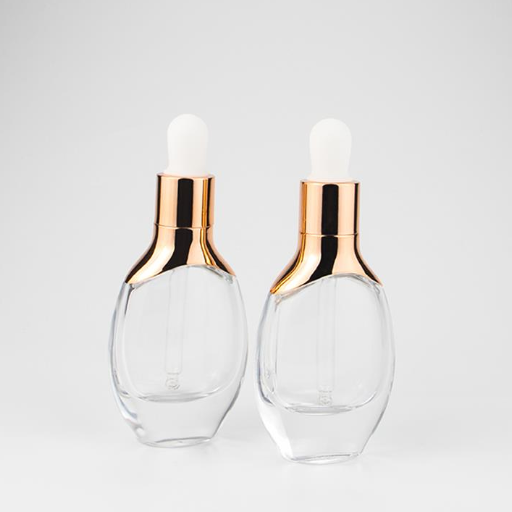
A luxury perfume packaging manufacturer is a factory that designs and produces premium fragrance packaging in-house, from rigid boxes and magnetic closures to inserts, bottles, and decorative finishes. Unlike a broker or design agency, the manufacturer owns the production line, the tooling, and the quality control process.
This distinction matters more than most buyers realize. A broker resells another factory’s work and adds a margin. A design agency can make the box look beautiful on screen but outsources the build. Only the manufacturer controls the materials, the tolerances, and the final inspection.
For a fragrance brand, that control is everything. Perfume is a fragile, premium product. The packaging has to protect a glass bottle, hold a heavy cap, and deliver a tactile first impression, all at the same time. A supplier that doesn’t own its own line can’t guarantee any of it.
Want to see what full-system luxury packaging looks like in practice? Explore our custom perfume packaging guide to understand bottles, caps, inserts, and boxes as one coordinated design.
Why Source Directly From a Manufacturer
Working directly with a perfume packaging manufacturer removes markup, speeds up communication, and puts quality control in one accountable place. But “direct” means different things depending on how you source.
OEM vs. ODM vs. Component Sourcing
Understanding these three paths is the first real vetting decision you will make.
- OEM (Original Equipment Manufacturer): You supply the design and specifications. The factory builds exactly what you define. This is the right path when your brand has its own artwork, structural drawings, or proprietary bottle dimensions.
- ODM (Original Design Manufacturer): The factory offers existing designs and templates that you customize with your branding. This is faster and cheaper for brands that do not need a fully bespoke structure.
- Component sourcing: You buy finished components, boxes, caps, inserts, from different suppliers and assemble them yourself or through a third party. This offers flexibility but multiplies your QC burden.
| Approach | Design Control | Cost | MOQ | Lead Time |
|---|---|---|---|---|
| OEM | Highest | Higher | Often 500+ | Longer |
| ODM | Medium | Lower | Often 100 to 500 | Shorter |
| Component sourcing | Split across vendors | Varies | Varies per part | Hardest to coordinate |
Most indie and mid-size fragrance brands start with ODM for speed, then graduate to OEM as volume and brand identity grow. A good custom perfume box manufacturer should support both.
The China-Manufacturing Value Proposition
The majority of the world’s luxury rigid boxes are produced in China, and for good reason. Chinese factories combine advanced printing, skilled hand-assembly, and material access at a price point Western suppliers rarely match. The global perfume packaging market is projected to grow from 3.72billionin2025to3.72billionin2025to6.89 billion by 2034. China and India together are projected to account for 40% of global middle-class consumption by 2030, which keeps the region’s packaging supply chain both scaled and competitive.
That said, sourcing from a perfume packaging manufacturer in China requires diligence, not blind trust. The gap between a top-tier factory and a reseller with a website is enormous. The sections below give you the tools to close that gap.
Technical Capabilities to Look For
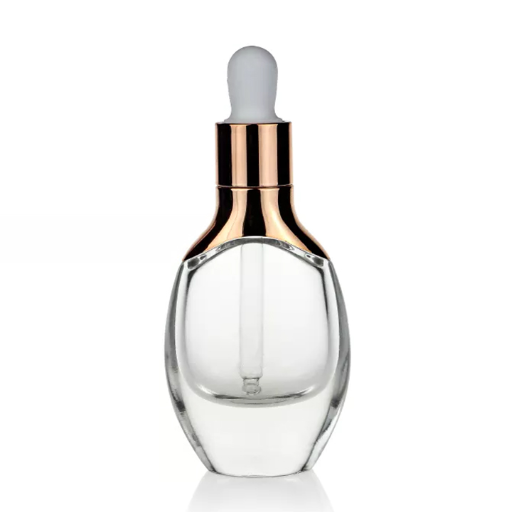
A legitimate luxury perfume packaging manufacturer should demonstrate three core capabilities. Ask for evidence of each.
Structures: Rigid, Magnetic, Drawer, Book-Style
Premium fragrance packaging is not a folding carton. It is a rigid setup box built from greyboard and wrapped in specialty paper. Ask whether the factory can produce the structures your product actually needs:
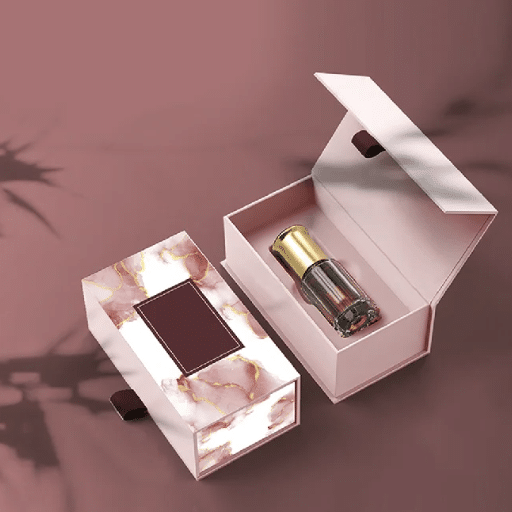
- Magnetic closure rigid boxes
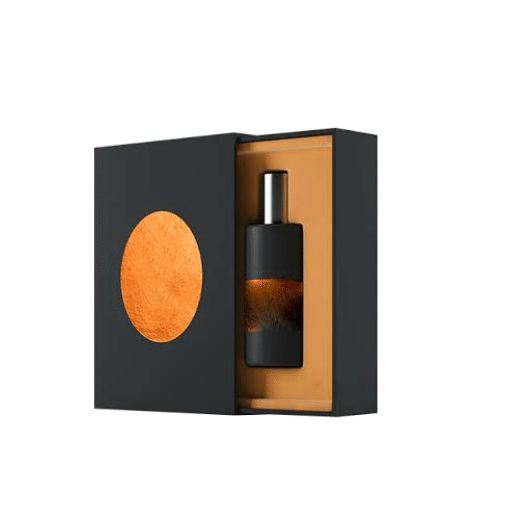
- Drawer and slider boxes for discovery sets
- Book-style boxes for gift collections
- Shoulder-neck and two-piece lid-base boxes for limited editions
- Custom shapes and multi-bottle configurations
A factory that only makes folding cartons will not deliver a luxury unboxing experience. A true rigid box manufacturer has the greyboard, tooling, and hand-assembly skill that premium fragrance packaging demands.
Inserts: EVA, Velvet, Molded Pulp, Satin
The interior is where luxury is felt. Precision-cut inserts hold the bottle in place, protect it in shipping, and elevate the reveal. Confirm the manufacturer offers EVA foam, velvet flocking, molded pulp, and satin cradles, and that inserts are custom-fit to your exact bottle dimensions, not generic.
Finishes and Printing: In-House Is Best
The highest-quality luxury perfume packaging suppliers print and finish in-house, which means tighter color control and faster revisions. Ask about:
- Offset printing with CMYK and Pantone color matching
- Foil stamping and hot stamping
- Embossing and debossing
- Soft-touch lamination
- Spot UV and varnish
In-house printing, especially on precision presses, is a strong signal the factory controls its own quality rather than outsourcing to the lowest bidder.
Quality Control & Certifications: What to Verify
Certifications are the single most important trust signal when vetting luxury perfume packaging manufacturers. But a logo on a website is not proof. Here is what each certification actually verifies, and how to confirm it.
Certifications Decoded
- ISO 9001: Verifies the factory runs a documented quality management system. It signals consistent processes, not just good products.
- FSC (Forest Stewardship Council): Verifies the paper and board come from responsibly managed forests. Critical if sustainability is part of your brand story.
- ISO 14001: Verifies an environmental management system, a strong complement to FSC for eco-conscious brands.
- REACH: A European regulation restricting hazardous substances in materials. Essential if you sell into the EU.
- RoHS: Restricts specific hazardous materials in electronics and components, relevant for some decorated caps and closures.
- BSCI: A social-compliance audit that verifies ethical labor and working conditions.
How to Request Proof
Never accept a claim at face value. Ask the supplier for the actual certificate number and the issuing body, then verify it. For FSC, request the chain-of-custody certificate number, which you can check. For ISO, the certificate should name the factory and its scope, not a vague “quality assured” phrase.
Beyond paperwork, request third-party test reports from an independent lab such as SGS or Intertek for heavy metals, phthalates, and restricted substances. A factory that hesitates to share these documents is telling you something important.
2026 Compliance Context
Regulatory pressure on packaging is rising. The EU Packaging and Packaging Waste Regulation (PPWR) targets over-packaging and non-recyclable composites, and REACH restricts a growing list of substances. If you sell into Europe, confirm your manufacturer understands these rules and can supply compliance documentation. For more on materials and eco-compliance, see our sustainable packaging guide.
Minimum Order Quantities & Total Cost of Ownership
MOQ is where many buyers get surprised, because the number on a quote rarely reflects the full cost.
MOQ Reality Check
Minimum order quantities vary widely. A low-MOQ supplier may start at 50 units for standard rigid boxes. Mid-tier factories often require 500 to 1,000 units. Some high-volume perfume packaging manufacturers set 2,000 to 5,000-piece minimums per design. For a deeper look at bulk pricing and order planning, see our wholesale perfume boxes guide.
The trade-off is price. A custom luxury rigid box typically runs 1.50to1.50to3.50 per unit at a 500-piece MOQ. Volume discounts start to appear at 5,000 to 10,000 units, and orders above 10,000 pieces can see up to 30% reductions.
Hidden Costs to Ask About Up Front
The per-unit price is only part of the story. Before you commit, ask about:
- Tooling and dies: New structural designs require cutting dies and often a one-time setup fee.
- Plates: Foil stamping and embossing require metal plates, a separate cost per design.
- Sample fees: Printed samples may cost 30to30to100 or more, though reputable suppliers often refund or deduct this against the bulk order.
- Inserts and assembly: Precision inserts and hand-assembly add cost beyond the box itself.
- Freight and import: Ocean freight, customs, and duties can add 20% or more to the landed cost.
Request three volume tiers, say 1,000, 3,000, and 5,000 units, so you can see exactly how price scales before committing.
Sampling & Prototyping: Never Skip It
Sampling is where good luxury perfume packaging manufacturers separate themselves. A supplier that rushes you past sampling is not one you want in production.
White Mock-Ups vs. Printed Samples vs. Pilot Orders
There are three stages, and each answers a different question.
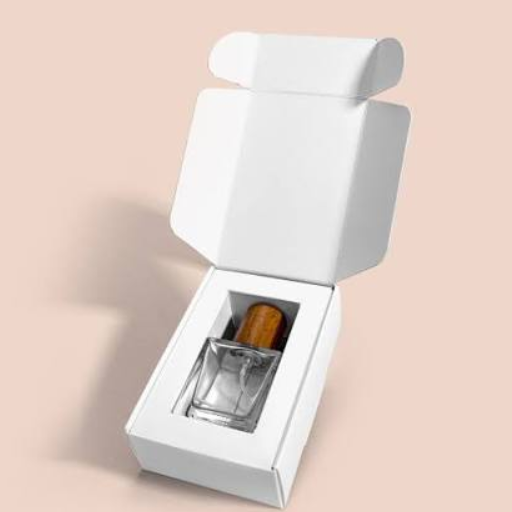
- White mock-up: An unprinted structural sample that validates dimensions, fold sequence, magnet position, and bottle fit. It confirms the box works before you spend on decoration.
- Printed sample: A finished sample with your artwork that verifies color, foil effect, embossing depth, and lamination feel. This is your production reference.
- Pilot order: A small production run, often 100 to 500 units, that tests real manufacturing quality, logistics, and market response before you scale.
Marcus, a procurement manager for a fragrance brand, vetted three suppliers using exactly this sequence. Two offered glossy promises but could not produce a clean white mock-up within three weeks. The third delivered a structural sample in five days, corrected a magnet-alignment issue on the printed sample, and then ran a 300-unit pilot. Marcus committed 10,000 units to that supplier and cut his defect rate by more than half compared to his previous vendor.
Lead Times & Global Logistics
Lead time is a promise, and you should treat it as one to verify, not assume.
Production + Shipping Timelines
A typical custom rigid perfume box takes 15 to 30 business days to produce, plus shipping. Pre-production sampling adds 5 to 7 days for printed samples. If you are working toward a launch date, build the full timeline, sampling, production, freight, customs, and inspection, into your plan and leave buffer.
Export-Grade Protection
Perfume ships long distances, often by sea, where humidity and rough handling are constant. Confirm your manufacturer applies waterproof coatings where needed and can provide transport testing: drop, vibration, compression, and humidity tests with filled bottles in the intended export cartons. This is the difference between a box that looks good in a studio and one that survives a container to a retail shelf.
Red Flags When Vetting Luxury Perfume Packaging Manufacturers
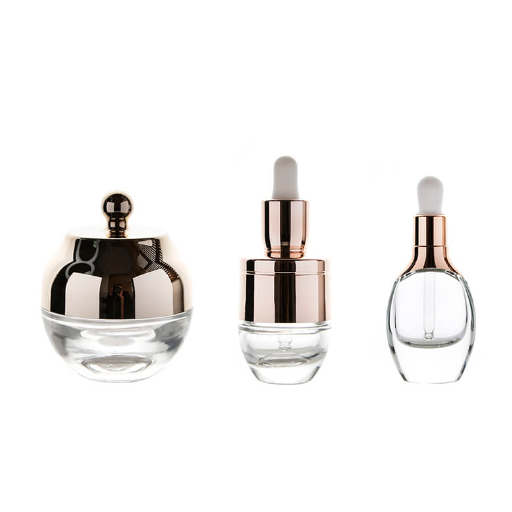
Some suppliers reveal themselves quickly if you know what to look for. Here are the warning signs to walk away from:
- No factory profile or ownership details. A supplier that cannot tell you where the factory is located or who runs it is likely a broker.
- No certifications or QC process on request. Claims without documents are marketing, not quality.
- Stock images or inconsistent photos. If the product photos do not match real production, the supplier may be reselling someone else’s work.
- Reluctance to provide samples. No structured sample approval process means no accountability.
- Unrealistically low pricing. A quote far below market often hides thin materials, skipped finishing, or hidden fees.
- Vague answers on materials and finishing. If they cannot explain GSM, board thickness, or finish options, they are not the manufacturer.
Ready to test the difference? Contact our team for a free wholesale quote and sample so you can verify our materials, finishes, and certifications yourself.
How to Choose a Luxury Perfume Packaging Manufacturer: A 5-Step Checklist
Bring it all together with a repeatable selection process.
- Define your specs. Lock your box structure, branding, bottle dimensions, and sustainability requirements before you approach anyone.
- Screen for capability. Confirm the factory makes rigid luxury structures, custom inserts, and finishes in-house, not folding cartons by proxy.
- Verify certifications in writing. Request certificate numbers for ISO 9001, FSC, REACH, and RoHS, and confirm them with the issuing body or a third-party lab.
- Sample in three stages. Run a white mock-up, then a printed sample, then a pilot order. Never skip a stage to save time.
- Compare total cost, not unit price. Get tiered quotes that include tooling, plates, samples, inserts, and freight before you decide.
The team at Maison Véronique used this checklist and caught a problem a competitor missed. One supplier claimed FSC certification but could not produce a chain-of-custody number. A two-minute verification call saved them from attaching a false sustainability claim to a product launching into the EU market, where that mistake would have been costly.
Frequently Asked Questions
How do I find a luxury perfume packaging manufacturer?
Start with a targeted search for “luxury perfume packaging manufacturers” or “custom rigid box manufacturer,” then screen each candidate for in-house production, certifications, and a factory profile. Trade shows, referrals, and supplier directories are good secondary sources. Always verify with samples before committing.
What is the minimum order quantity for custom perfume boxes?
MOQs typically range from 50 units at low-MOQ suppliers to 2,000 to 5,000+ units at high-volume factories. The sweet spot for most indie and mid-size fragrance brands is 500 to 1,000 units, where per-unit pricing improves without requiring massive inventory.
What certifications should a luxury packaging manufacturer have?
At minimum, look for ISO 9001 for quality management and FSC for responsibly sourced paper. If you sell into the EU, confirm REACH and RoHS compliance. Ask for certificate numbers and verify them with the issuing body, not just a logo on a website.
How long does custom perfume packaging take to produce?
A typical custom rigid perfume box takes 15 to 30 business days to produce, plus shipping. Add 5 to 7 days for printed samples and a few more for a pilot order. Build the full timeline, sampling, production, freight, and customs, into your launch plan.
What is the difference between OEM and ODM?
OEM means you supply the design and the factory builds to your exact specifications. ODM means the factory offers existing designs you customize with your branding. ODM is faster and cheaper for standard structures; OEM is the right choice for a fully bespoke package.
How much does custom luxury perfume packaging cost?
A custom luxury rigid box typically runs 1.50to1.50to3.50 per unit at a 500-piece MOQ, before tooling, plates, inserts, and freight. Total cost per unit falls as volume rises, with meaningful discounts at 5,000 to 10,000 units. Always compare total cost of ownership, not unit price alone.
Conclusion
Choosing among luxury perfume packaging manufacturers is not about finding the cheapest quote. It is about finding a supplier you can verify: one with real OEM/ODM capability, certifications you can confirm in writing, transparent MOQs and lead times, and a sampling process that holds up under scrutiny.
To recap: understand OEM versus ODM versus component sourcing, verify technical capability and certifications with documents, never skip the three-stage sampling process, and compare total cost rather than unit price. These steps turn a risky sourcing decision into a predictable one.
The right manufacturer becomes a long-term partner, not a one-off vendor. At Fuzhou Longlu Packaging, we are a factory, not a broker, and we are happy to prove it. Ask us for our certifications, request a free wholesale quote and sample, or explore our custom perfume packaging guide to see how we build premium fragrance packaging from the production line up.