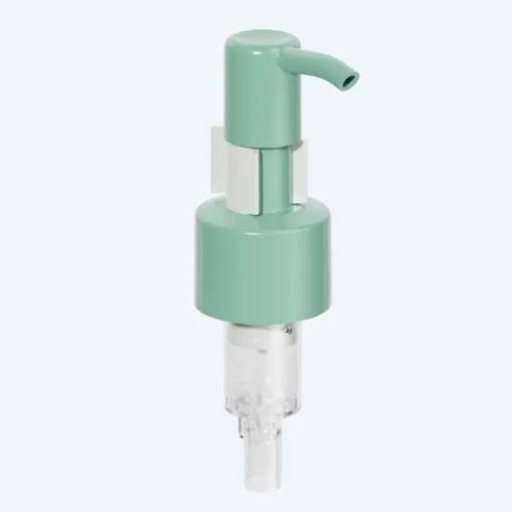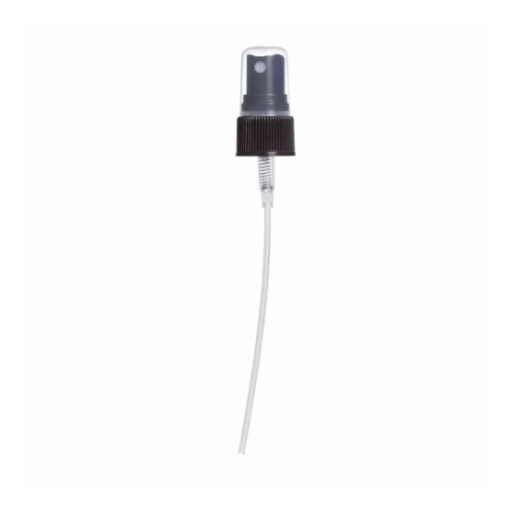
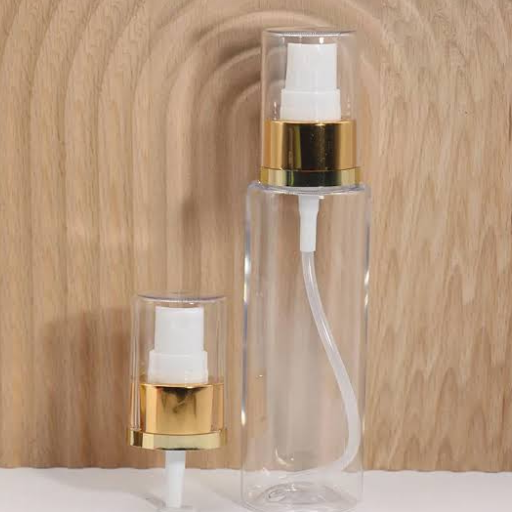
A standard polypropylene fine mist sprayer costs about USD 0.03 to 0.06 per unit at 10,000 pieces. Custom colour roughly doubles to triples that, metal finishes can push toward USD 0.80, and the minimum order is set by the customization rather than by the sprayer itself.
Two quotes for what looks like the same sprayer land in your inbox. One says USD 0.05. The other says USD 0.07.
The cheaper one turns out to cost more per finished bottle, because it excludes the collar colour and the printing set-up. Neither supplier is lying. They’re answering different questions.
That gap is what this guide closes. You already know unit price isn’t the whole story. What most catalogues skip is the middle: which change moves the price, which one moves the minimum, and which one moves both. Every figure below is an indicative band for 2026, not a quotation, and your specification, volume and Incoterm will move the final number.
Key Takeaways
- Standard polypropylene fine mist sprayers run about USD 0.03 to 0.06 per unit at 10,000 pieces; custom Pantone colour lands near USD 0.09 to 0.22 and metallized finishes near USD 0.18 to 0.40.
- The minimum order quantity is driven by the customization, not the sprayer: stock colour from 1,000, existing-mould colour at 10,000 per SKU, and new tooling at 20,000 or more.
- A mould costing USD 3,000 adds USD 0.06 per unit across 50,000 pieces and USD 0.60 across 5,000, so tooling math changes the whole business case.
- A stock sprayer under a custom overcap reaches a branded look at 3,000 to 5,000 pieces, the lowest-volume route that still looks custom.
- Two quotes are only comparable once neck finish, output, decoration, Incoterm and defect allowance all match.
Want to see the difference between stock, Pantone and metal on the same sprayer? with your formula before you commit to a mould.
What Drives Fine Mist Sprayer Pricing
Four things move the number: the components you specify, the material they are made from, how many you order, and how much of the part carries your brand. Volume is the largest lever, and decoration is the smallest per unit but the most visible.
The cost stack, part by part
A fine mist sprayer is an assembly, not a single moulding. Each part can be changed, and each change lands on a different line of the quote.
| Part | What you can change | Effect on unit cost | Effect on MOQ |
|---|---|---|---|
| Actuator | Colour, finish, shape | Colour adds about USD 0.01 to 0.05; a new shape needs a mould | Pantone raises it to 5,000 to 10,000 |
| Closure | Screw, crimp or snap-on; ribbed or smooth; aluminium collar | Aluminium collar adds about USD 0.01 to 0.04 | Stock from 1,000; custom colour 5,000 plus |
| Overcap | Colour, transparency, shape | Custom overcap adds about USD 0.02 to 0.08 | Custom overcap from 3,000 to 5,000 |
| Dip tube | Length and cut angle | Negligible | No effect |
| Decoration | Silk screen, pad print, hot stamp, laser | USD 0.01 to 0.05 per unit plus a set-up fee | Often 5,000 to 10,000 |
| Tooling | New actuator, closure or cap shape | USD 1,500 to 8,000 one time | 20,000 to 50,000 |
The pattern is consistent. Anything that touches the mould raises both cost and minimum. Anything applied after moulding, such as ink or a coloured overcap, raises cost but barely touches the minimum. That is why decoration is the cheapest way to look custom and tooling is the most expensive.
Volume is the biggest lever
Price falls sharply between 1,000 and 30,000 pieces, then flattens. The difference between 10,000 and 100,000 is real but modest; the difference between 1,000 and 10,000 is the one that changes whether a launch is viable.
Published listings show the same shape. On Made-in-China, 18 mm to 28 mm plastic fine mist sprayers are listed at roughly USD 0.03 to 0.05 on 2026-11-23, while mixed plastic and aluminium versions run from USD 0.04 to 0.20. Those are asking prices for a specification you can’t see in full, so treat them as an anchor rather than a quote.
Fine Mist Sprayer Pricing in 2026
The table below is the page’s core asset: what a sprayer costs at each volume band, for three levels of customization. It assumes a standard polypropylene body, FOB China, in 2026.
Stock, custom colour and metallized
| Order volume | Stock colour | Custom Pantone | Metallized or premium |
|---|---|---|---|
| 1,000 to 3,000 | USD 0.08 to 0.30 | USD 0.15 to 0.45 | USD 0.35 to 0.72 |
| 5,000 to 10,000 | USD 0.03 to 0.08 | USD 0.09 to 0.22 | USD 0.18 to 0.40 |
| 20,000 to 30,000 plus | USD 0.03 to 0.05 | USD 0.05 to 0.12 | USD 0.12 to 0.25 |
At 10,000 pieces, in the middle of the second row, stock colour sits at about USD 0.03 to 0.06. That’s the number most buyers anchor on, and it’s the one our published band on uses.
Read the columns, not just the rows. Moving from stock to Pantone at the same volume roughly doubles to triples the unit price. Moving from 1,000 to 20,000 pieces in the same column cuts it by half or more. In practice, the cheapest way to a custom look is volume plus patience, not a new mould.
Decoration and set-up fees
Surface decoration is charged per unit plus a one-time set-up. Silk screen set-up is typically USD 50 to 150; pad printing set-up runs USD 80 to 200. Per-unit decoration adds about USD 0.01 to 0.05, depending on the number of colours and the coverage.
At 10,000 units, a USD 150 set-up is USD 0.015 per unit. At 1,000 units it is USD 0.15, which can be more than the print itself. Small orders should budget set-up as a fixed cost, not divide it away.
Tooling and who owns the mould
A new actuator mould costs about USD 1,500 to 5,000. A closure or cap mould runs about USD 3,000 to 8,000. Some suppliers quote lower and recover it in the unit price; some quote higher and hand over ownership after the first run.
Do the amortization before you agree to anything. A USD 3,000 mould spread over 50,000 pieces is USD 0.06 per unit. The same mould over 5,000 pieces is USD 0.60 per unit, which can double the cost of a small launch.
Ownership matters more than the fee. Ask three questions before paying:
- What does the tooling cost?
- Who holds the mould?
- Where does it go when the order ends?
A supplier who won’t answer the third question in writing is telling you something.
What Sets the Fine Mist Sprayer MOQ
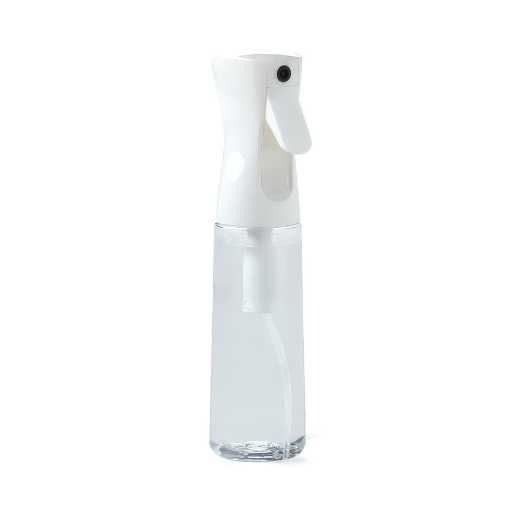
“MOQ 5,000” and “MOQ 20,000” can both be true for the same sprayer. The floor moves with the customization, because each change adds a process the factory can’t run economically in small batches.
Stock colour: the 1,000 to 5,000 floor
White, black and clear are made continuously, so they can ship in small quantities. Some suppliers start stock colours at 1,000 pieces. Sunshine, for example, publishes a 5,000-piece minimum per model and finish across its cosmetic sprayer range.
Our own fine mist sprayer MOQ is quoted per project, because it depends on the component, the decoration and whether tooling is involved.
Custom colour: why 10,000 appears everywhere
Custom Pantone colour requires a pigment lot, a dedicated run and a clean-down between batches. That’s why 10,000 per SKU is the most common figure in the market. Jarsking states a 10,000-unit minimum per SKU on existing moulds.
Colour is not the only trigger, though. SUNSHINE lists some UV-printed and gold-finish sprayers at 20,000 pieces on the same category page where the base model shows 5,000.
Colour also carries a price premium independent of volume: expect about 15 to 30 percent over stock at the same quantity, before decoration.
Tooling: the 20,000-plus rung
A new actuator shape or closure design is a tooling project. Moulds are built to run large batches, and the economics only work when the order is large enough to absorb the tool. A 20,000-piece minimum is typical; 50,000 is not unusual for a complex part.
| Customization | Typical MOQ floor | Why |
|---|---|---|
| Stock colour, standard closure | 1,000 to 5,000 | Made continuously, no dedicated run |
| Custom Pantone on an existing mould | 10,000 per SKU | Pigment lot, purge, dedicated batch |
| Decoration on a stock sprayer | 5,000 to 10,000 | Print set-up and registration |
| New actuator or closure shape | 20,000 to 50,000 | Tooling amortization |
How to Lower the MOQ Without Losing the Look
There’s a route between “stock” and “10,000 units of custom colour”, and it is the most underused idea in this category.
The custom overcap on a stock sprayer
Put a stock sprayer under a custom-coloured overcap. The cap is a separate moulding with its own low minimum, typically 3,000 to 5,000 pieces, and it is the part the buyer sees first.
Run the numbers. 5,000 stock sprayers at USD 0.04 plus 5,000 custom overcaps at USD 0.10 is USD 700 of goods, at an effective USD 0.14 per finished sprayer.
A full custom-colour run at 10,000 pieces and USD 0.12 is USD 1,200. Per unit, the custom run is slightly cheaper. In cash and commitment, the overcap route costs about 60 percent as much.
That distinction matters for a first launch. The overcap route costs less to commit to; the custom route costs less per unit once you can sell 10,000.
Stock colours that read as brand colours
Matte black, soft pink, navy and clear frost are now common stock finishes. If one of them is close to your brand colour, you avoid the Pantone minimum entirely and keep the custom budget for the label or the box.
What not to customise on a first order
Leave the dip tube and the nozzle standard unless your bottle demands otherwise. Both affect function, both carry their own engineering, and neither changes how the product looks on a shelf.
Spend the customization budget on what the buyer sees: the overcap, the closure finish and the printed logo.
Fine Mist Sprayer Pricing: Lead Times, Samples and Tooling
Time is part of the price. A quote that is USD 0.01 cheaper but adds three weeks can miss a launch window worth far more.
| Stage | Typical duration | Basis |
|---|---|---|
| Stock-colour sample | 15 to 18 days | Jarsking |
| Specified-colour sample | 15 to 25 days | Jarsking |
| Production of 10,000 custom-colour heads | 30 days | Jarsking |
| Production after sample approval | 20 days | SUNSHINE |
| Electroplated cap | 35 days | Jarsking |
| Anodized aluminium cap | 45 days | Jarsking |
| New steel mould | 35 to 40 days | Jarsking |
| Sea freight | 35 to 40 days | Jarsking |
Our production window is 4 to 6 weeks once the specification and artwork are approved. A full custom project, from brief to delivered goods, commonly runs 8 to 12 weeks. Plan backward from the launch date, not forward from the purchase order.
Sampling is the cheapest insurance in the process. Approve a physical sample in your actual material before production starts. A sample fee of USD 50 is trivial against a 10,000-piece run that arrives in the wrong colour.
Function and fit need their own check. A 28/412 neck needs a 412 sprayer and will not seal on a 410 thread.
Output also varies by model. Suppliers publish ranges from about 0.08 to 0.15 ml, and up to 0.18 ml on larger 20/410 and 24/410 bodies. Confirm the dose on the sample, not on the catalogue.
How to Compare Two Fine Mist Sprayer Quotes
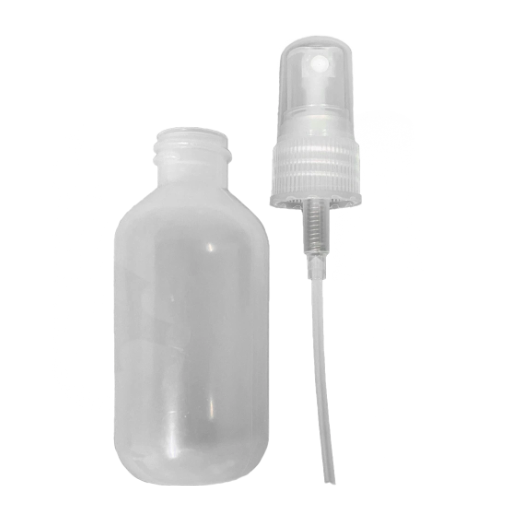
Two quotes are only comparable when they describe the same object. Most are not, and the difference is usually in the lines nobody reads.
| Line | Quote A, USD 0.05 | Quote B, USD 0.07 |
|---|---|---|
| Base sprayer, 24/410, stock colour | USD 0.05 | USD 0.07 |
| One-colour logo print | USD 0.02, extra | Included |
| Print set-up at 10,000 pieces | USD 0.015, extra | Included |
| Incoterm | FOB | FOB |
| Cost per finished sprayer | USD 0.085 | USD 0.07 |
Quote B is cheaper by USD 0.015 per unit, or USD 150 across 10,000 pieces. The higher sticker price was the better offer.
The six lines every RFQ needs
- Neck finish, such as 18/410, 20/410 or 24/410, matched to your bottle.
- Output per stroke, in millilitres, with a tolerance.
- Closure type and colour reference, including the Pantone number if custom.
- Decoration and artwork format, with vector files and a proof approval step.
- Quantity and Incoterm, stated as FOB or CIF with the named port.
- Defect allowance, as an AQL level or a percentage, agreed in writing.
If a quote omits any of these, the price isn’t yet a price.
FOB versus CIF, and what is excluded
Most factory quotes are FOB, which means the goods are yours once loaded at the origin port. Freight, insurance, duty, destination charges and customs examination are added later. CIF moves freight and insurance into the quote but still stops at the destination port.
Ask what the price excludes, not just what it includes. Tooling, set-up, sampling, colour matching, export packaging and inspection are the usual exclusions. A quote that lists them is easier to compare than one that hides them in a total.
Defect allowance and decoration durability
Agree the reject rate before production. Then test the decoration: rub it, apply tape, and check resistance to the alcohol or oil in your formula. Print that fails in transit costs more than the print did.
Frequently Asked Questions
How much does a fine mist sprayer cost per piece? Standard polypropylene sprayers run about USD 0.03 to 0.06 per unit at 10,000 pieces. Custom Pantone colour lands near USD 0.09 to 0.22, and metallized or premium finishes reach USD 0.18 to 0.40 at the same volume. Small orders and bespoke tooling sit well above that.
What is the minimum order for a custom fine mist sprayer? Stock colours start at 1,000 to 5,000 pieces. Custom colour on an existing mould is usually 10,000 per SKU, and some decorated versions are listed at 20,000. A new actuator or closure shape is a tooling project at 20,000 pieces or more.
Can I order 3,000 custom sprayers? Yes, if the customization is a custom overcap on a stock sprayer. A custom Pantone actuator at 3,000 pieces is usually refused, because the pigment and clean-down costs do not work at that volume.
Why do custom colours need a much higher minimum? A custom colour needs its own pigment lot, a dedicated production run and a clean-down between batches. The factory absorbs fixed cost on every run, and a small batch cannot carry it. The minimum is the point where the run becomes economic.
How long does custom production take? Samples take about 15 to 25 days depending on colour. Production of 10,000 custom-colour heads takes about 30 days after approval, and a new steel mould adds 35 to 40 days before production begins. Sea freight adds another 35 to 40 days.
Are fine mist sprayer prices FOB or delivered? Most factory quotes are FOB. CIF adds freight and insurance to the destination port. Duty, customs clearance and inland delivery are almost always extra, and they can change a landed cost by more than the unit-price difference between two suppliers.
Conclusion
Fine mist sprayer pricing is a stack, not a sticker. Standard polypropylene sits at about USD 0.03 to 0.06 at 10,000 pieces, and each customization adds a known increment: colour, decoration, closure material, tooling. The MOQ moves with the same decisions, from 1,000 on stock colour to 20,000 or more once a mould is involved.
Three habits keep the budget honest. Price the customization ladder, not the base sprayer. Do the tooling math before you agree to a mould. And compare quotes line by line, because the cheaper quote is often the one that left something out.
If you’re still choosing the format, our covers neck sizes, output and fit, and the starts with your formula. For pump-side specifications, see , or check the before you request a quote.
Tell us the bottle, the dose and the finish you want. We will confirm the minimum and the price for your specification, and send a sample before anything goes into production.