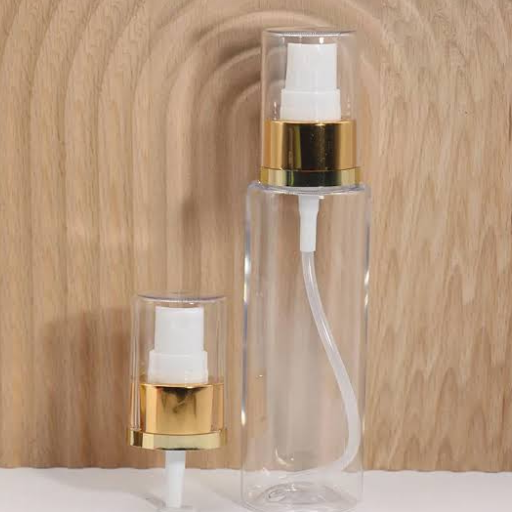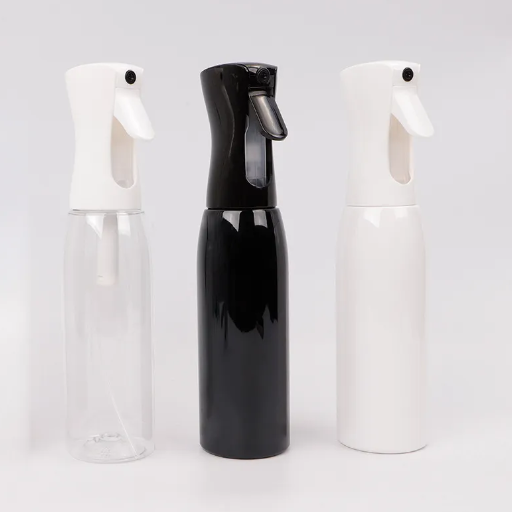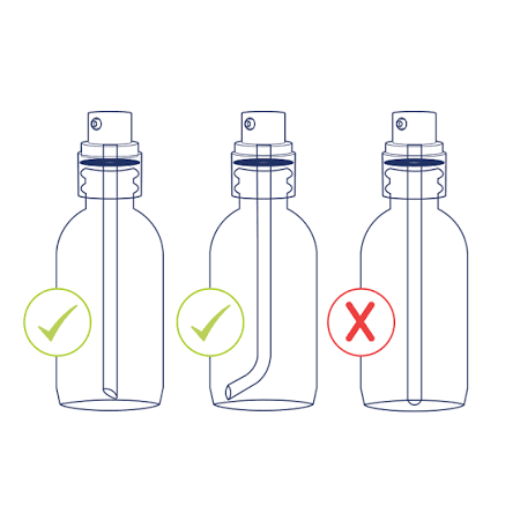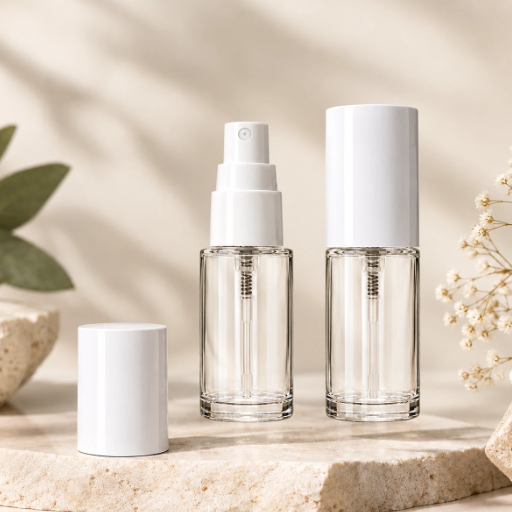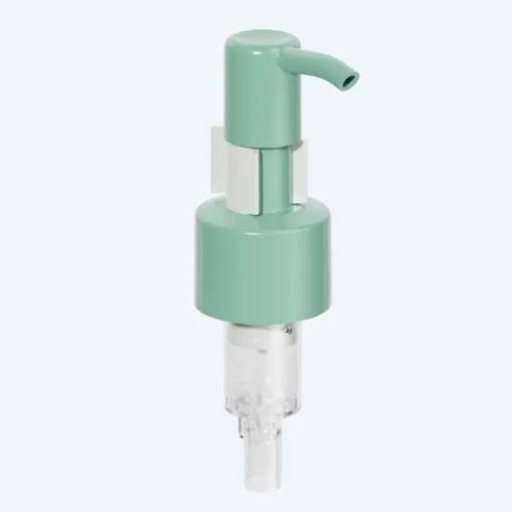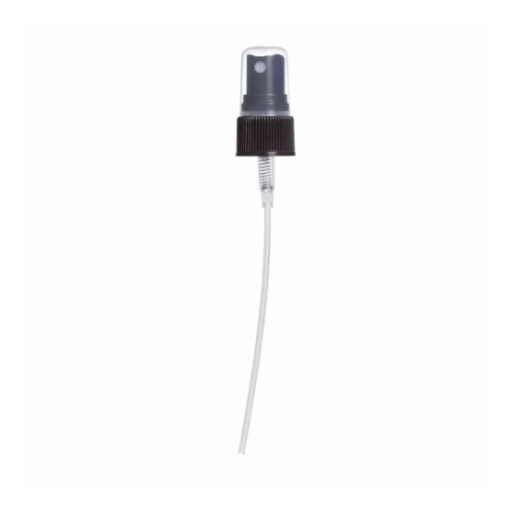
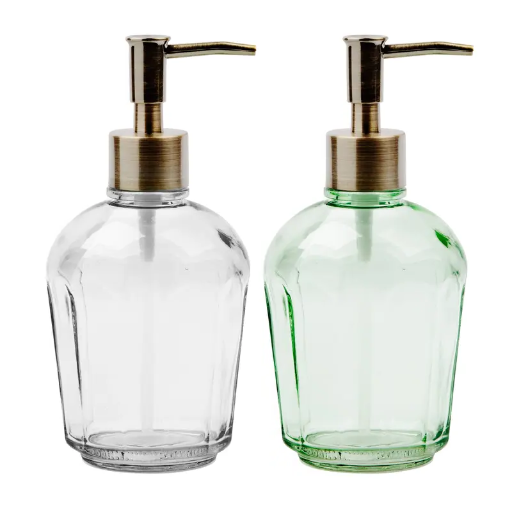
Wholesale lotion pumps cost roughly USD 0.03 to 0.12 per unit, depending on output, closure material, lock style and order size. Most buyers negotiate hard on that number and ignore the one that decides margin: landed cost per usable pump.
A 30,000-piece order at USD 0.045 looks like USD 1,350 of goods. Add freight, duty, inspection and a defect allowance, and each pump you can actually fill costs more than USD 0.06. That gap is where wholesale orders quietly fail.
If you’ve compared lotion pump quotes, you know the pattern. Every seller lists a minimum, a price and a photo, and none says what the order costs after it leaves the factory. This guide covers the rest: tier math, MOQ cash, stock versus custom, landed cost and the levers that don’t hurt quality.
Key Takeaways
- Published 2026 listings put lotion pumps at about USD 0.024 to 0.12 per unit, with MOQs commonly between 10,000 and 30,000 pieces.
- At 30,000 pieces, a USD 0.045 pump lands near USD 0.065 per usable unit after freight, duty, inspection and a 2.5 percent reject allowance.
- Fixed costs punish small orders. A USD 300 inspection is USD 0.03 per unit at 10,000 pieces and USD 0.003 at 100,000.
- One supplier carton holds 1,000 pumps at 60 x 37 x 38 cm, so 30,000 units take about 2.5 m3 and 240 kg of product.
- Custom colour often starts at 30,000 even when the stock pump has a 10,000 MOQ. Buy the configuration you can sell through in a year.
Lotion Pump Wholesale: Three Supply Routes
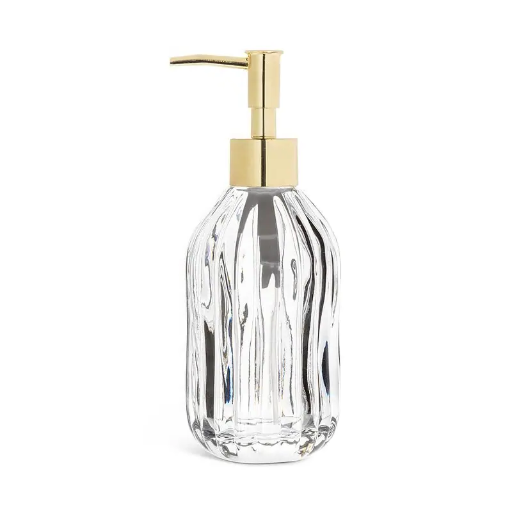
Three purchases hide behind the phrase, and the route sets your price, minimum and flexibility.
A component factory moulds or assembles the pump. It gives the lowest price at volume and the most control over specification, but you carry the full minimum and the longer schedule.
A wholesale distributor holds stock and sells in smaller quantities. You pay a margin for speed and flexibility.
A private-label supplier sells the pump on a filled bottle under your brand. The pump price disappears into the pack price. It’s the simplest route and the least transparent.
| Route | What you buy | Typical minimum | Best for |
|---|---|---|---|
| Component factory | Pump only, to your spec | 10,000 to 30,000 | Custom colour or engine; best unit price |
| Distributor or stockist | Pump from stock | Often a few thousand | Fast replenishment, small launches |
| Private label or finished pack | Filled bottle with pump | Set by the filler | Brands outsourcing filling |
A marketplace listing isn’t a fourth route. It’s a storefront, and its price is an asking price for a spec that may not match what ships. Treat it as an anchor, not a quote.
The same pump sells at factory-direct, distributor and retail levels. The spread can be several times the unit cost, which is what volume buys you.
If you’re still choosing between a pump and a sprayer, our starts with the liquid, not the catalogue.
The Volume Math Behind a Lotion Pump Wholesale Order
What the 2026 price bands look like
Buyers comparing bulk lotion pumps see a wide band. These figures come from supplier listings reviewed in October 2026 and from published supplier pages. A lotion pump price depends on output, collar material, lock style, colour, decoration, testing and quantity.
| Pump configuration | Price per unit | MOQ | Source type |
|---|---|---|---|
| Aluminium collar lotion pump | USD 0.024-0.032 | 10,000 | Supplier listing |
| 28/410 custom lotion pump | USD 0.032-0.05 | 10,000 | Supplier listing |
| 24/410 black ribbed lotion pump | USD 0.034-0.041 | 30,000 | Supplier listing |
| 24/410 standard lotion pump | USD 0.039-0.045 | 30,000 | Supplier listing |
| 24/410 clip-lock, 1.0 mL, white | USD 0.06 | 10,000 | NABO product page |
| 28/410 twist-lock | USD 0.077 | Not stated | NABO product page |
| Big-dosage skincare pump | USD 0.094-0.12 | 10,000 | Supplier listing |
| Child-resistant lotion pump | USD 0.11-0.117 | 30,000 | Supplier listing |
A standard 24/410 lotion pump is the usual starting point.
Two things stand out. The cheapest line isn’t always the best value: an aluminium collar can cost less than plastic at the same volume but changes the look, weight and recycling profile. And the MOQ isn’t one number. It moves with configuration and colour.
How price tiers are structured
Suppliers usually quote a ladder, for example 10,000, 30,000, 50,000 and 100,000 pieces. The curve is steep at the start and flattens near the top. Going from 10,000 to 30,000 often saves more per unit than going from 50,000 to 100,000.
Ask for the full ladder in the first reply. A lotion pump supplier that quotes one quantity is hiding the curve.
Quote request – lotion pump wholesale
Buy the tier that matches your next 12 months of sell-through. The lowest unit price on a pump you can’t sell is the most expensive decision in the order.
What the MOQ really costs you
The MOQ is a cash and shelf-space decision, not just a purchasing threshold. Assume a USD 0.045 pump and annual demand of 10,000 units.
| Order quantity | Goods value | Years of stock at 10,000/yr | What it means |
|---|---|---|---|
| 10,000 | USD 450 | 1.0 | Low cash, higher unit price |
| 30,000 | USD 1,350 | 3.0 | Common wholesale tier, three years of stock |
| 50,000 | USD 2,250 | 5.0 | Lower unit price, heavy carrying risk |
A common 20 percent annual carrying assumption covers storage, insurance and tied capital. On 30,000 units, average inventory is worth USD 675, so carrying cost is about USD 135 a year. The bigger risk is a formula change or a slow launch that strands two years of stock.
The lotion pump MOQ moves with colour, and that’s the trap most often missed. A brand that needs 12,000 Pantone-coloured pumps may find stock white starts at 10,000 but its colour starts at 30,000. The extra 18,000 units aren’t free capacity. They’re inventory to store, insure and eventually use or write off.
Stock, Custom Colour, Custom Tooling: What Each Does to Your Order
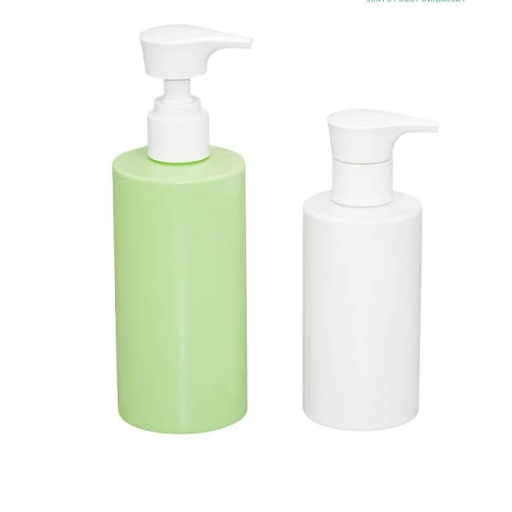
Most wholesale quotes blur four different products under one price. They aren’t interchangeable, and the differences show up in MOQ, tooling, lead time and how easily you can change your mind.
| Configuration | Typical MOQ | Tooling | Lead time | Flexibility |
|---|---|---|---|---|
| Stock pump, standard colour | 10,000 | None | 15-25 days | High, reorder from stock |
| Custom colour | 30,000 (published example) | Colour setup, usually no mould | Longer than stock | Medium, colour is fixed |
| Custom actuator or closure | Project-specific | Mould fee likely | Toward 30-35 working days for OEM | Low |
| Custom engine or output | Highest | New tooling likely | Longest | Lowest |
These are observed examples, not rules. Every step away from the stock pump raises the minimum, adds setup cost and lengthens the schedule.
Output is part of this. Published references run from 1.20 mL to 3.35 mL on common necks, so a 24/410 label says nothing about the dose (HCC Packaging).
If you sell into the EU, material choice is now a compliance question. The PPWR (Regulation (EU) 2025/40) has applied since 12 August 2026, with recyclability and material-simplification duties phased in (DS Smith).
The mould ownership question
A stock pump needs no tooling. A custom actuator, a proprietary collar or a moulded logo needs a mould, and the mould is quoted as a one-time fee.
The fee isn’t the important part. Ownership is. Ask three questions before you pay it:
- Who owns the mould after I pay for it?
- Can it be moved to another moulder if we stop working together?
- Is the fee charged upfront or amortized into the unit price?
A supplier that keeps a mould you paid for controls your product for as long as it sells. Put ownership in writing before the purchase order, not after.
Choose the configuration you can sell through
The cheapest configuration is the one your brand can sell before the stock ages. A stock black pump at 10,000 units will often beat a custom-coloured pump at 30,000 units for a first run, even though the custom unit price looks better on paper.
If you need help matching a pump to a bottle, our covers the dimensional side of the assembly.
Landed Cost per Usable Unit
Unit price is what you pay the supplier. Landed cost per usable unit is what the pump costs your business. Here’s a 30,000-piece order at USD 0.045, shipped FOB.
| Line item | Basis | Amount |
|---|---|---|
| Goods | 30,000 x USD 0.045 | USD 1,350 |
| Ocean freight and insurance | about 12 percent of goods | USD 162 |
| Import duty | 6 percent of goods, illustrative | USD 81 |
| Pre-shipment inspection | one visit | USD 300 |
| Total landed | USD 1,893 | |
| Usable units after 2.5 percent rejects | 29,250 | |
| Landed cost per usable unit | about USD 0.065 |
That’s roughly 44 percent above the quoted unit price, before a single defective pump reaches a customer.
The structure matters more than the exact percentages, which differ by market. Freight, duty and defects scale with the order. Inspection doesn’t. That’s why small orders carry a heavier fixed-cost burden.
At 10,000 pieces, the same USD 300 inspection adds USD 0.03 to every unit. At 100,000 pieces it adds USD 0.003. The inspection doesn’t get cheaper. It gets spread thinner.
The cheaper quote that costs more
Suppose two suppliers quote 30,000 pumps. Supplier A offers USD 0.041 with a 7 percent defect rate. Supplier B offers USD 0.046 with 1 percent.
A looks 11 percent cheaper. Now count the rejects. A produces 2,100 bad pumps, B produces 300.
If a defective pump is caught at the filling line, the loss isn’t just the pump. It’s the bottle, the formula, the labour and the line time, easily USD 0.15 per rejected unit. That adds about USD 315 to A and USD 45 to B.
Per usable pump, A lands near USD 0.055 and B near USD 0.048. The cheaper quote is the more expensive order. This is why a defect allowance belongs in the landed-cost table, not in a footnote.
How Lotion Pump Wholesale Orders Ship: Cartons, Cube and Consolidation
Lotion pumps are light and bulky, so freight is usually governed by volume, not weight. The carton tells you what you’re actually buying.
One published supplier carton holds 1,000 pumps at 60 x 37 x 38 cm, each weighing 8.0 grams (NABO). That’s 0.084 cubic metres.
Run the numbers for a 30,000-piece order:
- 30 cartons
- About 2.5 cubic metres
- About 240 kg of product before carton weight
Mixed orders are where buyers lose money. A 30,000-piece order split across three colours may trigger a 30,000 minimum for each colour, not for the total. Confirm the colour minimum before you plan the launch.
Consolidation is the other lever. If you also buy bottles, caps or boxes, shipping them together can cut freight per unit and reduce handling. It also concentrates risk: one delayed component holds the whole shipment. Our uses the same carton-and-landed-cost logic for the sprayer side of the purchase.
Plan the reorder before the first order
Set a reorder point when you place the first order, not when stock runs low. Standard pumps run 15 to 25 days; OEM work runs toward 30 to 35 working days, before transit.
A simple rule: reorder when stock equals lead time plus safety stock. At 800 pumps a month and a 10-week lead time, that’s about 2,000 units at the trigger, plus a buffer.
Negotiation Levers That Do Not Cost Quality
Wholesale negotiation isn’t only about the unit price. Several levers move the total cost without touching the specification.
Volume commitment. A 12-month forecast with a firm first order often earns a better tier than a single purchase order. Offer the forecast, not just the quantity.
Payment terms. Ask for the deposit percentage, the balance timing and whether a letter of credit is accepted. Terms affect the supplier’s risk and therefore its price.
Incoterm. FOB is the common baseline. CIF moves freight and insurance to the seller. DDP puts everything on the seller at the highest unit price. Compare quotes on the same term.
Packaging simplification. Bulk cartons without inner bags, or fewer label variants, can reduce packing cost. Ask what the packaging actually costs before you specify it.
Specification simplification. A standard colour, actuator or lock can move an order from a custom minimum to a stock minimum. In many cases the consumer can’t tell the difference.
What never to trade away
Some concessions look small and aren’t.
- The model number. Every quote and purchase order should name the exact pump model.
- The nominal output and its tolerance. “Standard output” isn’t a specification.
- The AQL. Agree the acceptance limit before production. AQL 2.5 for major defects is a common starting point for cosmetic components, with a tighter limit for critical defects such as leakage.
- A sample from the production line. Not a hand-built golden sample.
- The inspection. A pre-shipment inspection is cheap next to a container of unusable pumps.
Ask for COA and MSDS for the actual batch. If a supplier claims a certificate, ask for the certificate, its scope and its expiry, not a logo in a brochure.
Where CustomPackingCo Fits
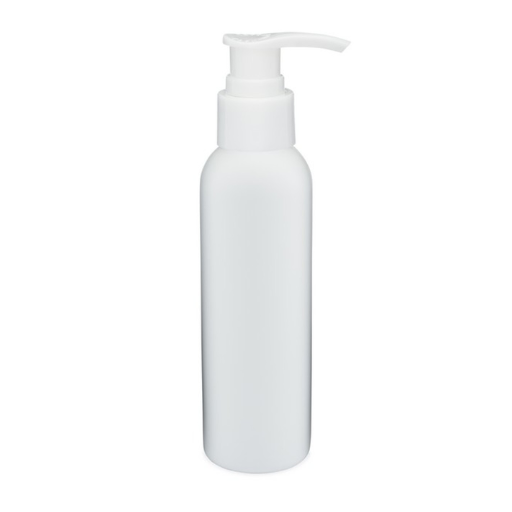
CustomPackingCo is a Fuzhou-based packaging manufacturer and sourcing partner for perfume and beauty brands. We review the pump and bottle as one assembly when that’s the useful unit.
We don’t publish a lotion-pump product catalogue, and we don’t claim in-house lotion-pump engine manufacturing. What we can do is check neck and dip-tube fit, coordinate pump samples with the bottle, and keep one specification record across both components.
Our published production window is 4 to 6 weeks. Certifications aren’t listed on our site, so we don’t claim any. MOQ is set per project, so ask rather than assume.
If you have a bottle drawing and a target volume, . We’ll tell you which configuration fits, what needs a sample, and what we can’t verify.
Frequently Asked Questions
What is the MOQ for wholesale lotion pumps?
Listings in late 2026 commonly quote 10,000 to 30,000 pieces. Stock pumps often start at 10,000; custom colour often starts at 30,000 even when stock starts lower. Tooling, decoration and packaging can raise it, so confirm in writing.
How much does a lotion pump cost wholesale?
Indicative 2026 listings run from about USD 0.024 for an aluminium-collar pump at 10,000 pieces to USD 0.12 for a large-dose or child-resistant model. Most standard 24/410 and 28/410 pumps sit between USD 0.03 and 0.08 depending on volume, colour and lock style.
Is it cheaper to buy 100,000 pumps instead of 30,000?
The unit price is lower, but the saving flattens near the top. The bigger issue is inventory: at 10,000 units a year, 100,000 pumps is ten years of stock.
Why is the landed cost so much higher than the unit price?
Freight, duty, inspection and defect allowance sit outside the unit price. On a 30,000-piece order they commonly add 40 percent or more, and fixed costs bite harder at small volumes.
Are 24/410 and 28/410 lotion pumps interchangeable?
No. The neck code describes the bottle thread, not the engine. A 24 mm pump won’t seal on a 28 mm bottle, and the same neck can carry different outputs. Match the bottle, then specify the dose by model number.
Can CustomPackingCo supply lotion pumps?
We build and source dispensing packaging for beauty and personal care brands. We can quote a lotion pump with the bottle as one assembly, check neck and dip-tube fit, and coordinate samples. We don’t claim in-house lotion-pump manufacturing, so the pump’s production origin is confirmed per project.
Conclusion
Wholesale lotion pump pricing is a procurement problem disguised as a price list. The unit price is the first number, not the last.
Choose the supply route before the quote. Ask for the full volume ladder and the colour minimum. Calculate the cash the MOQ ties up, then calculate landed cost per usable unit. Plan the reorder before the first shipment lands.
The order that wins is rarely the one with the lowest price per piece. It’s the one whose total cost, stock position and quality terms hold together.
Send us your bottle drawing, target dose and annual volume. We’ll review the assembly, quote what we can verify and tell you what needs a sample. .