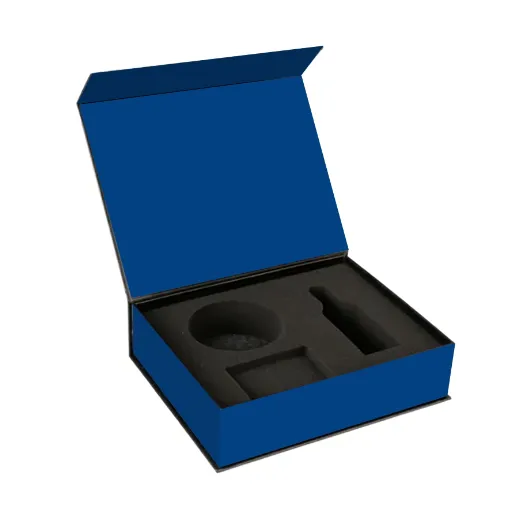
Suppose a hundred-dollar item is bought by an ordinary individual. As soon as the item is finally salvageable from a giant ball of bubble wrap and layers of tape, a simple and rather unappealing cardboard box will be found only with a marking of the brand. Well, it’s too late now for a first impression; as they say, first impression відкладається… Now, think of the same individual who is raising the lid of a massive, thick, textured box with a magnetic snap. The inside of the box is sumptuous, the velvet. The box is finished with a foil stamp logo, which twinkles in the light. Which one do you think fosters customer loyalty?
You already know packaging matters. What you might not know is that the global rigid box market is projected to reach $18.07 billion by 2035, and brands that invest in premium packaging see measurable returns in customer retention and perceived value. This guide will show you exactly how custom rigid boxes work, what options fit your products, how much they cost, and how to find a manufacturer you can trust.
Here is what we will cover: types of custom rigid boxes and their variations, materials and finishing methods, guidelines for particular sectors, costs and the breakdown thereof, the steps between concept and actual delivery to the consumer and the preferred parameters they are to the supplier. Finally, you will assess if packaging rigid boxes is the appropriate choice for your business, and how to go about it on a budget.
What Are Custom Rigid Boxes?
Custom rigid boxes are considered a premium type of packaging, where thick paperboard that is at most 1200 gsm to 2500 gsm is enveloped wrapping folded papers or printed soft papers. When we talk of folding cartons, they can be flattened and reconstituted; rigid boxes are different as they are fixed firmly in their shape. They do not have the weakness of folding, bending, or sagging while loaded with weight. This sturdy feature has made them a preference for niche designs, electronic devices, and any other product which is desired to be heavy even before the consumer opens the package.
Another activity which is common but different in the manufacturing of rigid boxes is the process of making the boxes. The base of a chipboard is moulded into the desired shape and covered/design with printed or design papers in clean gluing and crushing ways. This then produces a box which is heavy, smooth and of a superior nature. Majority of rigid boxes may also come with extra features for added convenience and beautification; these may be magnetic closures, ribbon pulls, cuts for foam inserts or windows.
If you are trying to decide between packaging types, our guide on how to choose the right packaging for your product breaks down the full decision framework.
Rigid boxes also differ from corrugated shipping containers. Corrugated boxes use fluted paperboard sandwiched between linerboards. They are designed for transport protection. Rigid boxes are designed for presentation. You would not ship a dozen units in a rigid box, but you would absolutely sell a single luxury watch or skincare set in one.
The bottom line: Custom rigid boxes communicate quality before your customer touches the product inside.
Types of Custom Rigid Boxes
Not all rigid boxes are built the same. The style you choose affects cost, assembly time, shipping efficiency, and customer experience. Here are the six most common types and when to use each.
Magnetic Closure Rigid Boxes
Magnetic closure boxes feature hidden magnets embedded in the front flap and base. When the lid closes, it snaps shut with a satisfying click. This style is the gold standard for luxury cosmetics, high-end electronics, and corporate gift sets. The mechanism feels expensive and encourages customers to reuse the box for storage, which extends brand visibility long after the initial purchase.
Two-Piece (Telescope) Rigid Boxes
Telescope boxes consist of a separate lid and base. The lid fits over the base like a sleeve, creating a clean, classic look. This is the most traditional rigid box style and often the most affordable because the construction is straightforward. Jewelry, confectionery, and apparel brands favor telescope boxes for their simplicity and elegance.
Drawer / Slide-Out Rigid Boxes
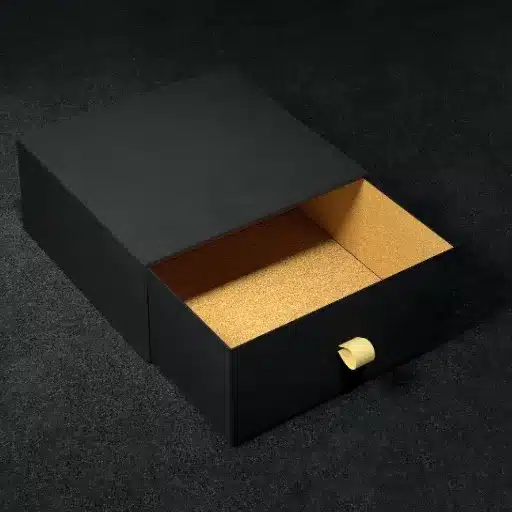
Drawer boxes function like a matchbox. An inner tray slides out from a rigid outer sleeve, often with a ribbon pull for easy opening. This style creates a sense of discovery and works beautifully for subscription boxes, tea collections, and product kits where unboxing is part of the brand story.
Shoulder-Neck Rigid Boxes
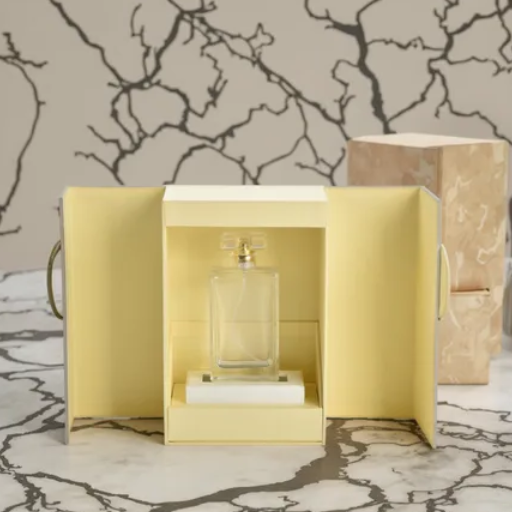
A shoulder-neck box has an inner platform that rises above the base, creating a visible “neck” when the lid is removed. This added dimension gives the box architectural presence and is popular among perfume brands and premium confectioners who want packaging that doubles as a display piece.
Collapsible (Fold-Flat) Rigid Boxes
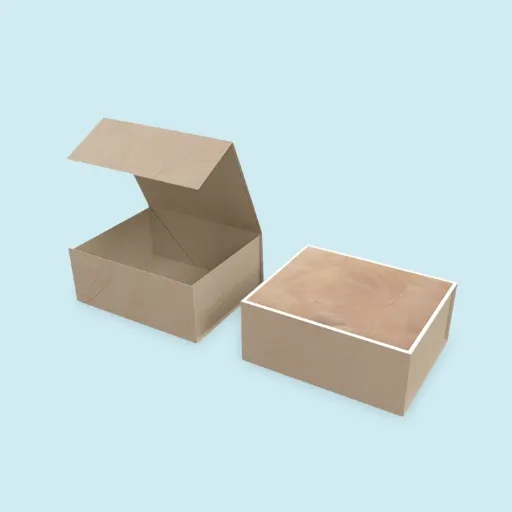
Collapsible rigid boxes ship flat and assemble into a rigid structure at their destination. They use magnetic or adhesive closures to lock into shape. This style has become one of the fastest-growing segments in the rigid box market at 5.4% CAGR because it cuts shipping and warehousing costs by 60 to 70 percent. E-commerce brands that want rigid box quality without rigid box logistics should strongly consider this option.
Book-Style / Hinged Rigid Boxes
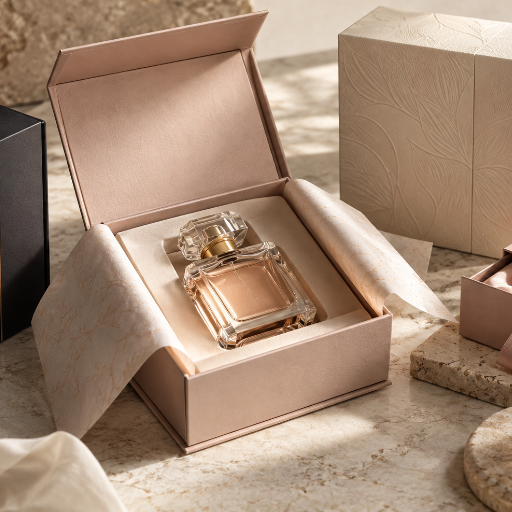
Hinged boxes open like a book, with the lid attached to the base along one edge. This style is ideal for portfolios, presentation kits, and memorial products. The continuous hinge creates a ceremonial feel that signals importance.
Which type is right for you? That depends on your product weight, your unboxing goals, your shipping model, and your budget. If you are unsure, the best next step is to request physical samples from a manufacturer before committing to a bulk order.
Customization Options: Materials, Printing, and Finishes
This is where a plain box becomes your box. Custom rigid boxes offer near-unlimited personalization across three main categories.
Material Choices
The core of every rigid box is chipboard. Standard thickness starts at 1200gsm for lightweight products and extends to 2500gsm for heavy or fragile items. The wrap material determines the exterior look and feel:
- Art paper provides a smooth surface ideal for high-resolution printing.
- Kraft paper offers a natural, organic texture that signals sustainability.
- Fabric wraps like linen or velvet add tactile luxury.
- Leatherette mimics genuine leather at a lower cost.
- Specialty papers include textured, metallic, or pearlized options.
For brands prioritizing environmental responsibility, FSC-certified papers, recycled chipboard cores, and soy-based inks are all available. These options do not compromise appearance. In fact, many consumers now associate kraft and uncoated finishes with premium authenticity.
Printing and Finishing Techniques
Custom printed rigid boxes rely on surface treatments that turn a plain wrapper into a brand statement. Once materials are selected, the finishing process defines the visual impact:
- Offset printing delivers sharp, vibrant artwork with PMS color matching for brand accuracy.
- Foil stamping applies metallic or pigmented foil to create reflective accents in gold, silver, copper, or holographic effects.
- Embossing and debossing raise or depress designs into the surface for texture and shadow.
- Soft-touch lamination adds a velvety, fingerprint-resistant coating that feels expensive.
- Spot UV coating highlights specific design elements with a glossy sheen against a matte background.
- Window cutouts reveal the product inside through a die-cut opening, often backed with clear PET or left open.
Custom Inserts
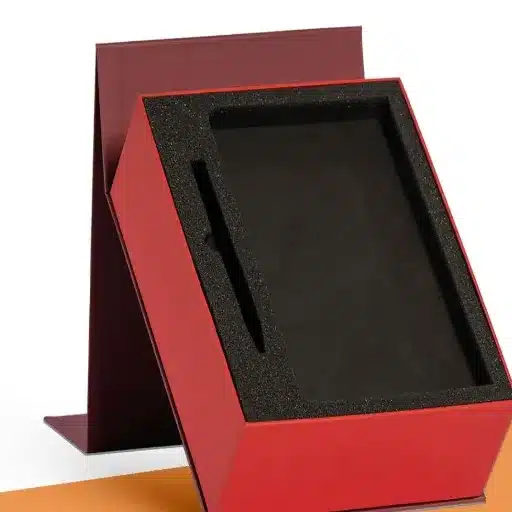
Inserts hold products securely and enhance presentation. Common options include EVA foam, flocked velvet trays, molded pulp, and cardboard dividers. Inserts can be shaped to cradle a single item or compartmentalize multiple products in one box.
If you want to see how design choices affect brand perception, our article on why packaging design matters for your brand explores the psychology behind every visual detail.
Custom Rigid Boxes by Industry
The same box style does not work for every product. Here is how different industries use custom rigid boxes to solve specific challenges.
Cosmetics and Skincare
Beauty brands, offering top of the range packaging, use custom rigid boxes to uphold the prestigious cost their products carry. A serum worth one hundred and twenty dollars most of the time appreciates even more if it is packed in a pro box with mat finish and a magnetic flip cover than the typical little flat box. The custom foam inserts protect fragile glass containers from movements in general transport while gold stamps achieve the cosmetic buyers positioning expected through the introduction of the cosmetic products.
Electronics and Tech Accessories
Things like headphones, wearable technology, and portable USB gadgets require storage and appearance. Rigid containers housing the foam die cuts display the item in an inclined manner providing protection to the item. In addition to this, since most of the technology products appeal to the mass markets, these companies do their fundraising and presales in these hybrid forms because they can build a marketing campaign around the international backers while still maintaining an essence of unboxing to be appreciated.
Jewelry and Watches
Jewelry lines, for instance, can opt for two piece telescope boxes which use velvet layering. The upper part is an entirely lift-off cover that is fully exposed for the product elegantly seating on a void-filler. It is not unusual for it to be of shoulder neck variety, made for watches as the platform of focus is raised and the watch taken as an object displayed in a gallery.
Food, Wine, and Gourmet Gifts
There are certain aesthetic and consideration points which need to be balanced while manufacturing padded boxes for food and drink deliveries. In case of shipping beers or wines, bottles are separated with enhanced walls in bottles’ boxes and columns are padded inside. In many cases, high-end chocolate boxes are of the drawer design since the gestural act of drawing out helps to build curiosity even before the first piece is seen.
Subscription Boxes and PR Kits
Subscription services live or die by unboxing videos. A custom rigid box with a ribbon pull, printed interior lid, and branded tissue paper turns a monthly delivery into a shareable event. PR kits for influencers and journalists use the same principle: the packaging itself becomes content.
For e-commerce brands specifically, our guide on custom packaging for e-commerce businesses explains how to balance shipping costs with brand impact.
How Much Do Custom Rigid Boxes Cost?
This is the question every buyer asks, and most manufacturers avoid answering directly. Here is the honest breakdown.
Usually, custom rigid boxes built to order are priced between the range of 3, 3 to15 each which will be dictated by the size of the box and the material and design of such a box as well as the quantity to be purchased. For 100 boxes, you should expect to pay around 8 15 for each box. This is reduced further to about 5 9 when purchasing up to 500 containers. Finally, as more than 1,000 can be ordered, the costs respectively also go down to that of 3 6. All these costs are based on the use of basic materials and single printing. Each premium finish such as foil stamping, embossing and, for example, fabric coverings, will cost extra per unit.
What drives the price?
- Order quantity: Setup costs for dies and plates are fixed, so they represent a smaller percentage of total cost at higher volumes.
- Box size: Larger boxes require more material and longer production time.
- Chipboard thickness: 2500gsm board costs more than 1200gsm.
- Finish complexity: Each additional process (foil + emboss + spot UV) adds labor and material cost.
- Custom inserts: Foam, velvet, or molded pulp inserts are priced separately based on complexity.
- Prototype and sampling: Physical samples before bulk production typically cost 50to50to200 depending on complexity.
How to optimize your budget:
Begin by defining your bespoke packaging goals. What is essential in your design? Consider the following—if it is to resist damage, then pay for the board’s density and support materials. If it is mostly visible to the outside world, then focus on design and print attributes. It is not advisable to buy all options available. A simple but effective design with one addition looks more presentable than a design which includes three extra decorations and elements.
Typically, manufacturers will provide digital layouts and 3D mockups prior to ordering. Make good use of them in order to enhance your cases without incurring the cost of several case samples. Additionally, request quotations for 100, 500, and 1,000 pieces so that you can calculate the cost per unit before ordering.
Ready to see real numbers for your project? Contact our team for a free quote with tiered pricing based on your specific design.
How to Choose the Right Custom Rigid Box Manufacturer
Selecting a manufacturer is as important as selecting the box itself. The wrong partner leads to color mismatches, delayed shipments, and quality inconsistencies that damage your brand.
Seven criteria to evaluate:
- Experience with your product category. A manufacturer that specializes in cosmetics packaging understands different challenges than one focused on industrial electronics. Ask for case studies or samples in your industry.
- Production capabilities. Can they handle your desired materials, finishes, and insert types in-house? Outsourcing certain steps increases lead time and reduces quality control.
- Certifications. Look for ISO 9001 for quality management and FSC certification if you need sustainable materials. These are not just badges. They indicate documented processes.
- Minimum order quantity flexibility. Some manufacturers require 1,000 units minimum. Others accommodate 100 to 500 units, which is ideal for testing or small product launches.
- Lead time transparency. Standard production runs 10 to 14 business days after artwork approval. Complex designs may need 14 to 18 days. Be wary of quotes that seem too fast.
- Communication quality. Do they respond promptly? Do they ask clarifying questions about your design? A manufacturer that silently accepts every request without feedback may not be reviewing your files for production issues.
- Pricing transparency. The lowest quote is rarely the best quote. Look for itemized breakdowns that show material, labor, finishing, and shipping costs separately.
Red flags to avoid:
- No physical address or factory photos
- Refusal to provide samples before bulk production
- Vague timelines like “about two weeks” without specificity
- Inability to explain their quality control process
- Pressure to pay 100 percent upfront for a first order
Back when Maya Chen entered the world of candle manufacturing in the final months of 2024, she started with the lowest bid which was provided to her by a suppliers’ agency which was charging 2.50 per piece of rigid boxes. However, the first shipment contained visible glue on the edges, colors that were inconsistent with her sample, and a plastic odor that rendered the boxes unusable as candle boxes. As a result, the first shipment cost her sixty thousand and mounted confrontational issues lasting six weeks. She missed another mechanical problem cost her six weeks and four thousand dollars because of 3.5 inches high custom rigid boxes missing any color on the given sample. But by the time she found a custom rigid boxes manufacturer who was controlling the quality of production within their own facilities, four thousand dollars including charges were lost. When she sought the relevant factory, maya’s first shipment of custom rigid boxes proved to be absolutely perfect. As one can see, it was not a matter of sheer luck. It was a matter of methodology.
Cooperating with a certain manufacturer located in Fuzhou has a number of benefits for foreign buyers. In fact, there’s a well-developed packaging industry in Fujian area including help with sourcing materials, print equipment as well as transport facilities. By engaging directly with the supplier, the premium imposed by the middlemen and possibilities of misunderstandings are greatly minimized. It’s a person to person interaction with the people who put together the custom rigid boxes for you.
The Production Process: From Concept to Delivery
Understanding how custom rigid boxes are made helps you plan timelines, ask better questions, and avoid surprises when working with any rigid box manufacturer.
Step 1: Design consultation and artwork submission. You provide dimensions, product weight, desired materials, and print files. Most manufacturers accept AI, EPS, or PDF vector files. They review your artwork for print compatibility and may suggest adjustments for better production results.
Step 2: Digital proofing and 3D mockups. Before any physical work begins, you receive digital proofs showing flat dielines and 3D renderings of the assembled box. This is your opportunity to verify dimensions, colors, and text placement. Approve nothing until you are satisfied with the digital version.
Step 3: Sample production and approval. A physical prototype is produced for your review. This sample represents the exact materials, construction, and finish of your bulk order. Test it with your actual product inside. Check the fit, the closure mechanism, and the visual impact under real lighting.
Step 4: Bulk manufacturing and quality control. Once the sample is approved, full production begins. Reputable manufacturers conduct inline inspections during production and final random inspections before packing. Common checks include dimensional accuracy, color consistency, adhesion strength, and surface defect review.
Step 5: Packaging and shipping. Finished boxes are packed in export cartons with protective wrapping to prevent damage in transit. Shipping options range from sea freight for large orders to air freight for urgent deliveries. Many manufacturers offer real-time tracking through partners like DHL, FedEx, and UPS.
The total timeline from artwork approval to delivery is typically 10 to 18 business days for standard orders, plus shipping time. Rush production is often available for an additional fee, but it limits the window for revisions and sampling.
Eco-Friendly Rigid Boxes: Sustainable Packaging Options
Sustainability is no longer a niche concern. According to industry data, the shift from plastic to paper-based rigid formats is accelerating across cosmetics and personal care as brands respond to Extended Producer Responsibility regulations and consumer demand. Custom rigid boxes are well-positioned for this transition because they are primarily constructed from paper-based materials.
Eco-friendly options available today include:
- Recycled chipboard cores that maintain structural integrity while reducing virgin material use.
- FSC-certified wrapper papers sourced from responsibly managed forests.
- Soy-based and water-based inks that reduce volatile organic compound emissions.
- Kraft and unbleached paper wraps that require less processing and are fully recyclable.
- Molded pulp inserts made from recycled paper fibers as a foam alternative.
- Collapsible designs that reduce shipping volume and associated carbon emissions.
The key consideration is mixed materials. A rigid box wrapped in recyclable paper with a recyclable chipboard core is widely recyclable. However, adding metallic foil laminates, plastic windows, or certain spot UV coatings can complicate recycling. If sustainability is central to your brand, discuss material compatibility with your manufacturer during the design phase.
For a deeper look at sustainable packaging strategies, see our ultimate guide to sustainable packaging.
Sustainable rigid boxes do not mean compromising on appearance. Many of the most visually striking designs on the market today use kraft wraps, minimalist one-color printing, and uncoated textures that signal environmental values while looking effortlessly premium.
Frequently Asked Questions About Custom Rigid Boxes
What are custom rigid boxes?
Custom rigid boxes are premium packaging solutions made from thick chipboard wrapped in decorative paper or printed stock. Unlike folding cartons, they maintain their shape permanently and offer a heavy, luxurious feel ideal for high-end products.
How much do custom rigid boxes cost?
Prices typically range from 3to3to15 per unit depending on size, materials, finishes, and order quantity. Costs are highest at low volumes (100 units) and drop significantly at 500 to 1,000 units or more.
What is the difference between rigid boxes and folding cartons?
Folding cartons are made from single-layer paperboard, ship flat, and fold into shape. Rigid boxes use thick chipboard wrapped in decorative paper, maintaining a permanent structure. They are heavier, more durable, and offer a premium presentation.
Can rigid boxes be collapsible?
Yes. Collapsible rigid boxes ship flat and assemble into a rigid structure at their destination. They typically use magnetic or adhesive closures and can reduce shipping and storage costs by 60 to 70 percent.
What is the minimum order quantity for custom rigid boxes?
Many manufacturers accommodate orders starting at 100 units, though 300 to 500 units is often the sweet spot for cost efficiency. Some suppliers offer even lower minimums for specific box styles.
How long does production take?
Standard production takes 10 to 14 business days after artwork approval. Complex designs with multiple finishes may require 14 to 18 days. Rush options are often available for an additional fee.
Are custom rigid boxes recyclable?
Many are recyclable when made from paperboard and wrapped with recyclable paper. Mixed-material finishes like metallic foils or plastic laminates can hinder recycling. Most suppliers now offer FSC-certified and recycled material options.
What premium finishes are available?
Common options include soft-touch lamination, gloss or matte coating, spot UV, foil stamping in gold or silver, embossing, debossing, and ribbon or magnetic closures.
Can I get a sample before placing a bulk order?
Most manufacturers provide physical samples or prototypes upon request. This lets you verify size, material, and construction quality before committing to full production.
Why should I work with a rigid box manufacturer in China?
Direct manufacturers in Fuzhou and the broader Fujian Province benefit from mature supply chains, access to raw materials, advanced printing technology, and competitive pricing due to established logistics infrastructure.
Conclusion
Custom rigid boxes are more than packaging. They are a physical expression of your brand’s commitment to quality. The right box protects your product, elevates customer perception, and creates unboxing moments that customers remember and share.
Here are the key takeaways from this guide:
- Custom rigid boxes use thick chipboard and decorative wraps to create permanent, premium packaging that folding cartons cannot match.
- Six main box types serve different needs: magnetic closure, telescope, drawer, shoulder-neck, collapsible, and book-style.
- Materials, printing techniques, and finishes offer near-unlimited customization to match your brand identity.
- Costs typically range from 3to3to15 per unit, with significant savings at volumes of 500 or more.
- Choosing a manufacturer requires evaluating experience, capabilities, certifications, MOQ flexibility, lead times, communication, and pricing transparency.
- Sustainable options including FSC-certified materials, recycled chipboard, and soy-based inks make rigid boxes an eco-friendly choice.
If you are ready to explore custom rigid boxes for your products, the next step is simple. Gather your product dimensions, any design files or inspiration images, and an idea of your target quantity. Then reach out for a consultation. A good manufacturer will ask the right questions, provide honest pricing, and guide you through sampling before a single bulk box is produced.
Request your free quote and design consultation today. Whether you need 100 units for a product launch or 10,000 for a retail rollout, we will help you build packaging that delivers the first impression your brand deserves.