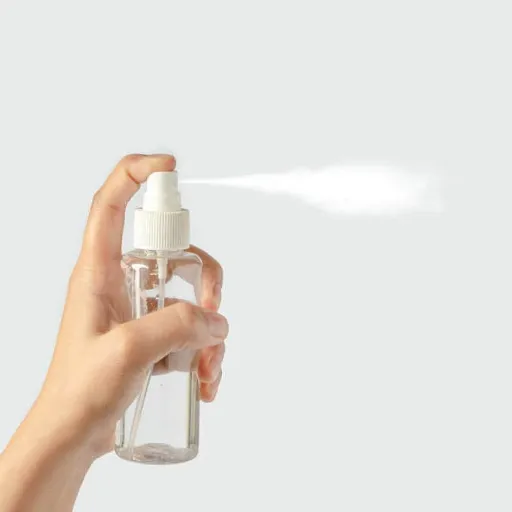
How does a fine mist sprayer work? Simply put, when one converts mechanical finger pressure, creates a hydraulic pressure, such a pressure will force the liquid contents in the sprayer through a swirl chamber that is so tiny shearing into 20 to 100 microns in diameter. Once you push the actuator, it’s piston will force pump all the liquid positioned within the housing of the pump and upon release of the actuator, a vacuum is created which aids in the suction of more product into the dip tube. Interestingly, TQ10 can not last for more than a second, but still requires an engineering insight into seven, very much, related components.
Another group of customers is the one that considers the sprayer as a triviality and pays attention only to the shape of the container and the style of the label. However, the sprayer is literally the only part of the product that comes in contact with the consumer, every day. Such mechanisms are often not desirable because without pain they can turn a neat bottle of lovely lotion into an angry little bottle that does not behave. When a package arrives and the contents have already leaked inside during transit or when after two weeks of use the nozzle gets clogged, or when the bottle does not produce the fine mist one is looking for because instead, it sprays an irregular splatter; it has usually done more brand damage than most other packaging problems.
Maria is the owner of a skin care company based in Miami. She tried to improvise on her own the natural toner that she would sell and how she would sell it. It took her about six months to come up with the perfect formulation and when she launched, the customers raised the red flag, zeroing in on the nozzle. The nozzle could not produce a fan instead it produced aggressive almost ballistic jets. The problem was not in her formulation. It was the cheap actuator she used which were bought from a commodity house with a pressurized hole and a shallow swirling volume inside. The number of returns has decreased by 34% over the period of one quarter, when she changed to a supplier who controlled every disclosed unit for consistency of dispensing.
After this guide, you may know how does a fine mist sprayer work, why one mechanism is efficient and some are not, and when will there be a right sprayer that matches the formula in question. Besides removing the most common causes of the failures, it is possible to identify proper root causes and eliminate causes in mechanical aspects of failure.
Key Takeaways
- Fine mist sprayers use mechanical pressure and a swirl chamber to break liquid into 20-100 micron droplets.
- Seven core components work together: actuator, insert, pump housing, spring, dip tube, closure, and gasket.
- The mechanism relies on a four-step cycle: compression, atomization, dispersion, and recovery.
- Formula viscosity, alcohol content, and particulates directly affect sprayer performance and longevity.
- Manufacturing tolerances in the orifice and swirl chamber determine spray quality and consistency.
The Basic Principle: Turning Liquid Pressure into a Fine Mist

The Role of Mechanical Energy
Every fine mist sprayer starts with one simple input: your finger pressing down. That mechanical force, typically generating just 2 to 4 bar of pressure, transforms liquid into microscopic droplets. The actuator acts as a lever, multiplying finger force across a small piston surface area. This concentrated pressure pushes liquid through an opening measured in fractions of a millimeter. The smaller the opening, the higher the exit velocity, and higher velocity means more shear force to break the liquid apart.
From Liquid Stream to Droplets
Atomization is the technical term for breaking a bulk liquid into droplets. In a fine mist sprayer, pressurized liquid enters the swirl chamber inside the insert and spins rapidly before exiting through the orifice, creating a thin, hollow cone. As this cone exits the nozzle, it encounters air resistance. The combination of internal turbulence and external shear strips the liquid into droplets. A well-designed fine mist sprayer mechanism produces droplets small enough to remain suspended in air for several seconds.
What “Fine Mist” Actually Means
Fine mist droplets typically measure between 20 and 50 microns in diameter. For comparison, a human hair is about 70 microns thick. True fine mist sprayers used in cosmetics aim for this range because it feels light and even on skin, covers a broad area without over-wetting, and creates the sensory experience customers associate with premium products. Most cosmetic fine mist sprayers produce a 45 to 60 degree spray cone.
Want to see how component quality affects your specific product? Request a free sample from our fine mist sprayer catalog and test the difference yourself.
Inside a Fine Mist Sprayer: Component-by-Component Breakdown
A fine mist sprayer is an assembly of seven distinct components, each with a specific mechanical role. Understanding these fine mist sprayer parts helps you evaluate quality and specify exactly what your product needs.
The Actuator
The actuator is the button your customer presses, usually made from polypropylene (PP). It acts as a lever, translating finger force into piston movement, and houses the insert and orifice. The angle of the face determines whether the spray projects straight ahead or slightly upward. Custom colors and finishes are common branding opportunities.
The Insert and Swirl Chamber
At the heart of the fine mist sprayer apparatus is the insert. This minute detail is found within the actuator and harbors the swirl chamber as well as the orifice. In the swirl chamber, slanted grooves cause the fluid to swirl at high velocity to form a hollow cone. And this orifice is the opening that has, usually, a diameter of between 0.2 and 0.5mm. A tiny difference affects the droplets and spray patterns. And so, the feature needs to be correctly molded because if it is not, larger droplets will result.
The Pump Housing and Piston
A cylinder is an engine housing unit; it is where the piston goes. The actuator is engaged by the user pressing, repeatedly, for the knob, and as a result, the piston goes down, compressing the chamber and pushing the liquid upward. Moreover, the housing includes the valves; both the inlet and the outlet. The piston must fit snugly and without much force. If it is too loose, the spray function is reduced; if it is too tight, there is excess stiffness when using the actuator. Good quality pump housings are made to very small tolerances and have smooth surfaces within.
The Spring and Return Mechanism
The piston is drawn back by a small spring as the user releases their finger, generating vacuum that draws up more liquid from the reservoir through the dip tube. The amount of force needed for actuation depends on the tension in the spring. Where a stronger spring is used, more force is required to depress the plunger; however, the plunger recoils quicker. In the case of a very weak spring, the thick fluid may not be able to refill the core adequately. In most cases, the amount of liquid delivered by one stroke of the cosmetic fine mist sprayer ranges from 0.12 to 0.25 ml.
The Dip Tube
The dip tube extends from the sprayer down into the bottle, typically made from polyethylene (PE) or polypropylene (PP). It must reach the bottom to access nearly all the product. Wider tubes refill faster but may droop in larger bottles. Narrower tubes stay rigid but can restrict viscous formulas. Length must match bottle height to avoid leaving product behind or buckling at the bottom.
The Closure and Gasket
The closure is the threaded collar that screws onto the bottle neck and must match the neck finish exactly. Common sizes include 18/410, 20/410, 24/410, and 28/410. Inside the closure, a gasket creates the seal between the sprayer and the bottle rim. Gasket material must be chemically compatible with the formula. EPDM gaskets work well with water-based products; NBR handles oils better. Using the wrong gasket material leads to swelling, shrinking, or chemical breakdown.
The Overcap
The overcap is the protective cover that snaps over the actuator. It prevents accidental pressing during transit and keeps dust out of the nozzle. A poorly fitting overcap can press down on the actuator slightly, causing slow leaks or premature gasket compression.
Step-by-Step: What Happens When You Press the Pump
Understanding how a fine mist spray bottle works becomes clearer when you break the action into four discrete phases. Each phase depends on the one before it.
Step 1: Compression
When you press the actuator, the piston moves downward, reducing chamber volume. The inlet valve seals shut under pressure, preventing liquid from flowing back into the dip tube. The liquid is forced upward through the outlet valve and into the insert. This phase takes only a fraction of a second, and the pressure spike peaks as the piston reaches the bottom of its travel.
Step 2: Atomization
In the advancement of the technology, the swirl chamber plays an inevitable role because the pressured liquid flows through vortex channels and creates a vortex of the liquid that exits through the orifice. When such strong propelling curates strong centrifugal circulation, a fine film of liquid that spins at high speeds into the droplets gets disrupted in fractions of a second. A naturally crafted piece of plastic molded to certain specifications was able to throw only limited ranges of droplets where in one case a specific piece of plastic was unable to prevent the splashing of large drops.
Step 3: Dispersion
There are defined designs that are programmed as the patterns when the droplets exit the nozzle, which is mainly either a hollow cone pattern or a solid cone pattern. The hollow cone pattern produces a circle of spray with more mist on the outer ring than the center. This pattern is usually the most requested pattern for facial toner. The solid cone pattern effectively reduces the energy of the spray, which is effective in areas such as haircare. Usually, the angle of the spray is between 45-60 degrees and it gives the area of coverage per stroke.
Step 4: Recovery
As soon as you let go of the actuator, the spring forces the piston back, which increases the volume of the chamber and causes its pressure to drop. As a result, the outlet valve will be closed by the negative pressure and the inlet valve will be opened, at which point the pressure of the atmosphere will assist in pushing more liquid up from the bottle. If the chamber’s dip tube is obstructed or the concentration of the formula is substantial, the chamber will not be completely replenished. That’s the reason it is important to know in detail about how does a fine mist sprayer work when designing a product.
Why Some Fine Mist Sprayers Perform Better Than Others

Two sprayers with the same neck size can perform dramatically differently. The difference lies in manufacturing precision and material quality.
Orifice Precision and Swirl Chamber Design
The orifice diameter controls liquid velocity, which controls droplet size. A variation of just 0.05 millimeters can shift average droplet size by 10 microns or more. Precision-molded inserts maintain tight tolerances across thousands of units, while low-cost inserts with worn tooling produce inconsistent orifices. Swirl chamber geometry is equally important. Deeper tangential channels create more rotation and finer atomization. Shallow channels produce coarser droplets. These invisible design details define the sensory experience of using the product.
Spring Tension and Actuation Force
Spring tension must be matched to formula viscosity and target output. A spring that is too strong for a water-based toner makes the sprayer feel stiff. A spring that is too weak for a thicker mist fails to generate enough pressure, resulting in a weak stream. At Fuzhou Longlu Packaging, we calibrate spring tension during assembly based on customer formula specifications to ensure comfortable actuation and fine droplets.
Gasket Material and Chemical Compatibility
Gasket failure is one of the most common causes of leakage. Incompatible gasket material can swell, soften, or crack. A swollen gasket prevents proper threading. A softened gasket loses its seal. A cracked gasket creates direct leakage paths. Water-based formulas are generally forgiving, but alcohol-heavy fragrances require solvent-resistant gaskets, and oil-based products need gaskets that do not swell in lipids.
Manufacturing Tolerances and Quality Control
High-end brands ensure quality by performing in-process and performance testing of each manufactured component. Typical activities involve calculation of the stroke output, actuation force, leak and spray visualization tests. All functional testing must be passed by any sprayers before they can be accepted. This quality assurance is one of the reasons why sprayers made to such accurate tolerances have a higher price and rarely fail.
James owns a company that does contract manufacture based in New Jersey. A customer showed him a room spray with plant matter floating in it. James understood that this product would have a sprayer clogged in few days. By conceptualizing orifice diameter and particle size relations, he suggested them to use a sprayer with a higher output and filtered dip tube. For eight months this product remained unblocked in stores without complaints.
Speak with our engineering team about matching the right mechanism to your formula and production requirements.
Common Problems and What They Reveal About the Mechanism
When a fine mist sprayer fails, the symptoms point directly to specific mechanical causes. Understanding these connections helps you diagnose issues and specify better components.
Clogging and How to Prevent It
Clogging occurs when something blocks the orifice, swirl chamber, or dip tube. Common culprits include dried residue, suspended particulates, or microbial growth. From a mechanism perspective, clogging is a particle-size problem. If any ingredient has particles larger than about one-third of the orifice diameter, blockages are likely. The fix is either to filter the formula more thoroughly or to specify a sprayer with a larger orifice and a filtered dip tube.
Leaking and Seal Integrity
Leaks typically originate from the gasket-bottle interface, the piston housing seal, or the actuator-insert junction. Gasket leaks indicate material incompatibility or improper torque. Transit vibration and temperature changes exacerbate leaks. A sprayer that holds at room temperature may leak under air cargo pressure changes or container heat. Pre-shipment leak testing catches these issues before products reach customers.
Inconsistent Spray Patterns
If some units spray evenly while others sputter or stream, the cause is usually variation in the insert orifice. Worn molding tools produce orifices with burrs or partial blockages that are invisible to the naked eye but obvious in the spray pattern. Another cause is variation in spring tension. Springs from inconsistent batches may have different compression rates, changing peak pressure and droplet size.
Priming and First-Time Use
New fine mist sprayers often require priming, meaning several presses before the first usable spray. This happens because the dip tube and chamber are filled with air when first assembled. Excessive priming, more than five to six pumps, suggests a problem. The inlet valve may be sticking, the dip tube may have a kink, or the formula may be too viscous to flow up the tube fast enough.
How Formula Properties Affect Sprayer Mechanism Performance
The same fine mist sprayer can perform perfectly with one formula and poorly with another. The difference is the interaction between the formula’s physical properties and the mechanical design.
Viscosity and Flow Rate
Viscosity refers to the property of a liquid which makes it flow slowly. How does a fine mist sprayer work is the lament of tiny channels used to draw up the liquid where as higher viscosity discourages such a flow. The piston may not manage to fill the chamber entirely between strokes with thick consistency formulations, and so the force of spray reduces with each consecutive stroke. The sprayer does not work when in reality the sprayer is not compatible with the formulation. One of the possible answers to this problem is to use a sprayer which has either a lower spring tension, larger a larger diameter of dip tubes and/or larger orifice.
When Priya decided to develop her fragrance range from the basic alcohol based eau de toilette to oil based body mist she thought that a 20/410 pump sprayer would do the same job. It did not do so. Due to the thicker viscosity, the oil did not go in a normal piston chamber very easily and the spray was very poor and erratic. But when she shifted to a better sprayer with less spring tension and a wider orifice, it solved the problem and gave the appropriate look.
Alcohol Content and Evaporation
High-alcohol solutions do not last long due to fast evaporation that in turn makes the solutions non-spattering and cooling to the skin. However, alcohol is a solvent which could attack supporting plastics and gaskets after a while. Polypropylene parts are not affected by alcohol, while compact low quality plastics may become crazed or cracked after a long period of time. EPDM gaskets, compared to natural rubber, generally show better performance in high-alcohol use.
Particulates and Suspended Ingredients
Materials such as glitter, herbal extracts or zinc oxide in suspension are prone to causing clogging. The criterion is simply whether or not the abstraction will pass through the orifice. The dimensions of the typical spray nozzle for a fine mist is 0.2 mm – 0.3 mm in diameter. Particles larger than say 0.05 mm will sooner or later present a problem. If there are any visible particles in your formula, you will need a bigger orifice, a dip tube with a filter or even perhaps both.
pH and Chemical Compatibility with Plastics
Extreme pH levels can degrade plastic components over time. Most cosmetic formulas fall in the pH 4 to 8 range, which is safe for standard PP and PE components. However, active ingredients like alpha hydroxy acids can push pH outside this range. If your formula has an unusual pH, specify chemically resistant materials. Testing sprayer compatibility with the actual formula for several weeks before finalizing specifications prevents surprises after launch.
Fine Mist Sprayer vs. Other Dispensing Mechanisms

Comparing a fine mist sprayer to alternatives shows how each mechanism solves different problems.
Fine Mist Sprayer vs. Trigger Sprayer
A trigger sprayer uses a larger piston and trigger handle instead of a finger button. It generates more volume per stroke, typically 0.7 to 1.6 milliliters, and produces larger droplets. The mechanical principle is similar; both use a piston, spring, and nozzle. But the trigger sprayer’s larger scale means it cannot achieve the same droplet fineness. For cosmetic and personal care products where sensory experience matters, the fine mist sprayer remains the better choice.
Fine Mist Sprayer vs. Aerosol
Aerosol cans use pressurized gas to force liquid through a nozzle. They produce extremely fine, consistent mists without user effort, but propellants add cost and regulatory complexity. Aerosol cans are also harder to recycle. The mechanical fine mist sprayer offers an aerosol-like experience without propellant, making it popular for eco-conscious brands. Learn more about our sustainable packaging materials and how propellant-free sprayers support your environmental goals.
Fine Mist Sprayer vs. Crimp Pump Atomizer
Traditional perfume atomizers use a crimped metal pump with a similar piston mechanism but sealed with a metal crimp rather than a screw closure. The internal mechanism is essentially the same; both use pressure and an orifice to create droplets. The difference is in packaging aesthetics and sealing method. Crimp pumps are harder to assemble in automated lines and cannot be removed once attached. Screw-on fine mist sprayers offer more flexibility for custom cosmetic packaging and easier recycling.
Conclusion
A thin layer of liquid is released and a bottle cap liner makes use of this hydraulic pressure to swirl and then atomize the liquid creating small droplets. More precisely, the function of the spraying device is understood only when the sprayer is no longer viewed as a ‘commoditized’ product that repeats and adds ‘spin’ to a particular, rather than to promote, or advertise.
Four stages constitute every mechanism: Compression, Atomization, Dispersion and Recovery. The components required to achieve good spray designs are: an insert and a swirl chamber. Buyers often overlook the importance of manufacturing tolerances. The properties of the formula have to be compatible with the type of sprayer. The material of the gaskets must be able to withstand the product to prevent any loss. Whenever there is a malfunction, there is an internal built mechanism and not an external cause. User experience is better if you test with the particular formula that is going to be used in the final products before ordering the samples in bulk and thereby help in the sales.
Ready to source precision-engineered fine mist sprayers for your product? Contact us today for a free consultation, samples, and technical specifications. Our engineering team will help you match the right mechanism to your formula and deliver packaging that protects your product and your reputation.