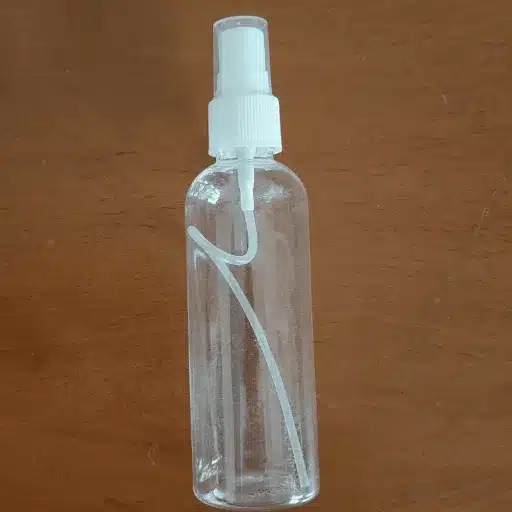
When you say ‘fine mist sprayer’, what I hear in my mind is a screw-on finger actuated spray needle for facial cosmetics and skin care, on the other hand, an atomizer on my mind is a crimp spray assembly or bulb vaporizer for use in perfumes. A fine sprayer and an atomizer are just products of vocabulary defining certain elements, because there are truly functional distinctions such as neck finishes, particle sizes, and prestige elements of the brands.
The differences between the two are more salient than most purchasers know. Just the previous year, in Shanghai, where she was engaged as a product designer for a newly developed skincare product line, Elena Chen demanded 5,000 pcs of what she knew as “atomizers”. Upon receipts of the consignment, she found out that the crimp-pump necks were not compatible with her 24/410 bottles making the consignment unusable. The fine mist sprayer vs atomizer confusion made her lose their chance of entering the market without wasting optimum time as well as three weeks.
It is to be identified that, for marketing purposes, “atomizer” and “fine mist sprayer” often refer to the same item. For production however, they usually mean different defending structures, different competent habitudes and different survival settings. And this guide will help you understand what your product is and how to deal with such confusion.
In summary, the following aspects will be discussed and a conclusion will be drawn: characteristics of both mechanisms, a contrast of specifications, the five criterion in each case and why the intuition of the trend of packaging today is already diminishing this border, plus where and how each type can be bought without unnecessary expenses.
Key Takeaways
- Fine mist sprayers use screw-on neck finishes (18/410, 20/410, 24/410) and produce droplets of 20-100 microns; atomizers use crimp necks (15/415, 18/415) and produce finer droplets of 10-50 microns.
- The global fine mist sprayer market is valued at approximately USD 1.41 billion in 2026, while perfume packaging reaches USD 3.96 billion, both growing steadily.
- Fragrance brands typically choose atomizers for luxury perception; skincare and hair care brands choose fine mist sprayers for practicality and refillability.
- Fine mist sprayers offer lower MOQs and faster customization; atomizers require crimp tooling and longer lead times.
- Modern packaging now blends both formats; screw-on “atomizers” and fine mist sprayers with metal overshells are reshaping traditional categories.
What Is a Fine Mist Sprayer?
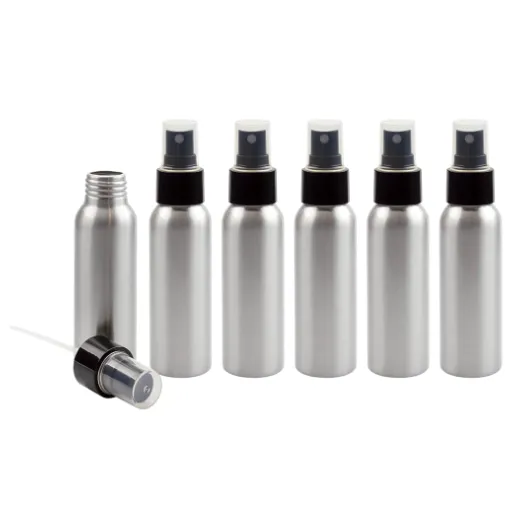
A fine mist sprayer is a mechanical dispensing pump that screws onto a bottle neck. It uses a vertical piston mechanism inside a plastic housing. When you press the actuator, the piston compresses a spring, forcing liquid through a narrow swirl chamber and out of a micro-orifice as a cloud of tiny droplets.
How It Works
Working principle is uncomplicated but highly accurate. A dip tube that is connected to the pump runs down through the agency of the bottle. After this, the actuator is pressed, and the piston goes down which shuts the inlet valve and opens the discharge valve.
Then, the liquid moves throughout the insert and spins in the swirl chamber thanks to centripetal force; at the nozzle, the liquid is sprayed in the form of a mist. When the actuator is released, the piston is returned by the spring which in turn makes the piston suck the liquid so that more liquid from the dip tube is drawn.
This is a relatively common size of a bottle neck: 18/410, 20/410, 24/410, and 28/410. The first number represents the neck outer diameter in mm, the second the neck thread appearance. Of the standards that are usually used for cosmetics, the 20/410 finish is the mostly used whereas the large body mists and hair sprays use the 24/410.
Technical Specifications
Standard cosmetic fine mist sprayers produce droplets in the 20-100 micron range. Output per stroke typically falls between 0.12ml and 0.4ml, depending on the actuator and insert design. The mechanism handles water-thin liquids best. Formulas with higher viscosity or suspended particles may need modified pumps or pre-filters.
Material compatibility is another key factor. Most fine mist sprayers use polypropylene (PP) for the housing and closure, with EPDM or silicone gaskets. Alcohol-heavy formulas require compatible seals to prevent gasket degradation over time.
Common Applications
Fine mist sprayers dominate the cosmetics and personal care sector. Facial toners, setting sprays, body mists, hair care products, room sprays, and essential oil blends all use this format. The screw-on design makes refilling easy, which appeals to brands offering refillable or sustainable packaging systems.
If you want a deeper look at the internal mechanics, read our guide on how a fine mist sprayer works.
What Is an Atomizer?
An atomizer is a dispensing device that breaks liquid into extremely fine particles. In modern packaging, the term usually refers to a crimp-pump mechanism sealed to the bottle with a metal collar. Traditional bulb atomizers, the kind with a rubber squeeze bulb, still exist but are now mostly decorative or nostalgic.
How It Works
Atomizer with a crimped pump is similar to the fine mist sprayer in terms of the working pressure principle with some significant variation; the assembly of the pump is firmly adhered to the bottle with a crimped metal ferrule. Thus, making this an inbuilt piece that cannot be unscrewed. The pump works the liquid up via the dip tube, then the liquid is compressed, pushed through a swirl chamber, and discharged through a dispensing nozzle.
The collar though, is not only a mechanical component but also decorative. It forms a firm barrier, which prevents the contents from leaking when stored for extended periods of time. It also adds volume, a metallic coating which conveys luxury. Several top perfumeries design collars made of zamac (a zinc alloy) for its feel.
Crimp atomizer neck finishes fall under a different classification: 15/415, 18/415, and 20/415. The thread /415 is meant for crimp closures rather than screw closures. That is where most of the purchasing errors take place. If an order of “atomizer” is made, and the specification of crimp or screw is not made, the neck finish may not fit the bottle.
Technical Specifications
In most cases atomizers produce smaller spray particles, unlike conventional fine mist dispensers. In ordinary atomizers, the droplet size ranges from 10 to 50 microns. With high accuracy designs, the particles measure fewer than 10microns. In addition, the dosage per single pump is also reduced, ranging between 0.05ml and 0.15ml within a single squeeze. More devastation happens in such formulae because of spraying as well without any reservation.
As for an atomizer, the spray pattern is narrower. Unlike fine mist sprayers that have a gentle wide throat spray, atomizers project a more binding mist that seems to drift into useful areas on the body.
The difference derives from design. People who use perfumes would want specific areas to be curved upwards, not torrents of sprays on the spray.
Common Applications
Atomizers are the standard for perfume, cologne, eau de toilette, and niche fragrance packaging. The association between atomizers and luxury fragrance is so strong that even screw-on pumps get marketed as “atomizers” when they target the perfume market.
Some travel and decant bottles also use atomizer-style mechanisms. Refillable perfume atomizers, pocket-sized devices for carrying fragrance on the go, have grown in popularity, with the refillable perfume atomizer segment seeing steady demand from consumers who want portability without sacrificing elegance.
For a broader look at fragrance closures, see our guide to perfume tops and caps.
Fine Mist Sprayer vs Atomizer: Side-by-Side Comparison
The differences between these two mechanisms go deeper than marketing language. Here’s how they stack up across the specs that actually matter for procurement.
| Feature | Fine Mist Sprayer | Atomizer (Crimp Pump) |
|---|---|---|
| Mechanism | Screw-on finger pump | Crimped pump with metal collar |
| Neck Finish | 18/410, 20/410, 24/410, 28/410 | 15/415, 18/415, 20/415 |
| Droplet Size | 20-100 microns | 10-50 microns |
| Output per Stroke | 0.12-0.4ml | 0.05-0.15ml |
| Spray Pattern | Wide, soft mist | Fine, concentrated cloud |
| Best For | Cosmetics, skincare, hair care, home care | Perfume, cologne, fragrance |
| Brand Perception | Practical, modern, accessible | Luxury, classic, exclusive |
| Customization | Color, finish, overcap | Metal collar, bulb, crystal/glass |
| Refillability | Easily refillable (screw-off) | Often sealed; refillable variants exist |
| Cost at Scale | Lower | Higher (metal components) |
Why the Confusion?
Such terminology confusion is as a result of three factors. The first factor is on the side of the marketers whose tendency is to refer ‘atomizer’ because it gives an impression of a high class. For instance, when a screw-on fine mist sprayer is used, especially with metal overshell, it is labeled ‘atomizer’ which also explains a price cap on packaging.
The second factor is the nature of the spray mechanisms for both structures is similar. That is, both of them use a mechanical action to create droplets from a liquid. For a lay customer, who is not an expert, they appear the same.
The third factor is the use of the language among consumers for product naming is not accurate. Any bottles with a spraying effect are termed atomizers by customers, and this trend continues to crop up even in B2B discussions.
The effect? Often as not, suppliers and clients are at odds when talking of orders, fine mist sprayer vs atomizer. While one party is referring to a self-wound crimp pump, the other is referring to a simple finger pump screw on. None of them realizes this is the case until the samples are received.
Ready to source the right mechanism for your product? Contact Fuzhou Longlu Packaging for a free consultation and sample comparison.
5 Key Decision Factors for Your Product
Choosing between a fine mist sprayer and an atomizer comes down to five practical considerations. Get these right, and your packaging will match both your product and your brand.
1. Product Category and Brand Positioning
Your product category is the strongest predictor of which mechanism to choose. Fragrance and perfume brands almost always lean toward atomizers. The crimp collar, metal finish, and lower output all signal luxury.
Skincare, hair care, and body care brands typically choose fine mist sprayers. The screw-on convenience and wider spray coverage fit daily-use products.
That said, exceptions exist. A niche fragrance house targeting Gen Z consumers might choose a screw-on fine mist sprayer with a bold, modern overcap to differentiate from traditional luxury. A high-end skincare serum might use an atomizer-style crimp pump to signal exclusivity. The mechanism is a brand signal. Choose the one that tells your story.
2. Formula Characteristics
The characteristics of a liquid influence its ability to be used in a specific device. Solutions that contain a high percentage of alcohol but little viscosity are suitable for both devices. A fine mist sprayer output is typically cumulatively larger than that from an atomizer, and the nozzle holes are bigger to help reduce clogging.
Such products can include water-based toners and mist are more suited for a fine mist sprayer. Atomizers are suitable for carrying pure perfumes that are alcohol-based as evaporation and diffusion are enhanced due to the small droplet size. Both are not advisable for thick oils, gels, and suspensions. You will probably want a specialized pump or another mode of application, if the product is in a suspension or higher than the density of water.
3. User Experience and Dosage Control
What the customer does with the product requires a different design. A simple atomizer outputs far less and the output is much controlled with an atomizer than the fine mist sprayer. In the end, another single spray is enough because of the attention given to each millimeter of the expensive, branded perfumes.
A fine mist sprayer vs atomizer provides a better volume delivery per stroke. These types of applicators suit products that need to be applied generously such as body mist, setting sprays or even hair refreshers.
They also differ with respect to how they are held and operated. A fine mist sprayer requires a light and quick finger press, while atomizers with metal collars are heavier. The zamac collars’ weight in hand is a luxurious tactile pleasure that plastic may not be able to match.
4. Packaging Aesthetics and Brand Story
It is impossible to have a brand’s design without choosing the mechanisms. A good example is atomizer since along with it comes most of the images of quality and styles of crafting even seemingly gone by days. The metallic pump one is associated with how a perfume bottle should look traditionally. Yet one can use a portable fine mist sprayer as it looks advanced, organized and friendly. Geometric view and simple towers are widely popular in the modern skin care products.
Marcus Webb who has been in the fragrance business in London for only a couple of years, suffered from this problem. Within the first attempt of production standard white fine mist sprayers were used in an effort to reduce the expenses. While the sales barely went up.
For the second drop, he decided to introduce caps with 18/415 crimp atomizers and brushed aluminum collars. No changes in the formula. No redesign of the bottle. Immediately, it felt like there was a lot more value to the brand.
Retailers started to order in large quantities and clients’ comments finally contained the words ”premium feel”. It took $ 0.18 more per unit in order to alter the package. The margin was boosted by 340% only.
5. Manufacturing and Procurement Practicalities
The market aspect is also essential because all businesses involve decisions that drive and maintain their market. These sprayers come with more benefits such as reduced MOQ, reduced lead time and easy to make changes. It will not be difficult to do these three – color matching, print a logo and change the style of the actuator. Usually, suppliers send out the finished samples of customized fine mist sprayers within 15 – 25 business days.
However, designing and ordering atomizers is a more extensive task. Some complications include the requirement of crimp tooling, processes that require metal collars, and assembling processes. Their MOQs are higher and their lead time stretches Good manufacturing practices cannot be met in 30 – 45 days. The good thing is that for those fragrance comb brands that wish to position themselves as a high-end brand, it comes as a given.
If you need help navigating fine mist sprayer neck finish sizes, our sizing guide covers every standard dimension.
Modern Convergence: When the Lines Blur
Innovations in the field of packaging are challenging the customary ways of differentiating the fine mist sprayer vs atomizer. Smart manufacturers are coming up with hybrid solutions that leverage elements from both categories.
Some screw-on pumps are now being branded as “atomizers” which are used for perfumes. They use 18/410- or 20/410-sized standard screw necks but have premium actuators, metal overshells, and even smaller insert orifices that almost give the atomizer vibe. Such a look is expensive because it comes as an atomizer but the refill option and the use of simple fine mist sprayer give it a cheap score.
Meanwhile, there is a temptation to start emphasizing the use of atomizing features in fine mist sprayers. There are metal collars, electroplated finishes or crystal-like caps for common cosmetic pumps that all the functional aspects have been ritualized.
Another layer of detail is continuous mist technology. The conventional pumps built next to pre-compression create a- persistent mist without pressing the fingers. They impede the functioning between high-accuracy atomizing and full coverage spraying from one’s protective coat.
Another notable trend reshaping the industry is the popularity of refillable perfume bottles. It is now possible to purchase small containers which come with detachable and replaceable atomisers which allow them to be filled with a concentrated or weak perfume as they wish. Although an atomiser would be most relevant in this regard, a sprayer, as it is also called, would suffice as well in this case. The essence of an atomizer underlies the present problem.
And this interchangeability has led to the expansion of terminology. This in turn calls for greater clarity in terms of sourcing from the sellers. Atomizer is no longer the only thing one can stipulate. You have to specify if it is a crimp or screw form. Whether metal collars and plastic fitments or both are present. A fine spray pattern, or finer? Such things decide the practicality of such devices.
For more on advanced spray technology, explore our overview of custom fine mist sprayer options and what’s possible with modern manufacturing.
Customization and Sourcing Guide
Once you’ve chosen your mechanism, the next step is specifying exactly what you need. Vague requests produce vague results. Here’s how to order with confidence.
Fine Mist Sprayer Customization
One of the advantages of utilizing fine mist sprayers is the ability to customize them according to the customer’s needs. These may include painting them to a specific Pantone shade, having a matte or gloss finish, having the logos silk-screened or hot-stamped, and even making various shapes of the actuators. Smooth, ribbed, or aluminum-plated overcaps can be availed. Various nozzle patterns can be used ranging from a conventional fine mist to a combination of these in an adjustable nozzle.
The least number of personalized fine mist sprayers orders is set between 5,000 and 10,000 pieces. e.g.,arla standard colors and finishes usually have lower numbers. The timelines that these products can be delivered are 15-25 days after the merchandise has been approved. in this case, the initial cost of packaging includes the bear minimum stock fine mist sprayers having variants of color that are already available in the market.
Atomizer Customization
Focus on atomizer enhancement is done mainly in terms of design and presence of the collar. Collars fit on top of the pack head at the finish and may be zamac, aluminum, or brass plated in gold, silver, rose gold, or gunmetal. However, the materials used in the manufacture of the bulb vary: some use rubber, others use silicone, and some even use decorative fabric wraps. Even crystals and glass can be used as decorative elements.
Unfortunately, the actual process of crimp fixing lids is more rigid. It is necessary to adapt the pump to the crimp dies that the supplier of how to paint your house possesses. The introduction of custom sizes means brand new dies, which means additional cost and time.
In the case of customized atomizers, the minimum order quantity is generally 10,000 units. The delivery time is from 30 to 45 days.
What to Specify When Ordering
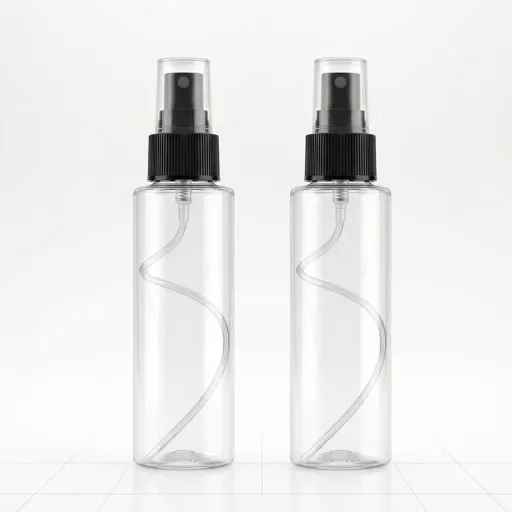
Regardless of which mechanism you choose, provide your supplier with these details:
- Neck finish and thread style: Exact millimeter diameter and thread profile (e.g., 24/410, 18/415)
- Output per stroke: Target milliliters per actuation
- Droplet size range: Micron specification if your formula requires precision
- Material compatibility: Plastic type, gasket material, and chemical resistance requirements
- Decoration requirements: Color codes, logo placement, finish type, and any metallization
- Bottle material and dimensions: So dip tube length can be calculated for proper product evacuation
Lena Torres, a product manager for a Brazilian essential oil brand, followed this exact checklist for her last order. She specified 24/410 fine mist sprayers, 0.18ml output, PP housing with silicone gaskets for essential oil compatibility, Pantone 186 C red actuators, and 150mm dip tubes for her 200ml PET bottles.
Her supplier delivered samples in 10 days. Production ran without a single revision. The clarity of her spec sheet saved her team three weeks of back-and-forth.
Need help building your spec sheet? Request a free sample and technical consultation from Fuzhou Longlu Packaging. Our engineers review every detail before production begins.
Conclusion
This fine mist sprayer vs atomizer is not just a conceptual tension. It is a real technical problem and extends to neck compatibility, droplet size, brand perception, and procurement strategy as well.
A fine mist sprayer should be used when you require a simple screw-on solution, a broader spray zone, reduced enzyme feelings, and generic modernization. Such a solution is perfect for skin care, hair sprays, body splashes, and care products which are used regularly by each and every woman.
An atomizer should be used when precision crimped seals, micronizing mists, brand appeal, and shall I add, the feel of metal come second to none. Such a solution is appropriate for perfume, aftershave, and artistic commodities.
When the modern day hybrid especially the new technology is brought in, be careful on the kind you want. Explain whether you want screw necks or crimp necks. Tell how much specific droplets to expect and the firm payload as well. Make and demand for fitment materials information from the manufacturers. The brands who go the extra mile to engage their partner companies appropriately and punctually receive packaging that fits them for the first time.
At Fuzhou Longlu Packaging Co., Limited, our product materials portfolio includes fine mist sprayers and crimp pump atomizers. We will assist you in selecting the appropriate closure, as well as packing systems that reflect your brand and values. Our product lineup includes 18/410 pumps which are available in stock, along with Zamac-collar atomizers that are fully customizable in design. All these and many more pumps are made to dispense product accurately and enhance the x-box’s value proposition.
The difference between a fine mist sprayer and an atomizer in the Cosmetic industry lies in the working mechanism for dispensing the product within the bottles.
Get a free quote on fine mist sprayers and atomizers today. Tell us your product, your bottle, and your vision. We’ll recommend the exact mechanism you need.