The best perfume boxes do three jobs at once: they protect fragile glass bottles, communicate your brand story before the cap comes off, and turn an ordinary unboxing into a memorable experience. Whether you are launching a niche fragrance line or restocking packaging for an established brand, choosing the right custom perfume boxes can directly affect perceived value, shipping costs, and repeat purchases.
Most fragrance brands pour budget into the bottle and treat the box as an afterthought. That is a costly mistake. In 2026, roughly 30% of fragrance sales happen online, which means your perfume box must survive couriers, delight customers on camera, and still feel luxurious on a shelf. The good news? You do not need a luxury-house budget to achieve all three.
In this guide, you will learn how to choose the right perfume box style, material, finish, and supplier for your brand. We will cover real costs, minimum order quantities, common mistakes new brands make, and what to print on every box to stay compliant in major markets. By the end, you will have a clear checklist you can hand to any packaging supplier.
Key Takeaways
- A perfume box is secondary packaging that protects the bottle, carries branding, and holds legally required labeling.
- Rigid, magnetic-closure, drawer, and tuck-end boxes each suit different brand tiers and budgets.
- Cardboard, rigid paperboard, kraft, and corrugated materials each offer a different balance of cost, protection, and perceived luxury.
- Most custom perfume boxes start at 50–100 units for folding cartons and 100+ units for rigid boxes, with per-unit costs often ranging from 0.50to0.50to8+ depending on quantity and finishes.
- Common mistakes include skipping drop-testing, mismatched MOQs across suppliers, and overlooking market-specific labeling requirements.
What Is a Perfume Box?
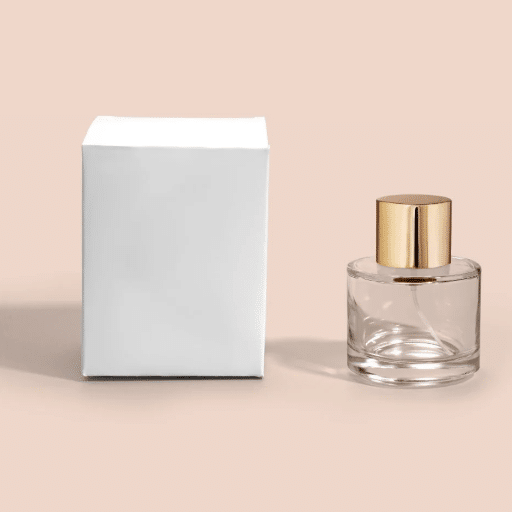
A perfume box is the secondary packaging that surrounds and protects a fragrance bottle. It typically holds the bottle, an insert or tray, and any supporting materials such as a story card, sample vial, or authentication tag.
Unlike primary packaging (the bottle, cap, and sprayer), the perfume box is the first thing a customer sees when the product arrives. It also performs a logistical role. A well-designed box prevents leaks, absorbs impact during shipping, and keeps the bottle centered so the atomizer and cap do not rattle or crack. For retailers, the box provides shelf presence, barcode space, and legally required product information.
In short, a perfume box is not just a container. It is a brand ambassador, a shipping guard, and a compliance document rolled into one.
Why Perfume Boxes Matter More Than Ever
The fragrance market is growing steadily. According to Fortune Business Insights, the global perfume packaging market is projected to reach approximately USD 3.96 billion in 2026, expanding at a CAGR of around 7.18%. Market Research Future notes that glass still accounts for roughly 53% of perfume packaging material share, with bottles under 100 ml holding nearly 65% of the market by capacity.
Those numbers matter for your box design. Smaller bottles mean tighter fits. Higher e-commerce share means more transit stress. And the rise of niche and indie fragrance brands means more competition for unboxing moments on social media.
When Marcus launched his indie fragrance line in early 2025, he spent 80% of his packaging budget on a custom glass bottle and a heavy metal cap. He chose a thin folding carton for the box because it was cheap and available quickly. Within two months, he had a problem: 12% of his DTC orders arrived with damaged caps or creased boxes. Refunds and replacements ate into his margins, and customer photos on Instagram showed bent corners instead of the luxury feel he wanted. After switching to a rigid box with a custom EVA foam insert, his damage rate dropped below 2%, and his return customer rate improved. The box upgrade paid for itself in three months.
That story illustrates why the box deserves the same strategic attention as the bottle. A weak box can undermine a beautiful fragrance.
Want to see how the right box protects your entire packaging investment? Explore our complete custom perfume packaging guide for a full-system view of bottles, caps, inserts, and labels.
Types of Perfume Boxes: Which Style Fits Your Brand?
Choosing a box style is one of the first decisions that shapes your customer’s unboxing experience. Each style sends a different signal about price point, brand personality, and occasion.
Rigid Setup / Two-Piece Boxes
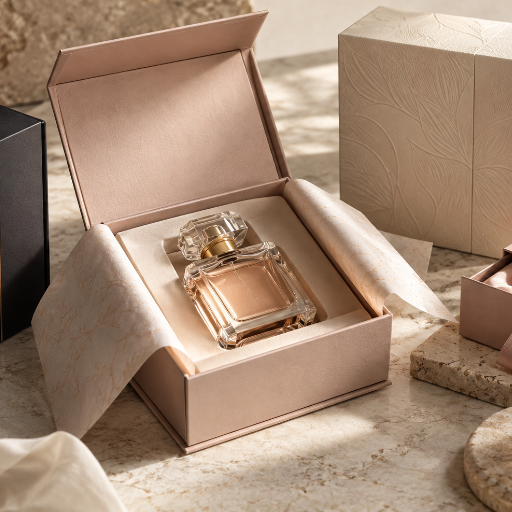
A rigid setup box, also called a two-piece box, has a separate lid and base. It feels substantial and is the classic choice for luxury perfume boxes. The construction uses thick paperboard wrapped in printed paper or fabric, giving it a premium weight and clean edges.
Best for: High-end fragrances, gift sets, limited editions, and brands that want a heritage or couture feel.
Typical MOQ: 100–500 units.
Cost tier: Medium to high.
Magnetic Closure Boxes
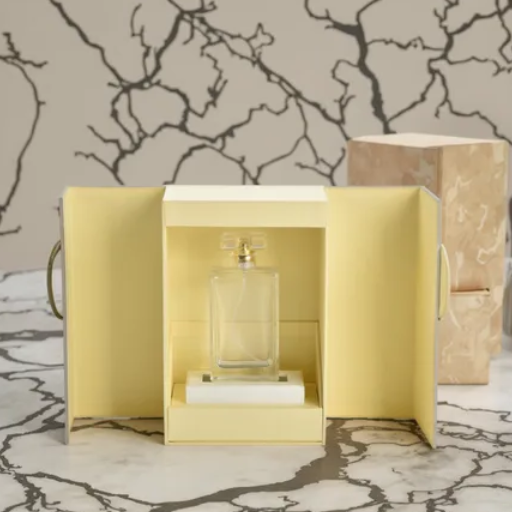
Magnetic closure boxes use hidden magnets to keep the lid shut. They combine the solidity of a rigid box with a satisfying snap when opened. This style works well for modern luxury and men’s fragrances.
Best for: Premium brands, influencer unboxing campaigns, and subscription or gift packaging.
Typical MOQ: 100–500 units.
Cost tier: Medium to high.
Drawer / Sleeve Boxes
Drawer boxes consist of an outer sleeve and an inner tray that slides out. The reveal feels deliberate and theatrical, making this style popular for niche and artistic fragrances.
Best for: Niche perfumes, artisanal brands, and collaborations where storytelling matters.
Typical MOQ: 100–500 units.
Cost tier: Medium.
Tuck-End Folding Cartons
Tuck-end cartons are the workhorse of retail fragrance packaging. They are lightweight, ship flat, and cost less per unit than rigid options. With good design and finishing, a folding carton can still feel refined.
Best for: Mass-market fragrances, samples, travel sizes, and budget-conscious launches.
Typical MOQ: 50–100 units.
Cost tier: Low to medium.
Round Tube Boxes
Round or oval tube boxes stand out on shelves and signal natural, minimalist, or eco-conscious positioning. They are often made from paperboard and can include a window or sleeve.
Best for: Natural fragrances, clean-beauty brands, and travel sets.
Typical MOQ: 100–300 units.
Cost tier: Low to medium.
Window Boxes
Window boxes include a clear PVC or PET panel that lets the bottle show through. This style works when the bottle itself is a key selling point.
Best for: Brands with sculptural or colorful bottles, retail displays, and gift packaging.
Typical MOQ: 100–300 units.
Cost tier: Low to medium.
| Box Style | Best For | Typical MOQ | Cost Tier | Unboxing Feel |
|---|---|---|---|---|
| Rigid two-piece | Luxury, heritage, gifts | 100–500 | Medium-high | Majestic, formal |
| Magnetic closure | Modern premium, men’s | 100–500 | Medium-high | Refined, tactile |
| Drawer / sleeve | Niche, artistic, storytelling | 100–500 | Medium | Theatrical, slow |
| Tuck-end carton | Retail, samples, travel | 50–100 | Low-medium | Practical, familiar |
| Round tube | Natural, minimalist, eco | 100–300 | Low-medium | Unique, playful |
| Window box | Bottle-focused retail | 100–300 | Low-medium | Revealing, visual |
The right choice depends on your price point, distribution channel, and brand story. A 25impulse−buyfragrancedoesnotneedarigidmagneticbox.A25impulse−buyfragrancedoesnotneedarigidmagneticbox.A180 niche scent probably should not ship in a thin carton.
How to Choose the Right Material for Perfume Boxes
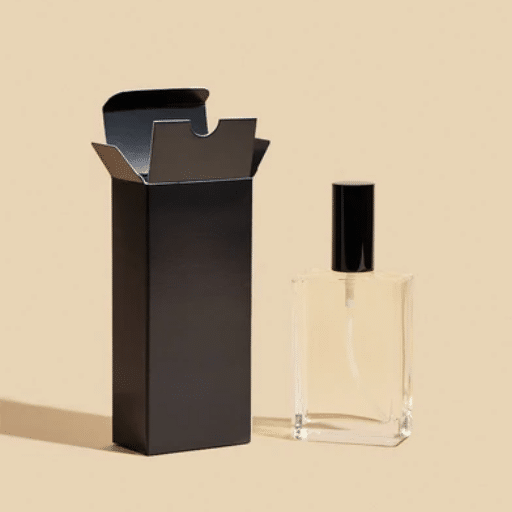
Material choice affects cost, protection, sustainability, and perceived value. Here are the most common options for custom perfume boxes.
Cardboard / Folding Carton
Standard cardboard or paperboard is lightweight, printable, and cost-effective. It works well for tuck-end boxes, sleeves, and outer wraps. Thickness is measured in points or grams per square meter (GSM); 300–400 GSM is typical for fragrance cartons.
Pros: Affordable, fast to produce, easy to print, recyclable.
Cons: Less protective than rigid board, can crease in transit without proper inserts.
Rigid Paperboard
Rigid paperboard is much thicker than folding carton and is wrapped in printed or textured paper. It creates the premium feel associated with luxury perfume boxes.
Pros: High-end feel, excellent protection, reusable.
Cons: Higher cost, heavier, higher MOQs, takes more storage space.
Kraft and Recycled Paper
Kraft paperboard has a natural, unbleached look that signals sustainability. It can be paired with soy-based inks and minimal coatings to create an eco-friendly package.
Pros: Strong sustainability story, on-trend, recyclable and biodegradable.
Cons: Limited color range unless printed over, less glossy or luxurious unless combined with premium finishes.
Corrugated Board
Corrugated board is the fluted cardboard used in shipping boxes. For perfume boxes, it is rarely the outer retail package, but it is essential as the shipping carton that protects the retail box during e-commerce delivery.
Pros: Excellent impact protection, widely recyclable, cost-effective at scale.
Cons: Too industrial for direct retail presentation unless covered or printed.
Inserts and Trays
The material inside the box matters as much as the box itself. Common insert options include:
- Paperboard inserts: Die-cut to hold the bottle, economical and recyclable.
- EVA foam: Soft, precise, and protective; common in luxury perfume boxes.
- Flocking or velvet: Adds a tactile premium feel.
- Molded pulp: Eco-friendly option for cushioning and protection.
If sustainability is a core brand value, our sustainable packaging guide walks through recyclable, biodegradable, and plastic-free options in more detail.
What Should Be Printed on a Perfume Box?
Every perfume box must carry more than a pretty logo. Regulatory bodies in major markets require specific information to protect consumers and enable traceability.
Brand Name and Logo
Your brand name and logo should be the most prominent visual elements. They build recognition and make the product instantly identifiable on a shelf or in an unboxing video.
Fragrance Name and Volume
The fragrance name and net volume (e.g., 50 ml / 1.7 fl. oz.) must be clearly visible. Volume must match what is declared on the bottle and any regulatory filings.
Ingredients and Allergen Information
In the EU and UK, fragrance ingredients must be disclosed according to regulations such as the Cosmetic Products Regulation (EC) No 1223/2009. Common allergens like linalool, limonene, and citronellol must be listed if present above threshold levels.
Batch Code and Country of Origin
A batch code allows manufacturers to trace production runs in case of recalls or quality issues. Country of origin is required for customs, retail, and consumer transparency.
Safety Warnings and Regulatory Marks
Warnings such as “Flammable” or “Keep away from heat and flame” are standard. Depending on the market, you may also need symbols for recycling, cruelty-free status, or organic certification.
Barcode and Retail Information
If you plan to sell through retailers, include a valid EAN or UPC barcode. Retailers also need space for price stickers, security tags, or RFID labels.
Working with a supplier who understands cosmetic labeling requirements can save you from costly reprints. Always request a digital proof and have it reviewed by a compliance contact before approving production.
Customization Options That Elevate Perfume Boxes
Once the structure and material are set, finishing techniques determine whether your perfume box feels ordinary or exceptional.
Printing
- CMYK: Standard four-color printing, ideal for photography and gradients.
- Pantone: Spot colors for precise brand-color matching, common in luxury packaging.
- Digital printing: Cost-effective for small runs and prototypes.
Foil Stamping
Foil stamping applies metallic or pigmented foil to the surface. Gold, rose gold, silver, and matte black are popular choices for luxury perfume boxes.
Embossing and Debossing
Embossing raises a design above the surface; debossing presses it in. Both add tactile texture and a subtle premium feel without relying on color alone.
Coatings and Laminations
- Gloss lamination: Shiny, vibrant, and protective.
- Matte lamination: Smooth, understated, and fingerprint-resistant.
- Soft-touch coating: Velvet-like feel that elevates perceived value.
- Spot UV: Glossy accents applied to specific areas for contrast.
Window Cutouts and Ribbons
A window cutout lets the bottle peek through. Ribbons, pulls, or magnetic closures add interaction and make the box easier to open.
Elena spent weeks choosing between gold foil and blind embossing for her debut fragrance. Her designer recommended blind embossing on matte-laminated rigid board with a soft-touch interior. The result was understated but unmistakably premium. Customers described the unboxing as “quiet luxury,” and the design cost less than a foil-heavy alternative because it used fewer processes.
That example shows how restraint can be more powerful than excess. The right finish depends on your brand positioning, not just your budget.
Custom Perfume Boxes: Costs, MOQs, and Lead Times
Transparency around cost and quantity helps you plan a realistic launch. The figures below are typical ranges for custom perfume boxes in 2026, though actual quotes depend on size, material, finishes, and supplier location.
Cost per Unit by Quantity
| Quantity Range | Folding Carton | Rigid Box | Magnetic Box |
|---|---|---|---|
| 100–500 units | 0.80–0.80–2.50 | 3.00–3.00–6.00 | 4.00–4.00–8.00 |
| 500–1,000 units | 0.50–0.50–1.50 | 2.00–2.00–4.00 | 3.00–3.00–6.00 |
| 1,000–5,000 units | 0.30–0.30–1.00 | 1.50–1.50–3.00 | 2.00–2.00–4.50 |
| 5,000+ units | 0.20–0.20–0.60 | 1.00–1.00–2.00 | 1.50–1.50–3.00 |
These are rough estimates. Add-ons like foil stamping, embossing, custom inserts, or magnetic closures increase cost per unit.
Minimum Order Quantities
- Folding cartons: often 50–100 units.
- Rigid boxes: typically 100–500 units.
- Magnetic closure boxes: typically 100–500 units.
- Drawer boxes: typically 100–500 units.
Some suppliers offer lower MOQs for digital printing or stock structures with custom printing.
Hidden Costs to Budget For
- Cutting dies and printing plates: One-time setup costs, often 100–100–500 per design.
- Prototype samples: Physical samples can range from free to $100+ each, plus shipping.
- Design and pre-press: If you need structural design help, budget for design fees.
- Compliance review: Legal or regulatory review may add cost but prevents reprints.
- Shipping and duties: International sourcing can add 10–25% to total landed cost.
Typical Lead Times
- Folding cartons: 5–10 business days after proof approval.
- Rigid boxes: 10–20 business days.
- Complex rigid or magnetic boxes: 15–25 business days.
Rush production is often available for an additional fee.
Ready to get a realistic quote for your fragrance launch? Contact our team with your box size, quantity, and finish requirements. We will walk you through options that match your budget and timeline.
10 Common Perfume Box Mistakes to Avoid
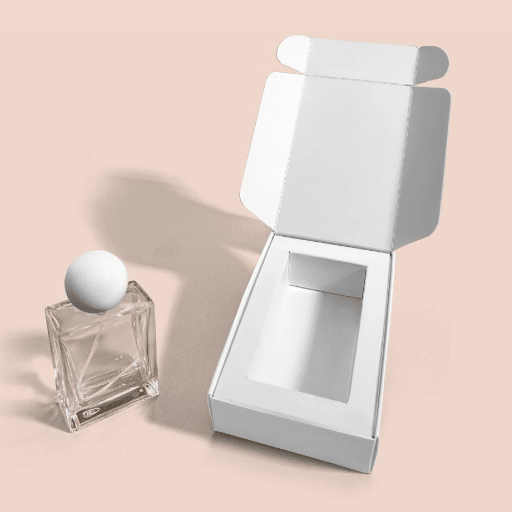
New fragrance brands often learn these lessons the hard way. Avoiding these mistakes can save money, protect your reputation, and speed up your launch.
- Skipping structural testing. A box that looks great on a screen may fail in a drop test. Always request samples and simulate shipping conditions.
- Ignoring e-commerce stress. Retail boxes are not designed for courier handling. Plan an outer shipping carton or a sturdier retail box.
- Choosing style over function. A drawer box is beautiful, but if customers cannot open it without damaging it, the experience backfires.
- Mismatched MOQs across suppliers. Ordering 500 boxes but 1,000 bottles leaves you with leftover inventory or delays.
- Weak or generic branding. Stock boxes with only a logo sticker rarely feel premium. Invest in custom printing or finishing.
- Overlooking labeling compliance. Missing allergen information or volume declarations can block customs or retail acceptance.
- Neglecting sustainability messaging. If you use eco-friendly materials, say so on the box. Silent sustainability is missed marketing.
- Ordering too many units before validation. Test your fragrance and packaging with a small run before committing to thousands.
- Poor insert fit. A bottle that rattles inside the box will arrive damaged and feel cheap.
- Forgetting the unboxing sequence. Map the order in which customers see each layer: outer box, insert, story card, bottle.
David made mistake number eight. He ordered 5,000 rigid boxes for a scent that had not yet been market-tested. When the fragrance underperformed, he was left with hundreds of boxes and a strained cash flow. His next launch used a 200-unit minimum, sold out in six weeks, and then scaled confidently. Starting small is not a lack of ambition. It is smart risk management.
How to Evaluate a Perfume Box Supplier
The right supplier is a partner, not just a vendor. Here is how to vet one before placing an order.
What to Ask Before Ordering
- What is your MOQ for this box style and material?
- Can you provide a physical sample before mass production?
- What is your typical lead time, and do you offer rush service?
- Do you have experience with cosmetic or fragrance packaging regulations?
- What quality control checks do you perform?
- Can you share references or case studies from fragrance brands?
- What are your payment terms and shipping options?
Red Flags to Avoid
- No sample process or refusal to send physical samples.
- Vague answers about MOQs, lead times, or materials.
- Pressure to pay 100% upfront before samples are approved.
- No quality control documentation.
- Inability to explain how they handle printing registration, color matching, or structural tolerances.
Sampling and Prototyping Best Practices
Start with a 3D mockup or flat dieline to confirm dimensions. Then request a physical sample to check material feel, print quality, and insert fit. Test the sample by placing your actual bottle inside and simulating shipping conditions.
A reliable supplier will welcome this process. At Fuzhou Longlu Packaging, we provide samples and prototypes so brands can validate fit, finish, and feel before committing to full production.
Frequently Asked Questions
What is the best material for custom perfume boxes?
Rigid paperboard is best for luxury positioning, folding carton is best for budget and speed, and kraft or recycled paper is best for sustainability-focused brands. The right choice depends on your price point, distribution channel, and brand values.
What is the typical minimum order quantity for perfume boxes?
Folding cartons often start at 50–100 units, while rigid and magnetic closure boxes typically start at 100–500 units. Some suppliers offer lower MOQs through digital printing or stock structures.
How much do custom perfume boxes cost?
Per-unit costs range from roughly 0.20–0.20–2.50 for folding cartons at scale, and 1.00–1.00–8.00+ for rigid or magnetic boxes depending on quantity, material, and finishes.
What should be printed on a perfume box?
At minimum, include your brand name, fragrance name, volume, ingredients/allergens, batch code, country of origin, safety warnings, and barcode. Requirements vary by market, so consult a compliance resource or supplier with cosmetic packaging experience.
Are custom perfume boxes eco-friendly?
Yes. Options include kraft paper, recycled paperboard, FSC-certified materials, soy-based inks, and biodegradable inserts. Make sure your sustainability claims are specific and verifiable.
How long does production take for custom perfume boxes?
Lead times typically range from 5–10 business days for folding cartons and 10–25 business days for rigid or complex boxes. Samples and prototyping add time upfront but prevent costly errors later.
Conclusion
A great fragrance deserves a box that protects it, presents it, and persuades the customer before they ever smell it. The best perfume boxes balance structure, material, finish, and compliance without losing sight of the unboxing experience.
To recap:
- Match the box style to your brand tier and distribution channel.
- Choose materials based on protection needs, sustainability goals, and budget.
- Include all legally required labeling for your target markets.
- Use finishing techniques that reinforce your brand story rather than distract from it.
- Start with a small run, test samples under real shipping conditions, and scale from there.
Whether you are preparing your first niche fragrance launch or refreshing packaging for an established line, the right perfume box is an investment in perception and protection.
Ready to design custom perfume boxes that protect your product and elevate your brand? Get in touch with Fuzhou Longlu Packaging for a free quote, sample, or design consultation. We will help you find the right style, material, and finish for your fragrance, on time and within budget.