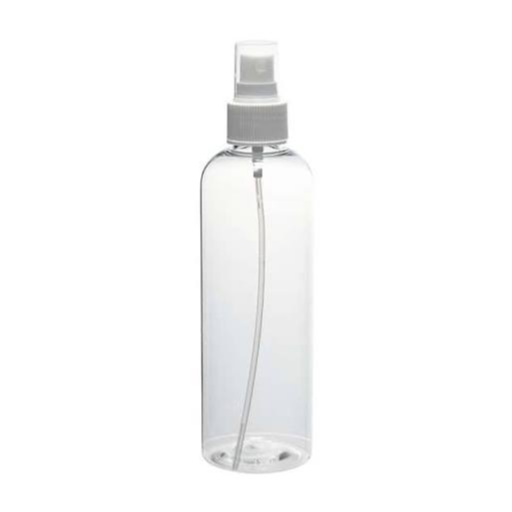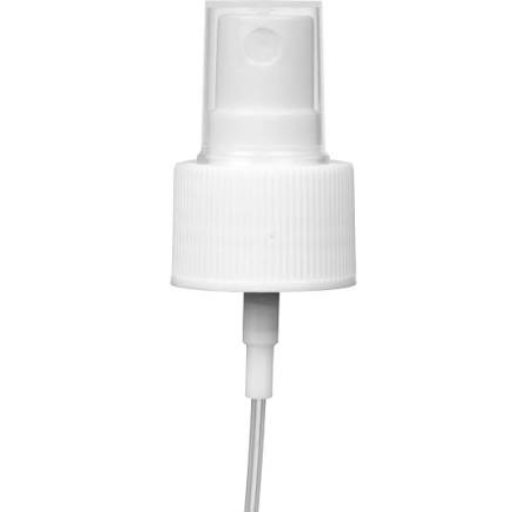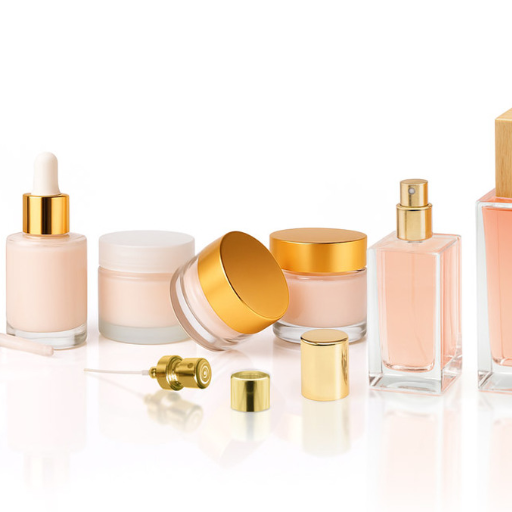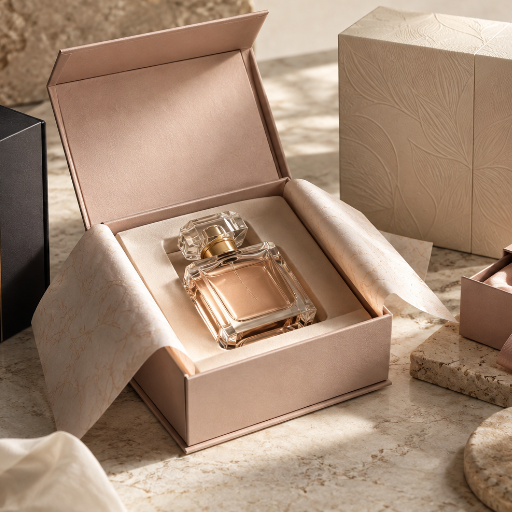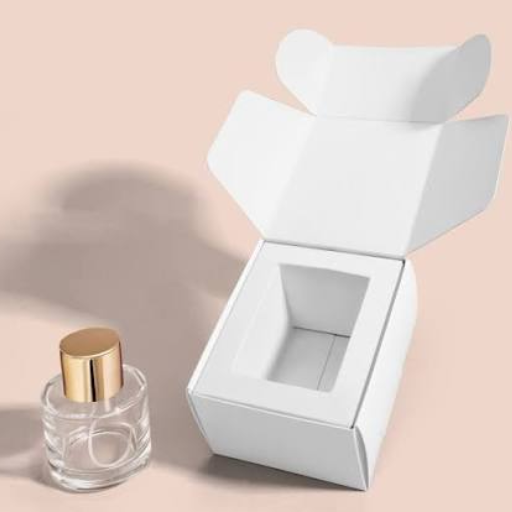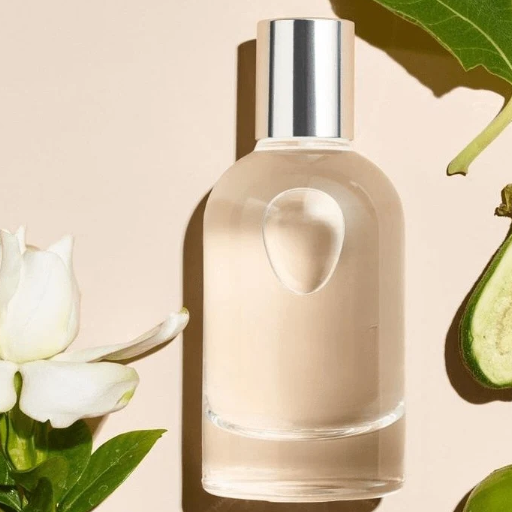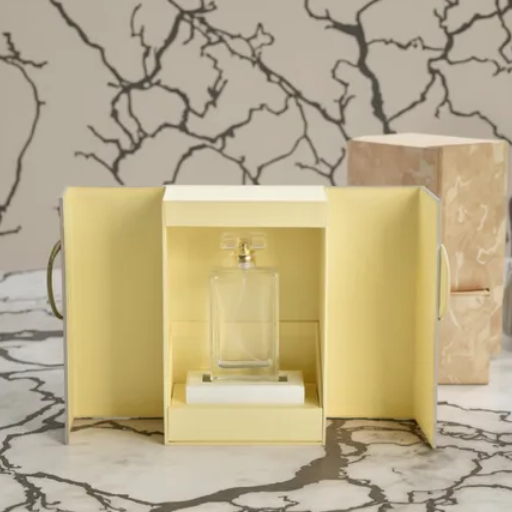
Custom luxury perfume packaging is a made-to-order premium fragrance package, the bottle, cap, insert, rigid box, and finishing, designed and produced to your brand’s exact specifications through OEM or ODM manufacturing. It’s how an independent perfumer or a growing fragrance house turns a “nice” product into one that feels worth three times the price.
Consider what a box actually does. Long before anyone sprays your scent, they hold the package. The weight of the lid, the resistance of a magnetic closure, the raised feel of an embossed logo. Those details are not decoration. They are the argument your product makes before a single note is smelled. And most brands get them wrong, not from a lack of taste, but from a lack of a clear commissioning plan.
That’s what this guide gives you. We’re Fuzhou Longlu Packaging Co., Ltd., a packaging manufacturer, not a design studio or a reseller. We’ll walk you through each component you can customize, what it costs, and how to avoid the expensive mistakes we’ve watched hundreds of brands make. By the end, you’ll know exactly what to spec, and what to skip.
Key Takeaways
- Custom luxury perfume packaging means commissioning the whole system (bottle, cap, insert, box, and finish) to your spec, not just buying a nicer box.
- You can customize a stock perfume bottle without a new mold using frosting, coating, screen printing, foil, or metal collars, saving thousands on tooling.
- Rigid greyboard boxes (1,200 to 1,800 gsm) with magnetic or drawer closures are the standard premium structure; expect 1.50to1.50to3.00 per unit at the premium tier and $5.00+ at true luxury.
- OEM means fully bespoke from scratch; ODM means adapting a supplier’s existing design, and the difference changes your cost and lead time dramatically.
- Hidden costs like foil plates, embossing dies, insert tooling, and freight can add 20% or more to a landed quote, so ask for a line-item breakdown.
What Is Custom Luxury Perfume Packaging?
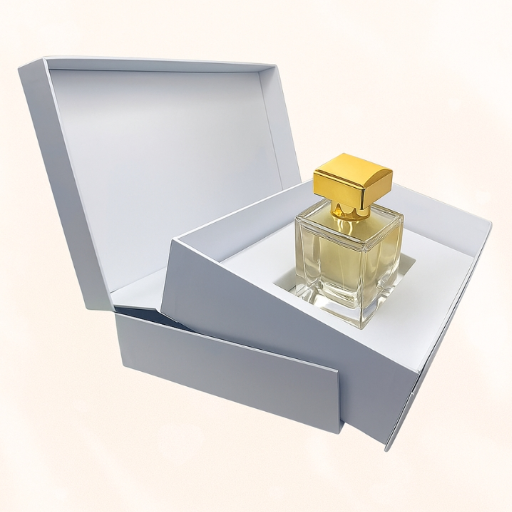
Custom luxury perfume packaging is a made-to-order fragrance package in which the bottle, cap, insert, rigid box, and finishing are produced to a brand’s exact specifications rather than selected from off-the-shelf stock. It sits in a lane of its own, above premium stock packaging but distinct from a simple custom box.
The confusion usually starts here. Brands use “custom,” “luxury,” and “bespoke” interchangeably, and suppliers rarely clarify the difference because it works to their advantage. There are three lanes worth separating in your head:
- Premium off-the-shelf uses a stock bottle, stock cap, and a printed folding carton. Fast and cheap, but nothing about it is yours.
- Custom luxury takes a stock or custom bottle and wraps a fully bespoke package around it. This is the sweet spot for most indie and growing brands.
- Box-only custom upgrades just the outer rigid box while the bottle and cap stay stock. Useful, but it is not the full system.
The bigger decision is OEM versus ODM. Original Equipment Manufacturing (OEM) means a package built entirely from your design, which means new molds, new tooling, and higher minimums. Original Design Manufacturing (ODM) means a supplier adapts one of its existing designs to your branding, which is faster and cheaper but less exclusive. Neither is “better.” It depends on your budget and how proprietary you need the result to be.
Related: Our complete guide to custom perfume packaging covers the full system at every price tier, not just luxury.
The Anatomy of a Fully Custom Luxury Perfume Package
A luxury fragrance package is not one object. It is a sequence of five components that have to feel coordinated, or the whole thing falls apart.
The Bottle
Glass dominates the luxury perfume packaging market, at roughly 53% of material demand according to Fortune Business Insights. The bottle is also where custom costs escalate fastest, because a bespoke mold is expensive. The good news is that most of what makes a bottle feel expensive can be done to a stock bottle, which we cover next.
The Cap and Collar
Zamac (a zinc alloy), aluminum, wood, and magnetic closures all signal weight and quality. A heavier cap changes the entire perception of the package. This is one of the highest-return customizations because caps are less tooling-intensive than bottles.
The Insert
The insert holds the bottle still and prevents the rattle that instantly reads as cheap. EVA foam, velvet, satin, and molded pulp each carry a different cost and a different sustainability story.
The Outer Box
The rigid box is the luxury standard. It is greyboard wrapped in a premium paper, not a thin folding carton. Magnetic flip-top, book-style, drawer, and lid-and-base are the four structures most brands should choose between.
The Finishing
Foil stamping, embossing, debossing, spot UV, and soft-touch lamination are what make a box feel expensive to the hand. The rule we repeat to every client is simple: two or three deliberate finishes read as more luxurious than five applied at once.
Once you understand these five pieces, you can commission them one at a time instead of paying a supplier to guess at the whole package. Want to see what a coordinated custom luxury system looks like in practice? Request a free sample and we will walk you through the options for your specific bottle.
How to Customize a Perfume Bottle Without a New Mold
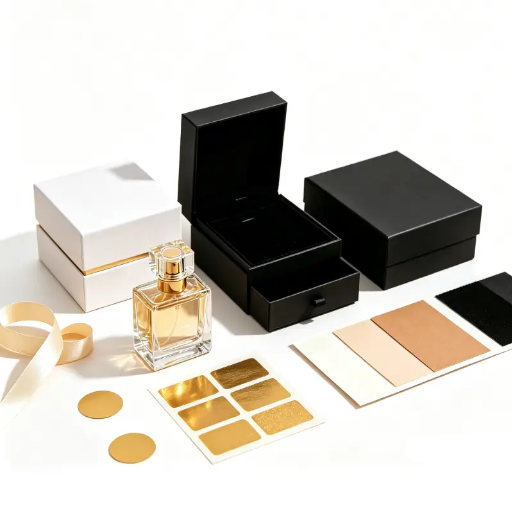
Here’s the single most important cost-saving idea in this guide, and almost no one tells indie brands about it. You don’t need a custom mold to own a distinctive bottle. You need decoration.
A custom glass mold can cost anywhere from a few thousand dollars to well over $10,000, plus per-unit costs, and it locks you into thousands of units before the first bottle ships. For a brand launching its first fragrance, that is a poor use of capital. Stock bottles are available in thousands of silhouettes, and the following treatments make them unmistakably yours:
- Frosting and coating. A frosted or color-sprayed stock bottle reads as bespoke at a fraction of mold cost.
- Screen printing and hot stamping. Logos, patterns, and fine detail applied directly to the glass.
- Foil decoration and metal collars. A metal collar at the neck or a foil emblem adds weight and structure.
- Attached branding. Custom labels, plates, and medallions create a proprietary look without a proprietary mold.
Lena, who founded a small niche fragrance label in Portland, wanted a sculpted bottle but had a 6,000launchbudget.Anewmoldwasoutofthequestion.Instead,shepairedastockcylindricalflaconwithasoft−touchfrostedcoating,agoldscreen−printedmonogram,andametalcollar.Herunitcoststayedunder6,000launchbudget.Anewmoldwasoutofthequestion.Instead,shepairedastockcylindricalflaconwithasoft−touchfrostedcoating,agoldscreen−printedmonogram,andametalcollar.Herunitcoststayedunder1.20 for the bottle treatment, and customers routinely described the bottle as “custom.” She reinvested the savings into a magnetic rigid box, which is where the unboxing moment actually happens.
When does a bespoke mold make sense? When your silhouette is central to the brand, you have the volume to justify it, and you plan to keep the design for years. If you cannot answer “yes” to all three, decorate a stock bottle first. You can always graduate to a mold for your second or third launch, once revenue proves the demand.
Choosing the Right Rigid Box and Closure
The box is where the luxury conversation is won or lost, and it is where most of your finishing budget should go. Rigid boxes are built from greyboard, typically 1,200 to 1,800 gsm (about 2 to 2.3 mm thick), wrapped in specialty paper. That construction is what gives a box its “book-like” stiffness, which is the core tactile signal of luxury.
The four structures to know:
- Magnetic closure boxes (flip-top and book-style) open like a book with a satisfying snap. They are the most popular premium choice because the magnet adds perceived value for pennies per unit.
- Drawer or slide boxes pull open like a drawer. They suit discovery sets, travel sprays, and any format where a slow reveal matters.
- Lid-and-base (two-piece) rigid boxes lift off cleanly and suit limited editions and gift sets.
- Paper tubes offer a cylindrical profile that stands out on a shelf and works well for travel formats.
A quick way to think about it:
| Structure | Feel | Cost tier | Best for |
|---|---|---|---|
| Magnetic flip-top | Premium “snap” | Mid | Signature launches |
| Drawer / slide | Slow reveal | Mid-high | Discovery sets, travel |
| Lid-and-base | Classic, clean | Mid | Gift sets, limited editions |
| Paper tube | Distinctive | Low-mid | Travel, samples |
| Folding carton | Lightweight | Low | Mass-market, shipping |
The distinction between a rigid box and a folding carton matters more than brands realize. A folding carton is printed paperboard folded into shape, thin and lightweight. A rigid box is a separate wrapped structure. If you want luxury, you want rigid. If you want volume shipping at minimum cost, folding carton wins. Most fragrance brands doing a premium launch choose rigid for the retail unit and a plain shipper carton for transport.
Premium Materials and Finishes for a Bespoke Package
Materials and finishes are where “expensive-looking” actually happens, and they are the part of custom luxury perfume packaging where a manufacturer’s advice pays for itself.
Wraps cover the greyboard and set the texture. Leather-touch, linen, soft-touch, and metallic papers each change how the box feels and what it communicates. Soft-touch lamination is widely considered the highest-return finish in fragrance because it makes even a modest box feel expensive to the touch.
Finishes add the detail:
- Foil stamping applies metallic foil (gold, silver, rose gold, holographic) to the logo or fine rules. It is the most recognizable luxury signal.
- Embossing and debossing press the design into or out of the paper for a tactile, dimensional logo.
- Spot UV creates a matte-versus-glossy contrast on the same surface.
- Soft-touch and matte lamination add the premium feel and reduce fingerprints.
The mistake to avoid is treating finishes like a checklist. A box with foil, embossing, spot UV, and lamination all at once looks busy and, counterintuitively, cheap. Two or three restrained accents read as more considered.
Marcus, a brand manager at a mid-sized fragrance house, once approved a box with five finishes because the supplier offered them at a “bundle discount.” The result looked cluttered, and his team quietly abandoned it after one season. His next box used a single blind emboss on soft-touch stock with one foil line. It cost less and tested dramatically better with focus groups. Restraint is a finishing strategy.
Sustainability is part of luxury now, not the opposite of it. FSC-certified rigid board, recycled greyboard, mono-material construction, and refillable systems let a brand claim both premium and responsible, a trend Hale Path Packaging tracks closely in its 2026 outlook. Chanel won a Formes de Luxe award for a bagasse-based sustainable luxury package, and Dior now uses recycled rare-earth magnets in its closures, proof that “magnetic” and “sustainable” are not in conflict. For a deeper look at doing this without greenwashing, see our sustainable packaging guide.
What Custom Luxury Perfume Packaging Costs
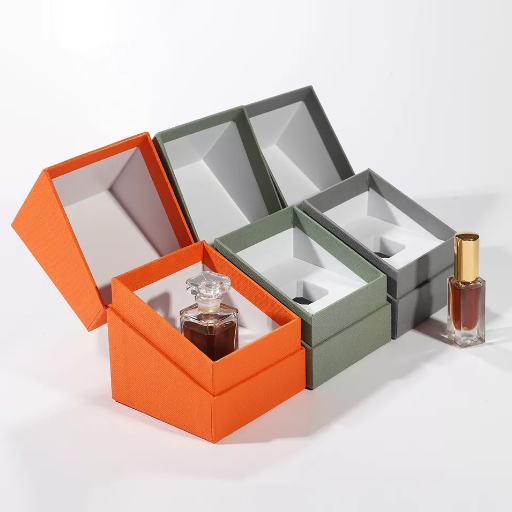
Let us talk about money, because vague pricing is the number one complaint fragrance founders have about packaging suppliers. Here is a realistic picture based on current manufacturer data.
The market itself is growing fast. The high-end perfume packaging segment is worth roughly 4.5to4.5to4.6 billion in 2025 and is projected to reach about $7.2 billion by 2032, growing at 6.6 to 6.8 percent annually, with the bespoke custom segment expanding even faster at around 12.4 percent a year, according to Intel Market Research.
Per-unit pricing breaks into tiers:
- Premium tier: roughly 1.50to1.50to3.00 per unit for a rigid box with a couple of standard finishes.
- True luxury tier: $5.00 or more per unit once you add custom inserts, foil, embossing, and bespoke closures.
- Folding carton: from about $0.50 per unit, for comparison.
Minimum order quantities vary by supplier and by how custom you go. Low-MOQ digital shops start around 50 to 100 units. Full custom runs typically begin at 500 units, and some suppliers ask for 2,000 to 5,000 for highly bespoke work. Ordering 5,000 to 10,000 units can cut your per-unit cost by up to 30 percent.
The part brands are not prepared for is the hidden costs. Foil and embossing plates and physical samples often run 50to50to150 each, though they are frequently credited against a production order. Insert tooling for a custom EVA or molded pulp cradle is a separate line item. Then freight and import duties can add 20 percent or more to the landed cost. Always ask for a line-item quote, not a single number.
Ready to get a real number? Request a free wholesale quote and tell us your bottle size, volume, and finish goals. We will return a transparent breakdown, not a vague estimate. For volume pricing on the box alone, our wholesale perfume boxes guide has more detail.
The Custom Production Process and Lead Times
Knowing how production works will save you both money and anxiety, because most delays come from the design phase, not the factory floor.
The flow looks like this:
- Design brief. You provide your bottle, dimensions, branding, and finish goals.
- Sampling and proofing. The supplier produces a physical sample, usually in 7 to 15 days, so you can feel the material and check the color before committing.
- Bulk production. Once the proof is approved, production runs 15 to 30 days depending on complexity and volume.
- Quality control. Reputable manufacturers inspect against an accepted quality level, commonly ISO 2859-1 AQL sampling, checking foil registration, embossing near crease lines, magnet alignment, and wrap edges.
- Shipping. Freight and duty get added here, which is why they appear as “hidden” costs in a quote.
A word on certifications. When you vet a supplier, ask for ISO 9001 for quality management, FSC for responsibly sourced board, and REACH and RoHS for material safety, plus BSCI if you care about ethical manufacturing. These are not decoration. They are the difference between a supplier that can export to regulated markets and one that cannot.
Maria, who runs a fragrance brand selling into the EU, learned this the hard way. She chose a supplier on price alone and only discovered after production that the box could not meet EU packaging requirements. The rework cost her a season and a retail partner. Her next supplier, vetted for FSC and REACH from the start, cleared the same requirements in a week. Certifications are cheaper to check than to ignore.
Frequently Asked Questions
How much does custom luxury perfume packaging cost?
Expect 1.50to1.50to3.00 per unit at the premium tier and 5.00ormoreattrueluxury,withrigidboxesfrom5.00ormoreattrueluxury,withrigidboxesfrom1.50 to 3.50andbasicfoldingcartonsfromabout3.50andbasicfoldingcartonsfromabout0.50. Hidden costs like plates, insert tooling, and freight can add 20 percent or more.
What is the MOQ for custom perfume packaging?
Low-MOQ digital suppliers start around 50 to 100 units. Full custom and OEM work usually begins at 500 units, with 2,000 to 5,000 common for highly bespoke packages.
How do I customize a perfume bottle without a new mold?
Use decoration on a stock bottle: frosting, color coating, screen printing, hot stamping, foil, metal collars, and custom labels. Reserve a bespoke mold for when the silhouette is core to the brand and volume justifies it.
What is the difference between OEM and ODM?
OEM is a package built entirely from your design, requiring new molds and tooling. ODM adapts a supplier’s existing design to your branding, which is faster and cheaper but less exclusive.
Can custom luxury perfume packaging be sustainable?
Yes. FSC-certified board, recycled greyboard, mono-material construction, refillable systems, and water-based adhesives can all support a premium feel with a responsible footprint.
How long does custom perfume packaging take to produce?
Physical sampling typically takes 7 to 15 days, and bulk production 15 to 30 days, plus freight time. Design approval is the most common source of delay.
Conclusion
Custom luxury perfume packaging is a system, not a single purchase. The bottle, cap, insert, rigid box, and finishing have to work together, and the brands that succeed are the ones that commission each piece deliberately instead of paying for guesswork.
If you take three things from this guide, take these. First, you can create a distinctive bottle without a new mold by using frosting, coating, screen printing, foil, and metal collars. Second, a rigid box with two or three restrained finishes beats a busy box with five. Third, ask for a line-item quote, because the hidden costs are where budgets go to die.
That is exactly the kind of guidance we give every day at Fuzhou Longlu Packaging Co., Ltd. We are the manufacturer, so the advice comes from the production floor, not a sales script. When you are ready to commission your package, contact our team for a free quote or sample. Your fragrance deserves a first impression that matches it.