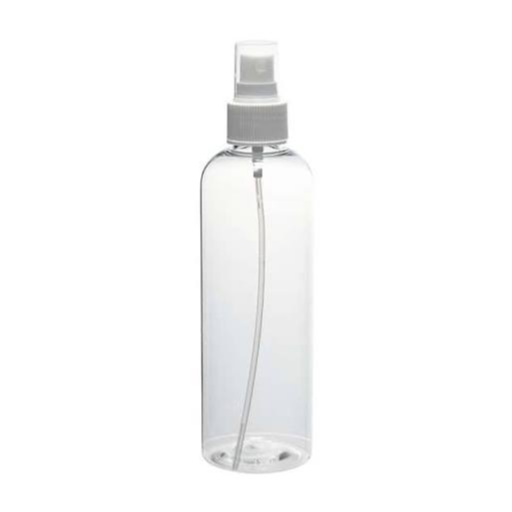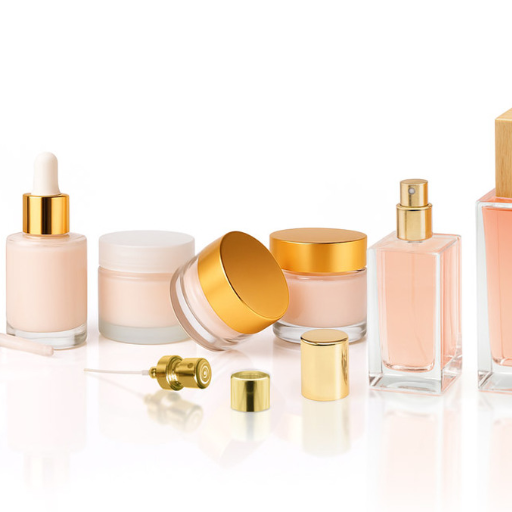
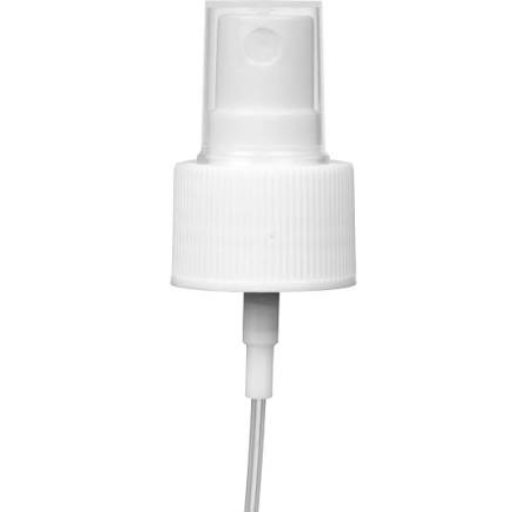
A fine mist spray pump is the precision atomizer that turns water-thin liquids into an even micro-droplet mist, dispensing roughly 0.08 to 0.25 ml with each press. It’s the component behind facial toners, setting sprays, body mists, and many fragrance products, and it’s the first thing a customer feels when they press down on your bottle.
Here’s the problem most brands don’t notice until it’s too late: they choose a sprayer by how it looks, not by what it does. The result is a toner that streams instead of mists, a serum that clogs the nozzle, or a mist that feels heavy and wet instead of light and dry. Every one of those failures traces back to one skipped spec decision.
We’re Fuzhou Longlu Packaging, a China-based manufacturer of cosmetic and fragrance packaging components. This guide gives you the full picture: how a fine mist spray pump works, the real specifications that matter, how to customize it for a premium look, and how to source it wholesale without overpaying. You’ll leave able to spec and buy a mist sprayer with the same confidence as a packaging engineer.
Key Takeaways
- A fine mist spray pump dispenses 0.08 to 0.25 ml per press and produces droplets around 20 to 60 microns, making it ideal for water-thin formulas under 200 centipoise.
- The neck finish decides everything: 18/410, 20/410, and 24/410 are the most common screw necks, while fragrance atomizers use 13, 15, or 18 mm crimp ferrules.
- Fine mist, lotion pumps, trigger sprayers, and continuous sprays are four different tools. Match the dispenser to your formula’s viscosity, not to the bottle’s shape.
- Standard sprayers cost roughly 0.10to0.10to0.80 per unit, with stock MOQs around 10,000 pieces and samples from 50 to 100 pieces.
- Most suppliers won’t volunteer droplet-size data. Requesting it is the fastest way to tell a quality sprayer from a commodity one.
What Is a Fine Mist Spray Pump?
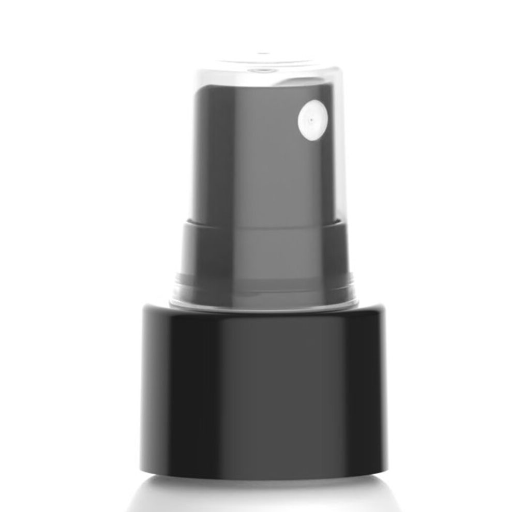
A fine mist spray pump is a finger-operated dispenser that forces a liquid through a tiny orifice inside a swirl chamber, breaking it into fine, uniform droplets rather than a coarse spray. It’s the dispenser type you reach for when a product needs to feel light, even, and fast-absorbing on the skin or hair.
The mechanism is small, but it’s genuinely precise. When you press the actuator, a piston compresses the liquid and pushes it into a swirl chamber, where it spins at high speed before exiting through a micro-orifice. That spin is what produces the fine mist instead of a stream. Remove the swirl chamber, and the same pump would shoot a thin jet instead of a cloud.
That precision is why this component matters as much as the bottle it sits on. A well-specified fine mist spray pump makes a toner feel refreshing and a setting spray feel weightless. A poorly matched one makes the same formula feel dripping, uneven, or blocked. It’s a small part with an outsized effect on how a customer judges your product.
How a Fine Mist Spray Pump Works
Understanding the mechanism makes the spec sheet easier to read. It also explains most of the problems brands hit later.
The swirl chamber and micro-orifice
Inside every fine mist sprayer is a small insert with angled channels feeding a central chamber. As liquid enters, it spins, building angular momentum before it’s forced through a micro-orifice at the tip. The spin, combined with the tiny opening, is what atomizes the liquid into droplets rather than letting it leave as a stream.
This is also why fine mist sprayers are sensitive to particulates. Anything suspended in the formula can lodge in those angled channels or the orifice. The moment that happens, the mist degrades into a stream or stops entirely.
Output per stroke and droplet size
Two numbers define a mist sprayer’s performance. The first is output per stroke, measured in milliliters. Most commercial fine mist spray pumps deliver 0.08 to 0.25 ml per press, though dosage options span a wider range. A setting spray might want the low end of that range, while a body mist benefits from the high end.
The second number is droplet size, measured in microns. A fine mist targets droplets around 20 to 60 microns, small enough to feel weightless and absorb quickly. Here’s the catch: very few suppliers publish this figure. You usually have to request it on the technical data sheet. That missing number is one of the fastest ways to separate a quality sprayer from a commodity one, and we’ll return to it later.
Why viscosity matters
A fine mist spray pump only works with water-thin formulas. As a rule, the liquid needs to be under 200 centipoise (cP) and ideally closer to water’s 1 cP. Toners, facial mists, setting sprays, hair mists, and alcohol-based fragrances sit comfortably in this range.
Push a thicker formula through the same pump, and the swirl chamber can’t spin it fast enough. You get a weak, heavy spray or a clog. That single constraint is behind most “my sprayer doesn’t work” complaints we hear from brand owners.
A note from our lab: always test with your final formula, not water. Alcohol, humectants like glycerin, and even fragrance oils change viscosity and surface tension. A sprayer that mists water perfectly can stream a formula that’s only slightly thicker. We test every new sprayer against a representative formula before we quote a production run.
Fine Mist Spray Pump vs. Other Dispensing Systems
Fine mist is one member of a family. Knowing where it ends and the others begin prevents the wrong choice. Here’s the short version:
| Dispenser | Output per stroke | Viscosity range | Best for |
|---|---|---|---|
| Fine mist spray pump | 0.08 to 0.25 ml | Under 200 cP | Toners, mists, setting sprays, fragrance |
| Lotion pump | 1.0 to 2.0 ml | 500 to 30,000 cP | Serums, lotions, creams, gels |
| Trigger sprayer | 0.5 to 2.0 ml | Up to about 1,000 cP | Cleaning, large-area, salon use |
| Continuous mist | 2 to 5 seconds per press | Under 200 cP | Hair mists, sanitizers, inverted use |
Fine mist vs. lotion pump
A lotion pump is built for thicker products. It delivers a ribbon or a few larger droplets, usually 1.0 to 2.0 ml per stroke, and it handles viscosities from about 500 up to 30,000 cP. That’s serums, lotions, creams, and gels.
The deciding factor is dose, not just texture. A fine mist sprays a light cloud across a wide area. A lotion pump deposits a controlled amount in one spot. If you’re filling a 30 ml bottle of toner, you want fine mist. If you’re filling a 50 ml serum, you want a lotion or treatment pump. This comparison is covered in depth by packaging suppliers like RLAND and HCC, and it’s the single most common decision a formulator gets wrong.
Fine mist vs. trigger sprayer
A trigger sprayer uses a lever for larger, faster output, typically 0.5 to 2.0 ml per pull. Rafesa’s guide to cosmetic dispensing systems lays out the full trigger versus mist trade-off. It can move thicker liquids than a fine mist and is built for cleaning products, larger-area sprays, and salon use.
Trigger sprayers are about volume and coverage. Fine mist sprayers are about delicacy and evenness. A trigger would soak a face in a single pull, which is exactly why skincare and fragrance use finger pumps instead.
Fine mist vs. continuous spray
A continuous mist bottle uses an internal pressure chamber so it keeps spraying for several seconds from a single press, and it works at any angle, even upside down. That makes it popular for hair mists and sanitizers where you want an uninterrupted, fine, even cloud over a larger area.
The standard fine mist spray pump is “one press, one burst.” If you need sustained coverage or inverted use, the continuous design is the right tool. If you need a quick, light application to the face, a standard fine mist is cleaner and more precise.
Fine Mist Sprayer Types and Applications
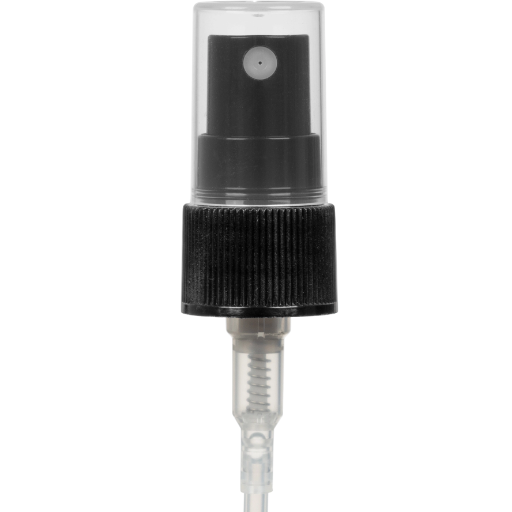
The same core mechanism shows up in a few different forms, each matched to a product category.
Fine mist spray bottles
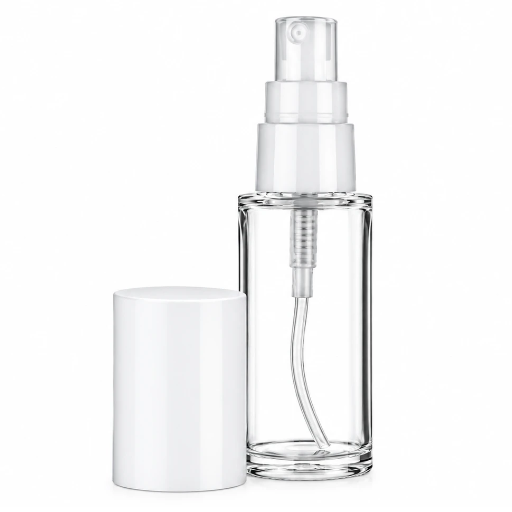
The assembled fine mist spray bottle pairs a screw-neck sprayer with a PET, HDPE, or glass bottle. This is the workhorse for facial toners, essences, setting sprays, and body mists. Capacities typically run 30 to 100 ml, and the sprayer is matched to the formula’s viscosity and the bottle’s neck finish.
When you buy an assembled bottle, you’re buying two components that must agree: the neck finish on the bottle and the neck finish on the sprayer. We cover how to match them in the spec section below.
Perfume spray pumps
Perfume uses a crimp atomizer rather than a screw neck. The pump is crimped onto a glass bottle with a metal ferrule, usually 13, 15, or 18 mm, and it delivers a finer, drier mist with dosage around 0.10 to 0.25 ml. Fragrance atomizers also include an anti-backflow valve so the dip tube stays primed between uses.
Perfume spray pumps are the most technically demanding member of the family, which is why they sit at the center of our fragrance packaging work. They’re a topic in their own right, and they live alongside caps and bottles inside a complete custom perfume packaging guide.
Continuous mist bottles
As covered above, the continuous mist bottle is a distinct mechanism with an accumulator chamber. It’s the choice for hair and body mists, plant misters, and sanitizers where inverted use or a sustained cloud matters.
Sizes, Output and Neck Finishes: A Spec Reference
This is the section that turns a vague “I need a sprayer” into a clear spec. Here’s the reference table.
| Neck finish | Type | Typical output | Common use |
|---|---|---|---|
| 18/410 | Screw | 0.08 to 0.14 ml | Toners, mists, small bottles |
| 20/410 | Screw | 0.10 to 0.18 ml | Body mists, hair mists |
| 24/410 | Screw | 0.12 to 0.25 ml | Larger body and room mists |
| 13 mm | Crimp | 0.10 to 0.15 ml | Fine fragrance |
| 15 mm | Crimp | 0.10 to 0.20 ml | Fine fragrance, EDT |
| 18 mm | Crimp | 0.12 to 0.25 ml | Larger fragrance bottles |
How to read a neck finish
A neck finish like 18/410 is two numbers. The first, 18, is the neck diameter in millimeters. The second, 410, describes the thread. A “410” thread is a single, shallow turn; “415” is a taller thread with more engagement. The two must match the bottle exactly. An 18/410 sprayer will not seal on a 20/410 bottle.
Fragrance crimp ferrules skip the thread entirely. They’re crimped onto the glass, which is why perfume bottles don’t screw on and off like a lotion bottle.
Matching the sprayer to the bottle and formula
The workflow is: formula viscosity first, then output per stroke, then neck finish, then material. If the formula is water-thin and you want a light mist, pick a low-output sprayer in the neck finish your bottle already has. Don’t redesign the bottle to fit a sprayer; choose the sprayer that fits the bottle and the formula.
Customizing Your Fine Mist Spray Pump
The sprayer is often the most visible moving part on a bottle, which makes it a natural place to signal quality.
Anodized aluminum actuators and metal overshells
The default sprayer is all plastic. For a premium or luxury product, brands upgrade to an anodized aluminum actuator or a metal overshell over the collar. The result is a cooler feel, a metallic sheen, and a noticeably more expensive first impression. Anodized aluminum can be matched to a wide palette, so a copper actuator or a gold overshell can tie directly into your cap and collar design.
Custom colors and finishes
Custom Pantone matching extends to the actuator, collar, and even the closure. Matte, gloss, and soft-touch finishes are all available. Custom color usually carries a higher minimum, which we cover in the sourcing section.
Matching the sprayer to luxury packaging
When the bottle, cap, collar, and sprayer are designed as one system, the result reads as intentional rather than assembled. This is the difference between a premium fragrance and a generic one. If you’re building that system, our custom perfume packaging guide walks through how the sprayer fits with the bottle, cap, and box.
Sustainable and Mono-Material Spray Pumps
Sustainability has finally reached the dispenser itself. The 2026 frontier is the mono-material spray pump, made entirely from a single plastic family like polypropylene or polyethylene with no metal spring and no POM parts. Removing the metal spring and mixing materials is what lets the pump be recycled in a single stream, and suppliers like Aptar and Silgan have led the charge on all-plastic designs.
The trade-off has historically been spray quality. Early all-plastic pumps didn’t mist as finely as their metal-spring counterparts. That gap has narrowed sharply, and for most water-thin formulas a modern mono-material pump now delivers mist quality close to a conventional one.
If recyclability matters to your brand, ask the supplier for the pump’s recyclability certification, such as CYCLOS-HTP, and confirm the exact polymer before you commit. You can also add post-consumer recycled (PCR) content to many designs. For the broader picture on materials and low-waste packaging, see our sustainable packaging guide.
Sourcing Fine Mist Sprayers Wholesale
Sourcing is where most buyers leave money on the table, usually because they don’t know the real numbers up front.
MOQs, lead times, and cost tiers
Stock fine mist spray pumps are commodity items with real economies of scale. Here’s what to expect when sourcing from a China-based manufacturer:
- Samples: 50 to 100 pieces, often free or at a nominal cost.
- Custom color: around 5,000 to 10,000 pieces.
- Full OEM production: 10,000 to 30,000 pieces.
- Unit cost: roughly 0.10to0.10to0.80, depending on material, finish, and volume.
- Lead time: about 18 to 30 days for production, plus freight.
The single biggest lever is volume. Unit cost drops sharply between 10,000 and 100,000 pieces, so ordering a bit more than you think you need often costs less per unit.
OEM/ODM vs. stock sprayers
A stock sprayer is a finished, off-the-shelf component. It’s fast and cheap but limited in color and finish. OEM/ODM means the manufacturer produces the sprayer to your specification, from custom colors to a fully custom actuator shape. It costs more and takes longer, but it’s the only path to a sprayer that’s genuinely yours.
Quality control and certifications
Before you commit, confirm three things. First, that the supplier tests output and spray pattern on every batch, not just on samples. Second, that they can provide the certifications you need, which for cosmetics and fragrance typically means ISO 9001, SGS testing, and REACH compliance. Third, that the materials are compatible with your formula, especially if it contains high alcohol content or active ingredients.
If you’re buying in volume, our team can quote a stock or custom fine mist sprayer against your exact neck finish, output, and color requirements. Request a free wholesale quote and we’ll come back with MOQ, lead time, and per-unit pricing in plain numbers. If you’re sourcing the outer packaging at the same time, our wholesale perfume boxes guide walks through bulk buying on that side.
Common Sprayer Problems and How to Fix Them
Most sprayer problems are diagnosable in a minute if you know what to look for.
- Clogging: particles in the formula blocking the swirl chamber or orifice. Fix: filter the formula or reformulate to remove suspended solids.
- Leaking: a neck finish mismatch or a worn seal. Fix: verify the bottle and sprayer neck match exactly, and check seal material against your formula.
- Weak or streaming spray: the formula is too viscous, or the pump is underperforming. Fix: confirm viscosity is under 200 cP, and request the output and droplet specs from the supplier.
- Incompatibility: the formula attacks the seal or the spring. High alcohol content and some actives are the usual culprits. Fix: request compatibility data or switch to a formula-safe material.
The common thread is testing with your real formula, not water. A week of settling plus transport and inversion testing catches most of these issues before a single unit ships to a customer.
FAQ
What is the difference between a fine mist sprayer and a regular sprayer?
A fine mist sprayer uses a swirl chamber and micro-orifice to break liquid into droplets around 20 to 60 microns, creating a light, even cloud. A regular sprayer has a simpler nozzle and produces a coarser, heavier spray with larger droplets.
How much product does a fine mist sprayer dispense per spray?
Most fine mist spray pumps dispense 0.08 to 0.25 ml per press. The exact figure depends on the model, with low-output options for face mists and higher output for body and hair mists.
What neck size do I need for my bottle?
Match the sprayer’s neck finish to your bottle exactly. The most common screw finishes are 18/410, 20/410, and 24/410, while fragrance atomizers use 13, 15, or 18 mm crimp ferrules. An 18/410 sprayer will not seal on a 20/410 bottle.
Are fine mist sprayers recyclable?
Conventional sprayers contain a metal spring and mixed plastics, which makes them hard to recycle. Mono-material spray pumps made entirely from one polymer, with no metal spring, can be recycled in a single stream. Ask for CYCLOS-HTP certification to confirm.
Can I use a fine mist sprayer for oils or serums?
No. Fine mist sprayers are built for water-thin formulas under 200 cP. Oils and serums are too viscous and will stream or clog. Use a lotion or treatment pump for those products instead.
Conclusion
A fine mist spray pump looks like a simple plastic part, but it’s a precision dosing instrument. The three numbers that matter are output per stroke (0.08 to 0.25 ml), droplet size (20 to 60 microns), and neck finish (18/410, 20/410, 24/410, or 13 to 18 mm crimp). Match those to a water-thin formula, and the mist feels light and even. Ignore them, and the product streams, clogs, or drips.
From there, the choice is about economics and brand. Stock sprayers are cheap and fast. Custom anodized aluminum actuators and metal overshells cost more but transform the perceived value of the bottle. Mono-material pumps add a recyclability story that’s increasingly expected in 2026.
Whether you need a stock 18/410 sprayer for a toner or a fully custom gold-overshell atomizer for a fragrance, the process starts with a spec. Send us your formula, your bottle’s neck finish, and your target output, and we’ll match you with the right fine mist spray pump and a clear quote. Contact our team today to request a free wholesale quote or sample.