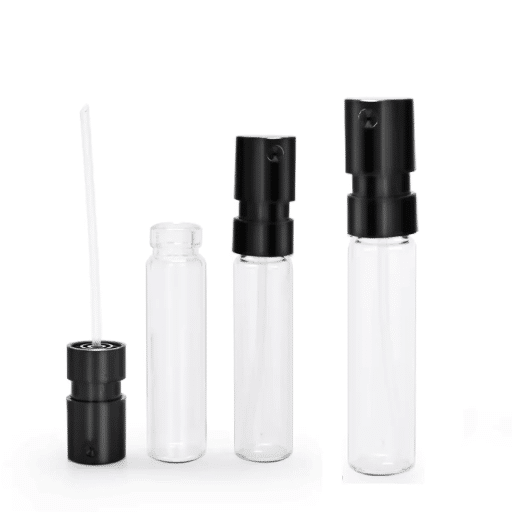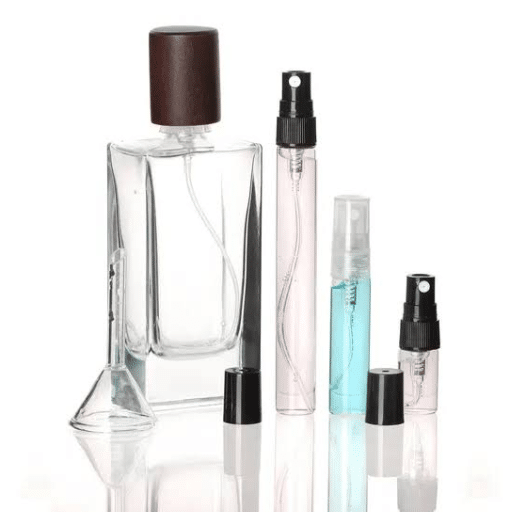
Custom perfume packaging costs between 0.50and0.50and60 per unit, depending on the box type, bottle choice, decoration, and order volume. A basic folding carton with a stock glass bottle and simple label might cost 1.50to1.50to4.00 per unit at volume. A luxury rigid magnetic box with custom glass, foil stamping, and velvet lining can easily reach 20to20to60 or more.
That is a wide range. And if you are budgeting for your first fragrance launch, the gap between the low end and the high end can feel overwhelming. Here is the truth most suppliers will not tell you upfront: the single biggest factor driving your cost is not the material. It is the decisions you make before you ever contact a manufacturer.
When Priya started her indie fragrance brand in Brooklyn, she received quotes ranging from 1,200to1,200to8,500 for the same 1,000-unit order. The difference? One supplier quoted a folding carton with digital printing and a stock bottle. The other quoted a rigid box with embossing, spot UV, a custom EVA insert, and a bespoke glass mold. She had not specified what she actually needed. She just asked, “How much for custom perfume packaging?” Vague questions get vague answers. Worse, they get expensive ones.
In this guide, you will learn: exactly what drives custom perfume packaging cost, how much you should budget for each component, realistic per-unit prices by brand tier, how order quantity changes your pricing, hidden costs that blow up budgets, and proven strategies to reduce costs without sacrificing quality.
Key Takeaways
- Custom perfume packaging ranges from 1.50to1.50to60+ per unit, with the biggest cost drivers being box structure, material choice, decoration, and order volume.
- Secondary packaging (boxes) accounts for 20 to 35% of total packaging cost, while primary packaging (bottles, pumps, caps) typically represents 35 to 50%.
- Order quantity is the most powerful lever for reducing per-unit cost: moving from 500 to 5,000 units can cut prices by 30 to 50%.
- Hidden costs, including prototyping, custom molds, freight, and compliance testing, can add 500to500to50,000+ to your first run.
- Working directly with a full-service manufacturer simplifies budgeting and often reduces total cost by 20 to 30% compared to sourcing components separately.
What Counts as “Custom Perfume Packaging”?
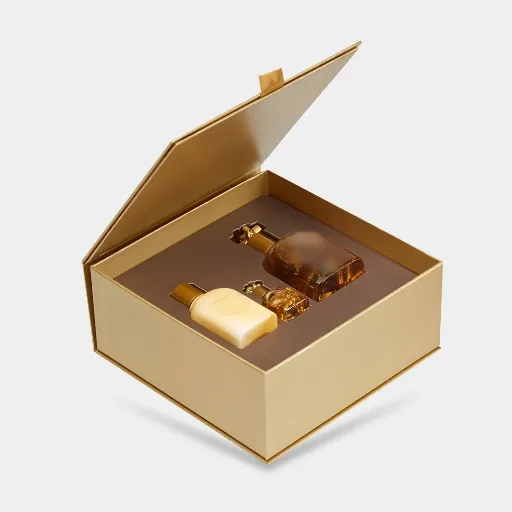
Before you can budget accurately, you need to understand what you are actually paying for. Custom perfume packaging is not one thing. It is a system of components, each with its own cost structure.
Primary Packaging: The Bottle, Pump, and Cap
Primary packaging is what holds the fragrance. It includes the glass bottle, the pump or spray mechanism, and the cap or closure. For most brands, this is the single most expensive packaging component. A standard 50ml stock glass bottle costs 0.35to0.35to1.20 per unit. A custom-molded bottle with unique shaping can cost 1.50to1.50to3.00 or more. The pump and collar assembly adds another 0.20to0.20to0.60. Custom caps, especially metal or magnetic closures, range from 0.50to0.50to5.00+.
The hidden cost here is tooling. If you want a bottle shape that does not already exist, you will pay for a custom mold. Mold costs typically range from 3,000to3,000to10,000 for aluminum prototypes and 10,000to10,000to50,000 for production steel molds. That cost is spread across your order, but at low volumes, it dominates your per-unit price.
Secondary Packaging: The Box, Insert, and Sleeve
Secondary packaging is what the customer sees on the shelf. It includes the outer box, any protective insert, and optional sleeve or wrap. This is where most brands have the most control over cost. A simple folding carton costs 0.10to0.10to0.80 per unit. A rigid setup box runs 1.00to1.00to3.50 or more. Magnetic closure boxes, drawer boxes, and other premium structures start at 1.50andcanexceed1.50andcanexceed5.00 per unit depending on size and finish.
Inserts protect the bottle during shipping and enhance presentation. Molded pulp inserts cost 0.05to0.05to0.20. EVA foam inserts run 0.20to0.20to0.80. Velvet-lined or custom-molded inserts can cost 0.50to0.50to1.50. The choice depends on your brand positioning and how much protection your bottle needs.
Decoration and Finishing
Decoration transforms a plain box or bottle into a branded experience. Screen printing or labeling costs 0.10to0.10to0.60 per unit. Hot foil stamping adds 0.10to0.10to0.60. Embossing or debossing runs 0.50to0.50to2.00. Spray coating, spot UV, and soft-touch lamination add variable amounts depending on coverage and complexity.
The key thing to remember: decoration costs layer. A box with foil stamping, embossing, and spot UV does not cost the sum of each technique. It costs more because each additional process requires separate setup, separate production passes, and more labor. Complex decoration alone can represent 15 to 25% of your total packaging cost.
Want a clearer picture of what your specific project might cost? Contact our team for a free, no-obligation quote based on your exact specifications, volume, and timeline.
Custom Perfume Packaging Cost by Component
Let us break down the numbers. The table below shows realistic per-unit costs for each component based on 2026 market data from manufacturers across China, the US, and Europe.
Secondary Packaging Costs
| Box Type | Low Volume (100-500) | Medium Volume (1,000-5,000) | High Volume (5,000+) |
|---|---|---|---|
| Folding carton / paperboard | 0.30−0.30−0.80 | 0.15−0.15−0.50 | 0.10−0.10−0.35 |
| Kraft / eco-friendly box | 0.50−0.50−1.20 | 0.30−0.30−0.80 | 0.20−0.20−0.55 |
| Rigid setup box (2-piece) | 1.50−1.50−2.80 | 1.00−1.00−2.00 | 0.80−0.80−1.50 |
| Magnetic closure box | 2.00−2.00−3.50 | 1.50−1.50−2.50 | 1.00−1.00−2.00 |
| Drawer / slide box | 1.80−1.80−3.00 | 1.20−1.20−2.20 | 0.90−0.90−1.80 |
| Premium luxury rigid (velvet, hot-stamp) | 2.50−2.50−4.50+ | 2.00−2.00−3.50+ | 1.50−1.50−3.00+ |
Primary Packaging Costs
| Component | Stock / Standard | Custom / Premium |
|---|---|---|
| Glass bottle (50ml) | 0.35−0.35−1.20 | 1.50−1.50−3.00+ |
| Basic bottle + standard cap | 0.50−0.50−2.50 | — |
| Pump and collar assembly | 0.20−0.20−0.60 | 0.40−0.40−1.00+ |
| Custom cap (Zamac / metal) | — | 0.50−0.50−5.00+ |
| Custom mold (one-time NRE) | — | 3,000−3,000−50,000 |
Decoration and Insert Costs
| Technique / Material | Cost per Unit |
|---|---|
| Screen printing / basic label | 0.10−0.10−0.60 |
| Hot foil stamping | 0.10−0.10−0.60 |
| Embossing / debossing | 0.50−0.50−2.00 |
| Spot UV / soft-touch lamination | 0.20−0.20−0.80 |
| Molded pulp insert | 0.05−0.05−0.20 |
| EVA foam insert | 0.20−0.20−0.80 |
| Velvet-lined insert | 0.50−0.50−1.50 |
These figures represent industry benchmarks based on data from Packaging Squad, Winpackprinting, and Fragrance Package. Your actual costs will vary based on specifications, supplier location, and current material prices.
Cost by Brand Tier: What Should You Budget?
The most useful way to think about perfume packaging cost is by brand tier. Your retail price point determines how much you can afford to spend on packaging without destroying your margins.
Budget and Mass Market: 1.50to1.50to4.00 per Unit
This tier is for fragrances retailing between 20and20and40. The goal is clean, professional packaging that protects the product and communicates brand identity without overspending.
A typical budget-tier setup includes a folding carton (0.30to0.30to0.60), a stock glass bottle (0.60to0.60to1.00), a basic pump and cap (0.30to0.30to0.50), a simple paperboard insert (0.05to0.05to0.10), and one-color screen printing or a basic label (0.10to0.10to0.30). Total packaging cost: approximately 1.50to1.50to3.00 per unit. At this tier, packaging represents roughly 7 to 15% of your retail price, which is healthy for mass-market margins.
When Leo launched his first fragrance line targeting college-aged buyers, he needed to keep costs tight. He chose a 350gsm folding carton with single-color offset printing, a stock 50ml cylindrical bottle, and a molded pulp insert. His total packaging cost came in at 1.85perunitfora2,000−unitrun.Ata1.85perunitfora2,000−unitrun.Ata28 retail price, that left him enough margin for marketing, distribution, and a modest profit. His packaging was not flashy. But it was consistent, protected the product, and told his brand story clearly.
Mid-Range and Premium: 4.00to4.00to15.00 per Unit
This tier covers fragrances retailing from 40to40to120. Here, packaging becomes a genuine differentiator. Customers at this price point expect tactile quality and visual refinement.
A typical premium setup includes a rigid setup box (1.00to1.00to2.00), a stock bottle with better glass clarity (0.80to0.80to1.50), a quality pump and metal cap (0.50to0.50to1.50), an EVA foam insert (0.30to0.30to0.60), foil stamping or embossing (0.30to0.30to0.80), and matte or soft-touch lamination (0.20to0.20to0.50). Total packaging cost: approximately 4.00to4.00to8.00 per unit. For more elaborate setups with magnetic closures, custom inserts, or multiple finishing techniques, costs can reach 10.00to10.00to15.00.
At this tier, packaging typically represents 10 to 20% of retail price. That is a significant investment, but it is justified by the perceived value premium that quality packaging creates.
Luxury and Bespoke: 20.00to20.00to60.00+ per Unit
Luxury fragrances retailing at $150 or more demand packaging that matches the price tag. Every element is custom, and no expense is spared on materials or finishing.
A luxury setup might include a fully custom rigid box with magnetic closure (2.50to2.50to5.00), a custom-molded glass bottle (2.00to2.00to5.00+), a precision pump and bespoke metal or magnetic cap (1.50to1.50to5.00+), a velvet-lined or custom-molded insert (0.80to0.80to2.00), multiple finishing techniques like embossing, foil stamping, and spot UV (1.00to1.00to3.00+), and possibly smart packaging elements like NFC tags or QR authentication. Total packaging cost: 20.00to20.00to60.00 or more per unit.
At this level, packaging can represent 15 to 30% of retail price. But for luxury brands, packaging is not a cost center. It is a marketing investment. The box itself becomes a shareable object, a keepsake, and a brand ambassador.
| Brand Tier | Retail Price | Packaging Budget | Typical Components |
|---|---|---|---|
| Budget / Mass Market | 20−20−40 | 1.50−1.50−4.00 | Folding carton, stock bottle, basic label |
| Mid-Range / Premium | 40−40−120 | 4.00−4.00−15.00 | Rigid box, stock bottle, foil/emboss, foam insert |
| Luxury / Bespoke | $150+ | 20.00−20.00−60.00+ | Custom rigid box, custom glass, magnetic cap, velvet insert |
Seven Critical Factors That Drive Custom Perfume Packaging Cost
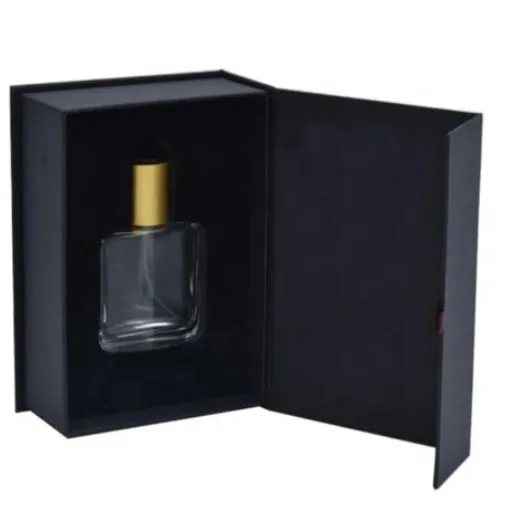
Understanding why packaging costs what it does helps you make smarter tradeoffs. Here are the seven factors that have the biggest impact on your final price.
1. Box Structure and Style
The physical construction of your box is the foundation of your cost. Folding cartons are the most economical because they are made from thinner paperboard, ship flat, and can be machine-assembled. Rigid boxes use thick greyboard wrapped in printed paper and require hand assembly, which adds labor cost. Premium structures like drawer boxes, book-style boxes, and magnetic closure boxes add complexity, materials, and assembly time.
2. Material Choice
Materials affect both price and perceived quality. Standard coated paper or cardboard is the most affordable. Art paper and textured paper cost more but feel premium. Thick rigid board, specialty papers, and soft-touch finishes command the highest prices. Kraft and recycled materials fall somewhere in the middle, though FSC-certified or biodegradable options can carry a 10 to 20% premium.
3. Printing Method and Color
Digital printing is cost-effective for small quantities and fast turnaround. Offset printing offers higher quality and becomes economical at larger volumes. Full CMYK printing costs more than one or two colors. Pantone color matching adds cost because it requires separate ink mixing and production passes. The more colors you use, the more setup and production time is required.
4. Surface Finishing and Decoration
Finishing is where brand identity comes to life, and where costs can escalate quickly. Gloss or matte lamination is standard and relatively affordable. Foil stamping, embossing, debossing, and spot UV each require separate tooling and production steps. Combining multiple techniques multiplies costs because each process requires its own setup, plates, and labor.
5. Inner Protection and Inserts
Perfume bottles are fragile. Inserts are non-negotiable for safe shipping. Molded pulp is the cheapest option and is eco-friendly. EVA foam offers better protection and a more premium feel. Velvet-lined or custom-molded inserts provide the highest-end presentation but cost the most. The complexity of your insert, die-cutting requirements, and material choice all factor into the price.
6. Order Quantity and MOQ
This is the single most powerful factor in your per-unit cost. Custom packaging requires upfront investment in printing plates, die-cutting tools, and machine setup. At low volumes, these fixed costs are spread across fewer units, driving up the per-unit price. At high volumes, they are absorbed, and raw material discounts kick in.
The steepest cost drop typically happens between 1,000 and 5,000 units. Moving from 500 to 5,000 units can reduce your per-unit cost by 30 to 50%. Most suppliers offer tiered pricing at 500, 1,000, 5,000, and 10,000+ units.
7. The Bottle and Closure System
If your project includes the bottle itself, this is often your largest single cost. Stock bottles are affordable because the mold cost has already been amortized across thousands of orders. Custom bottles require new molds, which is a significant upfront investment. Closure systems vary widely: a standard plastic cap costs pennies, while a custom Zamac or magnetic closure can cost as much as the glass bottle itself.
Looking for ways to optimize your packaging budget? Request a free design consultation and our team will review your specs, suggest cost-effective alternatives, and provide a detailed quote with no hidden fees.
How Order Quantity Changes Your Per-Unit Cost
Let us look at a real example. Suppose you want a rigid perfume box with foil stamping, an EVA foam insert, and a stock 50ml bottle. Here is how your per-unit cost changes as your order volume increases.
| Volume Tier | Box Cost | Insert Cost | Bottle + Cap | Decoration | Total per Unit |
|---|---|---|---|---|---|
| 100 units | $2.50 | $0.60 | $1.50 | $0.80 | $5.40 |
| 500 units | $1.80 | $0.45 | $1.20 | $0.50 | $3.95 |
| 1,000 units | $1.40 | $0.35 | $1.00 | $0.40 | $3.15 |
| 5,000 units | $1.00 | $0.25 | $0.80 | $0.30 | $2.35 |
| 10,000 units | $0.80 | $0.20 | $0.70 | $0.25 | $1.95 |
The lesson is clear. If you are planning a small launch, expect higher per-unit costs. If you can consolidate orders or plan ahead to hit higher volume tiers, your savings are substantial.
When Aisha prepared to restock her bestselling fragrance, she faced a decision. Her first run was 500 units at 4.20perunitinpackaging.Forherrestock,shehadenoughdemanddatatoconfidentlyorder3,000units.Herper−unitpackagingcostdroppedto4.20perunitinpackaging.Forherrestock,shehadenoughdemanddatatoconfidentlyorder3,000units.Herper−unitpackagingcostdroppedto2.60. That saved her $4,800 on packaging alone. She reinvested those savings into influencer marketing, which drove enough pre-orders to justify her next 5,000-unit run.
Hidden Costs Most Brands Forget to Budget For
The per-unit price from your supplier is not your total packaging cost. Here are the hidden expenses that catch first-time fragrance brands off guard.
Prototyping and Sampling
Before you commit to a full production run, you need to see and touch physical samples. Prototype costs typically range from 500to500to2,000 per iteration. If your design requires adjustments, which it almost always does, you may go through two or three rounds. Budget 1,000to1,000to5,000 for prototyping, especially if you are developing custom structures or inserts.
Custom Mold and Tooling Costs
If you are using a custom bottle shape, you will pay for the mold. Aluminum molds for prototype runs cost 3,000to3,000to10,000. Steel production molds run 10,000to10,000to50,000 depending on complexity. Mold costs are one-time investments, but at low volumes, they add significantly to your per-unit cost.
Printing Plates and Die-Cutting Tools
Even for boxes, custom designs require printing plates and die-cutting tools. These typically cost 200to200to800 per plate and 300to300to1,500 for die-cutting tools, depending on size and complexity. Like molds, these are one-time costs that get amortized across your order.
Regulatory and Compliance Testing
Fragrance products must meet regulatory standards, which vary by market. IFRA compliance, CPSR for the EU market, stability testing, and packaging material safety testing all add cost. These are not packaging costs per se, but they are part of your total launch budget and are easy to overlook.
Freight, Duties, and Logistics
Shipping packaging components from overseas adds 3 to 10% to your landed cost. Sea freight from China to the US or Europe typically takes 20 to 45 days. Air freight is faster but can cost 5 to 10 times as much. Import duties, customs clearance, and inland transportation add additional costs.
Damage and Loss Buffer
Glass bottles break. Prints can have defects. Inserts may not fit perfectly on the first run. Industry best practice is to budget a 2 to 3% buffer for damage, quality control rejects, and loss during shipping. On a 10,000packagingorder,thatis10,000packagingorder,thatis200 to $300 you should plan for.
How to Reduce Custom Perfume Packaging Costs
Smart brands do not just accept high packaging costs. They actively engineer them down. Here are seven proven strategies.
1. Start with Stock Bottles and Focus Customization on the Box
Custom glass molds are expensive and time-consuming. Stock bottles offer hundreds of shapes, sizes, and neck finishes at a fraction of the cost. You can still create a unique brand experience by customizing the box, label, and cap. This single decision can cut your primary packaging cost by 50 to 70%.
2. Limit Finishing to One or Two Techniques
It is tempting to add foil stamping, embossing, spot UV, and soft-touch lamination all at once. Resist that temptation. Choose the one or two techniques that best communicate your brand identity. A well-executed single foil stamp often looks more elegant than a cluttered combination of four different finishes.
3. Consolidate Orders to Hit Higher Volume Tiers
If you have multiple SKUs or fragrances, consider consolidating your packaging orders. Using the same box structure across several products, with variations in print design, allows you to hit higher volume tiers for the structural components. This is one of the most effective cost-reduction strategies for multi-product brands.
4. Choose the Right Material for Your Brand Tier
Do not overspend on luxury materials if your brand is positioned as accessible. A well-designed folding carton with quality printing can look more premium than a poorly executed rigid box. Match your material choices to your brand positioning and your customers’ expectations.
5. Order Physical Samples Before Full Production
A $200 sample order can save you thousands in costly mistakes. Colors look different on screen versus in print. Box dimensions that look right on a technical drawing may not fit your bottle properly. Always verify with physical samples before committing to a full production run.
6. Plan Lead Times to Avoid Rush Fees
Rush orders cost more. Standard production lead times for custom perfume boxes range from 10 to 20 business days. Bottles may take 20 to 45 days. If you need everything in two weeks, expect to pay 20 to 50% more. Plan your timeline backward from your launch date and build in buffer time.
7. Work Directly with the Manufacturer
Middlemen add markup. Working directly with a packaging manufacturer eliminates distributor margins and gives you access to engineering expertise that can help you optimize your design for cost and manufacturability. A manufacturer can suggest material alternatives, structural simplifications, and production efficiencies that a reseller simply cannot.
Ready to get a transparent, itemized quote for your project? Contact Fuzhou Longlu Packaging today and receive a detailed cost breakdown within 24 hours, with no hidden fees and no obligation.
What Information Do You Need for an Accurate Quote?
The more specific you are with suppliers, the more accurate your quote will be. Here is what manufacturers need to know to give you a realistic price.
- Bottle dimensions, weight, and shape, or a sample photo if you are still selecting.
- Desired box structure, folding carton, rigid box, drawer, magnetic closure, etc.
- Box dimensions or the number of bottles per box.
- Material preference, paper type, board thickness, eco-friendly requirements.
- Artwork details, logo files, number of colors, Pantone codes if applicable.
- Finishing requirements, foil, emboss, UV, lamination type.
- Insert type, molded pulp, EVA foam, velvet, or custom-molded.
- Order quantity and any plans for future reorders.
- Shipping destination and preferred delivery timeline.
Vague requests like “I need custom perfume packaging” will get vague, often inflated quotes. Detailed requests get precise, competitive pricing.
Choosing the Right Supplier: Cost vs. Value
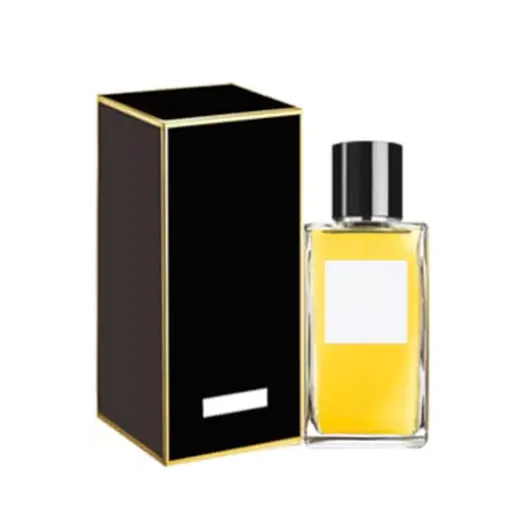
Price is important, but it is not the only factor. Here is how to think about supplier selection.
China-Based Manufacturers
Chinese manufacturers typically offer the lowest per-unit prices, especially for rigid boxes, custom printing, and large volumes. MOQs are often higher, typically 500 to 1,000 units for custom boxes and 1,000 to 5,000 for bottles. Lead times are longer: 15 to 25 days for production plus 20 to 45 days for sea freight. Quality varies significantly, so factory audits and sample verification are essential.
US, UK, and European Suppliers
Western suppliers charge higher per-unit prices but offer lower MOQs, often 100 to 500 units. Turnaround times are faster, typically 7 to 15 business days for production. Communication is often easier, and there are no import duties or overseas shipping complications. For startups testing the market, local suppliers can be worth the premium.
What to Evaluate Beyond Price
- Quality consistency: Ask for samples from previous production runs, not just prototypes.
- Communication responsiveness: Slow replies during quoting mean slow replies during production.
- Engineering support: Can they suggest design improvements that reduce cost or improve manufacturability?
- Certifications: Do they have ISO, FSC, or other relevant certifications?
- Flexibility: Will they accommodate small test orders before a large commitment?
At Fuzhou Longlu Packaging, we bridge the gap between Chinese manufacturing efficiency and Western service standards. We offer flexible MOQs starting at 100 units for boxes, full in-house design support, and transparent pricing with itemized quotes. Our clients range from indie perfumers launching their first fragrance to established brands ordering 50,000+ units.
Conclusion
Custom perfume packaging is not a fixed cost. It is a set of choices. The box structure you select, the bottle you source, the finishes you apply, and the volume you order all combine to create your final price. Understanding these variables puts you in control.
For a budget fragrance brand, 1.50to1.50to4.00 per unit in packaging is achievable and appropriate. For a premium brand, 4.00to4.00to15.00 per unit creates the tactile and visual experience that justifies a higher retail price. For luxury houses, 20.00to20.00to60.00+ per unit is an investment in brand perception that pays dividends in customer loyalty and word-of-mouth.
The key is to match your packaging investment to your brand positioning, plan your volumes strategically, and work with a manufacturer who treats your budget as seriously as you do. The brands that succeed are not the ones that spend the most on packaging. They are the ones that spend smart.
Start your custom perfume packaging project today. Request a free quote from Fuzhou Longlu Packaging and get an itemized cost breakdown tailored to your brand, volume, and timeline.