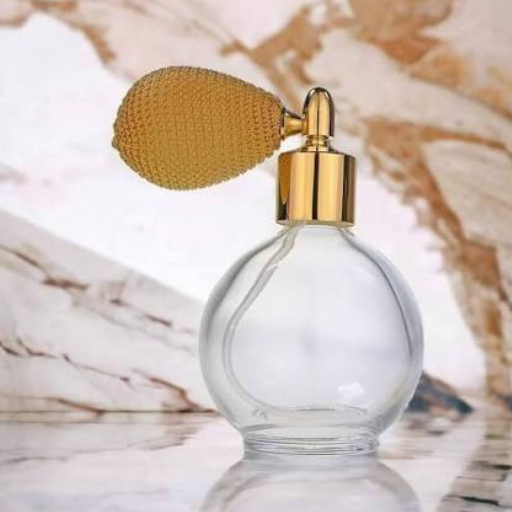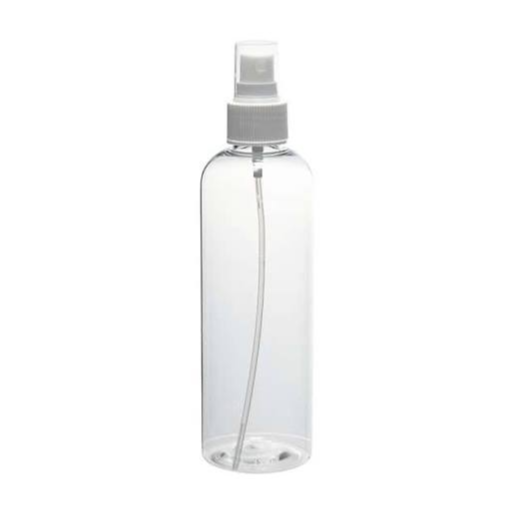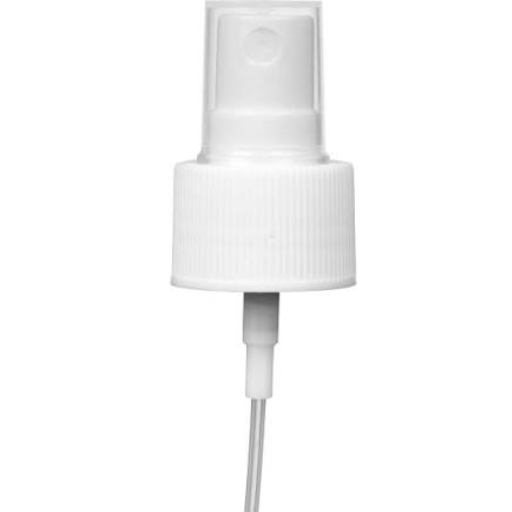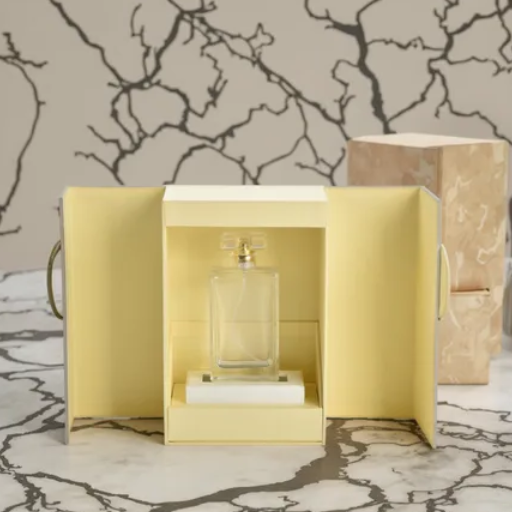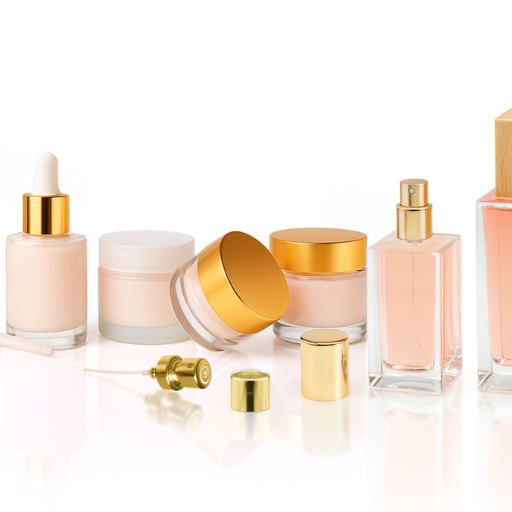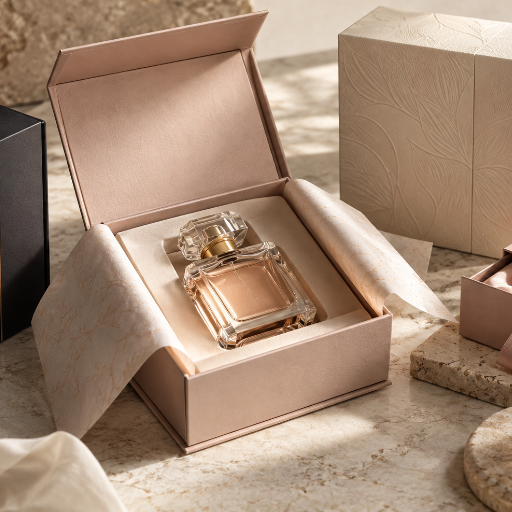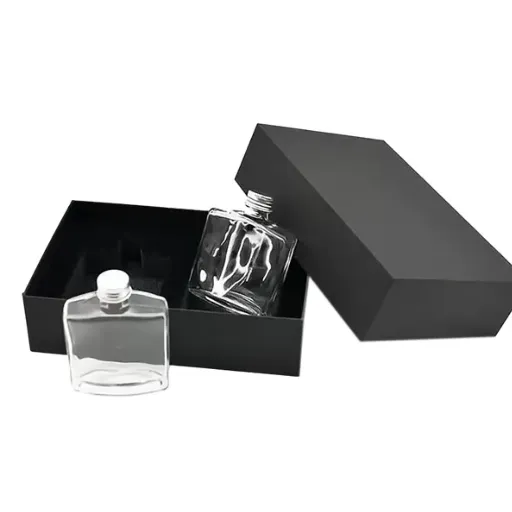
Custom perfume packaging functions as a complete system which contains bottles caps boxes inserts and labels to protect your fragrance while it shows your brand identity to customers before they experience the scent. The global perfume packaging market will reach a value of $3.96 billion in 2026 while it continues to grow at 7.18% annual rate which makes proper packaging essential for your business. The way customers see your product begins with the first thing they see.
Your understanding of this concept already exists if you have experienced standing in front of a shelf full of fragrances and selecting one bottle because it felt better in your hand. The way perfume gets sold depends on its packaging. Custom packaging matters to the business but the main issue involves finding a way to develop it without spending too much money or making the process too complex or using materials which conflict with your brand image.
The guide teaches you about the 2026 design trends which will impact the industry and methods for selecting materials that achieve both luxury and sustainability and startup and established brand cost analysis and supplier assessment through a practical framework. The article provides you with effective solutions for launching your first niche fragrance and for updating your existing product line.
Key Takeaways
- Custom perfume packaging in 2026 must balance luxury aesthetics with sustainability, as 80% of young consumers prefer eco-conscious brands.
- Entry-level custom perfume packaging costs 2–2–6 per unit, mid-range runs 6–6–18, and luxury bespoke packaging starts at $18+ per unit.
- Folding cartons offer MOQs as low as 50 units, while rigid boxes typically require 500+ units. Stock bottles with custom decoration are the smartest starting point for startups.
- The 2026 trend palette centers on Transformative Teal and Cloud Dancer, with texture-first design replacing heavy ornamentation.
- Evaluating a supplier requires checking prototyping capabilities, quality inspection processes, and realistic lead times. Standard production takes 4–10 weeks.
What Is Custom Perfume Packaging?
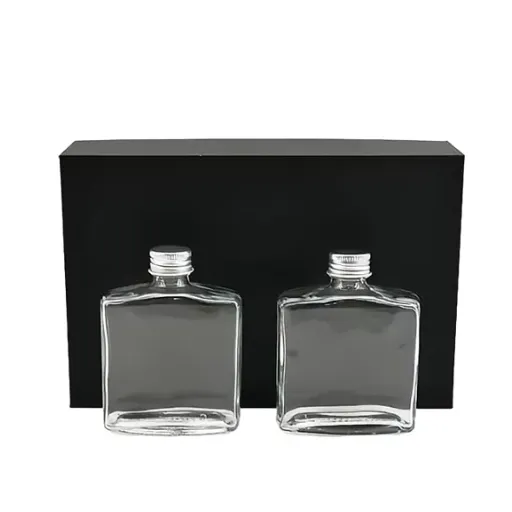
The process of creating custom perfume packaging extends beyond designing a container for the perfume bottle. The customer uses the entire physical setup to evaluate your fragrance until they experience its first application.
The system includes three main components. The system needs a first component which serves as the main glass container. The system needs a second component which functions as the closing mechanism. The system needs a third component which consists of any insert or tray that keeps the bottle in place. The system needs a fourth component which includes both the outside container and the box. The system needs a fifth component which consists of all printed materials that display your business trademarks.
The term “custom” means that we have changed one or more product elements to suit your business needs. A custom bottle design needs a new bottle shape which comes from an original mold. The design requires a rigid box with your logo hot foil stamped onto textured paper. The solution requires you to pick a standard bottle design while applying screen-printed graphics and a custom label and an outer carton that you choose.
The difference between stock and custom perfume packaging creates important consequences for your financial resources and required product quantities and delivery times. A fully bespoke glass mold can cost 5,000 to 5,000 to 30,000. The process usually requires production of 10,000 to 20,000 units for each order.
You can start your business with stock bottles that come with your custom designs to reach an inventory between 100 and 1,000 units. Most successful fragrance brands start here. Their success in the market drives them to create unique products that need custom parts.
2026 Perfume Packaging Design Trends
The packaging industry for custom perfumes will develop in 2026 because customers demand packages which provide them with premium yet unique experiences while their environmental and authentic packaging requirements remain unfulfilled. The brands that resolve this tension successfully are winning shelf space and loyalty.
Sustainability-First Design
The global demand for refillable perfume bottles increased by 40 percent during each year from the past until now. The current pattern will continue into the future because It represents a fundamental transformation which impacts how consumers assess fragrance brands.
Sustainable custom perfume packaging in 2026 extends beyond using recycled cardboard materials. The system requires designers to create solutions which lengthen the duration of serviceable use for essential packaging components. The leading brands implement no-spill refilling systems through their guided alignment nozzles. The company selects FSC-certified paper materials to create external cartons while using biodegradable molded inserts as an alternative to plastic trays.
Some companies now test box creation methods which use agricultural byproduct fibers. Sustainability needs to become something which people can see and touch. The customer needs to experience a sensory change through your packaging system. Packaging design should enable customers to directly experience product features instead of visiting a website to learn about them.
Minimalist and Texture-First Aesthetics
The design evolution moves away from decorative gold filigree and excessive visual elements toward minimalistic designs that use ample empty space and tactile surfaces. The 2026 color palette reflects this shift.
WGSN and Coloro have selected Transformative Teal as their Colour of the Year which represents sustainable design through its clean technological advances and eco-friendly luxury products. The Pantone color Cloud Dancer presents a quiet warm white which establishes a tranquil atmosphere for ceremonial practices.
Color by itself does not suffice as a solution. The brands that stand out are investing in tactile depth. Designers create “slow unboxing” experiences through the use of soft-touch laminations and blind embossing and matte finishes and micro-embossed cartons. The customer lingers because the packaging rewards their senses beyond sight.
The method helps decrease waste that results from material usage. You are not adding layers of decoration. The surface itself functions as your decorative element.
Smart and Connected Packaging
Technology in perfume packaging has reached a point where its presence has become undetectable. Customers can use their phones to authenticate products through NFC chips which manufacturers have placed in their product caps and labels. QR codes provide access to pages showing product ingredients and interviews with the perfumer and refill order systems.
Variable data printing enables micro-personalization. The gift market and collector market allow customers to print their names and dates and zodiac signs directly onto boxes.
Discretion serves as the primary design principle for 2026. The luxury design must maintain its visual appeal while enabling smart technology. A QR code should be integrated into the label design. Designers should not treat this element as something that should be added after the main design work. Designers should create NFC technology to operate in areas where users can experience its functionality without seeing its components. The technology serves the brand experience. Not the other way around.
Compact and Travel-Ready Formats
Portable fragrance formats are expanding beyond traditional travel sprays. Perfume pens, slim vials, and miniature sprayers are being treated as primary packaging, not afterthoughts. The testing process requires them to handle materials which receive identical treatment to what they use for actual cannabis containers. The company uses lightweight glass and recycled aluminum and ocean-plastic materials which they design to create airtight containers that feel premium at reduced dimensions.
For brands targeting younger demographics or frequent travelers, offering a compact format alongside your standard size is becoming an expectation rather than a bonus.
How to Choose the Right Materials for Perfume Packaging
Fragrance brands lose substantial money through their choice of packaging materials for custom perfume containers. The wrong choice either blows the budget on day one or creates a product that feels cheap when it reaches the customer. People need to assess the benefits and drawbacks which come from using glass versus paper and plastic and metal materials.
Glass Bottles: The Default Standard
Glass remains the dominant material for perfume bottles. It holds approximately 62% of the market by volume. The material remains inert while preventing any substances from passing through and it can be recycled without losing its original quality.
Glass presents a branding advantage because it establishes an image of permanent value and high-end status. A heavy-bottomed flacon feels substantial. Plastic cannot replicate this.
The tradeoff exists between increased weight and reduced protection against damage. Glass increases shipping costs. Additionally, e-commerce businesses need to use protective materials for their delivery process. Online retailers face major challenges because of this issue.
The solution many brands choose is to use high-quality glass for the bottle. The company offsets their shipping costs by creating lightweight packaging with optimal design for their products.
Outer Box Materials
Your available packaging solutions consist of three major types which each produce different effects on both their financial expenses and their public image.
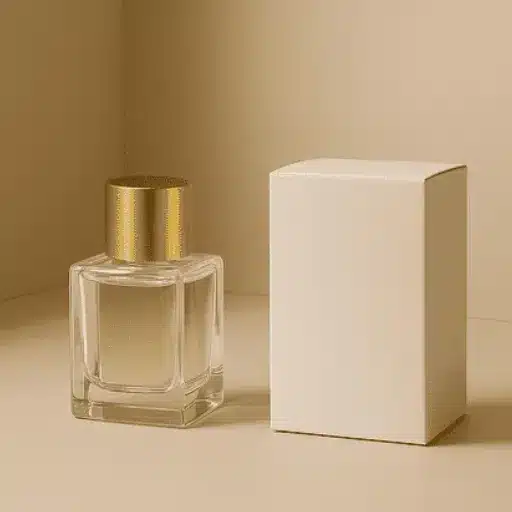
Folding cartons are the most accessible entry point. The product consists of paperboard material which enables high-resolution graphic printing. The minimum order quantity for this product begins at 50 units.
A well-designed folding carton with soft-touch lamination and foil stamping can feel surprisingly premium. This is the optimal starting point for most startups.
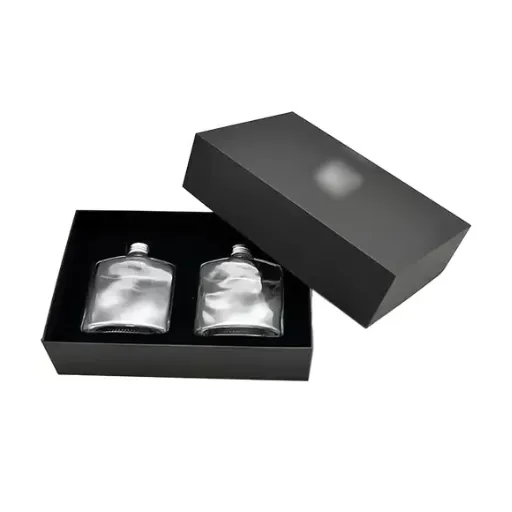
Rigid boxes, also known as set-up boxes, serve as the ultimate standard for establishing luxury brand image. The material consists of thick chipboard which needs to be covered with printed paper. The product provides exceptional structural presence.
The main disadvantage of the product lies within its pricing structure and minimum order quantity requirement. Rigid boxes typically start at 500-unit minimums. The products have a price range from 2.50to2.50to8.00 per unit when purchased at small quantities. The products also increase total shipping weight which affects shipping cost calculations.
Kraft and eco-specialty papers are gaining traction for brands with strong sustainability positioning. Unbleached kraft material shows commitment to environmental protection through its use of natural materials which creates a straightforward appearance. The boxes present brand values through their design which combines soy-based inks with minimal printing.
Sustainable Alternatives
The year 2026 has brought about significant technological progress beyond what conventional materials can provide. The optical characteristics of post-consumer recycled glass remain unchanged while the process decreases the need for raw material extraction. Bamboo and wood components serve as renewable material options which replace zamac and plastic caps. Agricultural byproduct fibers serve as raw materials for the production of molded inserts and box boards because they are derived from wheat straw and bagasse.
The essential issue for most brands concerns the availability of these materials rather than their existence. A material science breakthrough in a laboratory is not the same as a material you can source reliably at 1,000 units. Your initial order should be fulfilled through established sustainable material programs instead of requiring suppliers to provide you with new experimental materials.
Decoration Techniques
How you apply your branding to packaging components is as important as the components themselves. The main techniques include:
- Hot foil stamping creates a metallic or pigmented impression using heat and pressure. It works on paper, cardboard, and some plastics. It is the classic luxury signal.
- Screen printing applies ink directly to glass or plastic surfaces. It is durable and allows for fine detail, with MOQs starting around 1,000 units.
- Spray coating gives bottles a solid color finish. It requires higher MOQs, typically 1,000 to 5,000 units, due to batch paint preparation.
- Embossing and debossing create raised or recessed patterns in paper surfaces. Blind embossing (without ink) is particularly popular for 2026 minimalist designs.
The smartest approach for most brands is to combine one or two decoration techniques rather than using all of them. A screen-printed bottle with a blind-embossed folding carton creates sophistication without visual noise.
Custom Perfume Packaging Costs and MOQs: A Startup Guide
Elena Vasquez started her niche fragrance business in Barcelona using an initial budget of 8000 euros. Her business plan required French-style custom perfume packaging. She reached out to three different suppliers. The first supplier estimated costs at 8000 dollars. Her business plan required French-style custom perfume packaging. She reached out to three different suppliers. The second supplier estimated costs between 12000 dollars and 45000 dollars.
The problem was not the suppliers. Elena requested custom design for a complete mold system and security packaging that included magnetic locks and spray-coated bottles. The company needed to produce 300 units for its initial production run.
Fragrance startup founders must acquire essential knowledge according to Elena. You can create a luxury brand by using standard elements that receive high-quality finishing. You do not need a custom mold that costs 20000 dollars at your business launch.
Budget Tiers
Custom perfume packaging falls into three clear cost categories:
Entry-level (2to2to6 per unit) uses stock bottles, basic folding cartons, and standard labels. At higher volumes (5,000+ units), you can achieve surprisingly professional results in this tier. The limitation is differentiation. Your bottle shape will be shared by other brands.
Mid-range (6to6to18 per unit) introduces custom decoration like screen printing, foil stamping, or upgraded cartons with soft-touch finishes. This is the sweet spot for most emerging brands. You get visual distinction without the tooling costs of fully custom components.
Luxury (18to18to60+ per unit) encompasses bespoke glass molds, rigid boxes, magnetic closures, and multi-component packaging systems. This tier is appropriate for established brands or high-margin niche fragrances where packaging is a core part of the value proposition.
MOQ Breakdown by Component
Understanding minimum order quantities helps you plan realistic first orders:
| Component | Typical MOQ | Best For |
|---|---|---|
| Stock glass bottles (factory direct) | 5,000–10,000 units | Established brands with volume |
| Stock bottles (private label/turnkey) | 100–1,000 units | Startups and first launches |
| Screen printing on bottles | ~1,000 units | Adding logos to stock glass |
| Spray coating | 1,000–5,000 units | Solid color finishes |
| Folding cartons | 50–500 units | Accessible entry point |
| Rigid boxes | 500–1,000 units | Luxury positioning |
| Custom glass mold | 10,000–20,000+ units | Mature brands only |
Hidden Costs to Budget For
Beyond per-unit costs, plan for one-time expenses. Custom bottle molds range from 5,000to5,000to30,000+. Graphic design and artwork preparation can cost 300to300to3,000. Fragrance compliance testing, including IFRA certification and safety assessments, ranges from 200to200to5,000 depending on your market. Prototype samples typically run 50to50to500 per set.
Cost-Saving Strategies for Small Brands
Start with stock bottles and differentiate through labels, caps, and outer packaging. Choose folding cartons over rigid boxes for your first run. Work with turnkey manufacturers who bundle fragrance filling and packaging under one roof, allowing launches at 100 to 250 units. Negotiate mixed MOQs so you can split orders across multiple SKUs or bottle colors without hitting separate minimums for each variant.
E-Commerce and Shipping Considerations for Perfume Packaging
The process of selling perfume through online channels establishes a packaging problem. The unboxing experience must create a feeling of luxury while the package needs to protect itself from damage during transportation. A mailer bag which contains a rigid box that crumples needs to be handled with caution because it will harm your brand more than any basic folding carton could do.
E-commerce-first brands require all their product structures to maintain complete strength throughout their operations. The system requires your shipping box and product box and bottle protection to function together.
You should consider implementing corrugated inserts or molded pulp trays as your product box inserts. These add minimal cost. But they prevent the bottle from shifting during transit.
Dimensional weight is another critical factor. Carriers charge based on the greater of actual weight or dimensional weight. This is calculated from package dimensions. A rigid box with thick walls might weigh only 200 grams. But it could be charged as if it weighed 800 grams because of its volume. The use of folding cartons and compact designs helps to decrease this charge.
Different regions establish distinct regulatory compliance requirements. The European Union Packaging and Packaging Waste Directive sets requirements for recyclability and material composition. The international transportation of perfumes requires compliance with dangerous goods regulations. Alcohol-based fragrances are flammable. Always confirm that your packaging complies with destination country regulations before committing to a design.
How to Evaluate a Custom Perfume Packaging Supplier
Not all packaging suppliers are equipped to handle fragrance projects. A company that excels at food packaging may lack the precision required for glass bottle decoration. A generalist box printer may not understand the tolerances needed for an insert that cradles a bottle without rattling.
What to Ask Before You Order
Do they offer samples? If so, what type of samples exactly? For example, can they produce physical units, or do they only deal in digital mockups? Physical samples must be available prior to the commencement of mass production since this is critical to assessing such parameters as weight, texture, and structure.
Request information on their quality control procedure. Do they check every piece delivered to the customers? Or, do they take a few samples and check them? For high-end targeting, frequent over-checking pays off as does accepting 200%.
The lead time of different stages of production needs to be adequately explained. Let it be known how long it will take to develop prototypes, as well as what their mass production will take. Are there any options concerning shipping? It takes typically 3–6 months for any such project to move from conception to full inventory. If anyone promises significant shorter timelines, either research was unethical, or expectations are exaggerated.
Red Flags to Avoid
With regards to the supplier’s references, do not deal with a supplier that cannot offer specific fragrance-related client lists. Parfum packaging in custom containers, for example, has different types of restrictions than that of cosmetics and skin care. As they are higher than for other skincare or cosmetic product packaging. In addition the needs are more demanding, and the rules are the principles are not the same.
Do not use suppliers whose MOQ (minimum order quantity) is indeterminate. Be wary of quotations that then increase between invoices and quotation provided earlier. A reliable supplier gives out a comprehensive quotation. The quotation should be detailed; clearly explaining the cost of the tooling, cost of the units, cost of freight, and any other costs. Take for instance if the quotation contains no itemized bill and consist only of the amount, that is potential danger.
Sampling and Prototyping Best Practices
One must note that undertaking production without first even obtaining a prototype is senseless. The product has to be submitted in a conjectural environment. Put the fragrance in an envelope and send by a regular post. You can store the product in the institution about one week in a heated room. Spray it in the paper insert and replace it in the box.
These seemingly easy tasks help to resolve any ‘hidden’ from the eyes of inspectors and surge.
And when approving samples, one should also be aware of colour matching in several types and kinds of light. Colours that match perfectly under fluorescent lighting in a storehouse can look differently when exposed to sunlight. Make sure the font size is adequate, and you can easily read the printed letters without straining your eyes. But not in the enlarged project files that they see.
Conclusion
The art of excellent design of custom perfume packaging in 2026 becomes a pursuit of equilibrium. One has to integrate design elegance and the growing need for eco-friendly concerns. How will you let your brand stand out and how much are you willing to spend? This too has to be balanced. And lastly, how aesthetics can go out of hand and spike costs, shall be checked with practical considerations of transportability and compliance to safety and standards.
The winning brands do not always have the highest pricing for their packaging. They have packaging that supports an appetite for understandable logic. The logic that fits the perfume present inside.
To convey this the design of a product shall always be minimal in nature rather than being abundant like an adorned box for a shoe. It is about being intentional with every detail.
Use standard packaging elements and high-end decorations as your base. Test your concept by making between 100 and 500 pieces. When sales begin to roll, also reach out for those as you plan to get custom molds and utilize them. The essence of doing this is to make sure your resources are not overextended. Yet none prove too little for customer satisfaction and loyalty.
At Fuzhou Longlu Packaging Co., Ltd. We focus on helping fragrance brands at any level of development. If you need 200 folding cartons for consumer trials or 20,000 rigid boxes for global distribution, our attentive team will discuss and provide solutions as to what type of material, finishing options, and structure will suit your pocket best. There are no interruptions in terms of volumes, printing quality is par excellence, and the materials used for packaging are environmentally friendly. According to the custom orders of our clients we do packaging for ‘parfum’ with folding cartons and rigid boxes. Packers can suggest and provide materials to the clients with respect to the custom shape of the required pack for the product.
Ready to create packaging that matches the quality of your fragrance? Contact us today for a free quote and let our team help you design custom perfume packaging that protects your product, communicates your brand, and delights your customers from the first touch.