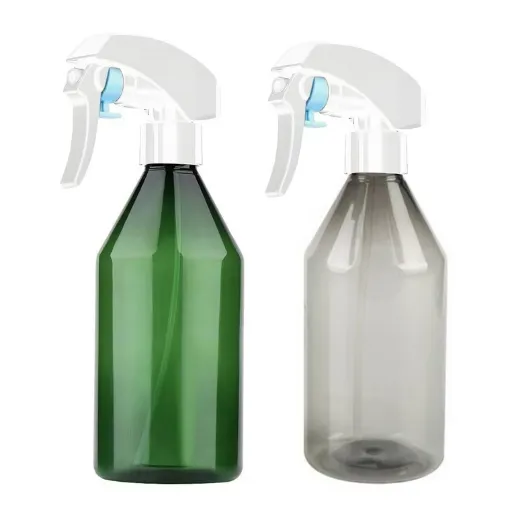
A more eco-friendly fine mist sprayer utilizes the use of mono-material or recycled materials, free metal atomizers, and the ability to refill in order to reduce waste of landfills with the same spray precision that most pumps have. Brands are currently presented with more than five viable pathways. Some are radical and others are incremental. They include mono-material polypropylene, recycled PET, and new formulations such as aluminum, glass, and refilling systems. However, each is applicable to different formulas, costs, and types of image.
The beauty and personal care sector is responsible for the shipping of over 600 million units of packaging every year. In most traditional fine mist sprayers lies a concealed yet infuriating problem. The housing of the pump has a metal spring inside. The housing is made of mixed types of plastic.
The intricacy of the design makes this combination almost impossible for the recyclers hence it is simply trash to them. That bottle with a recycling symbol? It is more often than not, dumped in a garbage pit. Nobody takes the trouble to dismantle the pump.
In the beginning of 2025, when Elena introduced the market her line of organic skincare products, she decided to include the ordinary fine mist sprayers for her products like toners and facial mists. Within six months, she got an email of irritation from one of her clients. This was because the bottles were not accepted by the local recycling center due to the presence of metal components.
Sustainability was one of the key pillars of Elena’s brand, yet the packaging was not in line with that strategy. She was in dire need for an eco-friendly fine mist sprayer. One that could meet her expectations, and at the same time, good spraying properties and cost that would be bearable.
This guide provides the current comprehensive list of green friendly alternatives available in the market. You will get to appreciate the material’s performance, cost, applicable formula, and where to get it from suppliers who manufacture in a sustainable way.
Key Takeaways
- Mono-material PP fine mist sprayers eliminate metal springs and use a single plastic type, making them fully recyclable without disassembly.
- PCR (post-consumer recycled) PET reduces virgin plastic use by 30 to 100 percent but requires careful formula compatibility testing.
- Aluminum offers infinite recyclability and lightweight durability, while glass provides premium aesthetics and chemical inertness.
- Refillable systems with detachable pumps or replaceable cartridges can cut packaging waste by 60 to 80 percent on repeat purchases.
- Sustainable options typically carry a 10 to 40 percent price premium and may require higher minimum order quantities.
What Makes a Fine Mist Sprayer Eco-Friendly?

Eco-friendly shouldn’t be a term that’s freely ascribed to every sprayer. There are a few important variables to consider in fine mist packaging to ensure complete sustainability. That has to do with the pump’s constituent, how much of it is from recycled material, and the fate of the package after the consumer’s need has been met.
Material Composition
PP and PE composites, as well as stainless steel springs used in conventional fine mist sprayers sometimes even with glass balls, are examples of standard components. However, the usage of diverse materials replete in plastic allows easy recycling of the waste.
One such design which uses only one substrate and avoids multiple materials is a hybrid sprayer made of a single polymer, commonly polypropylene. The entire pump mechanism including actuator, closure, and dip tube, along with the housing of the pump, is made with only one resin. As there is no metal present, the pump as a whole falls within their existing recycling plastic channels.
Recycled Content
The term PCR stands for “Post Consumer Recycled” and it refers to the plastic that has been already consumed and discarded as waste but then is utilized to make a new plastic packaging. An eco-friendly fine mist sprayer is manufactured with 50 percent PCR PET so that the material used to make the sprayer is 50 percent from recycled water bottles and food containers. Nowadays, some suppliers are providing 100 percent PCR options though certain limitations such as the materials being off-color and less sturdy for usage occur.
End-of-Life Design
The best sustainable sprayers are designed for circularity. Screw-on pumps let consumers remove and reuse the actuator on a refill bottle. Cartridge-based systems keep an outer bottle in service while only the inner pouch or cartridge gets replaced. These designs shift the model from single-use to multi-use, which often matters more than the material itself.
Want to see how sustainable materials work on the production line? Explore our custom packaging solutions and request material samples for your specific formula.
Sustainable Material Options for Fine Mist Sprayers
Choosing the right material means balancing sustainability credentials, performance, cost, and aesthetics. Here’s how the five leading options compare.
Mono-Material PP (Polypropylene)
Plastic fine mist sprayers entirely constructed from PP are the most eco-friendly solutions as they are easy for recycling. It is also worth stating that there are no metal springs, glass balls or other plastics in the pump. Hence, all plastic components melt at the same rate and can be melted as a single material for recycling.
This type of pump is effective with a dose ranging from 0.12 ml to 0.16 ml per stroke and where the droplet structures will be consistent mostly within 30 μm or 80 μm. Such pumps can fit common size necks such as those with a circumference of 18/410, 20/410, 24/410 as well as 28/410. A few brands have gone to the extent of seeking the APR (Association of Plastic Recyclers) certification with promises that the product can be recycled in North America without embarking on sorting processes.
What does this peculiar fact mean? Unlike PET, PP does not have that glassy nature. It has a bit of an opalescent hue. Brands may find it difficult to obtain the much desired race “crystal water look” in such cases. However, color combination is not a problem. With few exceptions, PP does not corrode any cosmetic preparation; even alcohol based tonics and oil mist wraps are not a major problem.
PET with PCR Content
Unfortunately, such plastics are known to be quite challenging to use, particularly when the type in question is PCR. This is because, apart from recycled resins, plastics made from recycled PET at times exhibit structural irregularities or remain visually contaminated by PET flakes as a result of insufficient PET flake cleaning, thus affecting the chemical resistance of the material whether new or used. Consider alcohol concentration perfumes that contain between 80 and 95 percent ethanol content. Slowly with time, some formulations of PCR PET will be highly prone to stress cracking caused by ethanol creased plastics. Do not accept advanced payment for any aggressive formulation if PCR compatibility has not been tested.
That said, the use of PCR in packaging does come at a cost. Most packaging films especially those made with colors have a high rate of rejection because the colors are not solid due to the original resin sourced ability to take those pastel and/or specific colors.
Aluminum
Material reclaimed Aluminum used in fine mist sprayer bottles can be recycled numerous times. The gadget is low in weight, does not smash or allow ultraviolet rays across its surface. The content is not damaged by exposure to the light A light protective feature. It mostly applies to body mists, hair products, and room scents that can be used in a white bottle.
However, all these benefits come at costs too. The price of aluminum can be between 20% and 40% more than a similar plastic counterpart. And once that technician sees that it works also says there is no way you will get a clear vision of the substance. Additional heat conduction abilities of the aluminum are another disadvantage. This could be detrimental to the product during transportation in extreme weather conditions.
Additionally, certain curing and inks have to be used to print on aluminum. The preparation process becomes elaborate furthermore.
Glass
Few could argue that glass first and foremost generates those feelings of luxury that many high-end brands rely on. It does not contaminate and there is zero per cent waste in its construction; i.e. it is entirely recyclable. Glass says high class for precious liquids such as eaux de toilette or top-notch facial sprays. And no plastic will ever do it any better. It is luxurious. Metal being more expensive most likely persuades quite a few.
There are layers to the argument on relevancy of glass to the environment. It has the advantage of being recyclable over and over again, but it is also very heavy. Freight of a loaded glass bottle contains emissions of a fuel consumed more than freight of a similar light plastic bottle. It is common for lifecycle assessment evaluations to be in favour of mono material PP when shipping lends itself, and glass when distributing high value goods ‘gently’.
Glass fits in well with the notion of refillable ‘eco-friendly’ packaging. Refilling is accomplished by having a relatively thicker outer glass bottle, while the internal cartridge or replacing pouch offers luxury looks.
Bio-Based and Emerging Materials
Producing plastics from agricultural products such as maize starch and sugar cane based polyethylene is very attractive. Polylactic acid based plastics and these alternative materials are not derived from oil. Such polymers and petrochemicals have their practical challenges however.
PLA for instance needs municipal waste management authorities to have a different system which is not the case in most of the places Currently. In the normal dumping of waste PLA will be of no much help comparable to waste disposal of plastic bags. Furthermore, its lower heat resistance may further lead to deformation during movement or even during storage at high temperatures.
Most of the marketers in 2026 already understand that such a philosophical change is good for the marketers rather than the people changing policy in favor of recycling. Typically plastic only pump PP or food grade wastage consumption grade PET eco-friendly fine mist sprayer is even better from an environmental one point of view since it is easier to operate.
Refillable and Reusable Fine Mist Sprayer Systems

The most sustainable package is the one you don’t throw away. Refillable fine mist systems are gaining traction because they attack waste at the source.
Cartridge-Based Refill Systems
Sophisticated eco-friendly fine mist sprayer Refillable models feature a shell made of solid and hard material, and replaceable products, there is an insert of this shell. The spray head is kept and so is the outer system but the spray bottle itself is removed and replaced with the contained liquid only. Some designs focus on the use of ‘seed’ PP cartridges which is recyclable but others use the pouch technique which is even more efficient in terms of material consumption.
With these systems, material consumption is minimized to between 60% and 80% in the product life cycle. The initial design cost tends to be higher while the process is much more involved. However, for companies where the number of repeat purchases is high, the returns are worth the outlay since they help to retain customers and reduce costs in the packaging of each refill.
Screw-On Detachable Pumps
Standard screw-on fine mist sprayers with 18/410, 20/410, 24/410, or 28/410 neck finishes can be removed and reused. A brand sells a “forever bottle” with a high-quality metal-free pump, then offers lightweight refill bottles at a lower price point. The consumer transfers the pump to the refill bottle and continues using the original outer container.
This approach requires no specialized tooling. Any brand using standard neck finishes can implement it with minimal design changes. The key is communicating the reuse process clearly on packaging and marketing materials.
Pouch-in-Glass Airless Systems
For brands that need airless protection alongside sustainability, pouch-in-glass systems offer an elegant compromise. A flexible pouch containing the product sits inside a weighted glass bottle. The pump draws product from the pouch without exposing it to air. When empty, the consumer replaces the pouch and keeps the glass outer bottle.
These systems work beautifully for high-end skincare serums and vitamin C formulations that oxidize quickly. The glass outer vessel elevates shelf presence while the replaceable pouch minimizes waste.
Ready to explore refillable options for your product line? Contact our team to discuss cartridge-based and screw-on refillable designs tailored to your formula and budget.
Certifications and Standards to Look For
Sustainability claims need third-party validation. Here are the certifications that actually matter when sourcing an eco-friendly fine mist sprayer.
APR (Association of Plastic Recyclers) Recognition
APR recognition means a packaging design has been tested and approved for compatibility with North American recycling infrastructure. A mono-material fine mist sprayer with APR recognition can go straight into curbside recycling without disassembly. This is the gold standard for plastic spray pump recyclability in the United States and Canada.
ISO 14001 Environmental Management
ISO 14001 certification at the manufacturing facility level indicates that your supplier operates an environmental management system. It does not guarantee sustainable products, but it does mean the factory measures and manages its environmental impact systematically.
REACH and RoHS Compliance
The EU chemicals regulation, known as REACH, together with the directive for Restriction of Hazardous Substances (RoHS), seek to regulate the presence of toxic substances such as phthalates, heavy metals, and many other dangerous chemicals in materials. This is especially true of products like cosmetics and personal care items that women put on their skin surface.
When Marcus changed his packaging for home fragrance into mono-material PP fine mist sprayers he had to order APR components and REACH compliance certification in particular. He and his staff needed it for their retail partners in Germany and such availability accelerated his startup by 3 weeks. The documentation was far from just a requirement or a collection of certificates for regulatory purposes. It helped the marketing efforts quite a lot.
How to Choose the Right Eco-Friendly Fine Mist Sprayer
Material selection should start with your product, not your sustainability aspirations. A beautiful glass bottle means nothing if it cracks during e-commerce shipping.
Match Material to Product Formula
| Formula Type | Recommended Material | Why |
|---|---|---|
| High-alcohol perfumes (80 to 95 percent) | Glass or aluminum | Chemical resistance and prestige |
| Water-based toners and mists | Mono-material PP or PCR PET | Cost-effective, recyclable, clear visibility |
| Oil-based serums and moisturizers | PP or glass | Oil compatibility and premium positioning |
| High-viscosity products | Mono-material PP (HV grade) | Specialized high-viscosity pump mechanisms |
Consider Your Brand Positioning
Mass-market brands typically prioritize cost and scalability. Mono-material PP or 30 percent PCR PET hits the sweet spot of sustainability credibility without shocking the finance team. Clean beauty brands often push further with 100 percent PCR content, label-free laser etching, or refillable systems. Luxury brands lean into glass and aluminum for the tactile and visual premium.
Factor in MOQ and Lead Times
High minimum order quantities are generally attached to such reasonable materials. About 5,000 could in fact be a mono-material polypropylene pump without anything more being done to it. On the other hand, if a customer is looking for PCR colored plastics, then they may have to take 10,000-30,000 units. And the particular case of bio-based raw materials is even worse since it is manufactured in small quantities.
For eco-friendly fine mist sprayer, anticipate that projected time delays will range from 10-30% compared to traditional materials. The issue of availability of recycled resin and color variegation persists or increases. Hence, the following points should be considered with regard to the reworking of input materials.
Customization Options for Sustainable Fine Mist Sprayers

Sustainability doesn’t mean sacrificing brand identity. Eco-friendly fine mist sprayers offer substantial customization flexibility.
Color Matching on Eco-Friendly Materials
Mono-material PP accepts colorants easily. You can match Pantone shades with good accuracy, though metallic and pearlescent effects are harder to achieve without additives that complicate recycling. PCR PET carries natural amber or gray tints from its recycled content, which some brands embrace as an authentic visual cue.
Branding and Decoration
Screen printing and hot stamping work on PP, PET, aluminum, and glass. For the most sustainable approach, consider laser etching directly onto glass or aluminum. It eliminates adhesive labels and paper waste entirely. Water-based inks offer a lower-impact alternative to solvent-based printing.
Overcaps, Collars, and Accessories
PP overcaps maintain mono-material consistency for fully recyclable packages. Metal sheaths and collars add visual prestige but reintroduce the mixed-material problem. If you use a metal collar, design it for easy removal so consumers can separate materials before recycling.
Cost and Sourcing Considerations
Sustainability comes with a price tag. Understanding the numbers helps you build a realistic budget and avoid sticker shock.
Price Premium for Sustainable Materials
Expect to pay 10 to 25 percent more for PCR plastic compared to virgin resin. Aluminum carries a 20 to 40 percent premium. Glass sits 15 to 30 percent above plastic, with additional shipping costs due to weight.
Mono-material PP pumps typically cost about the same as conventional mixed-material pumps. The manufacturing process is similar. The sustainability benefit comes from the design, not a more expensive material.
MOQ Expectations
In general, the minimum order quantities for stock sustainable pumps that are already available in commercial scale from existing producers of said products, ranges between 5 000 and 10 000 pieces. Also, in most cases, specific sustainable packaging elements custom coloring bottles, specific mold and neck are at a minimum 10 000-30 000. Chinese firms, such as Fuzhou Longlu, may have much lower MQQ’s than those of Europeans or North Americans, which is convenient for upcoming brands that want to experiment with environmentally friendly solutions.
Finding the Right Manufacturer
And before you purchase anything or make any orders, ask all potential suppliers the following three questions. Initially, do they provide material traceability documents that confirm inclusion of specific proportion of recycled materials and their origin? Again, do they perform sample testing to check compatibility with the eco-friendly fine mist sprayer and your formulation? Lastly, when it comes to sustainable products, what can be said about their defecting rates in comparison with that of their common product lines?
Natural components can act differently in quick assembly lines. Recycled plastic can bring about a more significant dimensional variation. Therefore, the advice of users and engineers who have faced certain problems is that the tools should be engineered properly and the quality management systems adjusted right from the start.
Conclusion
Switching to eco-friendly fine mist sprayer is not merely a passing fad; it is a dynamic change in the way contemporary brands package products.
Mono-material PP pumps facilitate complete recyclability. PCR PET ensures clarity, but also minimises use of raw PET material. Where robustness is an issue or a sophisticated look is required, aluminum or glass, respectively, is employed. Some use refillable systems which help cut waste because the same package can be used several times.
What you opt for is heavily influenced by the chemistry of your formula, the characteristics of the customers and the existing logistics. Any aqueous based toner has great application within mono-material PP. Conversely, glass is the only way to hold expensive perfume. Finally, aluminum is the best option for canisters of a kind sports dress body sprays.
Pick and focus on one product first. See how well the green solution performs in a limited scale experiment. Start from the bottom. Pick rapidly. Grow wisely. Evaluate in terms of customer adoption, shipping constraints and cost considerations. And do more of what turns out to be appropriate.
At Fuzhou Longlu Packaging, we manufacture eco-friendly fine mist sprayers in mono-material PP, PCR PET, aluminum, and glass configurations. Our team helps you match the material to your formula, customize colors and finishes, and manage MOQs that fit your growth stage. Request a free sample or custom quote today and see how sustainable spray packaging can strengthen your brand.