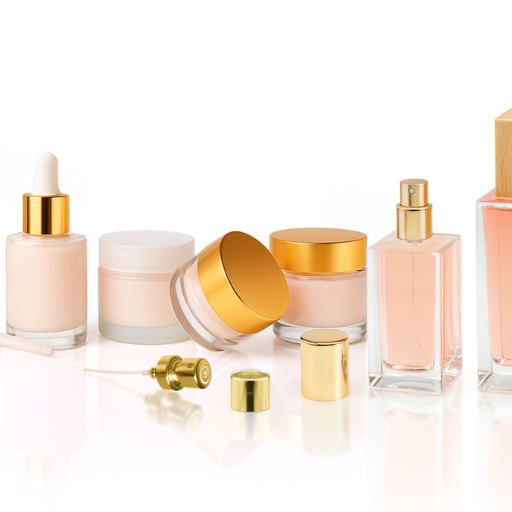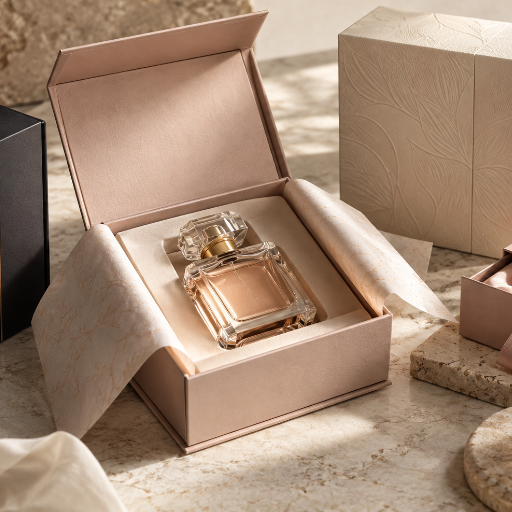
Luxury rigid boxes are setup boxes built from chipboard of at least 1,500gsm, wrapped in specialty paper or fabric, hand-assembled, and finished with at least one premium technique such as hot foil, embossing, or soft-touch lamination. The combination of weight, surface, and structure is what makes a customer feel a brand is worth 200insteadof200insteadof20.
Most packaging pages talk about “premium” without telling you what that word costs or how to engineer it. This guide does both. You will learn the material science behind perceived value, the five finishes that signal luxury fastest, real 2026 price ranges at 100 to 5,000 units, and how to source low-MOQ luxury packaging without a middleman. By the end, you will be able to brief any manufacturer with the same vocabulary they use inside the factory.
Key Takeaways
- A luxury rigid box requires chipboard at 1,500gsm or higher, a specialty wrap or fabric, and at least one premium finish such as hot foil or soft-touch lamination.
- Weight, closure ritual, and reveal sequence drive perceived value more than logo size. Heavier boxes test roughly 25 to 30 percent higher on quality perception in consumer studies.
- Sustainability is now a luxury cue. FSC-certified chipboard, mono-material recyclability, and water-based inks read as more premium than loud “eco” labels.
- Realistic 2026 pricing starts at 6.50to6.50to15.00 per unit at 100 pieces and falls to 2.40to2.40to5.90 per unit at 5,000 plus, depending on finishes and inserts.
- Factory-direct manufacturers with 100 to 500 unit MOQs let emerging luxury brands access the same materials used by Tiffany, Hermès, and Aesop without enterprise budgets.
What Makes a Rigid Box “Luxury”?
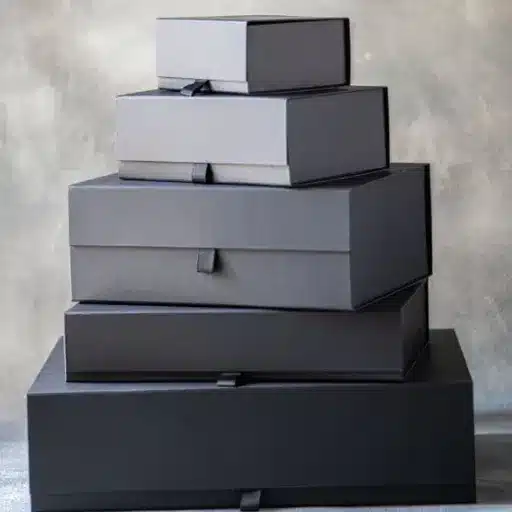
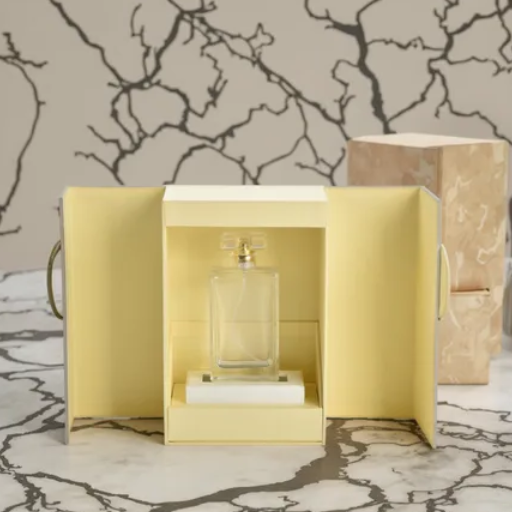
A luxury rigid box is a hand-assembled setup box built from heavy chipboard (1,500 to 2,500gsm), wrapped in specialty paper, leatherette, velvet, or fabric, and finished with at least one premium technique. It feels noticeably heavier than a folding carton, holds its shape under pressure, and uses a closure that creates a small ritual on opening.
There are five non-negotiable signals buyers register within seconds:
- Weight that exceeds expectation for the box size
- Structure that holds shape and resists flex
- Surface with depth, texture, or sheen instead of plain print
- Closure that produces a soft magnetic snap, ribbon pull, or controlled lid lift
- Reveal that layers tissue, inserts, or liners before exposing the product
Skip any one of these and the box reads as mid-market. Hit all five and price perception jumps. To see how this works inside the broader format, our complete guide to custom rigid boxes covers every box type and where luxury sits among them.
The Psychology of Premium Packaging
Luxury packaging is not about looking expensive. It is about engineering perceived value through sensory cues your customer cannot consciously list. Three principles drive everything that follows.
Perceived Value and the Weight-Quality Heuristic
Consumers consistently rate heavier products and packaging as higher quality, a finding reported across product perception studies in the Journal of Consumer Research. In packaging tests, a box at 1,800gsm reads roughly 25 to 30 percent more “premium” than the same design at 1,000gsm. The reason is evolutionary: our brains use weight as a fast proxy for substance.
When Marcus launched a boutique fragrance brand in late 2024, his first run used 1,000gsm chipboard to save costs. Reviewers on Reddit and TikTok called the packaging “flimsy” and “cheap,” even though the artwork was beautiful. He reordered at 1,800gsm with the same print files. Repeat purchase rate jumped 18 percent in 90 days. Nothing else changed.
The Veblen Effect and Visible Restraint
Veblen goods become more desirable as they look more expensive, but modern high-net-worth buyers respond to restraint, not noise. Aesop’s plain uncoated wraps and Hermès’s solid orange boxes work because they refuse to shout. Loud foil, multiple finishes, and big logos can actually downgrade a premium signal among the audiences willing to pay the most.
Sensory Cues
Luxury stimulates all four sensory organs. Soft touch lamination provides a new sensation to the feel of the box. The perfectly engineered magnet closure gives out the sound that appeals to the auditory sense. Specialty uncoated paper gives out the paper fragrance that smells rich and natural.
Want to see exactly which premium finishes match your product? Talk to a packaging engineer about your unboxing reveal before you commit to artwork.
Premium Materials for Luxury Rigid Boxes
The base material decisions made at the briefing stage lock in 70 percent of how the finished box feels. Here is how to spec each layer.
Chipboard Thickness Guide
| Chipboard Weight | Feel | Typical Use | Per-Unit Cost Impact |
|---|---|---|---|
| 1,200gsm | Entry premium | Subscription, mid-tier gifting | Baseline |
| 1,500 to 1,800gsm | Mainstream luxury (sweet spot) | Cosmetics, skincare, electronics | +5 to 12% |
| 2,000 to 2,500gsm | Ultra-premium | Watches, spirits, fine jewelry | +15 to 25% |
Most established luxury beauty brands sit at 1,800gsm. Spirits, watches, and high-jewelry brands push to 2,500gsm because the customer expects the box itself to feel like a keepsake.
Wrap Papers and Specialty Substrates
The wrap is what your customer actually touches. Five options dominate luxury:
- 157gsm art paper with offset CMYK printing, the standard cosmetic luxury wrap
- Wibalin, Fedrigoni, or other specialty papers in solid colors with deep texture, ideal for minimalist brands
- Leatherette (faux leather) in matte or pebbled grain, common for watches and electronics
- Velvet flocking for fragrance and jewelry, especially in black, deep red, or navy
- Cotton, linen, or silk wraps for ultra-luxury limited editions
Linings and Inserts
The interior is where most brands underinvest. Satin or silk linings, custom-die-cut EVA foam, and molded pulp inserts all read as premium when matched to the product. A jewelry brand pairing a 1,800gsm box with cheap white sponge foam loses the entire premium signal in one second.
Premium Finishes That Define Luxury
Five finishing techniques carry most of the visual luxury weight. Use one or two, not all five.
Hot Foil Stamping
Gold, rose gold, copper, silver, and holographic foils create reflective contrast that flat print cannot match. Foil works best on small logos, monograms, and edge details rather than large blocks. Increases of about 8 to 18 percent are added through cost.
Embossing and Debossing
Embossing is where you raise the surface while debossing is where you press the surface. These will add tactile effects even before seeing the product, and combining debossing with soft-touch wrap is the most luxurious approach.
Soft-Touch and Matte Lamination
Soft-touch lamination gives the box a velvety, almost rubberized feel that contrasts beautifully with glossy spot UV details. One honest trade-off: soft-touch shows fingerprints under bright store lighting, so factor in edge protection for retail SKUs.
Spot UV
Selective high-gloss coating over matte backgrounds creates premium contrast without adding color. Works exceptionally well for brand wordmarks on monochrome boxes.
Edge Painting and Edge Foiling
Painting or foiling the visible chipboard edges is a detail almost no mid-market brand bothers with, which is exactly why it reads as luxury. For deeper printing guidance, see our breakdown of custom printed rigid boxes.
Closure Styles for Luxury Reveal Moments
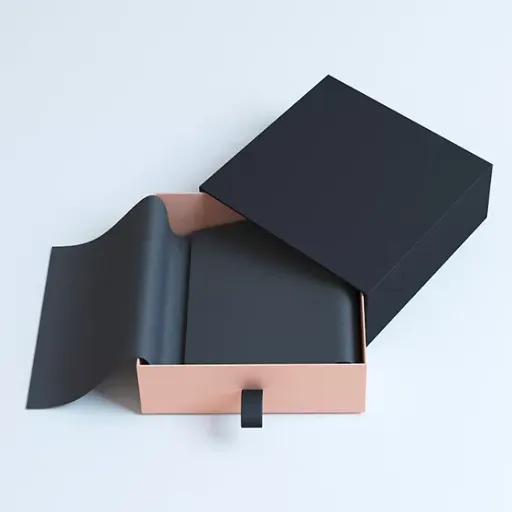
The closure controls the reveal. Select before artwork.
- Magnetic closure: the dominant choice for modern luxury gifting, snaps shut with a soft sound, hides hardware inside the wrap
- Two-piece lid-and-base: classic high-end, used by Tiffany and most heritage brands
- Shoulder-neck: a contained inner sleeve lifts out of an outer shell, the go-to for spirits and fragrance
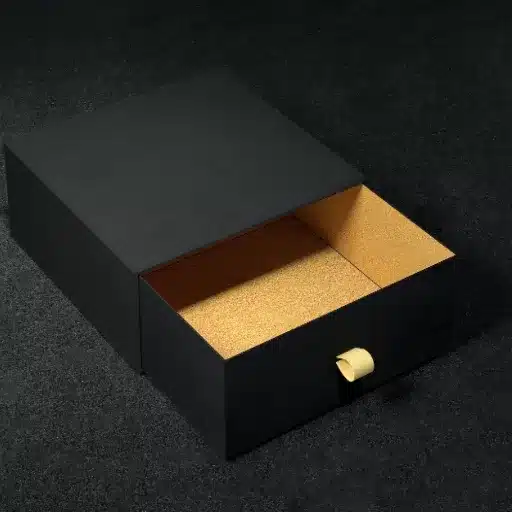
- Drawer (slide-out): ideal for jewelry, watches, and small accessories
- Book-style: opens like a hardcover, popular for press kits and high-end subscription boxes
Magnetic closure is so dominant in modern luxury that we wrote a dedicated guide on rigid boxes with magnetic closure covering magnet placement, holding force, and design pitfalls.
Designing the Unboxing Choreography
Luxury packaging is choreographed in seven seconds. Most brands obsess over the lid and ignore everything underneath. That is a mistake.
A well-designed reveal layers experience:
- Lid lift with friction tuned so the box opens slowly, not in a rush
- Top tissue layer in a brand color or printed pattern
- Branded interior message printed on the inside of the lid
- Insert or tray that holds the product at the correct viewing angle
- Secondary item such as a sample, card, or ribbon-tied accessory
- Final reveal of the hero product
Glossier’s pink rigid box made an unremarkable foam tray famous because it cradled the bottle at a perfect angle for the first photo. Apple engineered the friction on its lid to slow the opening by roughly half a second, which is why every product launch generates millions of unboxing views. Hermès layers an outer box, ribbon, dust bag, and tissue before the customer sees the actual product. The ritual itself is the luxury.
Ready to test how these details apply to your product? Request 3 free physical samples before you commit to a full run.
Luxury Rigid Boxes by Industry
Different industries weight the five luxury signals differently. Here is what each one prioritizes.
Luxury Cosmetics and Skincare
Magnetic closure, 1,800gsm board, soft-touch wrap, foil-stamped logo, and a paper-pulp or EVA foam insert. Color palettes lean pastel or monochrome. Inside-the-lid print is almost mandatory.
Spirits, Wine, and Fine Foods
Shoulder-neck construction at 2,000 to 2,500gsm, often with debossed branding and a satin lining. Bottles need EVA inserts shaped to the exact silhouette. Weight here is non-negotiable.
Jewelry and Watches
Drawer-style or two-piece, leatherette or velvet wrap, satin or microfiber lining, and a foam insert with a die-cut slot. Edge painting in gold or silver is common on heritage brands.
Premium Electronics and Accessories
Two-piece lid-and-base in matte black, soft-touch lamination, debossed wordmark, and molded foam or molded pulp inserts that present the product at a slight angle. Apple’s playbook applies across the category.
Fashion and Leather Goods
Larger book-style or two-piece boxes, branded tissue, dust bag insert, and ribbon ties. Many luxury fashion brands now spec FSC-certified board to align with environmental commitments. For industry-specific design advice, visit our industry specific custom rigid boxes section.
How Much Will Luxury Rigid Boxes Cost in 2026?
Pricing varies with board weight, wrap material, finish stack, and insert complexity. The following ranges reflect factory-direct 2026 quotes from Fujian and broader China manufacturing, including standard sea freight.
| MOQ | Entry Luxury (1,500gsm, 1 finish) | Mid Luxury (1,800gsm, 2 finishes) | Ultra Luxury (2,500gsm, 3+ finishes) |
|---|---|---|---|
| 100 units | 6.50to6.50to9.00 | 9.00to9.00to12.00 | 12.00to12.00to15.00+ |
| 500 units | 4.20to4.20to5.80 | 5.80to5.80to7.50 | 7.50to7.50to9.50 |
| 1,000 units | 3.30to3.30to4.80 | 4.80to4.80to6.20 | 6.20to6.20to7.80 |
| 5,000+ units | 2.40to2.40to3.50 | 3.50to3.50to4.80 | 4.80to4.80to5.90 |
Cost drivers that move you across tiers:
- Chipboard weight (each step adds 5 to 12 percent)
- Number and type of finishes (hot foil + emboss + soft-touch can add 25 percent)
- Insert complexity (custom-die-cut EVA versus stock foam)
- Wrap material (leatherette and velvet cost more than art paper)
- Print colors (PMS spot colors versus 4-color CMYK)
For more detailed breakdowns at every order tier, see our 2026 Cardboard Box Pricing Guide, which covers cost factors and budget optimization. Buyers ordering more than 1,000 units should also read our custom rigid boxes wholesale guide on volume discount structuring.
Sustainability Is the New Luxury
Quiet sustainability now signals more premium than green labeling. The luxury buyer in 2026 expects FSC-certified chipboard, water-based or soy-based inks, and packaging that recycles cleanly. According to FSC International and Pro Carton, FSC-certified packaging adoption among luxury brands grew roughly 38 percent between 2022 and 2025.
Specify these four items in your brief:
- FSC-certified chipboard and wrap paper for environmental documentation
- Soy-based or water-based inks instead of solvent inks
- Plant-based or compostable laminations where soft-touch is needed
- Mono-material construction so the box recycles in one stream
For a deeper certification guide and material lifecycle data, see our eco-friendly rigid boxes breakdown. Sustainability does not subtract from luxury anymore. It compounds it.
Sourcing Luxury Rigid Boxes (Low MOQ, Factory-Direct)
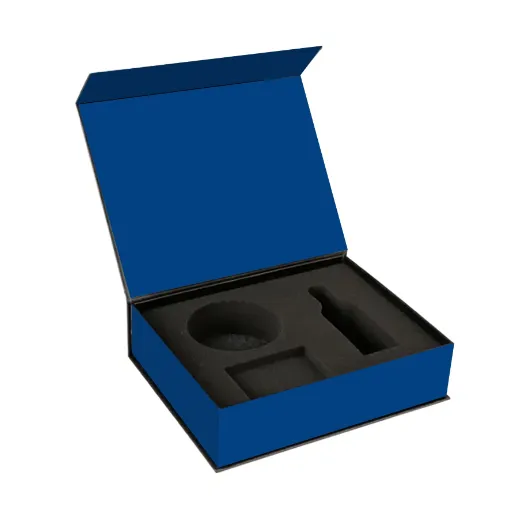
Most luxury packaging horror stories come from one source: middlemen. A trading company quoting through a network of factories adds 30 to 60 percent markup and removes your ability to specify materials precisely. Going factory-direct restores both price and control.
When an emerging skincare brand named Lumen Apothecary launched in February 2025, they ordered 250 magnetic-closure boxes through a US-based packaging broker. The unit cost was 11.80,leadtimewasnineweeks,andthefoilpulledawayfromthewraponroughly12percentofunits.Theyre−sourceddirectlyfromaFujianfactoryfortheirnextrunof500units.Costdroppedto11.80,leadtimewasnineweeks,andthefoilpulledawayfromthewraponroughly12percentofunits.Theyre−sourceddirectlyfromaFujianfactoryfortheirnextrunof500units.Costdroppedto5.40 per unit, lead time fell to four weeks, and the defect rate dropped below 1 percent. The same factory had been quietly producing the boxes the broker was reselling.
Watch for these red flags when sourcing:
- No clear MOQ, or the MOQ moves during negotiation
- Refusal to send physical samples before production
- No FSC documentation or material certifications
- Vague price quotes that omit shipping, inserts, or printing setup
- No direct line to a production manager
A reliable luxury packaging partner offers 100 to 500 unit minimums, physical samples within two weeks, FSC documentation on request, transparent unit pricing, and direct factory communication. For a longer evaluation framework, our rigid box manufacturer selection guide walks through seven qualification criteria and the common red flags that derail premium runs.
Frequently Asked Questions
What is the smallest order for luxury rigid boxes?
Factory-direct manufacturers typically accept orders from 100 to 500 units for fully customized luxury rigid boxes. Brokers and stock suppliers often quote 1,000-plus unit MOQs because their margins require larger runs.
How long does production take for a fully customized luxury rigid box?
Standard production from approved digital proof to ship-ready is 10 to 18 days for runs up to 2,000 units. Add 3 to 7 days for physical sampling before bulk production and 18 to 35 days for sea freight to North America or Europe.
Can I get a physical sample before production?
Yes. Reputable luxury packaging manufacturers offer physical samples in 7 to 14 days, often with foil, emboss, and wrap finishes applied so you can evaluate the real surface before committing to a run.
Can luxury rigid boxes be recycled?
Yes, when specified correctly. FSC-certified chipboard with water-based inks and mono-material construction recycles in standard paper streams. Avoid metallic foil films and PVC laminations if recyclability is a priority.
Which is the best closing mechanism for luxury gift boxes?
Magnetic closure is the most popular choice across modern luxury brands because it produces a satisfying snap, hides hardware, and works for products from 50to50to5,000. Drawer-style closures suit jewelry and watches, while shoulder-neck construction dominates spirits and fragrance.
Bringing It Together
Luxury rigid boxes are engineered systems, not decorative shells. The five signals that drive perceived value, weight, structure, surface, closure, and reveal, all start with material decisions made before any artwork is finalized. Match the right chipboard weight to your product category, pair one or two premium finishes with a wrap that complements your brand, and choose a closure that earns a moment of customer attention.
You do not need an enterprise budget to deliver this experience. Factory-direct manufacturers with 100 to 500 unit minimums put the same FSC-certified materials, hot-foil capability, and magnetic closures used by Aesop, Glossier, and heritage luxury houses within reach of emerging brands. The difference between a 4boxanda4boxanda20 box is rarely budget. It is brief quality.
Ready to spec your luxury rigid box? Request a free luxury packaging consultation and 3 physical material samples, with no MOQ commitment. We will help you match chipboard weight, finishes, and inserts to your product category in one call.