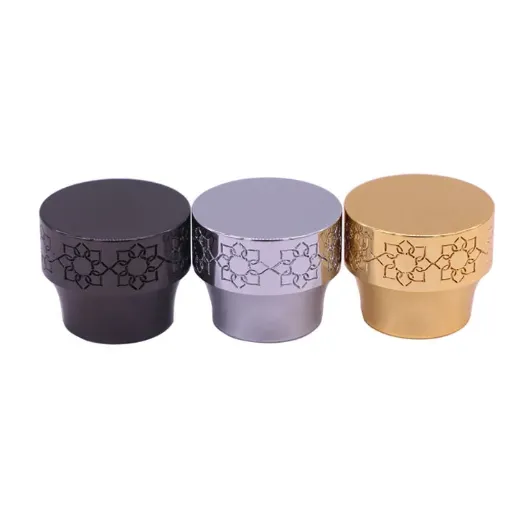
Engraved perfume caps are customized fragrance closures that carry logos, monograms, patterns, or codes directly cut or etched into the surface. They turn an ordinary cap into a tactile brand signature and are used by fragrance houses, indie perfume brands, and gifting services to add perceived value and personalization.
When Elena launched her niche fragrance line in Milan, she spent months perfecting the scent. Then her first retail buyer picked up the tester, turned the bottle over, and set it back down. The cap felt light, generic, and forgettable. Six months later, after switching to a weighted Zamac cap with a laser-engraved monogram, her wholesale inquiries tripled. The fragrance had not changed. The first touch had.
That is the power of an engraved perfume cap. It is the detail customers feel before they ever smell the juice inside. Yet many brands struggle to choose the right engraving technique, material, and supplier. This guide explains every major method, what works best on each surface, and how to source custom engraved perfume caps at the right MOQ and price.
You will learn the differences between laser, mechanical, sandblast, and CNC engraving. You will see how engraving compares to embossing and debossing. You will get practical artwork tips, cost benchmarks, and a clear checklist for evaluating suppliers. By the end, you will know exactly how to specify a cap that feels as premium as the fragrance it protects.
Key Takeaways
- Laser engraving is the most versatile method for metal, wood, and acrylic caps, offering speed and fine detail at volume.
- Mechanical engraving creates the deepest, most tactile marks on Zamac and brass, ideal for luxury limited editions.
- Engraving cuts into the surface, while embossing raises the design and debossing presses it downward.
- Zamac, aluminum, stainless steel, wood, and acrylic all engrave well, but each needs a different technique and finish.
- Custom logo engraving typically adds around $0.10 per piece at volume, with MOQs starting near 500 pieces for flexible suppliers.
Why Engraved Perfume Caps Matter for Fragrance Brands
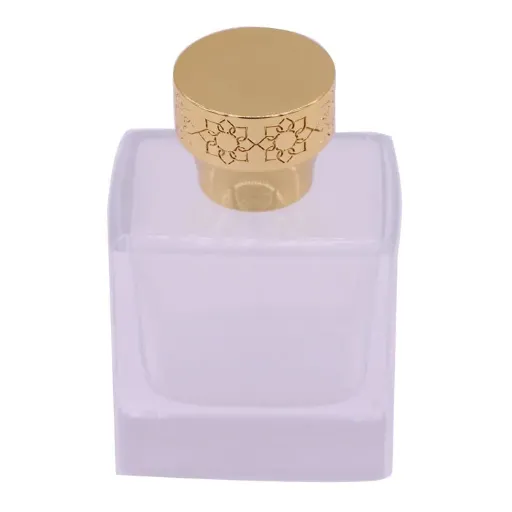
The cap is the first physical contact a customer has with a perfume. According to packaging research, 62% of perfume shoppers touch the cap before deciding to test the fragrance. That moment shapes perceived quality, price expectation, and brand trust.
Tactile Branding
An engraved cap adds texture, weight, and intentionality. A smooth metal cap feels mass-market. A cap with a finely etched logo or geometric pattern feels considered. The material and finish together can influence up to 40% of a product’s perceived value, even though the cap represents only about 18% of total packaging cost.
Personalization and Limited Editions
Engraving makes small-batch personalization possible. Brands can mark limited editions with collector numbers, engrave monograms for gifting programs, or create region-specific designs without new molds. This flexibility is especially valuable for niche and direct-to-consumer fragrance brands.
Anti-Counterfeit and Traceability
Micro-engraved serial numbers, batch codes, and QR codes help protect luxury products from counterfeiting. Some brands pair engraved QR codes with NFC chips under the cap to tell batch stories or verify authenticity. This turns the cap into both a design element and a security feature.
Differentiation on Shelf and Social
In a market where hundreds of fragrances launch each year, the cap is a quiet differentiator. A distinctive engraved pattern catches light on a retail shelf and photographs well in unboxing videos. For indie brands with limited marketing budgets, this visual signature can travel far on social media.
Want to explore how premium caps fit into a full fragrance packaging strategy? Read our guide to luxury perfume caps for a broader look at materials, trends, and closures.
What Are Engraved Perfume Caps?
Engraved perfume caps are fragrance bottle closures with designs permanently cut, etched, or ablated into the surface. Unlike printed labels, which sit on top, engraving removes or displaces material to create a recessed or textured mark. Common engraved elements include brand logos, monograms, decorative patterns, serial numbers, and QR codes.
Engraving can be applied to many cap materials:
- Metal caps, including Zamac, aluminum, brass, and stainless steel
- Wood and bamboo caps
- Acrylic, resin, and Surlyn caps
- Glass and crystal caps
- Coated or plated surfaces
The result is durable, wear-resistant, and premium-feeling. It will not peel, fade, or rub off during normal use, making it a strong choice for products that travel in bags, sit on vanities, or pass through retail testers.
Types of Perfume Cap Engraving
Not all engraving is the same. The right method depends on the material, the level of detail, the desired depth, and the production volume. Below are the five most common techniques used for engraved perfume bottle caps.
The video below shows how laser engraving creates precise, permanent marks on glass and metal perfume packaging. Replace the placeholder with your own product video or an authoritative third-party demonstration before publishing.
Laser Engraving
A computer-controlled laser beam vaporizes the top layer of material to create a precise, permanent mark. It is fast, repeatable, and requires no physical tooling.
- Best for: Logos, fine text, variable data, and complex patterns
- Works on: Metal, wood, acrylic, glass, coated plastics
- Finish: Slightly frosted or matte recessed area
- Volume: Excellent for high-volume production
- Cost: Low per-unit cost after setup
Mechanical or Diamond Engraving
A diamond-tipped cutter physically carves into the surface. This creates the deepest, most tactile groove of any method.
- Best for: Premium luxury caps and limited editions
- Works on: Zamac, brass, stainless steel, hard metals
- Finish: Deep, polished groove that can be filled with metallic wax or pigment
- Volume: Slower than laser; better for medium volumes
- Cost: Higher setup, but unmatched perceived value
Sandblast Engraving
Abrasive particles are blasted through a stencil onto the surface. This creates a deeper, more artistic carved effect than laser.
- Best for: Large decorative areas and frosted artistic effects
- Works on: Glass, crystal, metal, acrylic
- Finish: Matte, three-dimensional carved look
- Volume: Good for medium to high volumes
- Cost: Moderate; requires stencil preparation
Rotary Engraving
A rotating cutter follows curved paths, making it ideal for cylindrical or rounded cap surfaces.
- Best for: Curved caps and continuous patterns
- Works on: Metal, wood, some plastics
- Finish: Smooth, flowing lines
- Volume: Medium to high
- Cost: Moderate
CNC Engraving
Computer numerical control cutters trace complex 3D surfaces with high precision.
- Best for: Sculptural caps, intricate 3D patterns, and uneven surfaces
- Works on: Metal, resin, wood, composites
- Finish: Sharp, detailed, depth-controlled
- Volume: Flexible
- Cost: Higher setup for complex designs
Engraving Technique Comparison
| Technique | Best Materials | Detail Level | Depth | Speed | Cost Tier | Ideal Use |
|---|---|---|---|---|---|---|
| Laser engraving | Metal, wood, acrylic, glass | Very high | Shallow | Fast | $ | Logos, text, variable data |
| Mechanical engraving | Zamac, brass, steel | High | Deep | Medium | $$ | Luxury limited editions |
| Sandblast engraving | Glass, crystal, metal | Medium | Medium | Medium | $$ | Artistic frosted effects |
| Rotary engraving | Metal, wood, plastics | Medium | Medium | Medium | $$ | Curved surfaces and patterns |
| CNC engraving | Metal, resin, composites | High | Variable | Medium | $$$ | Complex 3D sculptural caps |
Engraving vs. Embossing vs. Debossing: What Is the Difference?
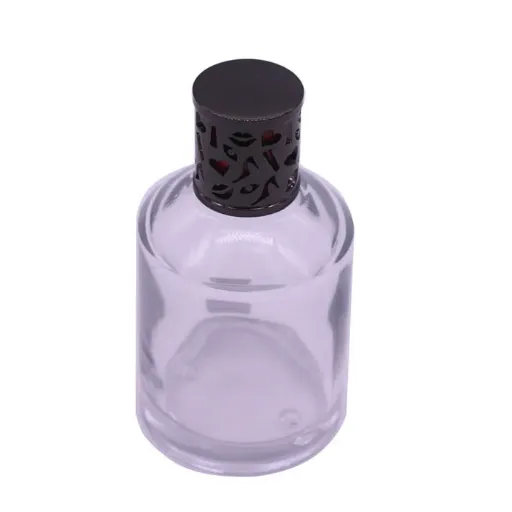
These three decoration methods are often confused, but they produce very different results. Choosing the wrong one can change both the look and cost of your cap.
Engraving
Engraving removes material to create a recessed design. The mark sits below the original surface level.
- Look: Cut-in lines or areas
- Feel: Slightly indented, crisp edges
- Best for: Logos, serial numbers, fine details
- Durability: Permanent, will not wear off
Embossing
Embossing raises the design above the surrounding surface using a die and counter-die.
- Look: Raised, three-dimensional
- Feel: Bumps outward, catches light
- Best for: Bold logos, decorative medallions
- Durability: Durable but limited on hard, brittle materials
Debossing
Debossing presses the design downward without removing material.
- Look: Indented, stamped appearance
- Feel: Subtle groove
- Best for: Understated luxury, leather or soft materials
- Durability: Durable, but shallower than engraving
When to Choose Each for Perfume Caps
| Goal | Recommended Method | Why |
|---|---|---|
| Permanent, precise logo | Engraving | Will not fade; works on nearly all materials |
| Bold, premium medallion | Embossing | Strong visual impact on metal nameplates |
| Subtle, refined branding | Debossing | Elegant, understated look |
| Luxury limited edition | Mechanical engraving with color fill | Tactile depth and exclusivity |
| High-volume personalization | Laser engraving | Fast, no tooling, variable data |
Marcus, a product developer for a Middle Eastern fragrance house, learned this distinction the hard way. His team ordered embossed logos on Zamac caps, only to find the raised edges felt sharp and caught on fabric pouches. They switched to mechanical engraving with a gold wax fill. The result felt smoother, looked more refined, and matched the brand’s gifting culture perfectly.
What Can Be Engraved on a Perfume Cap?
Almost any graphic element can be engraved if it is designed for the technique and cap size. Here are the most common applications.
Brand Logos and Monograms
A clean vector logo is the most common engraving request. Simpler logos with clear lines reproduce better than highly detailed illustrations at small sizes.
Names, Initials, and Personalized Messages
Engraving supports personalization for gifting, wedding favors, corporate orders, and boutique services. Variable data laser engraving can mark each cap with a different name or number.
Decorative Patterns and Geometric Textures
Patterns such as guilloche, floral motifs, herringbone, or abstract textures add premium detail without requiring a central logo. These are popular on limited editions and seasonal releases.
Serial Numbers, Batch Codes, and QR Codes
Functional engraving adds traceability and anti-counterfeit protection. Micro QR codes can link to product stories, authentication pages, or refill reminders.
Limited-Edition Markings and Collector Numbering
Phrases like “Edition 1 of 500” or “Holiday 2026” create scarcity and collectibility. Laser engraving makes this easy to execute across small batches.
Best Materials for Engraved Perfume Caps
The material determines how the engraving looks, feels, and ages. Below are the most common options for custom engraved perfume caps.
Zamac / Zinc Alloy
Zamac is the heavyweight standard for luxury fragrance caps. It takes mechanical and laser engraving beautifully and supports color infill for contrast.
- Engraving quality: Excellent depth and tactile feel
- Best technique: Mechanical engraving or laser engraving
- Finish pairing: Gold, silver, rose gold, gunmetal plating
- Sustainability: Recyclable; heavier than aluminum
Aluminum
Aluminum is lightweight, recyclable, and increasingly popular for eco-conscious luxury lines. It laser-engraves with crisp precision.
- Engraving quality: Very fine detail, slightly frosted
- Best technique: Laser engraving
- Finish pairing: Anodized colors, brushed metal, matte black
- Sustainability: Highly recyclable; lighter shipping weight
Stainless Steel and Brass
These metals offer durability and a premium cold feel. They are ideal for minimalist, modern, or unisex fragrances.
- Engraving quality: Deep, permanent marks
- Best technique: Mechanical or laser engraving
- Finish pairing: Polished, brushed, PVD coatings
- Sustainability: Durable and recyclable
Wood and Bamboo
Wood caps create a warm, natural look. Laser engraving burns away the top layer to reveal a darker mark.
- Engraving quality: Organic, textured appearance
- Best technique: Laser engraving
- Finish pairing: Natural oil, matte varnish, wax seal
- Sustainability: FSC-certified options available
Acrylic, Glass, and Resin
These materials produce frosted, decorative effects. They are lighter than metal and allow for transparent or colored designs.
- Engraving quality: Smooth, frosted detail
- Best technique: Laser engraving or sandblast engraving
- Finish pairing: UV coating, metallic paint, colored resin
- Sustainability: Recyclable acrylics and bio-resins are emerging
Material Comparison
| Material | Best Engraving Technique | Detail Level | Cost Tier | Weight | Sustainability |
|---|---|---|---|---|---|
| Zamac / zinc alloy | Mechanical, laser | High | $$ | Heavy | Recyclable |
| Aluminum | Laser | Very high | $ | Light | Highly recyclable |
| Stainless steel / brass | Mechanical, laser | High | $$$ | Heavy | Recyclable |
| Wood / bamboo | Laser | Medium | $$ | Light | FSC options |
| Acrylic / glass / resin | Laser, sandblast | High | $ | Light | Mixed; bio-resins emerging |
Surface Finishes That Pair with Engraving
The finish changes how engraving catches light. A polished surface reflects around the engraved area, while a matte surface absorbs light and softens the mark.
Polished, Brushed, and Matte Finishes
- Polished: Bright, mirror-like; engraving appears darker by contrast
- Brushed: Linear texture; hides fingerprints, engraving reads cleanly
- Matte: Soft, non-reflective; gives engraving a subtle, modern look
Electroplated Finishes
Gold, silver, rose gold, gunmetal, and chrome plating can be engraved to expose the base metal beneath. This two-tone effect adds depth and luxury.
Anodized Aluminum and PVD Coatings
Anodizing creates a hard, colored surface. Laser engraving removes the anodized layer to reveal the raw aluminum underneath. PVD coatings offer similar contrast with excellent scratch resistance.
Color Infill and Contrast Enhancement
For maximum visibility, engraved grooves can be filled with metallic wax, paint, or enamel. Gold fill on a black cap, for example, creates a striking premium look.
How to Design Artwork for Perfume Cap Engraving
Poor artwork is one of the main reasons engraved caps miss their mark. Follow these guidelines to prepare files that translate cleanly to production.
Recommended File Formats
Supply vector files in AI, EPS, PDF, or DXF format. Vector artwork scales without losing detail. Raster images like JPG or PNG must be converted and may not reproduce cleanly.
Line Weight and Detail Limits
- For laser engraving on metal: minimum line weight of 0.1 mm
- For mechanical engraving: minimum line weight of 0.2 mm
- For sandblast: avoid extremely fine details; use bold shapes
- Keep lettering at least 1.5 mm tall for readability
Depth and Texture Considerations
Specify whether the engraving should be shallow for subtlety or deep for tactile impact. Deep engraving is better for color infill but costs more and takes longer.
Positioning and Cap Curvature
Caps are rarely flat. Artwork must be distorted slightly to appear straight on a curved surface. Experienced suppliers will create a curving compensation proof before production.
Sourcing Custom Engraved Perfume Caps: What Buyers Need to Know
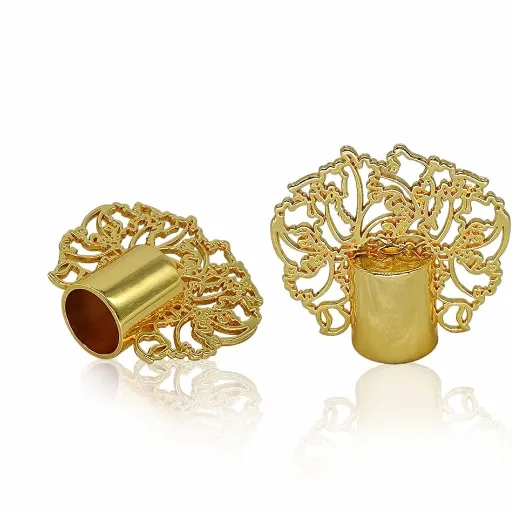
Sourcing engraved caps requires more than choosing a design. You also need to understand MOQs, tooling, lead times, and quality control.
Typical MOQs
For custom perfume caps wholesale, MOQs typically range from 500 to 10,000 pieces per model or color. Flexible manufacturers may accept 500-piece runs for simple laser engraving on existing cap shapes. New custom molds usually require 3,000 pieces or more.
Tooling and Setup Costs
- Existing cap + laser engraving: Low setup, sometimes no mold fee
- New cap shape + engraving: Mold cost of 200–200–2,500 depending on complexity
- Mechanical engraving die: Setup cost for custom cutters
Lead Times
- Sample approval: 3–7 days
- Tooling: 10–20 days for new molds
- Mass production: 20–35 days after sample approval
Cost Per Piece for Engraving
Custom logo engraving commonly adds approximately $0.10 per piece at volume. Complex mechanical engraving, color infill, or multi-location engraving will cost more.
Quality Control and Sampling
Always request a physical sample before mass production. Check for:
- Alignment and centering of the design
- Depth consistency across the batch
- Edge sharpness and burr removal
- Plating or coating adhesion around engraved areas
- Alcohol resistance and wear testing
Certifications to Request
- ISO 9001 for quality management
- RoHS and REACH for chemical safety
- FSC for wood sourcing
- EN 1811 for nickel release on metal caps in contact with skin
Ready to specify your own engraved caps? Contact Fuzhou Longlu Packaging for a free sample and quote tailored to your design, material, and volume.
Common Mistakes When Ordering Engraved Perfume Caps
Even experienced buyers make these errors. Avoiding them saves time, money, and frustration.
Choosing the Wrong Technique for the Material
Laser engraving on uncoated Zamac looks good but lacks depth. Mechanical engraving on acrylic can crack the surface. Match the technique to the material from the start.
Overly Intricate Designs
A detailed illustration may look beautiful on screen but lose definition at cap size. Simplify artwork for small engraving areas.
Ignoring Cap Curvature
Flat artwork placed on a domed cap can appear stretched or distorted. Ask your supplier for a 3D proof or sample before approving production.
Underestimating Setup Costs for Low Volumes
If you only need 300 pieces, mechanical engraving with a custom die may be too expensive. Laser engraving is usually more cost-effective for small runs.
Forgetting Alcohol Resistance and Wear Testing
Perfume contains alcohol, which can attack some coatings or infills. Always test engraved samples for chemical resistance and repeated handling.
Sustainability and Engraved Perfume Caps
Sustainability is no longer optional in fragrance packaging. The global perfume packaging market is projected to reach USD 3.96 billion in 2026, and eco-conscious consumers are driving much of that growth. 72% of Gen Z and 62% of millennials are willing to pay more for sustainable luxury packaging.
How Engraving Supports Mono-Material Recyclability
Engraving removes the need for separate labels, stickers, or foil transfers. A cap with a directly engraved logo is closer to a mono-material design, which is easier to recycle under regulations like the EU Packaging and Packaging Waste Regulation (PPWR).
Sustainable Materials That Engrave Well
- Recycled aluminum: Lightweight, infinitely recyclable, crisp laser engraving
- FSC-certified wood: Renewable, biodegradable, warm laser engraving
- Recycled Zamac: Maintains luxury weight with lower virgin material use
- Bio-based resins: Emerging option for clear, engravable caps
Avoiding Extra Plastic Labels
Direct engraving replaces plastic logo labels or nameplates. This reduces the number of materials in the cap and simplifies end-of-life recycling.
EU PPWR and Recyclability Considerations
The EU PPWR, taking full effect in 2026, pushes brands toward recyclable, minimal, and mono-material packaging. Engraved caps align with these goals because the decoration is part of the material itself, not an added layer.
FAQ
What is the best engraving method for metal perfume caps?
For most metal caps, laser engraving offers the best balance of detail, speed, and cost. For luxury limited editions, mechanical engraving creates a deeper, more tactile mark.
How much does it cost to engrave perfume caps?
Custom logo engraving typically adds around $0.10 per piece at volume. Mechanical engraving, color infill, or multi-location designs cost more. Setup fees may apply for custom dies or molds.
Can you engrave wooden perfume caps?
Yes. Wood caps engrave beautifully with CO2 laser engraving. The laser burns away the top layer to reveal a darker, high-contrast mark. FSC-certified wood options are available for sustainable brands.
What is the MOQ for custom engraved perfume caps?
MOQs range from 500 to 10,000 pieces depending on the supplier, material, and customization level. Laser engraving on existing cap shapes often has the lowest MOQ.
How long does it take to produce engraved perfume caps?
Sample approval typically takes 3–7 days, tooling takes 10–20 days if needed, and mass production takes 20–35 days after approval.
What file format do I need for cap engraving artwork?
Supply vector files in AI, EPS, PDF, or DXF format. Vector artwork ensures clean scaling and precise reproduction on small cap surfaces.
Conclusion
Engraved perfume caps are one of the most effective ways to elevate a fragrance brand. They add tactile value, support personalization, enable traceability, and differentiate products on crowded shelves. The right combination of technique, material, and finish can turn a simple closure into a signature brand moment.
Start by matching your goal to the method. Choose laser engraving for speed and fine detail. Choose mechanical engraving for deep luxury texture. Choose sandblast engraving for artistic frosted effects. Pair the technique with the right material, whether that is heavy Zamac, lightweight aluminum, warm wood, or clear acrylic.
Then work with a supplier who understands artwork preparation, sampling, quality control, and compliance. Ask about MOQs, lead times, engraving costs, and certifications before committing to production.
At Fuzhou Longlu Packaging, we help fragrance brands design and manufacture custom engraved perfume caps that feel as refined as the scents inside. From prototype to production, we guide you through material selection, artwork setup, and finishing. Contact us today for a free sample and quote.