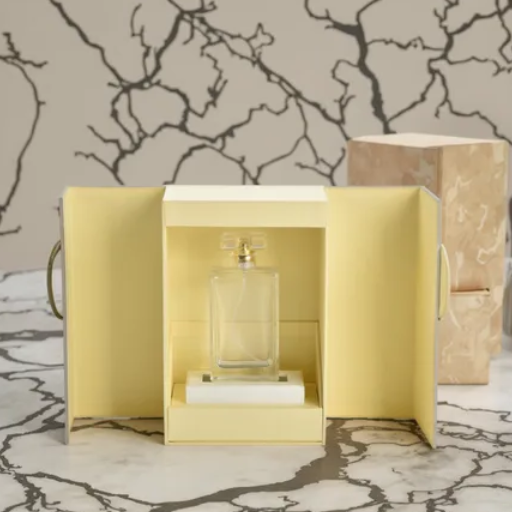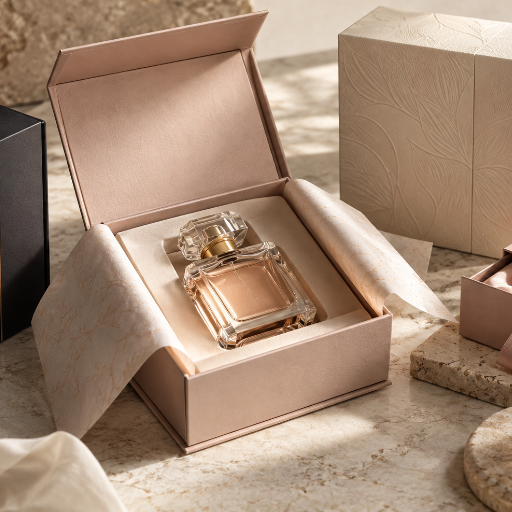
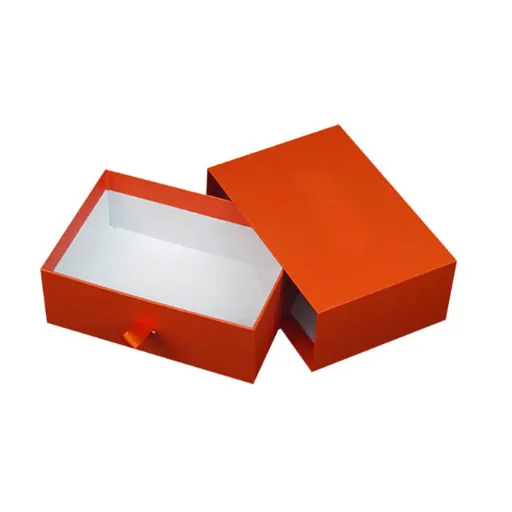
Rigid boxes are paper-based packaging containers that are generally wrapped in 1,200–2,500 gsm chipboard to keep a fixed shape. It is an up-scale packaging exceeding the unboxing experience of foldable cartons. Therefore, they are used in various industries such as cosmetics, electronics, jewellery, gourmet food, and gift kits.
Nonetheless desirable pre-wrapped rigid boxes sometimes fail to deliver such excitement but this is where this guide comes in – production orders of hinged boxes listed with their included cost all What; FSC and PPWR certification and how to perform the latter within manufacturers without experiencing headaches and 6 solid weeks of unproductive email exchanges.
Let’s take the example of a small skincare business in Lisbon who was able to launch its first 500 magnetic custom boxes in March 2026, the founder then posted a 28-second unboxing video which gained 1.4 million views in a span of nine days. The product was the same. But importantly the packaging was not possible IBC. That is the power that custom rigid boxes avail to a small brand – and that explains why even more people are yearning for it every year.
Key Takeaways
- Custom rigid boxes deliver the highest perceived value of any paper-based packaging because they hold shape, accept luxury finishes, and survive shipping.
- The six dominant styles are two-piece, magnetic closure, drawer, shoulder-neck, book-style, and collapsible — each suited to specific product categories.
- Factory-direct pricing typically runs 8–8–15/unit at 100 MOQ, 3–3–6 at 500, and 1.20–1.20–2.50 at 5,000+ units.
- EU PPWR (effective 2026) requires rigid boxes sold into Europe to be recyclable by 2030 — choose mono-material designs and water-based glues now.
- The fastest path from concept to delivery is 10–14 business days when you work directly with a manufacturer that handles design, sampling, and QC under one roof.
New to custom packaging? Download our free Rigid Box Design Checklist → — a one-page printable that covers every spec to nail down before requesting your first quote.
What Are Custom Rigid Boxes?
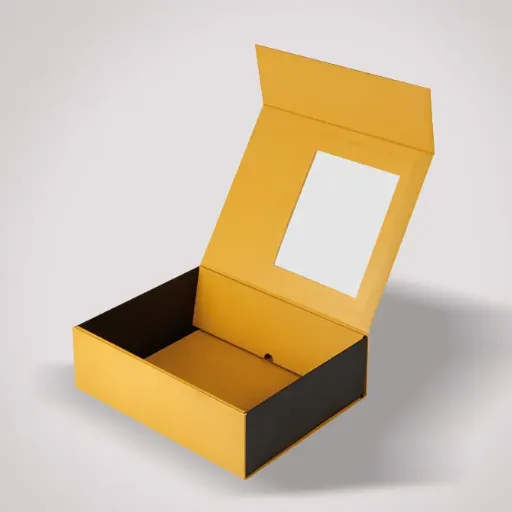
Rigid boxes, or packages, are essentially paper-based structures made from a thick chipboard which is between 1,200 and 2,500 grams per square meter, and are papered or coated with printed, or decorated two sticker layers. Their construction makes them distinct from folding cartons as they do not change in shape over time and are considered more of a luxury item. This is due to their common usage in the packaging of a variety of products including but not limited to cosmetics and electronics, jewelry, and gifts.
How they are created that makes the difference. A rigid box consists of three basic layers: the firm chipboard base structure which holds the shape, the visual wrap which is affixed to the outer surface of the box, and, in most cases, the printed liner or insert. This construction is what mainly adds the weight of the box, enhances edges to be precise, and allows the surface to be embossed, foil stamped, or soft-touch laminated without any deformations.
Die-cut folding cartons, on the other hand, are produced from one piece of folding paperboard and transported in an unfolded state. They’re less expensive and quicker, but can’t achieve the same effect on the shelves. Corrugated cartons transport goods safely but tend to be too commonplace for luxury purposes. Moving on to the premium league of paper packaging, rigid boxes are the most elite but also pricier per piece, facilitating an unboxing experience that customers don’t forget.
Quick fact: The global rigid box market reached 12.91billionin2025andisprojectedtohit12.91billionin2025andisprojectedtohit18.07 billion by 2035, growing at 3.42% CAGR. The luxury sub-segment alone is on track to grow even faster. (Future Market Insights)
The 6 Types of Custom Rigid Boxes
The six most common types of custom rigid boxes are:
- Two-piece (telescope) boxes — a separate lid lifts off a base; classic for shoes, gift sets, and tech accessories.
- Magnetic closure boxes — a hinged lid with hidden magnets that snap shut; the favorite for influencer PR kits and luxury skincare.
- Drawer (slide-out) boxes — an inner tray slides out of an outer sleeve; ideal for jewelry, watches, and chocolate.
- Shoulder-neck boxes — a base with a raised neck and a separate lid that rests on the neck; common for premium wine, perfume, and spirits.
- Book-style (hinged) boxes — opens like a book with a hinged spine; great for subscription boxes and limited-edition product launches.
- Collapsible (fold-flat) boxes — ship flat and pop into shape on demand; the fastest-growing style for e-commerce brands cutting freight costs.
Each style has a sweet spot. Magnetic closure boxes feel premium but add 15–25% to the unit cost. Collapsible rigid boxes are the smart pick if you’re shipping internationally and need to keep storage and freight cheap. Drawer boxes are tactile — they invite the customer to slow down and engage with the product reveal, which is exactly what high-end jewelry brands want.
Want a visual reference for each style? Order a free sample pack → and we’ll send physical examples of all six styles, so you can feel the difference before you commit.
Materials, Finishes & Inserts
Material choice is where a 4rigidboxbecomesa4rigidboxbecomesa9 rigid box. Here’s how to make the call without overspending.
Chipboard Weight (gsm)
Chipboard thickness ranges from 1,200 gsm to 2,500 gsm. For most consumer products, 1,500–1,800 gsm hits the right balance of premium feel and reasonable cost. Heavier electronics or wine boxes step up to 2,000–2,500 gsm for structural integrity. Going thicker than you need is the most common way buyers waste money on rigid box packaging.
Wrap Options
- Art paper (128–157 gsm) — the default. Smooth, takes full-color printing, and works for almost every product category.
- Kraft paper — natural, recyclable, and on-brand for clean-beauty or organic-food labels.
- Specialty paper — textured, pearlescent, or metallic stocks for limited editions.
- Fabric or leatherette — used by jewelry and watch brands willing to spend $12+ per unit for an heirloom feel.
Premium Finishes
Finishes are where rigid boxes earn their luxury reputation. The most-requested options:
- Foil stamping (gold, silver, copper, holographic) — typically adds 0.30–0.30–0.80 per unit
- Embossing / debossing — creates raised or recessed texture for logos
- Soft-touch lamination — that velvety, fingerprint-resistant feel
- Spot UV — glossy accents over a matte surface
- Window cutouts — paired with PET or recyclable PLA film
Custom Inserts
A rigid box without an insert is half a product. Standard insert options include:
- EVA foam — die-cut foam trays for electronics and cosmetics
- Velvet trays — for jewelry and watches
- Molded pulp — recycled paper formed into product-shaped cavities (the eco-friendly alternative to plastic blisters)
- Cardboard dividers — economical and 100% recyclable
Mid-priced brands often combine printed art paper, soft-touch lamination, single-color foil stamping, and molded-pulp inserts. That combination keeps unit cost under $5 at 1,000 MOQ while still feeling premium in hand.
How Much Do Custom Rigid Boxes Cost?
Custom rigid box pricing depends on five drivers: size, chipboard weight, finishes, inserts, and order quantity. The single biggest lever is quantity. Doubling your MOQ typically cuts the per-unit cost by 30–40%.
Here are realistic factory-direct ranges for a mid-size rigid box (roughly 8″ × 6″ × 3″) with art-paper wrap, single-color foil, and an EVA insert:
| Order Quantity | Estimated Unit Cost (Factory-Direct) |
|---|---|
| 100 units | 8.00–8.00–15.00 |
| 500 units | 3.00–3.00–6.00 |
| 1,000 units | 2.00–2.00–4.00 |
| 5,000 units | 1.20–1.20–2.50 |
| 10,000+ units | 0.90–0.90–1.80 |
As the end of 2025 was approaching, Marcus from Toronto, who made candles, ordered 100 custom rigid boxes and paid closer to 11.40 per box, which may have been the longest lasting cost in terms of customer orders. In the next six months, Marcus increased the number of units to 1000 and the per-unit cost reduced to 3.10. Economically, it only makes sense if the business owner has the funds and space to accommodate the order; however, the increase from 100 to 1000 units is too huge such that even the most seemingly minute of businesses need to consider the calculations before the selection of a minimum quantity is made.
Hidden Cost Traps to Watch For
- Tooling fees — custom dies for unusual sizes can add 200–200–600 to the first order
- Color matching — Pantone matching is usually included; ask in writing
- Shipping — sea freight is far cheaper than air, but plan for 30–45 days transit
- Sample fees — most reputable factories charge 80–80–200 for physical samples, often credited back against the bulk order
The cheapest quote is rarely the cheapest box. Trading companies routinely undercut on quote and recover margin on tooling, sample fees, or “art correction” surcharges. A direct manufacturer relationship eliminates most of those line items.
Custom Rigid Boxes by Industry
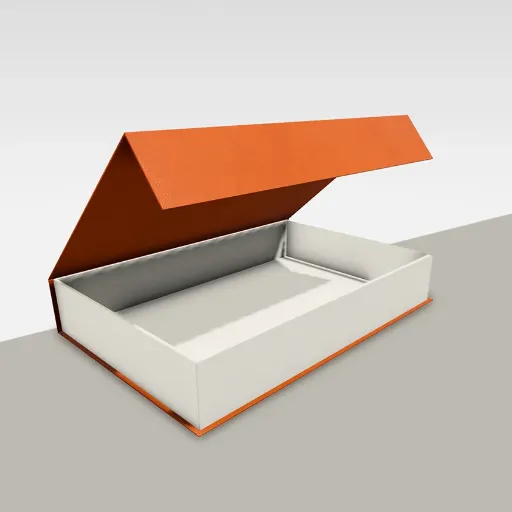
The same magnetic-closure box looks luxurious on a skincare line and out-of-place on a power tool. Match the format to the product.
Cosmetics and Skincare
Magnetic closure boxes are leaders in this segment, mostly because their presence makes the shelves look attractive and they fit well for photoshoots related to unboxings. The combination of three components that remains unchanged is a soft touch laminate, a spot color foil and an inner-lid print. Usually they look like cosmetic rigid boxes (a size of a face cream) in the range of 2.40-2.40-3.80 per piece for an MOQ of 1000. The Portuguese brand that has been within the introductory remarks promoted this design and managed to increase its conversion profits by 18 percent within the subsequent quarter of abandoning the folding cartons for custom rigid boxes.
Electronics and Tech Accessories
Electronics come in custom rigid boxes that are rigid to about 1,800–2,800 gsm, with EVA foam interiors to hold components and a simple elegant presentation in either a white or cream black in most instances. Apple innovated this style earlier on, and each newly introduced product in the market is compared only with this one oversize product where only a few people are actually in the market.
Jewelry and Watches
It is not considered common to use other types of rigid boxes except for drawer or shoulder/neck boxes. Trays and their lining should be made of velvet or microfiber red or black trays because such trays will not be beat up in transportation. The basis will be 6-6-15 per piece, because from the buyer’s point of view this kind of product does have a value.
Food, Wine, and Gourmet Gifts
Wine bottles, olive oils, premium chocolates without a doubt need additional support therefore shoulder and two piece rigid custom rigid boxes are preferable. These coatings must be present in any food boxes that have an external liner, especially those which will be in contact with food. Environmental concerns have started to play a significant role in this aspect such that many brands of vertical gift foods have started to demand FSC certified materials with every order.
Subscription Boxes and PR Kits
There are three main types of boxes being used in the subscription business: book style, rigid and collapsible. If collapsed, the design of these boxes save immensely transportation costs by 60–70% compared to ready made ones. Member boxes that are thousands of these boxes can specifically book style or tab hold the magnetic closure for an unboxing experience.
Sustainability and Compliance in 2026
Sustainability is no longer a soft preference. It’s a regulation.
The EU’s Packaging and Packaging Waste Regulation (PPWR), in force from 2026, requires all packaging placed on the EU market to be recyclable by 2030 and sets minimum recycled-content thresholds for several material categories. For brands exporting to Europe, that turns “eco-friendly rigid boxes” from a marketing line into a procurement requirement.
Designing rigid boxes for compliance is straightforward once you know what to ask for:
- FSC-certified chipboard and wrap paper — the most recognized forestry certification globally (FSC International)
- Water-based glues — replaces solvent-based adhesives that complicate recycling
- Soy or vegetable-based inks — recyclable and lower-VOC than petroleum inks
- Mono-material construction — avoid laminated plastic windows, PVC inserts, or metallic foils that contaminate paper recycling streams
- Recycled chipboard — post-consumer recycled (PCR) content of 60–100% is widely available and visually indistinguishable from virgin material
Sustainability also opens a marketing channel. Brands that print FSC logos and recyclability instructions directly on the box convert more eco-conscious shoppers, especially in beauty and food categories. If you’re aiming for European retail shelves, build PPWR alignment into your spec sheet from day one — retrofitting compliance is expensive.
Need help building a PPWR-aligned spec? Our sustainable packaging team can review your current design and flag the changes needed before your next production run.
How to Order Custom Rigid Boxes from a Manufacturer
Sourcing custom rigid boxes feels intimidating the first time. The process is actually predictable once you’ve done it once. Here’s the five-step workflow that takes most brands from concept to delivery in 10–14 business days for standard runs (14–18 days for complex multi-finish builds).
Step 1 — Design Brief and Artwork Submission
Send the manufacturer your product dimensions, target box style, finish preferences, and print-ready artwork. The standard file formats are AI, PDF (300 dpi, CMYK), or dieline templates exported from Illustrator. If you don’t have artwork, a good manufacturer will offer structural and graphic design support — sometimes free for committed orders, sometimes for a 150–150–400 fee credited against production.
Step 2 — Digital Proof and 3D Mockup
You’ll be able to review the digital proof in 24–72 hours, and preferably, a Keyshot or Adobe Dimension rendered 3D mockup as well. Besides these, also assess the-artwork registration, cut paths, and also do color checks. This is where it costs the minimum amount to correct such issues, if any.
Step 3 — Physical Sample
Try during sample stage till box production to get a printed sample. It takes about 5 – 10 working days to make a payment of 80 – 80 – 200 most of which is readily recoverable in the main order. Take the sample in your hand, or photograph it using the interior lights of your shop and test the shipping. If such checks are not met, modify the design before putting it into production.
Step 4 — Bulk Production and QC
For orders less than five thousand pieces, the average production time varies between ten and fourteen working days. Photos of work in progress and a final quality assurance report can be requested during production. In factories with QC departments on the premises and directly producing factories the two things are supposed to be given without the requests from the buyers.
Step 5 — Shipping and Delivery
Shipping rates to North America if vans need to be packed in China usually take 25-35 days door-to door; while to European countries shipping time will cover 28-40 days. That works out to around 5-7 days which would be saved by air freight but costs are more expensive because at shipping cost is multiplied 4-6 times. If it is a first order or during any launch, especially if they are timebound, most people will turn to the 20% air+80% sea arrangements.
Red Flags When Vetting Manufacturers
- No physical samples offered before bulk production
- Pricing quoted without dimensions or specs (suggests trading company markup)
- No FSC, ISO 9001, or SEDEX certification on request
- Communication delays longer than 48 hours during sourcing
- Refusal to share factory photos, machine lists, or production line video
Working directly with a manufacturer instead of a trading company typically saves 15–30% on unit cost and eliminates the loudest cause of project delays: a middleman translating specs imperfectly between buyer and factory floor.
Custom Rigid Boxes FAQ
What is the lowest MOQ for custom rigid boxes?
The bulk of manufacturers have a minimum order quantity of 100 units for any stock sizes and colours. However, others only furnish the fifty samples at a slightly higher cost. Extreme customizations (custom sizes, custom fabric covers, custom finishes) can only be done on a minimum of 300 to 500 games.
Are custom rigid boxes recyclable?
It is possible to recycle them, but only if they are made in a certain manner. Rigid boxes which are mono material, glued using water based and without any addition of plastics are broadly recyclable. Designs which incorporate PVC windows, foils with plastic lamination and ribbons fastening with solvent adhesives will require modifications to allow total recycle ability of the product. Ensure that the manufacture provides a product specification along with information concerning recycle ability of the same.
How long does production take?
Most clients’ orders are manufactured in 10-14 working days. For physical samples, the time should increase by 5 to 10 days, another 25 – 40 days for freight by sea. So, do calculations that if approved art is sent, the stock will arrive in six to eight weeks.
Can rigid boxes ship flat to save freight?
Sure, collapsible rigid boxes that can be folded flat to ship in around 30% of the volume of boxes that come already assembled. Putting them together at packing facilities takes from five to ten seconds and most companies go for this as they understand the advantages of cutting transportation costs. This no doubt is the reason why many brands have opted to see their packaging methods change from the likes of corrugated boxes or custom rigid boxes to flat packs collapse for shipping purposes.
Are rigid boxes worth the extra cost over folding cartons?
Usually, for those products that are over 25–25–30 at retail, the answer is positive. In fact, the cost premium which is 1–1–3 per unit at a grand scale of production most of the times is offset by better presentation, better unboxing features or less damage in transit. However for sub-$15 products, it is more advisable to use folded cartons or printed mailers rather than custom rigid boxes.
Do you offer FSC-certified rigid boxes?
Yes. FSC-certified chipboard and wrap papers are standard options across our material library, and we can print the FSC logo on the box for retail compliance.
Final Thoughts: Choosing Custom Rigid Boxes for Your Brand
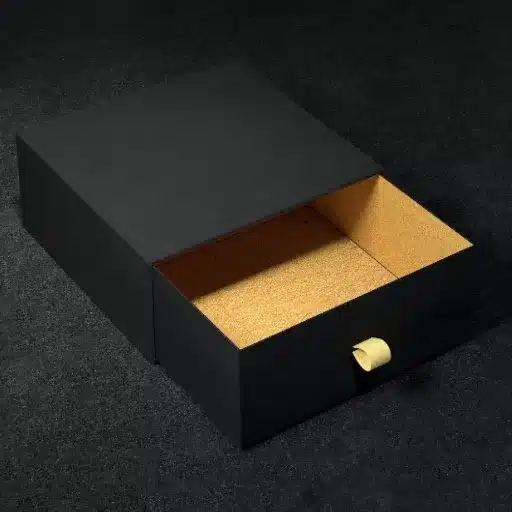
Base-level paper packaging could not be elevated to the top-most level except and unless custom rigid boxes are used. Yes, they are high-priced as opposed to folding cartons, but they in turn raise the perceived value of the product, reinforce the excitement at the unboxing stage and offer a handy shipping feature which minimizes returns.
The first ones are the ones that count – box style, chipboard weight, MOQ and Impregnation Compliance specification. Once those factors are addressed appropriately, the remaining part of the project is literally a walk in the park.
Three takeaways to act on this week:
- Pick the style that fits the product. Magnetic for beauty, drawer for jewelry, shoulder-neck for wine, collapsible for subscription-driven e-commerce.
- Commit to the MOQ your cash flow can handle. The pricing gap between 100 and 1,000 units is the single largest cost lever you control.
- Design for PPWR and FSC from the start. Retrofitting compliance after production is expensive; building it in costs nothing extra.
Fuzhou Longlu Packaging Co., Ltd. is a factory-direct rigid box manufacturer based in Fujian, China. We work with cosmetics, electronics, jewelry, F&B, and subscription brands worldwide, with low 100-unit MOQs and full-service design, sampling, production, and global shipping under one roof.
Ready to bring your custom rigid boxes to life? Request a free quote with your specs in under 60 seconds → and our packaging team will get back to you within one business day with pricing, sample timing, and a production plan tailored to your launch.