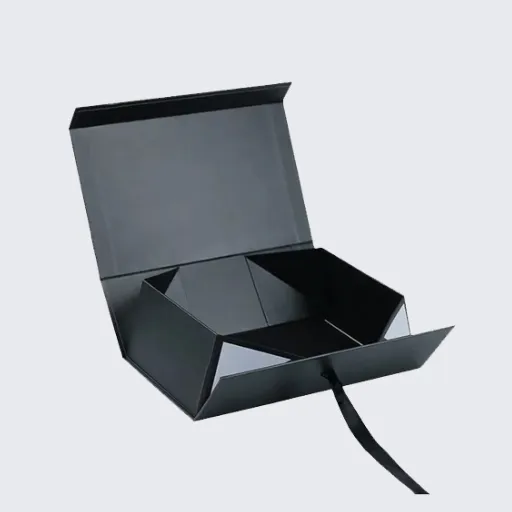
Collapsible rigid boxes are premium packaging structures made from thick chipboard wrapped in printed paper or specialty material, engineered with precise score lines so they ship flat and fold into a rigid shape on arrival. They deliver the same luxury unboxing experience as traditional setup boxes while cutting inbound shipping volume by up to 80%. If your brand needs high-end packaging without crippling freight costs or warehouse congestion, this guide covers everything you need to know.
You already know that packaging shapes first impressions. What you might not know is that a poorly chosen box format can quietly drain your margins through hidden logistics costs. In this guide, you will learn how collapsible rigid boxes work, what they cost at real volume tiers, how much warehouse space they save, and how to order them factory-direct with confidence.
Key Takeaways
- Collapsible rigid boxes reduce shipping and storage volume by up to 80% compared to pre-assembled setup boxes.
- Assembly takes 15–45 seconds per box, and structural integrity matches traditional rigid boxes when engineered correctly.
- Factory-direct pricing starts around 9–9–16 per unit at 100 MOQ and drops to 1.50–1.50–3.00 at 5,000+ units.
- FSC-certified chipboard, mono-material designs, and flat-ship logistics make collapsible rigid boxes a strong choice for PPWR-compliant exports.
- A factory-direct manufacturer can move from flat dieline approval to bulk delivery in 10–14 business days.
What Are Collapsible Rigid Boxes?
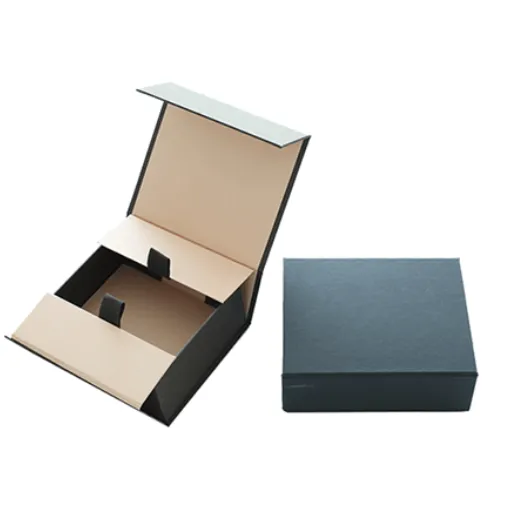
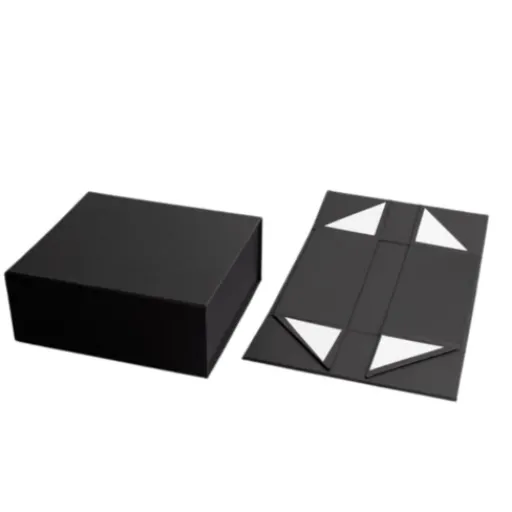
Collapsible rigid boxes, also called fold-flat or knock-down rigid boxes, combine the premium feel of setup boxes with the logistics efficiency of flat-packed cartons. They are built from a chipboard skeleton, typically 1,200–2,000 gsm in weight, that is pre-scored and wrapped in branded paper, fabric, or leatherette. The box ships completely flat and transforms into a rigid structure through a simple assembly process at your warehouse or fulfillment center.
Unlike folding cartons, which use thin paperboard and lack structural heft, collapsible rigid boxes maintain the substantial feel that consumers associate with luxury brands. Unlike traditional setup boxes, which arrive pre-assembled and consume massive shipping volume, these boxes collapse down to a fraction of their assembled size. That difference matters when you are importing thousands of units from overseas or storing seasonal inventory in a tight warehouse.
Ava Chen learned this lesson the hard way. When she launched her skincare line in early 2025, she ordered 500 pre-assembled magnetic setup boxes from a trading company. The shipment filled her small fulfillment space to capacity, and she spent $1,200 on inbound freight alone. Six months later, she switched to custom collapsible rigid boxes with the same wrap, foil logo, and EVA foam insert. Her next 500-unit shipment arrived on a single pallet. The unboxing videos her customers posted looked identical. Only her balance sheet noticed the difference.
How Collapsible Rigid Boxes Work
The Fold-Flat Engineering
The magic of a collapsible rigid box lives in its geometry. During production, a flat sheet of greyboard or chipboard is die-cut into the exact profile of the box walls, base, and lid. Precision score lines are pressed into the board at calculated angles, creating living hinges that allow the walls to fold upright without cracking the wrap paper. Corner tabs lock into slots or adhere with concealed tape to hold the structure square.
The wrap paper, laminated to the outer face of the board before cutting, must be chosen carefully. Thin art paper can tear along score lines after repeated folding, while overly thick textured stocks may resist clean corner bends. Experienced manufacturers calibrate board thickness, wrap gsm, and adhesive type for each specific box size and style.
Assembly Process
Assembling a collapsible rigid box takes three simple steps:
- Unfold the flat box along the score lines.
- Lock the corner tabs into the base and side walls.
- Secure the magnetic or adhesive closure and add the lid.
Most operators reach a comfortable rhythm of 20–30 seconds per box after handling a few dozen units. Magnetic closure styles tend to assemble faster than adhesive-corner styles because the magnets self-align the lid. Drawer-style boxes require an extra step of inserting the inner tray, but the process remains intuitive.
Structural Integrity
A common myth holds that collapsible rigid boxes are flimsier than setup boxes. In practice, a well-engineered collapsible box uses the same chipboard grade and wrap quality as its pre-assembled cousin. The difference is the joinery. Where a setup box relies on glued wall-to-base seams, the collapsible box relies on interlocking corners and often a full wrap that acts as a structural skin.
For most consumer products under 2 kg, collapsible rigid boxes provide equivalent protection. The caveat is heavy or densely packed items. If you are shipping glass bottles or dense metal goods, a setup box with reinforced base corners may still be the safer choice. For cosmetics, jewelry, electronics, apparel, and subscription products, collapsibility adds no meaningful risk.
Collapsible Rigid Boxes vs Standard Rigid Boxes
Choosing between collapsible and standard setup boxes comes down to a simple trade-off: logistics efficiency versus absolute rigidity. The table below breaks down the comparison.
| Feature | Collapsible Rigid Box | Standard Setup Box |
|---|---|---|
| Shipping volume | 75–80% less | Full assembled volume |
| Assembly required | Yes (15–45 seconds) | No |
| Unit cost (factory-direct) | Slightly higher | Baseline |
| Storage efficiency | High | Low |
| Structural strength | Strong (interlocking corners) | Strongest (glued seams) |
| Best for | E-commerce, DTC, subscription, international shipping | Luxury retail, heavy products, no-assembly requirements |
When to choose collapsible rigid boxes: You sell online, ship internationally, operate from limited warehouse space, or run a subscription model with recurring replenishment. The freight savings alone often offset the modest per-unit premium within the first order.
When to choose standard setup boxes: Your products are heavy or fragile, your retail partners require fully assembled display packaging, or your brand positioning demands the absolute highest perceived rigidity. Some ultra-luxury brands still prefer setup boxes for boutique retail environments where assembly is never part of the equation.
David Park, who manages fulfillment for a mid-sized electronics brand, ran the numbers last quarter. His company imports 2,000 rigid boxes every month from China. Switching to foldable rigid boxes cut his sea freight cubic meterage from 2.8 m³ to 0.7 m³. At current LCL rates, that saved $340 per shipment. Over a year, the savings paid for a redesigned wrap with soft-touch lamination and spot UV.
Key Benefits of Collapsible Rigid Boxes
Warehouse and Storage Efficiency
Space is money, especially for growing brands renting fulfillment center square footage by the pallet position. A 1,000-unit order of pre-assembled rigid boxes typically occupies 1.0–1.4 cubic meters. The same quantity of collapsible rigid boxes ships flat on roughly 0.25–0.35 cubic meters. That is not a minor optimization. It is the difference between renting a second storage bay or staying in your current footprint for another six months of growth.
Shipping and Freight Savings
The dimensional weight pricing is the main trend in modern-day freight, particularly in air and less-than-container loads in sea shipping. Pricing of the services depends on which is higher: either actual weight or volumetric weight. Because rigid boxes are light but bulky, they almost always trigger dimensional weight penalties. Flat-packing collapses that volume, bringing the charge back toward actual weight.
For a typical 500-unit order shipped by air from China to the US East Coast, the difference can range from 400to400to900 in freight savings alone. Multiply that across four to six replenishment orders per year, and the packaging format starts to look like a supply chain strategy, not just a design choice.
Reverse Logistics and Returns
Returns are a reality for e-commerce brands. Collapsible rigid boxes simplify reverse logistics because empty boxes can be flattened and stored for resale, refurbishment, or recycling. Seasonal brands also benefit. After the holiday rush, unsold gift boxes flatten down and tuck away until next year rather than consuming shelf space for eleven months.
Sustainability
Transport efficiency translates directly into carbon footprint reduction. Fewer pallets mean fewer container loads, which means fewer kilometers of diesel-powered shipping. Beyond logistics, collapsible rigid boxes can be engineered as mono-material products: FSC-certified chipboard, recyclable wrap paper, water-based adhesives, and soy-based inks. No plastic windows. No PVC lamination. When designed thoughtfully, the entire box enters standard paper recycling streams.
Materials, Finishes, and Closures
Board and Wrap Materials
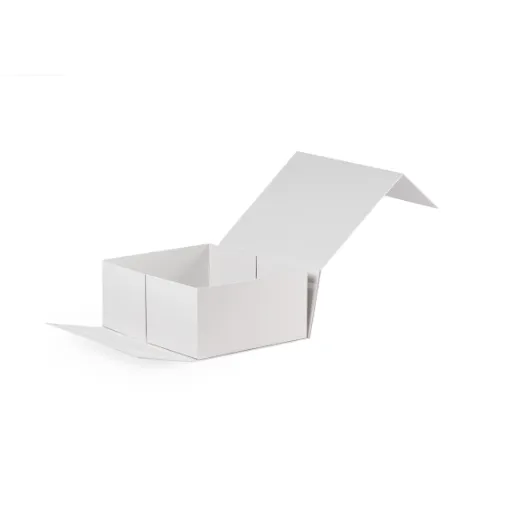
The foundation of every collapsible rigid box is its chipboard or greyboard core. For collapsible designs, 1,200–2,000 gsm is the typical range. Lighter boards fold more easily but offer less rigidity. Heavier boards hold shape better but require deeper score lines and more careful wrap selection to prevent surface cracking at the folds.
Wrap options include:
- Art paper (128–157 gsm): Smooth, printable, and cost-effective. Ideal for detailed graphics and photographic prints.
- Kraft paper: Natural, textured, and highly recyclable. Perfect for earthy or minimalist brand identities.
- Textured specialty papers: Linen, felt, and embossed papers add tactile interest but require testing along score lines.
- Fabric and leatherette: Luxurious options for high-end gifts and jewelry. These demand expert lamination to prevent bubbling at folds.
Premium Finishes
Finishes transform a plain box into a branded experience. Common options include:
- Foil stamping: Metallic or pigment foil applied with heat and pressure. Excellent for logos and limited text.
- Embossing and debossing: Raised or recessed patterns that add dimensionality.
- Soft-touch lamination: A matte film that feels velvety and resists fingerprints.
- Spot UV: Glossy highlights applied selectively over matte lamination for contrast.
One practical note: soft-touch and spot UV finishes work beautifully on collapsible boxes, but they must be applied before the die-cutting and scoring stage. Finish sequencing matters. An inexperienced manufacturer might laminate after scoring, which cracks the film at every fold line.
Closure Systems
Closure choice affects both aesthetics and assembly speed:
- Hidden neodymium magnets: The premium standard. Two small magnets, one in the lid and one in the front wall, create a satisfying snap closure. Magnet placement must avoid interference with electronic products.
- Adhesive tape corners: A cost-effective alternative where magnets are unnecessary or prohibited.
- Ribbon ties: Elegant for gift and corporate applications. The ribbon is typically attached during assembly.
- Tuck-flap lids: Simple and economical, common in book-style collapsible boxes.
If your products target children or are sold in jurisdictions with strict toy safety rules, confirm that any magnets meet CPSIA or equivalent safety standards.
Custom Inserts for Collapsible Rigid Boxes
A rigid box without an insert is just a shell. The insert holds your product securely, elevates perceived value, and controls the unboxing sequence. For collapsible rigid boxes, inserts must be designed with flat-ship logistics in mind.
EVA foam cutouts are the most popular choice for electronics, cosmetics, and jewelry. Foam density ranges from 35 kg/m³ (soft) to 75 kg/m³ (firm). For collapsible boxes, foam inserts are typically produced as flat sheets with pre-cut cavities and then folded or layered inside the assembled box. A skilled manufacturer will design the foam layout so that multiple inserts nest together during shipping, minimizing void space.
Velvet and satin trays add luxury for jewelry, watches, and premium cosmetics. These trays often ship flat and pop into shape when placed inside the box. The tray base is usually cardboard, which keeps the insert rigid while the fabric adds visual richness.
Molded pulp inserts are gaining traction among sustainability-focused brands. Made from recycled paper fiber, they are fully recyclable and compostable. Because pulp is inherently rigid, pulp inserts can ship nested and occupy minimal space. They work best for products with simple geometries.
Cardboard dividers and platform inserts offer a budget-friendly way to separate multiple items or raise a single product for better presentation. They fold flat, cost little, and integrate seamlessly with collapsible box logistics.
The key design principle is simple: every insert must either ship flat or nest efficiently inside the collapsed box. If your insert consumes more shipping volume than the box saves, you have defeated the purpose.
Best Industries and Use Cases
Cosmetics and Skincare
Magnetic collapsible rigid boxes dominate the premium beauty sector. A serum set or PR kit arrives flat at the brand’s fulfillment center, assembles in seconds, and delivers an Instagram-worthy unboxing moment. The flat-ship format is especially valuable for influencer mailers, where brands send small batches to dozens of creators monthly.
Jewelry and Watches
Compact drawer-style collapsible boxes with velvet inserts protect delicate items while occupying minimal storage space. For brands that exhibit at trade shows, flat-packed boxes travel in a fraction of the luggage volume that pre-assembled cases require.
Electronics and Tech Accessories
Earbuds, cables, chargers, and device kits all fit neatly into collapsible rigid boxes with EVA foam inserts. The format is particularly popular with crowdfunding campaigns, where creators need premium packaging but lack warehouse space for bulky inventory.
Subscription Boxes
Monthly collapsible boxes impress subscribers without breaking logistics budgets. Because each month’s design may change, brands appreciate the ability to store flat blanks and assemble only what they need. Marcus Ortiz, founder of a men’s grooming subscription, switched to collapsible gift boxes after his third warehouse expansion quote. His monthly freight bill dropped 38%, and subscriber retention actually improved because the magnetic closure box felt more premium than the folding carton it replaced.
Apparel and Accessories
Book-style collapsible boxes work beautifully for scarves, ties, leather goods, and small accessories. The flat profile stores easily, and the rigid structure protects delicate fabrics from crushing during transit.
Corporate Gifts and Events
Branded collapsible rigid boxes make a strong impression at client onboarding, conference swag distribution, and employee recognition programs. Flat-packed boxes can be shipped directly to event venues and assembled on-site, eliminating the need to transport bulky pre-built packaging.
How Much Do Collapsible Rigid Boxes Cost?
Pricing transparency is rare in the packaging industry. Most competitors publish vague ranges or force you through a quote form. Here are realistic factory-direct per-unit tiers for standard collapsible rigid boxes, based on 2026 production costs from Fujian, China.
| Order Quantity | Estimated Unit Cost (Factory-Direct) | Notes |
|---|---|---|
| 100 units | 9–9–16 | Higher per-unit cost due to setup fees; ideal for prototypes or limited launches |
| 500 units | 3.50–3.50–7.00 | Sweet spot for small brands and influencer campaigns |
| 1,000 units | 2.50–2.50–5.00 | Most common MOQ for established product lines |
| 5,000 units | 1.50–1.50–3.00 | Strong economies of scale; freight savings become significant |
| 10,000+ units | 1.20–1.20–2.50 | Maximum efficiency; custom tooling costs amortized |
Cost drivers that move you up or down within each band:
- Box size: Larger boxes require more board and wrap material.
- Board weight: 2,000 gsm costs more than 1,200 gsm.
- Wrap material: Kraft paper is economical; fabric or leatherette adds cost.
- Finish complexity: Each added finish, foil stamp, emboss, or spot UV layer adds setup and run time.
- Magnet count: Neodymium magnets are small but not free; two magnets per box is standard.
- Insert type: EVA foam adds 0.30–0.30–1.50 per unit depending on density and complexity.
- Lead time: Rush orders carry premium scheduling fees.
Freight savings offset calculation: If you order 1,000 units monthly and save 500pershipmentbyflat−packing,thatis500pershipmentbyflat−packing,thatis6,000 annually in freight alone. At the 500-unit tier, those savings often cover the modest per-unit premium that collapsible engineering adds.
Want to see how these numbers apply to your specific product? Request a free packaging quote with your dimensions, quantity, and finish requirements.
Sustainability and Compliance in 2026
Sustainability is no longer a nice-to-have in packaging. It is a regulatory requirement and a consumer expectation. Collapsible rigid boxes offer several environmental advantages when specified correctly.
FSC-certified materials ensure that the chipboard and wrap paper come from responsibly managed forests. Look for FSC Mix or FSC Recycled certifications from your manufacturer.
Mono-material design is the gold standard for recyclability. A box built entirely from paper-based components, water-based adhesives, and soy inks can enter standard paper recycling streams without disassembly. Avoid PVC windows, plastic laminations, and petroleum-based foams if recyclability is a priority.
EU PPWR compliance is now essential for brands exporting to Europe. The Packaging and Packaging Waste Regulation, effective January 2026, requires all packaging placed on the EU market to be recyclable by 2030. For collapsible rigid boxes, this means choosing recyclable wraps, avoiding mixed-material inserts, and documenting material composition. A factory-direct manufacturer with export experience can guide you through the specification choices that keep your packaging compliant.
End-of-life guidance is often overlooked. If your collapsible rigid box contains magnets, consumers should be instructed to remove them before recycling the paper components. Some manufacturers now offer adhesive-backed magnets that peel away cleanly, simplifying disassembly.
Carbon footprint advantage comes from transport efficiency. Shipping 80% less volume per unit means fewer container loads, fewer truck miles, and lower CO₂ per box delivered. For brands publishing sustainability reports, this is a measurable win.
How to Order Collapsible Rigid Boxes from a Manufacturer
Ordering custom packaging from overseas can feel intimidating. A clear workflow eliminates guesswork and protects your investment. Here is the factory-direct process we recommend.
Step 1: Design brief and structural requirements. Define your assembled dimensions, flat dimensions if known, product weight, and insert needs. Share artwork files in AI or PDF format with outlined fonts. Specify board weight, wrap material, finish list, and closure type.
Step 2: Digital proof and flat dieline approval. Your manufacturer should return a digital mockup showing the assembled box and a flat dieline showing how the box will be cut and scored. Review both carefully. The flat dieline reveals whether the manufacturer understands collapsible engineering.
Step 3: Physical sample assembly test. Order one or two physical samples. Assemble them yourself. Test the corner locks, check the wrap for cracks along score lines, and verify that your product fits the insert. This step takes 1–2 weeks but prevents costly bulk errors.
Step 4: Bulk production. Once the sample is approved, production typically runs 10–14 business days for standard finishes. Complex multi-finish orders may extend to 14–18 days. A reliable manufacturer provides a production schedule with checkpoint dates.
Step 5: Flat-pack QC inspection and palletized shipping. Before shipment, boxes should be inspected for dimensional accuracy, wrap adhesion, score line integrity, and print registration. Flat-packed units are palletized with corner protectors and stretch wrap to prevent transit damage.
Red flags when vetting manufacturers:
- They cannot provide a flat dieline for review.
- They quote without asking about board weight or wrap material.
- They promise turnaround under 5 days for custom work.
- They have no quality documentation or defect-rate history.
Why factory-direct sourcing wins. Trading companies add a markup of 15–40% while offering no additional value. A factory-direct manufacturer in Fujian controls the entire process from structural design to final QC. You get better pricing, faster communication, and accountability if something goes wrong.
Collapsible Rigid Boxes FAQ
How long does assembly take?
Most people assemble a collapsible rigid box in 15–45 seconds. Magnetic closure styles are faster than adhesive-corner styles. After handling 20–30 units, operators typically find a steady rhythm.
Are collapsible rigid boxes as strong as setup boxes?
For most consumer products under 2 kg, yes. The interlocking corner design and laminated wrap provide excellent rigidity. For very heavy or fragile items, a setup box with reinforced base corners may still be preferable.
What is the lowest MOQ?
Factory-direct manufacturers often accept orders starting at 100 units. At this volume, per-unit costs are higher due to setup fees, but it is ideal for prototypes, limited launches, or influencer campaigns.
Can they ship fully assembled if needed?
Yes, most manufacturers can ship collapsible rigid boxes fully assembled upon request. However, this eliminates the primary logistics benefit. Only choose this option if your fulfillment partner cannot handle assembly.
Are the magnets safe for consumer products?
Neodymium magnets used in packaging are generally safe for adult consumer products. If your product targets children, verify CPSIA compliance or choose a magnet-free closure alternative.
How much warehouse space do I actually save?
A 1,000-unit order of collapsible rigid boxes occupies roughly 0.25–0.35 cubic meters, compared to 1.0–1.4 cubic meters for pre-assembled setup boxes. That is a 75–80% reduction in storage volume.
Are collapsible rigid boxes recyclable?
Yes, if specified correctly. Choose mono-material construction with paper-based components, water-based adhesives, and soy inks. Remove any magnets before recycling. FSC-certified options are widely available.
Can I add custom inserts?
Absolutely. EVA foam, velvet trays, molded pulp, and cardboard dividers all integrate with collapsible rigid boxes. The key is designing inserts that ship flat or nest efficiently inside the collapsed box.
Conclusion
Collapsible rigid boxes solve a problem that growing brands know too well. You need packaging that looks premium, protects your product, and creates memorable unboxing moments. But you cannot afford to spend your margin on freight and warehouse space.
Flat-pack rigid boxes deliver the same visual impact and tactile quality as traditional setup boxes. The difference is logistics. Up to 80% less shipping volume. Faster assembly than most people expect. Storage efficiency that delays your next warehouse upgrade. And when specified with FSC-certified materials and mono-material construction, they align with the sustainability standards your customers and regulators now demand.
At Fuzhou Longlu Packaging Co., Ltd., we engineer custom collapsible rigid boxes from concept to flat dieline to finished product. Our standard turnaround is 10–14 business days, with MOQs starting at 100 units. We handle structural design, premium printing, insert integration, and global shipping under one roof.
Ready to see the difference? Request a free quote with your specs, and we will send a flat-pack sample so you can test the assembly and feel the quality before committing to bulk production.