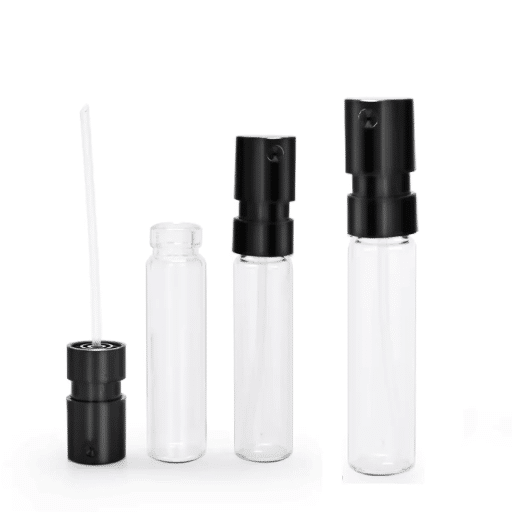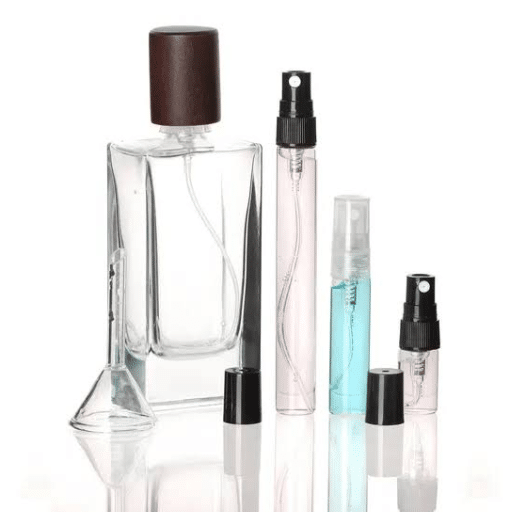
Custom perfume packaging with logo is branded packaging that integrates your company’s logo across boxes, bottles, caps, and labels using professional printing techniques like embossing, foil stamping, screen printing, and digital printing. The best custom perfume packaging with logo combines strategic placement, consistent color matching, and the right printing method for each surface to build brand recognition and increase perceived value.
When Priya launched her indie fragrance brand in Brooklyn last fall, she had a beautiful logo designed by a local agency. Clean typography. A subtle botanical motif. Perfect on her website and business cards. She ordered 500 perfume boxes from a generic supplier and sent over her logo file. What came back looked nothing like her brand. The green in her logo printed as a dull olive on the kraft paperboard. The fine detail in the botanical motif turned muddy. The logo sat awkwardly in the corner of the front panel, too small to make an impression.
Priya had made a common mistake. She invested in logo design but not in logo execution. A logo on packaging is not the same file you use digitally. It demands specific techniques, precise color matching, and thoughtful placement across every component of the packaging set. Get it right, and your packaging becomes a brand-building machine. Get it wrong, and you waste money on boxes that dilute your identity instead of reinforcing it.
This guide covers everything you need to know about custom perfume packaging with logo: where to place your logo, which printing technique to use for each surface, how to match colors across materials, and how to get professional results whether you are ordering 100 units or 10,000.
Key Takeaways
- 72% of consumers say packaging design influences their purchase decisions, making logo execution a direct revenue driver, not a cosmetic detail.
- The right printing technique depends on your surface material: embossing for rigid boxes, screen printing for glass bottles, pad printing for metal caps, and digital printing for low-MOQ startups.
- Foil stamping produces 30% higher perceived value than flat printing, but costs 0.15–0.15–0.50 more per unit at 1,000+ quantities.
- Brands that maintain consistent logo placement across box, bottle, cap, and label see 23% higher brand recall than those with inconsistent branding.
- Small-batch solutions like custom stickers, shrink sleeves, and digital printing make branded packaging accessible starting at $500 for 100 units.
Why Logo Placement on Custom Perfume Packaging with Logo Matters
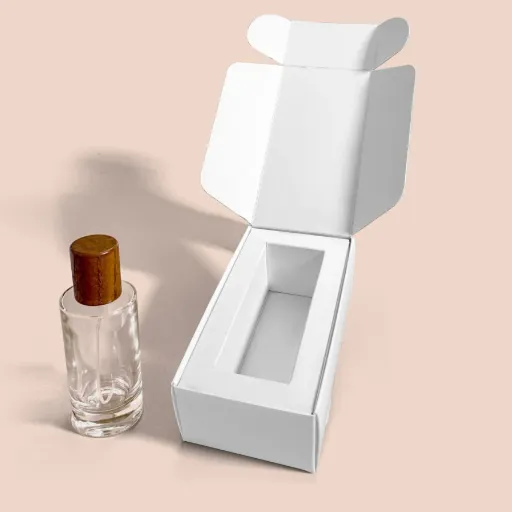
Your logo is the fastest trust signal in your packaging. Before a customer reads your fragrance name, before they smell the scent, before they touch the bottle, they see your logo. That split-second recognition determines whether they perceive your product as premium, mid-market, or cheap.
The data backs this up. According to Dotcom Distribution research, 72% of consumers say packaging design influences their purchase decisions. A separate study by Perception Research Services found that shoppers spend an average of 8 seconds evaluating packaging on a shelf. In that window, logo visibility, clarity, and placement do most of the heavy lifting.
The impact extends beyond the point of sale. According to McKinsey research, 40% of consumers will share an image of packaging on social media if they find it visually appealing. That means your logo is not just on a box. It is on Instagram stories, TikTok unboxing videos, and Pinterest boards. Each share is free brand advertising, but only if the logo is executed well enough to photograph clearly.
The Customer Journey Touchpoints
Your logo appears at five distinct moments in the customer experience:
- Shelf discovery — The box exterior is your first impression. A clear, well-placed logo builds instant recognition.
- Purchase decision — Customers compare boxes side by side. Premium logo execution signals product quality.
- Unboxing — Opening the box reveals interior branding. This is where emotional connection deepens.
- Daily use — The bottle sits on a vanity or bathroom shelf. Your logo is visible every day.
- Gifting — When customers give your perfume as a gift, the packaging carries your brand to a new audience.
Each touchpoint is an opportunity. Miss one, and you leave brand equity on the table.
Want to explore the full range of packaging options for your fragrance line? Browse our complete guide to custom perfume packaging for materials, trends, and sourcing strategies.
Logo Placement Strategies Across the Packaging Set
Placing your logo on a single surface is not enough. Luxury fragrance brands understand that consistent logo presence across the entire packaging set builds recognition and trust. Here is where to place your logo on each component.
Box Exterior
The front panel is your primary real estate. Place your logo at the top third of the front panel, slightly above center. This position draws the eye naturally and ensures visibility on retail shelves where products sit at eye level.
The top lid works well for rigid boxes that are displayed flat or stacked. A centered logo on the lid creates a clean, gift-like presentation.
Side panels are secondary positions. Use them for smaller logo marks or brand initials rather than the full logo. They add recognition without cluttering the primary design.
Box Interior
The inside of the lid is a powerful branding moment. When a customer opens the box, their eyes go straight to the lid interior. A logo here, printed or foil-stamped on a contrasting background, creates a premium reveal.
The base interior can hold a smaller logo mark alongside product information, batch numbers, or a brand message. This reinforces identity without competing with the lid.
Tissue paper, if you use it, can carry a repeated logo pattern. This adds a layer of luxury and extends the unboxing experience.
Bottle Label
The front label is the most visible surface on the bottle itself. Your logo should be prominent but balanced with the fragrance name and other required information.
Back labels carry regulatory information but can also include a smaller logo mark for consistency.
Wrap-around labels give you more space and work well for brands that want the logo to appear multiple times as the customer rotates the bottle.
Cap and Closure
Caps offer a subtle but effective branding surface. Metal caps can be pad printed or laser engraved with your logo. Plastic caps accept screen printing or hot stamping.
The cap is the first thing a customer touches. A logo on the cap reinforces brand identity at the moment of physical interaction.
Choosing the right cap style matters for logo execution. Learn about perfume tops and caps including materials, closure types, and logo compatibility.
Secondary Elements
Dust bags, ribbon pulls, brand story cards, and tissue paper all carry branding potential. These elements are low-cost additions that extend your logo presence across the entire unboxing sequence.
A ribbon pull with a small logo tag costs pennies per unit but adds a perceived premium touch. Brand story cards create emotional connection. Each element reinforces the same visual identity.
Printing Techniques for Custom Perfume Boxes with Logo
Not every printing technique works on every surface. The method you choose depends on your material, order quantity, budget, and the visual effect you want. Here are the six most common techniques for custom perfume packaging with logo.
Embossing and Debossing
Embossing raises your logo above the surface. Debossing presses it below. Both create a three-dimensional, tactile effect that invites touch and signals premium quality.
These techniques work best on rigid boxes and paperboard. They require custom dies, which adds to setup costs, but the per-unit cost drops significantly at higher quantities.
Best for: Rigid perfume boxes, cartons, labels
Per-unit cost: 0.20–0.20–0.80 (depending on complexity and quantity)
MOQ: Typically 500+ units
Durability: Excellent — permanent physical impression
Foil Stamping
Foil stamping transfers a metallic or pigmented film onto the surface using heat and pressure. Gold and silver are the classic choices. Rose gold, copper, holographic, and matte colored foils are also available.
Foil stamping creates a reflective, eye-catching logo that catches light and photographs beautifully. It pairs well with embossing for a raised metallic effect.
Best for: Rigid boxes, folding cartons, labels
Per-unit cost: 0.15–0.15–0.50 (plus die costs)
MOQ: 500+ units
Durability: Good — may scratch under heavy friction
Spot UV
Spot UV applies a glossy, transparent coating to specific areas of the design. When applied over a matte-laminated surface, it creates dramatic contrast. Your logo shines while the surrounding area stays matte.
This technique works well for logos on box exteriors and labels. It photographs exceptionally well, making it popular with e-commerce brands.
Best for: Matte-laminated boxes, labels
Per-unit cost: 0.10–0.10–0.30
MOQ: 300+ units
Durability: Good — scratch-resistant under normal handling
Screen Printing
Screen printing pushes ink through a mesh stencil onto the surface. It produces bold, opaque colors with excellent adhesion on glass, plastic, and metal.
For perfume bottles, screen printing is the standard method. It handles curved surfaces, produces vibrant colors, and works with specialty inks including metallics and fluorescents.
Best for: Glass bottles, plastic caps, metal components
Per-unit cost: 0.08–0.08–0.25 (per color, per location)
MOQ: 200+ units
Durability: Excellent — ink bonds permanently to glass
Pad Printing
Pad printing transfers ink from a silicone pad onto three-dimensional objects. It handles curved, recessed, and irregular surfaces that screen printing cannot reach.
This is the go-to technique for perfume caps, pump collars, and small components. The silicone pad conforms to the shape of the surface, producing clean results on round or textured objects.
Best for: Caps, pump collars, small metal or plastic components
Per-unit cost: 0.05–0.05–0.20
MOQ: 500+ units
Durability: Excellent on metal, good on plastic
Digital Printing
Digital printing applies ink directly to the surface without plates or screens. Its key advantage is flexibility: no setup costs, full-color capability, and the ability to print variable data.
Digital printing is ideal for short runs, prototypes, and brands testing new packaging. Quality has improved to the point where digital results are often indistinguishable from offset at normal viewing distances.
Best for: Folding cartons, labels, short runs, prototypes
Per-unit cost: 0.10–0.10–0.40 (no plate fees)
MOQ: As low as 50–100 units
Durability: Good — varies by ink and surface
Technique Comparison Table
| Technique | Best Surface | Per-Unit Cost | MOQ | Durability | Visual Effect |
|---|---|---|---|---|---|
| Embossing/Debossing | Rigid boxes, cartons | 0.20–0.20–0.80 | 500+ | Excellent | 3D tactile |
| Foil Stamping | Boxes, labels | 0.15–0.15–0.50 | 500+ | Good | Metallic, reflective |
| Spot UV | Matte boxes, labels | 0.10–0.10–0.30 | 300+ | Good | Glossy contrast |
| Screen Printing | Glass, caps | 0.08–0.08–0.25 | 200+ | Excellent | Bold, opaque |
| Pad Printing | Caps, small parts | 0.05–0.05–0.20 | 500+ | Excellent | Clean on curves |
| Digital Printing | Cartons, labels | 0.10–0.10–0.40 | 50+ | Good | Full-color, flexible |
Looking for premium finishes that elevate your brand? Explore luxury perfume packaging techniques including advanced finishing options and brand case studies.
Color Matching Your Logo for Packaging
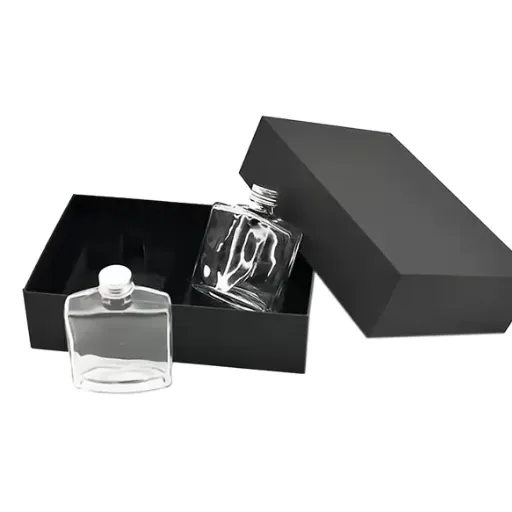
The green on your screen is not the green on your box. Color reproduction varies across printing methods, materials, and ink types. Getting your logo colors right requires deliberate planning.
Pantone (PMS) vs. CMYK
CMYK (cyan, magenta, yellow, black) mixes four ink colors to produce a full spectrum. It works well for photographs and complex graphics but can produce slight color variation between print runs.
Pantone (PMS) uses pre-mixed, standardized ink colors. When you specify Pantone 348 Green, every printer worldwide produces the same shade. For brand-critical logo colors, Pantone is the safer choice.
Most luxury perfume packaging uses a combination: CMYK for background imagery and Pantone spot colors for the logo itself. This ensures logo consistency while keeping costs manageable.
Metallic and Specialty Inks
Gold, silver, and copper inks add premium impact to logo printing. Metallic inks come in two forms: true metallic inks (mixed with metal flakes) and Pantone metallic spot colors.
Fluorescent and pearlescent inks create eye-catching effects for limited editions or seasonal releases. These specialty inks cost more and may require additional print passes.
Color Variation Across Materials
The same ink produces different results on different surfaces. A Pantone color on white SBS paperboard will look crisp and bright. The same color on kraft paper will appear muted and warm. On glass, screen-printed inks may shift slightly due to the surface’s transparency and curvature.
Always request a physical proof or strike-off before approving a full production run. Digital proofs on your monitor are not reliable indicators of how ink will behave on the actual material.
Brand Consistency Across Packaging Components
Consistency is what separates professional packaging from amateur branding. When your logo looks different on the box than it does on the bottle, customers notice. They may not articulate what feels off, but the inconsistency erodes trust.
Common Branding Mistakes
- Inconsistent sizing — Logo is 2 inches on the box but 0.5 inches on the label, creating visual imbalance
- Color mismatches — The gold foil on the box does not match the gold screen print on the bottle
- Poor contrast — A dark logo on a dark background that disappears at arm’s length
- Overcrowding — Logo competes with too many design elements on a small surface
- Style conflicts — Embossed logo on the box but flat-printed logo on the label
The Brand Consistency Checklist
Use this checklist when working with your packaging manufacturer:
- Define exact logo dimensions for each surface (box, bottle, cap, label)
- Specify Pantone colors for every component — do not rely on CMYK approximations
- Request material-specific color samples before production
- Maintain a minimum clear space around the logo (equal to the height of the logo mark)
- Use the same printing technique across similar surfaces when possible
- Create a one-page packaging brand guide that documents all specifications
- Review physical proofs for every component before approving full production
- Keep a reference sample from each production run for future color matching
Materials directly affect how your logo prints. Read our guide to perfume packaging materials to understand how glass, paperboard, kraft, and specialty stocks interact with different printing methods.
Logo Solutions for Small Batches: Branded Perfume Packaging on a Budget
You do not need a 5,000-unit order to get professional logo packaging. Several techniques work at low quantities without sacrificing quality.
Digital Printing
Digital printing requires no plates, no screens, and no setup fees. You send your file, and the printer produces your boxes. This makes it the most cost-effective option for runs under 500 units.
Quality has improved dramatically. Modern digital presses produce results that are often indistinguishable from offset at normal viewing distances. The tradeoff is slightly higher per-unit cost and fewer specialty ink options.
Custom Stickers and Labels
A high-quality custom sticker on a stock box is one of the most affordable ways to create branded perfume packaging without custom printing. Vinyl stickers with a matte or gloss laminate finish look professional and adhere well to kraft, cardboard, and rigid boxes.
This approach works particularly well for artisan and indie brands where the sticker itself becomes part of the aesthetic. A round sticker with your logo on the box lid, combined with a branded label on the bottle, creates a cohesive look at minimal cost.
Shrink Sleeves
Shrink sleeves wrap around the entire bottle, conforming to its shape when heat is applied. They offer full-color, 360-degree branding on any bottle shape. For startups, shrink sleeves eliminate the need for expensive bottle-specific labels.
Rubber Stamps and Wax Seals
For brands with a handmade or boutique positioning, a custom rubber stamp or wax seal adds artisan charm. Stamp your logo on kraft boxes, tissue paper, or brand cards. The imperfections are part of the appeal.
Budget Scenarios
| Budget | What You Get | Best For |
|---|---|---|
| $500 | 100 boxes with digital-printed logo + 100 branded stickers | Indie launch, market testing |
| $1,000 | 250 boxes with spot UV logo + branded tissue paper | Small-batch production |
| $3,000 | 500 rigid boxes with foil-stamped logo + custom inserts | Growth-stage brand |
Launching on a tight budget? Our guide to perfume packaging for small businesses covers phased investment strategies and low-MOQ sourcing.
Cost Guide: Custom Printed Perfume Packaging by Technique and Quantity
Understanding the cost structure helps you budget accurately and avoid surprises. Here is what to expect at common order quantities.
Whether you are ordering wholesale perfume boxes with logo for a retail chain or small-batch custom perfume boxes with logo for an indie launch, the cost structure follows the same logic. Here is what to expect at common order quantities.
Per-Unit Cost Estimates
| Technique | 100 Units | 500 Units | 1,000 Units | 5,000 Units |
|---|---|---|---|---|
| Digital Printing | 0.30–0.30–0.50 | 0.15–0.15–0.25 | 0.10–0.10–0.18 | 0.06–0.06–0.12 |
| Screen Printing | 0.40–0.40–0.60 | 0.15–0.15–0.30 | 0.08–0.08–0.20 | 0.05–0.05–0.12 |
| Foil Stamping | N/A | 0.40–0.40–0.80 | 0.20–0.20–0.50 | 0.12–0.12–0.30 |
| Embossing | N/A | 0.50–0.50–1.00 | 0.25–0.25–0.60 | 0.15–0.15–0.35 |
| Spot UV | N/A | 0.30–0.30–0.60 | 0.15–0.15–0.35 | 0.08–0.08–0.20 |
| Pad Printing | N/A | 0.20–0.20–0.40 | 0.10–0.10–0.25 | 0.05–0.05–0.15 |
Hidden Costs to Watch For
- Plate or die fees — Embossing and foil stamping require custom dies (150–150–500 per design)
- Setup charges — Screen printing has per-color setup fees (50–50–150 per color)
- Color matching fees — Pantone ink mixing may incur additional charges
- Proof costs — Physical samples or strike-offs (50–50–200)
- Multi-location charges — Printing on multiple surfaces (box lid + side panel) adds cost
Cost-Saving Strategies
- Combine techniques: foil stamp the box lid, digital print the labels
- Limit logo placement to 2–3 key surfaces rather than every component
- Use a single Pantone color for your logo instead of multi-color designs
- Order in quantities of 500+ to unlock lower per-unit pricing
- Choose folding cartons over rigid boxes if budget is tight
For a complete cost breakdown across all packaging components, see our detailed guide to custom perfume packaging costs.
How to Prepare Your Logo File for Printing
Sending the wrong file format is one of the most common reasons logos print poorly. Here is what manufacturers need.
Required File Formats
- AI (Adobe Illustrator) — The industry standard. Vector format that scales to any size without quality loss.
- EPS — Another vector format, widely compatible with professional printing equipment.
- PDF — Acceptable if saved from vector software with fonts embedded.
- SVG — Increasingly accepted, especially for digital printing.
What Not to Send
- JPEG or PNG — These are raster formats. They pixelate when scaled and cannot be separated into color channels for screen or offset printing.
- Files from Canva or PowerPoint — These tools export at screen resolution (72 DPI), not print resolution.
Resolution Requirements
If your logo includes raster elements (photographs, textures), they must be at least 300 DPI at the final print size. A logo that is 2 inches wide on the box needs to be at least 600 pixels wide in the file.
Bleed and Safe Zones
Extend your logo background by 3mm (0.125 inches) beyond the trim line if it reaches the edge of the box. Keep critical logo elements at least 5mm (0.2 inches) from any edge to avoid accidental cropping.
Choosing a Logo Packaging Manufacturer
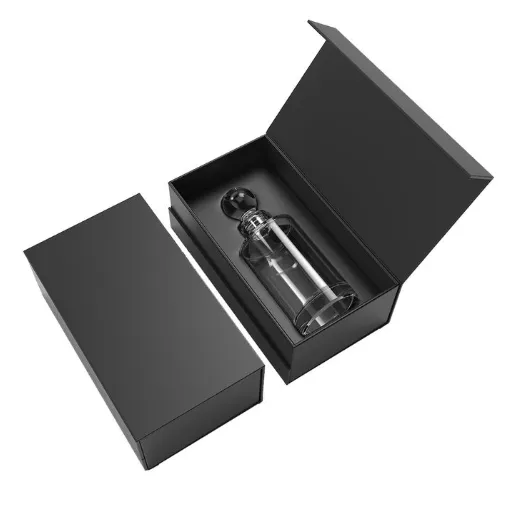
Not all packaging manufacturers handle logo printing with the same level of precision. Here is what to evaluate before placing your order.
What to Ask Before Ordering
- Can you print my exact Pantone colors? — Some manufacturers work only in CMYK
- What proofing options do you offer? — Look for digital proofs, 3D mockups, and physical samples
- How do you handle color matching across materials? — A good manufacturer will test your logo on each material type
- What is your quality control process? — Ask about inspection stages and defect rates
- Can you accommodate multiple printing techniques on one order? — If you want foil on the box and screen print on the bottle, one manufacturer handling both simplifies coordination
Red Flags to Avoid
- No physical proofing option — digital-only proofs are not reliable
- Unwilling to share sample work or client references
- Vague answers about ink types or material compatibility
- No clear revision process after proof review
At Fuzhou Longlu Packaging Co., Ltd., we handle logo printing across the entire packaging set under one roof. From foil-stamped rigid boxes to screen-printed glass bottles and pad-printed metal caps, our integrated production ensures color consistency and reduces coordination overhead. We provide free 3D mockups, physical color samples, and unlimited revisions before production begins.
Ready to start your custom perfume packaging project? Contact us for a free logo packaging consultation and receive a detailed quote within 24 hours.
Frequently Asked Questions
How do I put my logo on perfume packaging?
Start by preparing your logo in a vector format (AI or EPS). Choose your printing technique based on the surface: embossing or foil stamping for boxes, screen printing for glass bottles, pad printing for caps. Submit your file to your manufacturer along with Pantone color specifications. Request a physical proof before approving full production.
What is the best printing method for perfume box logos?
For rigid perfume boxes, foil stamping combined with embossing delivers the highest perceived value. For folding cartons, spot UV over matte lamination creates a premium look at lower cost. For short runs under 500 units, digital printing offers the best balance of quality and affordability.
How much does logo printing cost per unit?
Logo printing costs range from 0.05to0.05to1.00 per unit depending on the technique, quantity, and complexity. Digital printing on cartons starts around 0.10perunitat1,000units.Foilstampingwithembossingonrigidboxesruns0.10perunitat1,000units.Foilstampingwithembossingonrigidboxesruns0.30–0.80perunitatthesamequantity.Plateanddiefees(0.80perunitatthesamequantity.Plateanddiefees(150–$500) are one-time costs that apply to the first order.
Can I get custom perfume packaging with my logo in small quantities?
Yes. Digital printing and custom stickers work at quantities as low as 50–100 units. Screen printing on bottles typically starts at 200 units. Foil stamping and embossing usually require 500+ units due to die setup costs. For startups, combining stock bottles with digitally printed boxes and branded stickers is the most affordable entry point.
What file format does my logo need to be in?
Vector formats are required: Adobe Illustrator (.AI), EPS, or PDF saved from vector software. These formats scale to any size without quality loss and allow color separation for professional printing. Avoid JPEG, PNG, or files exported from Canva or PowerPoint, as these are raster formats that will pixelate at print size.
Conclusion
Your logo deserves the same investment as your fragrance formula. It is the visual shorthand for everything your brand represents: quality, personality, and promise. When that logo appears consistently and professionally across your custom perfume packaging with logo, it builds recognition at every touchpoint, from the retail shelf to the customer’s vanity to their social media feed.
The process is straightforward once you know the fundamentals. Choose the right printing technique for each surface. Match your colors using Pantone specifications. Maintain consistency across every component. And work with a manufacturer who can handle the full packaging set under one roof.
Whether you are an indie brand ordering your first 100 boxes or an established house refreshing your packaging for 2026, the principles are the same. Strategic logo placement, quality printing execution, and brand consistency turn packaging from a cost center into a growth engine.
Ready to bring your logo to life on custom perfume packaging? Request a free quote from Fuzhou Longlu Packaging and receive a detailed proposal with 3D mockups within 24 hours.