Refillable perfume tester bottles are reusable spray, rollerball, or cartridge containers that brands fill with fragrance again and again instead of throwing away after a single use. They cut sample waste, lower your cost per fill, and are quickly becoming the default choice for eco-conscious fragrance brands.
If your brand is still shipping single-use vials, you’re paying for packaging that ends up in a landfill after one spray. Here’s the thing: 59% of consumers bought a refillable beauty product in 2025, and refillable fragrance sales climbed 23% year over year. Your customers want this, and your margins probably do too.
In this guide, you’ll learn the different refillable tester formats, how their refill mechanisms actually work (and why they leak), what durable hardware costs at scale, and how to pick the right format for your sampling program. By the end, you’ll be able to spec a refillable tester with confidence.
Key Takeaways
- The refillable perfume bottle market is projected to grow at 8.86% annually through 2034, and 44% of consumers specifically prefer mini refillable formats.
- Leakage and seal reliability, not the bottle itself, is the number one reason refillable testers fail. The refill mechanism is what you need to specify carefully.
- Refillable glass testers cost roughly 0.04to0.04to0.09 per unit at 10,000+ pieces, and their cost per fill beats single-use vials after just a few refills.
- Choose your format by deployment model: glass atomizers for retail counters, aluminum for travel retail, and refillable vials or sticks for subscription and on-demand sampling.
- Honest sustainability claims matter. Verifiable PCR content and recyclability beat vague “eco-friendly” wording, and a 2025 US tariff on Chinese glass bottles is changing the cost math.
What Are Refillable Perfume Tester Bottles?

Refillable perfume tester bottles are reusable containers designed to hold fragrance for sampling and be refilled multiple times rather than discarded. Unlike a single-use sample vial, a refillable tester is built to open, refill, and reseal cleanly across dozens of fills.
They sit in the middle of a spectrum. On one end, you have throwaway sample vials in 1ml to 3ml sizes. On the other, you have full-size refillable retail bottles. Refillable testers live between them: small enough for a counter or a discovery set, durable enough to reuse.
Maya runs an indie fragrance line in Portland. In March 2025, she shipped 4,000 single-use sample vials for a discovery-set campaign. Within a week, dozens of customers emailed the same question: “Can I refill this?” The vials she’d bought at $0.08 each were already in the trash. She started researching refillable perfume tester bottles the next morning.
For a deeper look at how tester bottles fit into your overall sampling strategy, see our complete guide to perfume tester bottles.
Why Refillable Sampling Matters
The case for refillable testers is partly environmental and partly financial. The two reinforce each other.
On the environmental side, fragrance sampling generates enormous waste. Millions of tiny glass vials and plastic atomizers are produced, shipped, and discarded after a single spray. Refillable formats attack that problem directly by turning a disposable into a durable asset.
The market is moving fast. The broader refillable perfume bottles market is projected to grow from 1.8billionin2025to1.8billionin2025to3.55 billion by 2034, a compound annual growth rate of 8.86%, according to The Insight Partners. A separate TechSci Research estimate puts the mini refillable perfume bottle segment at 18.57billionin2025,reaching18.57billionin2025,reaching23.73 billion by 2031.
Consumer behavior backs this up. FEBEA, the French beauty federation, found that 59% of surveyed consumers purchased a refillable beauty product in 2025, and 44% specifically prefer mini refillable formats. The Perfume Shop reported refillable fragrance sales up 23% year over year.
The financial case is just as strong. A single-use vial has a fixed cost per impression. A refillable tester spreads its cost across every fill, so your cost per sample drops each time it’s refilled. For high-frequency sampling like a busy retail counter, the savings add up quickly.
Want to see refillable formats in action? Explore Fuzhou Longlu’s tester bottle options and request a sample set.
Types of Refillable Tester Formats
Not all refillable testers work the same way. The format you choose shapes your cost, your refill workflow, and how customers experience the sample.
Spray Atomizers
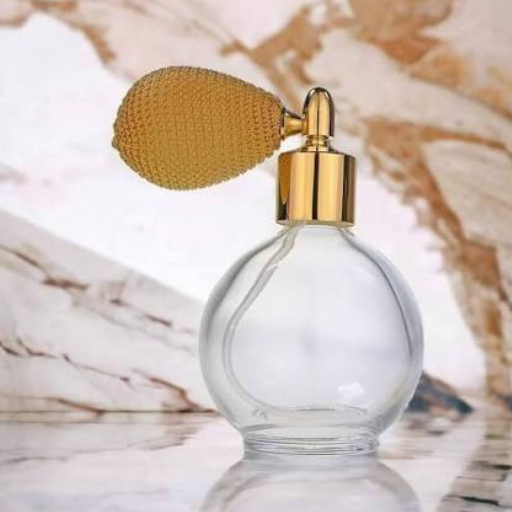
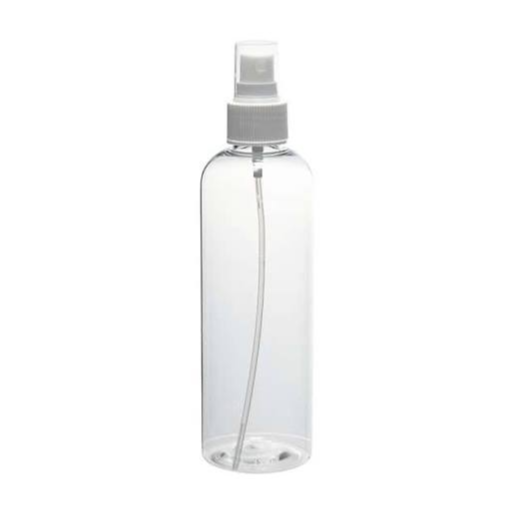
The workhorse of refillable testers. A glass or aluminum bottle with a fine-mist spray pump, typically 2ml to 10ml. These are what most people picture when they think of a refillable perfume atomizer. They’re ideal for retail counters and DTC discovery sets where a true fragrance experience matters.
Rollerball and Pen-Style Testers
Rollerballs apply fragrance directly to skin with a rolling ball applicator. Pen-style testers, like the plastic refillable spray pump pen, are slim and pocketable. Both favor low-cost materials and high volume, which makes them common for on-the-go and promotional sampling.
Cartridge and Valve-Lock Refill Systems
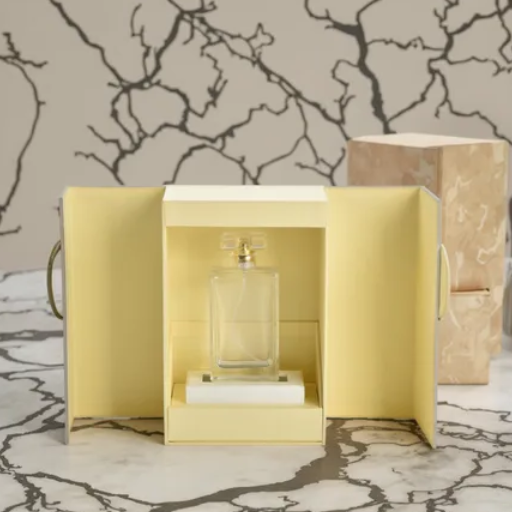
These use a dedicated refill cartridge or a proprietary valve that locks into the bottle. The refill is sealed and mess-free, and the valve prevents cross-contamination between fills. They cost more up front but offer the cleanest, most reliable refill experience, which is exactly why luxury and “bijou” refillable formats lean on them.
Paper-Based and On-Demand Refill Systems
An emerging category. SCENTOUCH by iD SCENT produces a miniature perfume-bottle-shaped sample made entirely of certified, recyclable paper, reusable for up to 100 applications. Samplistick fills recycled-PET sampling sticks on demand at the point of sale. These aren’t bottles in the traditional sense, but they’re worth knowing as the refillable movement expands beyond rigid hardware.
| Format | Best For | Typical Size | Cost Level | Refill Ease |
|---|---|---|---|---|
| Glass spray atomizer | Retail counters, DTC discovery sets | 2-10ml | Medium | High |
| Aluminum atomizer | Travel retail, on-the-go sampling | 5-10ml | Medium-high | High |
| Rollerball / pen-style | Promotional, high-volume sampling | 2-5ml | Low | Medium |
| Cartridge / valve-lock | Luxury, precise sealed refills | 3-10ml | High | Very high |
| Paper-based / on-demand | Point-of-sale, low-waste | n/a | Low-medium | High |
How Refillable Tester Bottles Work

The single biggest reason refillable testers fail isn’t the bottle. It’s the refill mechanism. Leakage and seal reliability are the number one adoption barrier, so it’s worth understanding how each mechanism works before you order.
Spray-Pump Refill (Bottom-Fill Atomizers)
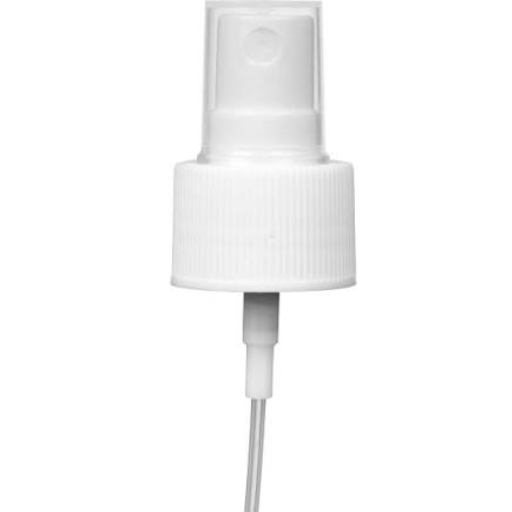
Bottom-fill atomizers let you fill from the base by pressing the bottle onto a fragrance source or a dedicated refill nozzle. A one-way valve in the base opens under pressure and seals when you release. They’re fast to fill and popular for travel, but the base valve is also the most common point of failure if tolerances are loose.
Screw-Top and Snap-On Refill Vials
The simplest approach: unscrew the cap or snap the top off, fill, and reseal. These are forgiving and easy to clean between fragrances, which matters if you refill the same bottle with different scents. The tradeoff is that a threaded closure has more room for user error, so a quality gasket or liner is essential.
Cartridge, Valve, and On-Demand Fill
Cartridge systems swap in a sealed, pre-filled cartridge. Valve-lock systems use a proprietary connector that only opens when a matching refill is attached. On-demand systems, like Samplistick, fill a fresh stick from a larger source at the counter. All three minimize spills, but they add cost and lock you into a specific refill ecosystem.
At a boutique counter in Austin, manager Daniel watched a customer walk away after a refillable tester leaked onto their hand. The atomizer’s seal had worn after its 30th refill. Daniel pulled the bottle from rotation that afternoon. His takeaway: the seal, not the glass, is where refillable testers succeed or fail.
That’s why you should ask any supplier about refill-cycle durability, not just the bottle spec. How many fills is the seal rated for? What’s the replacement process? A manufacturer who can answer those questions is worth more than one who just quotes a unit price.
Materials for Durable, Multi-Fill Testers
Material choice affects how many fills you get, how the fragrance holds up, and how your brand is perceived.
Glass is the premium standard. It’s chemically inert, so it won’t react with alcohol- or oil-based fragrance over repeated fills. Borosilicate glass adds thermal durability. Glass signals quality, but it’s heavier and can break in transit. For a full breakdown of the tradeoffs, read our glass vs plastic tester bottles comparison.
Aluminum is lightweight, shatterproof, and opaque, which protects fragrance from UV light. It’s the go-to for travel retail and on-the-go formats. The downside is cost and a limited finish palette.
PET and PCR plastic are the budget option. PET is light and cheap, and post-consumer recycled (PCR) content gives you an eco-credential at a low price point. Plastics don’t have the chemical inertness of glass, so they’re better for short-cycle refills than long-term storage of delicate top notes.
Think about fill frequency when you choose. A counter tester refilled daily benefits from glass’s durability. A promotional sample refilled once or twice can use plastic without a meaningful penalty.
Sizes and Deployment Models
Refillable testers come in the same size bands as single-use vials, but the “right” size depends on where the sample lives.
- 2ml to 3ml: Discovery sets, subscription boxes, and mailer inserts.
- 5ml: The retail-counter sweet spot. Enough for weeks of daily refills without a huge footprint.
- 10ml: Travel retail and high-traffic counters where a tester sees constant use.
Your deployment model is the better organizing lens:
- Retail counter: A sturdy glass atomizer with a reliable pump.
- DTC discovery and subscription: Light, low-cost refillable vials or sticks.
- Travel retail: Aluminum for durability and UV protection.
- In-store refill station: A compact refill cart with concentrated scent cartridges so staff can demo a “30-second refill ritual” on the spot.
Lena runs a clean-beauty fragrance line. She switched her subscription boxes from single-use 2ml vials to 5ml glass refillable atomizers. Her per-fill cost dropped from 0.09to0.09to0.02 after the third refill. Six months in, she’d eliminated over 90,000 single-use vials from her supply chain.
Refillable Tester Sourcing: MOQ, Pricing, and Lead Times
Sourcing refillable testers is different from buying single-use vials. You’re buying a durable good, so MOQs and per-unit costs trend higher, but the lifetime value is higher too.
Real-world pricing from current supplier listings puts refillable glass tester bottles at roughly 0.04to0.04to0.09 per unit at 10,000+ pieces. Luxury metal-and-glass refillable formats run higher, around 0.64to0.64to0.89 per piece, reflecting premium materials and proprietary valves. Minimum order quantities vary widely, from about 100 pieces for luxury refillables to 10,000+ for high-volume tubular styles.
Plan on lead times of 25 to 45 days after sample approval for custom or decorated refillable testers. Stock options ship faster. When you’re budgeting, use cost-per-fill rather than cost-per-unit: divide the landed cost by the expected number of fills, then compare that to a single-use vial’s flat cost.
For a full walkthrough of MOQ tiers, supplier vetting, and landed-cost math, read our wholesale perfume tester bottles sourcing guide.
Ready to price out refillable testers for your next launch? Request a quote and a free sample from Fuzhou Longlu Packaging.
Sustainability Compliance and Avoiding Greenwashing

Sustainability is a selling point only if it’s true. Consumers increasingly check for third-party certifications and verifiable claims, and regulators are watching too.
A few things to get right. If you claim recycled content, specify the percentage and back it with documentation. Look for certifications like COSMOS or Ecocert where they apply, and confirm your supplier’s ISO 22716 GMP status. Recyclability is material-specific: glass is infinitely recyclable, while most plastics downcycle, so don’t claim a plastic refillable is “100% recyclable” unless it genuinely is.
There’s also a cost reality to plan around. In May 2025, the US imposed an additional 25% tariff on certain Chinese-imported glass perfume bottles under Section 301 and revoked the de minimis exemption for imports under $800. That’s shifting landed-cost math for refillable glass testers, so factor tariffs into your sourcing comparison.
The strongest move is honesty. Say what your refillable does, prove it, and avoid vague “eco-friendly” wording. For broader guidance on sustainable materials, see our eco-friendly packaging solutions.
Frequently Asked Questions
Can you refill perfume tester bottles?
Yes. Refillable perfume tester bottles are specifically built to be opened, refilled, and resealed, typically dozens of times depending on the mechanism and seal.
How do refillable perfume bottles work?
They use a refill mechanism: a bottom-fill one-way valve, a screw-top or snap-on closure, or a cartridge or valve-lock system. Each opens to accept fragrance and seals to prevent leaks.
How many times can you refill a perfume tester bottle?
It depends on the seal. A quality glass atomizer can handle dozens to hundreds of fills, while a lightweight plastic vial may be designed for a handful. Ask your supplier for a rated fill cycle.
Do refillable perfume bottles leak?
Poorly specced ones do, and leakage is the top complaint in the category. The fix is a quality seal and a supplier who can confirm refill-cycle durability, not just a low unit price.
Are refillable perfume bottles worth the cost?
For high-frequency sampling, yes. The cost per fill falls below single-use vials after just a few refills, and you eliminate ongoing reorder and disposal costs.
What is the best refillable perfume atomizer for travel?
Aluminum bottom-fill atomizers are the standard for travel: shatterproof, opaque for UV protection, and TSA-friendly in 5ml to 10ml sizes.
Where can I buy refillable perfume tester bottles wholesale?
Directly from a manufacturer like Fuzhou Longlu Packaging, or through trading companies and marketplaces. Manufacturer-direct gives you the best price and the most control over the refill mechanism.
Conclusion
Refillable perfume tester bottles turn sampling from a recurring waste problem into a durable, brand-building asset. The market is growing at a double-digit pace, consumers are asking for refillable formats, and the economics reward brands that switch.
Three things to remember. First, the refill mechanism is where quality lives: specify the seal and its rated fill cycles, not just the bottle. Second, match format to deployment model, glass for counters, aluminum for travel, refillable vials or sticks for discovery and subscription. Third, keep your sustainability claims honest and verifiable, and factor tariffs into your sourcing math.
The brands winning this shift aren’t just greener. They’re paying less per sample and giving customers what they already want. If you’re ready to spec refillable testers for your next campaign, request a quote and free sample from Fuzhou Longlu Packaging today.