
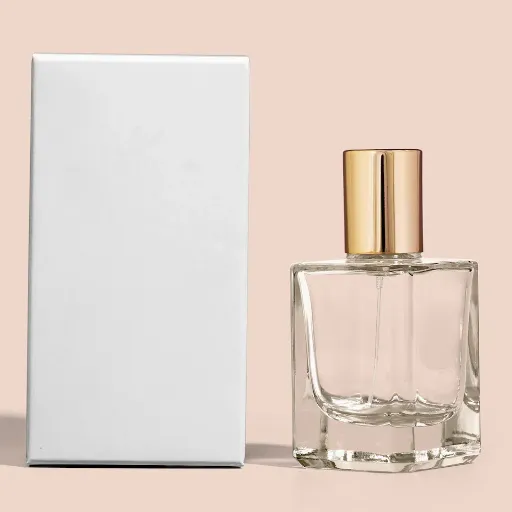
The best perfume packaging for e-commerce combines protective shipping design, Instagram-worthy unboxing appeal, and compliance with hazardous material regulations. It needs to survive a 3-foot drop, photograph beautifully on a white background, and cost less than 20% of your product price. Most online fragrance sellers get at least one of these wrong. They either ship in plain bubble mailers that shatter on arrival, or they over-invest in luxury retail boxes that inflate shipping costs and destroy margins.
You already know that online fragrance sales hit $3.12 billion in 2025. You know the market is growing. What you might not know is that packaging failures are quietly killing conversions, triggering returns, and getting brands flagged by carriers for hazmat violations.
This guide covers everything you need to know about perfume packaging for e-commerce. We will walk through 2026 design trends, shipping compliance rules that most sellers miss, unboxing strategies that drive organic social reach, and cost-effective solutions for every budget. Whether you are launching your first Etsy listing or scaling a D2C fragrance brand, the right packaging decisions will protect your products, your profits, and your reputation.
Key Takeaways
- The best e-commerce perfume packaging solves three problems at once: protection from breakage, presentation that converts, and compliance with UN 1266 hazmat rules for flammable liquids.
- Luxury brands spend 15-20% of product cost on packaging, but small e-commerce sellers can achieve similar impact at a fraction of that by focusing on rigid boxes with custom inserts rather than expensive glass decorations.
- A “Fragile” sticker does not protect your bottle; custom foam or molded pulp inserts that immobilize the product inside a rigid outer box do.
- TikTok and Instagram unboxing videos now drive organic discovery for fragrance brands, meaning your packaging must be designed for the camera, not just the shelf.
- Working with a manufacturer that offers low MOQs and understands e-commerce logistics lets you test packaging before committing to large production runs.
What Makes Perfume Packaging Different for E-Commerce?
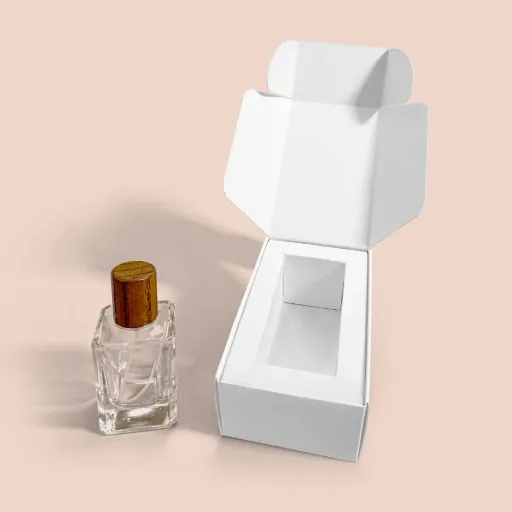
Selling perfume online is not like selling it in a boutique. In a store, the customer holds the bottle, smells the tester, and walks out with the product in a branded bag. Online, your packaging has to do all of that work. It has to convince a buyer who cannot smell the product. It has to survive a journey through sorting facilities and delivery trucks. And it has to create an experience so memorable that the customer posts about it, reviews it, and buys again.
The Triple Challenge: Protection, Presentation, and Compliance
Every e-commerce perfume package faces three simultaneous demands. First, protection: glass bottles filled with alcohol-based fragrance are fragile and flammable. A dropped package can mean a shattered bottle, leaked liquid, and an angry customer. Second, presentation: your packaging is the first physical touchpoint between your brand and your customer. A plain brown box says “commodity.” A custom rigid box with foil-stamped branding says “luxury.” Third, compliance: perfumes are classified as UN 1266, Class 3 flammable liquids. That means carrier restrictions, labeling requirements, and quantity limits that most e-commerce sellers learn about the hard way.
When Priya launched her indie fragrance brand in early 2025, she invested heavily in beautiful glass bottles with custom engravings. She wrapped each one in tissue paper, placed it in a plain corrugated box, and added a “Fragile” sticker. Within her first month, she had a 12% return rate. Three bottles arrived shattered. Two customers complained that the generic box did not match the premium price point. And her shipping carrier flagged a package for improper hazmat labeling, resulting in a 45surchargeshehadnotbudgetedfor.Thepackagingshethoughtwas”goodenough”wascostingherroughly45surchargeshehadnotbudgetedfor.Thepackagingshethoughtwas“goodenough“wascostingherroughly180 per week in returns, fees, and lost repeat customers.
Why In-Store Packaging Fails Online
That stunning retail display box your competitor uses? It was designed to sit on a shelf under controlled lighting. It was never tested for compression strength, drop impact, or the vibration of a cross-country delivery truck. Rigid retail packaging often lacks the internal structure needed to immobilize a glass bottle during transit. It might look beautiful in a department store, but it becomes expensive scrap the moment a fulfillment worker tosses it onto a conveyor belt.
E-commerce perfume packaging needs to be designed backward from the delivery moment. Start with the question: what happens when this box is dropped from waist height onto concrete? If your answer is “I hope it does not,” your packaging is not ready for e-commerce.
The Unboxing Economy
Here is a number that should change how you think about packaging: TikTok videos tagged with #perfumetok have generated billions of views. A significant portion of those are unboxing videos. When a customer opens your package and feels compelled to film it, your packaging becomes a marketing channel. When they do not, you have missed an opportunity that your competitors are capitalizing on.
Brands like Le Labo and Byredo built cult followings partly because their packaging is designed for the camera. Minimalist boxes, tactile materials, and carefully staged reveals create moments that customers want to share. You do not need a Dior budget to achieve this. You need intentional design choices that understand how packaging performs in a digital-first world.
2026 Perfume Packaging Design Trends That Sell Online
Design trends for perfume packaging in 2026 are being shaped by two forces: sustainability demands and the realities of digital commerce. What looks good on a shelf and what photographs well on a phone screen are not always the same thing. Here are the trends that actually move the needle for online sales.
Minimalist Design for Digital Thumbnails
On Amazon, Etsy, or your own Shopify store, your product image is often a 200-pixel thumbnail. Intricate embossing, busy patterns, and multi-color designs disappear at that scale. The brands winning online are embracing what designers call “thumbnail-friendly minimalism”: clean lines, bold typography, single accent colors, and generous white space. This does not mean boring. It means legible at every size.
Transformative Teal and Cloud Dancer have emerged as dominant color directions for 2026, according to industry color forecasts. These muted, sophisticated tones photograph consistently across different lighting conditions and device screens. They also signal premium positioning without the production complexity of metallics or holographics.
Sustainable and Refillable Packaging Systems
According to Intel Market Research, 62% of luxury consumers are willing to pay more for environmentally friendly perfume packaging. That is not a niche preference anymore. It is a market expectation. The fastest-growing fragrance brands in 2026 are designing for circularity from day one.
Refillable bottles are the standout trend. Instead of selling a disposable bottle that gets discarded after use, brands are creating “keep-forever” vessels with lighter, more affordable refill formats. This reduces material costs over time, builds brand loyalty, and creates a powerful sustainability story that resonates with younger consumers. For e-commerce sellers, refillable systems also mean repeat purchases, which is the holy grail of online fragrance retail.
Tactile Finishes and Feel-First Design
As packaging becomes lighter to reduce shipping costs and carbon footprints, brands are compensating with texture. Soft-touch coatings, satinized glass, matte laminations, and wooden caps create sensory experiences that justify premium pricing. The unboxing becomes a multi-sensory moment: the visual reveal, the weight of the box, the texture of the surface, the sound of the closure.
For e-commerce, tactile finishes serve a secondary purpose. They signal quality in product photography. A matte black box with soft-touch coating catches light differently than glossy cardboard. It reads as expensive in a product image, even when the customer cannot physically feel it yet.
Gender-Neutral and Inclusive Packaging
The traditional gender binary in fragrance marketing is rapidly dissolving. Niche and indie brands are leading with gender-neutral positioning, and their packaging reflects it. Neutral color palettes, architectural bottle shapes, and minimalist labeling appeal to a broader audience while reducing SKU complexity. One well-designed package can serve multiple product lines, which simplifies inventory and lowers production costs.
Smart Packaging: QR Codes and NFC Integration
Smart packaging is moving from novelty to expectation. QR codes printed inside the box lid can link to video content, scent stories, or loyalty programs. NFC tags embedded in packaging allow customers to tap their phone to access exclusive content or verify authenticity. For e-commerce brands, this bridges the physical-digital gap. Your packaging becomes a portal to the brand experience that a physical store would normally provide.
Want to see how smart packaging can work for your brand? Explore our custom packaging solutions with advanced printing technology.
Choosing the Right Packaging Materials for E-Commerce
Material selection for perfume packaging involves balancing protection, aesthetics, cost, and sustainability. The wrong choice in any category can undermine your entire e-commerce operation.
Primary Packaging: Glass Bottles, Atomizers, and Caps
Glass remains the dominant material for perfume bottles, with the global glass perfume packaging segment valued at approximately $9.82 billion in 2025. It conveys luxury, protects the fragrance from degradation, and is infinitely recyclable. However, glass is heavy and fragile, two factors that directly impact your shipping costs and breakage rates.
For e-commerce, consider these primary packaging strategies:
- Thicker-walled bottles resist impact better than thin decorative glass
- Frosted or coated glass hides minor surface imperfections that occur during transit
- Secure crimp pumps prevent leakage better than snap-on atomizers
- Magnetic or threaded caps stay attached during shipping; friction-fit caps often do not
Secondary Packaging: Rigid Boxes vs. Folding Cartons
Your secondary packaging, the box that holds the bottle, is where most e-commerce perfume brands make their biggest mistake. Folding cartons, the lightweight paperboard boxes common in retail, offer almost no protection against impact. They collapse under compression and transmit shock directly to the bottle inside.
Rigid boxes, also called set-up boxes, are constructed from thick paperboard mounted on a wrapped exterior. They maintain structural integrity under pressure, absorb impact, and create a premium unboxing experience. For e-commerce perfume sales, rigid boxes are not a luxury. They are a practical necessity.
| Packaging Type | Cost per Unit | Protection Level | Unboxing Impact | Best For |
|---|---|---|---|---|
| Folding carton | 0.50−0.50−1.50 | Low | Minimal | Retail display only |
| Rigid box (standard) | 1.50−1.50−3.50 | Medium | Good | Entry-level e-commerce |
| Rigid box (premium) | 3.50−3.50−8.00 | High | Excellent | Luxury D2C brands |
| Corrugated mailer | 0.30−0.30−0.80 | Medium | Minimal | Budget shipping |
Protective Inserts: Foam, Molded Pulp, and Corrugated Dividers
The insert that holds your bottle inside the box is arguably more important than the box itself. A bottle that can move even slightly inside its packaging will eventually break. The insert must immobilize the bottle completely.
- Die-cut foam inserts provide the best protection and can be customized to any bottle shape. They add a premium feel but increase cost.
- Molded pulp trays are eco-friendly, cost-effective, and offer excellent shock absorption. They are increasingly the choice for sustainable brands.
- Corrugated dividers are the budget option. They provide basic separation but limited shock absorption.
Marcus, who runs a subscription-based fragrance discovery service, switched from tissue paper wrapping to custom molded pulp inserts in early 2026. His breakage rate dropped from 8% to under 1%. More surprisingly, his customer reviews mentioning “packaging” went from neutral to overwhelmingly positive. The insert cost 0.40moreperunit.Thereductioninreplacementshipmentsalonesavedhim0.40moreperunit.Thereductioninreplacementshipmentsalonesavedhim2.10 per order.
Sustainable Material Options
Sustainability in perfume packaging is not just about consumer preference. It is increasingly about regulatory compliance and supply chain resilience. Key sustainable options include:
- Post-consumer recycled (PCR) glass reduces virgin material use without compromising aesthetics
- Biodegradable molded pulp replaces plastic foam entirely
- FSC-certified paperboard ensures responsible forestry practices
- Soy-based inks eliminate petroleum-based printing chemicals
- Mono-material designs simplify recycling by using a single material type throughout
Cost Comparison by Material Type
When Elena priced out packaging for her new fragrance line, she was shocked by the range. A basic folding carton with generic printing cost 0.80perunitat1,000pieces.Acustomrigidboxwithfoaminsert,foilstamping,andmagneticclosurecost0.80perunitat1,000pieces.Acustomrigidboxwithfoaminsert,foilstamping,andmagneticclosurecost6.50. She compromised: a standard rigid box with custom printed exterior and molded pulp insert at 2.80perunit.Itlookedpremium,protectedthebottle,andkeptherpackagingcostat182.80perunit.Itlookedpremium,protectedthebottle,andkeptherpackagingcostat1815 retail price. That is right in the sweet spot for emerging e-commerce fragrance brands.
Shipping Compliance: What Every Online Perfume Seller Must Know
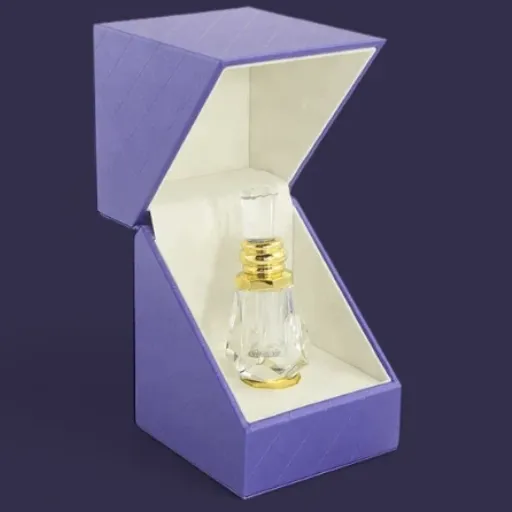
This is the section that most perfume packaging guides skip entirely. That is unfortunate, because getting it wrong can shut down your shipping operation overnight.
Understanding UN 1266 and Hazmat Classification
Perfume contains alcohol, typically at concentrations between 60% and 90%. That makes it a Class 3 flammable liquid under international shipping regulations. The proper shipping name is “Perfumery products,” and the UN identification number is UN 1266. This classification triggers specific packaging, labeling, and documentation requirements.
What does this mean in practice? You cannot simply drop a perfume bottle in a padded envelope and send it via standard postal service. You need packaging that meets minimum performance standards. You need proper labels. And you need to use carriers that are licensed to transport hazardous materials.
Carrier Rules: FedEx, DHL, and USPS Restrictions
Each carrier has its own specific rules for perfume shipments:
- FedEx accepts perfume through its hazardous materials shipping program. You must complete hazardous materials training and use approved packaging.
- DHL handles perfume internationally but requires proper documentation and may restrict quantities per shipment.
- USPS generally prohibits air transport of flammable liquids. Ground shipping only, with specific quantity limits.
- UPS offers hazmat shipping services but requires account holders to complete certification.
For most small e-commerce sellers, the practical path is either FedEx or DHL for international orders, with careful attention to quantity limits and documentation. Ground shipping through USPS works for domestic orders under the volume thresholds.
Required Labeling and Documentation
At minimum, perfume shipments require:
- Orientation arrows indicating which side must face up
- “This Side Up” handling labels
- UN 1266 marking on the outer package (for larger quantities)
- Shipper’s Declaration for dangerous goods (for air freight)
- Commercial invoice with correct HS code (3303 for perfume)
Many e-commerce fulfillment centers will handle hazmat compliance for you, but they charge premium fees. Understanding the requirements yourself helps you evaluate whether those fees are reasonable and ensures your packaging is compliant before it reaches the fulfillment center.
Quantity Limits and International Shipping
Common quantity restrictions include:
- Maximum 500ml per bottle for many international air routes
- Maximum 30kg per outer carton
- Minimum box dimensions (often at least 5 x 9 x 11 inches) to accommodate required cushioning
- Aerosol variants are often prohibited entirely
International shipping adds complexity. Customs declarations must accurately state alcohol content. Duties vary by destination country. And some countries have outright import restrictions on fragrances containing alcohol.
Common Compliance Mistakes to Avoid
The most frequent errors we see from e-commerce fragrance sellers:
- Using incorrect HS codes (perfume is 3303, not a generic cosmetics code)
- Inadequate hazmat labeling (missing UN 1266 markings)
- Shipping over-limit quantities per parcel
- Using recycled or used boxes (often prohibited for hazmat; new packaging is mandatory)
- Failing to declare alcohol content accurately for customs
- Skipping insurance or tracked services for high-value orders
Need help ensuring your perfume packaging meets shipping compliance standards? Contact our team for a free packaging consultation. We design packaging that protects your products and satisfies carrier requirements.
Designing for the Unboxing Experience
In e-commerce, your packaging is your showroom, your sales associate, and your brand ambassador. The unboxing experience determines whether a customer becomes a repeat buyer, leaves a review, or shares your brand on social media.
The Psychology of Unboxing and Repeat Purchases
Research consistently shows that emotional experiences drive brand loyalty more than functional satisfaction. A customer who feels delighted when opening your package is significantly more likely to repurchase than one who simply receives an undamaged product. The unboxing triggers dopamine release, creates a memory anchor, and establishes an emotional connection with your brand.
Luxury perfume brands have understood this for decades. They design every layer of the unboxing: the weight of the outer box, the texture of the tissue paper, the reveal of the bottle, the placement of the documentation. E-commerce sellers can replicate this psychology at any budget level by thinking sequentially about the opening experience.
Packaging That Photographs Well for Listings
Your packaging needs to perform in two contexts: in the customer’s hands and in your product photography. Consider these photography-focused design choices:
- Matte finishes reduce glare and hotspots in studio lighting
- Consistent color palettes create cohesive catalog pages when customers browse multiple products
- Clean typography remains legible even in thumbnail images
- Proportional sizing ensures the box complements the bottle without overwhelming it
- White or light interiors provide natural reflectors that make product photography easier
Creating Shareable Moments for Social Media
The brands winning organic reach on social media design specific “shareable moments” into their packaging. These are the surprise elements that make customers pull out their phones:
- Hidden messages printed inside the box lid
- Unexpected textures that invite touch
- Layered reveals where each opened layer exposes something new
- Personalized elements like handwritten notes or custom-printed names
- Bonus items like sample vials, stickers, or branded accessories
When Lina launched her Etsy perfume shop, she included a small dried flower arrangement in each box, customized to match the fragrance’s primary notes. The cost was $0.15 per order. Her customers posted unboxing videos mentioning the flowers in 40% of reviews. That organic content became her most effective marketing channel, generating an estimated 3x return on the packaging investment.
Insert Design: Thank-You Cards, Samples, and Care Instructions
The inserts inside your packaging deserve as much design attention as the exterior. A well-designed insert strategy includes:
- A thank-you card with brand story and care instructions
- Sample vials of complementary scents (drives cross-selling)
- A QR code linking to video content or a loyalty program
- Care instructions specific to the fragrance (storage temperature, shelf life)
- A review request timed to arrive when the customer is most satisfied
Subscription Box and Discovery Set Packaging
The subscription fragrance model, popularized by services like Scentbird, has created a distinct packaging category. Discovery sets and sample vials require different packaging logic than full bottles:
- Individual vial protection to prevent leakage and cross-contamination
- Compact dimensions that fit standard mailbox sizes
- Lightweight construction to keep subscription shipping costs viable
- Branded outer mailers that protect the inner presentation box
- Information cards describing each scent, since customers cannot smell before choosing
For discovery sets, the packaging often costs more per unit than the fragrance itself. That is acceptable because the packaging is the primary product experience. A customer who loves your discovery set packaging is primed to purchase full bottles.
Cost Optimization: Balancing Luxury and Profitability
Packaging is an investment, not an expense. But like any investment, it needs to generate returns. Luxury perfume packaging can consume 15-20% of total product cost, according to industry research. For e-commerce sellers with tighter margins, the challenge is achieving perceived luxury at a sustainable cost.
How Packaging Affects Dimensional Weight and Shipping Costs
Carriers do not just charge by actual weight. They charge by dimensional weight, a calculation based on package volume. A large, mostly empty luxury box can cost more to ship than a smaller, efficiently packed box containing the same bottle.
Smart packaging design minimizes void space while maintaining protection. Custom inserts that fit the bottle precisely eliminate the need for excessive filler. Right-sized boxes reduce dimensional weight. These decisions directly impact your per-order shipping cost, which is often the second-largest expense after product cost.
Volume Discounts and MOQ Strategies for Small Businesses
Minimum order quantities (MOQs) are the biggest barrier for small fragrance brands. Many packaging manufacturers require 5,000 to 10,000 units for custom designs. That is a 15,000to15,000to50,000 commitment before you have proven market demand.
The solution is finding manufacturers with flexible MOQs. Some suppliers offer custom perfume boxes starting at 200 to 500 pieces. Others provide existing mold libraries that eliminate tooling costs. The key is asking the right questions before you commit.
At Fuzhou Longlu Packaging, we accommodate both small and large orders because we understand that e-commerce businesses need to test before they scale. Our standard turnaround is 7-10 business days, which means you can iterate quickly based on customer feedback.
When to Invest in Premium vs. Standard Packaging
Not every fragrance needs premium packaging. The decision depends on your price point and customer expectations:
- Under $25 retail: Focus on protection and basic branding. A printed mailer box with standard insert is sufficient.
- 25−25−75 retail: Custom rigid boxes with printed exteriors and molded pulp inserts signal quality without excessive cost.
- Over $75 retail: Premium finishes like foil stamping, embossing, and magnetic closures become expected. The packaging must match the price promise.
ROI: How Better Packaging Reduces Returns and Increases Reviews
The return on packaging investment shows up in metrics that matter:
- Reduced breakage rates eliminate replacement costs and customer frustration
- Higher review scores improve search ranking and conversion rates
- Increased repeat purchase rates lower customer acquisition costs
- Organic social content reduces paid advertising spend
- Fewer carrier surcharges from compliance violations protect margins
When you calculate total cost of ownership, premium packaging often pays for itself. A $2 increase in packaging cost that reduces returns by 5% and increases repeat purchases by 10% generates positive ROI within two order cycles.
Customization Options for Every Budget
Custom perfume packaging is more accessible than ever. Digital printing, flexible manufacturing, and global supply chains have lowered the barriers that once reserved custom designs for major brands.
Entry-Level: Printed Kraft Boxes and Labels
For brands just starting out, entry-level customization creates professional presentation without major investment:
- Custom printed kraft mailer boxes with one-color logo
- Branded labels applied to standard boxes
- Custom tissue paper with brand colors or patterns
- Standard inserts with printed care instructions
Cost range: 0.50−0.50−1.50 per unit at 500+ pieces. This level of customization is sufficient for Etsy sellers, small-batch artisans, and brands testing market response.
Mid-Range: Custom Rigid Boxes with Foil Stamping
The mid-range tier is where most growing e-commerce fragrance brands operate:
- Custom-sized rigid boxes with full exterior printing
- Foil stamping in gold, silver, or custom colors
- Spot UV coating for selective gloss highlights
- Custom molded pulp or foam inserts
- Magnetic or ribbon closures
Cost range: 2.00−2.00−5.00 per unit at 500+ pieces. This level signals premium positioning while remaining cost-effective for brands in the 40−40−100 retail range.
Premium: Embossed, Debossed, and Specialty Finishes
Premium customization creates the kind of packaging that customers keep and display:
- Embossing and debossing for textured logos and patterns
- Soft-touch lamination for tactile luxury
- Velvet or suede interiors for bottle presentation
- Holographic or metallic finishes
- Custom-shaped boxes that break from standard rectangular forms
Cost range: 5.00−5.00−15.00+ per unit. This tier is appropriate for luxury brands, limited editions, and gift sets where packaging is part of the product’s value proposition.
Low-MOQ Options for Startups and Small Brands
The most important customization for small brands is not a finish or a material. It is flexibility. Look for manufacturers that offer:
- Low minimum orders (200-500 pieces for boxes)
- Free or low-cost samples before production
- Rapid prototyping with 3-5 day sample turnaround
- Existing mold libraries to avoid tooling fees
- Digital printing for short runs without plate costs
Ready to explore custom perfume packaging for your brand? Get a free quote on custom packaging with your logo. We offer flexible MOQs and free design support to help you find the right solution for your budget.
Working with a Packaging Manufacturer: What to Look For
Choosing the right packaging partner is as important as choosing the right packaging design. The manufacturer you work with affects your costs, your quality, your timeline, and your ability to scale.
Questions to Ask Before You Order
Before committing to a manufacturer, get clear answers to these questions:
- What is your minimum order quantity for custom perfume boxes?
- Can you provide samples before full production?
- What is your typical turnaround time from order to delivery?
- Do you offer design support, or do I need to provide print-ready files?
- What certifications do you hold (ISO, FSC, SEDEX)?
- Can you handle international shipping and customs documentation?
- What is your policy on defects or quality issues?
- Do you offer sustainable material options?
A manufacturer that cannot answer these questions clearly is not ready to be your partner.
Sample Requests and Prototyping
Never commit to a full production run without seeing a physical sample. Digital mockups and renderings cannot show you how a box feels in your hands, how the insert holds the bottle, or how the printing looks under natural light. Reputable manufacturers provide samples within 3-10 days for boxes and 15-25 days for custom bottle molds.
Turnaround Times and International Shipping
E-commerce moves fast. A packaging manufacturer with a 6-week turnaround time will slow down your entire operation. Look for standard production times of 7-15 business days, with expedited options for urgent needs. International shipping adds 2-4 weeks depending on the destination and customs clearance.
Certifications and Quality Assurance
Certifications matter, especially if you are selling in regulated markets or working with retailers that require compliance documentation:
- ISO 9001 indicates quality management systems
- FSC certification verifies sustainable paper sourcing
- SEDEX certification demonstrates ethical labor practices
- Food-safe certifications may be relevant if you expand into scented body products
Frequently Asked Questions
What is the best packaging for shipping perfume bottles?
The best packaging for shipping perfume bottles combines a rigid outer box, a custom insert that immobilizes the bottle completely, and a leak-proof inner seal. Use at least 2 inches of cushioning material between the bottle and the outer box walls. Always use new corrugated cardboard, not recycled boxes, and apply proper orientation labels for hazmat compliance.
How much does custom perfume packaging cost?
Custom perfume packaging ranges from 0.50perunitforbasicprintedmailersto0.50perunitforbasicprintedmailersto15+ per unit for premium rigid boxes with specialty finishes. Most e-commerce fragrance brands find their sweet spot between 2.00and2.00and5.00 per unit, which provides custom branding and adequate protection without consuming excessive margin.
Do I need special packaging to ship perfume internationally?
Yes. Perfume is classified as UN 1266, a Class 3 flammable liquid, which triggers specific packaging and labeling requirements for international shipping. You need hazmat-approved packaging, proper orientation arrows, and documentation including commercial invoices with the correct HS code (3303). Only certain carriers (FedEx, DHL) are licensed for international perfume transport.
Can I get custom perfume boxes with a low minimum order?
Yes. Several manufacturers now offer custom perfume boxes with minimum orders as low as 200-500 pieces. This is a significant shift from the traditional 5,000+ unit requirements. Look for suppliers that offer digital printing and existing mold libraries to avoid tooling costs on small runs.
What packaging materials are best for sustainable perfume brands?
The most sustainable options include post-consumer recycled (PCR) glass bottles, molded pulp inserts (biodegradable and compostable), FSC-certified paperboard boxes, and soy-based inks. Mono-material designs, where the entire package uses one recyclable material type, simplify end-of-life disposal for customers.
Conclusion
Perfume packaging for e-commerce is not just about making your product look good. It is about protecting glass bottles through the shipping process, complying with hazmat regulations that most sellers overlook, creating unboxing experiences that drive organic social reach, and managing costs so your packaging investment generates real returns.
The brands winning in online fragrance retail understand this integrated approach. They do not treat packaging as an afterthought. They design it backward from the delivery moment, forward from the unboxing experience, and outward from the compliance requirements that keep their shipments moving.
Here is what to remember as you build your packaging strategy:
- Protection comes first: A broken bottle is a lost customer. Rigid boxes with custom inserts are non-negotiable for e-commerce.
- Compliance is not optional: Understand UN 1266 requirements before you ship your first order. Carrier violations are expensive and avoidable.
- Design for digital: Your packaging must photograph well, survive shipping, and create shareable moments. These are not separate goals. They are the same goal.
- Start where you are: You do not need a Dior budget to create effective perfume packaging. Start with a custom rigid box and a molded pulp insert, then iterate based on customer feedback.
- Choose partners carefully: Work with manufacturers who understand e-commerce logistics, offer flexible MOQs, and can grow with your brand.
At Fuzhou Longlu Packaging, we specialize in custom packaging solutions that help e-commerce businesses protect their products and elevate their brands. From eco-friendly materials to advanced printing technology, we bring your vision to life with the quality and reliability your customers expect.
Ready to create perfume packaging that sells? Contact us today for a free quote and let us help you design packaging that protects, converts, and delights your customers.


